The Shade Porch Plants Thriving Through Arizona’s Hottest Week
Arizona’s hottest week can make a porch feel less like shade and more like a test chamber.
The roof blocks direct sun, but the heat still builds. Walls radiate warmth. Pots dry out fast. Hanging baskets lose moisture from every side.
A plant that would be comfortable in spring can look completely overwhelmed by mid-July if the container is too small, the light is too harsh, or the watering routine falls behind.
Still, a shaded porch does not have to sit empty until fall.
The right plants can carry color, fragrance, texture, and useful kitchen harvests through brutal summer weather when they get bright shade, morning light, large enough pots, and steady moisture.
The trick is not pretending a porch is cool. It is choosing plants that can handle warmth while protecting them from the harshest afternoon exposure.
Arizona has many microclimates, from low desert neighborhoods around Phoenix and Tucson to cooler higher-elevation towns, so care still needs local adjustment.
But for bright shade, covered patios, and morning-sun porches, these plants are some of the most reliable summer choices.
1. Keep Basil In Bright Morning Shade
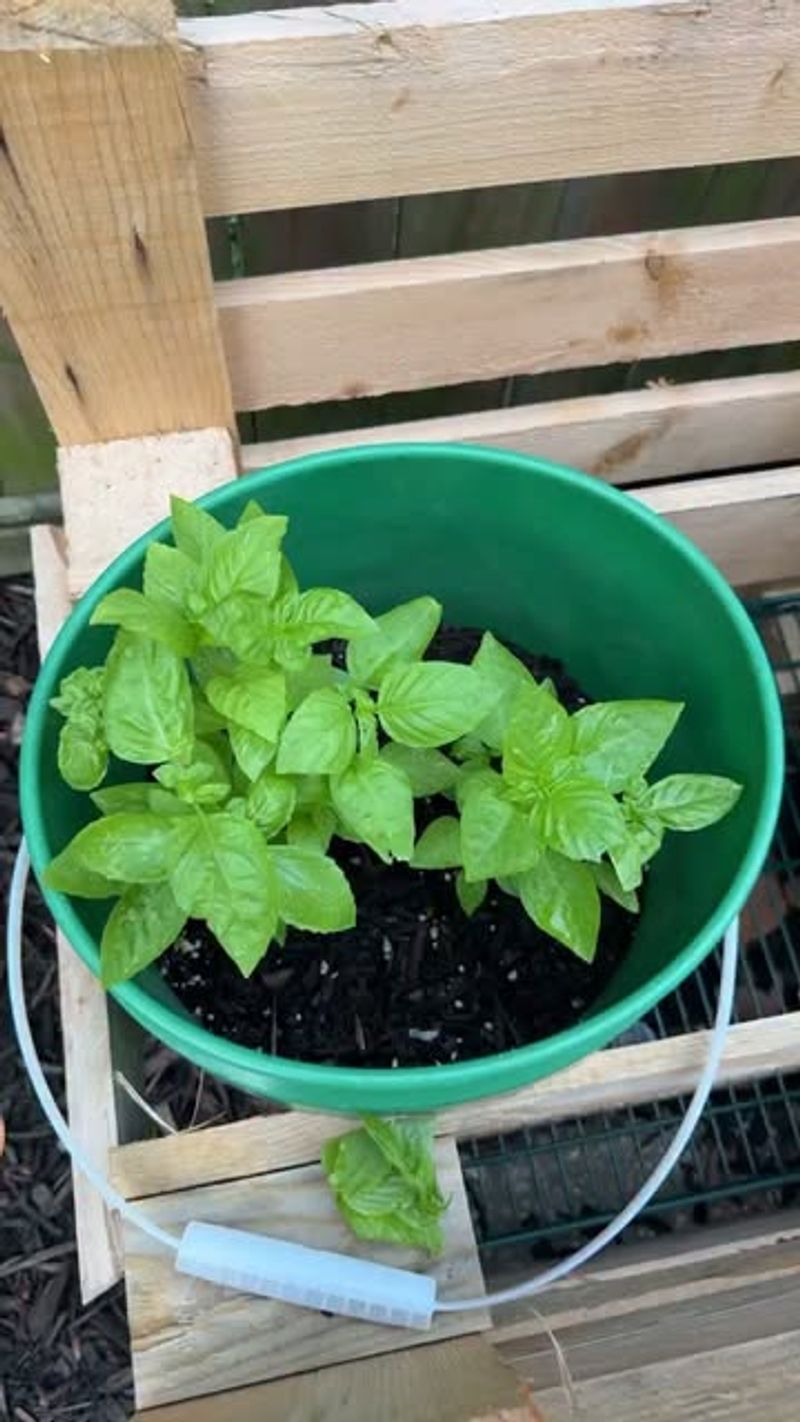
Basil can survive Arizona summer only when the light is handled carefully.
It wants brightness, warmth, and steady moisture, but it does not want to bake under direct low-desert sun all afternoon.
A covered porch with two to four hours of morning sun gives basil enough light to keep producing flavorful leaves without pushing it into constant scorch stress.
That balance matters most during the hottest week of the season.
A basil pot placed where sun hits after late morning can fade quickly. Leaves may curl, edges may crisp, and the plant may try to flower early as stress builds.
Once basil bolts, the leaves often lose some of that soft, sweet flavor that makes the plant worth growing near the kitchen door.
Pinching is essential. Remove flower buds as soon as they appear, and pinch stem tips regularly to encourage bushier growth. This keeps the plant focused on leaves rather than seed production.
Container size makes a huge difference. A tiny pot may dry out within hours in Arizona heat. Use at least a 12-inch container, and go larger if the porch has strong airflow or reflected heat. More soil volume gives roots a better moisture buffer.
Use a light, well-draining potting mix. Basil likes moisture, not swampy soil. Water deeply until excess drains out, then check the top inch before watering again. During extreme heat, daily watering may be needed.
Do not blame yourself if basil declines by late August in the low desert. Even well-grown plants can tire under repeated heat stress.
A fresh planting in early September can produce another round once temperatures soften.
For the hottest week, bright morning shade is what lets basil keep giving instead of giving up.
2. Give Lemon Verbena Afternoon Relief
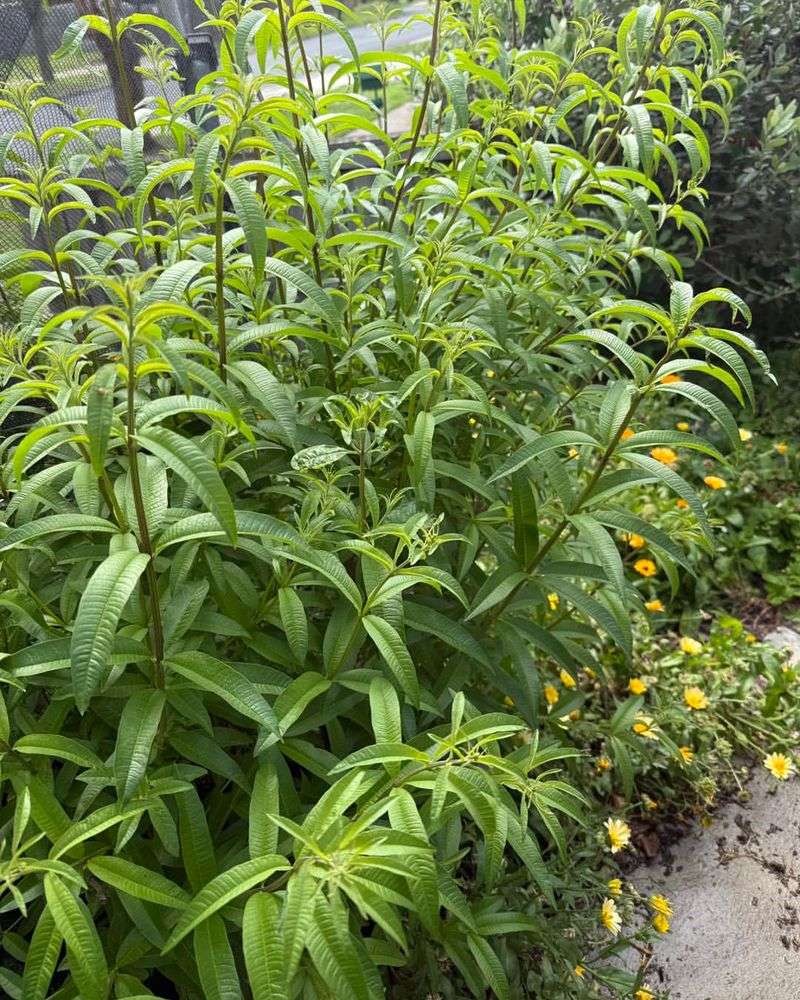
Lemon verbena earns its porch space the moment you brush one leaf.
The fragrance is sharp, clean, and intensely citrusy, which makes the plant feel refreshing even when the air around it is anything but. In Arizona summer, though, that freshness depends on afternoon protection.
Your Arizona Garden Changes Every Week. Your Plan Should Too.
Gardening in Arizona changes quickly throughout the season. Every Friday you’ll receive a simple weekly plan showing exactly what to plant, prune, fertilize, harvest, and protect so you never miss the right timing.
Morning sun suits lemon verbena well. Bright light helps keep growth sturdy and leaf oils strong. But direct western sun during a low-desert heat wave can push the plant too hard. Leaves may yellow, curl, or drop when heat and dry air stack up.
A covered porch, east-facing patio, or bright shaded wall can give lemon verbena the relief it needs.
This plant becomes woody over time, so the container should not be too shallow. A pot at least 14 inches deep gives roots better room to settle and helps prevent the plant from drying out too fast.
Drainage is just as important as size. Roots do not respond well to soggy soil, especially when nights stay hot and the potting mix does not cool much.
Water deeply, then let the upper layer of mix begin to dry before watering again. Do not let the entire root ball go crisp during peak heat. A fully dry lemon verbena pot can shed leaves fast.
Prune lightly during summer. Snip small tips to shape the plant or harvest leaves, but save hard pruning for cooler weather. During the hottest week, the goal is stability, not dramatic reshaping.
In the low desert, lemon verbena may act like a tender perennial. At higher elevations, it may need frost protection or indoor shelter when cold weather returns.
Through brutal summer weather, afternoon relief is what keeps lemon verbena fragrant, leafy, and worth reaching for.
3. Let Lemongrass Fill A Large Pot
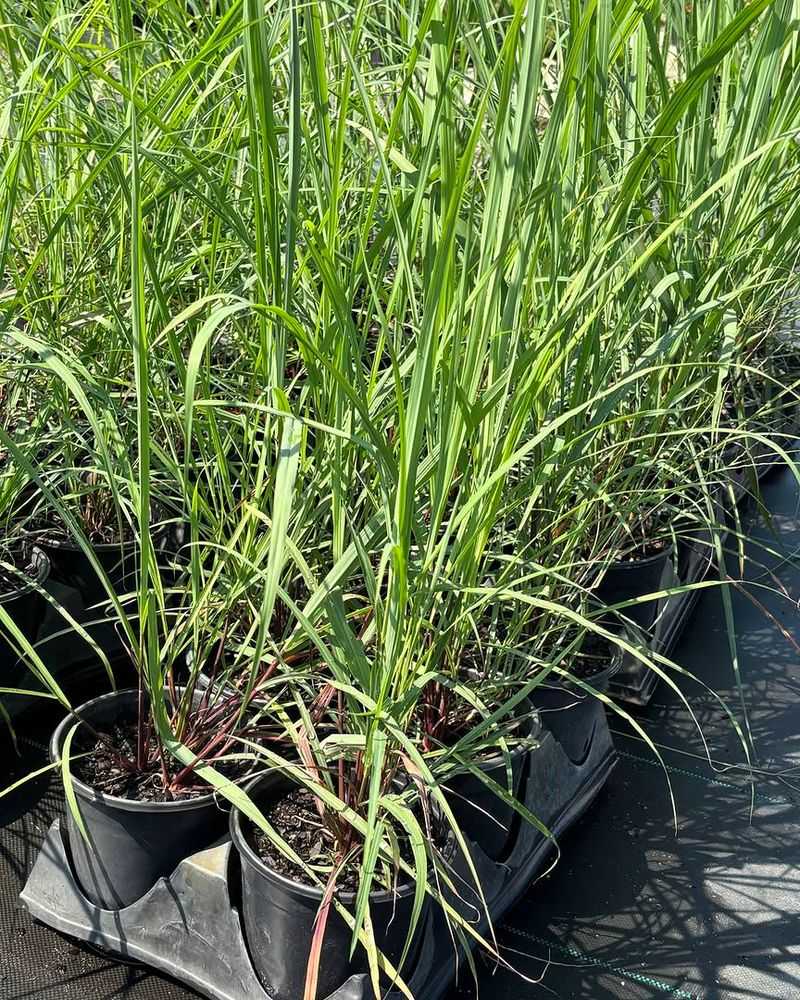
Lemongrass looks surprisingly confident in Arizona heat when the pot is big enough.
This is not a plant for a tiny porch container. Lemongrass builds a large root system and sends up tall, arching blades that can make a shaded patio feel lush and tropical.
Give it cramped roots, and it struggles. Give it a generous container, and it can power through hot weeks with impressive strength.
A 5-gallon pot is a starting point. A 7- to 10-gallon pot is better for serious summer growth. More soil means more moisture storage, better root insulation, and less panic between watering sessions.
Morning sun works beautifully. Early direct light gives lemongrass energy, while afternoon shade protects blade tips from browning and reduces water demand during the worst heat of the day.
Water deeply. Shallow watering only wets the surface and trains roots to stay near the hottest part of the pot. A thorough soak encourages roots to use the full container.
During extreme heat, check daily. Some large plants may need water every day or every other day, depending on pot size, exposure, and wind.
Wind matters because lemongrass gets tall. A lightweight pot can tip, especially after the top growth fills out. Use a heavy container or place the pot near a porch post, wall, or protected corner where it still gets bright light.
Give it space away from narrow walkways. The blades can brush against legs, and the plant gets wider as the clump matures.
Divide crowded clumps every year or two. That keeps the plant vigorous and prevents roots from packing the container too tightly.
Lemongrass thrives through Arizona’s hottest week when its roots have room, its leaves get morning light, and its pot never runs completely dry.
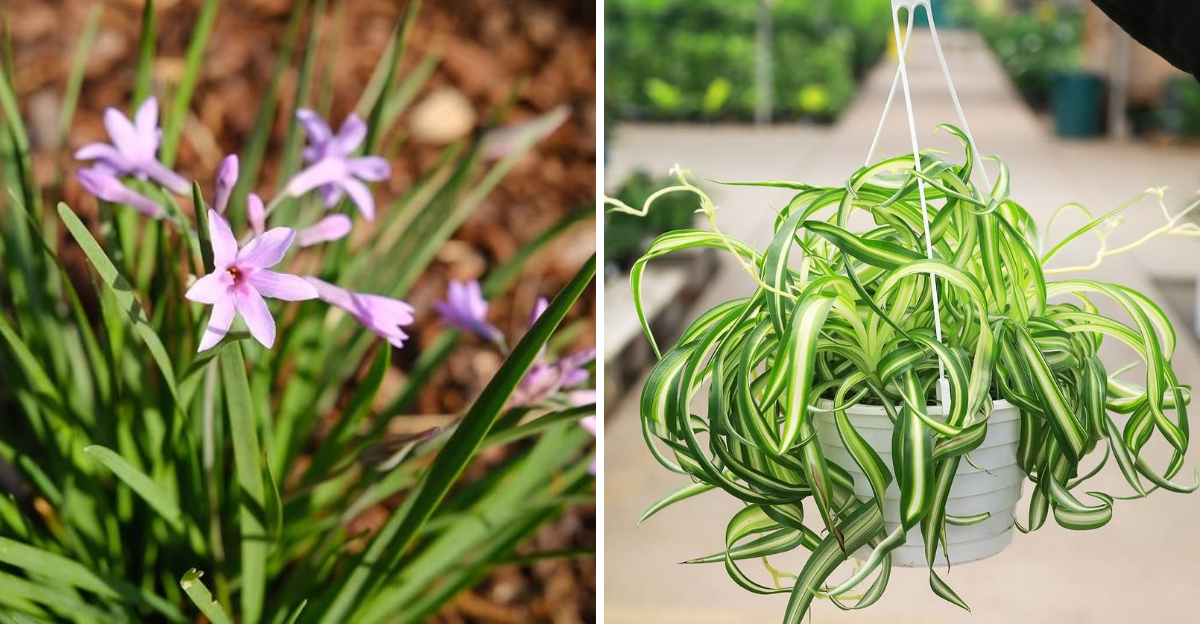
4. Use Society Garlic For Strappy Texture
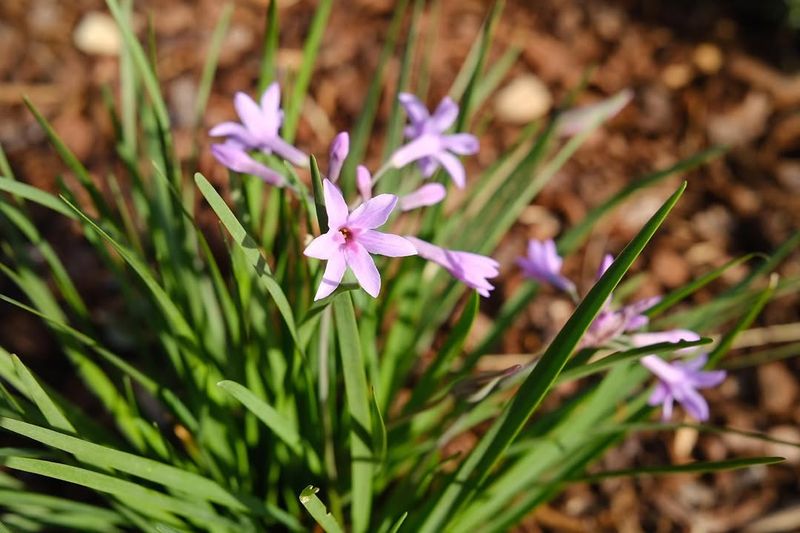
Society garlic brings order to a hot porch.
The narrow, strappy leaves stand upright, the clumps stay tidy, and the lavender flowers add a soft lift without asking for constant attention.
In a container garden full of round leaves and trailing stems, society garlic gives structure that still feels relaxed.
Bright shade is enough to keep it attractive. It can handle more sun than many porch plants, but in Arizona’s low desert, some afternoon protection helps prevent brown tips and tired foliage during the harshest stretch of summer.
Drainage is the main rule. Society garlic is more drought-adapted than basil or mint, but it does not like sitting in wet soil.
Use a container with generous drainage holes and a gritty, well-aerated potting mix. Water thoroughly, then let the mix dry more than you would for thirstier herbs.
This makes society garlic useful in mixed porch displays, but only with compatible companions. Pair it with plants that also prefer good drainage and moderate watering.
Do not tuck it into the same small pot as moisture-loving mint and expect both to be happy.
Deadhead spent flower stalks to keep the container looking fresh and encourage more blooms. The clump expands gradually, so it behaves well in pots and does not take over the way mint can.
There is one small warning. The foliage has a mild garlic-onion scent when bruised or brushed. Outdoors, most people barely notice it unless the pot sits right beside a chair or entryway. Place it where the scent will not surprise guests.
Society garlic shines because it handles heat with restraint. It does not demand constant rescue, does not collapse at the first hot afternoon, and keeps its shape while softer plants struggle.
For bright shade and porch texture, it is a steady performer.
5. Grow Mint Away From Harsh Sun
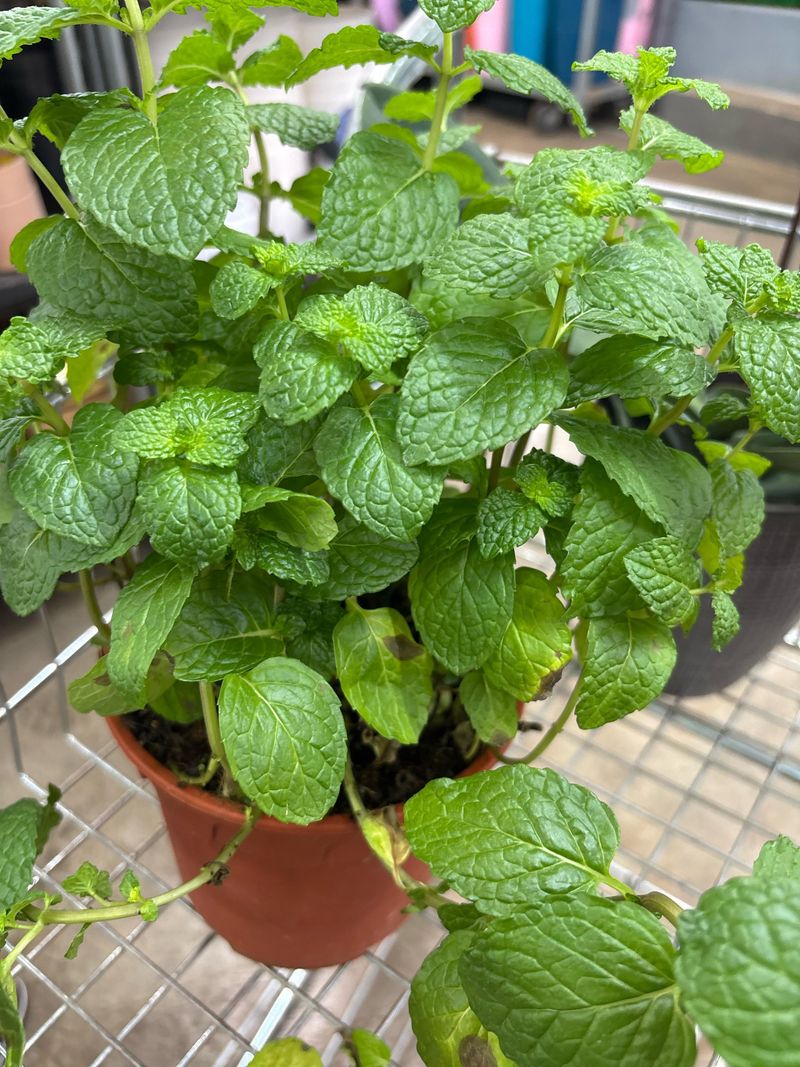
Mint is tough, but Arizona afternoon sun can still humble it.
Spearmint, peppermint, and other Mentha types prefer cooler, moist conditions. That makes a shaded porch one of the safest places to grow them in the low desert.
The porch does not make July cool, but it can remove the brutal direct exposure that turns mint leaves scorched and limp.
A container is non-negotiable.
Mint spreads by runners and can take over garden beds fast. In a pot, its enthusiasm becomes useful instead of annoying.
A wide, shallow container works well because mint roots spread outward. Extra width gives the plant room to fill in without requiring a deep pot that stays wet at the bottom.
Morning light is helpful. A few gentle hours keep growth flavorful and compact. Afternoon shade is the real protection. Without it, mint may wilt even when the soil is not fully dry.
Moisture needs close attention. Mint does not want to go bone dry during an Arizona heat wave. Check the pot daily, especially if it hangs or sits where air moves freely.
Water when the upper layer begins to dry, and water deeply enough to reach the full root area.
Airflow matters too. A shaded porch can still become humid and still around dense foliage. Crowded mint can develop powdery mildew or tired lower leaves. Give the pot room to breathe, and trim lightly to keep growth open.
If summer leaves the plant ragged, cut it back once temperatures begin to ease. Mint often regrows strongly from the base in early fall.
The plant thrives through the hottest week only when the harsh sun stays off it and the root zone stays consistently moist.
Treat mint like a shade-loving herb in Arizona, not an indestructible weed.
6. Tuck Coleus Under A Covered Porch
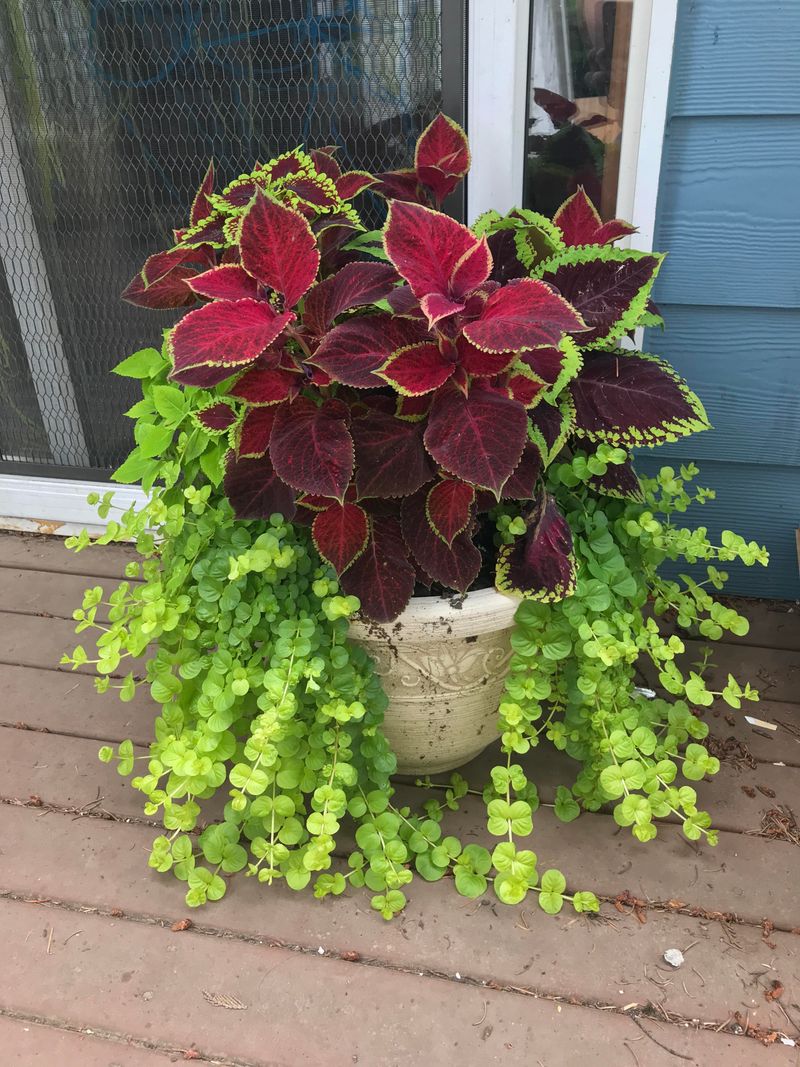
Coleus proves that porch color does not have to come from flowers.
The leaves do the whole show. Burgundy, lime, rose, purple, copper, red, and green patterns can light up a shaded Arizona porch at a time when many flowering plants are struggling.
A covered porch gives coleus the bright filtered light it needs without the direct overhead sun that can scorch tender foliage.
This plant is all about placement.
Too much shade can make it stretch and lose intensity. Too much sun can bleach colors and crisp leaf edges.
The sweet spot is bright shade, morning light, or a protected porch that stays luminous without allowing harsh afternoon rays to hit the leaves.
Reflected heat is the sneaky problem. A coleus pot near white stucco, pale concrete, stone, or a west-facing wall may suffer even if direct sun never lands on it. The leaves can still feel the heat bouncing around the porch.
Move containers a little away from hot surfaces if color looks washed out or edges start to brown.
Pinching keeps coleus full. Remove the growing tips every so often to encourage side branching. Without pinching, many varieties grow tall and lanky, especially in shade.
If flower spikes appear, pinch them off unless you like the look. Keeping the plant focused on foliage usually gives a better display.
Moisture should stay even. Let the top inch dry slightly, but do not let the pot sit dry for long during extreme heat. A wilted coleus may recover after watering, but repeated wilting weakens the plant.
Wind can snap brittle stems, so choose a sheltered spot.
Coleus thrives in Arizona’s hottest week because it accepts shade and still delivers drama.
It is porch color without the pressure of constant bloom.
7. Use Wax Begonia For Steady Color
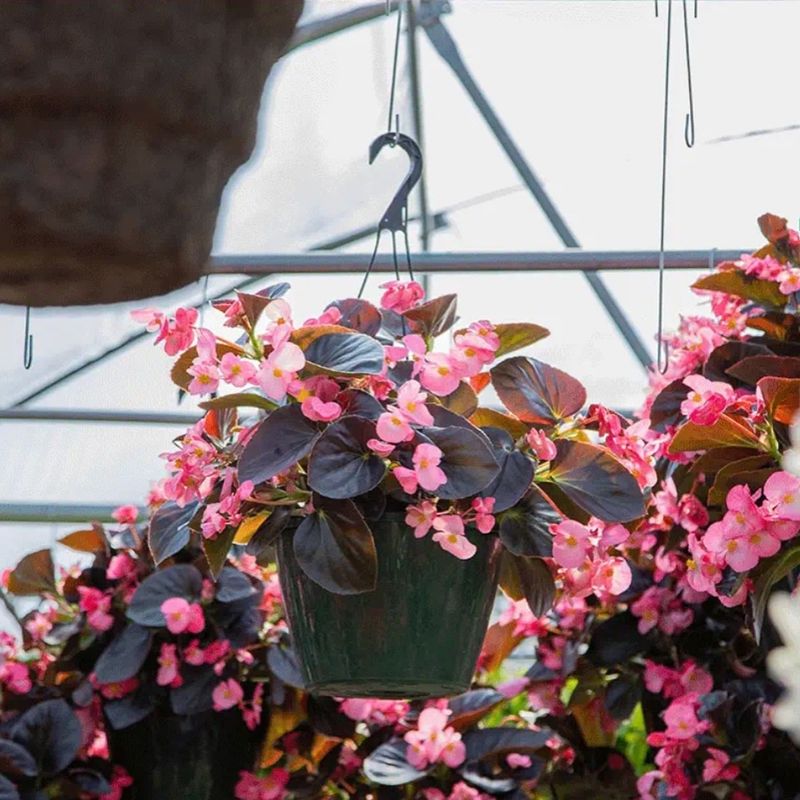
Wax begonia is the dependable one on a summer porch.
It does not need dramatic care to look good. It flowers steadily, keeps a compact shape, and handles bright indirect light better than many annuals. In Arizona’s hottest week, that steady nature becomes valuable.
The key is protecting it from direct afternoon sun.
Wax begonias can tolerate warmth, but low-desert sun can scorch the foliage quickly. A covered porch with morning brightness and midday shade is much better than an exposed railing or west-facing ledge.
The glossy leaves may look tough, but they still need protection from harsh light and reflected heat.
Container drainage is critical. Begonias dislike soggy roots. Use a light potting mix and a pot with open drainage holes.
Water when the top inch feels dry, then let excess drain freely. Do not leave the pot sitting in a saucer of standing water.
That balance keeps roots healthy. Too dry, and the plant wilts. Too wet, and roots struggle. In the hottest week, check more often because small pots can change quickly.
Wax begonias are especially useful in porch groupings. Their rounded leaves and neat flowers contrast well with strappy society garlic, trailing spider plant, and bold coleus. They bring steady color without taking over the container design.
In the low desert, they may slow down or look tired during the most extreme stretch, even with good care. That does not mean they were the wrong choice.
It means the weather is asking a lot. At higher elevations with cooler nights, they may stay stronger for longer.
Treat them as seasonal performers, and replace them if they become too stressed.
For covered shade and bright indirect light, wax begonia keeps the porch cheerful when fussier bloomers fade.
8. Let Spider Plant Spill From Baskets
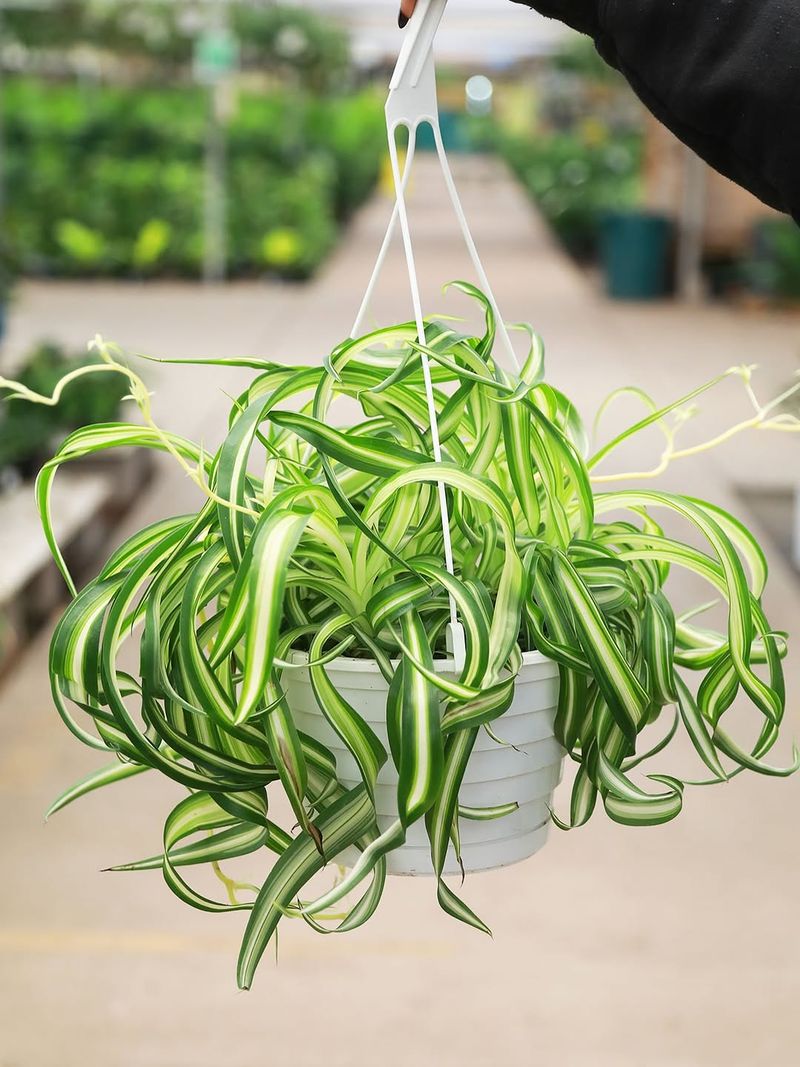
Spider plant is one of the easiest ways to make a shaded Arizona porch look lush.
Its arching striped leaves spill over basket edges, softening railings, beams, and corners without needing flowers. On a covered porch, it can handle summer surprisingly well as long as direct sun and dry roots are kept in check.
Bright indirect light is ideal. A little gentle morning light may be fine, but strong sun can brown the tips and bleach the foliage.
Reflected light from pale walls or concrete can also cause stress, so watch the plant rather than trusting shade alone.
Hanging baskets need special care in Arizona heat. They dry faster than floor pots because warm air moves around the sides and bottom.
During extreme heat, check moisture daily. Water thoroughly until it drains, then let the top inch dry slightly before the next soak.
Do not give tiny sips. A hanging basket may look watered because the surface is wet, while the center stays dry. Water slowly and deeply enough to reach the full root ball.
Salt buildup can cause brown tips too, especially when containers are watered often. Flush the basket every few weeks by watering slowly and generously so excess runs through the drainage holes.
This helps move accumulated salts out of the potting mix.
Spider plants can become root-bound quickly. If roots push through drainage holes or the basket dries out almost immediately after watering, move up one container size.
As fall arrives, spider plant transitions easily indoors. Bring it inside before cool nights become a problem, especially at higher elevations.
Through Arizona’s hottest week, spider plant thrives because shade protects the leaves and attentive watering protects the roots.
Give it those two things, and it rewards the porch with effortless spill and movement.