These 8 Arizona Birdbath Habits Are Making Your Mosquito Problem So Much Worse
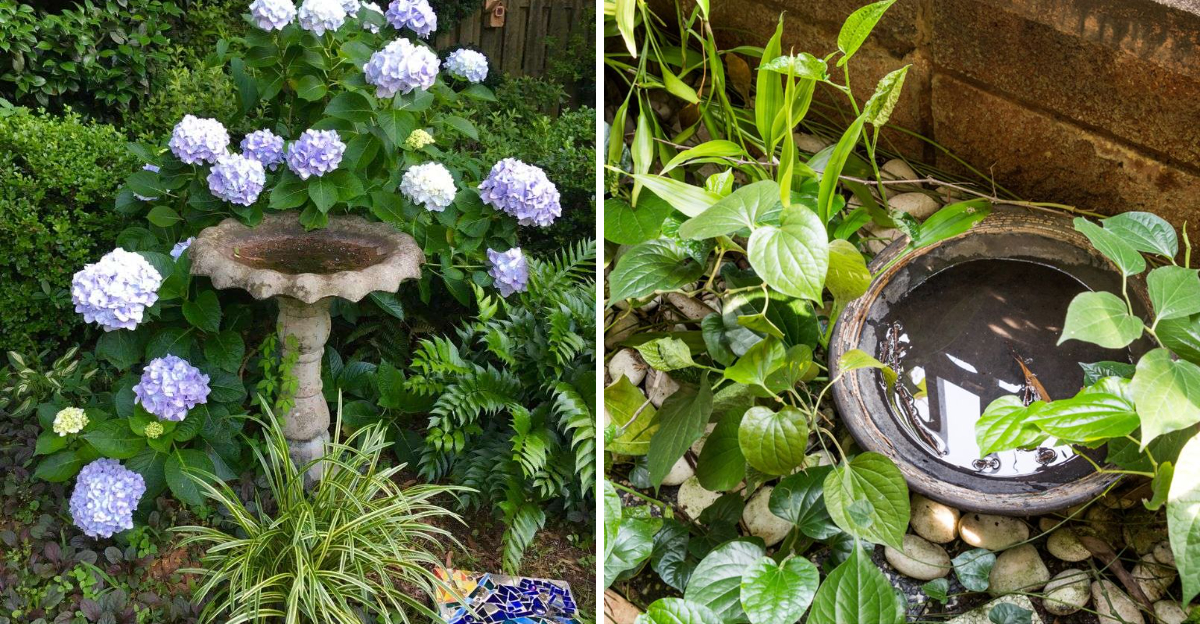
That birdbath sitting in your Arizona backyard is probably one of your favorite yard features.
The birds find it. The yard looks intentional. On a brutal summer afternoon, it feels like something genuinely good you did for local wildlife.
It might also be one of the main reasons you cannot sit outside without getting covered in bites.
Birdbaths and mosquitoes have a relationship that most backyard gardeners never fully connect. The water looks clean. The birds seem happy. Nothing about it screams problem.
But do you know how fast mosquito eggs hatch in Arizona summer heat? The answer is uncomfortable, and it changes how you look at that innocent little basin of water completely.
The good news is that the birdbath itself is not the issue. A few specific habits around it are.
Some of them are things almost every Arizona homeowner does without thinking twice, and none of them require expensive products or complicated solutions to fix.
Eight habits are making Arizona birdbaths into mosquito hotspots right now. How many of them sound familiar?
1. Skipping Weekly Water Changes Lets Eggs Hatch Fast
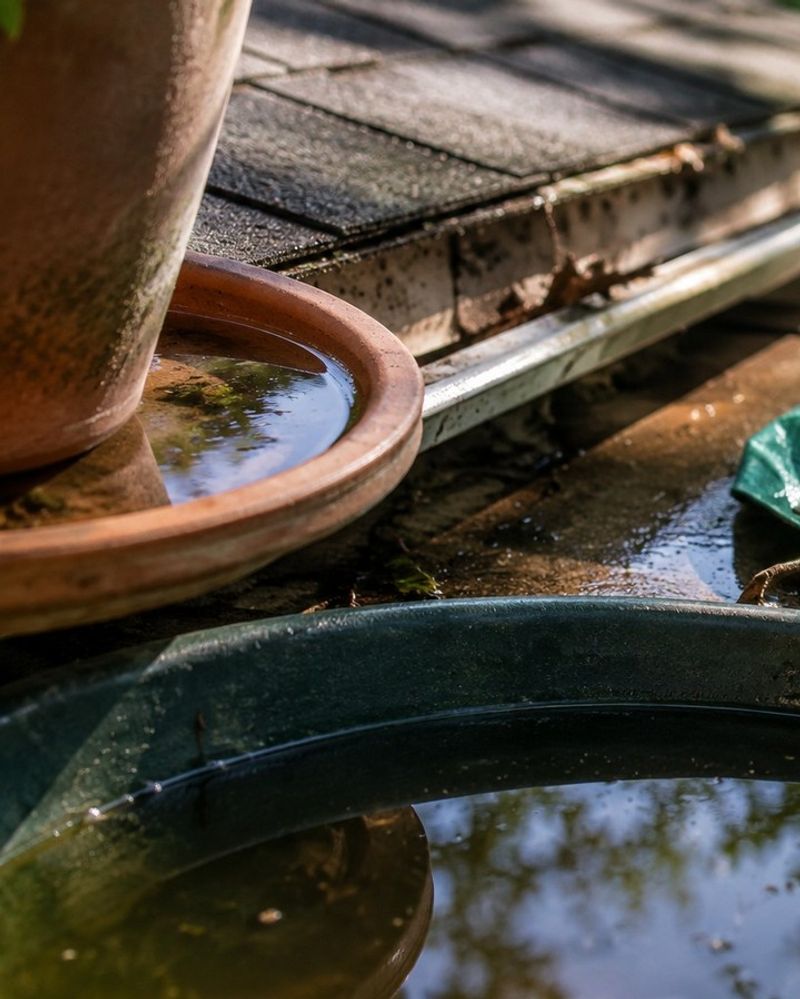
A birdbath that looks clean is not necessarily safe. Mosquito eggs are nearly invisible. In Arizona summer heat, they progress from egg to larvae in as little as 24 to 48 hours. The water can look perfect and still be doing something you would not approve of.
Skipping even one week of water changes can give an entire mosquito generation a comfortable head start in your own backyard.
The rule is simple. Empty the basin completely at least once a week. Scrub it with a stiff brush. Refill with fresh water.
The scrubbing step is the one most people skip, and it is the most important one. Female mosquitoes often attach eggs to the sides of the basin just above the waterline. A quick rinse does not remove them.
Arizona temperatures above 100 degrees accelerate the mosquito life cycle faster than most people realize. What takes two weeks in a cooler climate can happen in days here.
Making water changes part of a regular weekly routine removes the guesswork. A phone reminder takes ten seconds to set. The actual water change takes about five minutes.
Birds benefit from the fresh water too, which makes this one of the rare yard habits with no downside whatsoever.
A dirty birdbath and an Arizona summer are a combination that works out well for exactly one party. That party is not you, and it is definitely not the birds.
2. Leaving Birdbaths In Full Sun Encourages Warm Water Growth
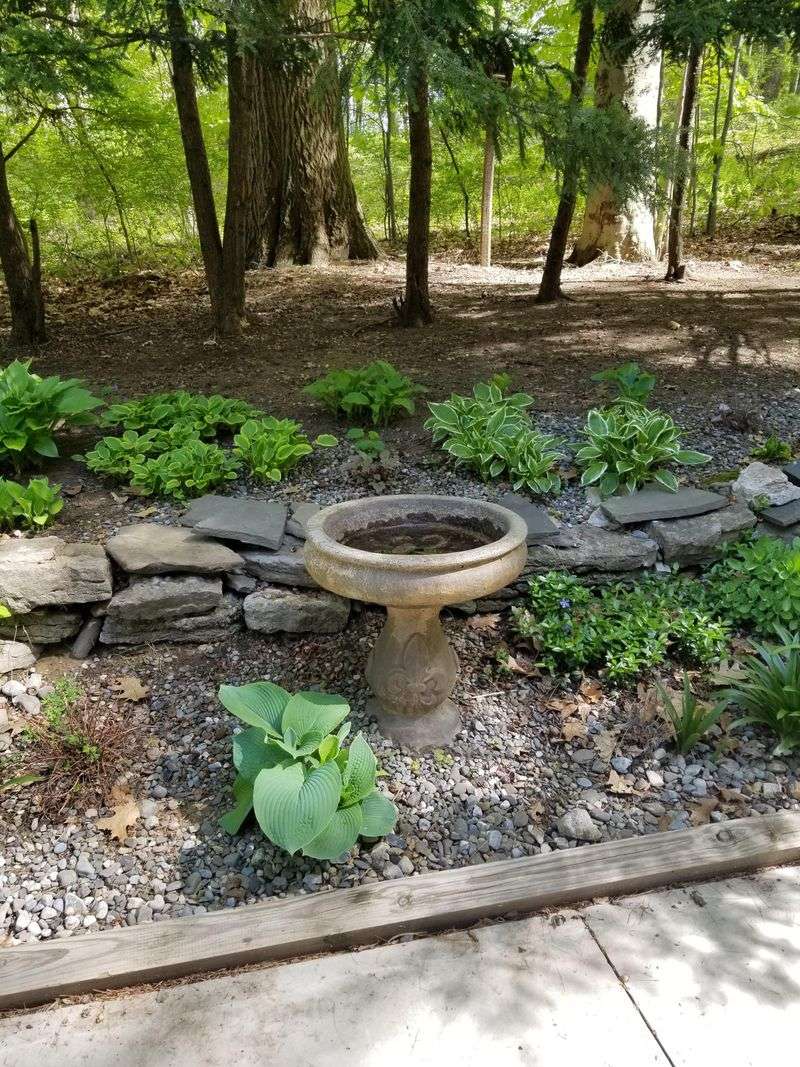
Warm, still water is exactly what mosquito larvae need to develop. An Arizona birdbath sitting in direct afternoon sun provides both with impressive efficiency.
Afternoon temperatures push past 105 degrees regularly across the state. A birdbath in full sun can reach temperatures that actually speed up larval development rather than slowing it down. The heat is helping the wrong side.
Moving the birdbath to a spot that gets morning sun but afternoon shade is one of the most effective repositioning decisions available.
Your Arizona Garden Changes Every Week. Your Plan Should Too.
Gardening in Arizona changes quickly throughout the season. Every Friday you’ll receive a simple weekly plan showing exactly what to plant, prune, fertilize, harvest, and protect so you never miss the right timing.
Shade from a palo verde, a ramada, or even a patio umbrella can drop water temperature by several degrees. Cooler water slows larval development and makes the location less attractive to egg-laying females overall.
There are additional benefits beyond mosquito control. Water evaporates considerably more slowly in shade, which means less time spent refilling the basin.
Birds prefer shaded water sources during brutal Arizona afternoons because they can drink and bathe without overheating.
Placement with morning sun and afternoon shade makes the birdbath more hospitable to birds and considerably less hospitable to mosquitoes at the same time.
That is a meaningful improvement from one afternoon of repositioning work.
Your birdbath does not need to be in full sun to attract birds. Turns out it just needs to be in full sun to attract mosquitoes.
3. Ignoring Screens On Water Features Lets Larvae Develop
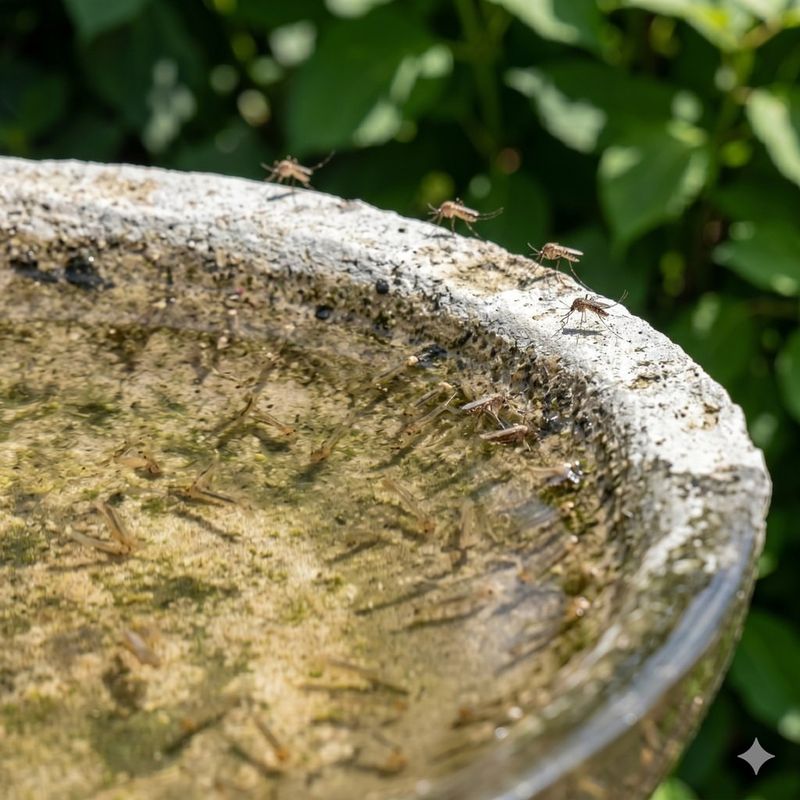
Decorative fountains, small ponds, and reservoir-style birdbaths add genuine appeal to an Arizona yard.
Without proper screening, they also function as open breeding sites available to any mosquito that happens by. The prettier the water feature, the more mosquitoes seem to appreciate it.
A single female mosquito can deposit up to 300 eggs in one visit. Without a physical barrier blocking access, she will return throughout the season without any inconvenience.
Fine mesh screens placed over the water surface or across a reservoir opening physically prevent mosquitoes from reaching the water to lay eggs.
This approach works especially well for larger features that are harder to empty and refill on a weekly schedule.
Screens with a fine mesh small enough to block adult mosquitoes effectively stops access while still allowing water flow and bird access. That specification is worth keeping in mind when shopping for mesh material.
Basic hardware cloth or fine fiberglass mesh cut to size and secured with a bungee cord handles this job without any significant expense. The material costs very little. The installation takes minutes.
Checking screens regularly for tears or gaps matters just as much as installing them. A small opening is enough for a mosquito to access the water and begin a new breeding cycle.
Physical barriers are one of the most underused mosquito prevention strategies available. Expensive traps and sprays get more attention, but a few inches of screen material often accomplishes more.
Sometimes the simplest solution is the one sitting at the hardware store for a fwe dollars.
4. Placing Baths Near Dense Shrub Cover Shields Mosquitoes
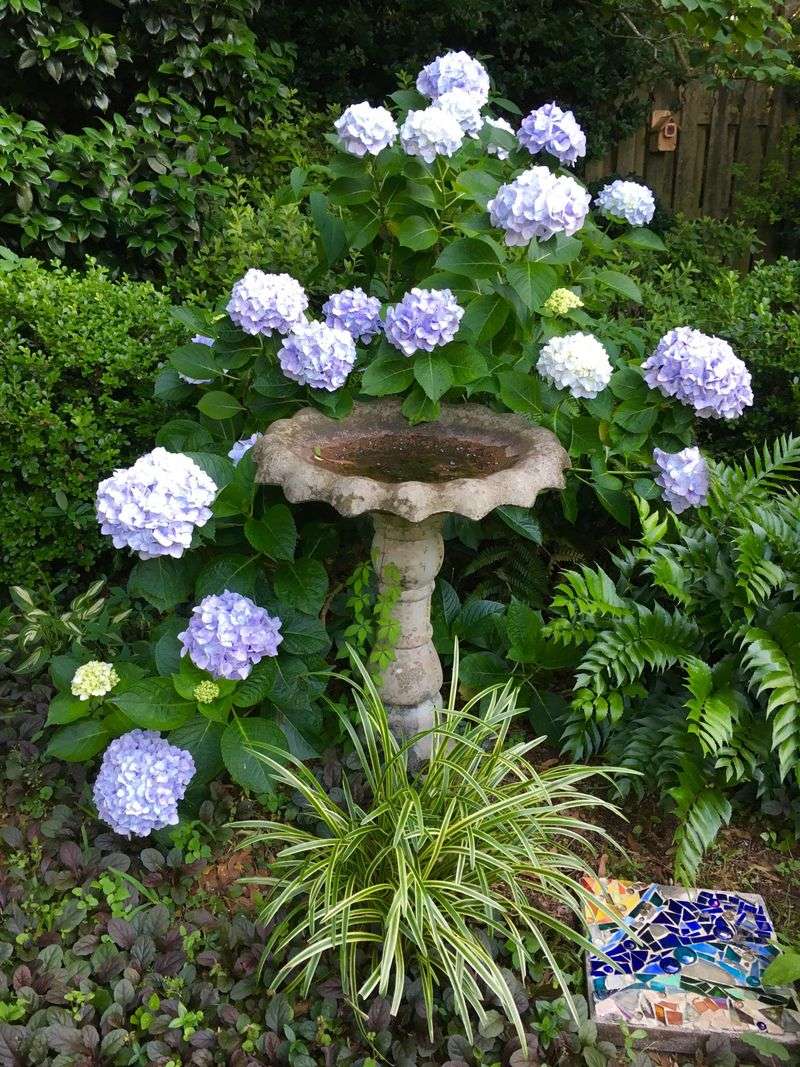
Where the birdbath sits matters as much as how it is maintained. A birdbath positioned against a dense hedge or shrub border creates a self-contained mosquito habitat with everything they need in one convenient location.
Mosquitoes are not strong fliers. They spend most of their time resting in cool, shaded vegetation close to a water source.
Dense shrubs right next to a birdbath give them shade to rest in and water to breed in, all within a few feet of each other.
Adult mosquitoes rest in tall grass, thick bushes, and low-hanging branches during the hottest parts of the day. When the birdbath sits within that kind of cover, the whole arrangement works strongly in their favor.
Keeping birdbaths at least six to ten feet away from dense plantings or tall grass areas reduces this effect significantly.
Trimming back nearby shrubs and keeping surrounding grass short disrupts the resting habitat. Open, breezy areas are naturally less hospitable to mosquitoes because wind makes their movement difficult.
An open placement near a patio or lawn area exposes resting mosquitoes to sunlight and wind, both of which they actively avoid.
Birds are not bothered by open placement. Many species actually prefer clear sightlines around their water source so they can watch for approaching predators.
Your birdbath deserves a better neighborhood. So does your patio furniture.
5. Not Adding Drippers Or Fountains Keeps Water Too Still
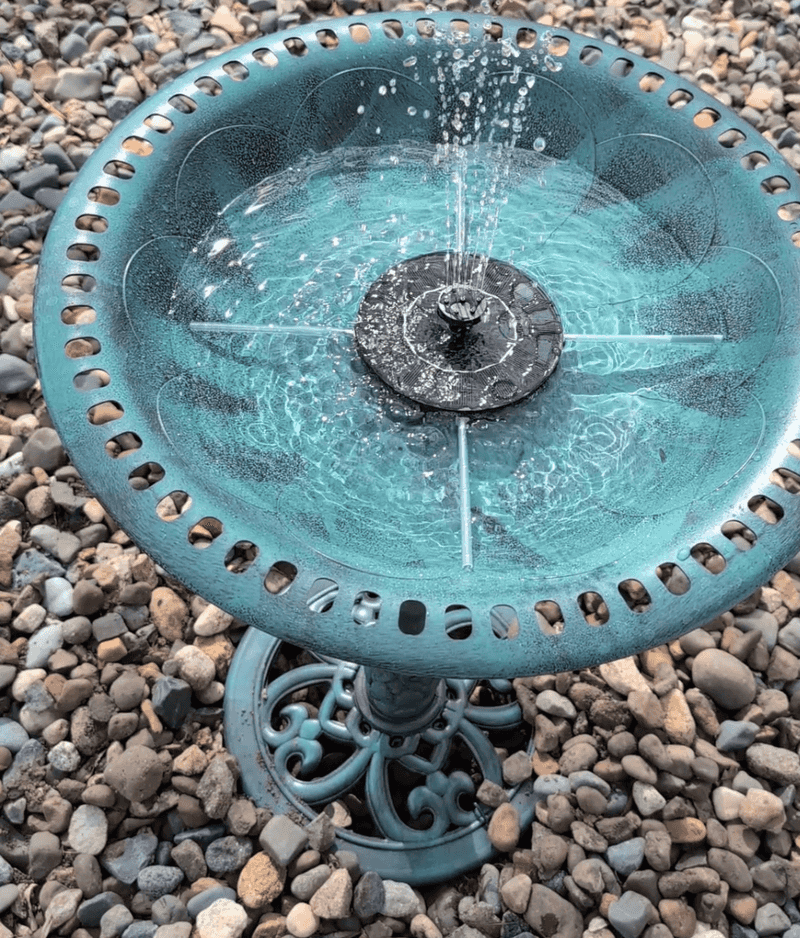
Still water is the preference. Moving water is the deterrent. Even a gentle ripple disrupts the surface tension that mosquito larvae need to breathe and that females need to lay eggs effectively.
A solar-powered fountain or simple dripper added to the birdbath is one of the most practical upgrades available for the cost. It creates continuous surface movement around the clock without electricity costs or wiring.
Solar fountain pumps designed for birdbaths are widely available and straightforward to set up. They create enough movement to make mosquito egg survival nearly impossible in the basin.
Even a slow drip from a hose nozzle positioned above the basin creates adequate surface disturbance.
The upgrade does more than discourage mosquitoes. Moving water attracts considerably more bird species than a silent, still basin.
Migrating warblers, thrushes, and other songbirds are particularly drawn to the sound of dripping water during Arizona’s spring and fall migration seasons.
A dripper also keeps water slightly cooler through evaporation, which adds another layer of mosquito discouragement.
For a birdbath that is already in place and functioning, a solar dripper delivers more value per dollar than almost any other single addition. More birds visit. Fewer mosquitoes breed. The water stays cooler longer.
A still birdbath is essentially a standing invitation. A moving one politely but firmly declines to host mosquito larvae.
6. Using Shallow Trays That Evaporate And Refill With Rain
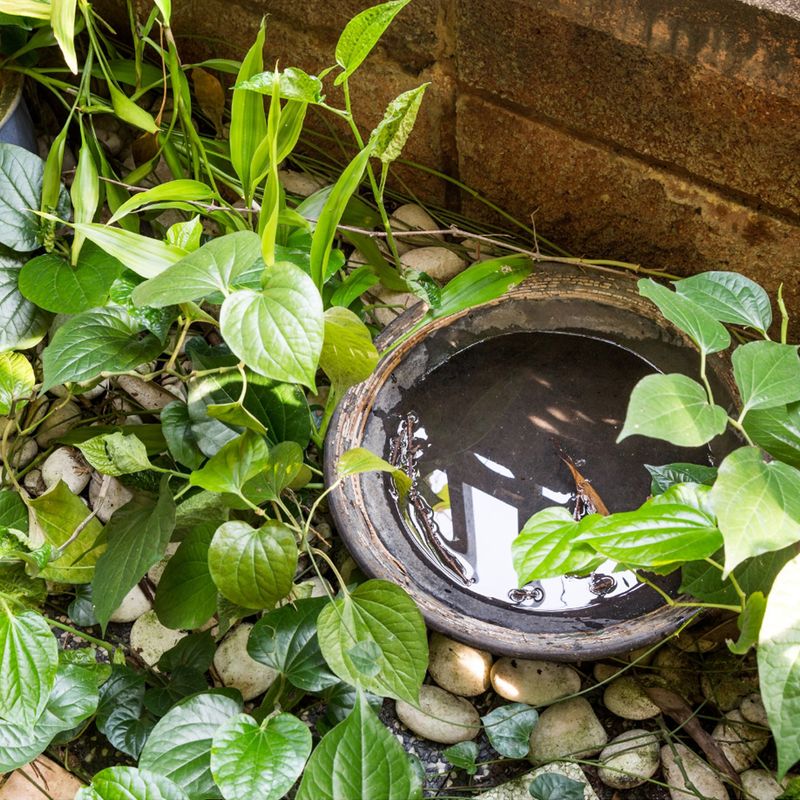
Shallow trays and plant saucers seem like reasonable birdbath alternatives, but they create a mosquito problem that catches Arizona homeowners off guard during monsoon season.
They dry out quickly in the desert heat, which seems like it would eliminate the problem. It does not.
Monsoon storms refill them without any warning or attention from the homeowner, and that cycle of drying and refilling creates repeated breeding opportunities across the entire season.
Some mosquito species lay drought-resistant eggs specifically in containers they expect to dry and refill.
These eggs survive for months in a dry state and hatch rapidly the moment water returns. That strategy is well-suited to Arizona’s monsoon pattern, where weeks of dry heat alternate with sudden, generous rain.
Plant saucers and shallow decorative trays are consistently listed as high-risk containers during monsoon season by county vector control programs.
Use a shallow, easy-to-clean birdbath and refresh it often. Regular turnover removes eggs before they progress and keeps the water from becoming the kind of still, warm environment mosquitoes prefer.
For shallow trays used under plants, drilling a small drainage hole prevents rainwater from accumulating. Turning them upside down during monsoon season eliminates the problem entirely.
Mosquito-resistant yards during Arizona summers are mostly built from small decisions like this one. The trays are not worth the population they support.
7. Overlooking Cracks Where Water Pools After Storms
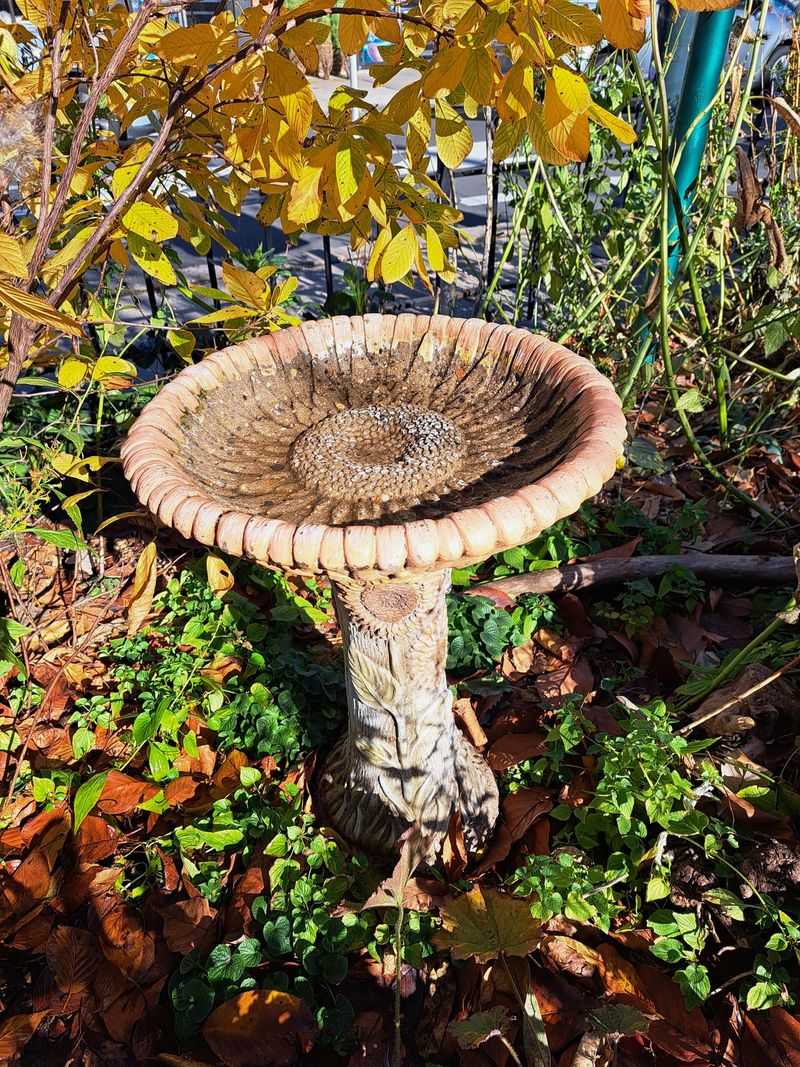
A concrete birdbath with weathered cracks looks charming and well-established. Those same cracks are functioning as hidden water traps after every monsoon storm.
When rain settles into cracks and crevices, it creates small pools that cannot be drained by simply tipping the basin.
Mosquitoes do not need significant space. A crack as shallow as a quarter inch holding water for a few days provides enough to support larvae.
Concrete birdbaths are especially prone to cracking because the material responds to Arizona’s extreme temperature swings.
Scorching summer days followed by cool winter nights cause expansion and contraction that creates new cracks over time.
Inspecting the basin closely after every significant rain event catches the problem early. Check for pooled water in cracks, along the rim, and around the base of the pedestal. A turkey baster or small syringe removes water from narrow cracks that a towel cannot reach.
Sealing cracks with a waterproof, non-toxic concrete sealant rated for outdoor water features is the most lasting fix.
Products labeled safe for fish ponds work well and are safe for wildlife contact. Resealing every one to two years keeps the surface smooth and water-tight.
For birdbaths with extensive cracking throughout, replacing with a smooth resin or glazed ceramic basin eliminates the issue and provides a surface that is considerably easier to clean.
A rustic birdbath is charming. A rustic birdbath full of mosquito larvae in every crack is considerably less so.
8. Not Refreshing Stones That Trap Puddles On Hot Days
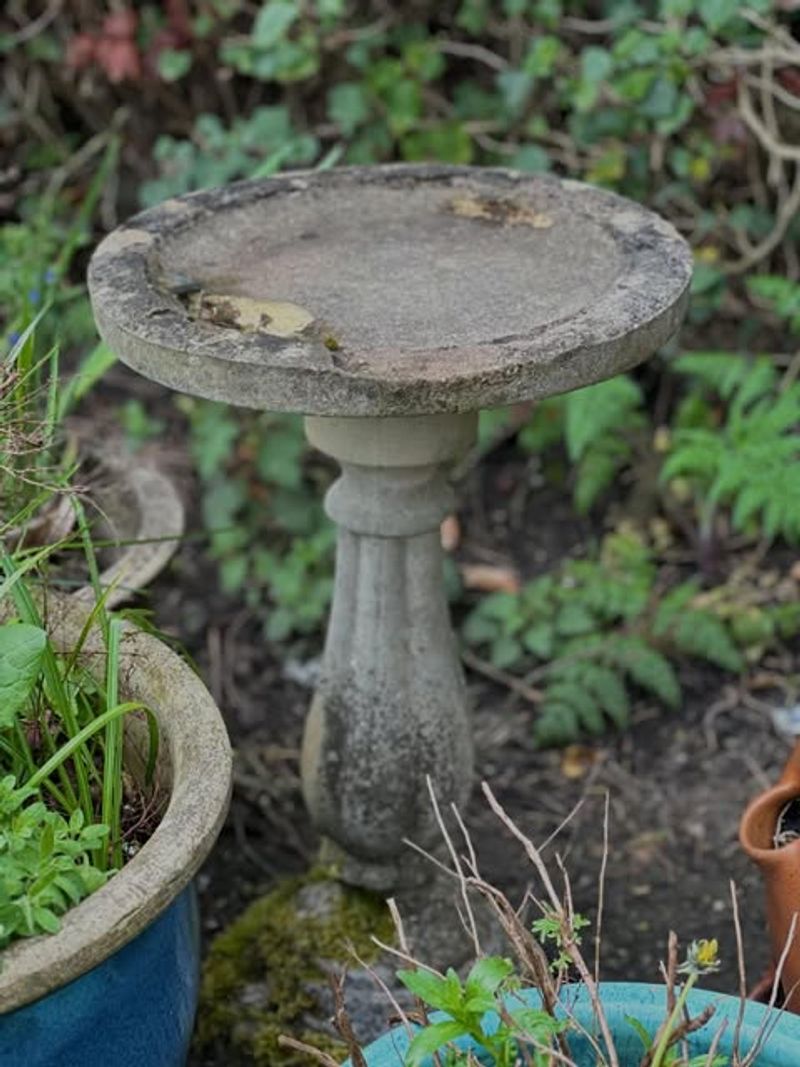
Stones inside a birdbath give small birds a comfortable, shallower area to stand. They also create a hidden network of gaps and pockets that trap standing water long after the basin appears empty.
On a hot Arizona day, those pockets stay moist and warm, which provides exactly the microenvironment mosquito larvae need.
When stones are not removed and rinsed regularly, algae and organic debris accumulate in the spaces between them. That buildup creates a nutrient-rich layer that supports faster larval development.
Stones that look clean on top may have a layer of biofilm underneath that is quietly feeding a mosquito population nobody can see from above.
Removing all stones during weekly cleaning and scrubbing both the stones and the basin floor underneath them addresses the problem directly.
Let the stones dry completely in direct sun before replacing them. Sun exposure helps reduce remaining organic material on the surfaces.
Using fewer, larger stones rather than many small ones reduces the number of water-trapping gaps in the basin. The fewer gaps available, the less hidden moisture accumulates between cleanings.
Some birders skip stones entirely and use a single flat rock as a perch or simply choose a basin with a shallower depth appropriate for small birds. Fewer objects in the basin mean fewer places for standing water to hide.
A birdbath should be a clean water source, not an obstacle course of tiny hidden puddles.
Simplifying the setup usually means cleaning it properly, which means fewer mosquitoes and happier birds. That trade seems worth making.