This Is When And How To Snip Garden Phlox In Ohio To Prevent Mildew
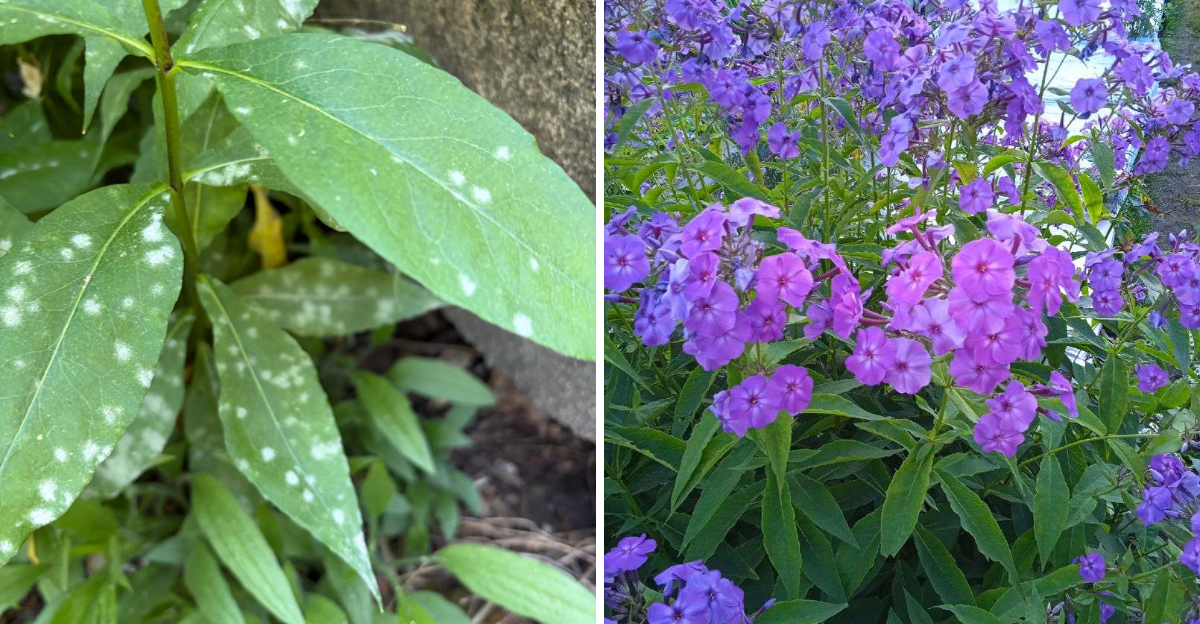
Garden phlox makes an Ohio summer border feel lush, fragrant, and full of life.
Then powdery mildew shows up and spoils the mood.
The white, dusty film usually starts quietly, often on lower leaves or crowded interior stems. By late summer, a plant that looked beautiful in July can look tired, chalky, and thin.
It is frustrating because phlox blooms right when Ohio gardens need color most, from midsummer into early fall.
Snipping helps, but it has to be understood correctly.
Removing faded flower clusters keeps the plant tidy, reduces seed formation, and may encourage smaller side blooms.
Cutting out the worst mildew-marked growth can also lower disease pressure. But pruning alone does not prevent mildew.
Garden phlox needs a broader routine: dry-condition snipping, clean tools, open spacing, ground-level watering, resistant cultivars, and a strong fall cleanup.
The timing matters. The cut location matters. The condition of the foliage matters too.
Snip too late, too wet, or too hard, and the plant can be stressed instead of helped. Snip with the right rhythm, and phlox has a better chance to stay attractive, airy, and healthy through Ohio’s humid late summer.
1. Snip Faded Clusters From July Through September
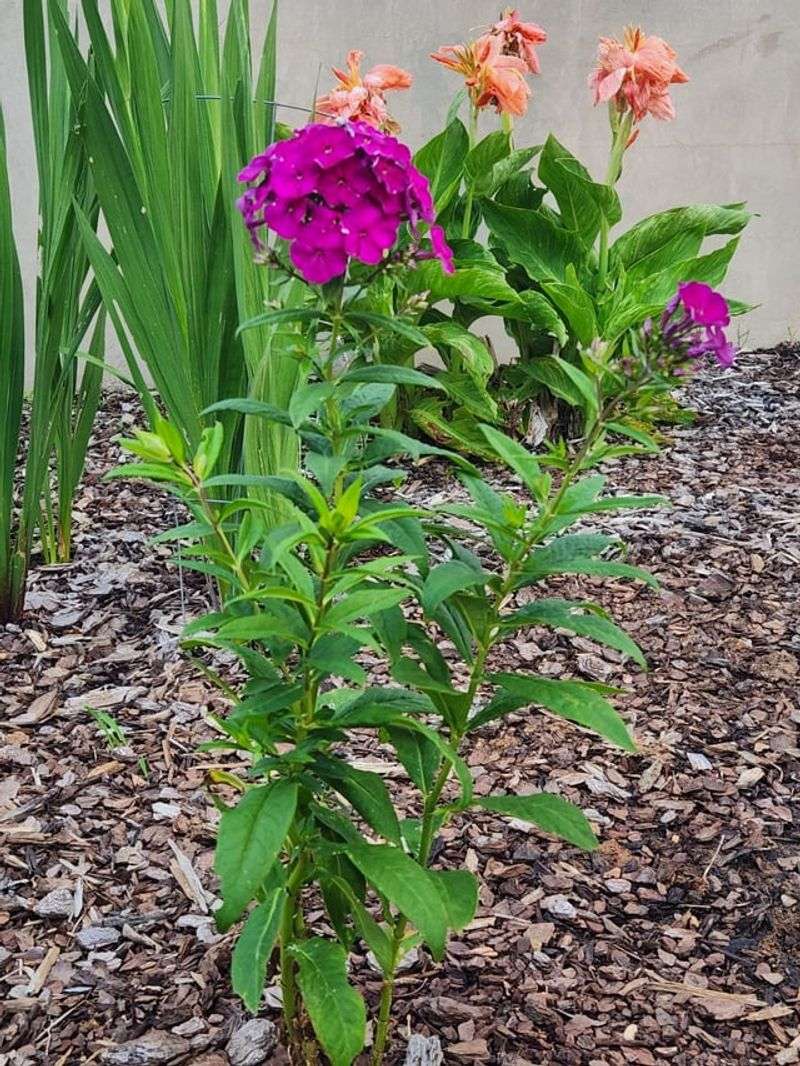
Garden phlox usually asks for attention once the first big bloom wave starts to fade.
In many Ohio gardens, that means July through September, depending on the cultivar, county, and weather pattern.
Northern Ohio gardens may see peak bloom a little later than southern Ohio gardens. A cool, rainy July can slow the show. A hot, dry stretch can make flower clusters fade faster than expected.
The plant does not follow a perfect calendar, so the flowers should set the schedule.
Each phlox bloom head is made of many small florets. The best time to snip is when roughly two-thirds of the florets in a cluster have faded, turned papery, or dropped.
At that stage, the flower head is no longer carrying the display well, but the plant has not put too much energy into seed formation yet.
Waiting until every floret is gone means the plant has already shifted more energy toward seed. Removing the cluster earlier can redirect some energy toward roots, leaves, and possible side shoots.
This does not cure powdery mildew by itself. It simply keeps the plant cleaner and reduces one unnecessary demand during a stressful part of summer.
Check every few days during peak bloom. Do not wait for the entire planting to look tired before starting. A steady habit of removing fading clusters keeps the border fresher and prevents one big, stressful cleanup later.
Some cultivars hold flowers longer than others. Older types may fade unevenly, while newer selections may stay showy for more time. Treat each plant as its own guide.
The right window is not one exact date.
It is the stretch from midsummer through early fall when clusters fade, side buds appear, and phlox benefits from thoughtful, timely snips.
2. Choose A Dry Morning After Dew Lifts

Ohio summer mornings often begin damp.
Your Ohio Garden Changes Every Week. Your Plan Should Too.
Gardening in Ohio changes quickly throughout the season. Every Friday you’ll receive a simple weekly plan showing exactly what to plant, prune, fertilize, harvest, and protect so you never miss the right timing.
Dew sits on the grass, leaves feel slick, and the inside of a phlox clump may stay humid long after the sun rises.
That moisture matters because working through wet foliage can move fungal material around the plant and from one plant to the next.
The safest time to snip is a dry morning after the dew has lifted.
Midmorning often works well. The air is usually cooler than afternoon, but leaves have had enough time to dry.
Dry stems are easier to handle, cleaner cuts dry more quickly, and your hands, sleeves, and tools are less likely to carry moisture from leaf to leaf.
Avoid pruning right after rain or an afternoon thunderstorm. Ohio summer storms can leave phlox foliage wet for hours, especially in crowded beds. If the leaves are still damp, wait. A delayed cut is better than a rushed cut through wet growth.
This habit is especially helpful for powdery mildew management because humidity and still air already work against phlox. You do not want the pruning session to add another disease-friendly condition.
Dry-condition snipping also helps you see the plant more clearly. Mildew patches, yellowing leaves, and fading flower clusters are easier to judge when foliage is not covered with dew.
You can choose what to remove instead of cutting blindly through a wet clump.
If several damp days line up, look for the driest window available. Even a couple of hours of drying time can help.
The rule is simple: let the plant dry before you reach in.
Timing the work for a dry morning keeps the cut cleaner, the plant calmer, and the mildew risk lower.
3. Cut Back To Healthy Leaves
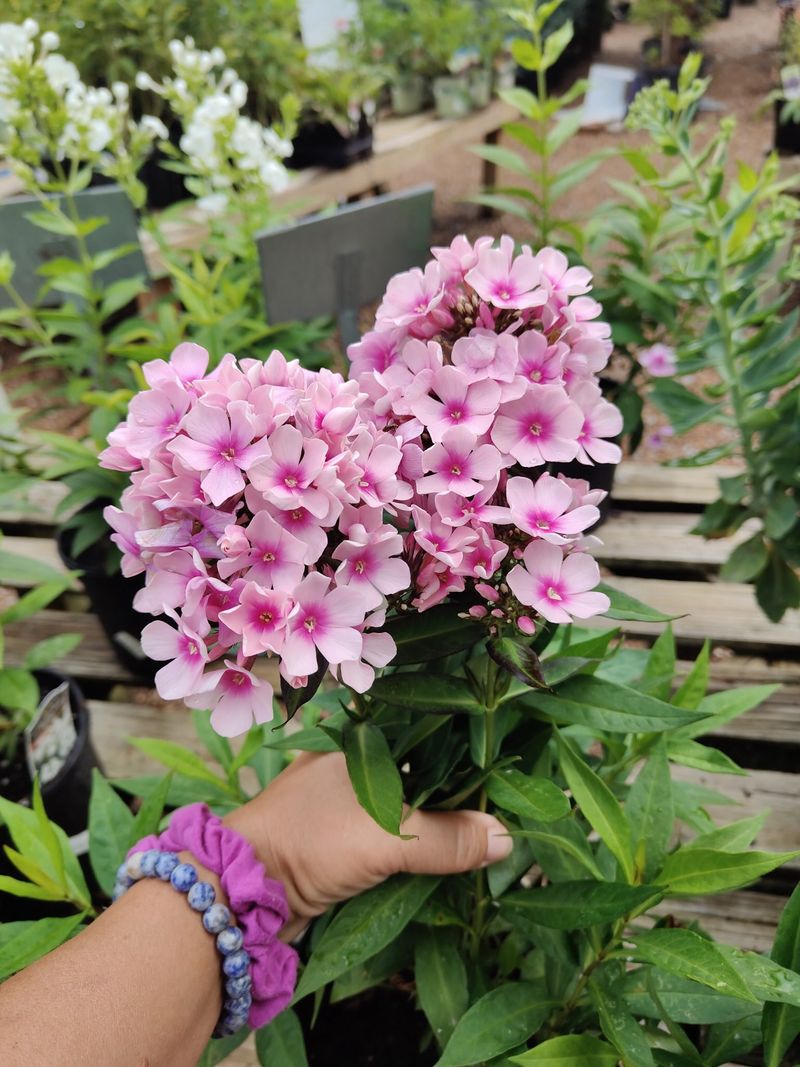
Where you cut matters as much as when you cut.
A faded flower cluster should not be snapped off randomly. Follow the flower stem downward until you reach the next healthy pair of leaves or a visible set of side buds. Make the cut just above that point, leaving only a short stub.
That leaf node is the plant’s recovery point.
A cut made too high leaves a bare stem that can dry out and look messy. A cut made too low removes extra leaves the plant still needs. The goal is to remove the faded flower head while preserving as much healthy green tissue as possible.
Use sharp bypass pruners or clean floral snips. Bypass blades make a cleaner slice through soft phlox stems than tools that crush the tissue. Ragged cuts take longer to seal and can become weak points during humid weather.
Do not cut the whole plant back during bloom season just because some leaves show mildew. Phlox leaves are still producing energy for the crown and roots.
Removing too much foliage in midsummer weakens the plant and may reduce its ability to push side blooms or store energy for next year.
If side buds are already visible below the spent cluster, treat them carefully. Those buds may develop into smaller secondary flower heads later in the season.
Cutting just above them gives the plant a chance to extend the display without forcing unnecessary stress.
Remove only what has finished blooming or what is clearly diseased beyond usefulness. Leave healthy leaves in place.
A good cut should look intentional, short, and tidy.
The plant should still have enough foliage to feed itself, enough airflow to dry, and enough buds to keep the season going.
4. Thin Crowded Stems For Better Airflow
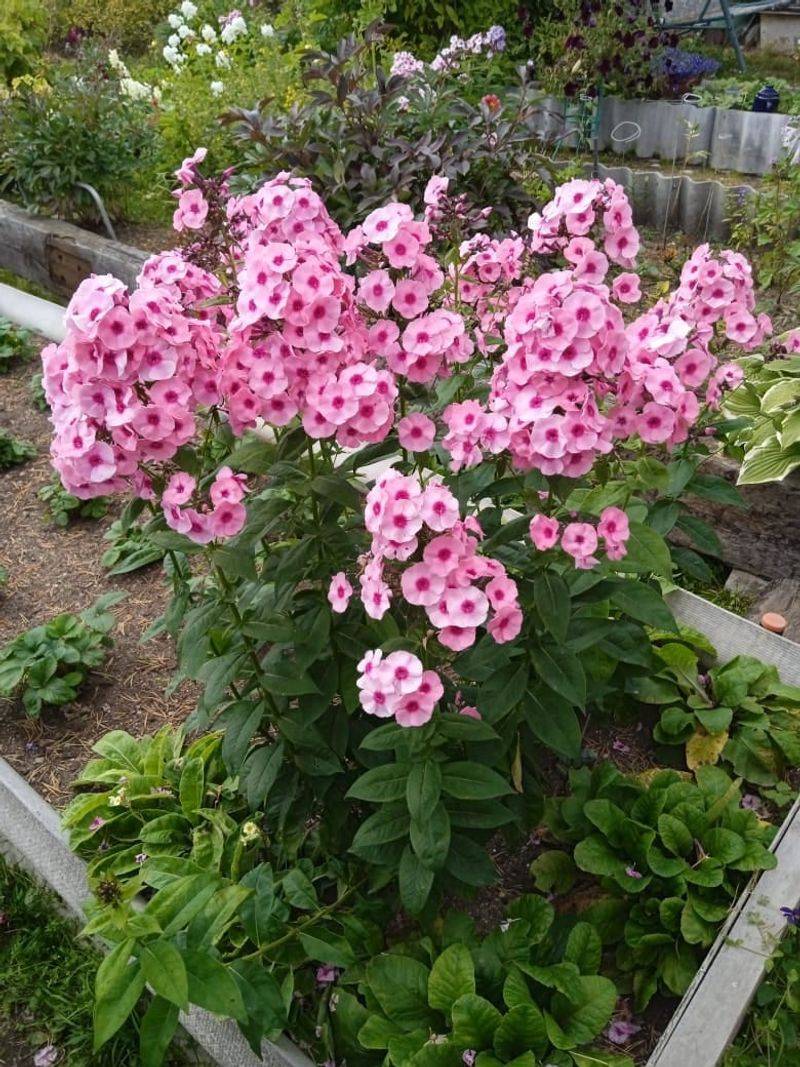
Powdery mildew loves crowded phlox.
When stems grow too tightly together, air stops moving through the center of the clump. Moisture lingers, lower leaves stay shaded, and humid pockets form right where disease pressure often begins.
Ohio’s warm days and humid nights can make that problem worse by midsummer.
The best time to prevent crowding is early, before bloom.
When stems are still young and shorter, usually in spring or early summer, thin the clump before it becomes a leafy wall. Choose the strongest, most upright stems and remove weaker, crowded, inward-facing shoots at the base.
A mature clump often performs better with fewer strong stems than with too many thin ones competing for the same space.
Leaving around five to seven strong stems on an established clump can improve airflow and make the plant easier to manage later.
This kind of thinning is different from heavy midsummer cutting. Early thinning shapes the plant before mildew pressure peaks.
It allows each stem more room, improves drying after rain, and reduces the dense interior growth that often turns chalky first.
If you missed the early window and the plant is badly crowded in July, be conservative. Remove only a few stems that are clearly weak, badly mildewed, or packed into the center. Do not strip the plant open all at once during bloom.
Long-term, division helps even more. Phlox clumps that have grown congested for several years often need to be lifted and divided in early spring or early fall.
Replant divisions with enough spacing, usually about 18 to 24 inches apart, so air can move between plants.
Mildew prevention starts before the first white patch appears. Open the clump early, and every later snip works better.
5. Remove Mildew Marked Growth Promptly
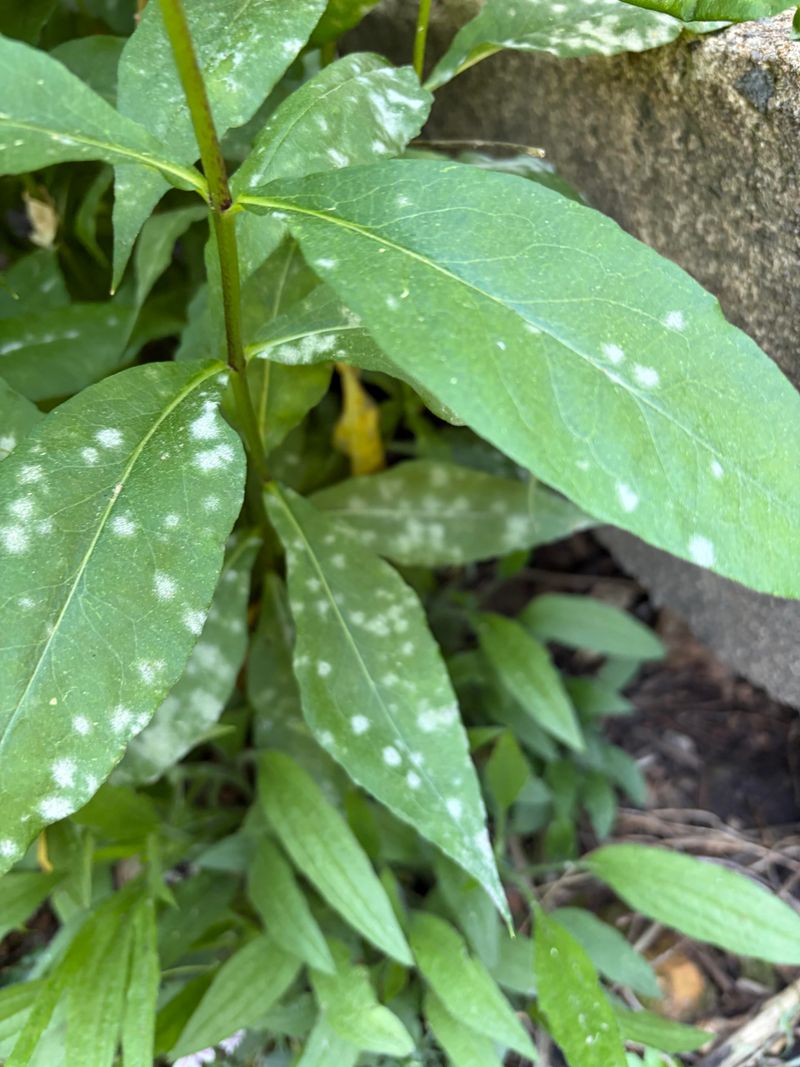
The first white patches on phlox should not be ignored.
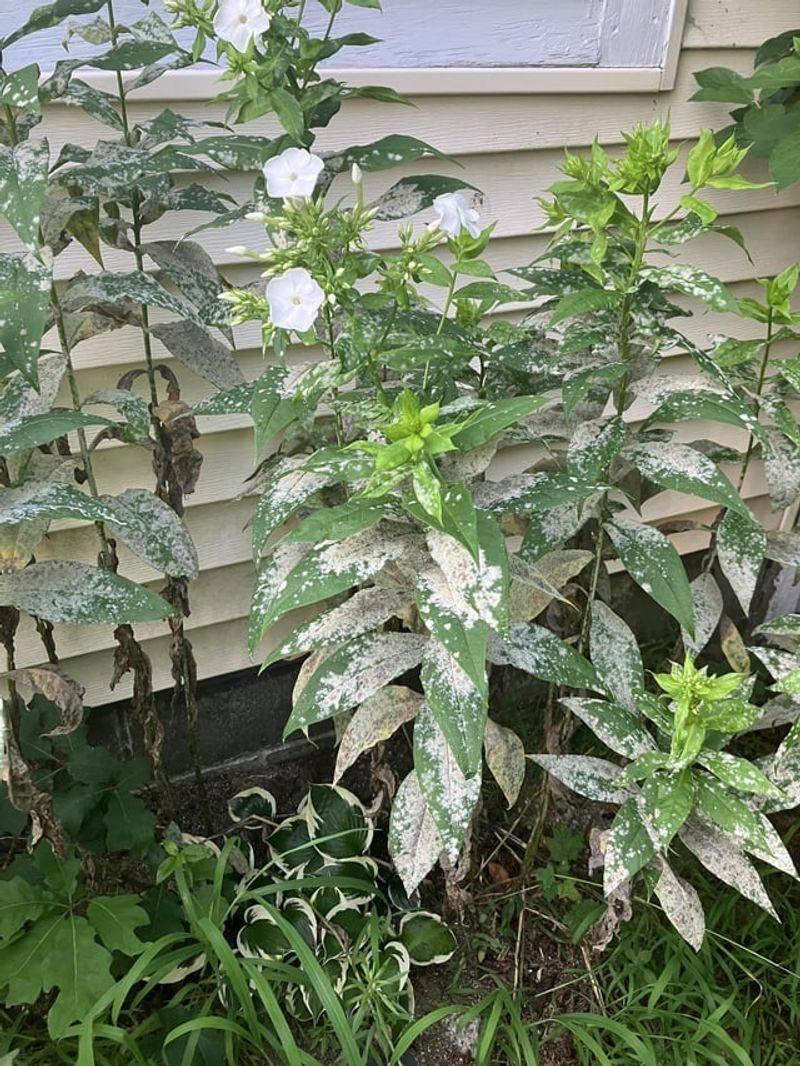
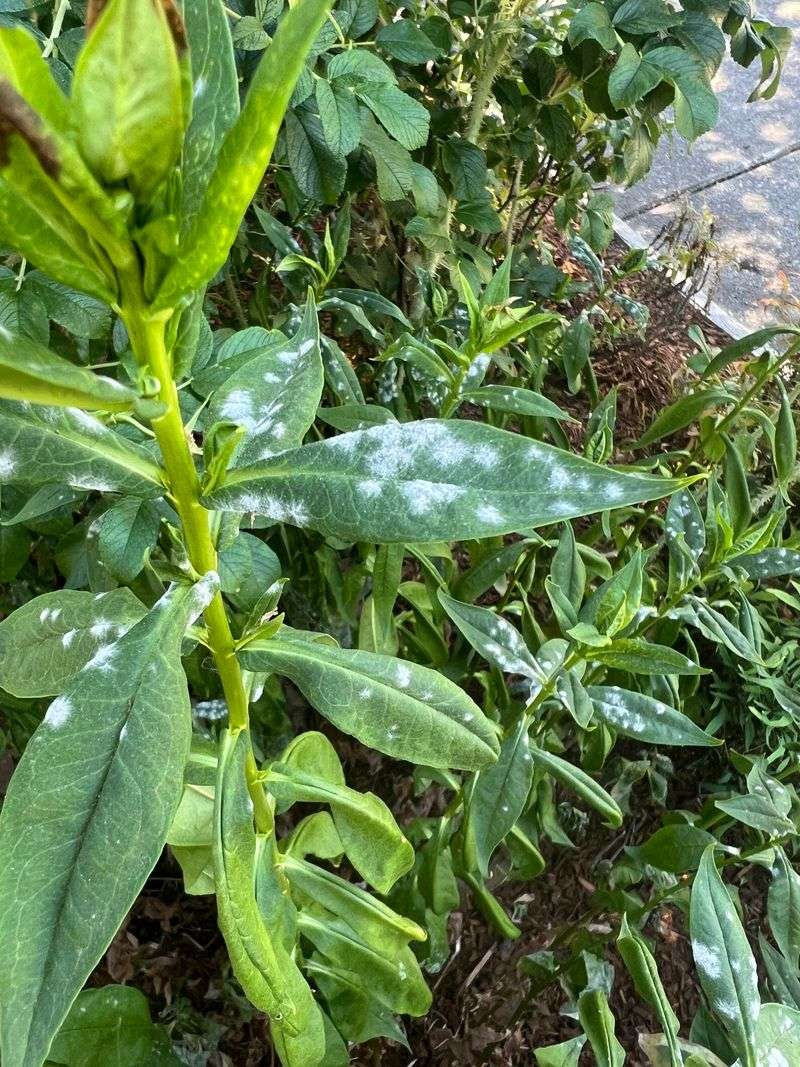
Powdery mildew often appears as a dusty white or gray coating on leaves, usually starting on lower foliage, shaded areas, or crowded interior stems. Leaves may also yellow, curl, or look distorted as the problem builds.
Early removal helps most when mildew is still limited.
Snip out the worst affected leaves or stems as soon as you notice them. Place that material directly into a bag instead of dropping it onto the soil.
The goal is to reduce the amount of active infected tissue sitting in the bed and spreading spores to nearby foliage.
Do not overdo it. A phlox plant still needs leaves. If mildew is only on a few lower leaves, remove those. If one interior stem is heavily coated while the rest of the plant is clean, cut that stem at the base.
But if the entire plant is covered, stripping it bare will not solve the problem and may stress it more.
At that point, management shifts toward bigger improvements: better spacing, more sun, ground-level watering, resistant cultivars, and end-of-season sanitation.
Prompt removal is still useful because it lowers pressure early. It also gives you a better view into the plant, making future scouting easier.
Handle affected foliage gently. Shaking mildewed stems through the bed can spread more spores. Use steady cuts, bag the material right away, and clean up fallen leaves around the crown.
Mildew-marked growth is not a reason to panic, but it is a reason to act.
The earlier you remove the worst pieces, the less the plant has to carry through the rest of Ohio’s humid summer.
6. Disinfect Pruners Between Affected Plants
Clean tools are a small habit with a big role.
Powdery mildew spreads mostly through airborne spores, so pruners are not the only concern. Still, dirty blades can carry plant residue, moisture, and disease material from one clump to another.
Cleaning between affected plants is an easy way to remove one more source of trouble.
A simple alcohol wipe works well for most home gardeners. Keep a cloth dampened with 70 percent isopropyl alcohol nearby, or use a small spray bottle and wipe the blades clean between plants.
Give the alcohol a few seconds of contact before cutting the next clump. This is especially important when moving from a visibly mildewed plant to one that still looks clean.
Bleach solutions can disinfect too, but they are harder on metal. If bleach is used, rinse and dry the blades afterward and apply a light coat of oil to reduce rust.
Do not make tool cleaning so complicated that you stop doing it. The best routine is the one you can repeat quickly in the garden.
Sharpness matters too. A clean but dull blade can crush stems and leave ragged wounds. Phlox stems should be cut with one smooth motion. If you have to squeeze hard or the stem tears, sharpen the tool before continuing.
You do not need to disinfect after every cut on the same healthy plant. Focus on cleaning between plants, after cutting diseased material, and before moving into a cleaner part of the bed.
Tool sanitation will not replace spacing, resistant varieties, or proper watering. It supports them.
Clean pruners help each snip do its job without adding another risk.
7. Bag Diseased Clippings Instead Of Composting
What happens after the snip matters.
Mildew-marked leaves and stems should not be left on the ground around the plant. They also should not be tossed casually into a home compost pile.
Most backyard compost piles do not stay hot enough, long enough, to reliably break down diseased ornamental debris.
Bagging is the safer choice.
As you remove mildewed leaves, faded clusters from affected plants, or diseased stems, place them straight into a bag.
Do not pile them beside the bed and come back later. Wind, rain, pets, or your own shoes can move that material around before cleanup is finished.
Check local rules for disposal. Some Ohio communities accept diseased plant material through municipal yard-waste programs that use high-temperature composting.
Others prefer bagged trash. If you are unsure, choose the more cautious route and keep diseased material out of your garden compost.
This is especially important at the base of phlox clumps. Fallen leaves collect near the crown and can sit there through damp weather. That debris can contribute to disease pressure the next season if it is left in place.
During summer, clean as you go. During fall, make a more thorough pass.
Healthy phlox trimmings that show no disease are less concerning, but once powdery mildew has been active in the planting, caution is wise.
Mixing healthy and diseased clippings in the same pile makes it harder to manage the risk.
A bag may not feel like a gardening tool, but for mildew control, it is one of the simplest ones.
Removing infected material from the bed helps reduce the amount of disease waiting to cycle back through the planting.
8. Finish Cleanup After The First Hard Frost

The last major phlox cleanup belongs after the growing season ends.
In Ohio, the first hard frost is the cue. Once temperatures drop low enough to finish the top growth, usually around 28 degrees Fahrenheit or below, garden phlox no longer needs its stems and leaves for active summer growth.
That is the time to cut the plant back and remove old material from the bed.
Cut stems down to a few inches above the ground. Gather the stems, fallen leaves, and any mildewed debris around the crown. Bag diseased material rather than composting it at home.
This final cleanup matters because powdery mildew can carry over on infected plant debris. Leaving old stems and leaves through a wet Ohio winter can give disease material a place to remain close to next spring’s new growth.
If mildew was severe, be thorough. Do not leave the worst debris because the bed looks more natural. In a heavily affected planting, sanitation is more important than winter texture.
If mildew was very light and the stems are otherwise healthy, leaving a few standing briefly for garden structure or wildlife may be reasonable. But remove infected material before it breaks down into the crown area.
Fall cleanup is also the moment to take notes. Mark plants that were badly affected. Plan to divide crowded clumps in spring or fall.
Consider replacing weak performers with mildew-resistant cultivars. Improve spacing before the next season begins.
New phlox should be planted in sun with enough room for airflow, not pressed against a wall, fence, or dense shrub.
The final snip is not just cleanup.
It sets the starting conditions for next year’s phlox, making every summer cut more effective before mildew has a chance to take over again.