Florida Patio Plants That Can Take Full Sun And Concrete Heat
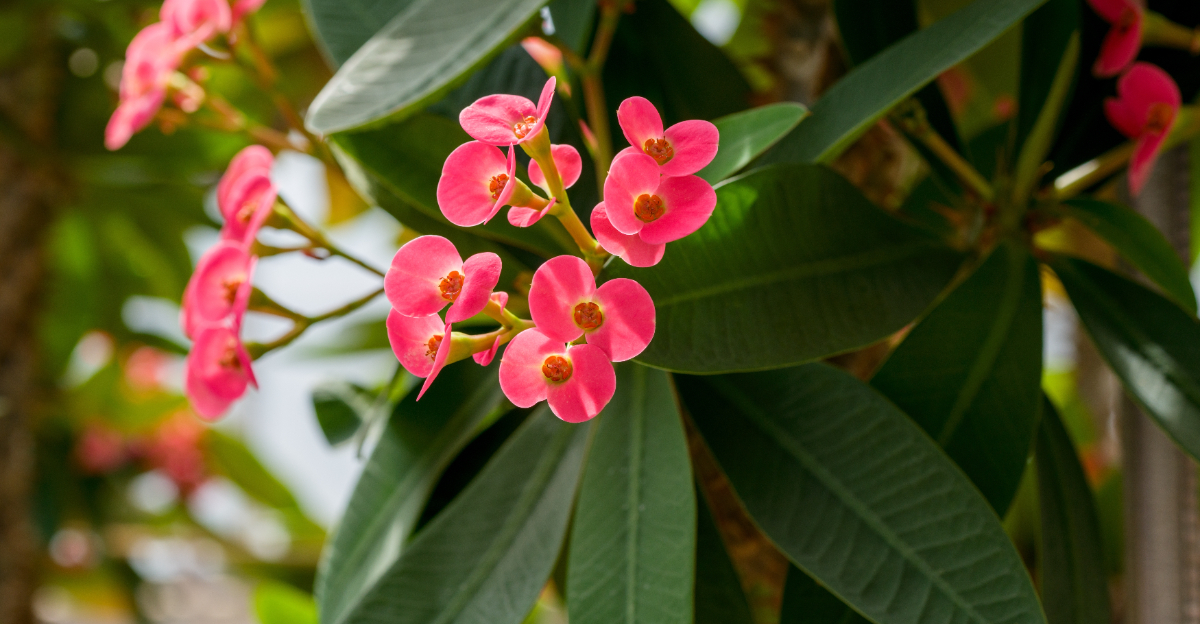
A Florida patio in August is not a plant-friendly environment. Concrete concentrates heat, containers dry out fast, and full sun at that intensity crosses a threshold that sends most plants into survival mode before noon.
Most container plants placed there are simply in the wrong spot. A short list of plants treats that environment differently.
Not tolerance. Genuine preference.
They root faster in hot containers, hold color through conditions that bleach everything else out, and look better in August than they did in April. Full sun and concrete heat together are not a problem to work around.
For the right plant, they are the whole point. Your patio deserves plants that show up for August instead of just enduring it.
1. Desert Rose Turns Baked Patios Into A Blooming Showcase
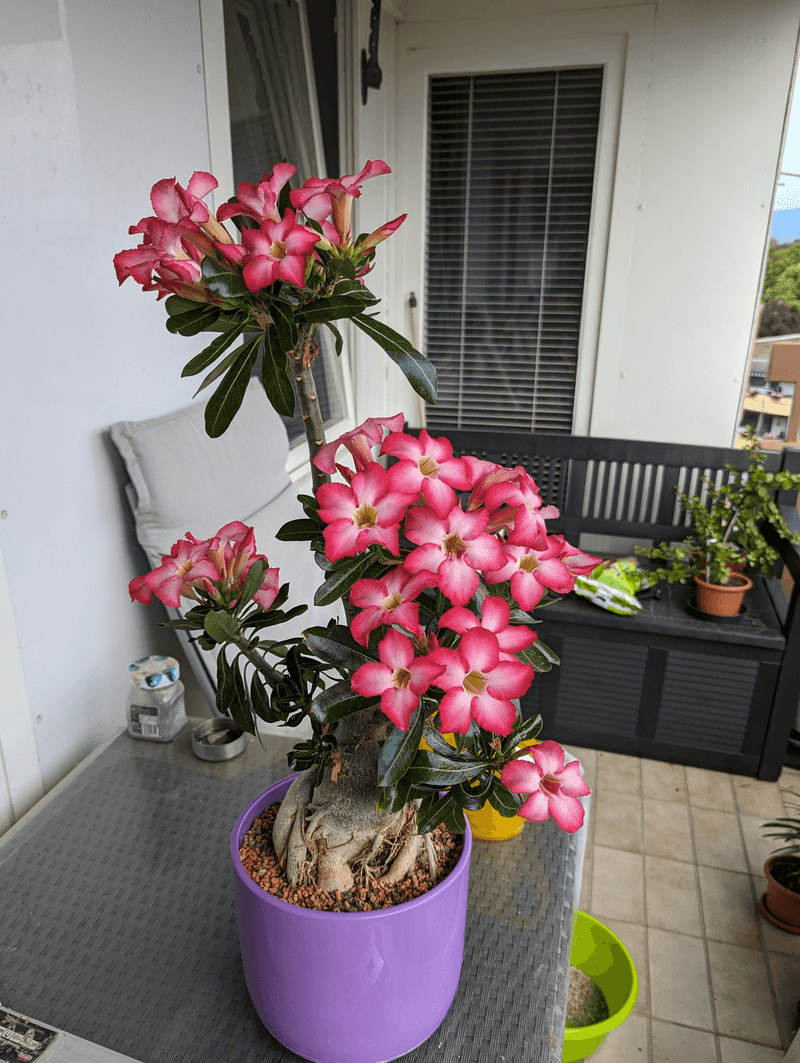
Few sights on a hot patio stop people in their tracks quite like a desert rose in full summer bloom. Known botanically as Adenium obesum, this striking plant grows a swollen, water-storing base called a caudex.
The caudex gives it a sculptural look even when the plant is not flowering. When it does bloom, trumpet-shaped flowers in shades of red, pink, white, and bicolor appear in generous clusters above glossy leaves.
Adenium needs at least six hours of bright, direct sunlight each day to bloom well. A sunny patio with reflective concrete nearby can actually suit it nicely, as long as the container and drainage are right.
Use a fast-draining mix designed for cacti or succulents, and choose a pot with generous drainage holes. Terracotta pots work well because they breathe and help prevent excess moisture from lingering around the roots.
Keeping the pot constantly wet is one of the fastest ways to stress this plant. During Florida rainy stretches, you may need to move containers under an overhang to prevent waterlogging.
Adenium is cold-sensitive and should be brought indoors when temperatures drop near freezing. One important safety note: the sap of this plant can irritate skin and eyes, so wear gloves when pruning or repotting and keep it away from curious pets and children.
2. Pentas Keep Their Color When Concrete Throws Heat Back
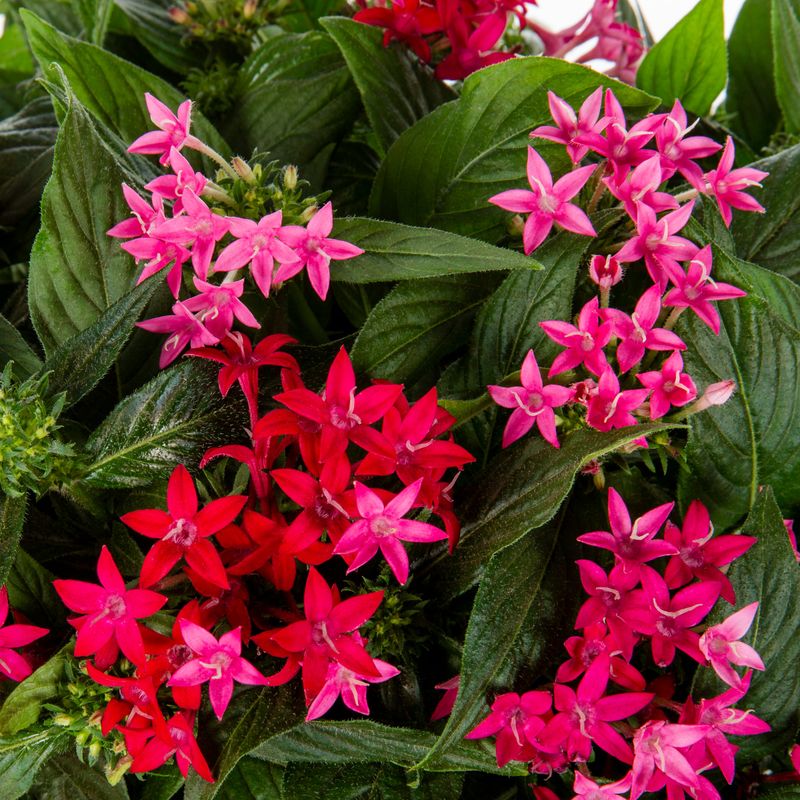
Clusters of tiny star-shaped flowers make pentas one of the most cheerful options for a sun-drenched container garden. Pentas lanceolata blooms reliably through Florida’s long, hot summers.
It produces rounded heads of red, pink, lavender, or white flowers that seem unfazed by afternoon heat. The plant keeps performing even when nearby pavers are radiating stored warmth back into the air.
Pentas grows well in full sun and adapts to container life without much fuss. During the first few weeks after planting, keep the soil consistently moist to help roots settle in.
Once established, water as needed based on rainfall and how quickly your specific container dries out. A larger pot holds moisture more evenly and gives roots room to spread, which matters because pentas can reach two feet tall or more at maturity.
Unlike some drought-adapted plants, pentas prefers more regular moisture than a cactus-style approach. Letting it dry out completely and repeatedly will stress the plant and reduce flower output.
Your Florida Garden Changes Every Week. Your Plan Should Too.
Gardening in Florida changes quickly throughout the season. Every Friday you’ll receive a simple weekly plan showing exactly what to plant, prune, fertilize, harvest, and protect so you never miss the right timing.
Make sure your container has drainage holes so water moves through freely rather than pooling at the bottom.
Butterflies and hummingbirds are drawn to pentas blooms, so placing the pot where you can watch the activity adds an extra layer of enjoyment to your patio setup.
3. Vinca Stays Bright Through Long Blazing Afternoons
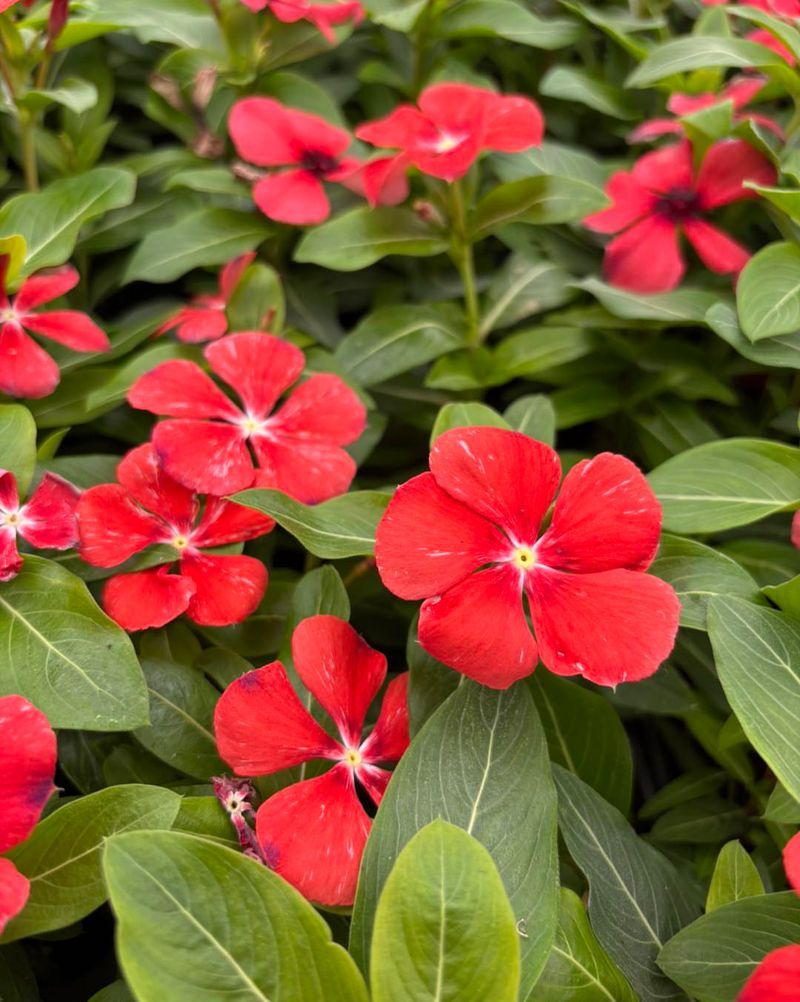
Annual vinca, also called Madagascar periwinkle, has built a reputation as one of the toughest flowering plants you can drop into a Florida sunny patio container.
Its glossy, deep green leaves stay looking sharp even when afternoon temperatures climb and concrete nearby is throwing heat in every direction.
The flowers come in shades of pink, red, white, lavender, and bicolor, and they keep appearing all season long without much trimming.
This plant is not the same as the trailing vinca sometimes used as a ground cover. Annual vinca grows in a compact, upright mound that suits containers and mixed pots well.
It thrives in full sun and actually performs better with good heat exposure than it does in shadier spots. Varieties bred for heat tolerance and disease resistance tend to do especially well in humid conditions, so look for those when shopping at a local nursery.
Fast drainage is critical, especially during the rainy season. A container that stays saturated for long periods can lead to root problems that will set the plant back significantly.
Newly planted vinca still needs regular watering to get established, even though mature plants handle drier stretches reasonably well. Do not assume that because vinca is tough, it can go without water during a dry spell right after planting.
Give it a consistent start and it will reward you all summer.
4. Portulaca Spills Flowers Across The Hottest Container Edges
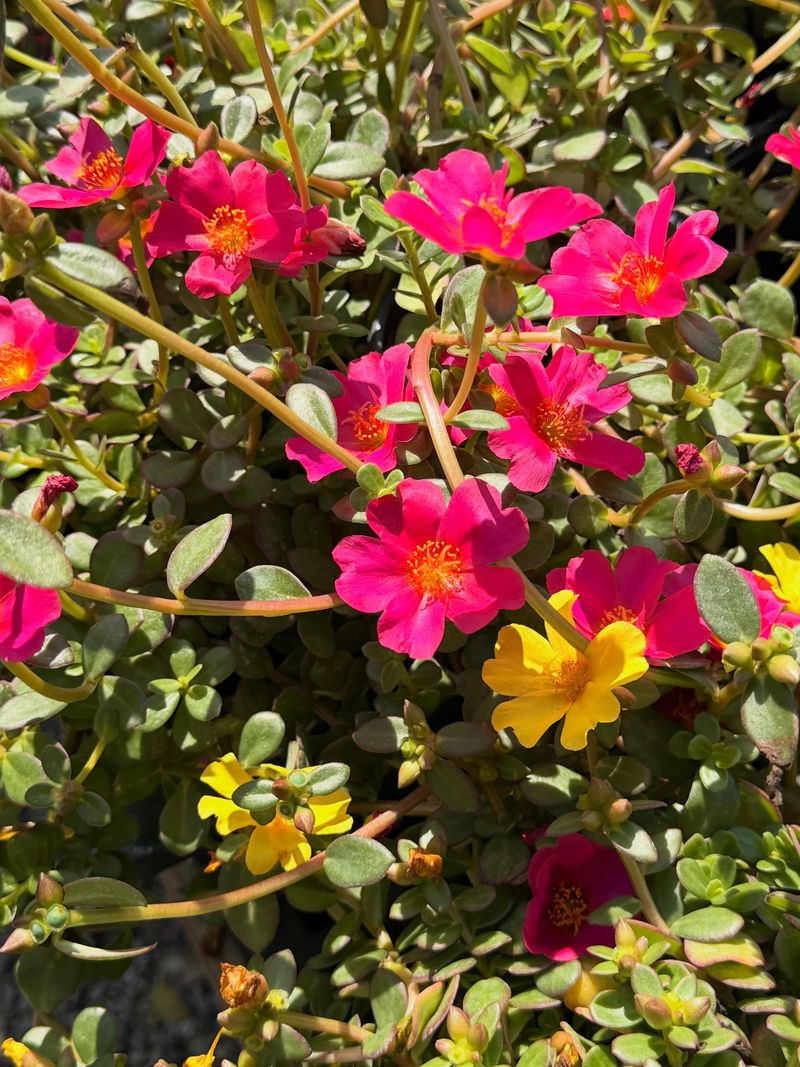
Portulaca, commonly called moss rose, is almost made for the kind of punishing heat that builds up along container edges and raised planters on a baking patio.
Its low, trailing stems spread outward naturally, making it an excellent choice for the edges of mixed containers or hanging pots where it can spill freely.
The succulent foliage stores a bit of moisture, which helps it handle short dry periods better than many other flowering annuals.
Strong sunlight is where portulaca truly earns its place. It blooms most freely in direct sun and tends to look sparse and unhappy in shaded or partly shaded conditions.
Drainage matters a great deal here. A soggy container is actually a bigger threat to portulaca than a brief dry spell, so always use a well-draining mix and a pot with clear drainage holes.
One quirky trait worth knowing: portulaca flowers often close during overcast weather or later in the afternoon. If you notice the blooms seem to disappear on a cloudy day, that is completely normal and not a sign of trouble.
Overwatering is a more common mistake with this plant than underwatering. Water when the top of the soil feels dry, and scale back during rainy periods.
Portulaca is a warm-season annual, so plan to replant each season for the best display.
5. Crown Of Thorns Shrugs Off Heat With Very Little Water
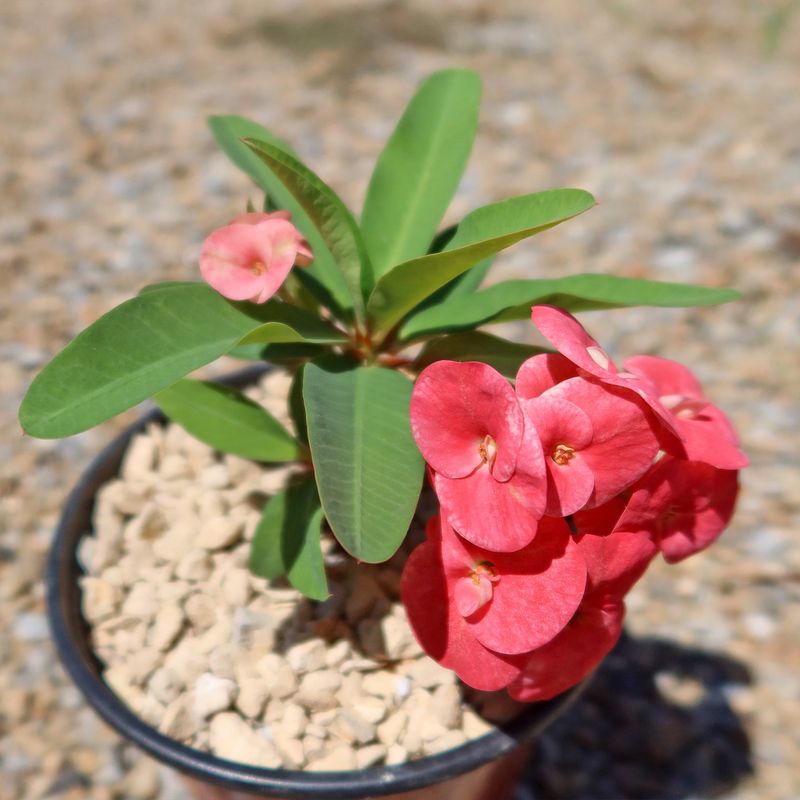
Sitting quietly on a sun-baked patio, a crown of thorns plant looks almost too easy. Euphorbia milii produces cheerful clusters of colorful bracts in shades of red, pink, yellow, and white.
They appear above succulent stems covered in sharp thorns. The overall effect is bold and tropical, and the plant keeps producing those bracts for much of the year with very modest care once it is established.
Full sun is where this plant performs best. It handles heat well and tolerates dry conditions that would stress many other container plants.
A fast-draining mix and a pot with solid drainage holes are non-negotiable. Allowing water to pool around the roots, especially during Florida’s rainy season, can cause serious problems.
Containers may need to be moved or elevated during periods of heavy rainfall to prevent waterlogging.
Crown of thorns is cold-sensitive, so bring containers indoors or to a sheltered spot when frost threatens. Near coastal patios, its tolerance for occasional salt spray can be an advantage, though consistent protection from direct saltwater is still a good idea.
Two safety points deserve clear emphasis. The thorns are sharp enough to cause real injury, and the milky sap can irritate the skin, eyes, and mucous membranes.
Keep it away from areas where pets or children regularly brush past pots.
6. Scarlet Salvia Keeps Sending Up Color Beside Sunny Walls
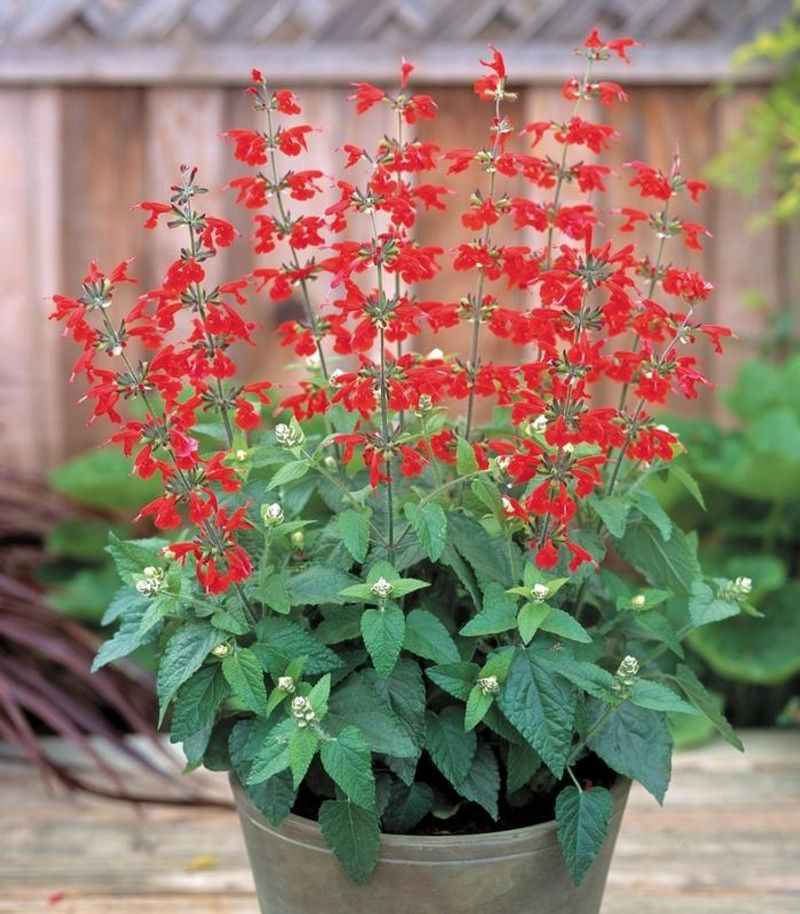
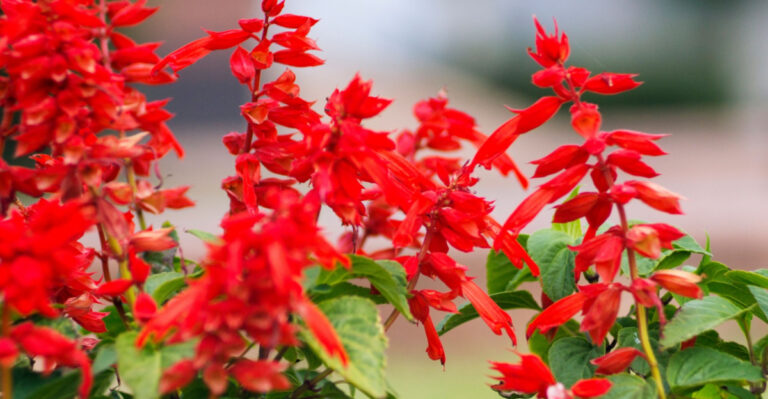
Bright red flower spikes rising above textured foliage make scarlet salvia one of the most eye-catching plants you can grow beside a sunny patio wall. Salvia coccinea is native to the southeastern United States.
That gives it a real advantage during hot, humid summers in Florida that push many ornamental plants to their limits. It blooms reliably through summer heat and continues performing into fall in many parts of the state.
Red is the most common flower color, but pink and white forms are also widely available. The upright spikes work well in tall containers or large mixed pots where vertical interest is useful.
Full sun produces the strongest flowering, and plants grown in too much shade tend to stretch and bloom less freely.
A spot beside a sunny wall can provide good light, but be mindful that reflected heat from pale walls may cause a container to dry out more quickly than usual.
Scarlet salvia grows tall enough that container size matters. A cramped pot limits root development and makes the plant more vulnerable to heat and drought stress.
Light trimming during the growing season encourages fresh growth and new flower spikes. Hummingbirds and butterflies visit the blooms regularly, adding motion and life to the patio.
Keep drainage consistent and water when the soil feels dry an inch below the surface for best results.
7. Bougainvillea Rewards The Hottest Corner With Bigger Color
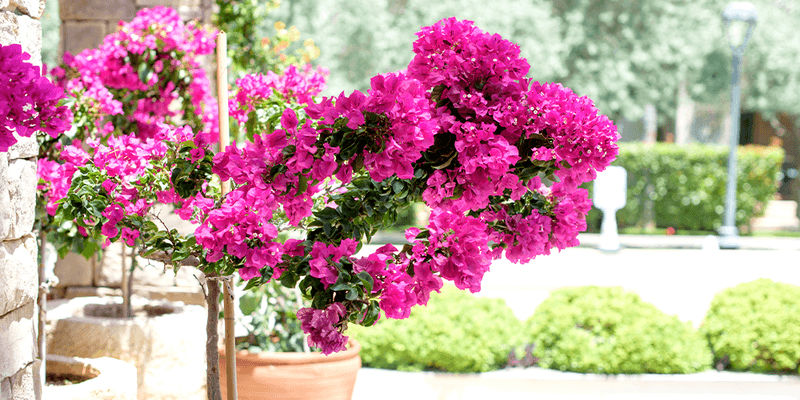
A corner of the Florida patio that bakes all afternoon and seems impossible to plant might be exactly where bougainvillea wants to live. This vigorous vine is famous for its papery bracts, which are the colorful parts most people call flowers.
The true flowers are actually the tiny white or cream tubes tucked inside those bracts. Colors range from electric magenta and deep purple to coral, red, orange, and white.
Bougainvillea genuinely loves full sun and performs best with somewhat dry conditions between waterings once it is established. Overwatering is one of the most common reasons container bougainvillea underperforms.
A well-draining mix and a pot large enough to support the root system are both important. Dwarf varieties suit medium to large containers, while larger varieties need substantial pots or sturdy support structures nearby.
Cold sensitivity varies somewhat by variety and region, so check local guidance for your specific area. Thorns on many varieties are sharp, so placement away from narrow walkways or high-traffic areas makes practical sense.
Handling stems during pruning or training calls for thick gloves. Bougainvillea is not a plant that thrives on extreme neglect, despite its tough reputation.
Regular monitoring of soil moisture, especially during dry stretches, keeps it looking its best. Give it the right conditions and it will put on one of the most dramatic color displays your patio has ever seen.
8. Ornamental Peppers Bring Fiery Color To Sun-Baked Pots
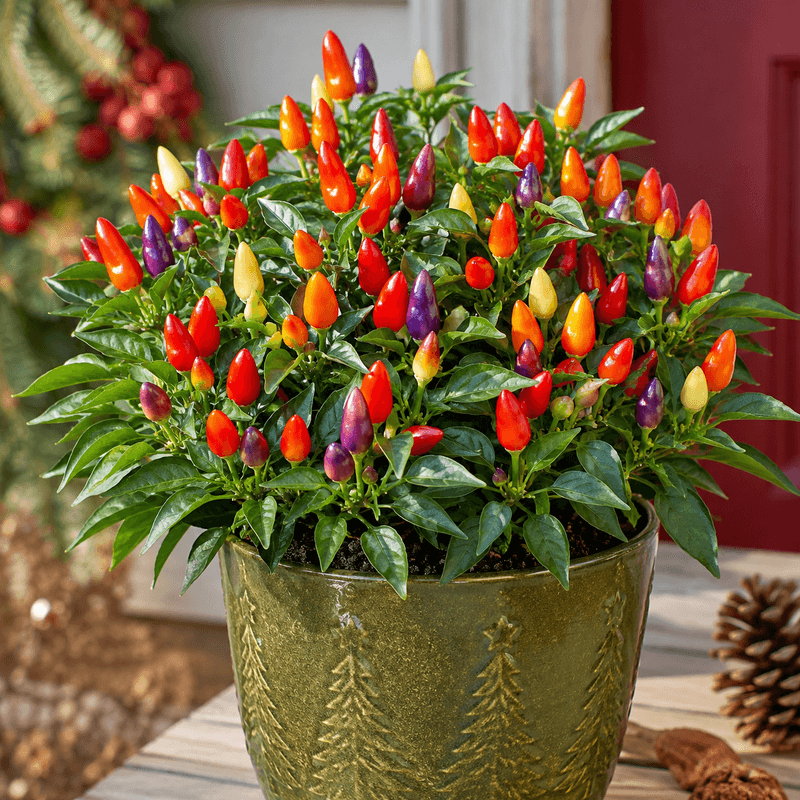
Compact, colorful, and surprisingly showy, ornamental peppers bring a different kind of energy to a sun-drenched patio. Instead of flowers being the main attraction, it is the fruit that steals the show.
Small peppers stand upright or cluster thickly along the stems, shifting through shades of cream, yellow, orange, red, and purple as they mature. A single plant in a container can display several colors at once during peak season.
Their naturally tidy, compact habit makes ornamental peppers well-suited to containers without a lot of extra pruning. Full sun brings out the best color in the fruit and keeps the plant sturdy and well-branched.
Good drainage prevents root stress during rainy stretches, and consistent moisture during the growing season supports steady fruit production. Avoid letting containers sit in standing water, especially during periods of heavy summer rain.
One thing is worth clarifying: some ornamental pepper varieties are technically edible, but many are extremely spicy. Some cultivars sold purely for ornament have not been tested for eating quality.
Do not encourage tasting unless the specific variety is clearly identified and intended for culinary use. Keep them away from small children and pets who might be tempted by the colorful fruit.
Match your container size and watering routine to your patio’s actual sun exposure. A pot in a very hot, exposed spot will dry out faster than one tucked near a wall with afternoon shade.