The Surprising Meaning Behind Seeing A Barn Owl In Your Oregon Neighborhood
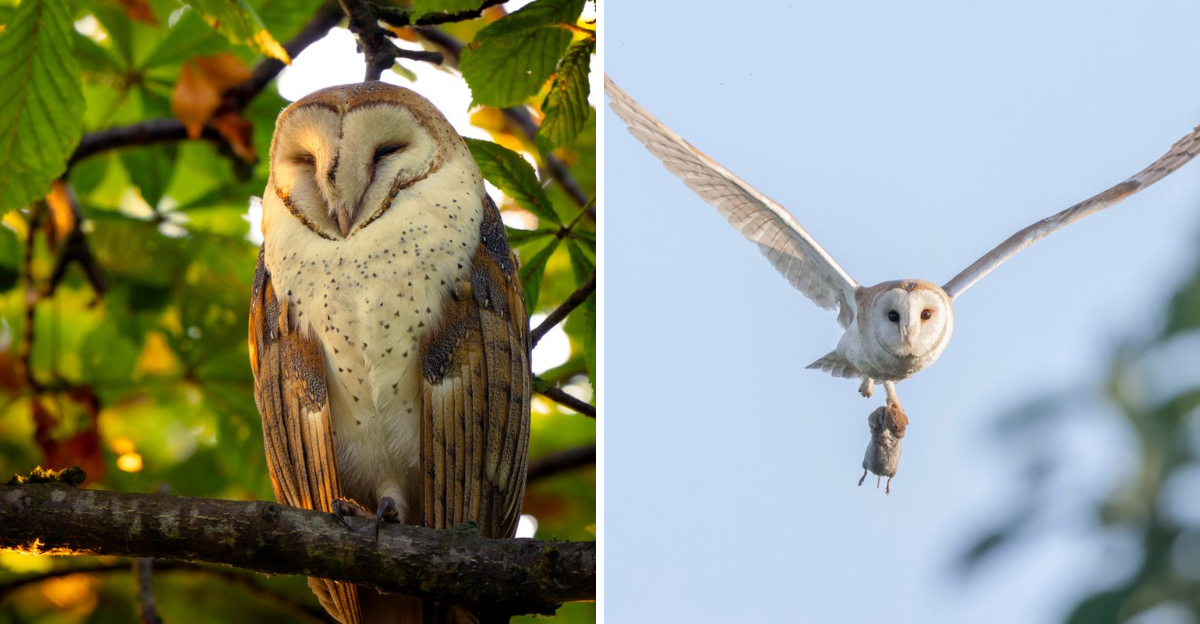
A pale shape crossing an Oregon yard after sunset can turn an ordinary evening into something much more interesting.
Barn owls are easy to recognize once you catch that heart-shaped face and almost ghostly flight. They move quietly, hunt mostly after dark, and often appear for only a few seconds before slipping beyond a fence, field, or roofline.
That brief visit can tell you quite a lot.
A barn owl usually does not choose a neighborhood at random. It is looking for prey, open ground, safe roosts, and enough connected habitat to make hunting worthwhile.
Repeat sightings can reveal even more about how the surrounding landscape is functioning.
So what does one owl overhead really mean?
It may point to healthy prey populations, nearby grassland, usable hunting corridors, or a hidden roost closer than you expect. It can also highlight choices that help or harm local raptors.
One quiet flyover can be a surprisingly detailed report on your neighborhood after dark.
And your own garden may be part of it.
Read The Visit As A Sign Prey Is Nearby
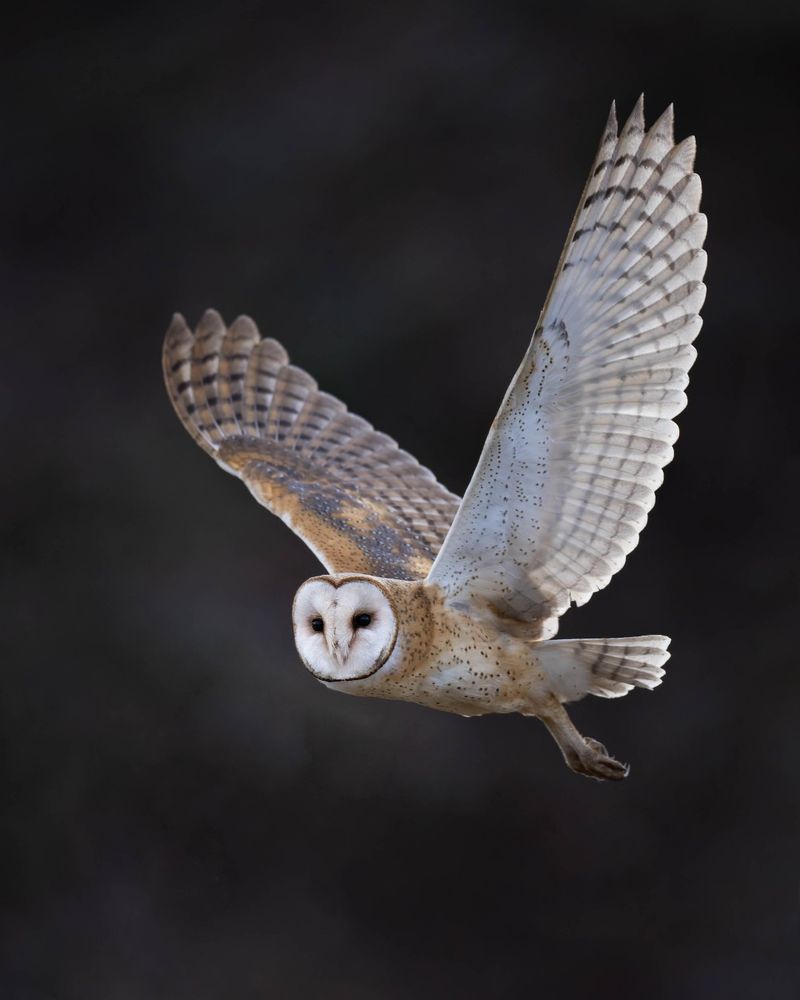
A barn owl gliding low over a yard usually has a practical reason for being there: food.
These owls specialize in hunting small mammals, especially mice, voles, and rats. A single sighting does not mean your property has a major rodent problem, but it does suggest that prey is available somewhere within the bird’s hunting range.
The source may be farther away than your fence.
Tall grass along a drainage ditch, an unmowed field, a vacant lot, a pasture edge, or a community garden can all support small mammals.
Barn owls can cover a surprising amount of ground while hunting, so the prey drawing one overhead may live several properties away.
That makes the sighting useful information rather than a reason to panic.
A neighborhood with enough small mammals to support a barn owl still has an active food web. The owl is functioning as a natural predator inside that system, removing prey night after night without traps or chemicals.
Pay attention to where it flies.
Repeated low passes over the same field or grassy strip can reveal a productive hunting area.
The message from one silent flyover is simple: something edible is moving below. The owl noticed before you did, and it has already volunteered for the night shift.
Even a brief evening pass can reveal that connection between garden edges, nearby grass, and the small mammals living there.
Expect Night Hunts Over Open Ground
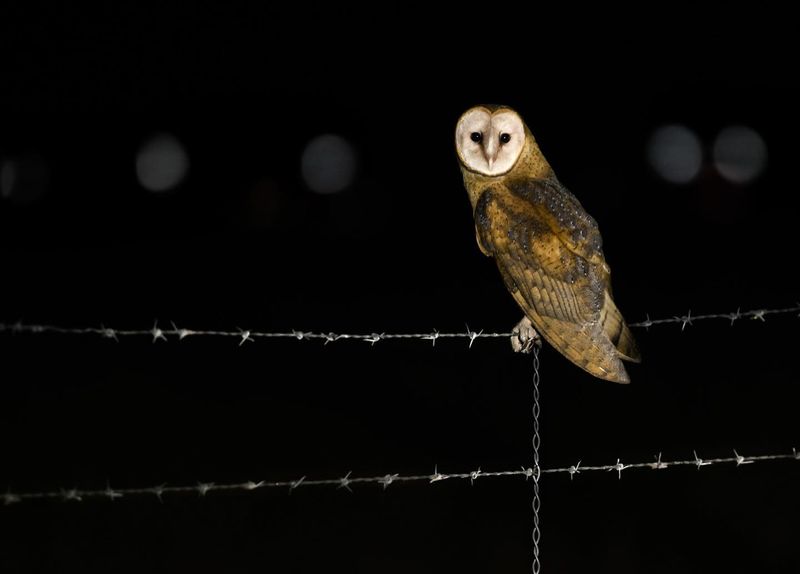
An owl repeatedly crossing a lawn or field after dusk tells you something about the shape of the landscape.
Barn owls hunt especially well over open ground. Lawns, pastures, hay fields, drainage corridors, and other broad grassy areas give them room to fly low while listening for small mammals below.
Their hearing does much of the work.
The heart-shaped facial disc helps direct sound toward the ears, allowing the bird to locate prey in darkness with remarkable precision.
Open spaces make that hunting style easier because the owl can move without constantly dodging dense branches.
Your Oregon Garden Changes Every Week. Your Plan Should Too.
Gardening in Oregon changes quickly throughout the season. Every Friday you’ll receive a simple weekly plan showing exactly what to plant, prune, fertilize, harvest, and protect so you never miss the right timing.
That does not mean every shrub needs to disappear.
The useful clue is the presence of connected open patches near enough to one another for a hunting bird to travel through efficiently. A suburban lawn beside a greenway may become part of a larger nighttime route.
Watch the bird’s path across several evenings.
A similar line over the same yard, field edge, or drainage strip may reveal a regular hunting corridor rather than a random visit.
For an Oregon neighborhood, that is an encouraging habitat signal.
The landscape still contains enough open structure for a specialist predator to use it successfully.
Your lawn may look ordinary at noon. After dark, it can become part of an aerial hunting lane where a barn owl listens for every rustle below.
That route can remain useful for years when open space stays connected instead of being broken into isolated little pockets.
Notice Fields And Grass Edges Around You
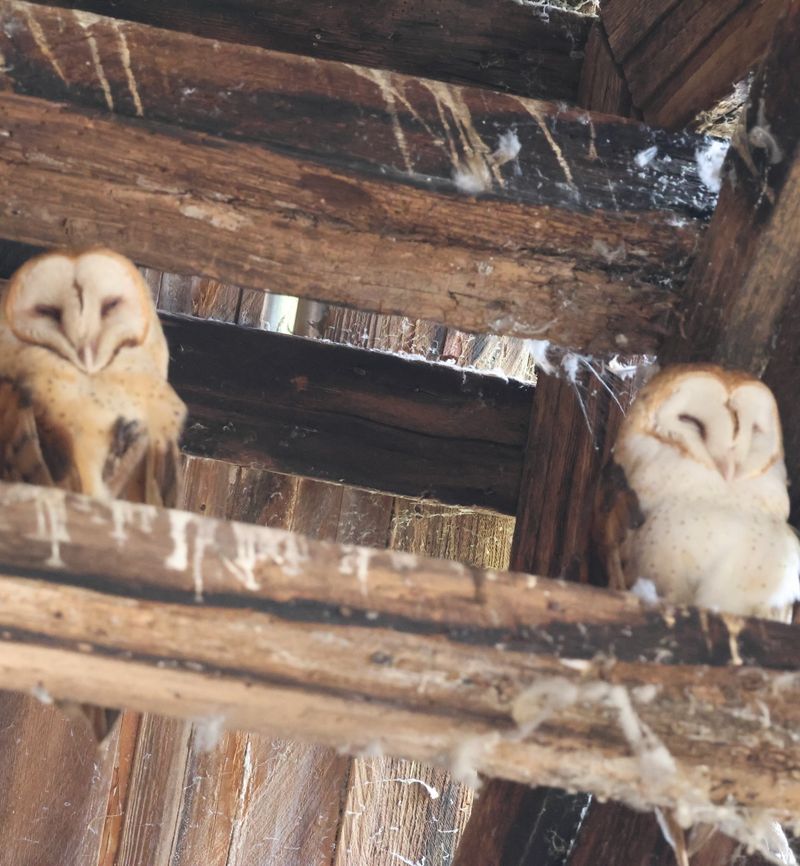
A barn owl over a subdivision can be evidence that wild habitat still exists around the edges.
These birds do best where open hunting ground connects with grassy margins, fields, wetlands, agricultural land, or other places that support small mammals.
Neighborhoods near those features can remain surprisingly useful even after houses and roads have changed much of the original landscape.
Look beyond your property line.
A weedy parcel, broad roadside verge, drainage channel, hay field, or park edge may be doing more ecological work than its appearance suggests. Those places can support voles and mice while giving barn owls room to hunt.
Connectivity matters too.
One isolated patch has less value than several usable areas linked across a neighborhood. An owl moving smoothly from a field to a drainage corridor and then across open yards is using the landscape as a network.
That makes the sighting bigger than one backyard moment.
It suggests your neighborhood has not become completely sealed off from the surrounding ecosystem.
Development can remove old fields, barns, and rough grassy edges surprisingly quickly. A barn owl still using the area shows that some functional habitat remains.
The bird is essentially tracing those remaining connections for you.
Follow its route with your eyes, and the neighborhood may suddenly look different. Empty lots, field edges, and green strips stop looking unused. They start looking like pieces of a much larger nighttime map.
Look For Nearby Roosting Opportunities
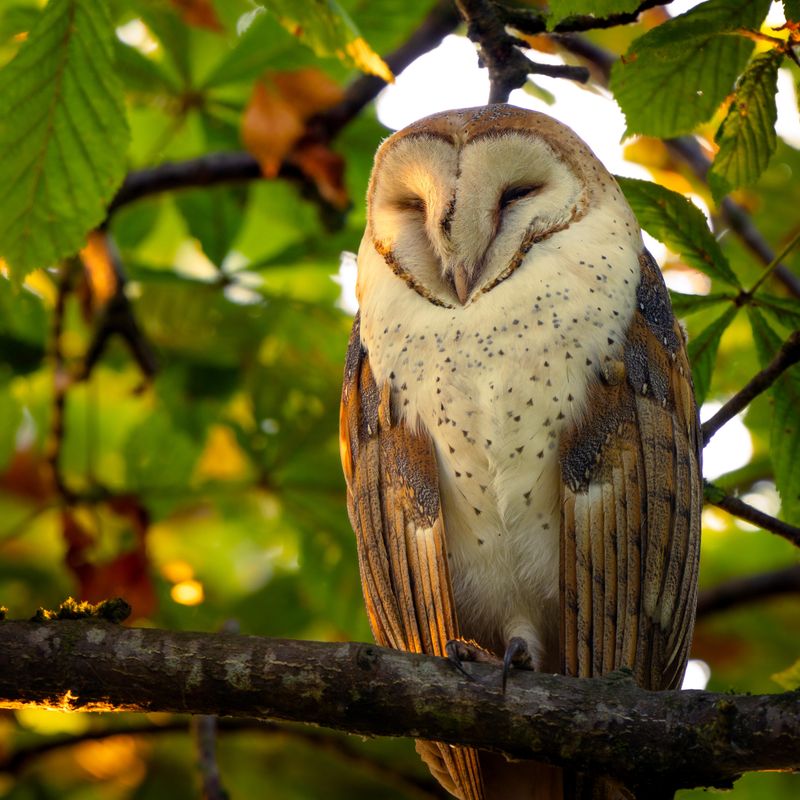
One barn owl sighting may also point upward rather than down toward the grass.
Barn owls need protected places to rest during the day, and they are famously flexible about what counts as shelter.
Old barns are the classic example, but tree cavities, sheds, roof spaces, steeples, and properly designed nest boxes can also provide suitable cover.
A bird appearing regularly after sunset may have a roost nearby.
The location can be surprisingly close. A quiet outbuilding or cavity that seems unremarkable to people may offer exactly the dark, sheltered space an owl wants until evening arrives.
Look for clues without disturbing the site.
Pellets beneath a sheltered beam, cavity, or regular perch can indicate repeated owl use. These compact masses contain fur and small bones that the bird cannot digest.
Frequent pellets in one protected spot can reveal a daytime base.
That matters because roosting opportunities have disappeared from many developed landscapes as old structures come down and cavities become scarce.
A neighborhood that still supports a barn owl may therefore offer more than prey. It may also contain one of the safe resting places the species needs.
Give suspected roosts plenty of space.
The best discovery is one that stays useful to the bird. Finding a hidden owl address is exciting. Evicting the tenant through constant inspection rather ruins the mystery.
Quiet shelter during daylight can be just as important as a productive field once darkness arrives.
Treat Repeat Visits As Regular Habitat Use
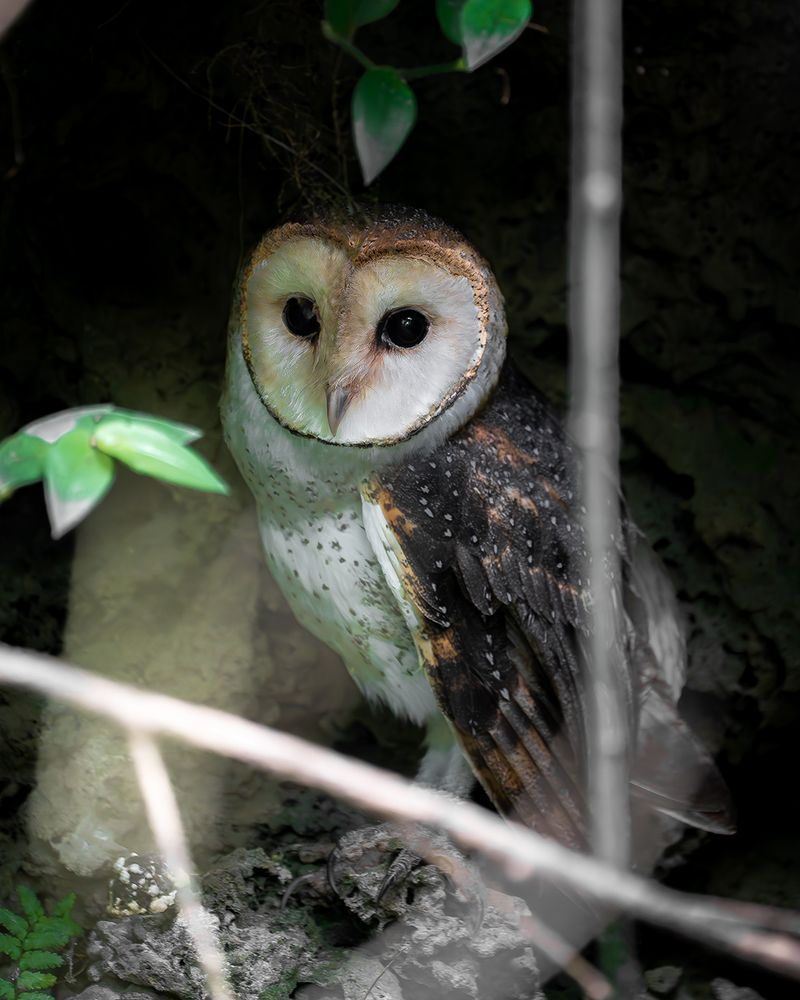
A pale owl crossing the same corner several nights in a row changes the meaning of the sighting.
One visit can be opportunistic. Repeated visits suggest the neighborhood has become part of the bird’s regular routine.
Barn owls in western Oregon can remain within a familiar home range when prey and shelter stay dependable. That means a bird appearing at a similar time and following a similar route may be working established hunting territory.
Keep a simple record.
Note the date, approximate time, direction of flight, and location. A pattern often becomes obvious after only a handful of sightings.
Repeated activity during spring or early summer can become especially interesting because adults may be making frequent hunting trips while supporting young nearby. Several passes in one evening do not automatically mean several owls are present.
The garden signal is strong either way.
Regular use means the surrounding landscape consistently provides something valuable enough to bring the bird back. That could be prey, a productive field edge, a safe roost, or a combination of all three.
You can contribute observations to community bird-monitoring projects too.
Even a backyard sighting becomes more useful once it joins a larger record of where birds are appearing.
A repeat barn owl is no longer just a lucky encounter. It is evidence that your neighborhood has earned a place on the owl’s nightly schedule.
Keep Rodent Poison Out Of The Food Chain
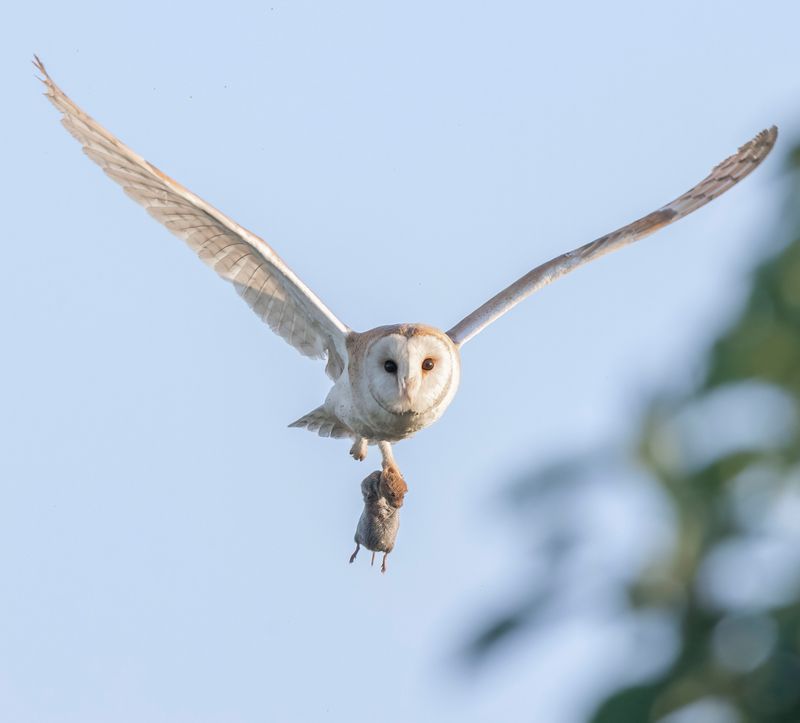
Seeing a barn owl nearby should change how you handle rodents around the house.
Poisons can move through the food chain. A mouse or vole that consumes rodenticide may later become prey for an owl, hawk, or another predator, creating a risk far beyond the animal the bait was meant to control.
That matters especially in a neighborhood with active barn owls.
These birds can consume large numbers of small mammals, which means every hunting trip potentially connects them with rodent-control choices made across several properties.
Use exclusion and mechanical control first.
Seal gaps that allow rodents into buildings, store food securely, remove easy shelter near structures, and use well-placed snap traps where control is necessary.
Those methods target the problem without turning prey into a toxic package for the predator already helping outside.
Talk with neighbors too.
One poison station can affect wildlife that hunts across an area much larger than a single yard.
A barn owl sighting is therefore more than a fun wildlife moment. It is a reminder that household pest control and local ecology overlap.
The owl is already providing rodent management for free.
Giving that predator a safer food chain lets the natural system keep working.
Few garden visitors arrive with such a clear maintenance memo. This one basically says: please do not poison the staff.
That single change can protect owls while making indoor rodent control more deliberate and effective.