What Drooping Basil Plants In North Carolina Really Mean After A Week Of Heavy Rain
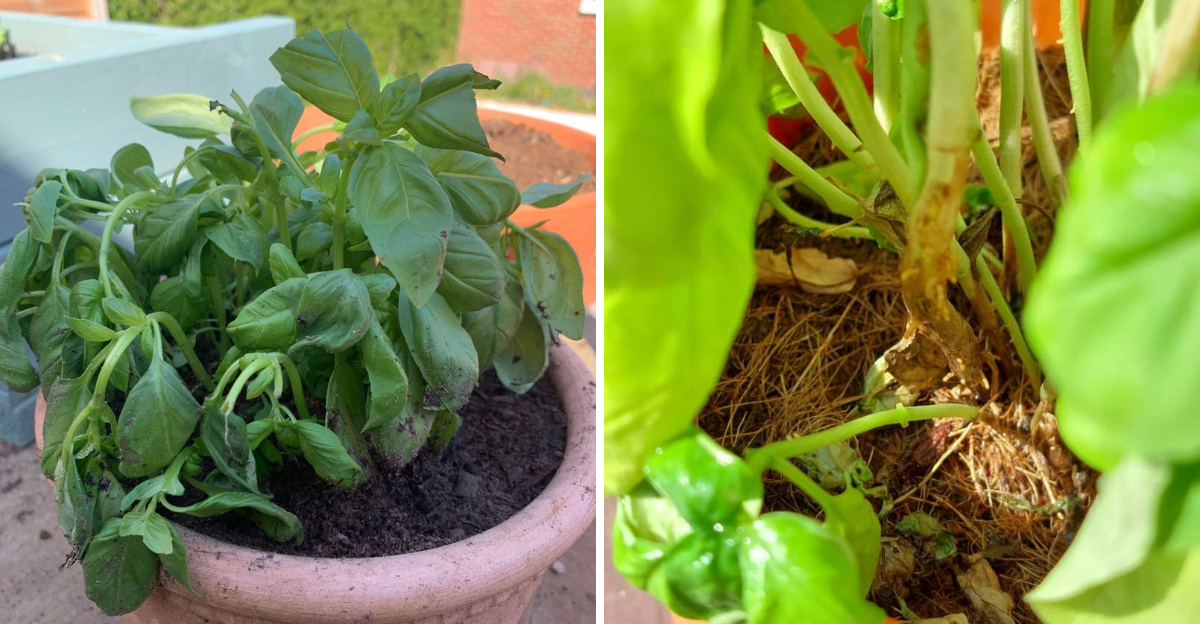
A week of heavy North Carolina rain can make basil look thirsty at the exact moment the soil is completely soaked.
That contradiction is the clue.
Drooping leaves after repeated storms often point to stressed roots, poor oxygen around the root zone, or damage beginning near the crown.
Basil can wilt from heat too, but a plant that stays limp through the cool morning deserves a closer look.
So what is the plant actually telling you?
Start underground.
Check the moisture below the surface, look at the stem where it meets the soil, and notice how quickly containers drain after another downpour. Then compare the plant in the afternoon with how it looks early the next day.
Those small observations separate temporary heat wilt from a real drainage problem.
North Carolina summer weather can deliver heat, humidity, and saturated soil all at once. Basil handles plenty of warmth, but roots still need air.
The faster you read that message correctly, the better chance the plant has to recover and rebound.
1. Read Persistent Droop As A Root Warning
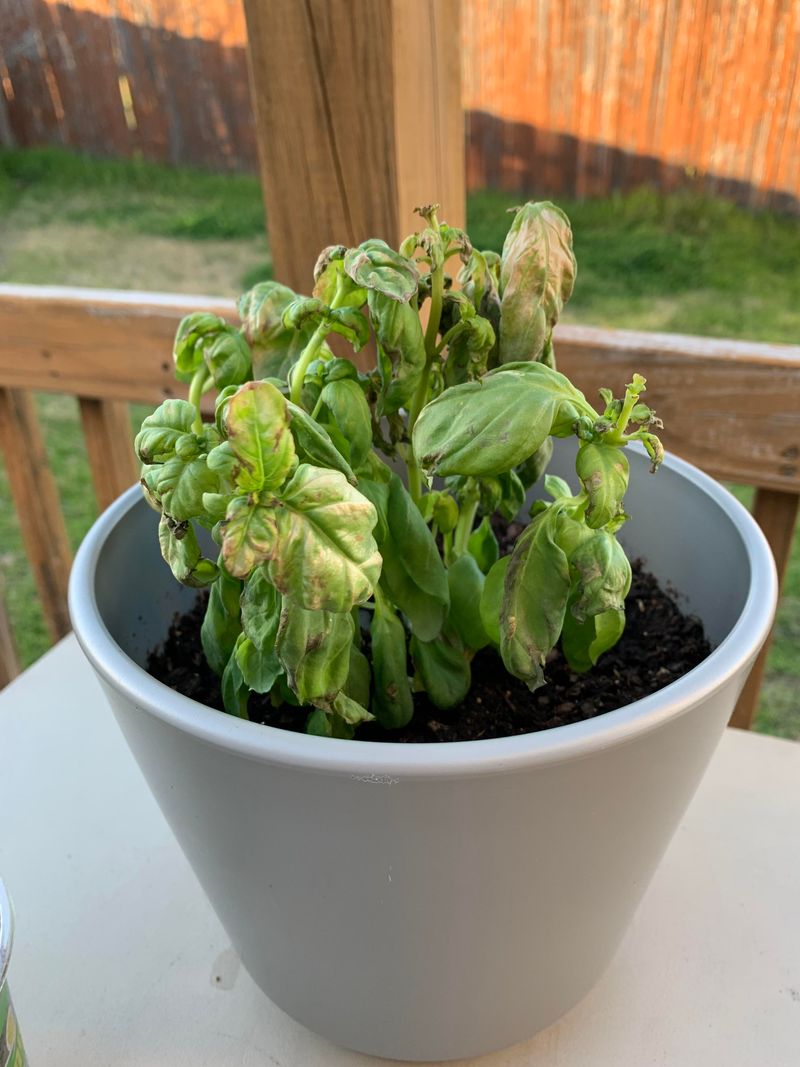
A basil plant can sit in wet soil and still behave like it needs water.
That happens because saturated ground pushes air out of the spaces around the roots. Basil roots need oxygen to function properly, and several days of heavy rain can leave them struggling even while moisture surrounds them.
The leaves respond by drooping.
Water and nutrients no longer move through the plant as efficiently, so the top growth softens and hangs down. That is why adding more water can make the problem worse instead of helping.
Morning is the best time to judge the severity.
A basil plant that wilts briefly during a hot afternoon may recover overnight. One that remains limp early the next morning is sending a stronger root-zone warning.
Check how long the soil has stayed wet.
Low garden beds, heavy clay, and containers with slow drainage can remain saturated long after the last storm passes. The surface may look normal while deeper soil still holds far too much moisture.
Do not rush to feed or water the plant.
Give the root zone time to drain and regain some air. Keep foot traffic and digging away from saturated soil too, since wet roots are easier to damage.
The strange part is that the plant looks thirsty. The useful clue is that the ground says exactly the opposite.
2. Check Wet Soil Before Adding More Water
Drooping leaves can trigger an automatic reaction: grab the hose.
After a week of North Carolina rain, that instinct needs to be ignored.
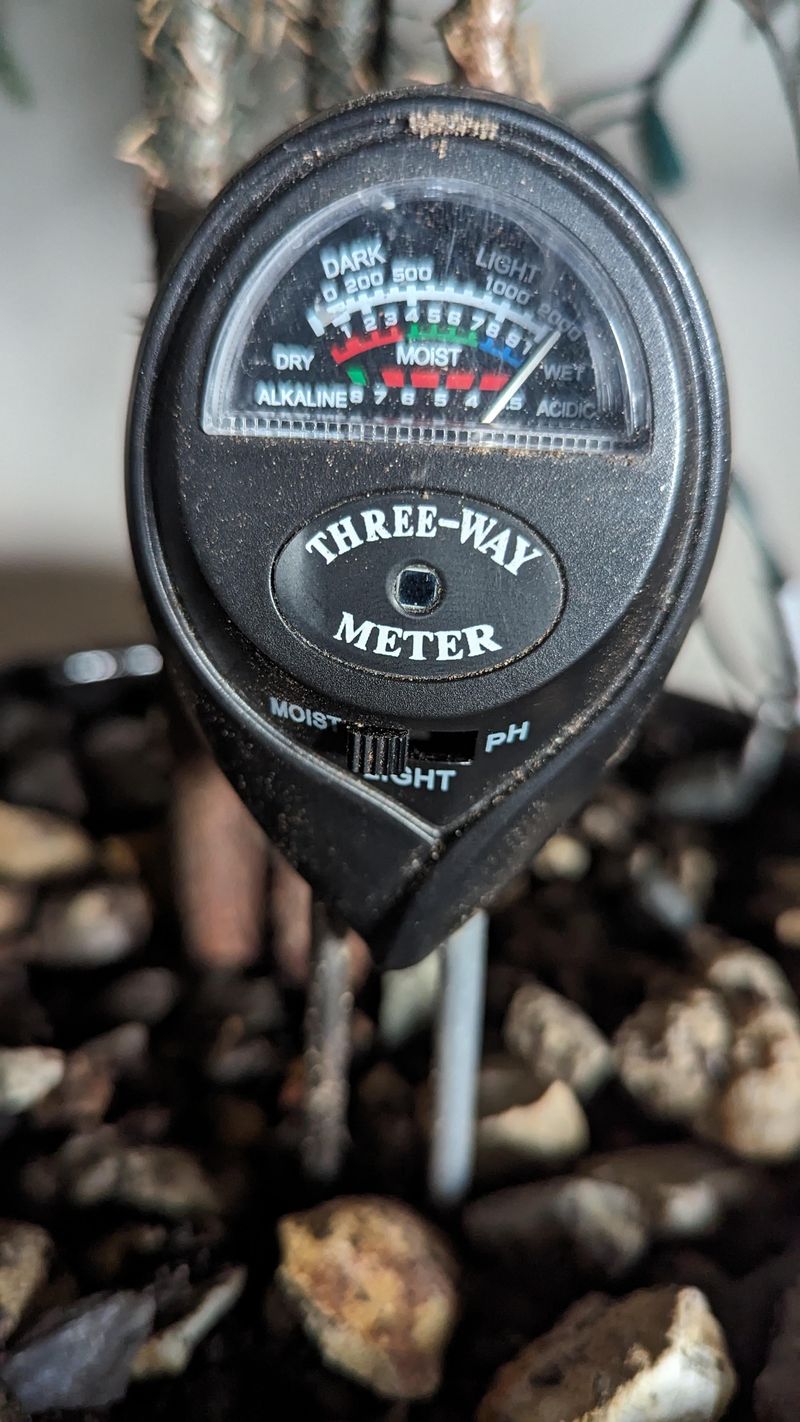
Check the soil first. Push a finger or wooden dowel two to three inches into the root zone. Damp soil clinging to it means the basil already has plenty of moisture around its roots.
The top inch can be misleading.
Sun and wind may dry the surface quickly while the soil below remains saturated. Basil roots sit relatively close to that deeper zone, so surface color alone does not tell you what the plant needs.
Your North Carolina Garden Changes Every Week. Your Plan Should Too.
Gardening in North Carolina changes quickly throughout the season. Every Friday you’ll receive a simple weekly plan showing exactly what to plant, prune, fertilize, harvest, and protect so you never miss the right timing.
Pause automatic irrigation during rainy stretches.
A timer that keeps running through daily storms can turn temporary wetness into a prolonged oxygen problem. Containers under roof edges can also receive runoff from above, adding much more water than the rainfall total suggests.
Let drainage happen before the next irrigation.
As the soil moves from saturated toward evenly moist, air begins returning around the roots. That change can be enough for a mildly stressed plant to regain firmness over the next day or two.
Avoid chasing the droop with repeated little drinks.
Those shallow additions keep the upper root zone wet without solving anything deeper.
Basil is expressive enough to make every limp leaf look urgent. After heavy rain, the smarter response is often doing absolutely nothing with the watering can.
3. Look For Darkening Around The Stem Base
The leaves are not the only place worth checking.
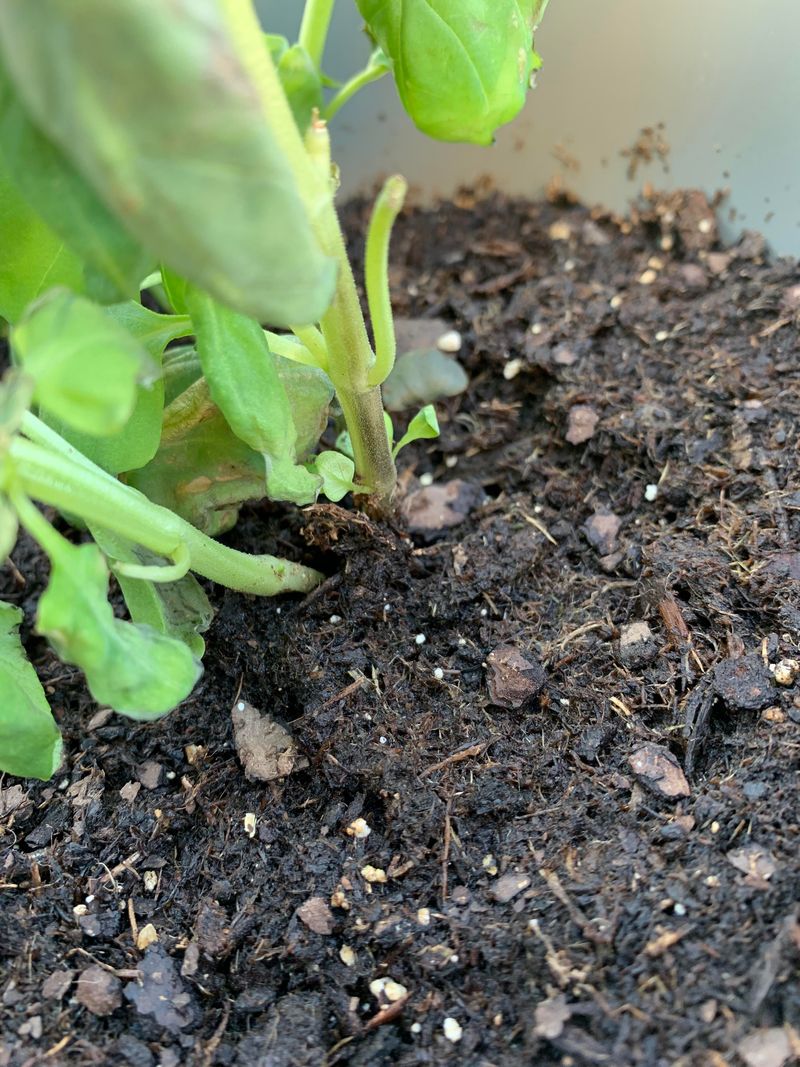
Look closely at the point where the basil stem meets the soil. That small section can reveal trouble before the rest of the plant changes dramatically.
Healthy tissue should feel firm.
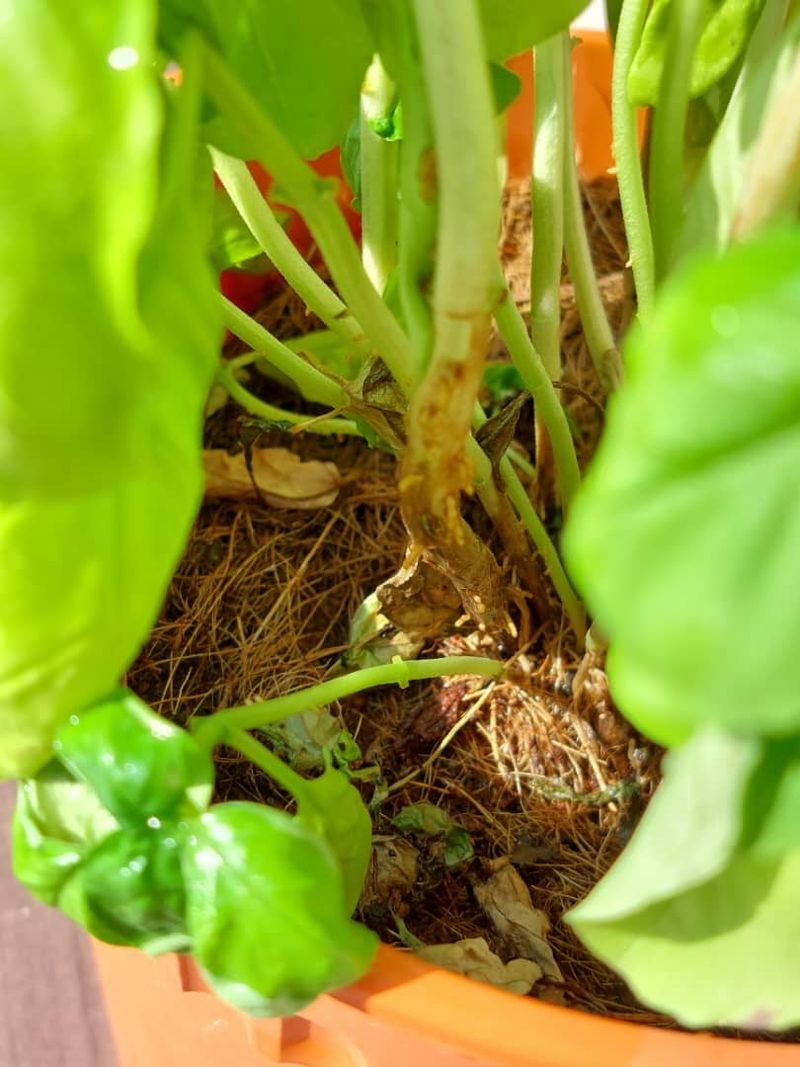
Green or slightly purple coloring can be normal depending on the basil variety. Soft brown, blackened, sunken, or mushy tissue is more concerning after several days of saturated weather.
Warm, wet conditions favor several root and crown problems.
Damage may begin below the soil surface and gradually move upward, which explains why a plant can wilt even though the leaves still look green at first.
Use a fingertip for a gentle check.
Firm tissue is encouraging. A soft stem base, collapsing crown, or sour smell from the soil points toward more serious deterioration rather than simple temporary wilting.
Remove yellowed or badly damaged lower leaves.
Then improve drainage and keep future irrigation away from the stem itself. Avoid piling mulch against the crown, since that can hold even more moisture against already stressed tissue.
Do not perform a major excavation around the plant while the soil is saturated.
The roots are fragile at that stage, and aggressive digging can add mechanical damage to an existing moisture problem.
The stem base is basically the plant’s checkpoint. When the leaves send a confusing message, that little strip at soil level often gives a much clearer answer.
4. Give Saturated Roots More Drainage
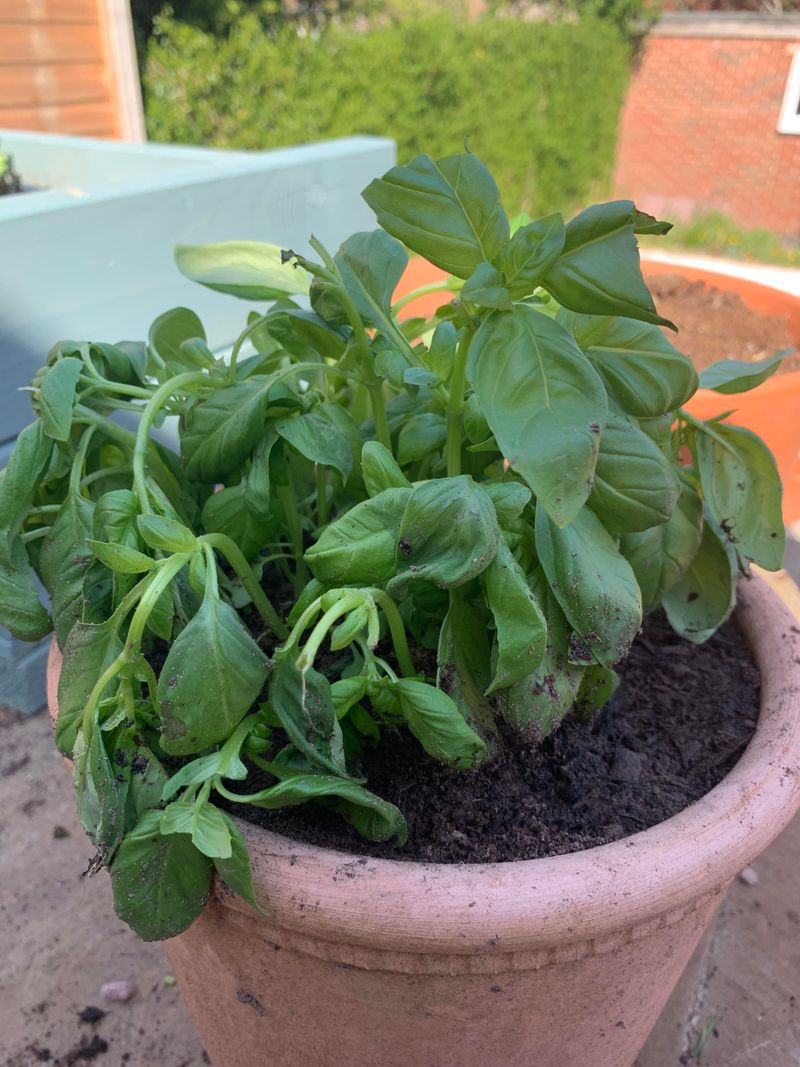
A basil bed can survive one soaking much better than a week of water that has nowhere to go.
Drainage determines the difference.
In containers, start at the bottom. Make sure every drainage hole is open and that the pot is not sitting flat over an opening that cannot release water. Pot feet can create enough clearance for excess moisture to escape.
In the ground, watch where rain collects.
A low spot, compacted clay, or runoff from a roof can keep the root zone saturated long after nearby soil begins drying. Raising the planting area slightly can help future storms drain away faster.
Wait for wet soil to become workable before making major changes.
Mixing or digging saturated clay can damage its structure and compact it further. Once the bed dries enough to crumble rather than smear, organic matter can improve soil texture over time.
A temporary rain cover can help during another long storm sequence.
Keep it elevated so air still moves around the basil and water does not simply pour off the edge directly into the root zone.
The goal is not bone-dry soil.
Basil likes consistent moisture, but those roots also need oxygen between water particles. Good drainage creates that balance.
A puddle that disappears from the surface in an hour can still leave trouble below. Give the root zone enough time and space to empty its rain boots too.
5. Move Potted Basil Out Of Standing Water
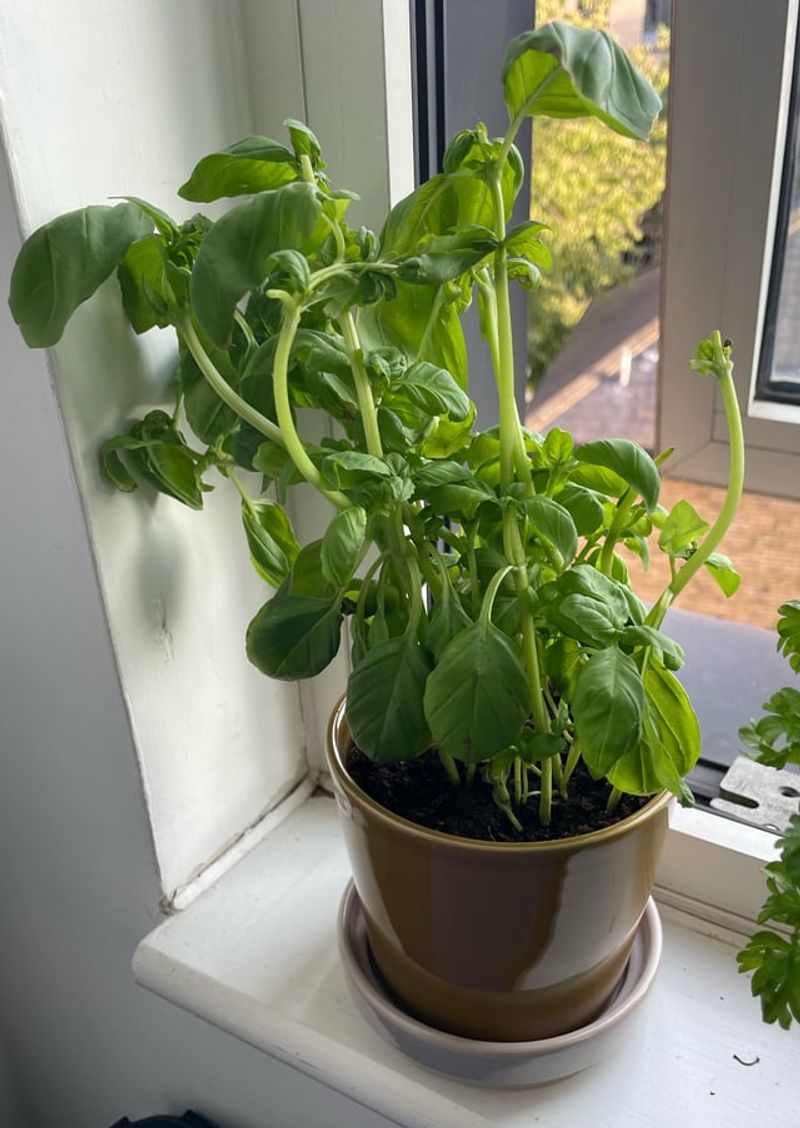
Container basil can have perfect potting mix and still struggle because of what is happening underneath the pot.
Saucers are a common culprit.
After several storms, a saucer may stay full for hours or days. The drainage holes remain submerged, so water cannot leave the root ball efficiently. The lowest roots sit in constant saturation and begin losing access to oxygen.
Decorative outer pots create the same problem.
A nursery pot may drain normally, then collect all that runoff inside a solid cachepot. From above, everything looks fine. Below, the basil is sitting in a hidden reservoir.
Empty collected water after heavy rain.
Lift the inner container out and let it drain fully before returning it to the decorative pot. Raising the container slightly can also improve airflow beneath the base.
Check the porch surface.
Some patios slope toward a wall or corner, creating shallow puddles that cover drainage holes after storms. Moving the pot a few inches can completely change the situation.
Watch for water that keeps dripping long after the rain stops.
That usually means the potting mix is still heavily saturated.
Container basil has one big advantage over a plant stuck in soggy garden soil: you can move it.
Use that advantage. A small shift upward or sideways may give the roots the breathing room they have been trying to request all week.
6. Open Crowded Plants For Better Airflow
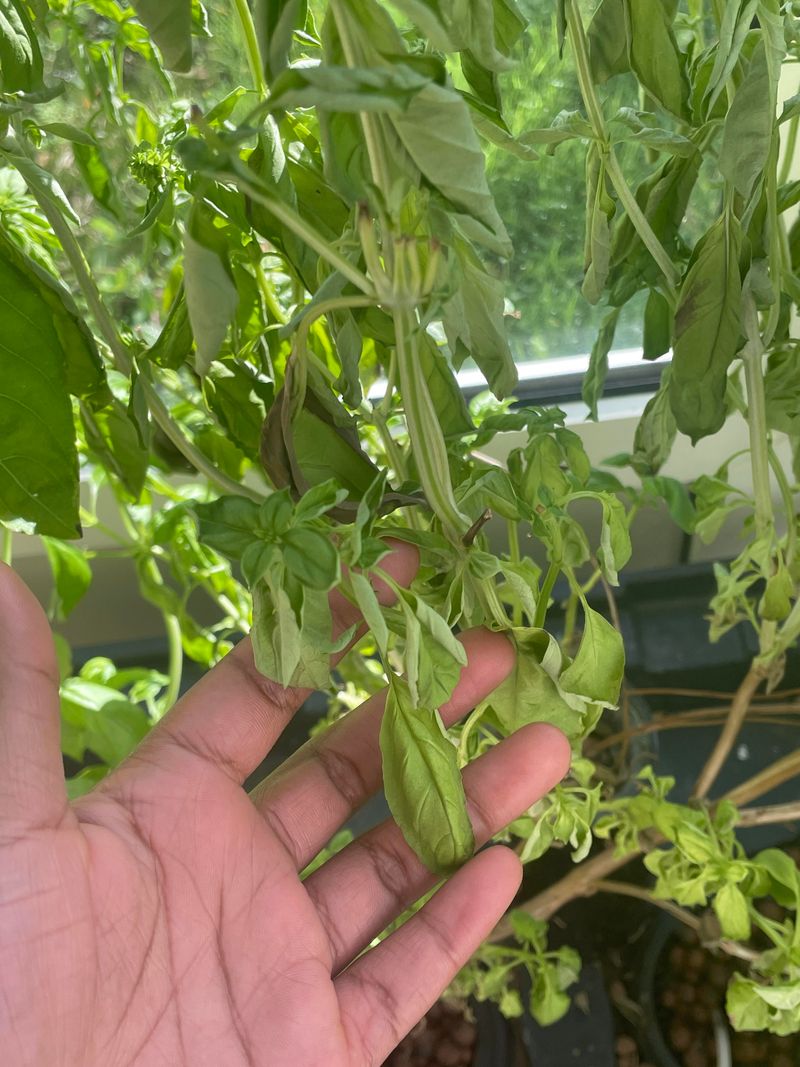
The soil may finally start draining while the top of the basil stays wet and crowded.
That creates a second problem.
Dense foliage holds humid air around stems and inner leaves, especially during a North Carolina summer when temperatures stay warm after the storm. Leaves that remain damp for long periods become more vulnerable to disease problems.
Open the canopy gently.
Harvest a few of the largest crowded stems and remove yellowed, spotted, or damaged leaves. The goal is better airflow, not a dramatic haircut on a plant already under stress.
Space neighboring plants apart where possible.
Several basil plants pressed together can create one humid mass even after the surrounding garden begins drying. A few extra inches between containers can make a noticeable difference.
Work after the foliage dries.
Handling wet plants can spread spores and damage soft leaves. Morning is useful once dew has lifted and before the hottest part of the day arrives.
Keep an eye out for unusual spotting or discoloration.
Persistent humidity can encourage problems such as basil downy mildew, so airflow becomes especially important after a long wet stretch.
Do not confuse thinning with stripping.
The plant still needs healthy leaves for photosynthesis and recovery.
A basil canopy should smell like dinner, not feel like a tropical locker room. Opening a few crowded spots gives the whole plant a better chance to dry before the next round of rain arrives.
7. Check Roots When Wilt Refuses To Lift
A plant that remains limp after the soil finally begins drying deserves a closer inspection.
Container basil makes that job easiest.
Tip the pot carefully and slide out the root ball while supporting the stems. Healthy roots are generally pale, firm, and threaded through the potting mix.
Damaged roots tell a different story.
Brown or gray sections, soft tissue, roots that break apart easily, or a sour smell from the mix can indicate serious stress or decay after prolonged saturation.
Do not tear the entire root ball apart searching for perfection.
Remove obviously damaged material with clean scissors and keep as much healthy root tissue intact as possible.
A badly waterlogged plant may benefit from fresh, freely draining potting mix and a clean container with generous drainage holes.
Keep the replacement mix loose.
Packing it hard around the roots removes the very air spaces the plant needs for recovery.
After repotting, place the basil somewhere bright but protected from brutal afternoon sun for a short recovery period. Skip fertilizer until the plant shows signs of renewed growth.
In-ground basil is harder to inspect without causing extra damage, so use stem condition, drainage, and morning recovery as your main clues first.
A stubborn wilt is the plant telling you the storm may have left a mark below ground. Once the excess water is gone, healthy roots should start proving they can work again.
8. Rule Out Heat Stress Before Blaming Disease
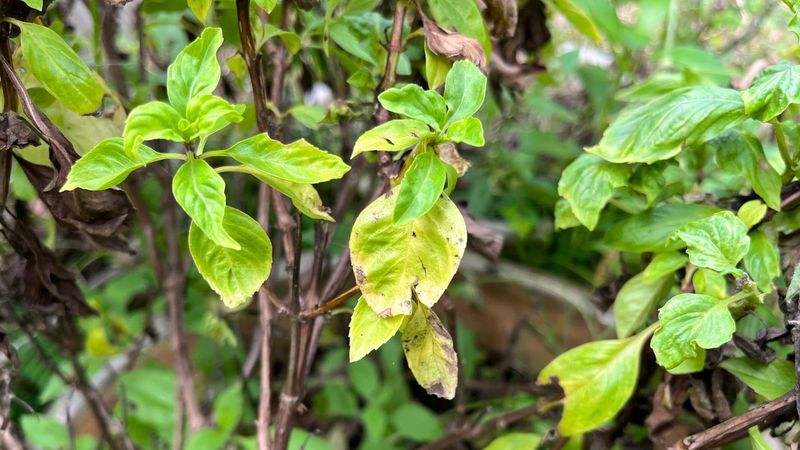
Not every limp basil plant after a rainy week has damaged roots.
North Carolina heat can produce almost the same appearance.
Basil leaves may droop during the hottest part of the afternoon as water loss temporarily outruns what the roots can supply. The plant often looks dramatically tired at four o’clock and surprisingly normal again the next morning.
That recovery is the clue.
Check the plant early, before the day heats up. Firm leaves after a cool night point more toward temporary heat stress than a persistent root problem.
Keep soil moisture in the picture.
A saturated plant can also droop in heat, so do not add water based on the afternoon appearance alone. Test the root zone and let the morning condition help you interpret what you find.
Temporary afternoon shade can reduce stress during severe heat.
Container basil can move to a spot with bright morning sun and some protection later in the day. In-ground plants may benefit from light shade during an unusually intense spell.
Watch the pattern for several days.
Recovery each morning is reassuring. Limp foliage that never rebounds, especially alongside saturated soil or dark stem tissue, deserves a drainage and root check.
Timing turns a vague symptom into useful information.
Basil can be theatrical in summer heat. Give it one cool night before deciding the droop means disaster.