Native Georgia Trees To Plant Instead Of Leyland Cypress This Fall
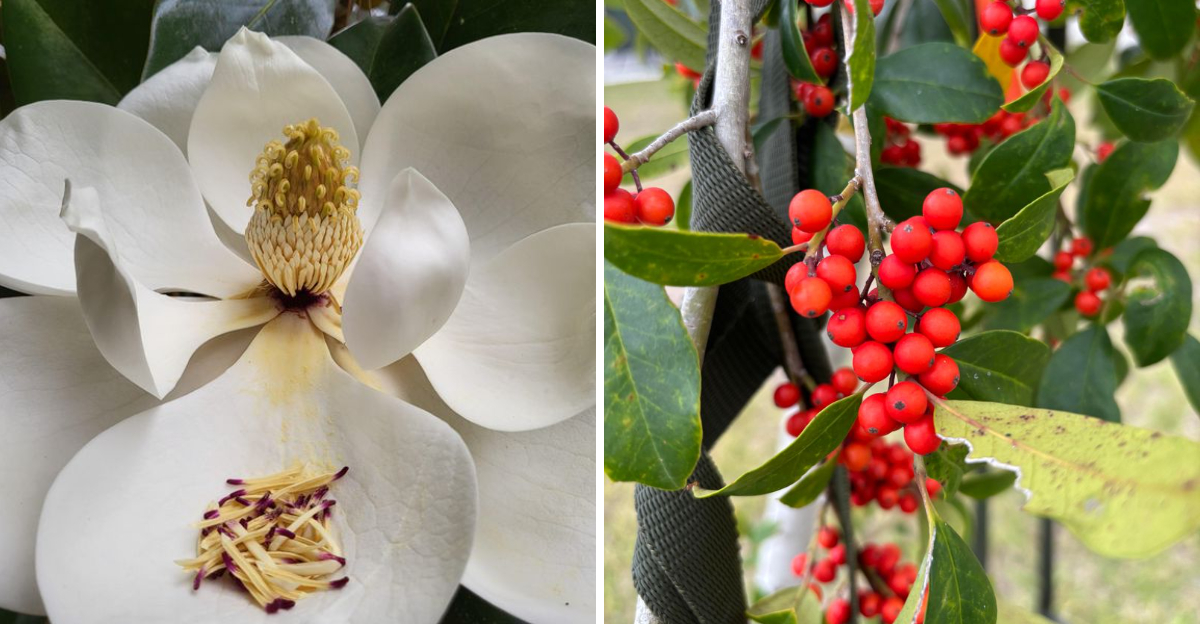
Leyland cypress earned its place in Georgia yards by doing one thing fast: creating a tall green wall.
The trouble often shows up later.
Rows planted tightly for quick privacy can become crowded, disease-prone, and difficult to replace once several trees begin declining together. A mixed screen of Georgia natives gives the property line a different kind of strength.
Evergreen hollies can hold winter cover. Eastern redcedar handles lean, sunny ground. Wax myrtle fills space quickly, while Southern magnolia brings broad evergreen structure where there is room to spread.
So which native belongs in your yard?
That depends on soil moisture, available width, sunlight, and how tall the screen really needs to become. Fall gives new roots cooler conditions and time to settle before another Georgia summer arrives.
Replacing one uniform row with several well-matched species also makes the landscape more useful to birds and other wildlife.
Privacy still matters.
The better goal is privacy that keeps getting stronger, more interesting, and easier to live with as the years pass.
1. Use Eastern Redcedar For Tough Evergreen Cover
A privacy screen does not always get rich soil and perfect irrigation.
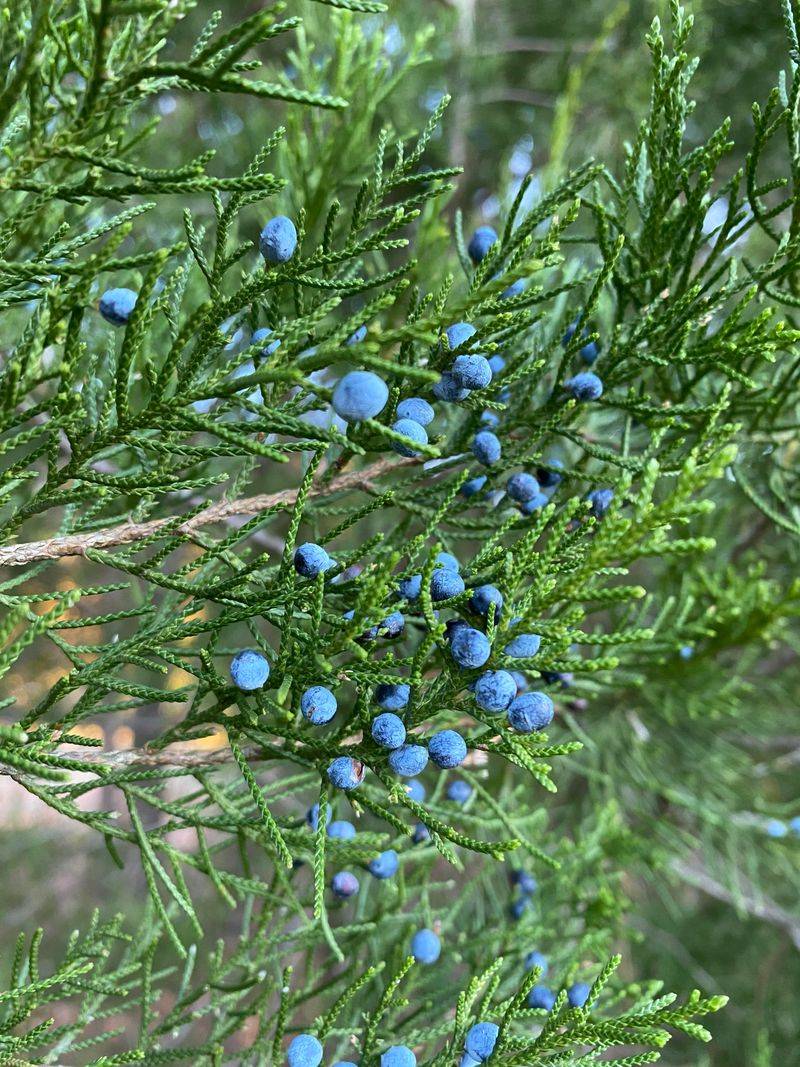
Eastern redcedar, Juniperus virginiana, is useful on the rougher parts of a Georgia property because it tolerates heat, drought, clay, rocky ground, and lean soils once established. Full sun produces the densest growth and the strongest screening shape.
Mature trees commonly reach about 40 to 50 feet tall, with a narrower spread than many broad-canopied natives.
That makes redcedar practical along long property lines where height matters but horizontal room is limited. Space trees generously enough for mature growth rather than packing them together for instant coverage.
A staggered arrangement can create a fuller visual barrier without forcing every trunk into one tight row.
Wildlife gets more from the planting too.
Female trees produce blue, berry-like cones that attract cedar waxwings, bluebirds, mockingbirds, and other birds. Dense evergreen branches also provide winter shelter when deciduous trees nearby are bare.
One site detail deserves attention.
Eastern redcedar can host cedar-apple rust, so gardeners growing apples, crabapples, or other susceptible plants may prefer greater separation between them.
For a sunny, relatively dry Georgia boundary, this native brings durability without demanding luxury accommodations.
Leyland cypress may race upward faster, but Eastern redcedar is built more like the neighbor who buys the house and plans to stay.
2. Plant American Holly For Dense Winter Privacy
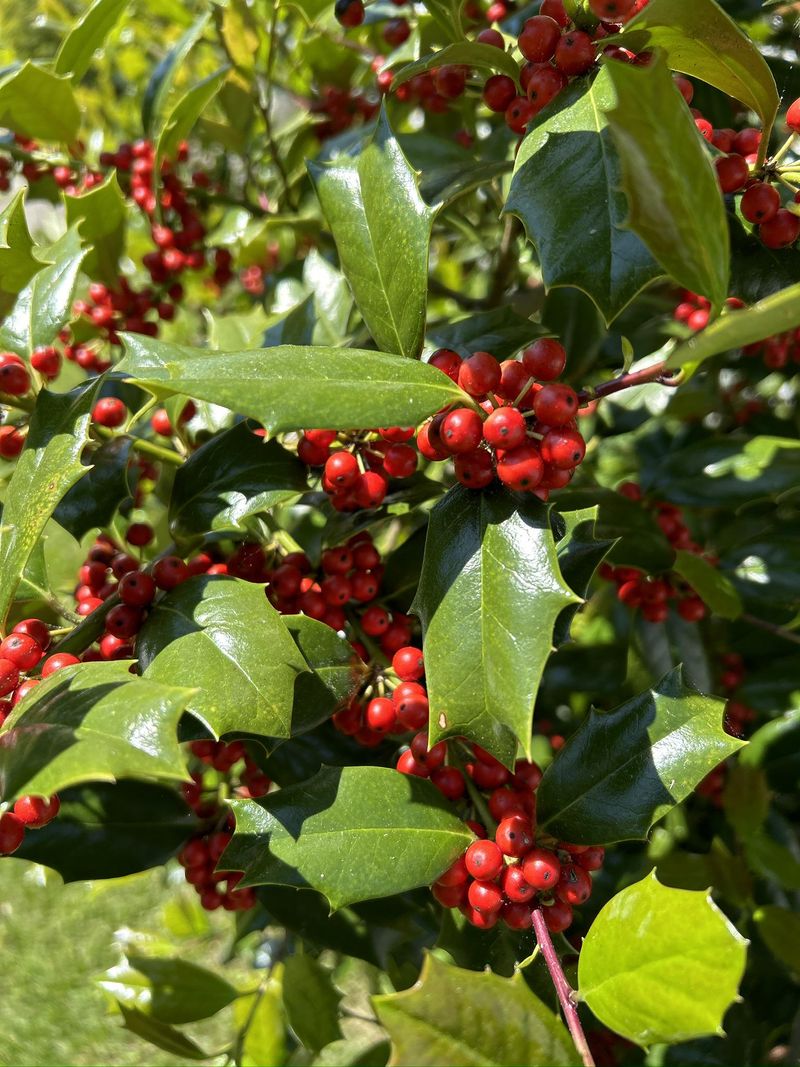
December exposes every weak point in a privacy planting.
American holly, Ilex opaca, keeps those sightlines covered with glossy evergreen foliage long after nearby deciduous trees have dropped their leaves.
Its naturally pyramidal shape can create a handsome, substantial screen without looking like a clipped green wall.
This is a tree that needs room.
Mature specimens can reach 40 to 50 feet tall and spread much wider than a narrow hedge plant. Give it enough distance from driveways, fences, utilities, and neighboring trees so the crown can develop without constant pruning.
Light conditions can range from sun to partial shade.
Moist, well-drained soil supports strong growth, though established trees can handle ordinary dry stretches better than a newly planted one.
Your Georgia Garden Changes Every Week. Your Plan Should Too.
Gardening in Georgia changes quickly throughout the season. Every Friday you’ll receive a simple weekly plan showing exactly what to plant, prune, fertilize, harvest, and protect so you never miss the right timing.
Fall planting gives roots a cooler season to settle before Georgia heat begins pulling moisture from the soil again.
The winter wildlife value is a major bonus.
Female trees can produce bright red fruit when a compatible male grows nearby. Robins, cedar waxwings, thrushes, and other birds use those fruits during the colder months, while the dense branches offer protective cover.
American holly works especially well in a mixed screen where its broad evergreen mass can anchor smaller natives.
It is not the tree for squeezing into a six-foot-wide strip.
Give it real estate, and it returns the favor with privacy, winter color, and a lot more personality than another identical row of Leylands.
3. Try Yaupon Holly For A Flexible Screen
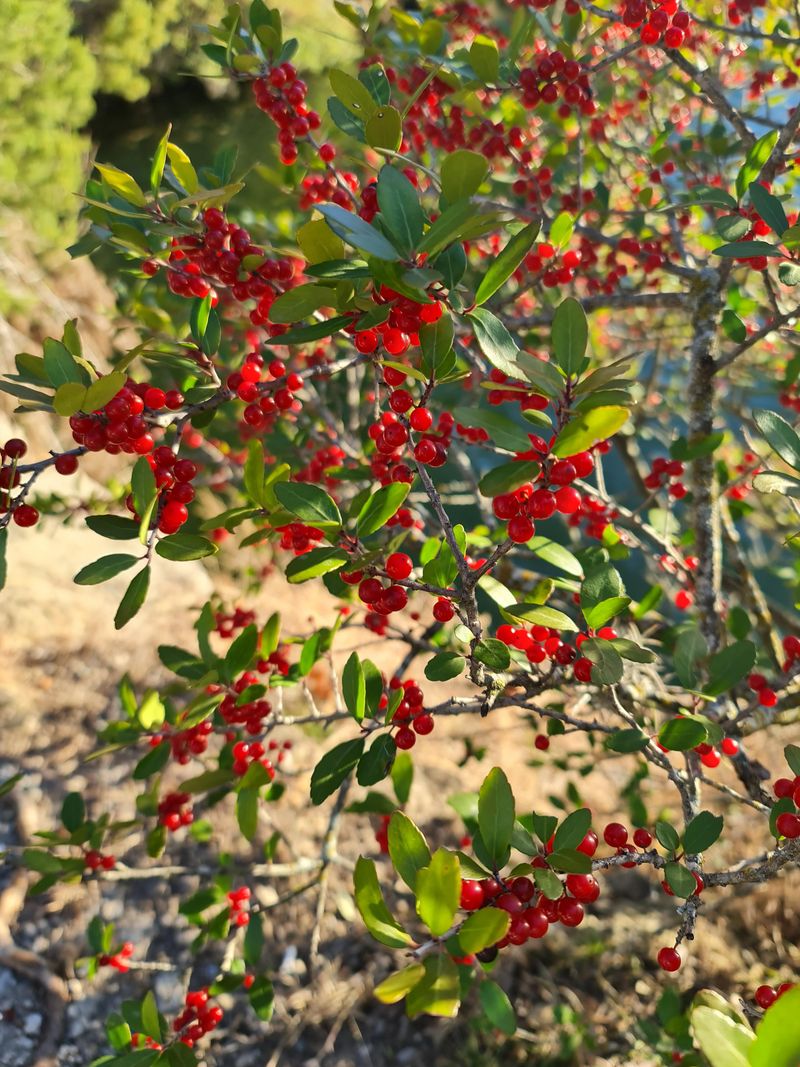
Not every property line needs a fifty-foot wall.
Yaupon holly, Ilex vomitoria, gives Georgia gardeners a more flexible native option for medium-height screening. It can grow as a large shrub or small multi-stemmed tree, usually reaching around 15 to 25 feet when allowed to develop naturally.
Its adaptability is the real attraction.
Yaupon tolerates sun, partial shade, coastal conditions, periods of drought, and a broad range of soils. That makes it useful in landscapes where one end of the screen gets blazing afternoon sun while another receives filtered light.
Pruning is also easy to work into the plan.
A natural screen can stay loose and informal, while regular shaping can create a denser, more controlled boundary. Different cultivars offer upright, weeping, and compact forms, so plant choice matters before the shovel comes out.
Female plants can carry bright berries through fall and winter when a male pollinator grows within range.
Those fruits attract mockingbirds, bluebirds, cedar waxwings, and other wildlife. The evergreen leaves keep useful cover around the yard through the colder months.
Yaupon also tends to shrug off many of the pest and disease headaches that make large Leyland plantings frustrating.
For a Georgia yard that needs privacy without a towering conifer wall, this native is easy to fit into the conversation.
It screens, feeds birds, takes pruning well, and rarely demands to be the most dramatic plant on the property.
4. Use Dahoon Holly On Wetter Ground
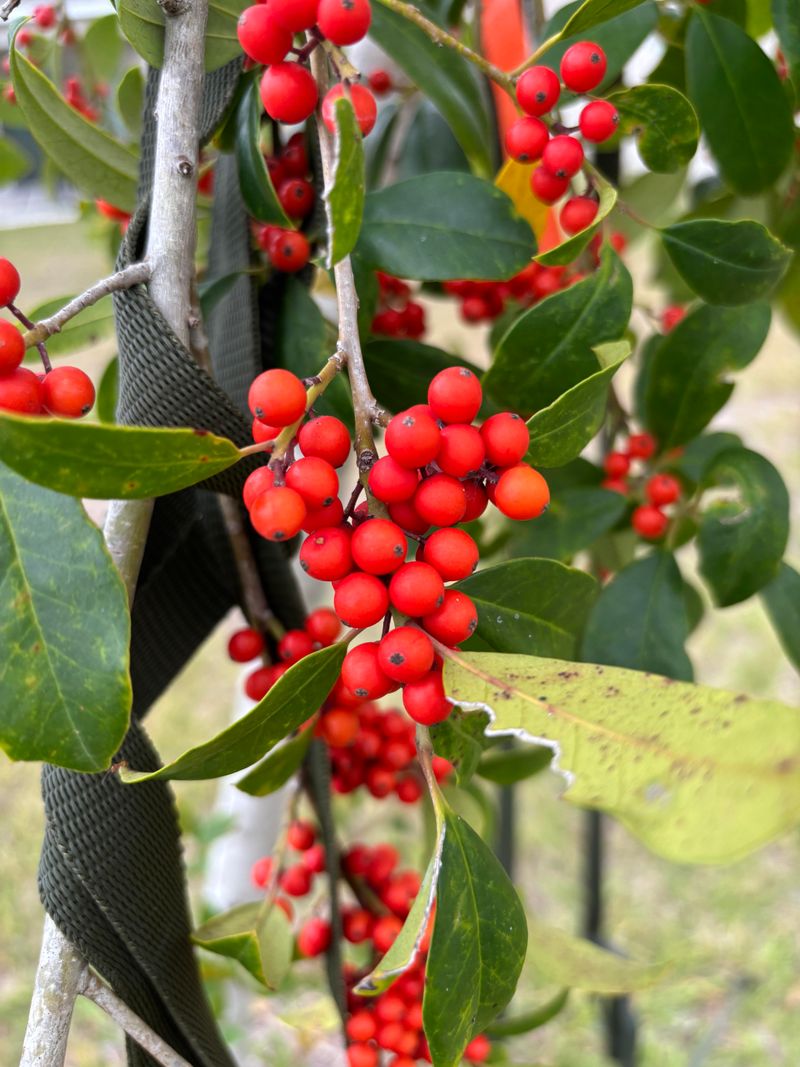
A soggy property edge can turn ordinary screening advice upside down.
Dahoon holly, Ilex cassine, is a Georgia native suited to moist ground, stream edges, pond margins, and low areas that stay wetter than most evergreen trees prefer. Its natural range is strongest through the Coastal Plain and southern parts of the state.
That regional fit matters.
This is not a universal substitute for Leyland cypress across every Georgia county. Dahoon performs best where moisture is dependable and soils lean acidic. Dry upland clay or a hot, exposed slope calls for a different native from the list.
On the right site, the tree is a beautiful problem solver.
Dahoon usually grows around 20 to 30 feet tall with a relatively narrow, upright form. Evergreen foliage creates year-round screening without requiring the width of a mature Southern magnolia or American holly.
Female trees can produce red fruit when a suitable male grows nearby.
Those berries add winter color and provide food for birds using wetland edges and nearby woodland. The softer-looking foliage also gives the screen a less rigid appearance than a formal conifer row.
Fall planting works especially well on sites where summer heat can stress new roots.
The cooler season gives the tree time to settle before the next hot stretch.
A low corner that keeps frustrating other evergreens may not be a bad planting site at all.
It may simply be waiting for a tree that actually likes wet socks.
5. Give Southern Magnolia Room To Spread
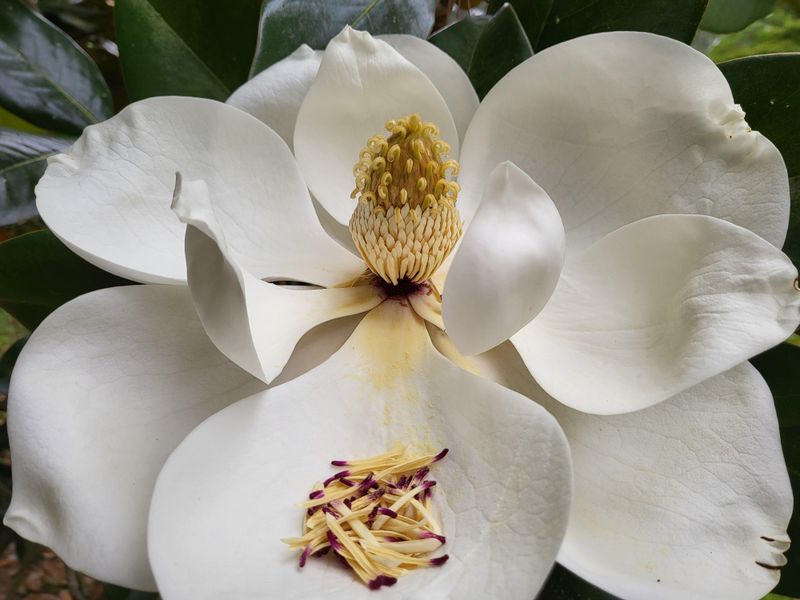
Some property lines need a screen.
Others have enough room for a landmark.
Southern magnolia, Magnolia grandiflora, brings broad evergreen foliage, creamy flowers, and long-term presence to a Georgia landscape.
It can serve as a powerful anchor in a mixed privacy planting, especially where the goal includes shade, structure, and beauty rather than one narrow hedge.
Space is the deciding factor.
A mature Southern magnolia can reach 60 to 80 feet tall and spread 30 to 50 feet across. That canopy does not belong squeezed between a driveway and a six-foot fence.
Plant it where the crown can expand naturally.
Well-drained, slightly acidic soil suits the tree, and much of the Piedmont and Coastal Plain provides favorable conditions.
A young magnolia appreciates consistent moisture during establishment, which makes fall a useful planting season before the next round of Georgia summer heat.
The evergreen leaves create dependable visual cover all year.
Large white flowers add a completely different level of seasonal interest, and the seeds can attract birds later in the year.
Leaf litter and seed pods are part of the package.
That natural debris is easier to accept in a broad bed or woodland edge than over manicured turf or pavement.
Southern magnolia will never behave like a skinny Leyland substitute.
That is exactly the point.
Give it room, and one well-placed tree can provide more character, shade, and lasting structure than several crowded conifers trying to occupy the same space.
6. Let Southern Wax Myrtle Fill Wide Gaps
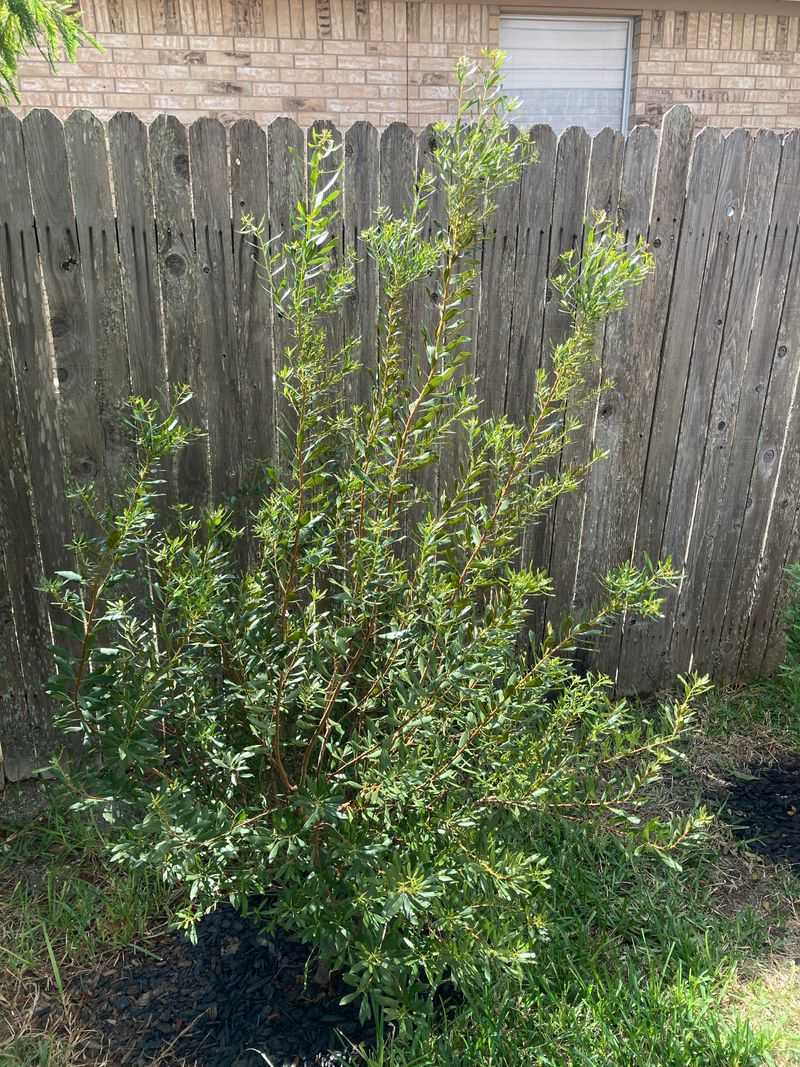
A native screen does not have to mean waiting decades for coverage.
Southern wax myrtle, Morella cerifera, can grow quickly under good conditions and develop into a broad, multi-stemmed evergreen screen.
In much of Georgia, especially the Piedmont and Coastal Plain, it holds foliage through winter and fills horizontal gaps as effectively as vertical ones.
Mature size usually lands around 10 to 20 feet, though favorable sites can produce larger plants.
That scale makes wax myrtle especially useful between taller trees in a mixed screen. It can cover the lower sightlines that open up beneath mature canopies without turning the entire property line into one species.
The plant tolerates a useful range of conditions.
Moist soils suit it well, but established wax myrtle can also handle periodic dry weather. Sun encourages fuller growth, while some shade is acceptable.
Pruning can keep the plant dense or gradually turn it into a more tree-like form by removing lower stems.
Wildlife appreciates the grayish waxy fruits produced by female plants.
Yellow-rumped warblers are especially associated with them, and dense branching offers cover for other birds.
North Georgia gardeners may see some foliage loss after harder freezes, so expectations should match local winter conditions.
For faster native privacy, wax myrtle is one of the strongest tools in the Georgia lineup.
Leyland cypress built its reputation on speed. Wax myrtle answers with speed plus berries, habitat, and a much softer landing in the landscape.
7. Try Loblolly Bay In Moist Southern Sites
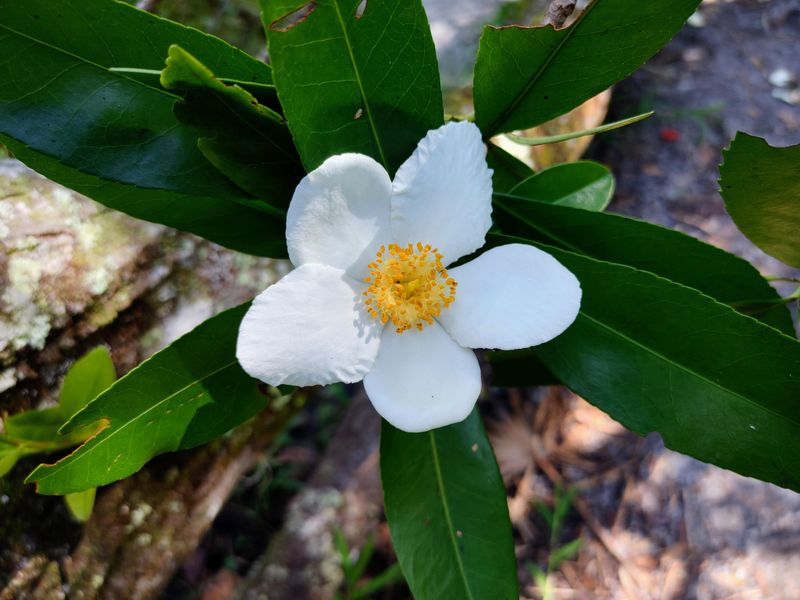
Loblolly bay, Gordonia lasianthus, is the specialist on this list.
It belongs mainly in Georgia’s Coastal Plain, where naturally moist, acidic soils match the conditions it uses in the wild. A dry Piedmont slope or ordinary suburban clay bed is not the place to force it.
On a suitable southern site, though, the payoff is remarkable.
Loblolly bay can reach roughly 40 to 60 feet tall and develop a relatively upright crown. Glossy evergreen leaves create year-round cover, while large white flowers appear during summer when many flowering trees have already finished their show.
That combination makes it valuable along wet property edges.
Moist flatwoods, pond margins, low borders, and consistently damp acidic ground can support a tree that offers privacy without looking like a conventional hedge.
The flowers bring ornamental drama to a screen that still feels natural.
Seeds and dense foliage add modest wildlife value, while the upright form helps the tree fit into narrower wetland transitions better than some broad native evergreens.
Site matching is everything.
Loblolly bay is not a tree to buy first and find a place for later. Check moisture, soil character, and regional suitability before planting.
That selectiveness makes it different from redcedar or yaupon.
For the right south Georgia yard, however, it turns a difficult wet border into one of the most distinctive parts of the landscape.
Sometimes the best Leyland replacement is not tougher everywhere. It is perfectly suited somewhere.