Southern Magnolias Look Like Easy Shade Trees For Florida Yards – The Roots Say Otherwise
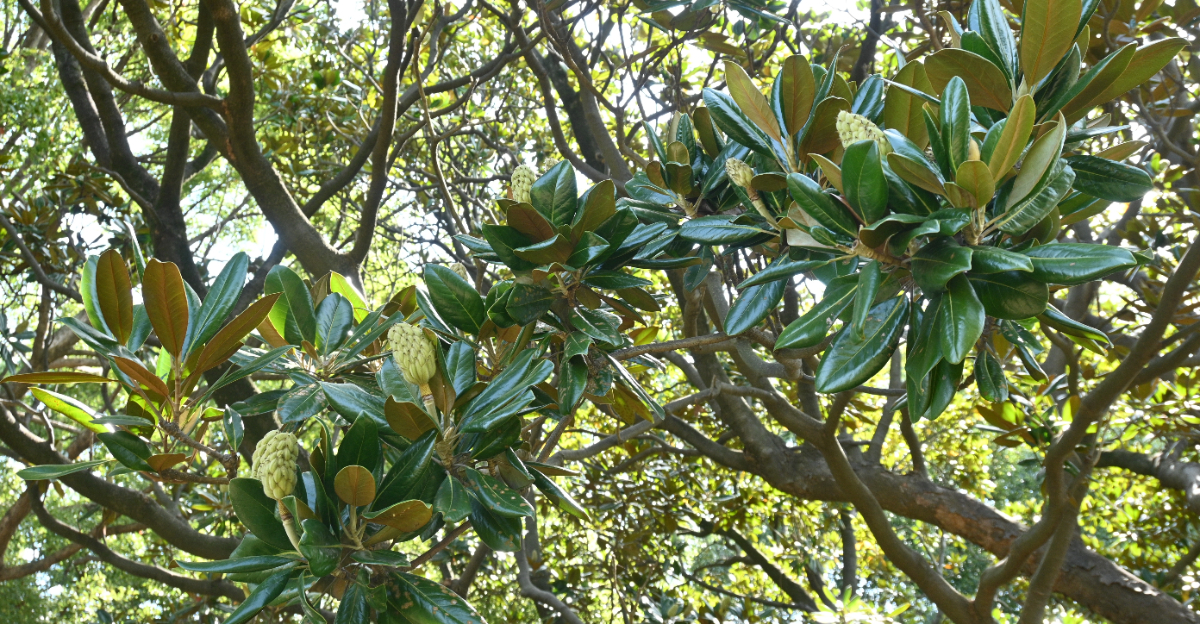
Southern magnolias sell themselves. That canopy, those flowers, the kind of shade that turns a Florida yard into somewhere worth being on a summer afternoon.
At the nursery, standing next to a container-grown specimen that fits in a truck bed, nothing about it suggests what is coming. The roots say otherwise.
A southern magnolia in a Florida yard is a long term negotiation between the tree and everything around it. Driveways crack.
Foundations get pressure tested. Sewer lines find themselves in conversations they did not anticipate.
The shallow, aggressive root system that makes this tree so vigorous is the same one that makes it a liability in any yard where infrastructure exists within reach. The shade is real.
The flowers are worth stopping for. The roots are the part of the southern magnolia story that the nursery tag never quite gets around to mentioning before the sale is made.
1. Magnolia Roots Travel Far Beyond The Shade You See
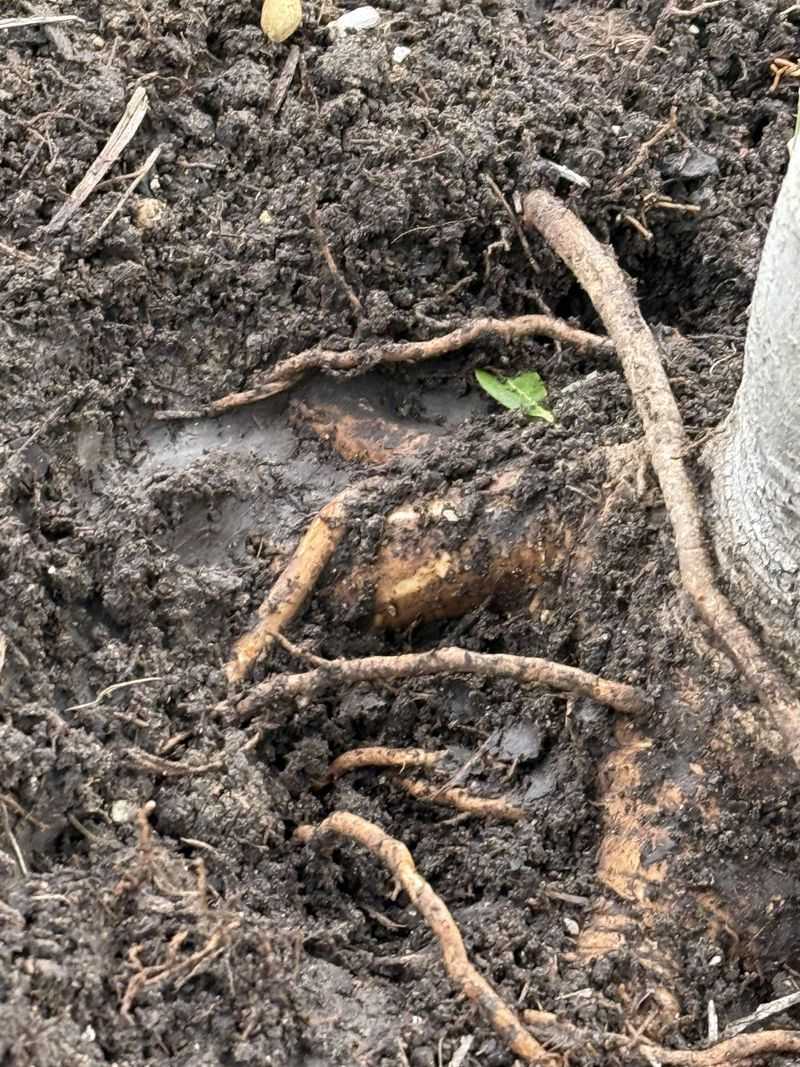
Most people in Florida size up a tree by what they can see above ground. A magnolia with a 20-foot canopy looks like it belongs in a modest yard, and that assumption is where trouble often starts.
The root system of a Southern magnolia, Magnolia grandiflora, can extend well beyond what the leafy canopy suggests.
Roots do not stop growing at the drip line. They follow paths of least resistance through the soil, chasing moisture, oxygen, and open space.
A tree that appears contained overhead may be quietly spreading underground into areas you have already committed to other uses.
The root system tends to be broad rather than deeply vertical. That horizontal spread means roots can reach under patios, near utility lines, or alongside foundations without giving you much visual warning above ground.
Visible canopy size is simply a poor guide to underground space needs. A magnolia that looks right-sized for a corner of your yard may still need a much larger unobstructed soil area to stay structurally sound and healthy over decades.
Before you plant, measure the full area around the planting site, not just the space overhead. Give serious thought to what sits within a wide radius at ground level and below.
2. Four Canopy Widths Changes The Planting Math Fast
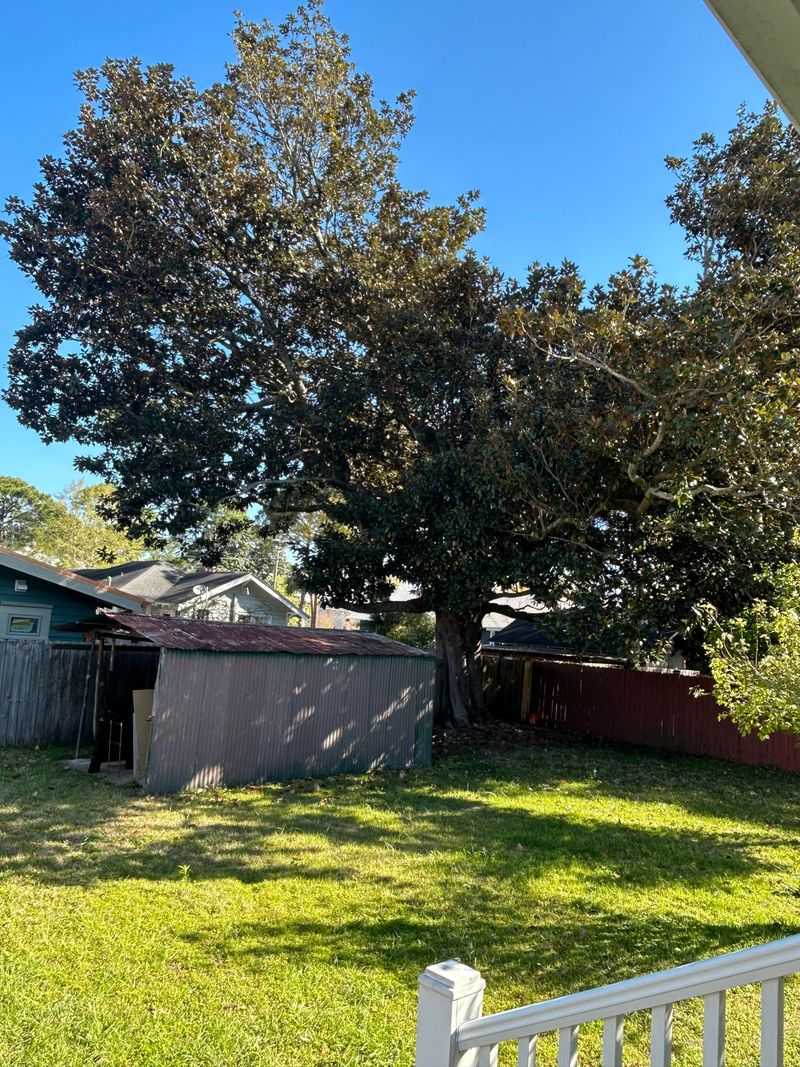
UF/IFAS research guidance notes that tree roots may spread roughly four times the canopy width. For a Southern magnolia that matures to a 40-foot canopy spread, that estimate puts potential root territory at around 160 feet in diameter.
That number changes the planning conversation completely.
Most Florida homeowners think about canopy spread when choosing a planting spot. Very few homeowners think about four times that number.
That gap between expectation and reality is where long-term conflicts with driveways, sidewalks, pools, and utility lines tend to develop. This four-canopy-width figure is a general root-system estimate, not a hard boundary.
Roots will not automatically reach every inch of that area. Soil type, moisture availability, and physical barriers all influence where roots actually travel.
Still, the estimate is useful because it forces realistic planning. A tree placed 10 feet from a sidewalk might seem fine today but could gradually encounter that hardscape as it matures over 20 or 30 years.
Your Florida Garden Changes Every Week. Your Plan Should Too.
Gardening in Florida changes quickly throughout the season. Every Friday you’ll receive a simple weekly plan showing exactly what to plant, prune, fertilize, harvest, and protect so you never miss the right timing.
Use the four-canopy-width estimate as a planning prompt, not a guarantee. Ask yourself what sits within that potential zone before committing to a planting location near utilities, structures, or paved surfaces.
Planning ahead is far easier than managing conflicts later.
3. A Driveway Can Steal More Rooting Room Than You Expect
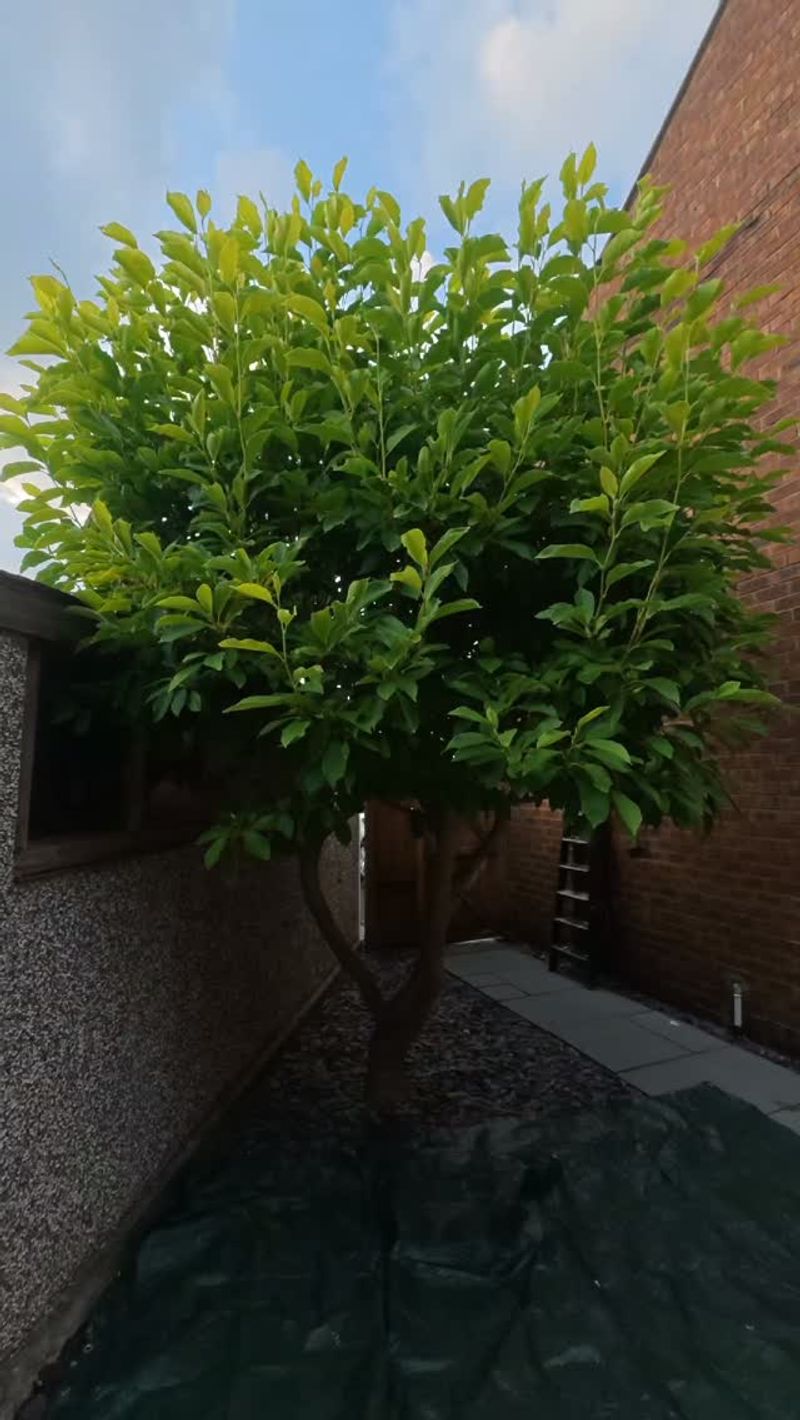
Concrete does not just sit on top of the soil. A typical driveway includes a compacted gravel or crushed stone base layer that can extend several inches below the surface.
That base material dramatically reduces the usable soil volume available to any nearby tree.
A magnolia planted between a Florida driveway and a house faces a squeeze from both sides. Roots seek suitable soil containing moisture, oxygen, and room to expand.
When hardscape blocks one direction and a foundation blocks another, the tree has fewer options for healthy root development.
Roots do not intentionally grow toward concrete. They simply follow whatever path offers the best growing conditions.
If the only available soil happens to run alongside or under a driveway edge, roots will use it because that is where resources are.
UF/IFAS planting guidance favors generous tree lawns and sites without restrictive sidewalks for large trees. A tight corridor between a driveway and a building rarely qualifies as a generous planting zone for a tree that can eventually reach 60 to 80 feet tall.
Walk the full planting site and identify every hard surface nearby. A spot that looks open may have more restrictions at the soil level than it appears from above.
Rooting room matters as much as overhead clearance.
4. Compacted Soil Leaves This Giant With Nowhere Good To Grow
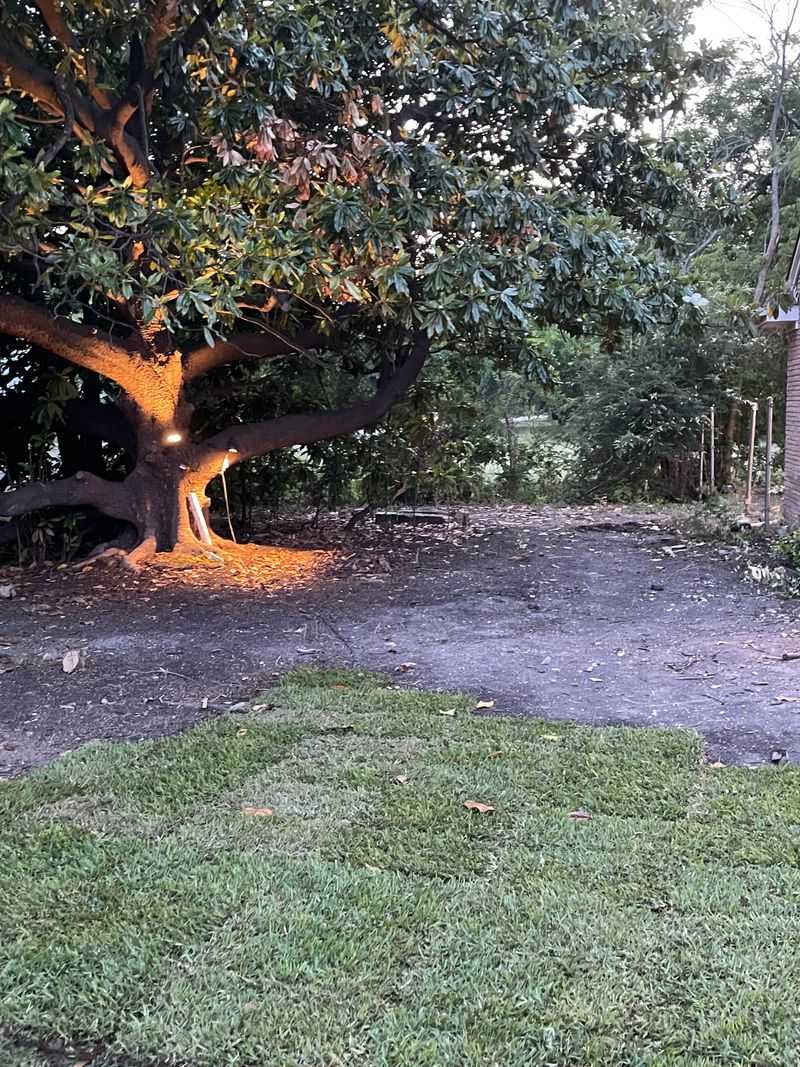
Soil compaction is one of the quieter threats to large landscape trees, and magnolias are not immune. When construction vehicles, heavy equipment, or repeated foot and car traffic compress the soil, air and water movement through it slows significantly.
Roots need both to function well.
New homes often have compacted fill soil around the foundation from grading and construction work. A magnolia planted in that environment starts with a disadvantage that may not show up for several growing seasons.
That delay makes the problem easy to miss until it is advanced.
Parking vehicles near the root zone of an established magnolia compounds the issue over time. Each pass compresses soil a little more, gradually shrinking the functional rooting area without any single dramatic event to signal the damage.
Protecting soil before planting is far easier than trying to repair severe compaction later. Once a tree is established, deep tilling near the root zone can harm the roots you are trying to help.
Prevention at the start gives the tree its best chance.
Before planting, assess the soil quality and compaction level of your chosen Florida site. If the ground feels brick-hard underfoot or was recently graded, consider soil improvement or a different location entirely.
A magnolia needs real, workable soil to grow well for decades.
5. Cutting Big Roots Later Can Create A Much Bigger Problem
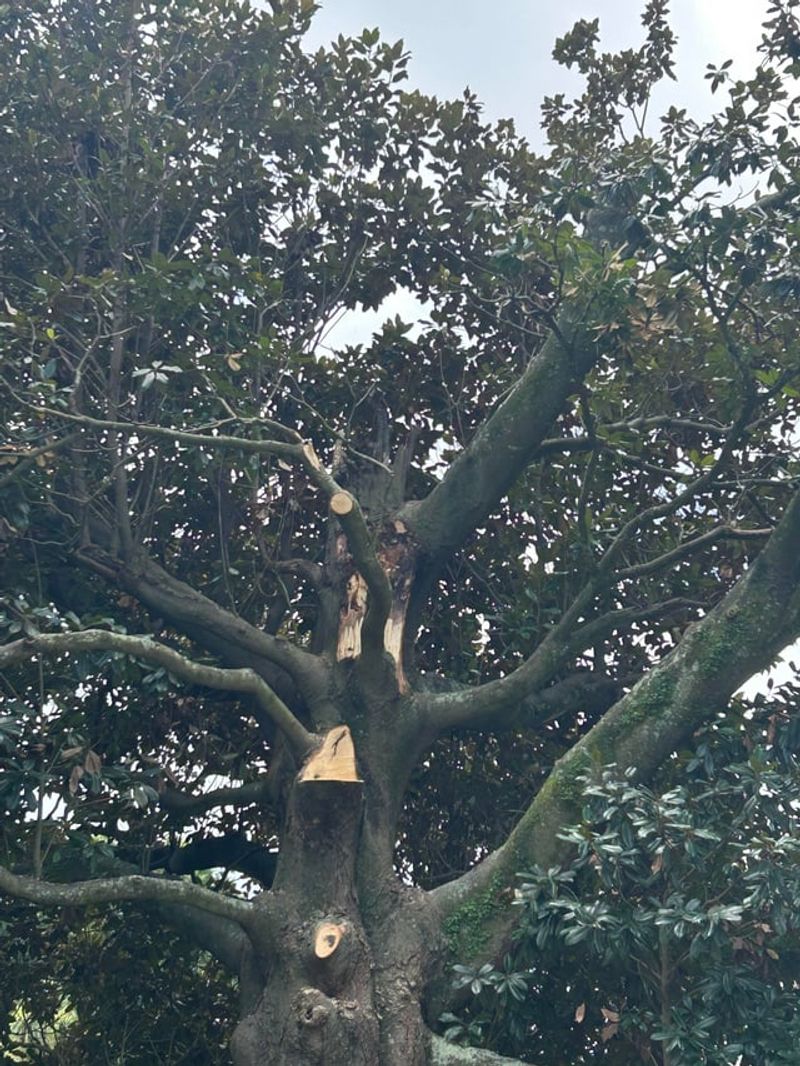
Driveway replacement projects often involve excavation that goes deeper and wider than homeowners expect. If a magnolia is nearby, that work can intersect with major structural roots, and removing those roots is not a simple trim-and-move-on situation.
Structural roots anchor a large tree and support its ability to stay upright under wind and storm loads.
Removing significant ones can affect both tree health and long-term stability, though the outcome depends on which roots are cut, how many, and how close to the trunk.
Not every cut root creates an immediate hazard. However, the risk is real enough that driveway replacement plans near a mature magnolia deserve professional review before excavation starts.
An ISA Certified Arborist can assess which roots are critical and what options exist to protect them.
Waiting until the contractor is already digging is too late for good decision-making. The conversation with an arborist should happen during the planning phase.
At that point, there is still time to adjust the project scope, reroute the work, or consider alternatives.
If you are planning any driveway, sidewalk, or utility work near a magnolia, bring in a certified professional before the first shovel breaks ground. Early consultation protects both the tree and your investment in the hardscape project itself.
6. Girdling Roots Can Start Trouble Before The Tree Leaves The Nursery
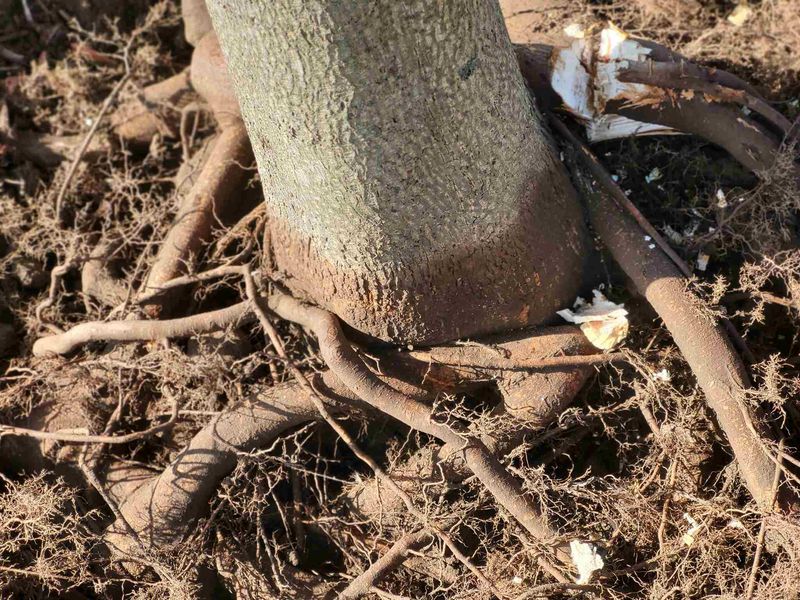
Some root problems begin long before a tree ever reaches your yard. Container-grown trees can develop circling roots when they spend too long in a pot that limits outward growth.
Those roots begin curling around the root ball instead of spreading outward naturally.
A circling root that wraps around the base of the trunk can eventually compress the bark and restrict the flow of water and nutrients. This is called a girdling root, and it can create serious structural and health problems as the tree grows larger over time.
Inspecting the root flare before purchase gives you useful information. The root flare is the visible widening at the base of the trunk where roots begin to spread.
If the base looks like a straight pole going into the soil, roots may be buried too deep or circling beneath the surface.
Planting depth matters here too. A tree set too deeply in the ground can develop additional root problems as surface roots struggle to find oxygen.
Proper planting depth keeps the root flare at or slightly above the soil surface.
At the Florida nursery, ask to see the root ball before you buy. Look for roots spreading outward from the base, not circling tightly.
A small investment of time at purchase can prevent significant problems years down the road.
7. Restricted Soil Makes Drought Harder On An Otherwise Tough Tree
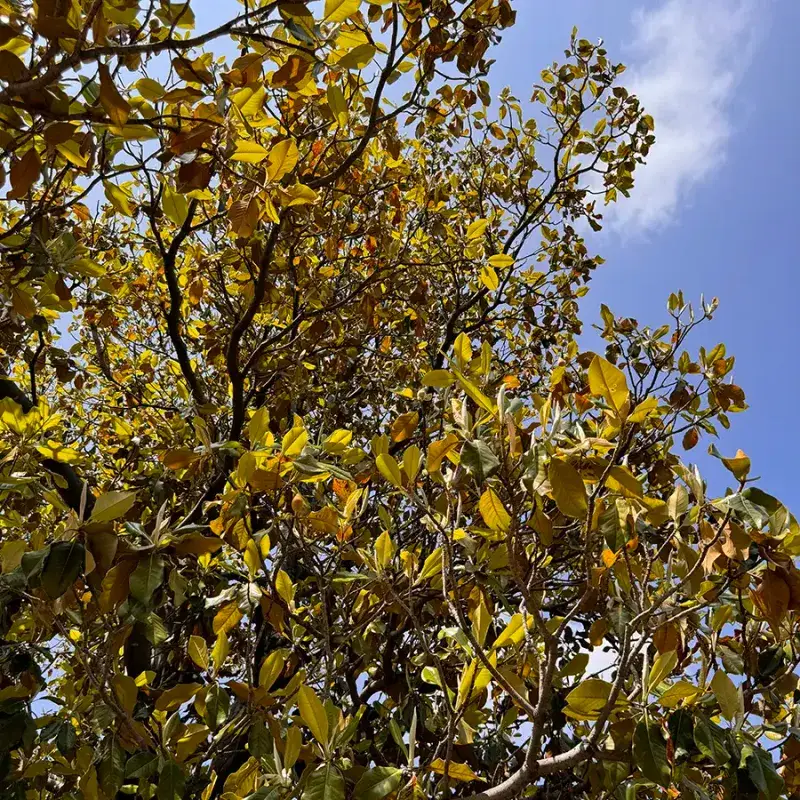
Established Southern magnolias have a reasonable ability to handle dry spells once they are well-rooted. That reputation for toughness is real, but it comes with an often-overlooked condition.
The tree needs enough functional root area and soil volume to access stored moisture.
A magnolia planted in a restricted space has a smaller reservoir to draw from during dry weather. When pavement covers much of the surrounding soil, rainfall cannot infiltrate as effectively.
The ground under concrete stays dry while the small exposed soil area around the tree takes on all the work.
Pavement also reflects and stores heat, raising soil temperatures near the root zone. That added heat increases moisture loss from both soil and leaves, putting more stress on a tree that already has limited rooting room to work with.
Irrigation can help during the establishment period, which typically spans the first two or three growing seasons.
However, supplemental watering cannot permanently replace the function of a full, healthy root system working through a generous volume of natural soil.
A magnolia in a tight planting area will need more attention during dry stretches than one with open soil all around it. Monitor soil moisture near the root zone, especially during the first few years and during extended dry periods in summer.
8. Even A Smaller Magnolia Needs More Underground Room Than It Looks
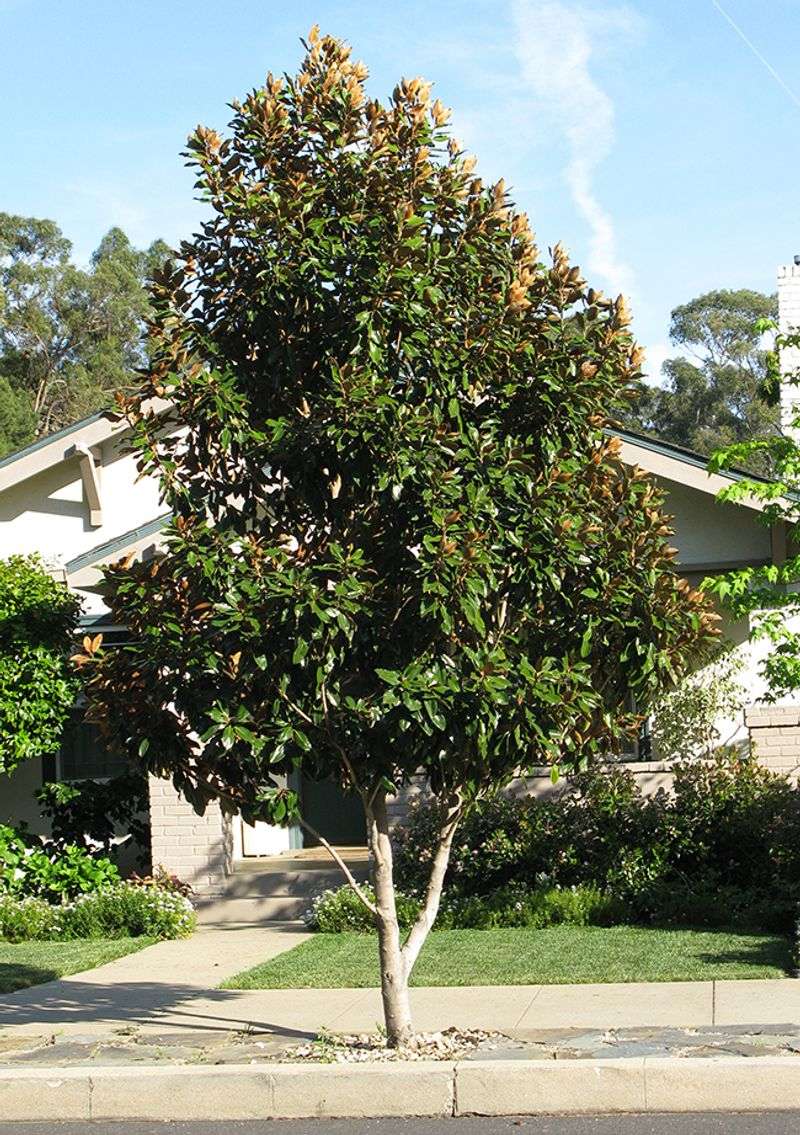
Compact magnolia cultivars have become popular choices for smaller yards. Varieties with narrower or shorter canopies can fit into spaces where the standard species would clearly be too large.
That is genuinely useful, but a smaller canopy does not automatically mean a small root system.
Root spread is tied to the tree’s overall size and age, not just the visible width of its branches. A cultivar bred for a reduced canopy may still develop a substantial root system as it matures, especially if it is planted in good soil with plenty of moisture.
Southern magnolia in suitable conditions can reach roughly 60 to 80 feet tall. Even compact selections can grow considerably larger than their nursery tags suggest if conditions are favorable.
Checking verified mature height and spread data before purchasing is a step worth taking seriously.
Cultivar selection can reduce some conflicts, but it does not eliminate the need for thoughtful site planning. The underground space requirement should still be part of the conversation, even when a smaller tree seems like the obvious answer to a tight yard situation.
Root space should be planned before the tree goes into the ground, regardless of cultivar size. Research the verified mature dimensions of any selection you are considering, and match those dimensions to the actual rooting area available at your planting site.