One Yard Change Brought Painted Buntings Back To A Central Florida Garden
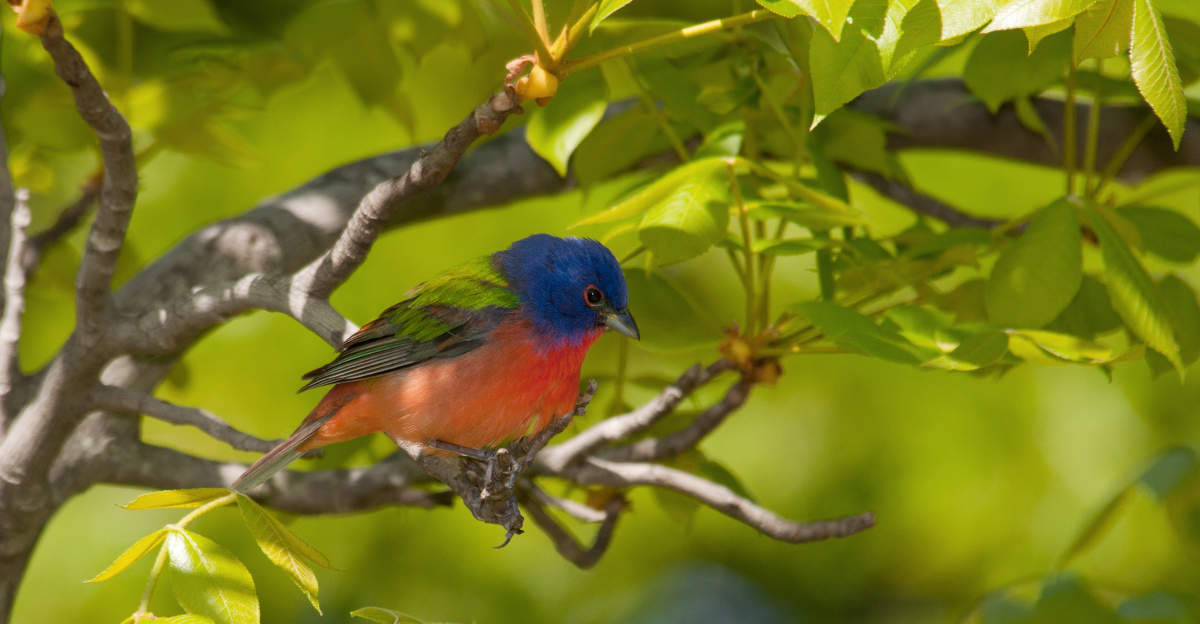
Painted buntings disappear from Central Florida gardens more often than they should. Not because the birds left the region.
Because something in the yard stopped meeting the standard they apply before committing to a space. One yard change has brought them back consistently for gardeners who figured out what that standard actually requires.
Not a redesign, not a new irrigation system, not an expensive native plant overhaul. One specific addition that addressed something the garden had quietly stopped providing.
Painted buntings are specific about what they need. When something in that equation disappears, they move on without explanation.
When it comes back, they notice faster than most people expect. What that one change actually was, and why it works, is worth knowing for any Central Florida garden still waiting on painted buntings that stopped showing up.
1. The Bare Lawn Edge Became A Place Buntings Could Disappear Into
A sharp lawn edge trimmed to the soil line looks tidy, but for a secretive bird, it offers nowhere to land safely. Painted Buntings are strongly associated with dense, low vegetation and tend to stay close to cover rather than venturing far into open turf.
The original problem in this yard was exactly that: a hard boundary between mowed grass and a fence, with almost nothing growing in between.
Converting that edge did not require redesigning the entire yard. The Florida homeowner started by allowing a three-to-four-foot strip along the fence line to fill with bunch grasses, low native shrubs, and a few sprawling ground-level plants.
That narrow zone became a transition area where birds could feed near open ground and retreat quickly into vegetation if startled.
Painted Buntings prefer semi-open habitat with dense low growth nearby. They are not birds of wide-open lawns, and they are not birds of closed-canopy forest either.
The sweet spot is somewhere in between, and a well-planted border strip can create exactly that structure. Adding a clump of muhly grass, a low native shrub, and a few wild-looking seed producers along any fence line is a manageable first step.
The transformation does not need to be large to be useful, but it does need to feel connected and layered rather than sparse and decorative.
2. Dense Low Cover Gave These Secretive Birds What The Yard Was Missing
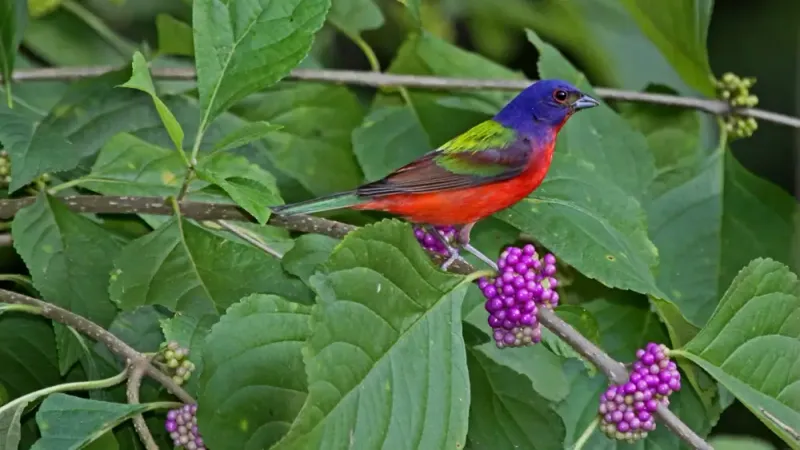
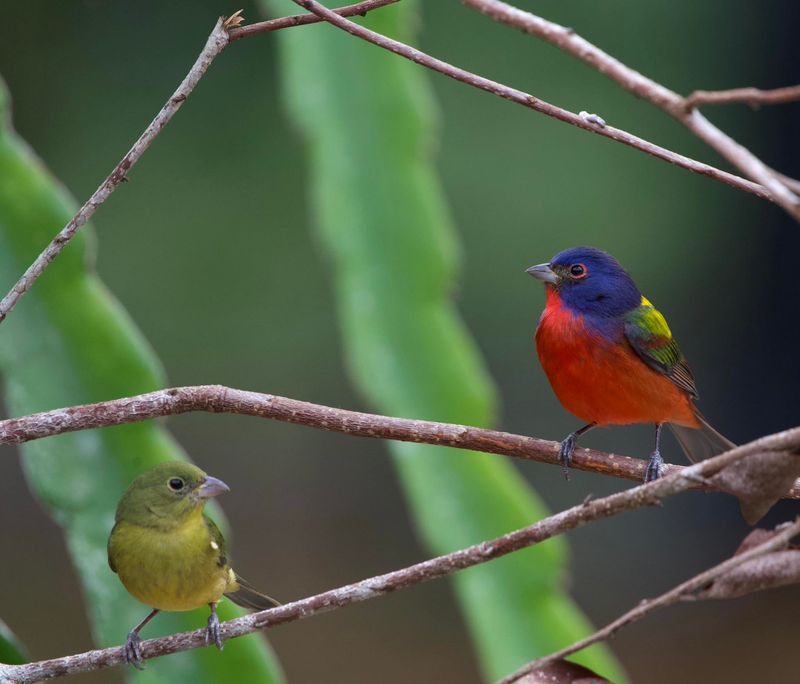
Most people who spot a male Painted Bunting for the first time cannot believe a bird that colorful could be hard to find. Yet despite those vivid red, blue, and green feathers, the species can vanish in seconds into a tangle of stems and leaves.
Females and immature birds are soft green and blend into foliage so completely that they are easy to overlook entirely.
The yard in this case study had ornamental plants, but they were isolated: one shrub here, one clump of grass there, each surrounded by open mulch or bare soil. That kind of scattered landscaping does not give secretive birds the connected cover they need.
A single ornamental shrub surrounded by raked mulch is not the same as a dense, tangled strip where stems overlap and ground-level vegetation fills every gap.
Your Florida Garden Changes Every Week. Your Plan Should Too.
Gardening in Florida changes quickly throughout the season. Every Friday you’ll receive a simple weekly plan showing exactly what to plant, prune, fertilize, harvest, and protect so you never miss the right timing.
Low shrubs, grasses that arch at knee height, and plants with branching stems close to the ground all contribute to the kind of structure these birds prefer.
Several connected plants growing into each other create far more usable cover than the same number of plants spaced apart.
Females and young birds especially rely on that visual concealment throughout the day. Thinking about cover as a continuous woven zone rather than a collection of individual plants changes how the border gets designed and how useful it becomes.
3. Seed-Heavy Grasses Put A Winter Pantry Right Beside The Shelter
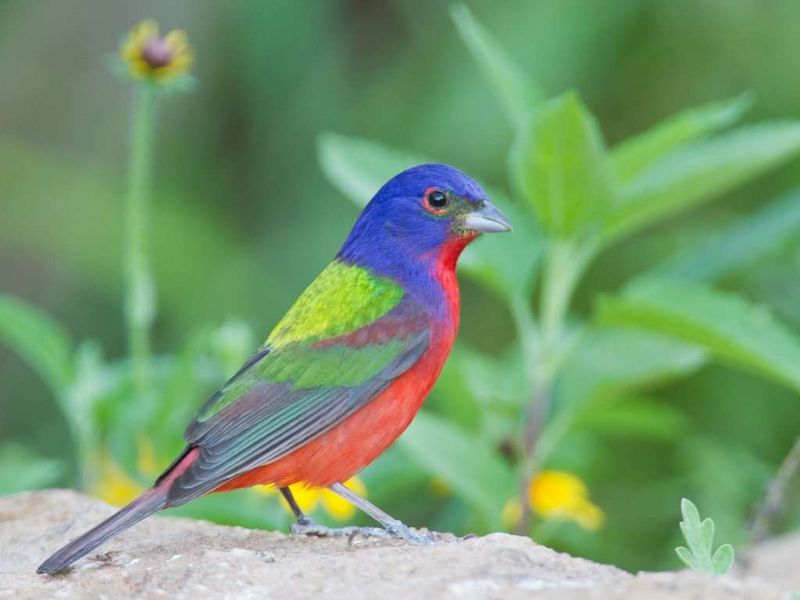
Seeds make up a large portion of the Painted Bunting’s diet throughout much of the year. Research and field observation consistently document their use of grass seeds, sedge seeds, and small weed seeds.
That makes a seed-producing plant border far more than decoration: it functions as a reliable food source positioned right next to protective cover.
Native bunch grasses suited to Central Florida, such as muhly grass and various panic grasses, produce abundant small seeds that ripen across the cooler months.
Allowing those seedheads to mature fully rather than cutting them immediately after bloom extends the window of natural food availability.
A seedhead left standing through the season offers more to a foraging bird than a stem cut clean before the seeds fully form.
Naturally produced seeds behave differently than commercial birdseed. They ripen gradually, stay attached to the plant at varying rates, and fall to the ground at different times, creating a longer feeding window.
The key point is that food becomes significantly more useful when it sits within a few hops of protective cover. A bird willing to feed in the open will do so more readily when retreat is quick and easy.
Planting grasses for seed production is not a guarantee of bunting visits, but it does add a functional food layer that complements the cover the border already provides.
4. Open Patches Kept Feeding Space Within A Few Quick Hops
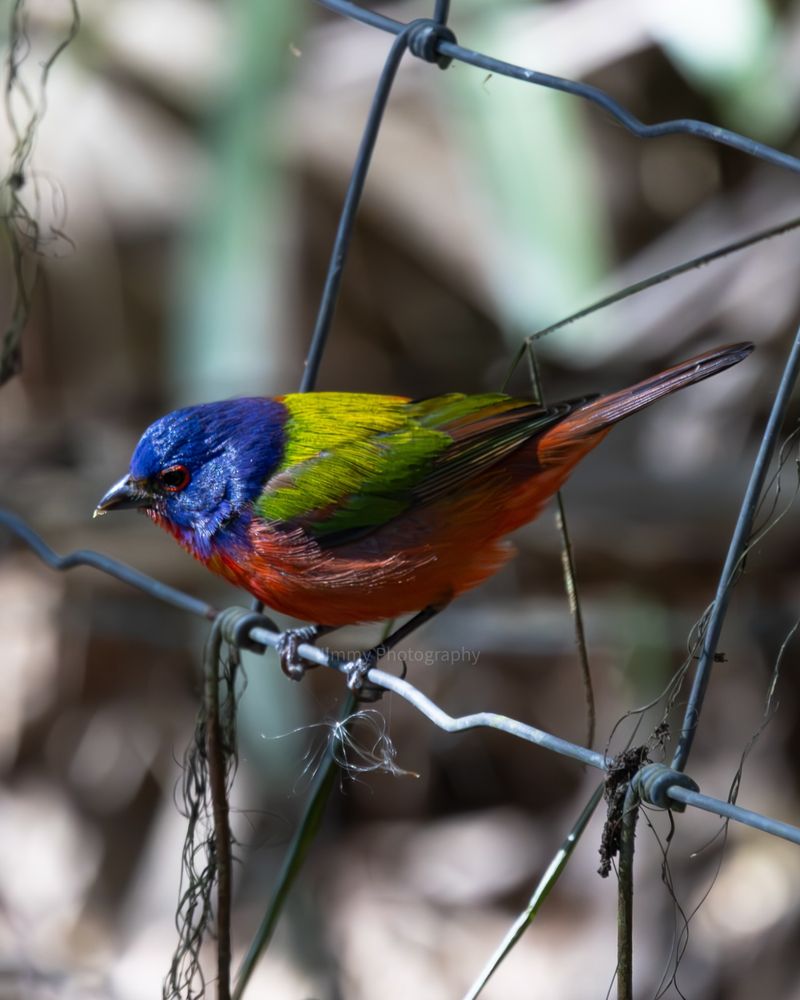
Thick cover from one fence post to the next sounds ideal. However, a solid wall of vegetation with no gaps can reduce how useful the border is for ground-feeding birds.
Painted Buntings forage on or very near the ground and will venture into short grass or open soil to pick up seeds that have fallen from nearby plants. Small open pockets beside dense cover create a practical pattern: feed in the clearing, retreat into the thicket.
This yard kept a few natural gaps in the border where shorter plants or open soil patches existed. Those small clearings were not planned as bird features specifically, but they ended up functioning as low-pressure feeding spots.
A bird can scan for danger from the edge of the cover, step into the open briefly, and return quickly if anything moves nearby.
The goal is not to strip away vegetation but to avoid a design so uniform that no feeding space exists at the transition zone. A short turf pocket, a section of open soil beneath a grass clump, or a small path edge beside the border all serve this purpose.
Spatial variety within the habitat strip matters as much as plant density. Thinking of the border as a series of small rooms rather than one solid barrier helps clarify where to leave useful gaps and where to let plants grow dense.
5. Native Shrubs Turned One Flat Yard Into Layers Of Refuge
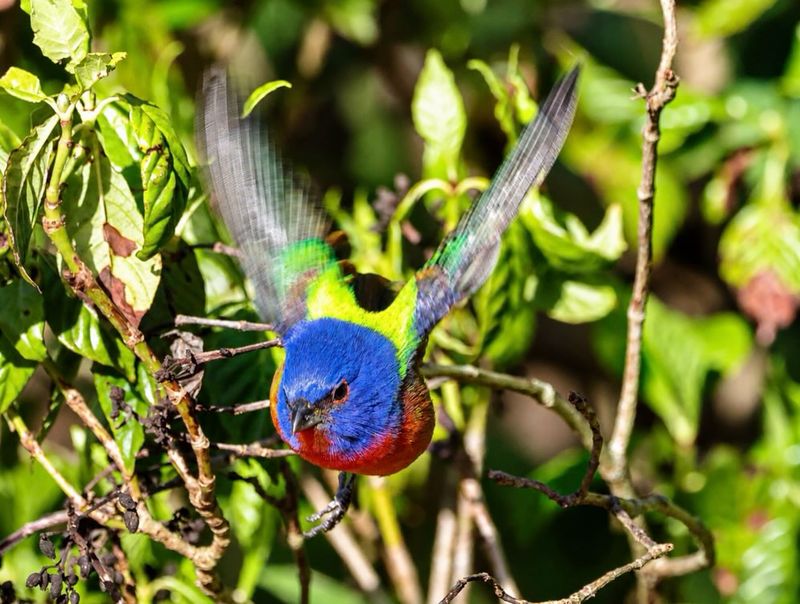
Flat turf from fence to patio gives birds almost nothing to work with vertically. Adding shrubs behind the grass layer changes that completely, creating several distinct vegetation heights within one narrow strip.
Low grasses, mid-level shrubs, and slightly taller plants toward the fence line all occupy different spaces. Each layer serves a different function.
Regionally appropriate native shrubs for Central Florida borders include beautyberry and Walter’s viburnum. Beautyberry produces purple fruit eaten by many birds, while Walter’s viburnum stays dense and manageable in a border.
These plants contribute to the food web by supporting insects as well as offering fruit, which broadens the habitat value beyond seed production alone.
Native plants are not strictly required for every layer. However, plants that evolved in the local environment tend to support more native insects, and insects matter to birds even when seeds are the primary food.
A shrub that hosts caterpillars or small beetles adds a protein source that commercially bred ornamentals rarely match. Keeping mature shrub size in mind matters too: a plant that reaches fifteen feet will overwhelm a three-foot border quickly.
Selecting low-growing or easily managed native shrubs keeps the layered structure useful without turning the border into a maintenance problem. Vertical variety, more than any single plant choice, is what makes the habitat feel complete.
6. Leaving Seedheads Standing Kept The Border Useful For Longer
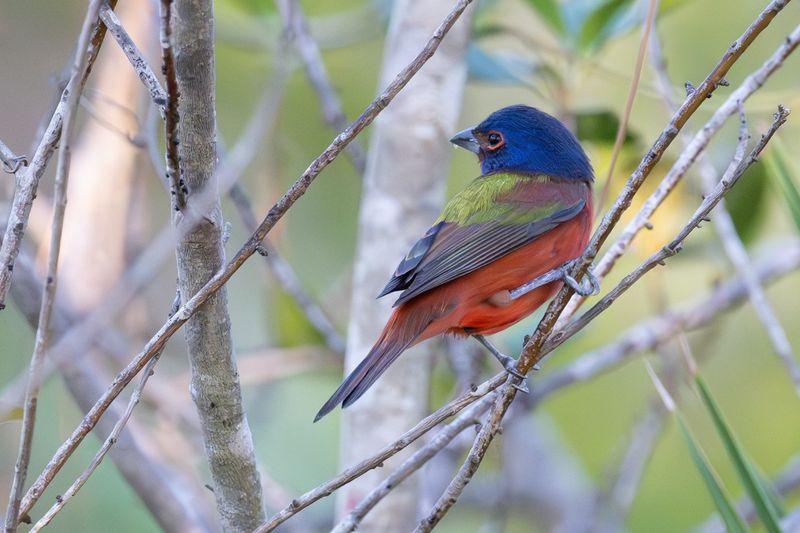
Cutting every grass stem and flower stalk immediately after bloom is a common yard habit. However, it quietly removes a food source before many birds have a chance to use it.
Seedheads that look spent to a gardener may still hold seeds that ripening slowly or falling gradually to the ground over several weeks. Removing them early shortens that window significantly.
Leaving selected stems standing through the cooler months does not mean abandoning the border entirely. A few well-placed cuts can remove plants that are spreading where they are not wanted.
Leaving most seedheads intact still allows the border to look intentional rather than neglected. Choosing which stems to cut and which to leave is a form of active management, not the absence of it.
Timing matters here too. Painted Buntings are most commonly observed in Central Florida during fall migration and through the winter months, with some moving through in spring.
That seasonal window aligns with the period when dried seedheads and late-ripening grass seeds are most available. Keeping the border stocked with natural food during those months increases the chance that a passing bird will find something worth stopping for.
Connecting seed availability to the seasonal calendar of bird movement is one of the more practical adjustments a homeowner can make without adding any new plants at all.
7. Skipping The Hard Trim Preserved Cover When Migrants Arrived
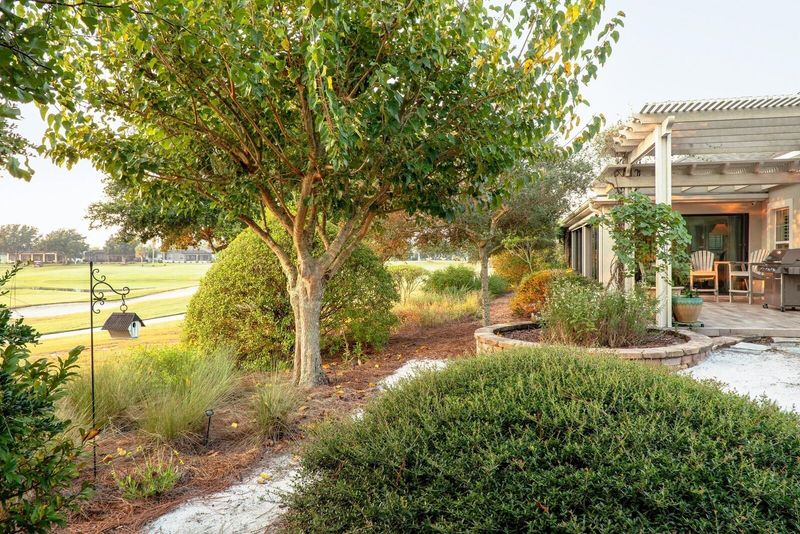
Cutting an entire border to the ground in late summer feels productive, but the timing can erase months of habitat structure right before migrants begin moving through.
Painted Buntings appear in Central Florida most reliably during fall migration, roughly from September into November.
They also occur as winter residents through March or April. A border that gets hard-trimmed in September may not recover its dense low structure before those birds arrive.
Selective pruning works better than synchronized aggressive cutting. Remove one or two plants that have grown past their intended space and tidy any genuinely overgrown sections.
Leave the rest of the border intact to preserve the cover that took months to develop. The goal is to maintain structure rather than reset it entirely each season.
Checking the border for active nests of other bird species before any major pruning is also worthwhile. Many small birds nest in low shrubs and grasses through spring and early summer, and even a modest trim can disturb nesting activity in progress.
Waiting until nesting season has clearly ended before doing heavier work protects a wider range of wildlife using the border.
For Painted Buntings specifically, the value of the border during their seasonal window depends entirely on that cover being present and dense when they actually arrive.
Preserving structure through restraint is often more effective than any new planting.
8. The Bird Feeder Became A Bonus Instead Of The Main Attraction
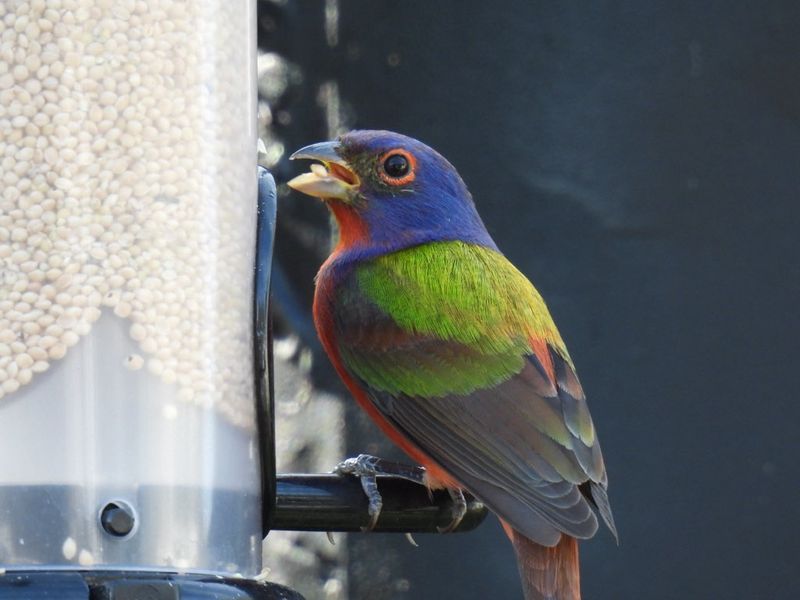
Feeders get a lot of attention in bird-watching conversations, and Painted Buntings do visit them. White proso millet, which is well-documented as a preferred seed for this species, can draw birds to a feeder when the surrounding habitat gives them a reason to linger.
The feeder works best as part of a larger habitat picture rather than as the reason a bird stays.
A feeder placed in an exposed location, far from any cover, asks a small bird to sit in the open while eating. That is a vulnerable position, and many birds will avoid it or visit only briefly.
Positioning a feeder close to the border, so that a bird can retreat into dense vegetation within a few hops, makes the setup feel safer and more usable.
Keeping feeders clean and managing spilled seed on the ground are both practical habits worth maintaining. Wet or moldy seed beneath a feeder can create problems, and accumulated seed attracts rodents that may discourage birds over time.
The habitat strip, by contrast, continues providing value even when the feeder is empty, the seed runs out, or the feeder needs cleaning. That reliability is the real point of this entire case study.
The meaningful change was not one magic plant or one feeder. Replacing an exposed edge with a connected, seed-rich, low-cover habitat strip was what shifted the yard from empty to visited.