Sudden Brown Patches In Your New York Lawn Could Signal A Bigger Issue
A dry patch of grass just showed up on your lawn overnight, and it wasn’t there yesterday. No heat wave, or a missed watering session, just an odd, lifeless circle staring back at you.
The damage you’re seeing on the surface usually starts somewhere you can’t see at all. Whatever’s happening below ground is already further along than it looks.
Across New York, this pattern shows up almost every year around this time, when conditions underground quietly shift in the yard’s favor. Rainfall has nothing to do with it.
Get to the bottom of what’s really going on down there, and that patch stops being a mystery and starts being a fixable problem.
Grubs Feed On Grass Roots Below
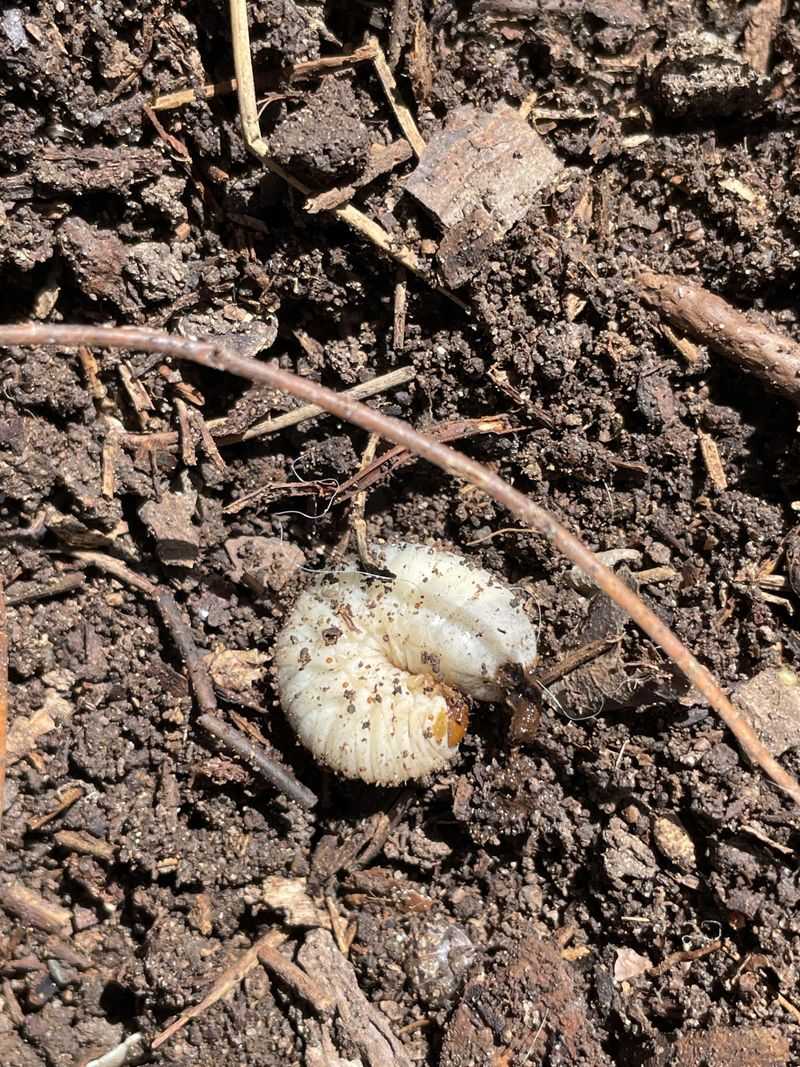
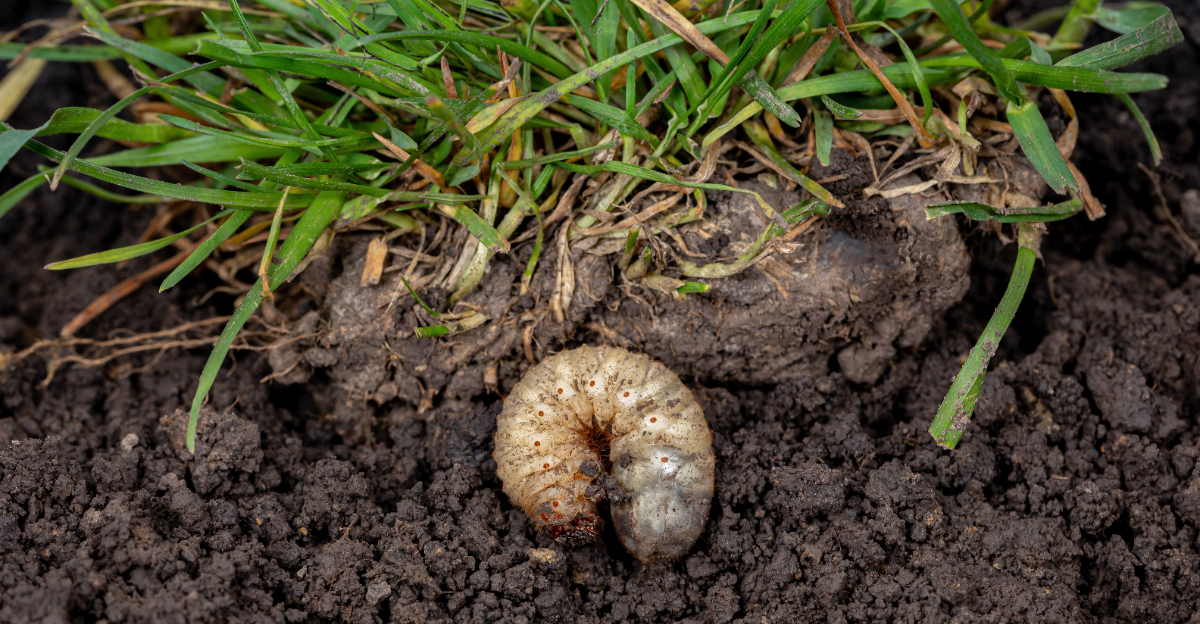
Most lawn problems start at the surface, but grub damage starts underground. White, C-shaped larvae curl up just an inch or two below the soil, silently chewing through grass roots.
Grubs are the immature stage of beetles like Japanese beetles and European chafers. Both species are widespread across New York and peak in summer.
Each grub severs the roots it feeds on, cutting off the grass plant’s access to water and nutrients. The turf above has no idea what is coming.
A healthy lawn can handle a few grubs without showing signs. Most experts suggest that 10 or more grubs per square foot is the threshold where visible damage begins.
Younger grubs, present in August and September, are the most destructive feeders. They are small but aggressive, and they work fast across a wide area.
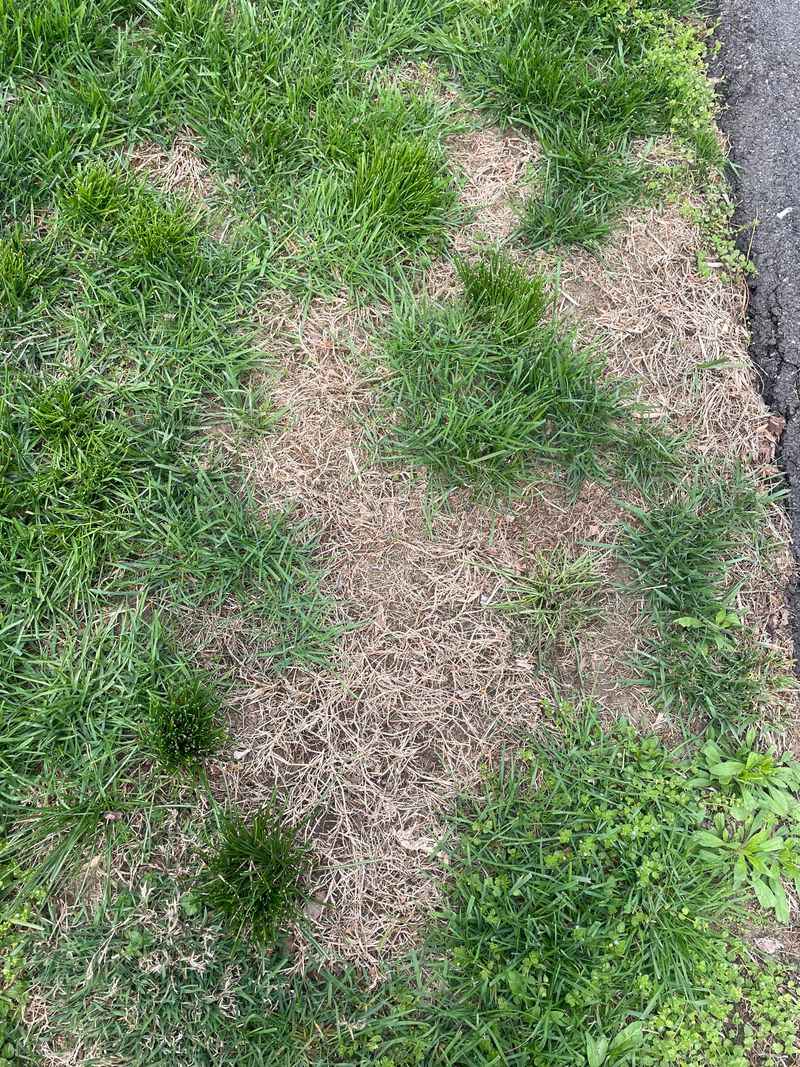
The tricky part is that grub feeding mimics drought stress perfectly. Grass turns brown, thins out, and looks wilted even after a rain. Pulling back the turf is the only real way to find out what’s happening beneath the surface.
To check for grubs, use a flat spade to cut a one-foot square of sod. Fold it back like a book and count the grubs in the soil beneath.
Finding more than ten grubs in that sample means treatment is likely needed. Acting early protects your lawn from escalating damage throughout the fall season.
Patches Pull Up Like Loose Carpet
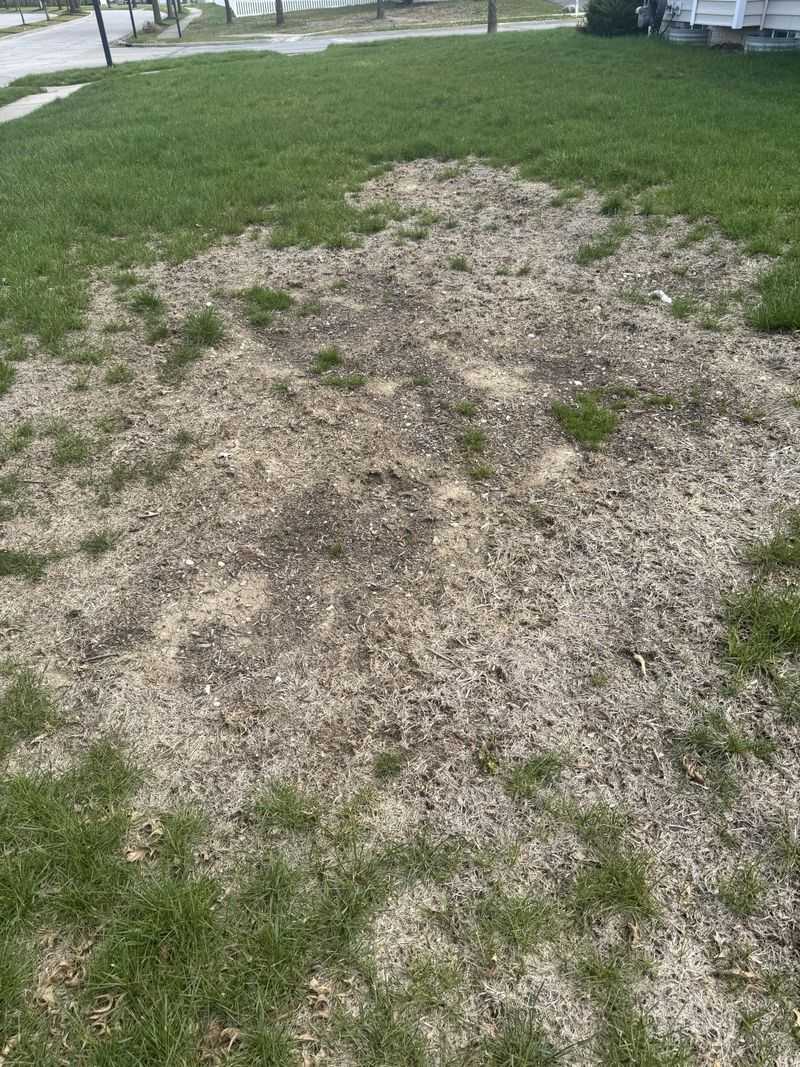
Here is a quick test every New York homeowner should try. Walk to a brown patch and grab a handful of the dead grass. Now pull.
If the turf peels back with almost no resistance, that is a major red flag. Healthy grass holds firmly to the soil because its roots grip deep and strong.
Grub-damaged turf has no roots left to anchor it. The larvae chew through the entire root system, leaving the grass floating like a loose rug on bare soil.
This carpet-like peel is one of the most reliable signs of grub activity. It separates grub damage from drought, disease, or poor soil conditions quickly.
Drought-stressed grass is still rooted, even when brown. You will feel resistance when you tug it, because the roots are still attached and alive beneath the surface.
Grub-damaged grass offers no pushback at all. It rolls back cleanly, sometimes in large sections, revealing pale soil and squirming larvae underneath. This quick test takes only seconds, and no tools are required.
Your New York Garden Changes Every Week. Your Plan Should Too.
Gardening in New York changes quickly throughout the season. Every Friday you’ll receive a simple weekly plan showing exactly what to plant, prune, fertilize, harvest, and protect so you never miss the right timing.
Once you peel back the turf, look closely at the exposed soil. Count the grubs you see within a square-foot area to gauge the severity of infestation.
Catching this early, before the patches multiply, gives you the best chance of treating effectively. A small brown patch today can become a massive bare zone by October.
Damage Often Appears Suddenly In Late Summer
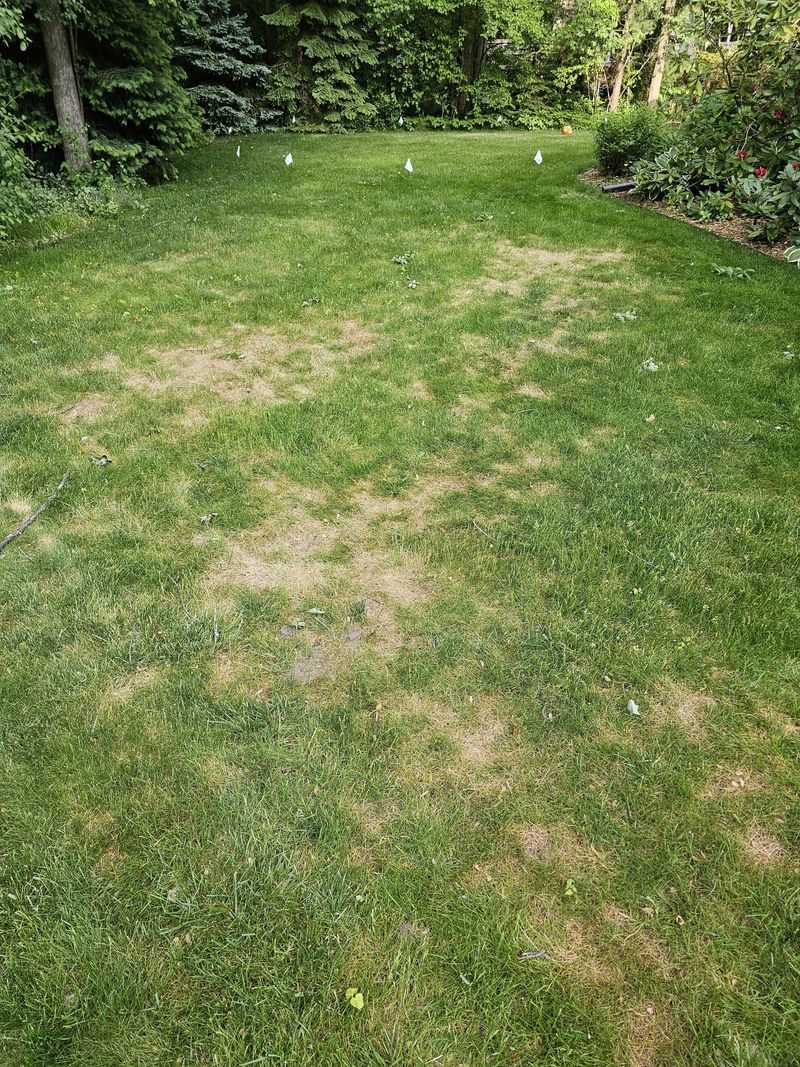
Late summer has a way of sneaking up on lawns. One week everything looks fine, and the next week brown patches appear almost overnight across the yard.
This sudden shift is not random. It follows the feeding cycle of beetle larvae, which hatch from eggs in mid-summer and begin aggressively feeding in August.
August and September are peak damage months for grub-affected lawns across the Northeast. The larvae are small but numerous, and they feed constantly as they grow.
Homeowners often blame the heat or a missed watering during this window. The timing is deceptive because summer stress and grub damage look nearly identical from above.
A key difference is that grub damage does not respond to irrigation. You can water a grub-damaged lawn every day and the brown patches will not recover or green up.
That lack of response is a strong clue that roots are gone. Without roots, water cannot reach the plant, no matter how much you apply to the surface.
This becomes especially clear when the damage appears fast and spreads in irregular shapes. Drought tends to brown grass more evenly.
Grub damage creates uneven, spreading patches that grow outward as larvae move through the soil. The edges of the damage zone often look ragged and irregular.
Noticing this pattern early in August gives you the best treatment window. Fall applications of grub control products are most effective when larvae are still small and close to the surface.
Birds And Animals Dig At Affected Spots
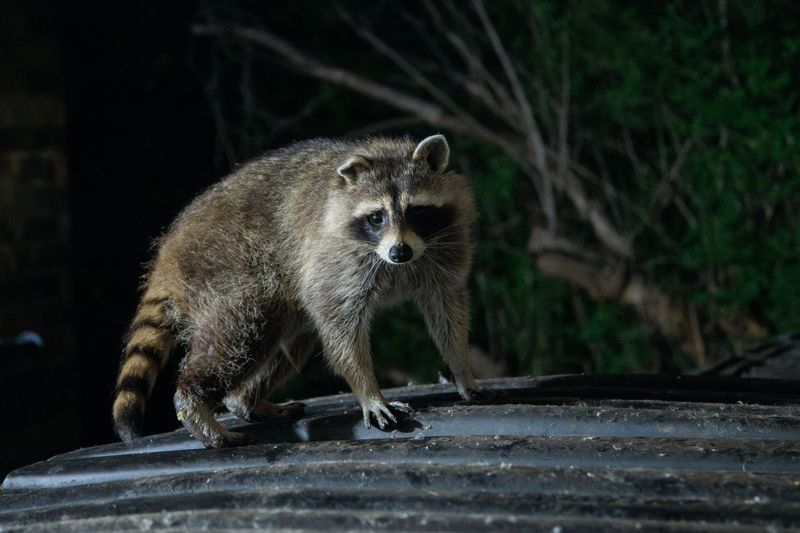
Skunks showed up in the yard last night and tore up a section of grass. Sound familiar? Wild animals digging in your lawn are not acting randomly.
Raccoons, skunks, crows, and starlings all have one thing in common: they love eating grubs. When grubs are present, these animals follow the scent right to your turf.
Skunks are especially notorious for this behavior. They roll back sections of sod with their front paws, rooting through the soil for a late-night grub feast.
Raccoons take it further, sometimes tearing up entire sections of lawn in a single night. The destruction can look worse than the grub damage itself by morning.
Birds like crows and starlings will peck repeatedly at the same brown spots. Watching where they concentrate their attention is actually a useful diagnostic tool for homeowners.
If the birds keep returning to the same patch day after day, that area likely has a high grub concentration below. Their instincts are reliable, even if their table manners are not.
Persistent animal digging is often the clearest confirmation you’ll get. The wildlife is essentially pointing you toward the problem.
Animal digging adds a second layer of damage on top of what the grubs already caused. Turf that was barely hanging on gets fully destroyed when skunks or raccoons move through.
Addressing the grub population removes the food source and stops the nightly visits. Once the grubs are gone, the animals have no reason to return to your yard.
Left Untreated The Damage Keeps Spreading
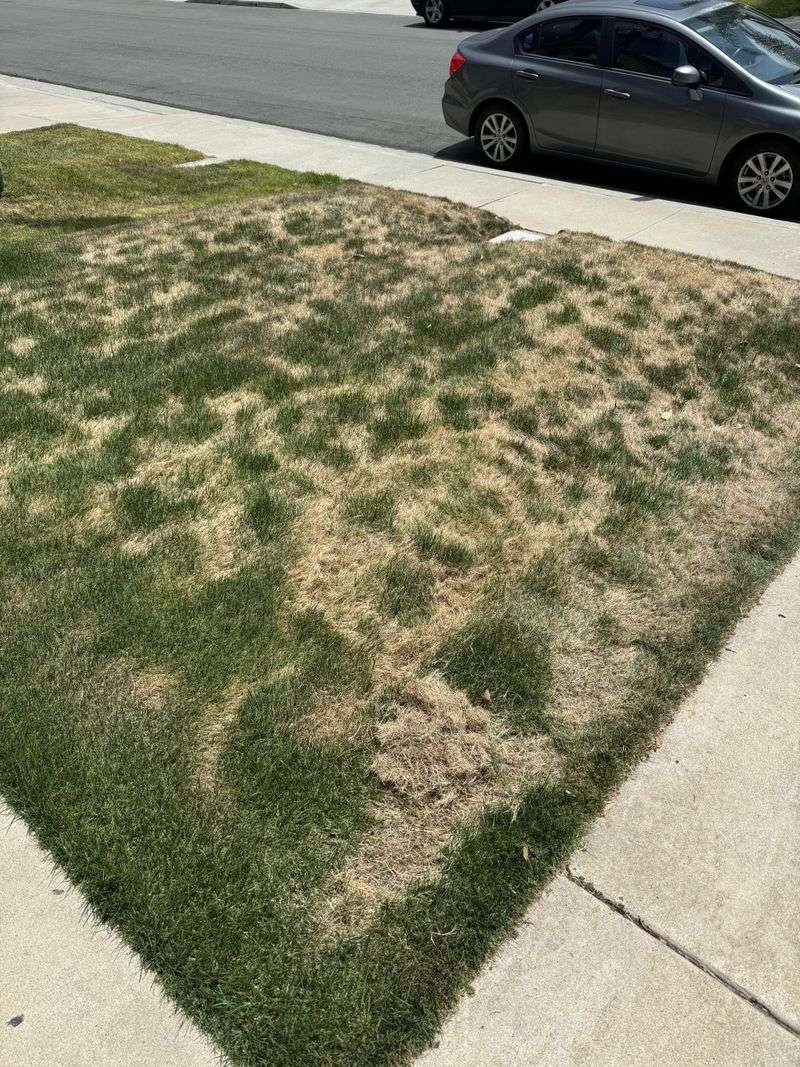
Grubs do not stay in one place. As larvae grow and consume the roots in one area, they move outward in search of fresh food sources nearby.
A small brown patch in August can double in size by September, and by October it may spread across a significant part of the lawn.
The spreading pattern often surprises homeowners who assumed the damage was minor. Grub infestations grow quietly and quickly, with most of the action happening underground and out of sight.
Untreated grub damage also weakens the surrounding turf, even in areas that still look green. Roots are being chewed at the edges of visible damage, setting up the next wave of browning.
Bare soil left behind by dead turf becomes an open invitation for weeds. Crabgrass, clover, and other opportunistic plants move into bare zones faster than grass can recover.
Come spring, a heavily grub-damaged lawn may need significant overseeding or even full resodding. That is a much larger project, and a much larger expense, than early fall treatment would have been.
The consequences for your yard’s health and curb appeal only grow the longer it’s ignored. Waiting is rarely the right move.
Grub larvae also overwinter deep in the soil and return to feed again the following spring. Skipping treatment one fall means starting next year with an already-weakened lawn.
The damage compounds over time, and recovery gets harder with each season of neglect. Treating promptly is generally the smarter, more cost-effective choice for most homeowners.
Early Treatment Protects Next Season’s Lawn
Catching grub damage early puts you firmly in control. Late summer is actually the ideal window to treat, because young larvae are close to the surface and vulnerable.
Two main treatment options exist for homeowners. Curative insecticides like trichlorfon work quickly on existing grubs, while preventive products like imidacloprid work best when applied before eggs hatch.
If you are already seeing brown patches in August or September, a curative product is the right call. Apply it according to label directions and water it in thoroughly after spreading.
Watering after treatment is critical. The product needs to reach the soil where the grubs are feeding, and dry application without water will not deliver results.
Biological options are also available for homeowners who prefer a more natural approach. Beneficial nematodes are microscopic organisms that parasitize and destroy grubs without harming pets or people.
Nematodes work best when soil is moist and temperatures are between 60 and 90 degrees. Early fall in New York falls right in that sweet spot for effective application.
After treatment, overseeding bare spots helps the lawn recover before winter arrives. Fall is the best time to seed cool-season grasses like fescue and ryegrass in the Northeast.
Early action is what makes real recovery possible. A treated lawn can bounce back beautifully by the following spring.
Protecting your lawn now means less work, less cost, and a much healthier yard next year. One good treatment this fall pays off across every season that follows.