What Arizona Gardeners Should Do With Overgrown Texas Sage In August
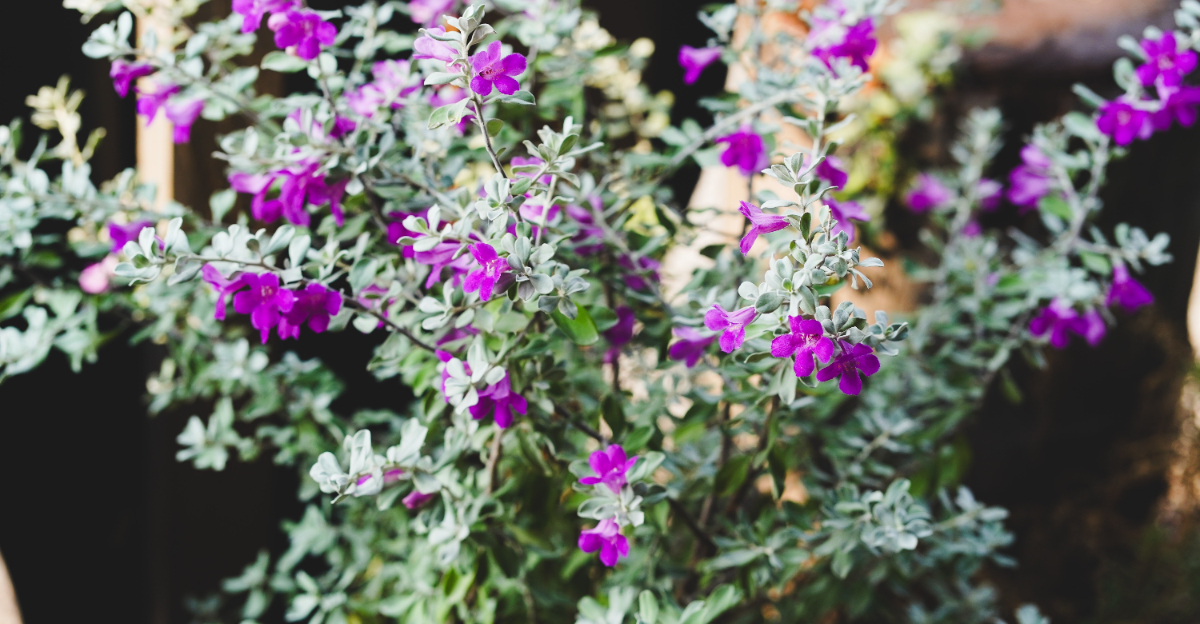
By August, Texas sage can look much bigger and messier than it did earlier in summer. If yours is spreading beyond its space, resist the urge to give it a dramatic makeover right now.
Extreme heat changes how much trimming this desert shrub can comfortably handle.
Arizona gardeners should be especially careful about removing too much protective growth while strong summer sun is still beating down.
Instead of chasing a perfectly rounded shape, look closely at what actually needs attention. An overgrown plant can often be managed without cutting back large sections all at once.
Summer moisture may also bring another flush of those familiar purple flowers. Aggressive trimming at the wrong moment could remove growth that would otherwise add color to your yard.
A lighter approach now keeps the shrub manageable without asking too much from it during August heat.
1. Trim Only Branches That Have Grown Out Of Place
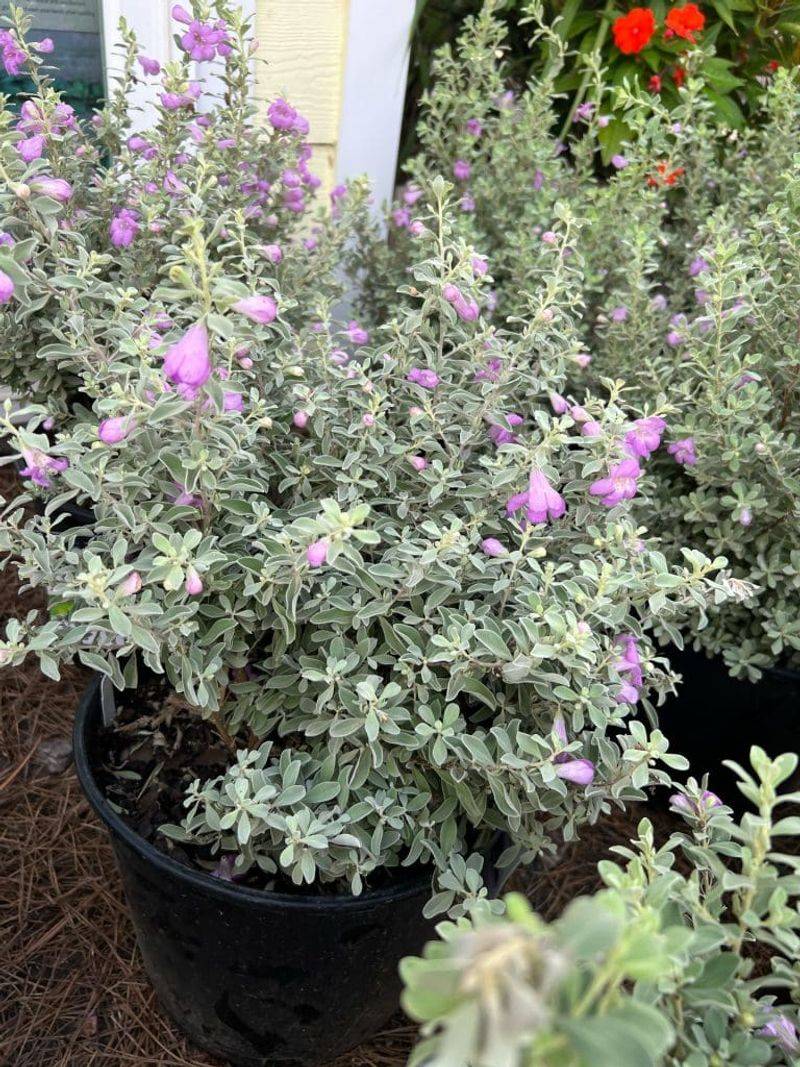
Some branches just refuse to cooperate. On an overgrown Texas sage, you will often spot a few long, straggling stems shooting out well beyond the rest of the shrub.
Those are the ones worth addressing in August.
Grab a sharp pair of hand pruners and cut those wayward stems back to a natural fork or junction inside the plant. You are not doing a full trim here.
Just cleaning up the obvious outliers that make the shrub look off-balance or sloppy.
Stick to branches that are clearly out of line with the rest of the canopy. If a stem is only slightly longer than the others, leave it alone for now.
August heat puts stress on shrubs, and every cut creates a wound the plant has to manage.
Fewer cuts mean less stress overall. Focus only on what genuinely looks wrong.
Selective trimming like this keeps the plant tidy without pushing it into recovery mode during one of the hottest months of the year.
Sharp, clean cuts heal faster than ragged ones, so make sure your pruners are in good shape before you start. Wipe the blades clean between cuts to avoid spreading any potential issues between stems.
Small efforts like this add up and keep your Texas sage looking its best through the rest of summer.
2. Avoid Major Pruning During August Heat
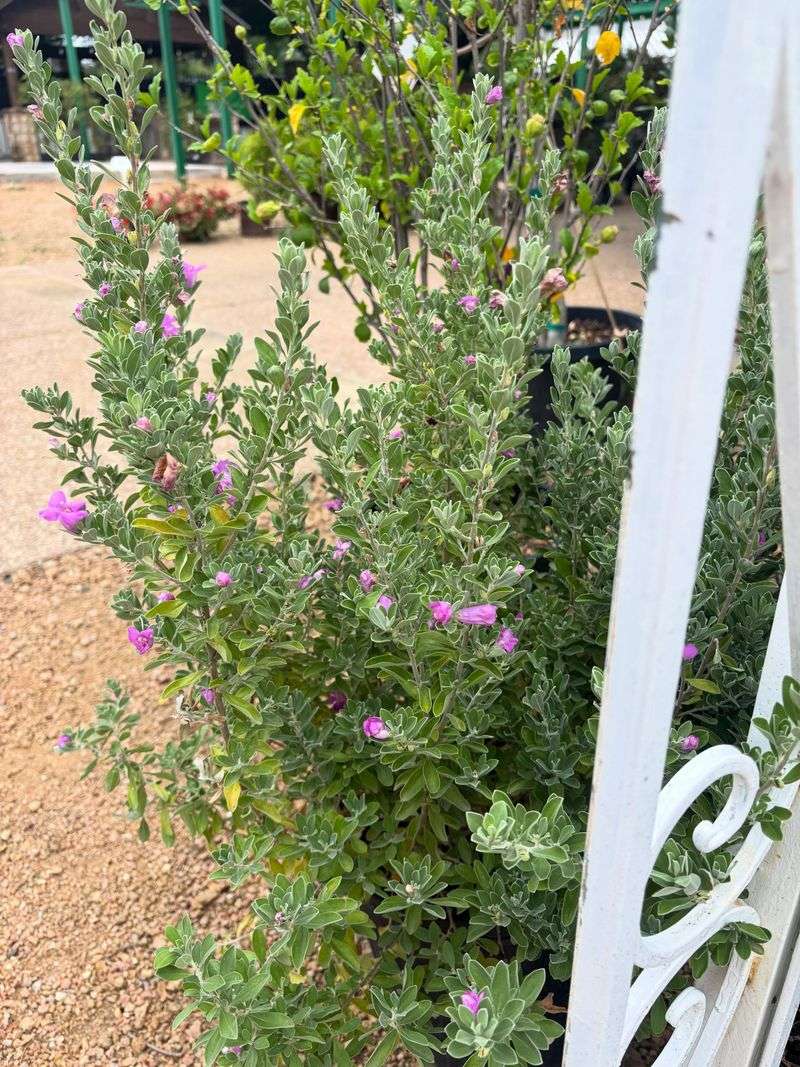
August in the desert is not pruning season. Temperatures regularly push past 100 degrees, and the sun is relentless from morning to late afternoon.
Cutting back a large portion of Texas sage right now puts the plant under serious stress at the worst possible time.
Heavy pruning removes foliage that the plant depends on for shade and moisture regulation. Losing too much leaf cover at once can leave inner stems exposed to harsh sunlight, which causes scorching and slows recovery significantly.
Texas sage is drought-tolerant, but that does not mean it is indestructible. Pushing it with aggressive cuts during peak heat is asking a lot.
Roots are already working hard just to keep the plant stable through the summer.
Wait until temperatures start dropping, typically in late September or October in most parts of the region, before tackling any major reshaping. Cooler conditions give the plant a much better chance to bounce back without added strain.
Your Arizona Garden Changes Every Week. Your Plan Should Too.
Gardening in Arizona changes quickly throughout the season. Every Friday you’ll receive a simple weekly plan showing exactly what to plant, prune, fertilize, harvest, and protect so you never miss the right timing.
If the shrub looks rough right now, resist the urge to fix everything at once. A few strategic snips to remove truly problematic growth is fine.
Anything beyond that is better left for a cooler day. Patience here really does pay off, and your Texas sage will look far better for it once fall rolls around.
3. Preserve The Shrub’s Natural Rounded Form
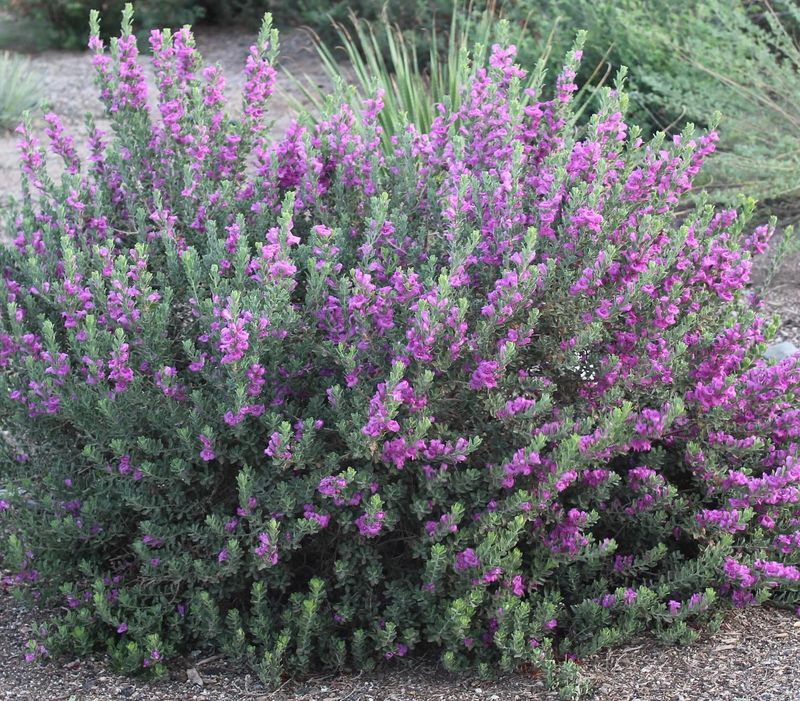
Texas sage grows into a soft, rounded mound naturally. That shape is not just attractive.
It is also functional, helping the plant shed heat and manage airflow through its canopy.
When gardeners start cutting without a plan, that natural form often gets lost. Flat tops, lopsided cuts, and uneven sides make the shrub look forced and unnatural.
Keeping the rounded silhouette intact should guide every cut you make.
Step back frequently while working. Looking at the shrub from a few feet away gives you a clearer sense of its overall shape than staring at it up close.
Adjust your cuts based on what you see from a distance.
Avoid removing large sections from just one side. Balance is important.
If one branch is longer on the left, check the right side before cutting. Matching the natural curve of the plant keeps things looking cohesive rather than patchy.
In desert landscapes, Texas sage often serves as a visual anchor in a planting bed. Maintaining its rounded form helps it blend with surrounding plants rather than standing out awkwardly.
A shrub that holds its natural shape tends to need less intervention over time, which is a real advantage during months when you would rather not be out pruning in triple-digit heat.
4. Remove Crossing Stems That Crowd The Center
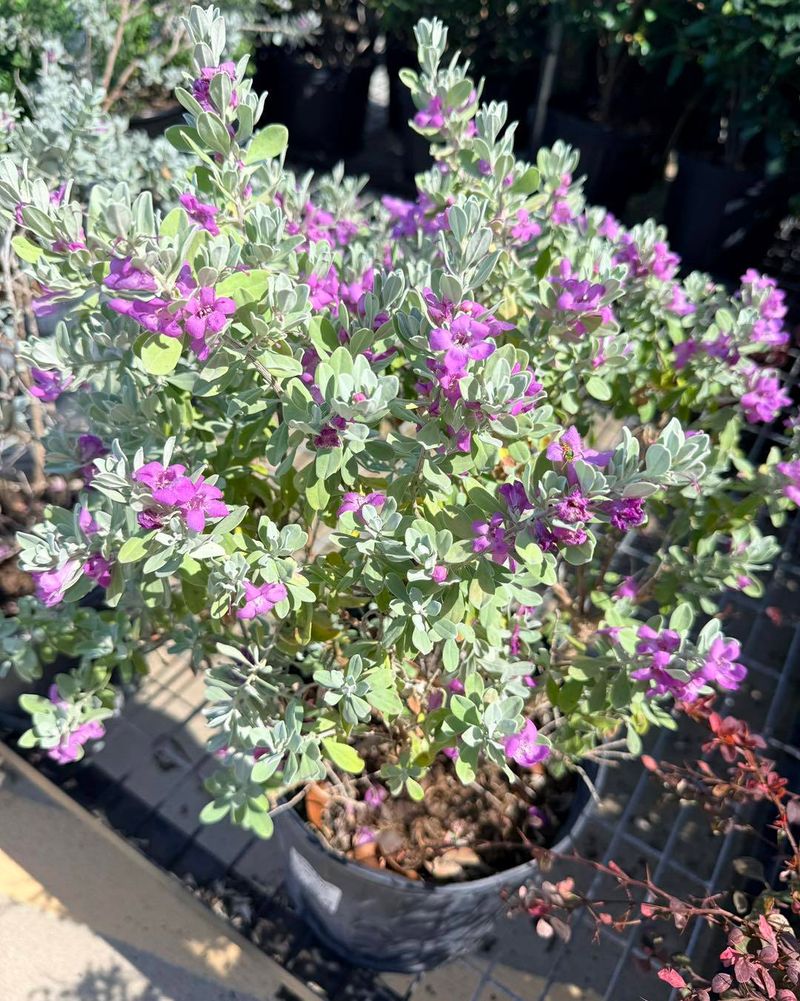
Crowded centers are one of the most common problems with older Texas sage plants. When stems cross and rub against each other, they create friction that can wear away bark over time and restrict airflow inside the canopy.
Poor airflow in the center of a shrub traps humidity and slows drying after rain or irrigation. In the desert, that might not seem like a big deal, but it can still encourage fungal issues in the right conditions.
Look for stems that grow toward the middle of the plant rather than outward. Those inward-pointing branches rarely produce much new growth and mostly just take up space.
Removing them opens the center without changing the outer shape much.
Cut crossing stems at their base where they originate, rather than cutting them midway. Leaving stubs behind encourages new growth from the same spot, which just recreates the crowding problem you are trying to fix.
Work slowly and remove one stem at a time. It is easy to overdo it when you start seeing how tangled things are inside.
Take out only what is clearly causing a problem. Removing too much at once stresses the plant and leaves gaps that may take a full season or more to fill back in.
5. Leave Healthy Foliage To Shade Inner Branches
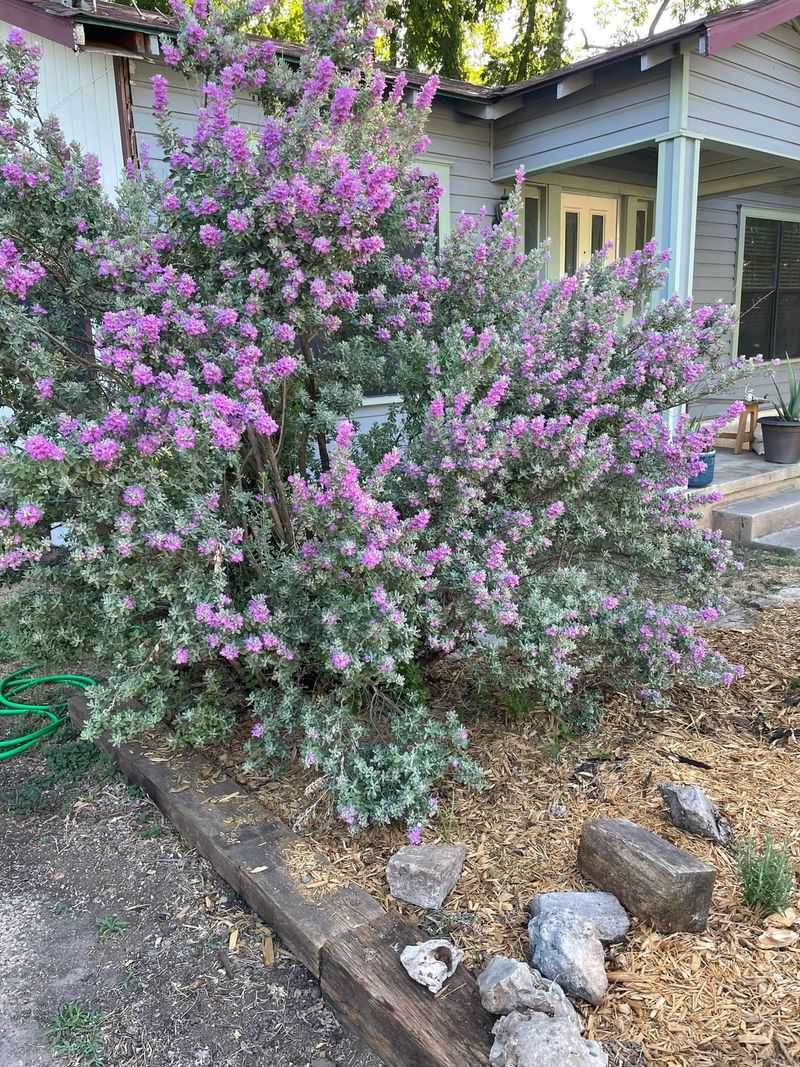
Healthy outer leaves on Texas sage do more than just look good. They act as a natural sunscreen for the woody stems underneath.
Stripping too much foliage exposes those inner branches to intense August sun, and scorching can follow quickly.
In Arizona, afternoon sun is especially brutal from June through September. Bare stems left exposed during this period can suffer damage that affects future growth.
Keeping a solid layer of foliage around the outside of the shrub helps buffer that impact.
Resist the urge to thin out leaves to make the plant look more open. Texas sage is naturally dense, and that density serves a purpose in hot climates.
Sparse foliage might look tidy, but it leaves the plant more vulnerable during heat spikes.
If you have already removed some foliage and notice pale or discolored inner stems, add temporary shade cloth nearby to reduce direct sun exposure while the plant adjusts. It is a simple fix that can prevent more serious setbacks.
Healthy leaves also support the plant’s ability to manage water efficiently. Removing too many at once forces the roots to work harder to compensate.
6. Skip Shearing That Creates Dense Outer Growth
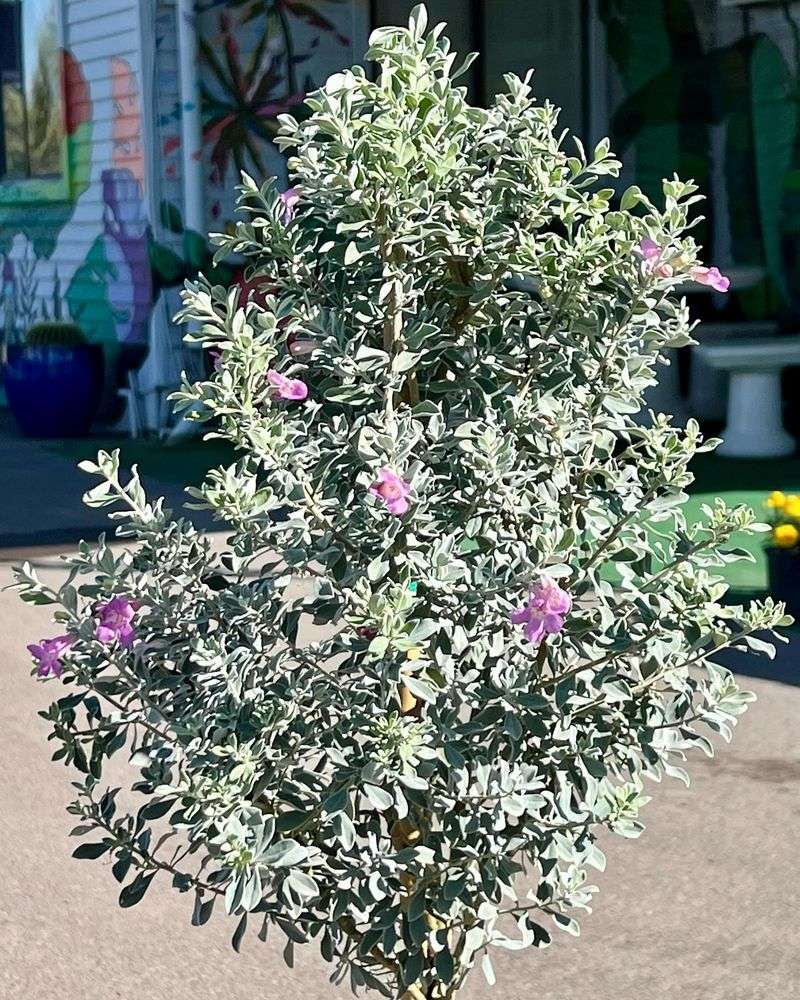
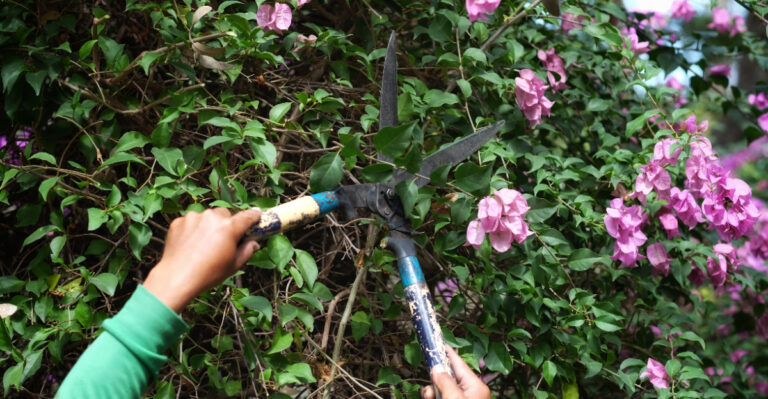
Hedge shears might seem like the fastest way to tame an overgrown Texas sage, but they cause more problems than they solve. Shearing cuts every stem at the same point, which triggers a burst of new growth right at the outer edge of the plant.
That dense outer shell looks tidy at first glance. Over time, though, it blocks light and air from reaching the interior.
Stems inside the shrub weaken and may stop producing new growth altogether, leaving a hollow center beneath a thick outer crust.
Texas sage responds better to selective hand pruning than to mechanical shearing. Cutting individual stems back to a natural fork keeps the canopy open and allows light to filter through the entire plant, not just the outer layer.
Shearing also removes flower buds, which is a real loss with Texas sage. Those purple blooms are one of the best features of the plant, and shearing right through the branch tips eliminates your chance of seeing them for weeks or longer after cutting.
Put the hedge shears away for now. Hand pruners give you control over exactly what gets removed and what stays.
It takes a little more time, but the results look far more natural and the plant stays healthier over the long term.
7. Wait For Milder Weather Before Major Reshaping
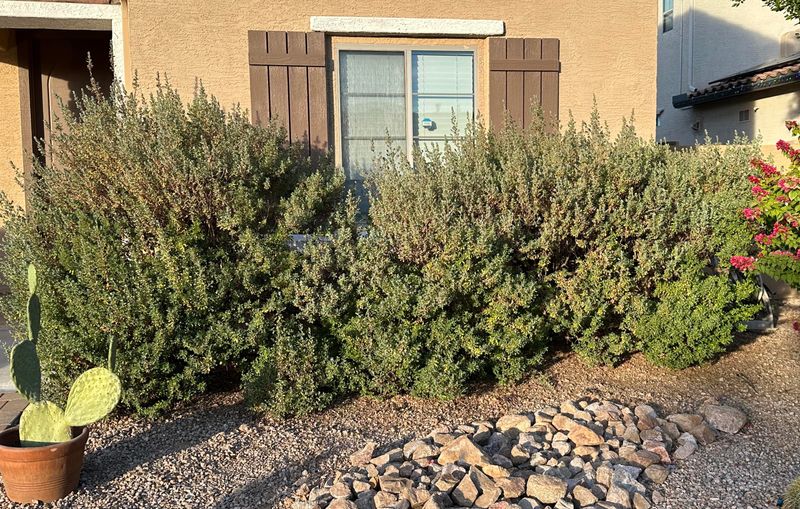
Patience is genuinely one of the most useful tools in a desert gardener’s kit. When Texas sage has gotten seriously out of shape, the instinct is to fix it right away.
August is not the right time for that kind of work.
Major reshaping means removing a significant portion of the plant’s canopy. Doing that in summer forces the shrub to push out new growth while managing extreme heat and limited soil moisture.
Recovery is slower and less predictable under those conditions.
Late September through November is a much better window for heavier pruning in most parts of the Southwest. Temperatures drop, days get shorter, and the plant naturally slows its growth rate.
That combination makes recovery far more manageable.
Mark the stems you want to remove now so you do not forget by fall. Use a small piece of ribbon or garden tape to flag the branches that need to go.
That way, when the weather cools, you are ready to work efficiently without second-guessing yourself.
Waiting also gives you time to observe the shrub more carefully. Sometimes what looks overgrown in August actually settles into a better shape as summer winds down.
You might find that less reshaping is needed than you originally thought.