Popular Arizona Landscaping Plants That Quietly Invite More Scorpions
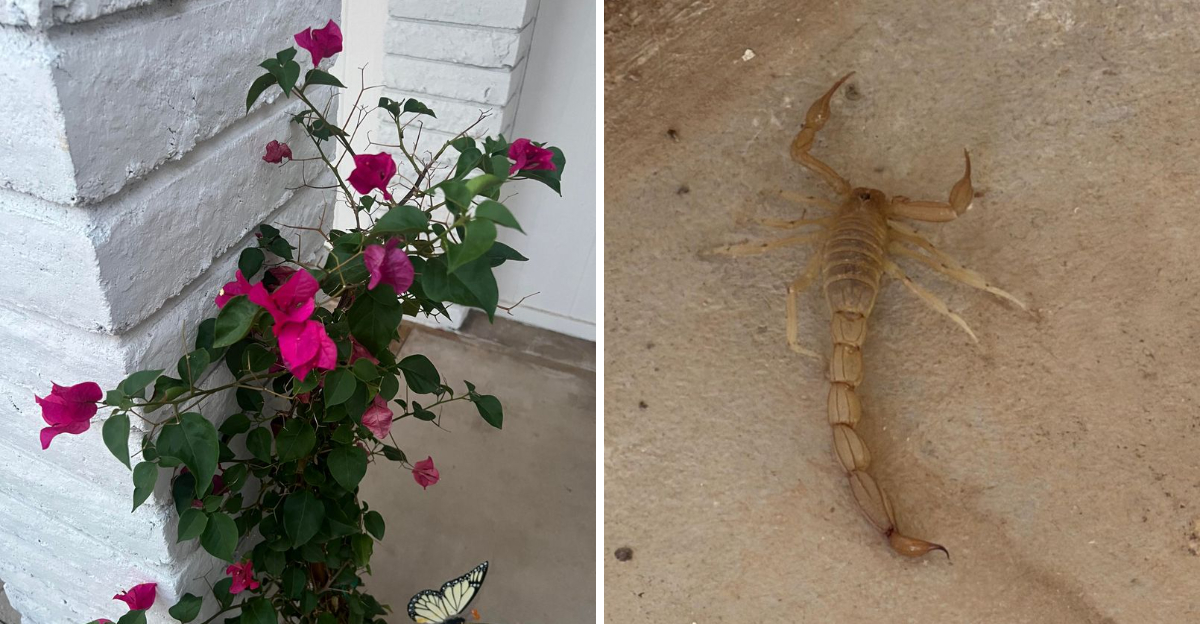
Scorpions do not wander into Arizona yards because one shrub smells irresistible.
They show up where the landscaping makes life easier.
Shade matters. Tight hiding spaces matter. Moist soil, fallen debris, and a steady supply of crickets, beetles, and other prey matter even more.
Certain popular plants can create several of those conditions at once, especially when they grow thickly against walls, doorways, patios, or irrigated beds.
That is where the plant list gets interesting.
Trailing rosemary can form a cool mat close to the soil. Palm skirts create layers of protected crevices.
Dense junipers, Texas sage, bougainvillea, vines, and ornamental grasses can all hide movement near the foundation when they grow unchecked.
So which plants deserve a closer inspection?
The answer is not to rip out every desert-friendly favorite.
It is to understand the exact habitat each one can create, then change the spacing, pruning, irrigation, and cleanup around it.
Keep the plants you like. Just stop giving scorpions the best seats in the yard through long summer nights.
1. Trailing Rosemary Can Create A Cool Ground-Level Hideout
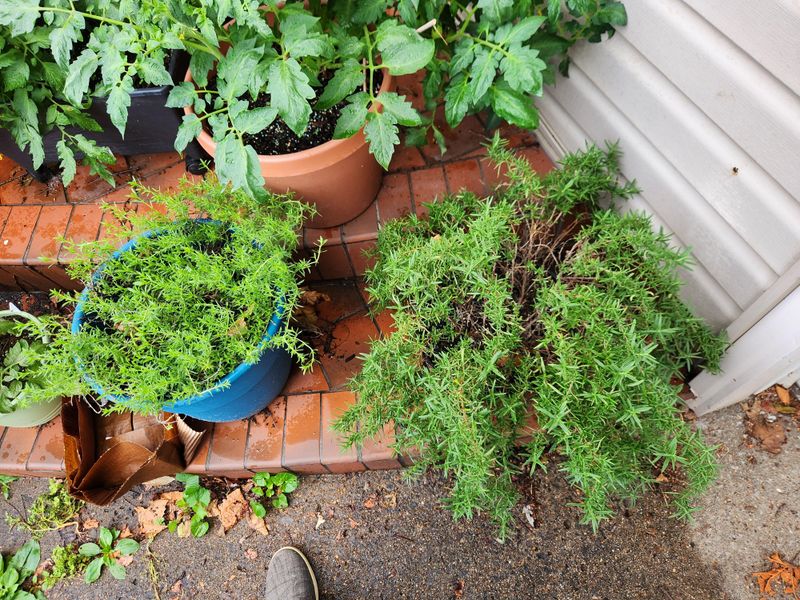
Trailing rosemary looks made for Arizona walls, slopes, and gravel beds.
Its low, spreading branches can form a dense canopy close to the soil, especially after several seasons without thinning. That shaded layer becomes much cooler than exposed rock or bare ground during a hot afternoon.
Scorpions value that cover.
The plant does not lure them with scent or chemistry. The attraction comes from the protected space underneath, where sunlight is weaker, temperatures stay more moderate, and movement goes largely unnoticed.
Irrigation can make the setup even more comfortable.
Drip emitters beneath a thick rosemary mat may keep pockets of soil damp longer than surrounding desert ground. That moisture can also support crickets, beetles, and other small prey moving through the same cover.
Placement near a foundation raises the concern.
Branches pressed against stucco can create a sheltered corridor beside the wall while hiding cracks or gaps that deserve inspection.
Trim the plant back enough to expose some soil and keep foliage away from the house.
Move emitters away from the foundation and clear fallen needles, leaves, and other debris trapped beneath the branches.
Trailing rosemary can stay in the landscape.
It simply works better several steps away from becoming a shaded tunnel with snacks, moisture, and a wall conveniently attached.
2. Low-Spreading Junipers Can Hide Scorpions All Day
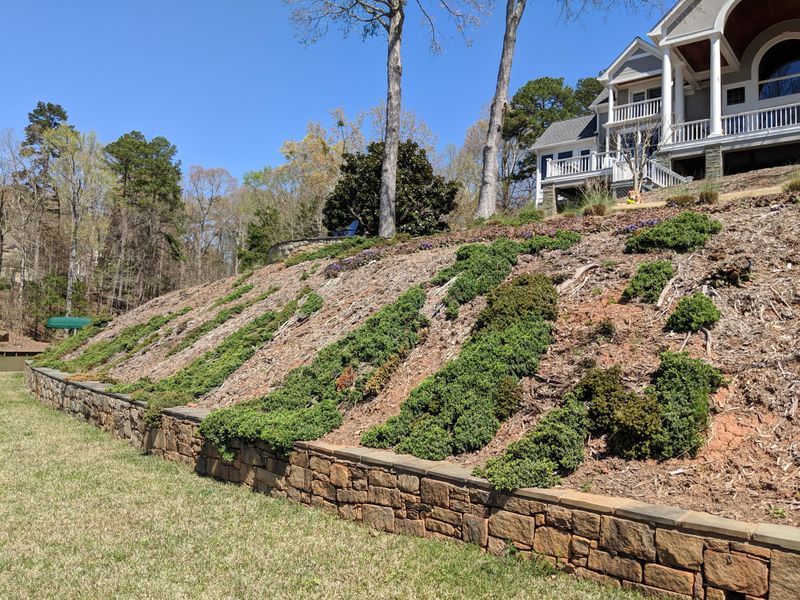
Few landscape plants create a darker ground-level canopy than a mature spreading juniper.
Branches overlap, evergreen foliage reaches close to the soil, and the interior can stay surprisingly undisturbed. From the sidewalk, the shrub looks neat. Underneath, visibility can drop to almost nothing.
That is useful shelter for a scorpion.
During daylight hours, scorpions seek protected spaces away from intense heat and exposure. A dense juniper can offer multiple narrow gaps between stems, soil, rock, and old plant material.
The interior can also collect debris.
Dry needles, fallen leaves, and bits of mulch may build beneath the canopy where routine cleanup becomes difficult. Small insects use that same protected layer, giving hunting scorpions another reason to investigate.
Your Arizona Garden Changes Every Week. Your Plan Should Too.
Gardening in Arizona changes quickly throughout the season. Every Friday you’ll receive a simple weekly plan showing exactly what to plant, prune, fertilize, harvest, and protect so you never miss the right timing.
Junipers planted against walls deserve the closest attention.
A low branch touching stucco can connect concealed ground cover with the foundation while blocking your view of cracks and utility openings.
Prune the lowest and densest growth enough to improve visibility.
Keep the shrub separated from the structure and remove debris from beneath the outer canopy whenever it becomes accessible.
Do not carve the plant into a bare skeleton.
The goal is simply to remove the deepest, most protected pockets.
A spreading juniper may look disciplined from ten feet away. Scorpions care much more about the tiny dark rooms underneath, where nobody has disturbed the furniture in months.
3. Palm Skirts Offer Layers Of Ready-Made Crevices
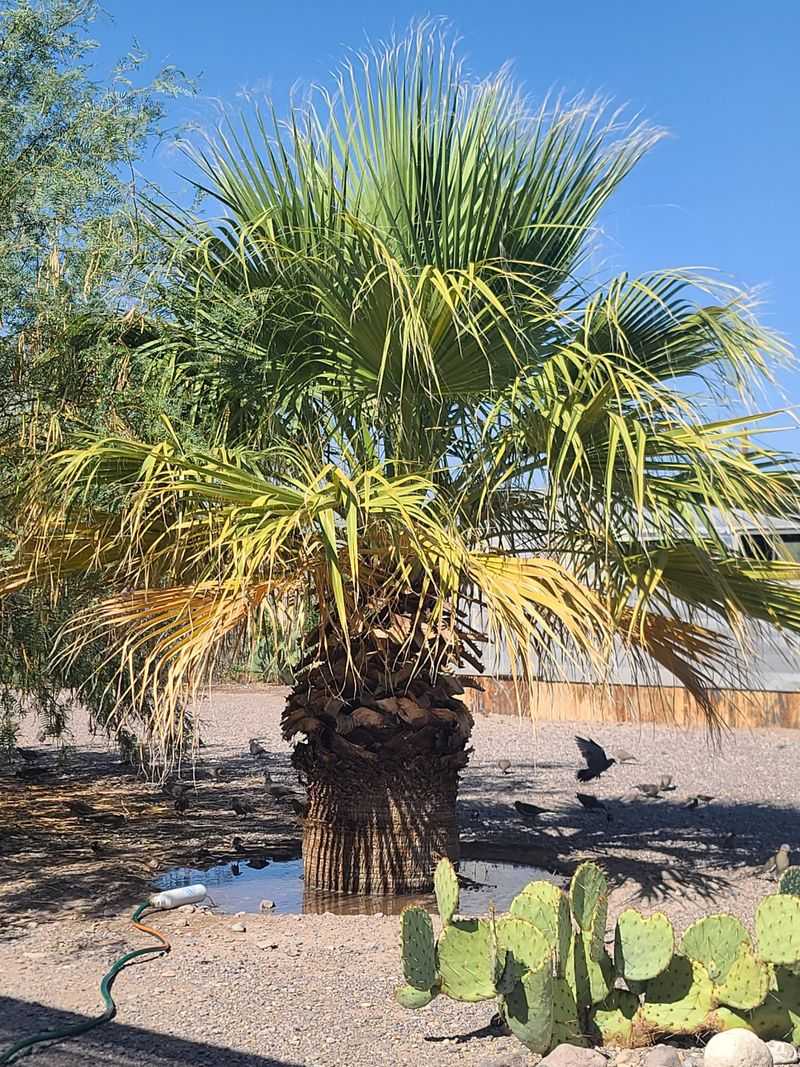
A palm can create scorpion shelter long after a frond stops being green.
Old fronds, fibrous leaf bases, and dry material left clinging around the trunk form overlapping layers with narrow protected spaces between them. Those crevices are especially relevant for bark scorpions, which can climb and use shelter above ground.
The palm itself is not the draw.
The accumulated skirt is.
Dry layers block direct sun, reduce disturbance, and create dozens of places where a scorpion can remain hidden through the day. Insects may also shelter in the same material, adding prey to an already convenient location.
Ground debris extends the habitat.
Dropped fronds and seed stalks left beneath the canopy can create more cover around irrigation lines, rocks, or walls. A palm planted close to a patio or house places those hiding spots near areas people use after dark.
Routine cleanup makes the plant less useful to scorpions.
Remove loose material before it develops into a heavy skirt, and keep the ground beneath the palm open enough to inspect.
Use long-handled tools and sturdy gloves for reachable debris.
Dark layers can hide more than the pest you expected to find.
Large palms may need professional maintenance because height and heavy fronds create hazards of their own.
A clean trunk keeps the desert drama. It just removes the stack of rent-free crevices hidden behind the scenery.
4. Texas Sage Can Build A Hidden Corridor Beside The House
Texas sage can grow from a tidy silver shrub into a surprisingly dense wall.
That fullness is part of its appeal, especially when purple flowers appear after humid weather. Trouble starts when the canopy expands until branches press directly against the foundation.
The hidden space behind the shrub can stay shaded and quiet.
Scorpions do not need the sage itself for food. They benefit from the protected zone created between dense branches and the wall, along with insects that move through the same cover.
Thick growth can also hide structural problems.
A small crack in stucco, a gap around a pipe, or an opening near trim becomes harder to notice once foliage covers the entire surface.
Irrigation adds another layer.
A regularly watered sage bed can support more insect activity than the dry gravel nearby, especially where emitters create damp pockets beneath the canopy.
Keep the shrub without letting it merge with the house.
Prune enough interior growth to improve airflow and maintain visible space between the outer branches and the wall. Clear litter from the base and check irrigation for wet spots close to the foundation.
Avoid shearing only the outside into a dense shell.
Selective thinning opens the interior more effectively.
Texas sage can still look full and colorful. It just does not need to become a silver-green curtain hiding every nighttime visitor between the plant and the stucco.
5. Bougainvillea Can Turn Into An Undisturbed Thorny Thicket
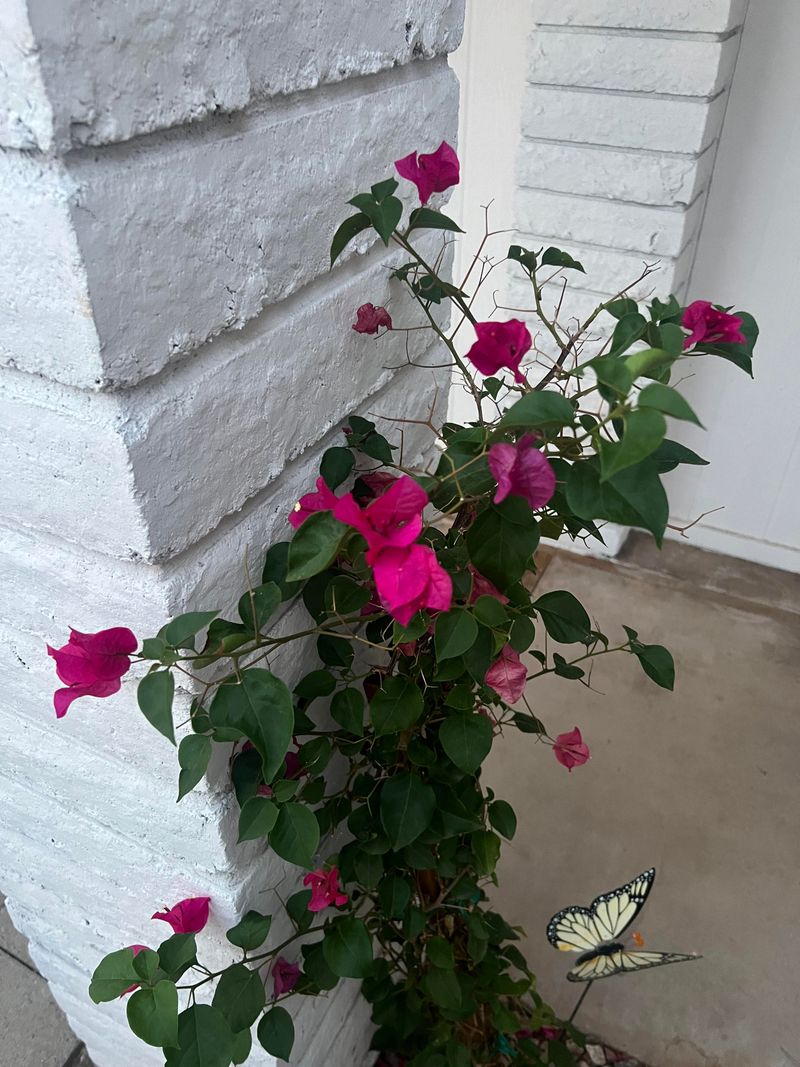
Bougainvillea can make an Arizona wall explode with color.
It can also become so tangled that nobody wants to reach inside it.
That reluctance is part of the scorpion problem. Dense, thorny stems can create a highly undisturbed interior where shade, dry debris, and insects collect beyond easy reach.
Scorpions take advantage of quiet shelter.
They are not attracted to the bright bracts. The useful part is the maze underneath, especially when the plant grows against stucco, block walls, patios, or utility areas.
Prey can add another incentive.
Insects visiting or sheltering in the plant increase activity around the same dense structure. A scorpion hunting after dark may find both food and a protected place to retreat once daylight returns.
Wall contact makes inspection harder.
Thick bougainvillea can cover cracks, gaps, and narrow openings before a homeowner ever notices them.
Train the plant on a support that keeps growth separated from the structure.
Remove dead interior stems and accumulated leaf litter with proper gloves and tools, then inspect the newly visible wall.
Keep irrigation focused on the root zone rather than soaking the foundation edge.
Bougainvillea does not need to leave the yard.
It just needs boundaries. A colorful climber is one thing. A thorny storage unit full of insects, hidden wall gaps, and zero foot traffic is a much better deal for scorpions.
6. Wall-Climbing Vines Can Cover The Routes Scorpions Use
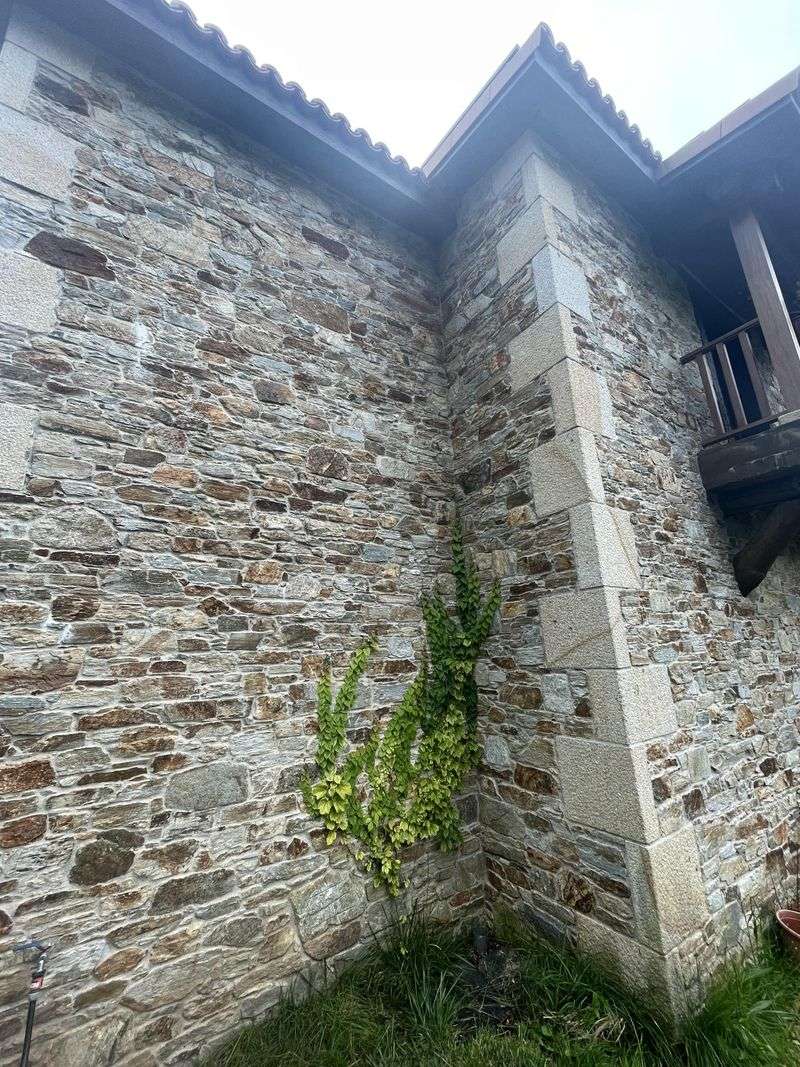
A green wall can hide a surprising amount of actual wall.
Boston ivy, trumpet vine, and other vigorous climbers create layers of stems and foliage across stucco, masonry, fences, or block. That growth can shade the surface while concealing cracks and narrow gaps underneath.
For bark scorpions, concealment matters.
Their flat bodies allow them to use very small openings around structures. A vine does not create the crack, but dense coverage can make that crack much harder for you to find and seal.
Mature growth adds more hiding structure.
Woody stems overlap, old leaves collect behind the canopy, and insects move among flowers and foliage. That combination can make the wall more useful as both hunting territory and daytime cover.
A separate trellis changes the relationship.
Set climbing support several inches away from the structure so air and light reach behind the vine. That gives you room to inspect the wall without sacrificing vertical greenery.
Prune stems that wander toward windows, door frames, roof edges, vents, or utility penetrations.
Clear trapped debris while those areas are visible.
The problem is not that a trumpet flower sends out a scorpion invitation.
The problem is losing access to the surface underneath.
Let the vine decorate its own support, and the wall becomes much less mysterious. In scorpion country, boring, visible masonry is actually a pretty useful landscape feature.
7. Ornamental Grasses Can Shelter Scorpions at the Crown
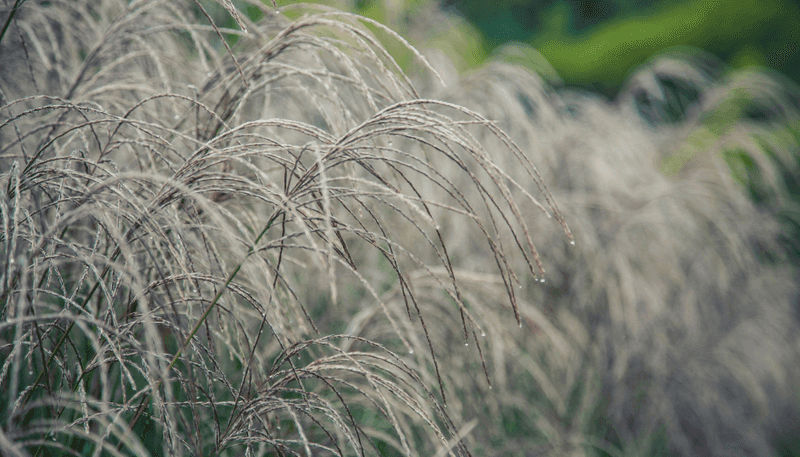
An ornamental grass clump can look airy at the top and completely different at ground level.
Dense stems meet at the crown, old blades fold inward, and dry leaves collect underneath. That base can become a compact shelter with far less light and disturbance than the swaying foliage suggests.
Scorpions can use those protected pockets during the day.
The risk becomes more relevant when grasses sit beside doors, walkways, patios, or foundation walls. A sheltered crown near an entry gives nighttime hunters a convenient resting spot close to the house.
Irrigation can increase insect traffic around the clump.
Moist soil supports small prey, while porch and landscape lights may draw flying insects into the same area after dark.
Old growth makes the base even denser.
Remove dead leaves and accumulated debris during routine maintenance, and thin crowded material when the plant allows it.
Keep substantial grass clumps farther from door thresholds.
Open gravel or lower, less dense planting immediately beside an entrance makes the area easier to inspect and gives scorpions fewer concealed places to pause.
Check door sweeps while you are there.
A beautiful grass does not become dangerous because it moves in the breeze.
Its base simply deserves more attention than its flowers or seedheads. The top may look like a fountain. The bottom can behave more like a bunker.