That Dandelion You Keep Spraying In Your Arizona Yard Fed Families And Feeds The Bees
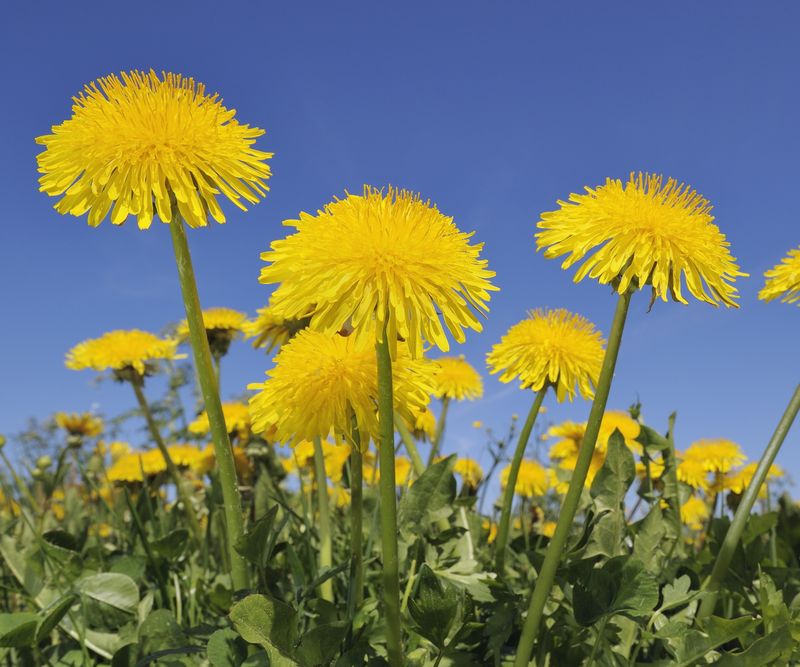
Somewhere in a Phoenix or Tucson lawn, a yellow flower is opening up between the grass blades, and a lot of homeowners reach for the spray bottle without a second thought. That flower is common dandelion, an introduced plant with a longer and more useful history than most people expect.
Before you pull the trigger on the herbicide, it helps to know what you are actually dealing with, what it can genuinely do for pollinators and soil, and where its limits are in the low desert.
Meet the introduced yellow flower in your Arizona yard
Common dandelion, known botanically as Taraxacum officinale, is not a plant that wandered into Arizona on its own. European settlers brought it to North America deliberately, valuing it as both food and medicine, and it has since established itself across a wide range of elevations and habitats.
University of Arizona Cooperative Extension records place it in lawns, roadsides, disturbed ground and moist low areas from roughly 2,500 to 9,000 feet, with bloom timing that can stretch from January through December depending on elevation.
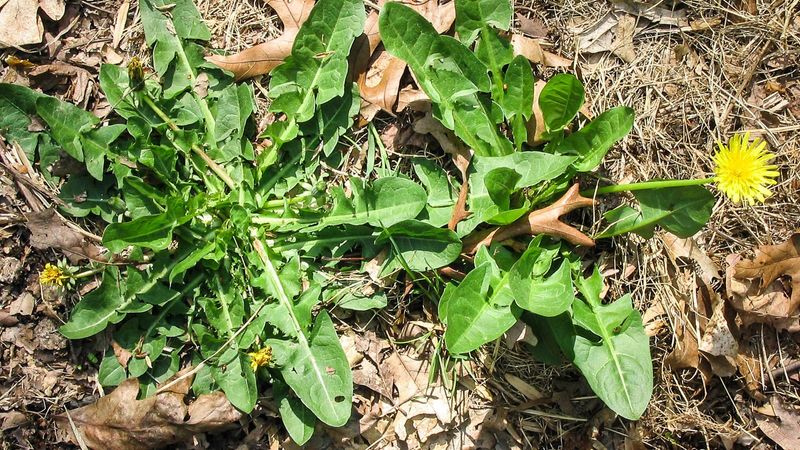
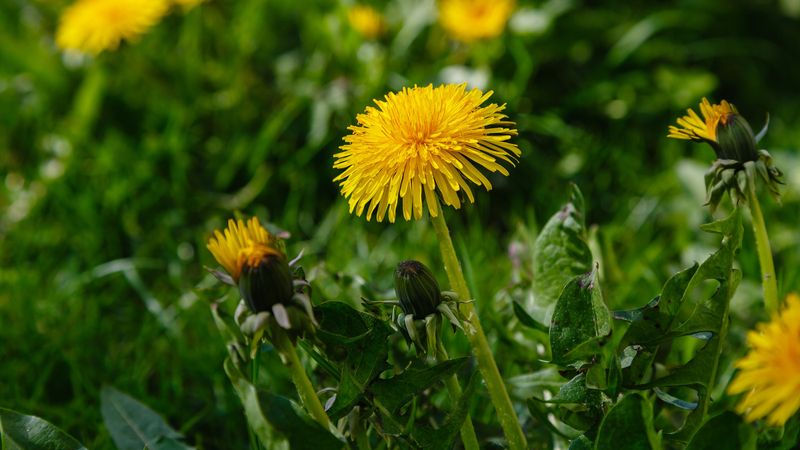
The plant has a distinctive look once you know what to check. Its leaves form a flat basal rosette at ground level, with deep irregular lobes pointing back toward the center.
Break a leaf or the stalk and milky sap appears almost immediately. The flower stalk is hollow and leafless, and each stalk carries exactly one yellow flower head.
Underneath the soil, a substantial taproot reaches down anywhere from six to eighteen inches, which is why a shallow tug rarely removes the whole plant.
Recognizing these traits matters before any other decision. Dandelion is not a native Arizona plant, and it is not universally desirable to preserve.
It can perform useful functions in the right spot, but that usefulness depends on correct identification and an honest look at where it fits, or does not fit, in a low-desert yard.
How dandelion can help bees during a floral gap
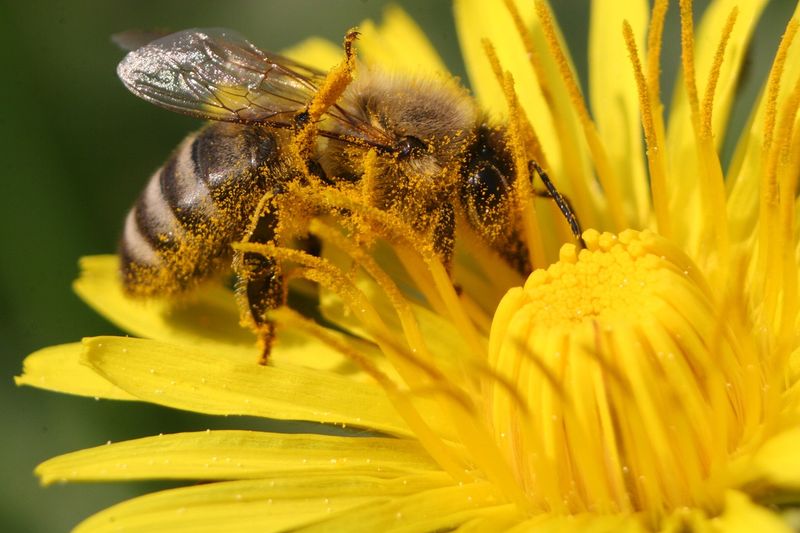
When a dandelion flower opens, it does not go unnoticed by foraging bees. The flower offers both nectar and pollen, and during stretches of the year when relatively few other plants are blooming, that resource can matter.
A cool-season window in a Phoenix or Tucson yard, when summer annuals have finished and spring natives have not yet peaked, is exactly the kind of gap where a flowering dandelion earns its place.
Research on suburban lawns points to real but geographically specific evidence. A U.S.
Forest Service study of lawn-dominated yards in Springfield, Massachusetts found dandelion among the most abundant spontaneous lawn flowers and documented 111 bee species in the study area. That study was conducted in New England, not the Sonoran Desert, so its numbers do not translate directly to Phoenix or Tucson.
What it does confirm is that flowering lawn plants can function as supplemental forage for a meaningful variety of bees.
Broader USDA pollinator guidance reinforces the same point with an important qualifier: pollinators need a sequence and diversity of flowers across the season, not one species alone. Dandelion can help fill a temporary gap, but it is not a complete habitat plan on its own.
Your Arizona Garden Changes Every Week. Your Plan Should Too.
Gardening in Arizona changes quickly throughout the season. Every Friday you’ll receive a simple weekly plan showing exactly what to plant, prune, fertilize, harvest, and protect so you never miss the right timing.
Its value as a pollen source is also uncertain. Some evidence suggests bees may find it more useful for nectar than as a nutritionally complete pollen resource, so the honest framing is that dandelion may provide supplemental forage rather than essential bee support.
The food history is real, but it is not an Arizona survival story

Dandelion has earned its place in food history, though that history belongs to a broad range of cultures and regions rather than to any single place. European settlers who crossed the Atlantic packed dandelion seeds alongside other provisions because the plant was already a familiar part of their diet and home medicine cabinet.
That intentional introduction is part of why the plant spread so thoroughly across North America.
Every part of the plant has documented culinary uses. Young leaves can be eaten raw in salads or cooked like other greens, with a slightly bitter flavor that mellows when blanched.
Flowers have been used in fritters, wines and syrups. Roots are sometimes roasted as a coffee substitute or steeped as a tea.
Oregon State University Extension, University of Illinois Extension and Michigan State University Extension all note these traditional uses as part of dandelion’s long cross-cultural food record.
What the research does not support is the idea that dandelion specifically sustained Arizona families or served as a major food source in the low desert. The food history is genuine and worth knowing, but it is regional and broad, not a local Arizona story.
Treat it as background that adds context to the plant’s presence here, and keep the safety steps that come later in mind before any foraging decision.
What the taproot can—and cannot—do for Arizona soil
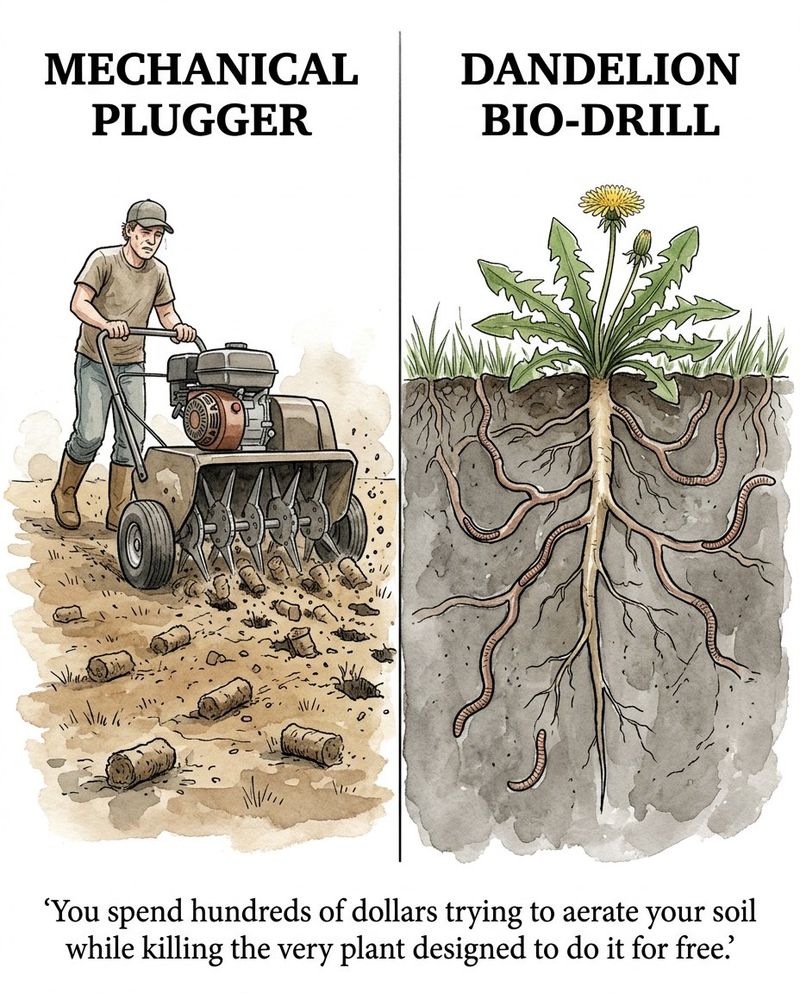
The dandelion taproot is real and it does real work, within limits. Reaching anywhere from six to eighteen inches depending on conditions, it is long enough to push through some compacted soil layers that shallower grass roots cannot penetrate.
As the root grows and eventually breaks down, it can leave behind narrow channels that alter pore structure in the immediate area around the root. Research published in peer-reviewed soil science literature confirms that wild plant species, including those with substantial taproots, can reorganize rhizosphere soil pore structure in compacted soils, though the effect is localized rather than landscape-wide.
The University of Minnesota Extension notes that dandelion roots can move some minerals into plant tissue, which returns those nutrients to the surface when leaves decompose. That is a real process, but its practical scale in a single residential lawn is modest.
One dandelion, or even a dozen, does not reliably improve an entire yard, fix compaction across a lawn, or repair the caliche layers that many Arizona homeowners contend with.
Caliche is a particular Arizona challenge. The University of Arizona Cooperative Extension describes caliche as a physical barrier that can restrict roots and drainage, and managing it typically requires breaking through the layer mechanically or building up adequate topsoil above it.
A dandelion taproot is not a substitute for that work. In a low-desert yard, soil performance depends far more on irrigation management, organic matter additions, turf density and how compaction and caliche are addressed directly than on whether a few dandelions are present.
Treat dandelion as a seasonal helper, not a habitat strategy
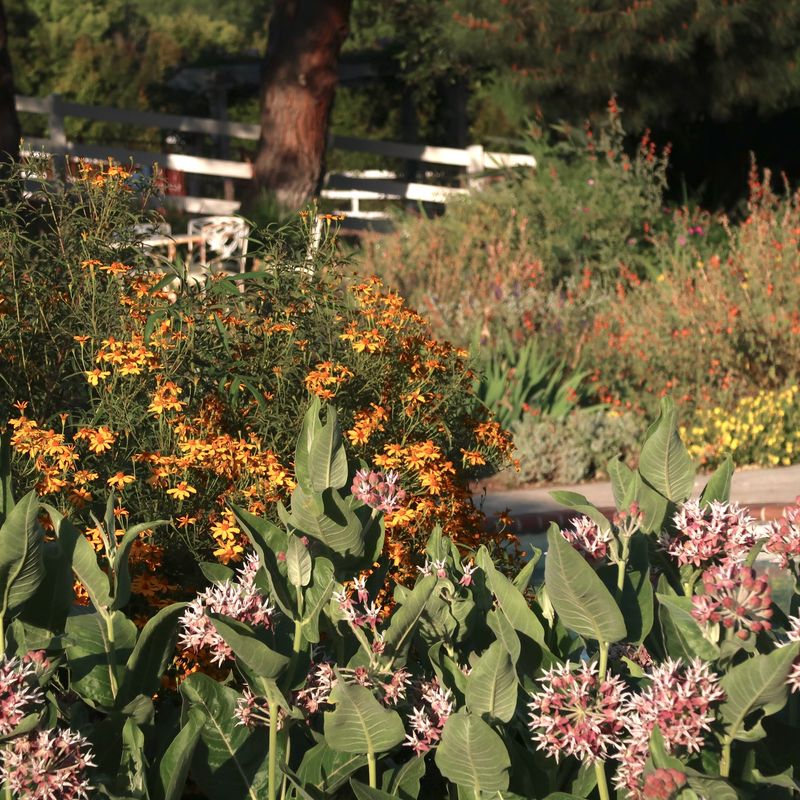
Dandelion can bloom across a wide range of Arizona elevations, and at some sites it flowers through much of the year. In Phoenix and Tucson lawns, it is most likely to persist and bloom during the cooler months, roughly October through May, when irrigation keeps soil moist enough to support it.
The University of Arizona notes that bloom timing varies considerably by elevation, so a dandelion in a higher-elevation Tucson neighborhood may behave differently than one in a low-desert Phoenix lawn. Do not count on it thriving uniformly through a 110-degree Phoenix summer without consistent irrigation.
That seasonal footprint shapes how much habitat value a dandelion actually provides. It can help fill a temporary gap when other flowers are scarce, particularly during cool-season windows before spring natives peak.
But a yard built around a few dandelions is not a pollinator habitat. It is a yard with a few dandelions.
The University of Arizona’s 2026 Pima County Master Gardener Bloom Calendar documents native and desert-adapted species that cover a much broader seasonal range and provide richer, more reliable forage. Brittlebush, penstemon, globemallow and desert marigold are examples of plants that evolved alongside Arizona’s native bees, bloom at different times across the season and require far less water once established.
These species form the stronger long-term framework for any low-desert pollinator planting. A dandelion that blooms in a cool-season gap can complement that framework, but it cannot replace it.
Use selective tolerance to balance forage and lawn care
Not every dandelion in an Arizona yard requires the same response. A plant blooming in a low-traffic corner where it does not compete with turf or spill into a path is a different situation from a dense patch spreading through the center of a Bermuda lawn.
The practical approach is selective: allow a few correctly identified, unsprayed plants to flower where they are acceptable, and manage actively where they compete, spread or create problems.
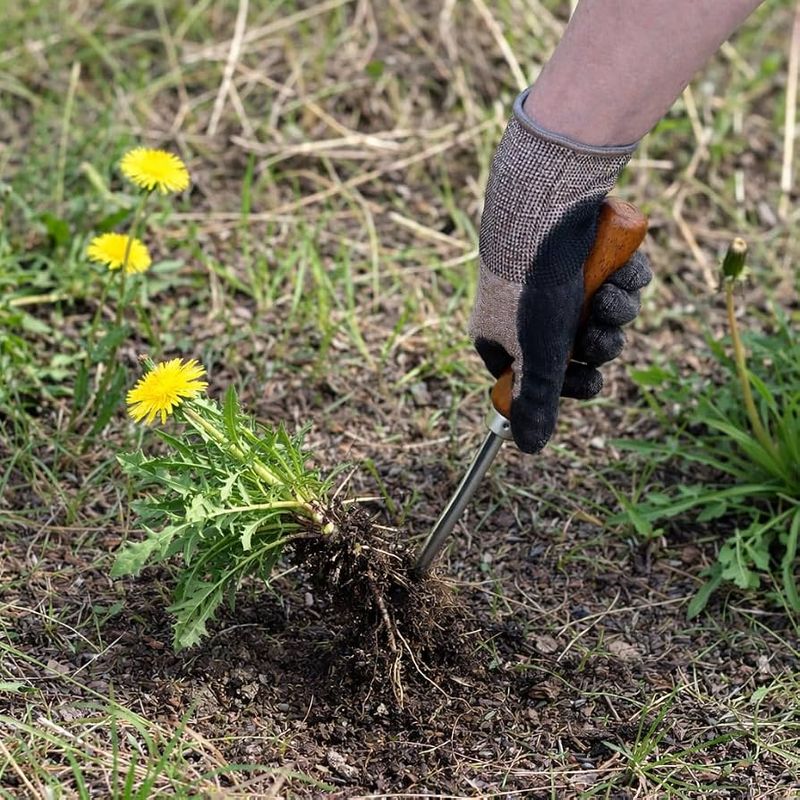
For isolated plants, hand-pulling works best when the soil is moist, which in Arizona means shortly after irrigation or a monsoon rain. The goal is to remove as much of the taproot as possible, because root fragments left behind can resprout.
The University of Arizona Cooperative Extension and Oregon State University Extension both identify hand-pulling as an effective nonchemical option for managing scattered plants. Mowing before seed heads mature reduces wind-dispersed spread without removing established plants, and a three-inch mulch layer in garden beds can slow new germination considerably.
Dense, vigorous turf is the best long-term defense against dandelion encroachment. Thin or stressed grass gives dandelion the bare ground it needs to establish.
Utah State University Extension and University of Minnesota Extension both note that a healthy, thick lawn crowds out most broadleaf weeds before they gain a foothold. If a homeowner managing a conventional lawn decides that a selective post-emergence herbicide is appropriate, the product label governs everything: application timing, bloom restrictions, reentry intervals and safe use around other plants.
The label is the legal document, and no general advice overrides it.
Identify before eating or spraying, then build better habitat
Arizona lawns grow several yellow-flowered plants that can look like dandelion at a glance. Common sowthistle has branched, leafy stems.
Desert dandelion and cat’s-ear both produce yellow composite flowers but differ in leaf texture and stalk structure. True common dandelion has one flower head per hollow, leafless stalk, deeply lobed leaves in a basal rosette at ground level and milky sap when broken.
The University of Arizona’s illustrated weed guide and the Yavapai Plants Extension profile both provide identification details that make the distinction clear before any foraging or treatment decision.
Eating without confirming identification is a genuine risk. Even after you have correctly identified a plant as Taraxacum officinale, location matters.
Do not eat dandelions from a lawn that has been sprayed with herbicide or any other pesticide, from a roadside, near a drainage channel or from any location where chemical contamination is possible. The University of Wisconsin Extension recommends thorough washing and avoidance of treated plants as basic safety steps, and those precautions apply regardless of how familiar the plant looks.
If a flowering dandelion is staying in the yard to support pollinators, keep pesticide applications away from it while it is blooming. EPA pollinator protection guidance requires following the product label, observing all bloom restrictions, reducing spray drift and avoiding applications while bees are actively foraging.
Timing alone does not make an application safe; the label, the product formulation and site conditions all factor in. Where dandelions do not fit, remove them.
Where a few fit, let them bloom through their season, then invest in penstemon, brittlebush, globemallow or another Arizona-adapted species that will carry the habitat work long after the dandelions are gone.