The One Thing North Carolina Sunflowers Need Today Or Saturday Storms Will Destroy Them
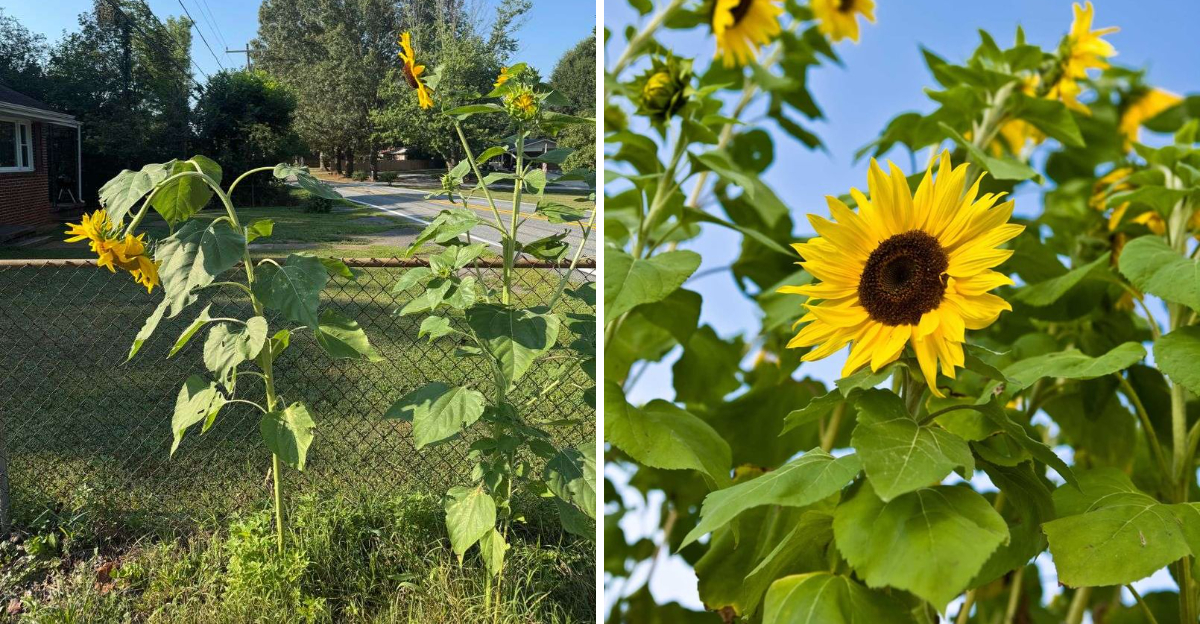
Staking tall sunflowers securely is the one task North Carolina gardeners cannot skip today if they want plants to survive incoming Saturday storms.
Heavy blooms combined with strong stems create a lot of surface area for wind to catch, making unsupported sunflowers especially vulnerable to snapping.
Checking existing stakes now, rather than waiting until storm conditions arrive, gives plants the best chance at remaining upright. Using soft ties around the main stem helps distribute stress evenly without cutting into or damaging the plant.
Cutting back any particularly heavy or top loaded blooms can also reduce the overall strain during high wind. Making sure soil around the base is firm, rather than loose from recent watering, helps roots hold steady through the storm.
Checking drainage nearby prevents water from pooling and further weakening root stability. Taking a few minutes today can save your sunflowers from serious damage this weekend.
1. Support Tall Sunflowers Before The Storm
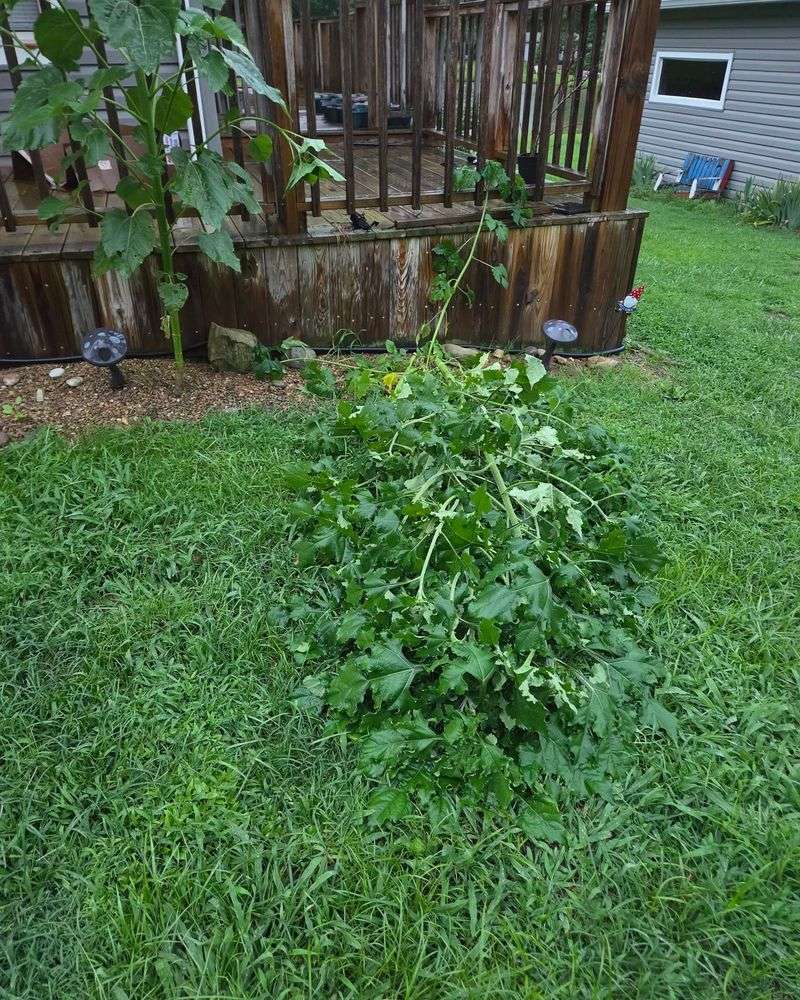
Picture this: your sunflowers are standing six, seven, maybe even eight feet tall, and Saturday’s storm is rolling in fast. Without support, all that height becomes a serious problem.
Tall sunflowers act almost like sails in a strong wind, catching every gust and putting enormous pressure on their stems.
Staking your sunflowers before the storm arrives is the single most effective thing you can do right now. A good stake driven into the soil beside the plant gives the stem something solid to lean on when the wind picks up and the rain starts pouring down.
It is a simple task that takes just a few minutes per plant but can protect weeks of careful gardening.
Many gardeners skip this step because their sunflowers look perfectly fine on a calm day. The problem is that calm days do not test a plant the way a storm does.
Wind gusts combined with the added weight of heavy rain-soaked flower heads create conditions that even healthy, thick stems struggle to handle alone.
Getting ahead of the storm is always smarter than dealing with the aftermath. Once stems bend sharply or snap under pressure, there is very little you can do to restore the plant to its original strength.
Acting today, before Saturday arrives, gives your sunflowers the best possible chance of coming through the storm looking just as beautiful as they do right now. Grab your stakes, get outside, and give those tall beauties the backup they deserve.
2. Focus On The Tallest Plants First
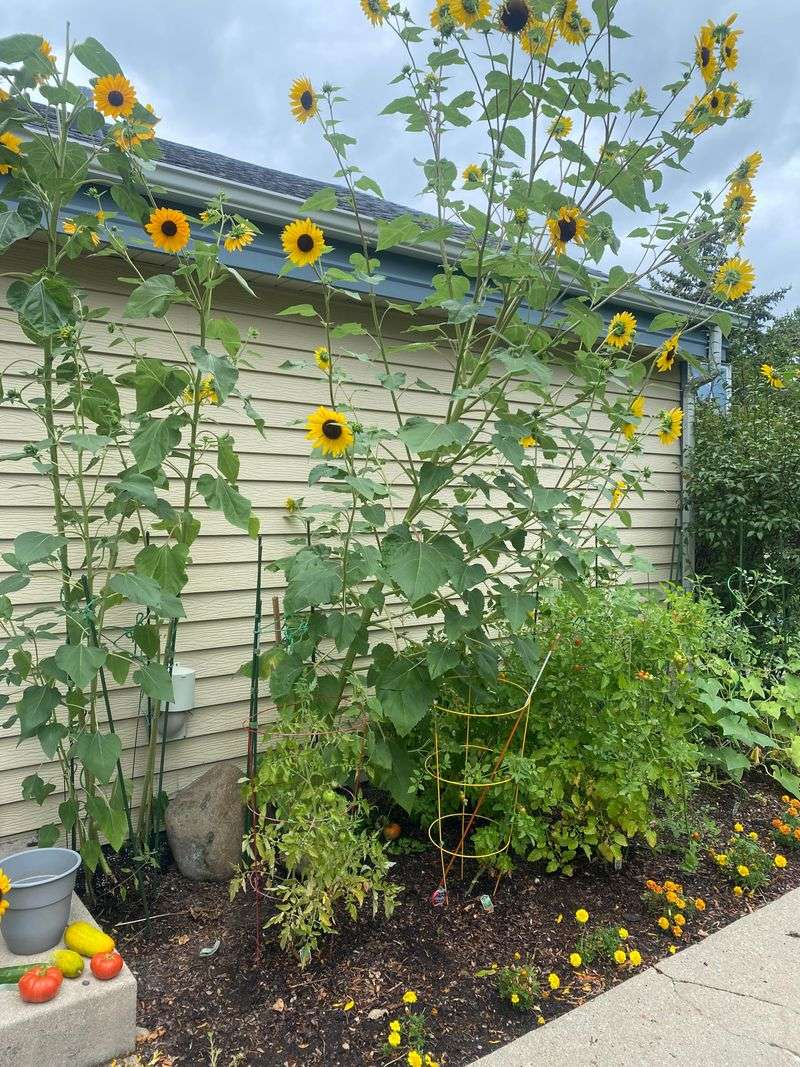
Not every sunflower in your garden carries the same level of risk when a storm rolls through. The tallest plants, especially those with large, heavy flower heads, are the ones most likely to suffer serious damage when wind and rain hit hard.
Think of a giant sunflower variety like Mammoth or American Giant, which can grow well over eight feet tall with flower heads the size of dinner plates.
All that beautiful size comes with a trade-off. A bigger flower head means more surface area catching the wind, and more weight pulling the stem forward when rain soaks into the petals and center disk.
Your North Carolina Garden Changes Every Week. Your Plan Should Too.
Gardening in North Carolina changes quickly throughout the season. Every Friday you’ll receive a simple weekly plan showing exactly what to plant, prune, fertilize, harvest, and protect so you never miss the right timing.
This combination puts tremendous stress on the lower portion of the stem, which is exactly where bending and breaking tend to happen during rough weather.
When you head outside to stake your garden today, start with the tallest plants first and work your way down. Prioritizing the biggest, heaviest sunflowers makes sure your most impressive plants get protected before time runs out.
Smaller, younger sunflowers with compact heads are generally better at handling wind on their own, so they can wait if you are short on time or materials.
Experienced gardeners know that giant varieties are the crown jewels of any sunflower patch, and protecting them takes just a little extra planning.
A few minutes of focused effort on your tallest plants today can keep that stunning display intact long after Saturday’s storm has passed through. Do not wait until the wind is already blowing.
3. Use A Strong Stake
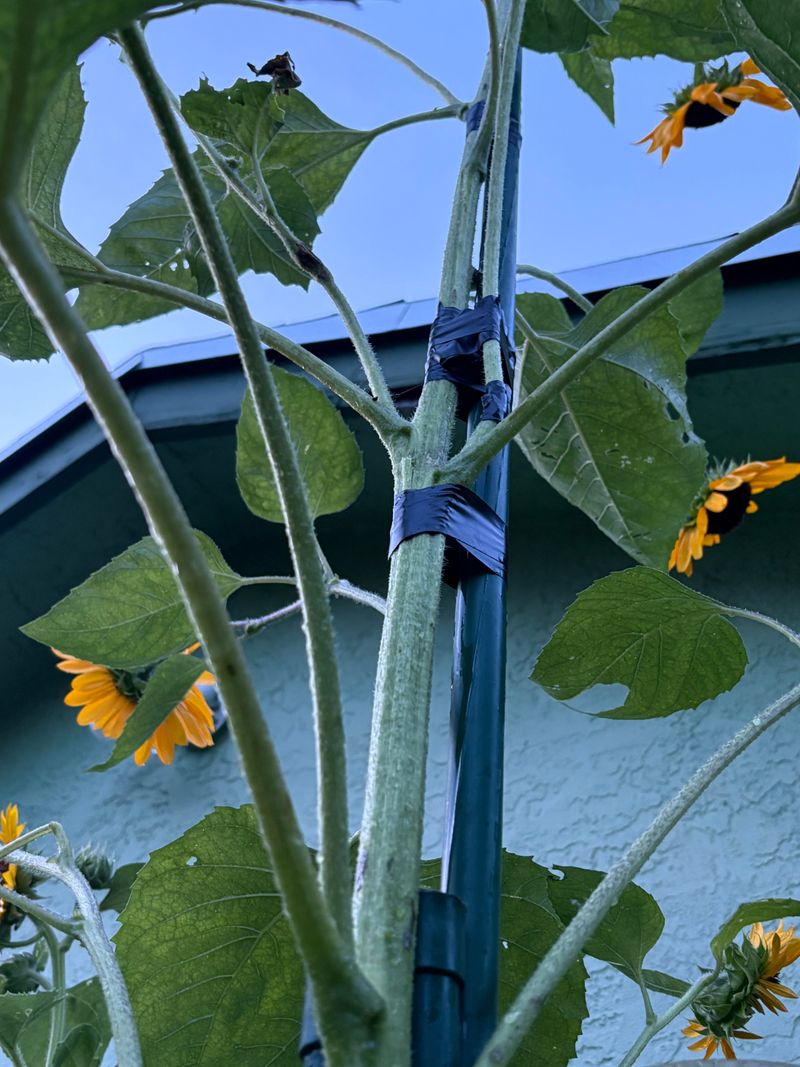
Choosing the right stake matters more than most people realize. A flimsy bamboo stick or a thin plastic rod might work fine for a small tomato plant, but a towering sunflower needs something with real strength behind it.
For most tall varieties, a wooden stake at least one inch thick or a sturdy metal garden stake works best, and it should be long enough to go at least twelve inches into the ground.
Pushing the stake into the soil correctly is just as important as picking the right one. Position it about three to four inches away from the base of the stem so you do not accidentally spear through the root system.
Sunflower roots spread out horizontally near the surface, so driving a stake too close or at an angle can disturb them and weaken the plant even before the storm arrives.
Once the stake is in place, push it deep enough that it does not wobble when you give it a firm shake. A stake that moves around in the soil will not do much good when a strong gust hits.
You want it locked in solid, like a fence post, so the plant has a reliable anchor to lean against.
Hardwood stakes, steel rebar, and heavy-duty fiberglass rods are all excellent choices for large sunflowers. Whatever material you use, test it by pulling on it before you attach the plant.
If it holds firm under your strength, it will likely hold firm in Saturday’s storm too. Solid preparation always pays off in the garden.
4. Tie The Stem Loosely
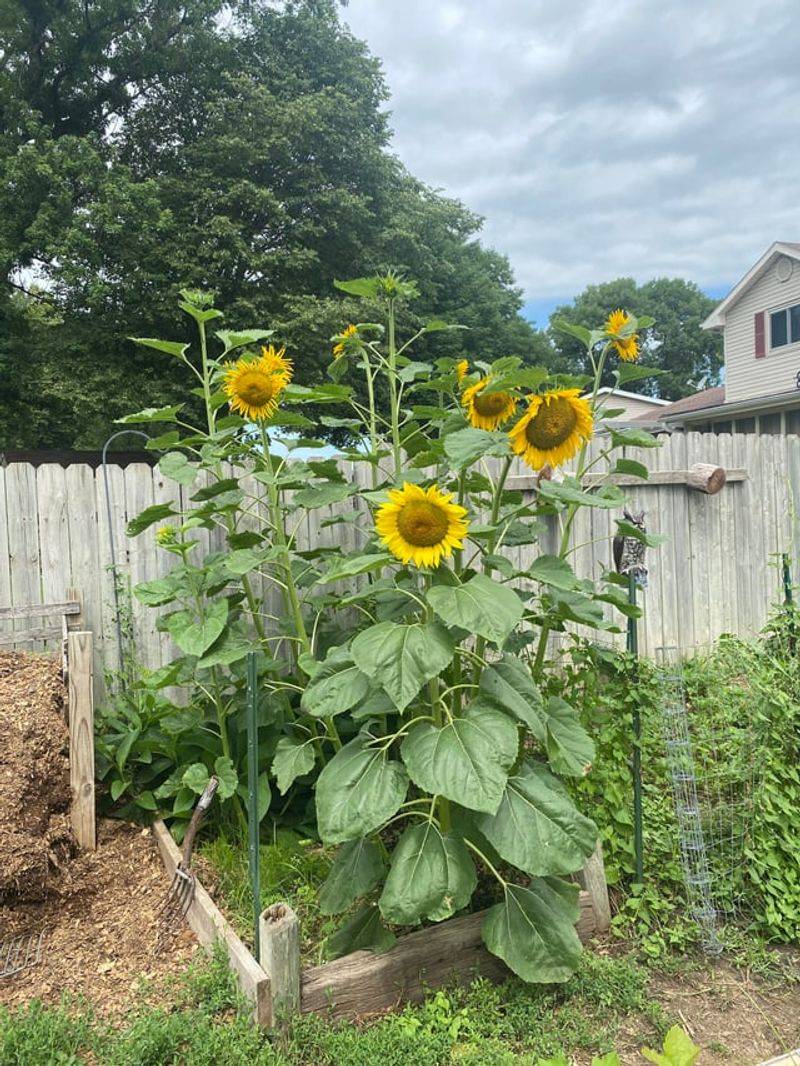
Here is something that surprises a lot of first-time gardeners: tying a sunflower too tightly to its stake can actually cause more harm than no tie at all. When you cinch a stem hard against a stake, you cut off the plant’s ability to flex naturally with the wind.
That flexibility is not a weakness. It is actually how plants absorb and manage the energy from gusts without snapping.
The goal of a good tie is to guide the stem, not to grip it. A loose figure-eight tie works really well for this purpose.
You wrap the material around the stake, cross it in the middle, and then loop it gently around the stem, leaving just enough space for the plant to sway slightly.
This way, the stake catches the stem if it leans too far, but the plant still gets to move a little on its own.
Soft materials work best for tying. Old strips of cotton fabric, stretchy plant tape, or even cut-up pantyhose are popular choices among gardeners because they hold without cutting into the stem.
Rough twine or wire can damage the outer layer of the stem, which opens the plant up to disease and stress right at the point where it needs to be strongest.
Check each tie after you make it by slipping a finger between the material and the stem. If your finger fits comfortably, the tie is about right.
Gentle support is the whole idea, giving the sunflower stability without restricting its natural movement during the storm. That balance makes all the difference.
5. Check Plants That Are Already Leaning
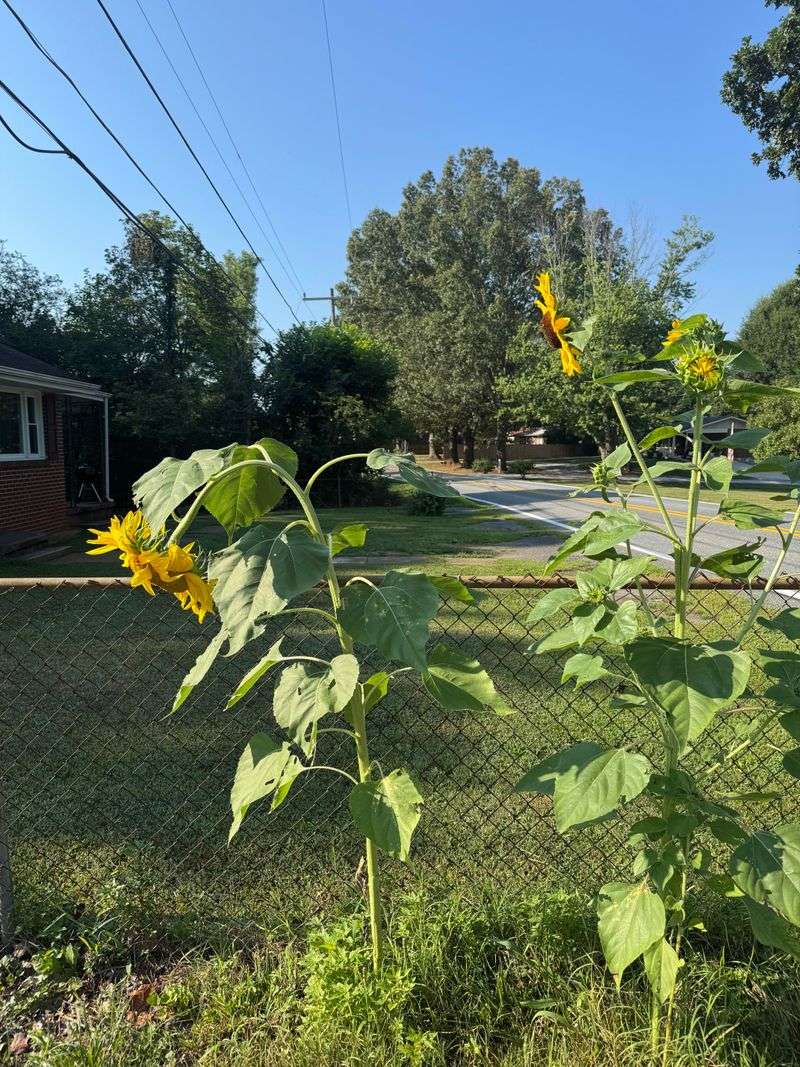
A sunflower that is already leaning before the storm even arrives is sending you a clear message.
Something has already pushed it off balance, whether that is uneven sunlight, soft soil, or the natural weight of a heavy flower head developing on one side.
Whatever the cause, a leaning plant is at a much higher risk of tipping over completely when wind and rain add even more pressure on top of what it is already handling.
Fixing a lean before Saturday is not complicated, but it does require a bit of care. Start by gently assessing which direction the plant is leaning and how far off vertical it actually is.
If the lean is slight, a single stake on the downward side with a loose tie can gradually guide the stem back toward a more upright position.
A more dramatic lean may need two stakes placed on opposite sides to create a more balanced support system. Do not try to force a leaning sunflower completely straight in one go.
Stems that have been growing at an angle for a while have adjusted their internal structure to that position, and yanking them upright too aggressively can cause cracking or tissue damage near the base.
A gentle correction over a day or two is always safer than a sudden one. Catching a lean early is one of the smartest moves a gardener can make. Once a storm-level wind hits a plant that is already off balance, the outcome is rarely good.
Addressing it now, while conditions are still calm, gives you full control and keeps your sunflowers standing tall through whatever Saturday brings.
6. Do Not Cut Healthy Sunflowers Back

When a big storm is in the forecast, some gardeners get nervous and start thinking about cutting their sunflowers back to reduce the risk of damage. It feels logical at first, shorter plants catch less wind, right?
But removing healthy stems or flower heads from thriving sunflowers is almost never the right move, and here is why that thinking backfires.
Sunflowers put enormous energy into producing their flower heads. By the time a plant is fully bloomed and standing tall, it has spent weeks building up to that moment.
Cutting the flower head off prematurely does not save the plant from storm damage. It just removes the very thing you were trying to protect in the first place, while also stressing the plant unnecessarily right before harsh weather hits.
Staking is a far better solution because it addresses the actual problem, which is instability, without sacrificing any part of the plant.
A properly staked sunflower can come through a significant storm looking nearly the same as it did before. The stake absorbs the mechanical stress so the stem and flower do not have to bear it alone.
Healthy plants also recover better from storm exposure when they have not been cut. Their root systems remain intact, their stems stay strong, and their flowers continue to develop seeds that birds and pollinators rely on through late summer and into fall.
Protecting a sunflower with a stake rather than a pair of scissors is always the smarter, kinder choice for your garden. Keep those flowers on the plant where they belong.
7. Protect Sunflowers In Exposed Locations
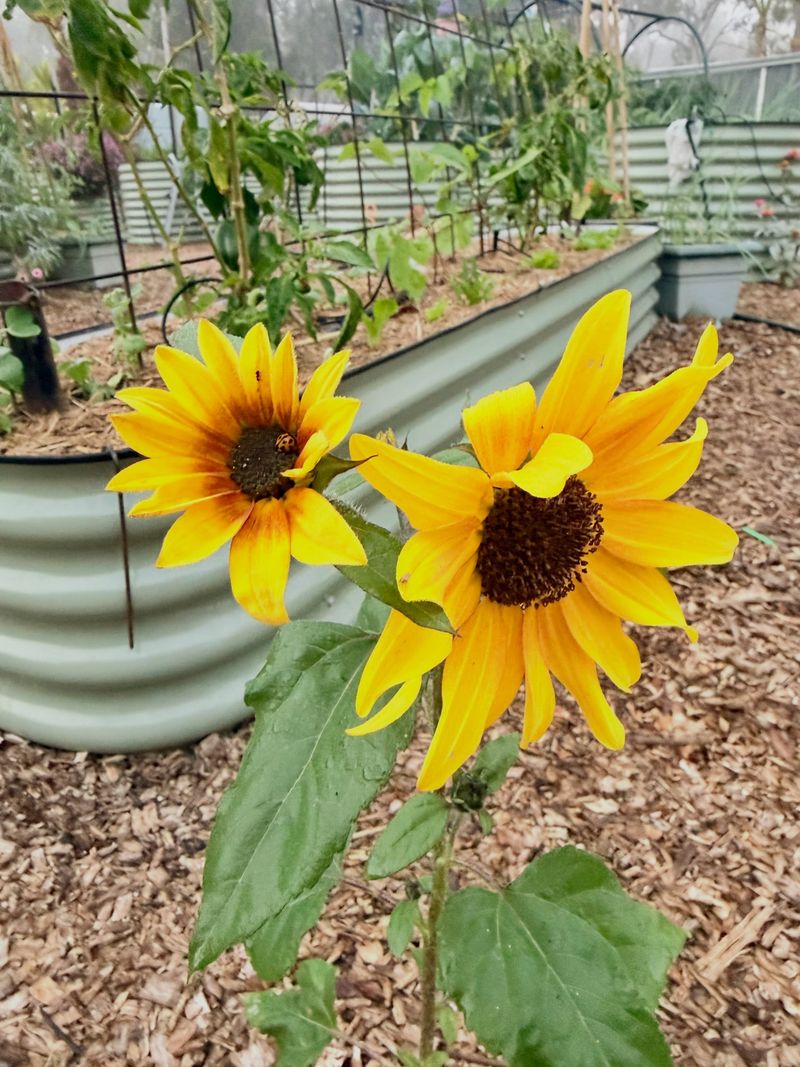
Location changes everything when it comes to storm risk. A sunflower growing in a wide open field or along the edge of a yard with no fence, trees, or structures nearby is exposed to wind from every direction.
These plants have no natural windbreak to soften the gusts, which means they absorb the full force of every storm that rolls through.
Sunflowers planted in sheltered spots, like along a fence line, near a building, or tucked beside a hedge, get natural protection from surrounding structures.
The wind still reaches them, but it arrives with less intensity because something has already broken its momentum.
If you have sunflowers in both sheltered and exposed areas, focus your staking efforts on the open-location plants first, since they face the greatest challenge during Saturday’s storm.
For sunflowers in extremely exposed spots, consider using two stakes instead of one. Placing a stake on both the windward side and the leeward side of the plant creates a more balanced support system that can handle gusts coming from shifting directions.
Storms in North Carolina often bring wind that changes direction as the system moves through, so having support on multiple sides is a smart precaution.
Some gardeners also use temporary windbreaks made from burlap or garden fabric staked around exposed plants before a major storm. While this takes a bit more effort, it can make a real difference for plants in especially vulnerable spots.
Knowing your garden’s layout and which plants face the most exposure is half the battle. Use that knowledge to protect the right plants at the right time.
8. Check The Supports After The Weather Passes
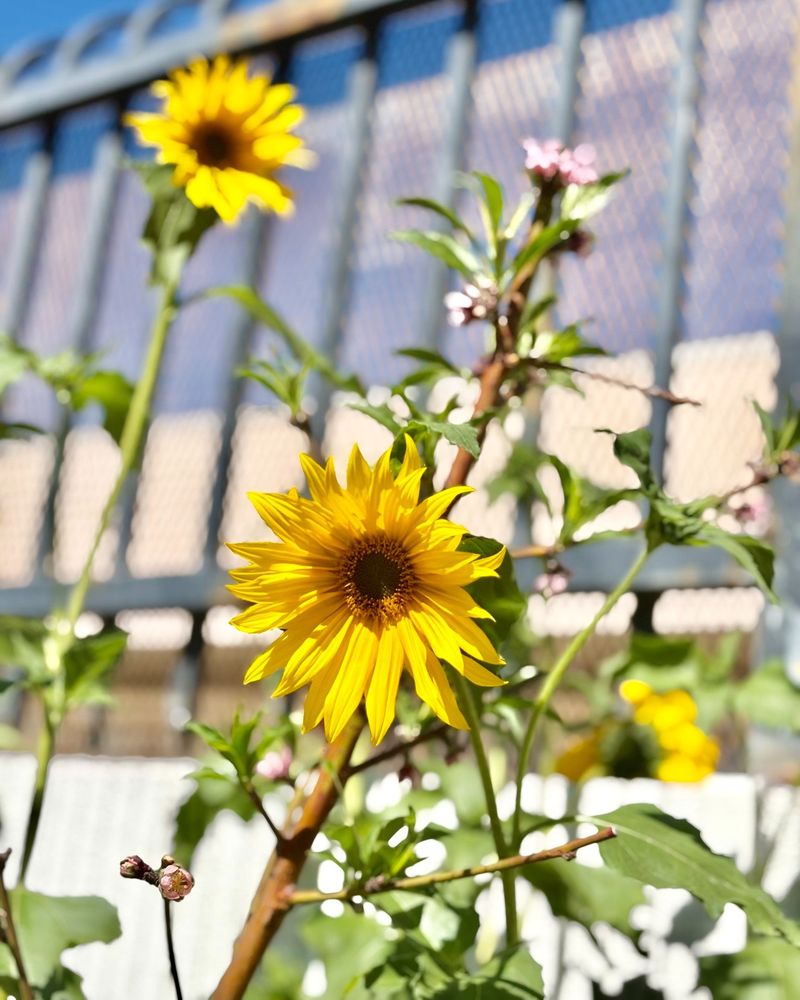
The work does not stop once the storm passes. In fact, the hours right after a storm are one of the most important times to be in your garden.
Stakes can shift in waterlogged soil, ties can loosen or tighten unexpectedly, and stems that bent during the storm may need gentle guidance back toward a more upright position before the soil firms up again as it dries.
Walk through your sunflower patch as soon as it is safe to go outside after the weather clears. Check each stake to make sure it is still firmly in the ground.
Wet, saturated soil is much softer than dry soil, and a stake that was solid before the storm might have shifted a few inches under the pressure of wind and moving water.
Push any loose stakes back into position and firm up the soil around their bases with your foot.
Look at each tie carefully too. Heavy rain can cause plant material to swell slightly, which sometimes makes a tie feel tighter than it was when you first put it on.
Loosen any ties that are pressing firmly against the stem and re-secure them with a little more breathing room.
On the flip side, ties made from stretchy material might have loosened too much, leaving the stem without the support it needs during any aftershock gusts.
Post-storm garden checks take maybe fifteen or twenty minutes, but they protect the investment of time and care you have already put into your sunflowers all season long.
A quick inspection today keeps your plants on track for a strong, healthy finish to the growing season.