The Ohio Berries You Can No Longer Legally Plant
Nobody thinks of berries as a legal issue. They are garden plants.
They feed birds. They look good along a fence line in fall.
The idea that planting the wrong one could put an Ohio homeowner on the wrong side of state regulation has simply never been part of the conversation. It is now.
Ohio has moved several berry-producing plants onto restricted lists in recent years. Not obscure species.
Familiar ones. Plants that show up in old gardens, in bird-friendly landscaping guides, and on nursery benches that have not caught up with the regulation changes yet.
The bird that ate those berries last October carried the seeds somewhere the plant was never supposed to go. Ohio’s natural areas have been dealing with the consequences long enough that the state stopped looking the other way.
Some berries have become a legal question. Knowing which ones is worth figuring out before fall planting starts.
1. Common Privet Is The Newest Familiar Shrub To Lose Its Pass
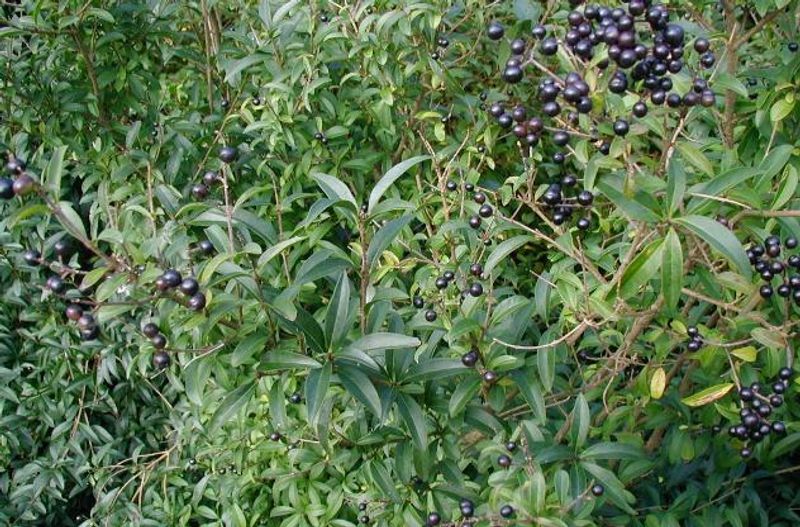
Plenty of old hedgerows across the region contain a plant that most people simply call privet. That familiar hedge shrub, known botanically as Ligustrum vulgare, now carries a regulated status under state law.
A phase-out period that once allowed limited sales has ended. Selling, propagating, or distributing common privet is no longer a permitted activity in the state.
One reason this matters is the name. Privet is used loosely for several different Ligustrum species, and not all of them share the same legal status.
A homeowner reading an old plant tag that says privet cannot assume the rule applies to every shrub sold under that label. The scientific name Ligustrum vulgare is what the current rule addresses, so checking the botanical name is worth the effort.
Common privet produces clusters of small, dark berries in late summer and fall. Birds eat the fruit and move seeds into woodland edges and disturbed areas beyond gardens.
The shrub also spreads through root sprouting, which gives it more than one route out of a planted space.
If you already have it growing on your property, the current rule restricts commercial and propagation activities rather than homeowner possession.
For a legal hedge replacement, Ohio native shrubs like arrowwood viburnum (Viburnum dentatum) offer similar screening with regional wildlife value.
2. Autumn Olive Spreads Far Beyond The Yard Where It Was Planted
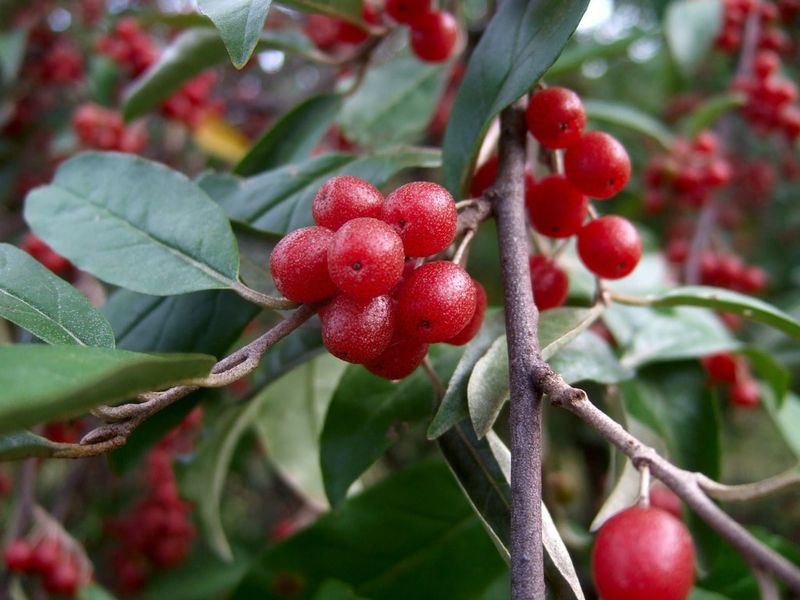
Decades ago, conservation agencies and landowners planted a fast-growing shrub to stabilize eroding slopes and provide food for wildlife. That shrub was autumn olive, Elaeagnus umbellata, and it performed those jobs effectively.
The problem was that it performed them far too well outside the original planting sites.
Autumn olive produces small, round, red fruit dotted with silver flecks. The fruit ripens in late summer and fall.
Birds consume it widely and deposit viable seeds in fields, woodland edges, roadsides, and other open or disturbed areas. A single mature shrub can produce an enormous number of seeds in a single season, which helps explain how seedlings appear well beyond any yard.
Your Ohio Garden Changes Every Week. Your Plan Should Too.
Gardening in Ohio changes quickly throughout the season. Every Friday you’ll receive a simple weekly plan showing exactly what to plant, prune, fertilize, harvest, and protect so you never miss the right timing.
The shrub also fixes nitrogen in the soil. That trait once made the shrub appealing for reclamation work.
However, it can alter soil chemistry in ways that favor its own continued growth over nearby native plants.
Under the current state rule, selling, offering for sale, propagating, distributing, and intentionally spreading autumn olive are restricted activities.
Simply having an established specimen on your property is a different matter from those commercial and propagation actions.
Ohio native serviceberry (Amelanchier species) is a good option if you want a fruiting shrub that supports wildlife without the same spread concerns. It is also well-suited to regional conditions.
3. Amur Honeysuckle Can Turn A Hedge Into A Woodland Problem
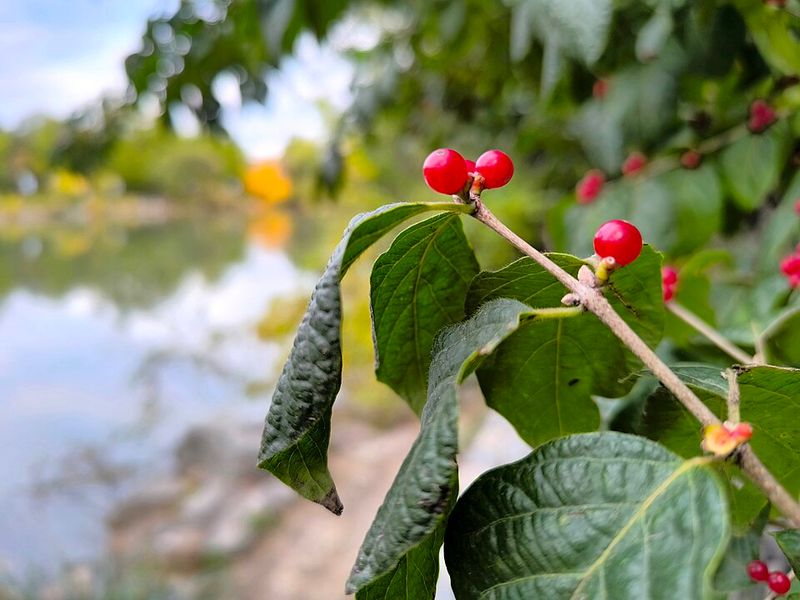
Not every plant called honeysuckle is the same, and that distinction carries real practical weight. The name honeysuckle covers Ohio native species, ornamental vines, and invasive shrubs.
Amur honeysuckle, Lonicera maackii, belongs in that last group and is regulated under the current state invasive plant rule.
Amur honeysuckle grows as a large, arching shrub rather than a vine. It produces pairs of bright red berries in fall.
Birds eat the fruit and carry seeds into woodland interiors and edges, where the shrub can establish a dense understory layer. That layer shades out plants that were already growing there, reducing the diversity of ground-level vegetation over time.
One useful identification detail: Amur honeysuckle leafs out earlier in spring and holds its leaves later into fall than most native shrubs around it. That extended growing season gives it a competitive edge in shaded woodland settings.
Native bush honeysuckles like Diervilla lonicera are sometimes suggested as a substitute, though they serve a different aesthetic role.
The current rule restricts selling, propagating, distributing, and intentionally spreading Amur honeysuckle. Native honeysuckle species are not affected by this rule.
If you see the name honeysuckle on a plant label, check the scientific name before purchasing. That is the clearest way to avoid confusion between regulated and native species.
4. Japanese Honeysuckle Does More Than Climb Over Garden Fences
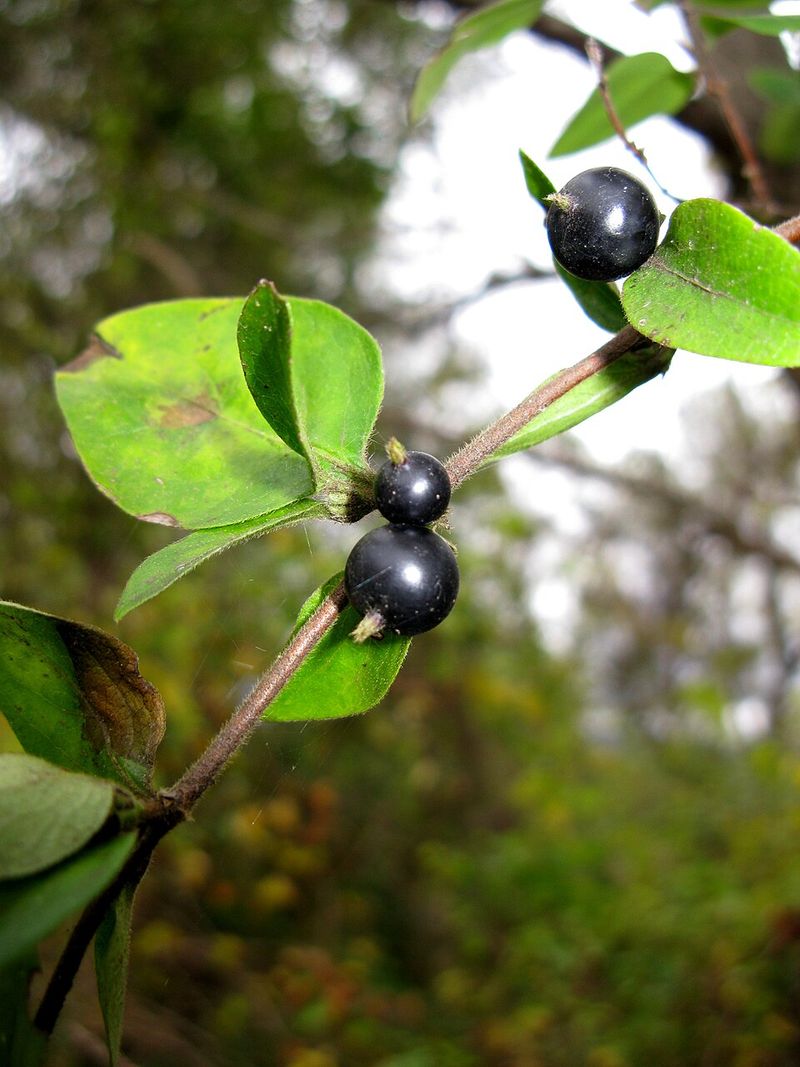
A vine that smells wonderful in early summer and covers a fence quickly sounds like a gardener’s dream. Japanese honeysuckle, Lonicera japonica, built a loyal following on exactly that appeal.
Its fragrant white and yellow flowers are genuinely attractive, and it was widely planted for that reason before its behavior in natural areas became better understood.
Unlike Amur honeysuckle, which grows as a shrub, Japanese honeysuckle is a twining vine. It climbs by wrapping around other plants, fences, and structures.
It also spreads by sending out runners along the ground, rooting as it goes. That combination of seed spread and vegetative growth lets it cover large areas without relying on any single method.
The fruit is small and black, ripening in late summer and fall. Birds consume the berries and distribute seeds into areas beyond the original planting.
In warmer winters, the vine can remain semi-evergreen, which extends its ability to grow and compete with surrounding vegetation.
Dense growth over shrubs and low trees can reduce the light those plants receive, affecting their development. The current rule restricts selling, propagating, distributing, and intentionally spreading this species.
Trumpet honeysuckle (Lonicera sempervirens) is an Ohio native climbing alternative with similar vertical interest. It also supports hummingbirds without the same spread concerns.
5. European Buckthorn Can Build Dense Thickets From Bird Spread Fruit
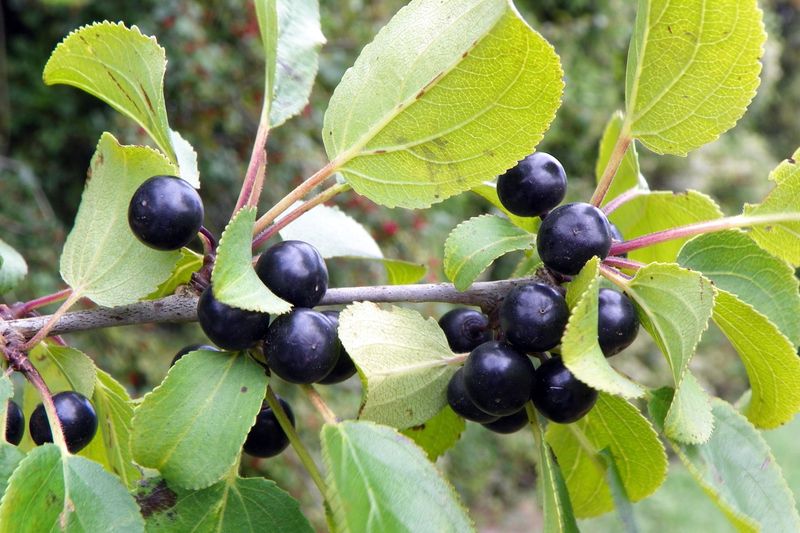
A thorny shrub with glossy leaves and clusters of small dark fruit might blend into a hedgerow without drawing much attention.
European buckthorn, Rhamnus cathartica, has that kind of unremarkable appearance, which is part of why it established so widely before people took notice.
The fruit is small and nearly black when ripe, appearing in late summer. Birds eat the berries and deposit viable seeds across a wide area, including woodland edges, floodplains, and disturbed sites.
Seedlings can establish in shade as well as open areas, which gives this species a broad range of suitable habitats.
European buckthorn can form dense thickets once it gains a foothold. Those thickets can reduce the number of native shrubs and tree seedlings able to establish beneath them.
The shrub also leafs out early in spring, extending its growing season relative to Ohio native plants nearby. Research from the U.S.
Forest Service has documented its capacity to alter understory conditions in forested areas.
European buckthorn should not be confused with glossy buckthorn (Frangula alnus), a separate species with its own regulatory status.
Under the current state rule, selling, propagating, distributing, and intentionally spreading Rhamnus cathartica are restricted.
An existing specimen on private land is not automatically a violation of those specific restrictions.
6. Common Barberry Is Already Off Limits Despite Its Ornamental Past
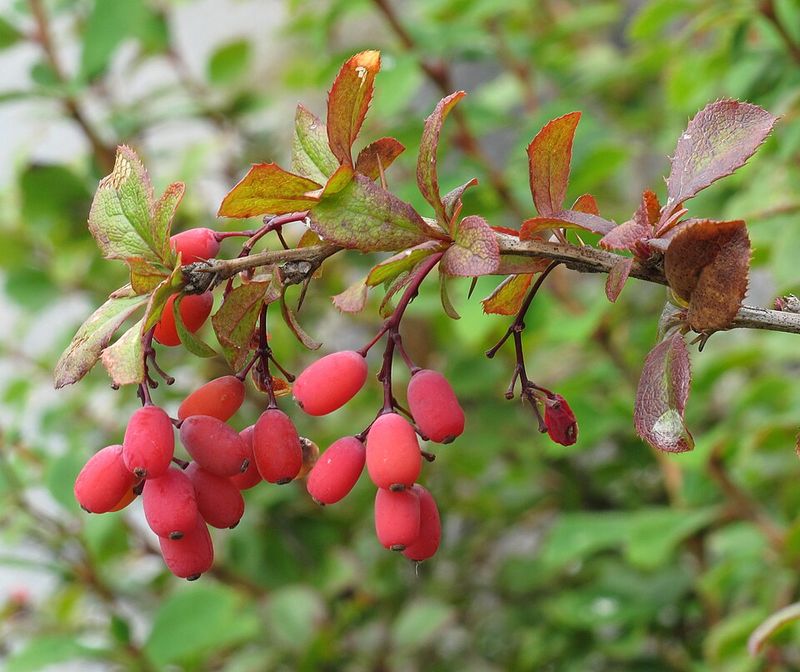
Spend time in older gardens or along neglected fence lines and you may come across a thorny shrub with small, elongated red berries hanging in clusters.
That plant is likely common barberry, Berberis vulgaris, and its regulated status predates some of the newer additions to the state invasive list.
Common barberry has a long ornamental history in North American gardens. Its bright red fruit and yellow flowers gave it landscape appeal.
It also has a documented agricultural history: the species serves as an alternate host for wheat stem rust, a fungal disease that can damage grain crops.
That agricultural concern led to eradication programs in some states long before invasive plant regulations addressed it.
The berries ripen in fall and persist into winter. Seed dispersal by birds has been documented, and seedlings can appear in woodland edges and disturbed areas near planted specimens.
One important clarification: common barberry is not the same as Japanese barberry (Berberis thunbergii). Those two plants share the genus name and the common name barberry, but they are separate species with different regulatory histories.
Shoppers at garden centers who see the name barberry on a label should confirm the scientific name before purchasing. Under the current rule, selling, propagating, and distributing Berberis vulgaris are restricted activities in the state.
7. Porcelainberry Can Escape A Trellis And Spread Into Natural Areas
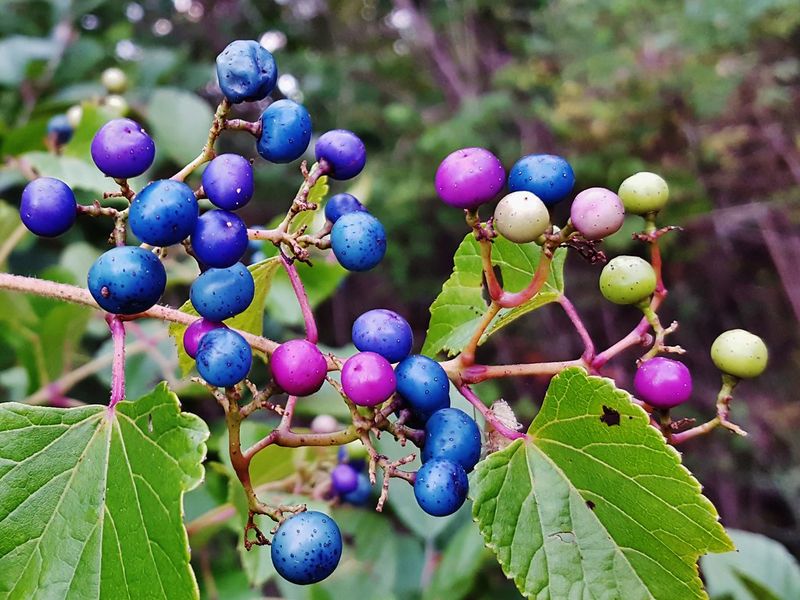
Few ornamental vines produce fruit quite as visually striking as this one. The berries shift through green, turquoise, blue, and purple as they ripen, often appearing in mixed colors on the same cluster at the same time.
That colorful display made porcelainberry, known botanically as Ampelopsis brevipedunculata, a popular choice for trellises and fences in residential landscapes.
The vine climbs using tendrils and can cover a large structure quickly. Beyond the trellis, it spreads by seed, with birds consuming the fruit and depositing viable seeds in natural areas.
Roadsides, woodland edges, and stream banks are among the habitats where seedlings have been documented establishing away from planted sites.
Porcelainberry can grow over surrounding shrubs and small trees, reducing the light available to the vegetation beneath it. That behavior has been documented in natural areas near planted specimens.
The vine is sometimes confused with Ohio native grapes, which also climb by tendrils and produce dark fruit in clusters.
A useful distinction is the bark: native grapes have shredding, fibrous bark, while porcelainberry has smooth, spotted bark with white dots called lenticels.
Under the current state rule, selling, propagating, distributing, and intentionally spreading this species are restricted.
Virginia creeper (Parthenocissus quinquefolia) is a native alternative that offers vigorous climbing growth and fall color without the same concerns.
8. Multiflora Rose Shows Why Pretty Fruit Does Not Make A Safe Plant
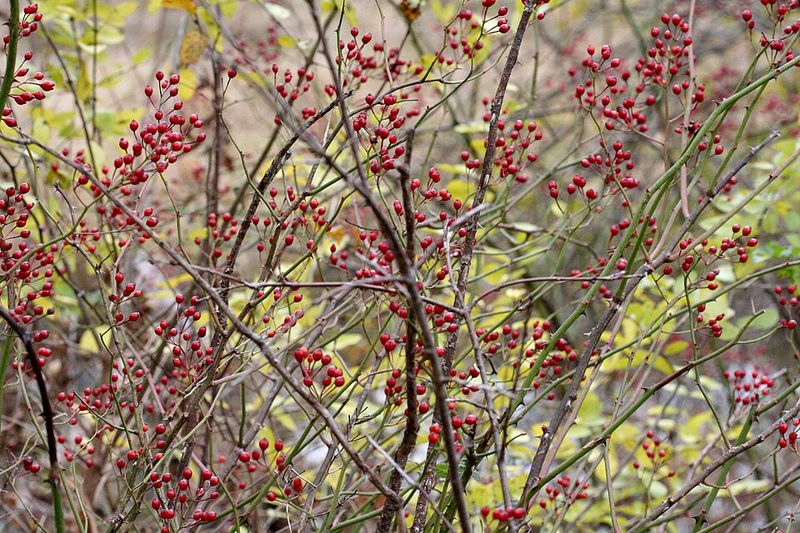
An arching shrub covered in small white flowers in late spring looks entirely welcoming in a landscape. Follow those flowers into fall and you will find clusters of tiny red rose hips that persist well into winter.
That seasonal interest once helped multiflora rose, Rosa multiflora, gain widespread use. It was planted in conservation projects, living fences, and highway erosion projects.
The rose hips are eaten by a range of birds and small mammals, and viable seeds are deposited widely as a result. Beyond seed spread, the plant also reproduces vegetatively.
Arching canes can root where their tips contact the soil, allowing the shrub to expand its footprint without any seed movement at all. Both routes contribute to its ability to establish dense stands in fields, pastures, and woodland edges.
Dense thickets of this rose can reduce the area available for other vegetation to establish in open habitats. The USDA has documented its impact on pasture land and natural areas across a broad range of states.
The current state rule restricts selling, propagating, distributing, and intentionally spreading multiflora rose. Not every rose that produces hips is regulated.
The restriction applies specifically to this species, not to ornamental roses generally. Selecting a rose for ornamental hips is a reasonable goal.
Checking the scientific name first is the practical way to make sure the choice stays within the law.