This Colorful Lizard Is Turning Up In More Arizona Yards After Monsoon Storms
Arizona monsoon season has a talent for making the desert feel completely alive overnight. The rain rolls in, the creosote fills the air with that incredible smell, and suddenly the whole landscape shifts into a completely different gear.
Most of that activity is welcome. Some of it is a little more surprising.
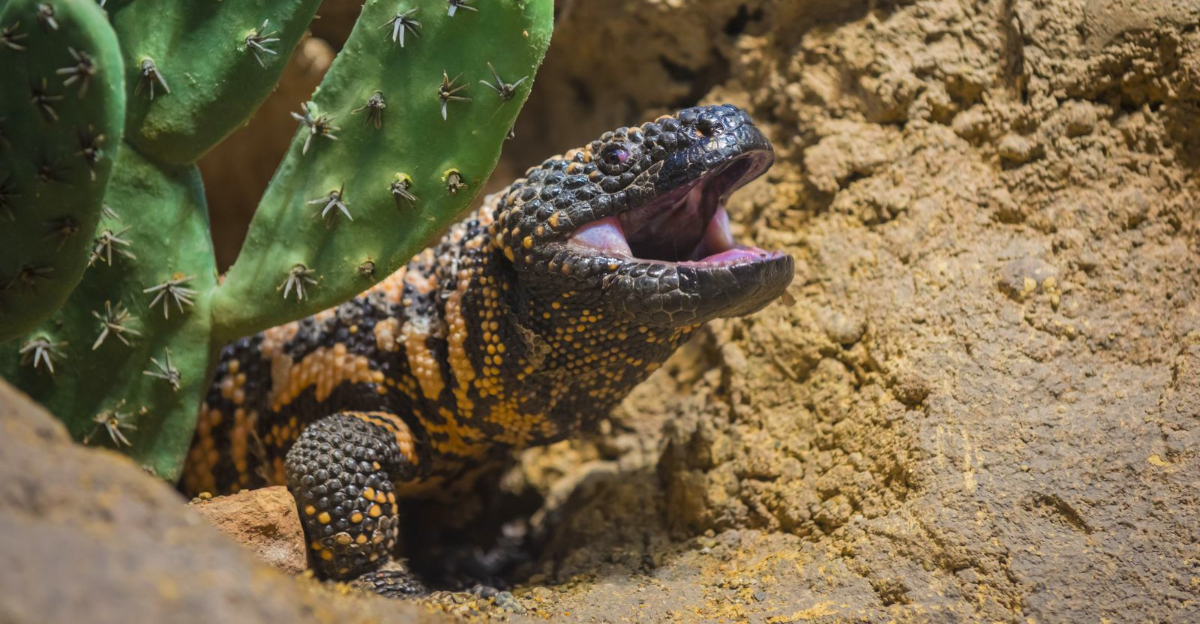
Like stepping outside after a storm and finding a boldly patterned, heavy-bodied lizard with striking black-and-pink or orange scales making its way across your yard like it owns the place.
Meet the Gila monster, one of Arizona’s most fascinating and honestly most misunderstood reptiles.
These lizards spend the majority of their lives underground or tucked into rocky shelters, but monsoon conditions have a way of bringing them out. If you live near desert habitat, a backyard encounter is more possible than most people realize.
Knowing how to respond matters.
1. Gila Monster Activity During Arizona’s Monsoon Season
Summer monsoon storms transform Arizona’s desert landscape in dramatic ways. Rainfall softens the ground, triggers insect activity, and prompts many desert animals to become more active above the surface.
Gila monsters are among the reptiles that tend to show more surface movement during this time of year, which can catch homeowners off guard when one turns up near a patio or garden bed.
Gila monsters are not truly nocturnal or strictly daytime animals. Their activity shifts with the seasons and temperatures.
During hot, dry months, they may remain sheltered underground for extended periods. When monsoon rains arrive and temperatures moderate slightly, conditions become more comfortable for movement and foraging.
According to wildlife researchers, Gila monsters spend a surprisingly large portion of their lives sheltered in burrows or under rocks. Surface activity is relatively limited throughout the year, which is part of why a sighting can feel so unexpected.
Monsoon season tends to be one of the windows when encounters near residential areas become somewhat more common.
Understanding this seasonal pattern helps put sightings in context. Seeing a Gila monster in your Arizona yard during monsoon months does not necessarily mean something unusual is happening.
It may simply mean the animal is moving through its natural range at a time when conditions are favorable for it to do so.
2. Common Yard Areas Where Gila Monsters May Appear
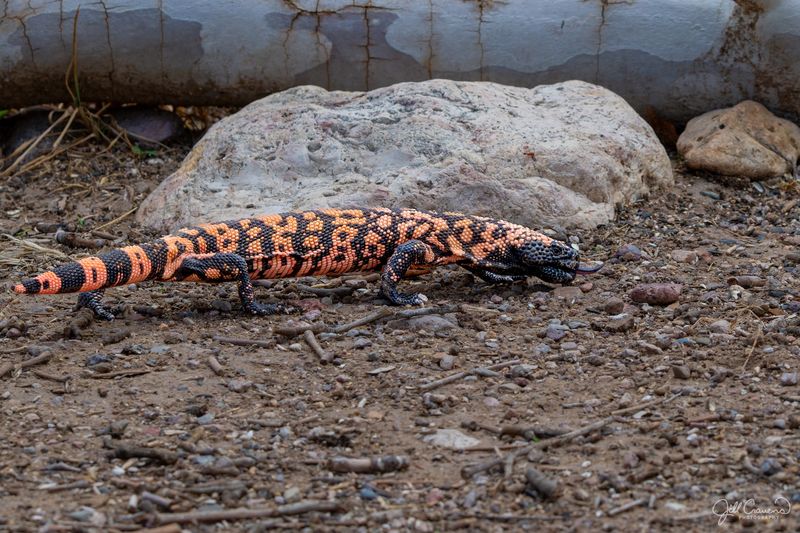
Finding a Gila monster in your yard can feel startling, but these reptiles tend to show up in fairly predictable spots.
Rock walls, stacked landscape boulders, and the shaded gaps beneath large decorative stones are among the most common places where Gila monsters may pause or take shelter.
These features mimic the rocky outcroppings they naturally prefer in the wild.
Low-lying areas along fence lines are another spot worth being aware of, especially where soil is softer or where gaps allow movement between properties.
Gila monsters are surprisingly capable of covering ground when motivated, and a yard that borders undeveloped desert or open wash areas in Arizona is more likely to see a passing visitor than one surrounded by dense urban development.
Your Arizona Garden Changes Every Week. Your Plan Should Too.
Gardening in Arizona changes quickly throughout the season. Every Friday you’ll receive a simple weekly plan showing exactly what to plant, prune, fertilize, harvest, and protect so you never miss the right timing.
Shaded areas beneath shrubs, wood piles, or low deck structures can also serve as temporary resting spots. Gila monsters are not looking to move into your yard permanently.
They are typically passing through in search of food, a mate, or a suitable place to regulate their body temperature.
Compost piles and areas where small animals like rodents or bird eggs may be accessible can also draw attention, since Gila monsters eat eggs, small mammals, and other protein-rich foods.
Being aware of these hotspots around your Arizona property helps you stay alert without becoming overly anxious about the possibility of an encounter.
3. Landscape Features That Can Attract Gila Monsters
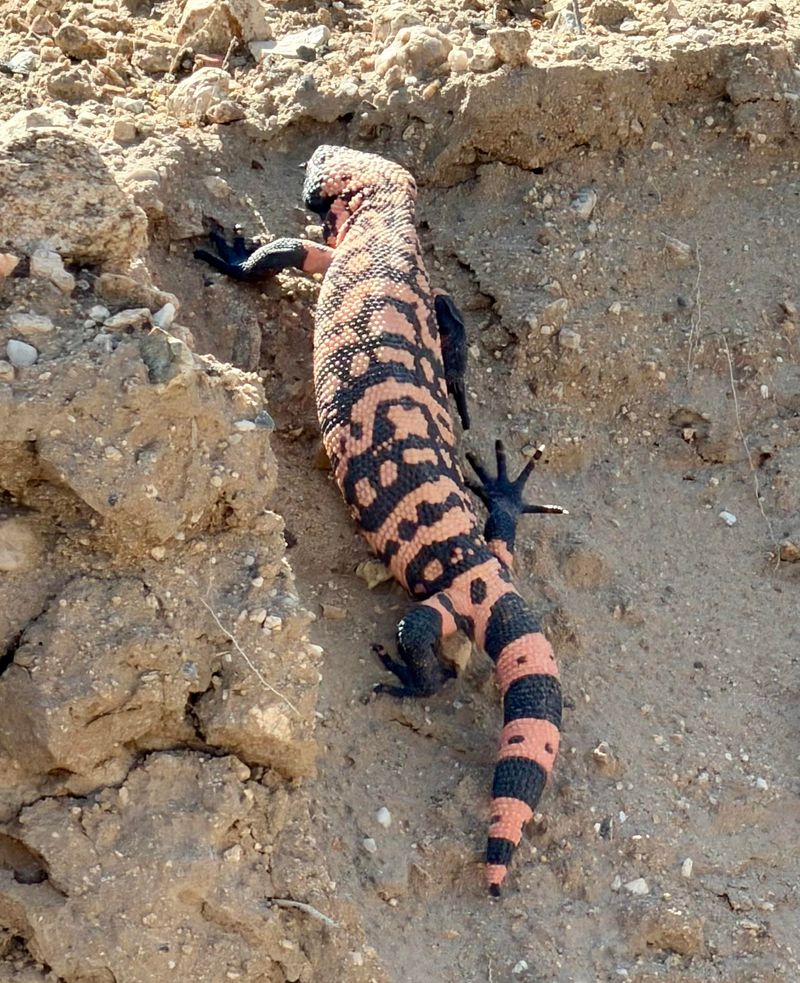
Certain yard conditions may make a property more appealing to a passing Gila monster, though no single feature guarantees an encounter. Rock features are among the most significant.
Stacked boulders, flagstone paths, and dry-stacked retaining walls all create gaps and shaded crevices that closely resemble the natural rocky terrain Gila monsters prefer across Arizona’s desert regions.
Dense ground cover, low-growing native shrubs, and areas with thick leaf litter or bark mulch can also provide the kind of shaded, sheltered spots these lizards may use to rest briefly. This does not mean you need to remove all native plantings from your yard.
It simply means being aware that certain areas may be worth checking before reaching underneath them.
The presence of prey is another factor worth considering. Yards that attract rodents, ground-nesting birds, or quail may indirectly draw Gila monsters, since eggs and small mammals are part of their natural diet.
Unsecured compost bins or pet food left outdoors can attract rodents, which in turn may attract predators like Gila monsters into the area.
Irrigation systems that keep soil moist after monsoon rains may also support conditions that bring Gila monsters closer to the surface.
While there is no verified list of specific plants or materials proven to attract them, focusing on shelter and prey availability is the most grounded way to think about what might make your Arizona yard more or less appealing to these reptiles.
4. Key Features For Identifying A Gila Monster
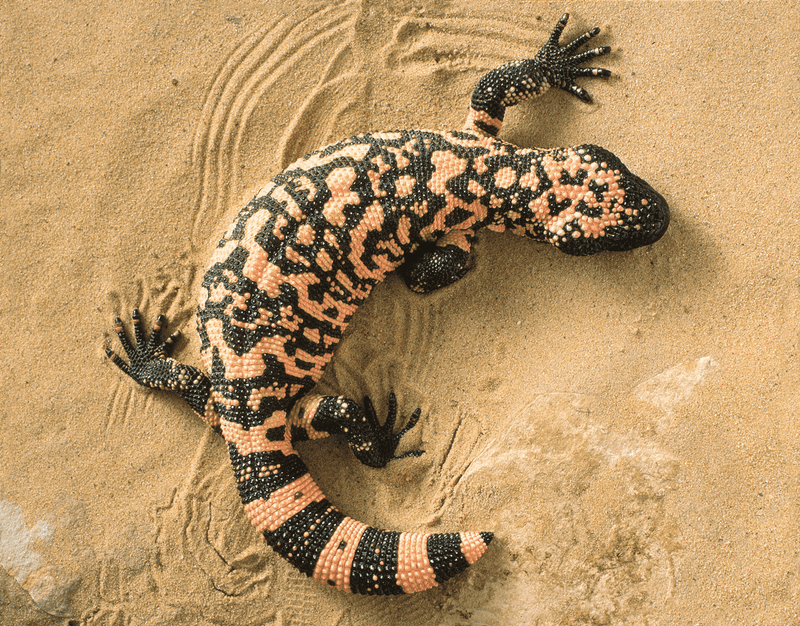
Spotting an unfamiliar lizard in your yard can raise quick questions about what you are actually looking at.
Gila monsters have several distinct physical features that set them apart from other Arizona lizards, though relying on color alone is not a reliable approach to identification.
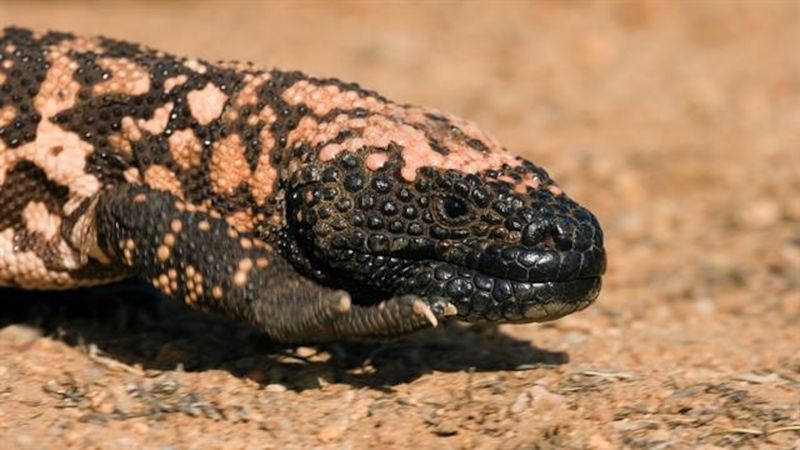
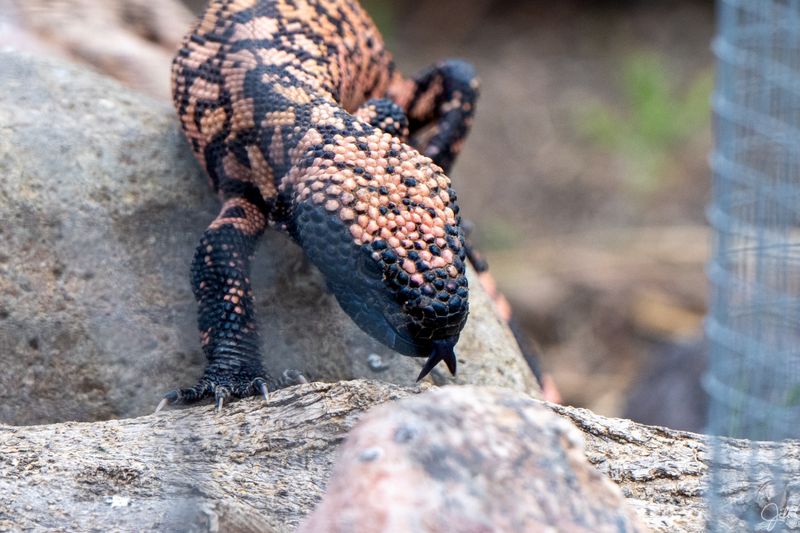
The most recognizable feature is the skin texture. Gila monsters have rounded, bead-like scales that give their skin a bumpy, almost mosaic-like appearance.
This is quite different from the smooth or finely keeled scales seen on most other lizards. The body is heavy and thick, giving the animal a stocky, low-to-the-ground silhouette that looks nothing like the slender skinks or whiptail lizards common in desert yards.
Coloration typically includes bands or blotchy patterns of black combined with shades of pink, orange, salmon, or yellowish tones. Patterns can vary between individuals, so color alone should not be your only guide.
The tail is notably thick and rounded, which is also where Gila monsters store fat reserves. The limbs are short and sturdy, and the animal moves with a slow, deliberate gait.
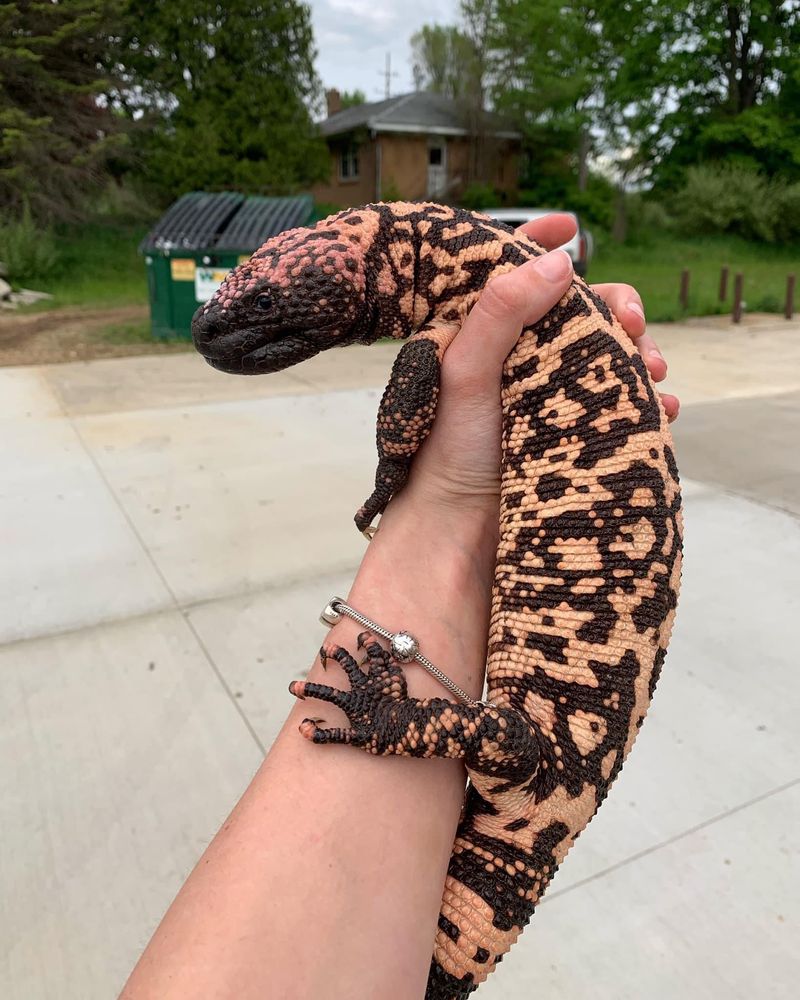
Adult Gila monsters generally reach about 18 to 22 inches in length, making them noticeably larger than most common yard lizards in Arizona.
If you observe these features together – heavy beaded body, patterned coloration, thick tail, and deliberate movement – you are likely looking at a Gila monster.
Maintaining a safe distance while observing is the best approach.
5. Safe Steps To Take After A Gila Monster Sighting
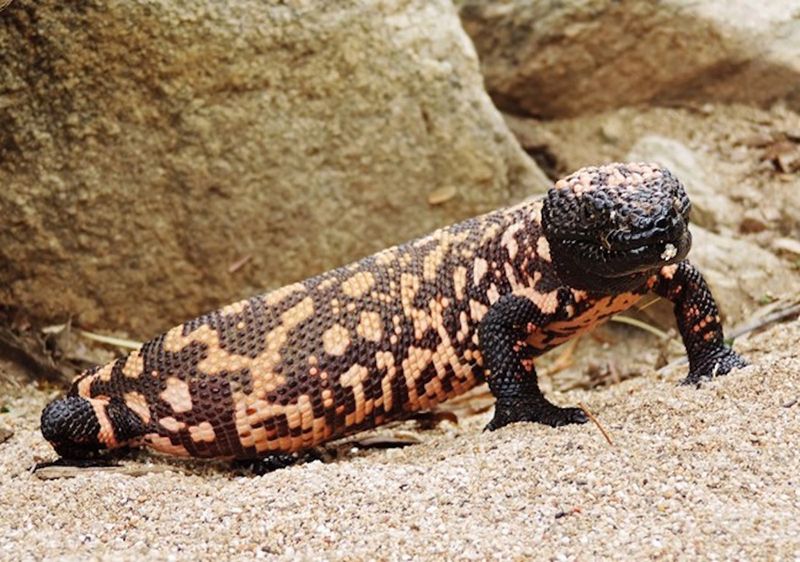
Remaining calm is the most practical first step when you spot a Gila monster near your home. These animals are venomous, but they are not aggressive by nature.
A Gila monster that feels cornered or threatened may react defensively, so giving it plenty of space is the most important thing you can do in the moment.
Back away slowly and keep children and pets inside or at a safe distance. Do not attempt to pick up, corner, poke, or chase the animal.
Gila monsters move slowly, but they can react quickly if they feel threatened, and bites can be serious and painful. The goal is to observe from a comfortable distance and let the animal move along on its own schedule.
Most Gila monsters that wander into an Arizona yard will continue moving through on their own if left undisturbed. Clearing the immediate area and giving the animal a clear path to exit is often all that is needed.
Avoid the temptation to herd it in a specific direction, as this can provoke a defensive response.
If the animal is in a location where it poses an ongoing concern, such as a high-traffic area near a doorway, consider calling Arizona Game and Fish or a local wildlife professional for guidance.
Keep a visual on the animal from a safe distance if you can do so safely, so you can describe its location accurately when help arrives.
6. Ways To Make Your Yard Less Inviting To Gila Monsters
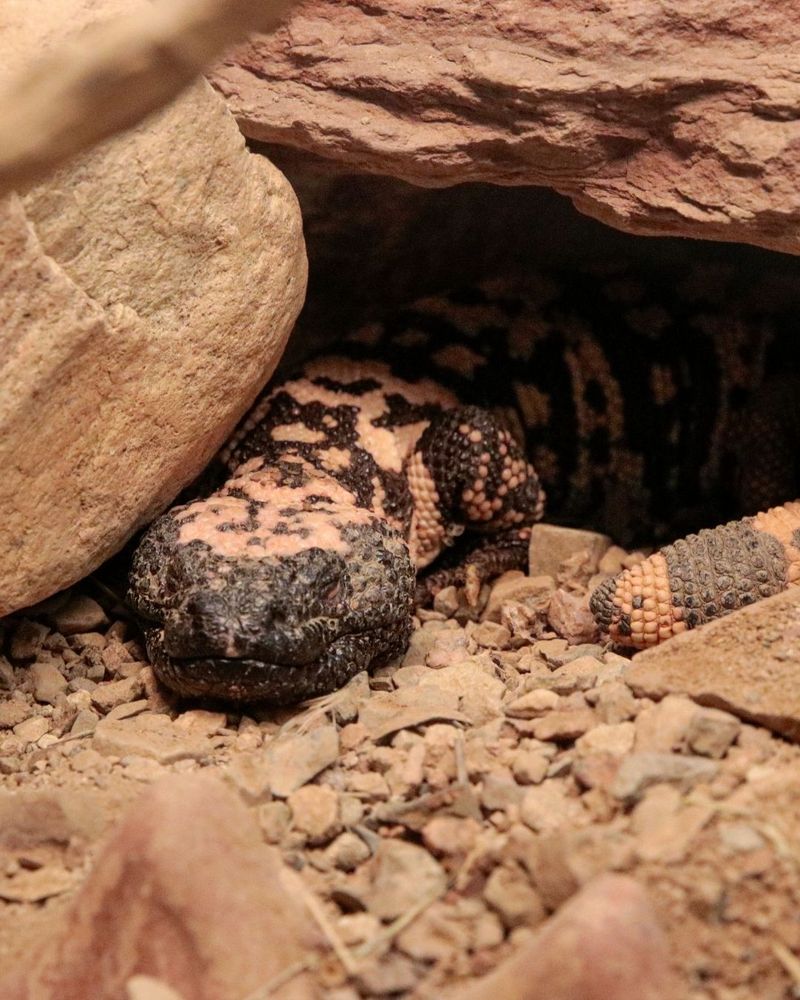
Reducing potential hiding spots around your property is one of the most practical ways to lower the chance of an unexpected Gila monster encounter. This does not mean stripping your yard of all natural features, but making a few adjustments can help.
Start by checking for gaps along fence lines and at the base of gates, especially if your yard backs up to open desert or a wash in Arizona.
Wood piles, stacked debris, and cluttered storage areas near ground level can create the kind of sheltered spaces that a passing Gila monster might find appealing.
Keeping these areas organized or elevating stored materials off the ground removes some of those opportunities.
Regularly checking under low deck structures or around rock features is also a good habit during monsoon season.
Reducing rodent activity around your yard can also help indirectly. Secure compost bins, avoid leaving pet food outdoors overnight, and address any conditions that might attract small mammals.
Fewer rodents means less reason for a predator like a Gila monster to linger near your property.
Some wildlife guidance suggests that keeping native desert landscaping open and well-maintained reduces the density of sheltered hiding spots while still supporting the surrounding ecosystem.
The goal is not to create a sterile yard, but to find a balance that makes the space feel less like ideal Gila monster habitat without sacrificing the natural character of an Arizona desert garden.
7. Pet And Child Safety Around Gila Monsters
Curious kids and energetic pets can turn a manageable wildlife encounter into a stressful one very quickly.
When a Gila monster is spotted in or near your Arizona yard, bringing children and pets inside immediately is the most straightforward protective step you can take.
Do not wait to see what happens.
Dogs in particular tend to investigate unfamiliar animals with their noses and paws, which puts them at risk of a defensive bite. Cats may also approach out of curiosity.
Neither animal instinctively recognizes a Gila monster as something to avoid, so supervision and restraint are essential.
Keeping pets on a leash when they are outside during monsoon season, especially in yards that border desert areas, is a sensible precaution.
Teaching children early that wild animals in the yard should never be touched, picked up, or chased is one of the most valuable lessons an Arizona parent can offer. Make it a general rule that applies to all unfamiliar wildlife, not just Gila monsters.
Kids who understand that rule are less likely to approach something dangerous out of excitement or curiosity.
If a pet is bitten by a Gila monster, contact a veterinarian as quickly as possible. If a person is bitten, seek medical attention right away.
Gila monster venom can cause significant pain and swelling, and prompt care is the most important response in either situation. Stay calm and focus on getting appropriate help without delay.
8. Situations That May Require Arizona Wildlife Assistance
Most Gila monster encounters near Arizona homes resolve on their own when the animal is left alone and given space to move. However, some situations call for outside help rather than a wait-and-see approach.
Knowing when to reach out to the right people can prevent the encounter from becoming more complicated.
Contact Arizona Game and Fish or a licensed wildlife removal professional if the Gila monster is inside a structure, trapped in an enclosed space with no clear exit, or in an area where it cannot safely move on without coming into contact with people or pets.
These situations go beyond simple observation and may require someone with proper training and equipment to handle safely.
If a person is bitten, call 911 or go to an emergency room immediately. Do not attempt to treat the bite at home.
Gila monster bites can cause intense localized pain, swelling, and other symptoms that require medical evaluation. Poison control centers can also provide guidance while you are on the way to seek care.
Animal control agencies in some Arizona counties may also assist with Gila monster calls, though policies vary by location. Calling your local agency to ask is a reasonable first step if you are unsure who handles wildlife encounters in your area.
Avoid attempting to relocate or capture the animal yourself, as this significantly increases the risk of a bite and may also be subject to legal protections under Arizona wildlife regulations.