The Arizona Container Setup That Helps Prevent Roots From Overheating
Your container plants may be getting more heat than you realize, especially when pots sit under strong afternoon sun. The leaves are not the only parts feeling it.
In Arizona, containers can heat up quickly because the pot itself is exposed to intense summer conditions. That extra warmth can make the root zone harder to manage.
Before moving every pot into shade, look at the entire setup. The container material, placement, and surrounding surfaces can all affect how much heat reaches the roots.
A few thoughtful changes can make your pots more comfortable without completely changing your patio or garden. Even small adjustments can matter during the hottest stretches.
Start by noticing which containers feel hottest later in the day.
A smarter setup can give those hidden roots valuable protection when temperatures climb.
1. The Right Setup Starts With Keeping Direct Heat Away
Concrete and pavement act like ovens in summer. When a pot sits directly on a hot surface, heat transfers straight up through the bottom and into the soil.
Root damage can happen fast under those conditions.
Lifting containers off the ground using pot feet, wooden risers, or a simple wire rack creates a small air gap underneath. That gap allows air to circulate and slows down heat transfer significantly.
Even a one-inch gap can make a measurable difference in soil temperature.
Bricks and pavers hold heat long after the sun moves. Placing pots on those materials without any buffer means roots are getting cooked from below, even in the evening hours.
Moving pots onto a wooden deck or gravel surface tends to reduce that absorbed heat.
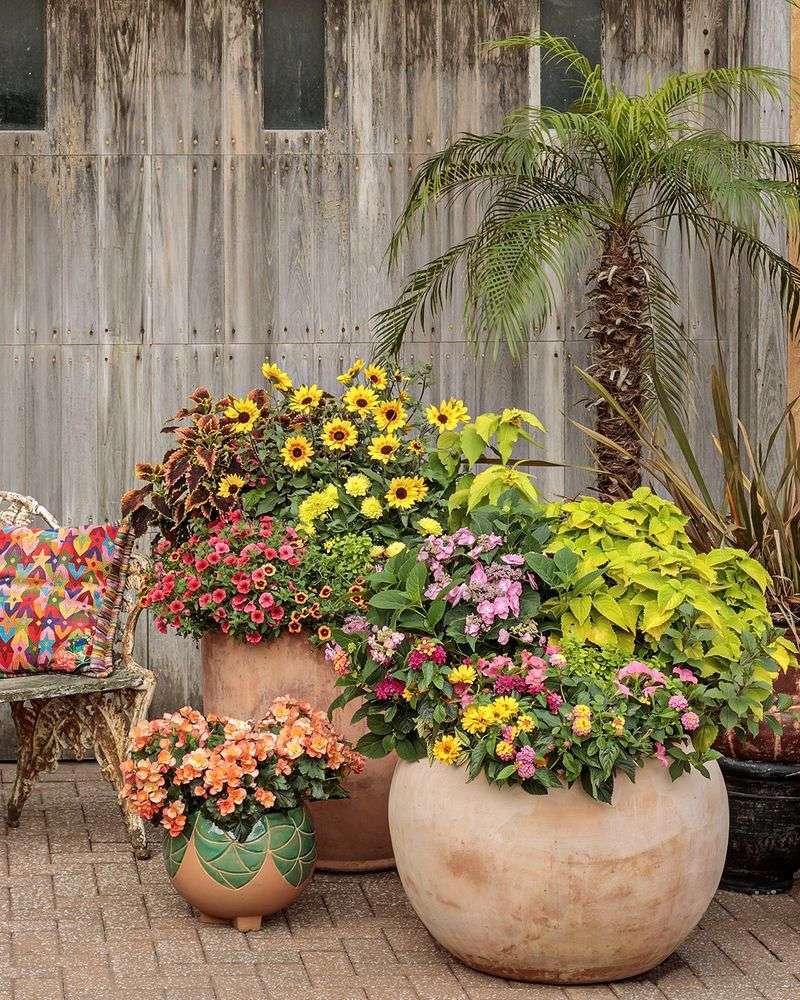
Grouping containers together also helps. Clustered pots shade each other’s sides, which reduces how much surface area is exposed to direct sunlight.
Fewer exposed sides means less heat entering the soil from multiple angles.
Small adjustments to where and how pots rest make a bigger difference than most people expect. Before buying new pots or special soil, check what your containers are actually sitting on.
That first contact point between the pot and the surface is where heat problems often begin.
2. Light-Colored Pots Absorb Less Heat In Strong Sun
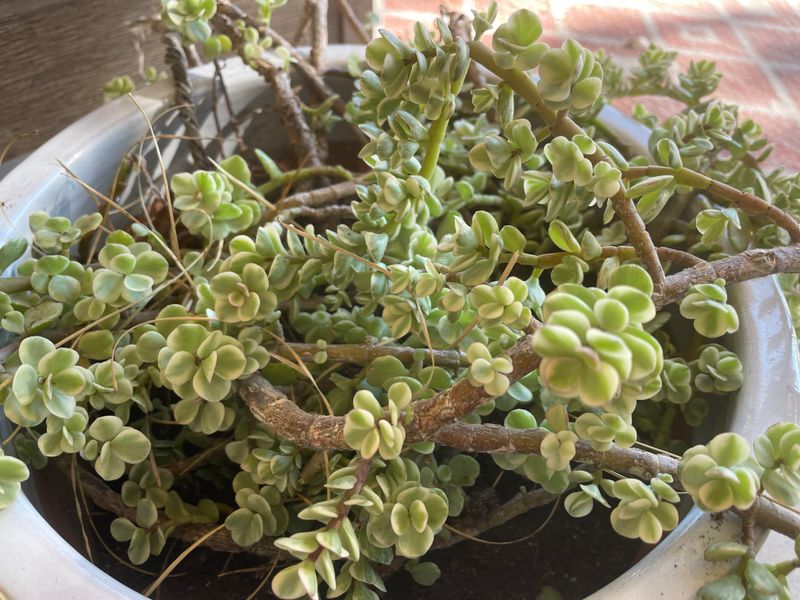
Pot color matters more than most gardeners think. Dark pots, especially black or deep brown ones, absorb solar radiation and transfer that energy directly into the soil.
On a 105-degree day, a black pot can hold soil temperatures well above what roots can handle comfortably.
White, cream, and light gray containers reflect more sunlight. That reflection keeps the outer wall cooler, which slows the rate at which heat moves inward toward the root zone.
Switching from dark to light-colored pots is one of the simplest changes you can make with a noticeable payoff.
Material matters too. Glazed ceramic pots tend to insulate better than thin plastic.
Thick terracotta, while it breathes well, can still heat up quickly in direct sun without some kind of shading or covering on the outer surface.
Double-walling is another option worth considering. Some specialty containers have an air gap built between two layers of material.
Your Arizona Garden Changes Every Week. Your Plan Should Too.
Gardening in Arizona changes quickly throughout the season. Every Friday you’ll receive a simple weekly plan showing exactly what to plant, prune, fertilize, harvest, and protect so you never miss the right timing.
That inner layer stays significantly cooler than the outer one, which directly benefits the root zone.
Wrapping a dark pot with burlap, a light-colored fabric, or even a second pot placed over it can help in a pinch. In Arizona summers, root protection often comes down to controlling what touches the soil from the outside.
Pot color and material are two of the easiest variables to control.
3. Larger Containers Give Roots More Soil Protection
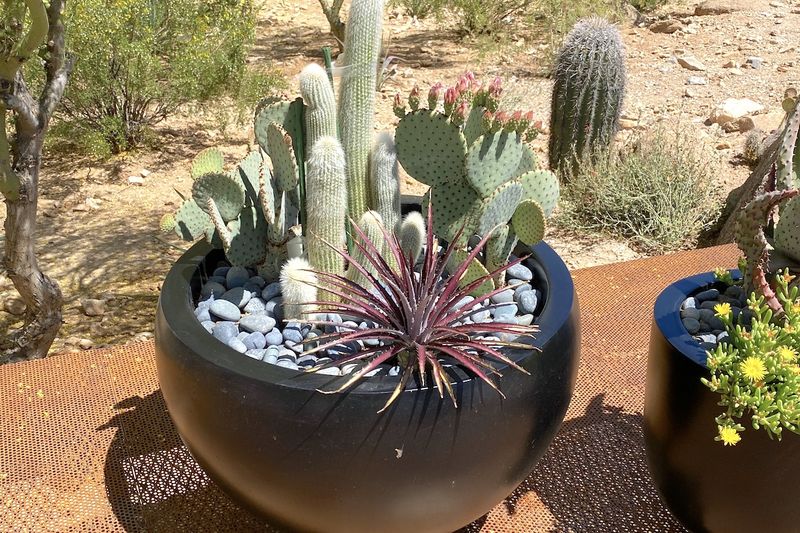
Soil volume is one of the best natural insulators roots have. Small pots heat up fast because there is not much soil between the outer wall and the root zone.
A large container gives roots more distance from that heat source.
When the outer inch or two of soil gets hot, roots in a large pot can still find cooler zones deeper in the container. A tiny four-inch pot has almost no buffer.
A fifteen-gallon container offers significantly more protection just from sheer volume.
Wider containers also spread root systems out horizontally. Roots near the center of a wide pot stay cooler longer than roots pressed against the sides.
Width matters just as much as depth when it comes to heat protection.
Heavier pots do have trade-offs. They are harder to move, and they require more water to stay consistently moist.
But in terms of root temperature management, the size advantage is real and worth the extra effort for heat-sensitive plants.
Upgrading pot size is a practical step that works without adding anything complicated to your setup. If a plant is struggling in a small dark container during summer, moving it into a larger light-colored pot can reduce heat stress noticeably.
Root health often improves simply because there is more soil acting as a buffer between the outside heat and where the roots actually live.
4. Afternoon Shade Can Limit The Hottest Exposure
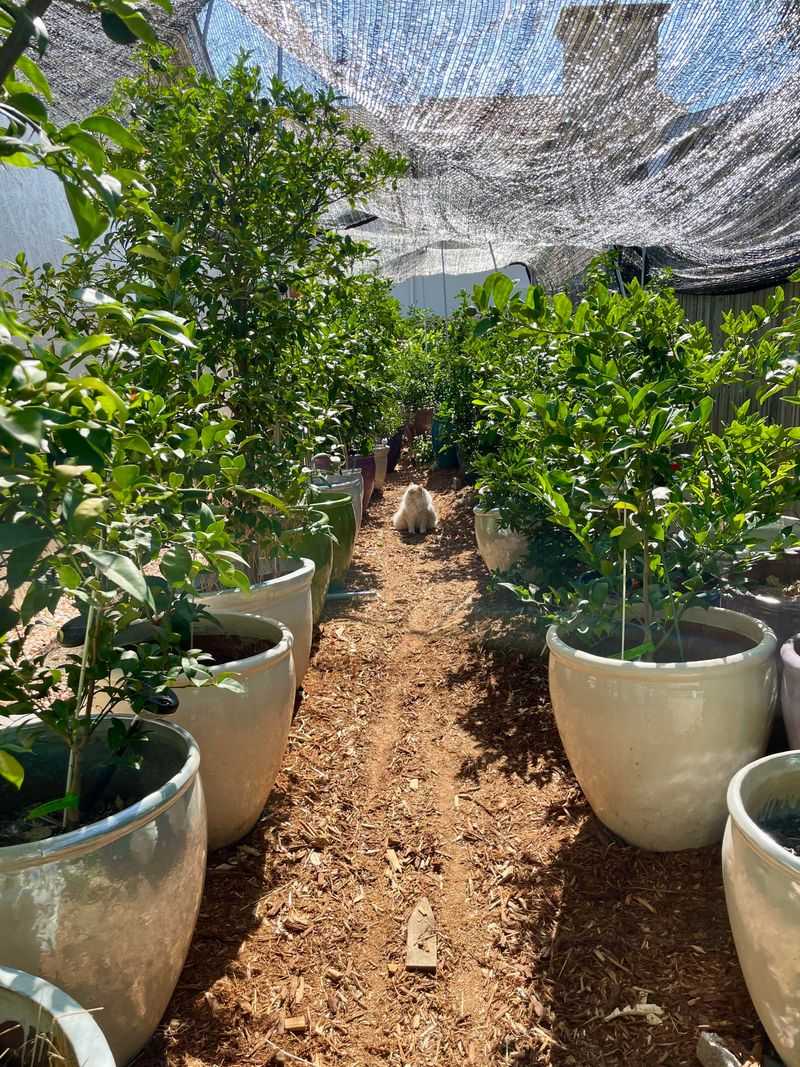
Afternoon sun in the desert Southwest hits differently. Morning sun is manageable for most plants, but the hours between 1 PM and 5 PM can push air temperatures past 110 degrees in peak summer.
Containers sitting in full afternoon sun during those hours take on intense heat quickly.
Moving pots to a spot that gets morning sun but afternoon shade is a practical fix. East-facing walls and fences provide that pattern naturally.
Plants still get enough light to grow well, but they miss the most brutal heat of the day.
Shade cloth is another solid option. A 30 to 50 percent shade cloth stretched above container areas filters sunlight without blocking it entirely.
Soil temperatures under shade cloth can run noticeably cooler than in fully exposed spots, which benefits roots without sacrificing too much light for photosynthesis.
Patio overhangs, pergolas, and mature trees all create usable shade zones. Placing containers under these structures during summer months gives roots a real break from peak heat exposure.
Shade placement does not need to be permanent; seasonal adjustments work well.
Tracking how sun moves across your yard helps a lot. A spot that seems shady in spring can turn into a full-sun zone by July as the sun angle shifts.
Checking your container locations at different times of day gives you a clearer picture of actual heat exposure throughout the season.
5. Mulch Adds Another Layer Between Soil And Sun
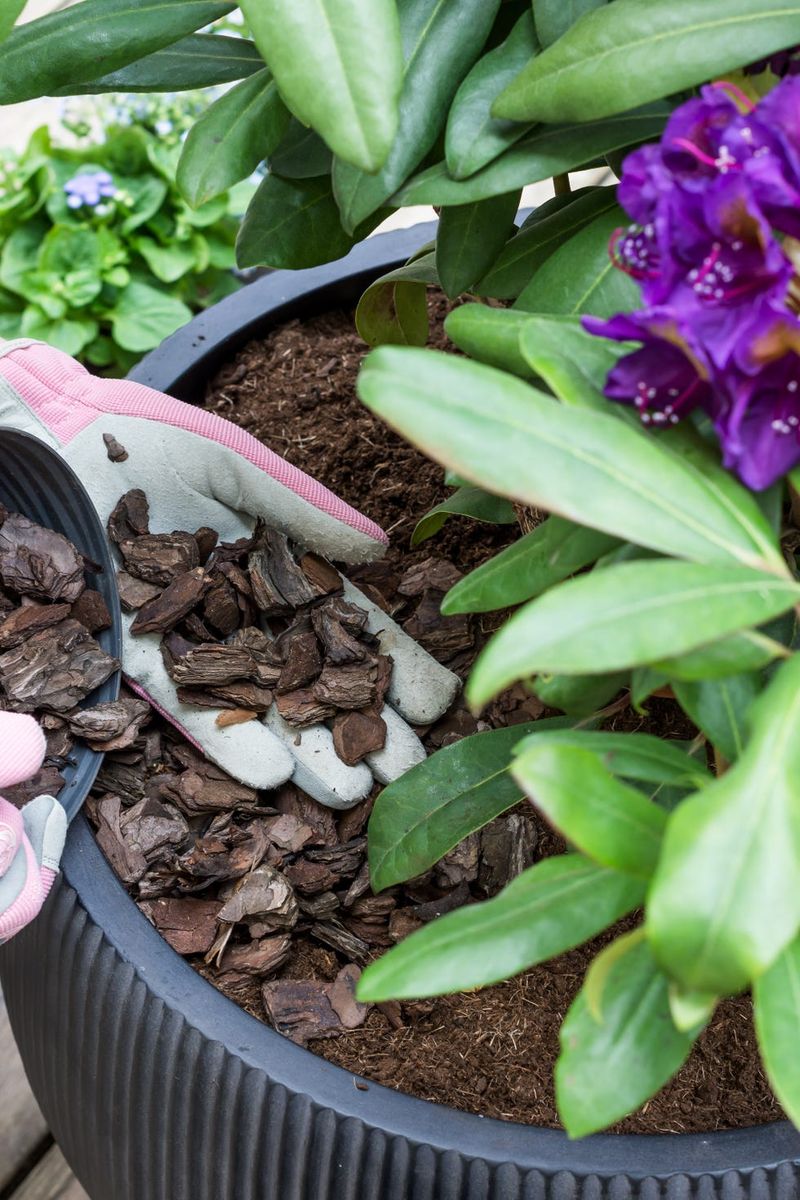
Bare soil in a pot is exposed soil. When sunlight hits the surface directly, heat moves downward and raises temperatures throughout the container.
Adding a layer of mulch on top of the soil creates a physical barrier that slows that process down.
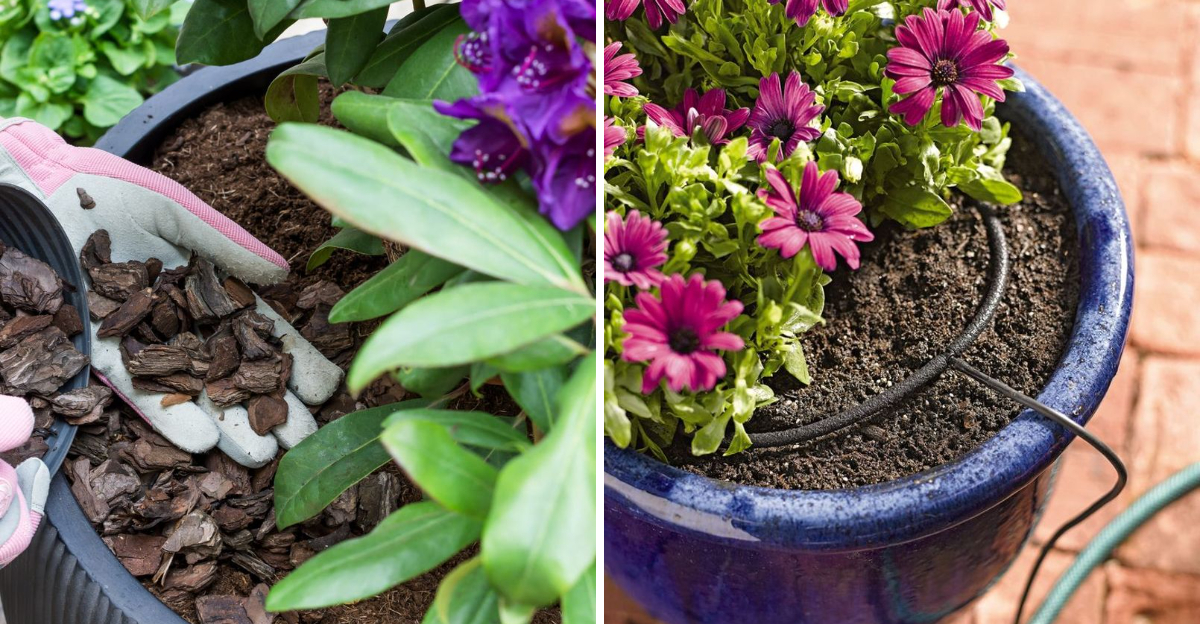
Wood chips, straw, shredded bark, and even gravel work as mulch on container soil. A layer about two to three inches thick can reduce soil surface temperatures by a meaningful amount.
That cooler surface translates to a cooler root zone over time.
Mulch also slows moisture loss. In hot, dry conditions, water evaporates from bare soil quickly.
Covered soil holds moisture longer, which means roots stay hydrated between waterings without as much stress. Moisture and temperature are closely connected in root health.
Gravel mulch works particularly well in arid climates like Arizona. It does not break down quickly, it does not blow away easily, and it reflects some sunlight while still insulating the soil below.
Decorative gravel also looks clean and low-maintenance in container settings.
Organic mulches like bark chips add nutrients as they break down slowly over time. Topping off the mulch layer once or twice a season keeps the insulating effect strong.
Mulching containers is a low-cost, low-effort step that delivers consistent benefits across the entire growing season without requiring ongoing attention.
6. Consistent Moisture Helps The Root Zone Handle Heat
Dry soil heats up faster than moist soil. Roots sitting in dry, hot soil face two problems at once: lack of water and excessive heat.
Keeping soil consistently moist acts as a buffer against temperature spikes inside the container.
Watering in the early morning is generally more effective than watering midday or evening. Morning watering gives soil time to absorb moisture before peak heat arrives.
Evening watering can work, but wet foliage overnight sometimes creates fungal issues depending on the plant.
Checking soil moisture before watering matters more than following a fixed schedule. Stick a finger two inches into the soil.
If it feels dry at that depth, water thoroughly. If it still feels damp, wait another day and check again.
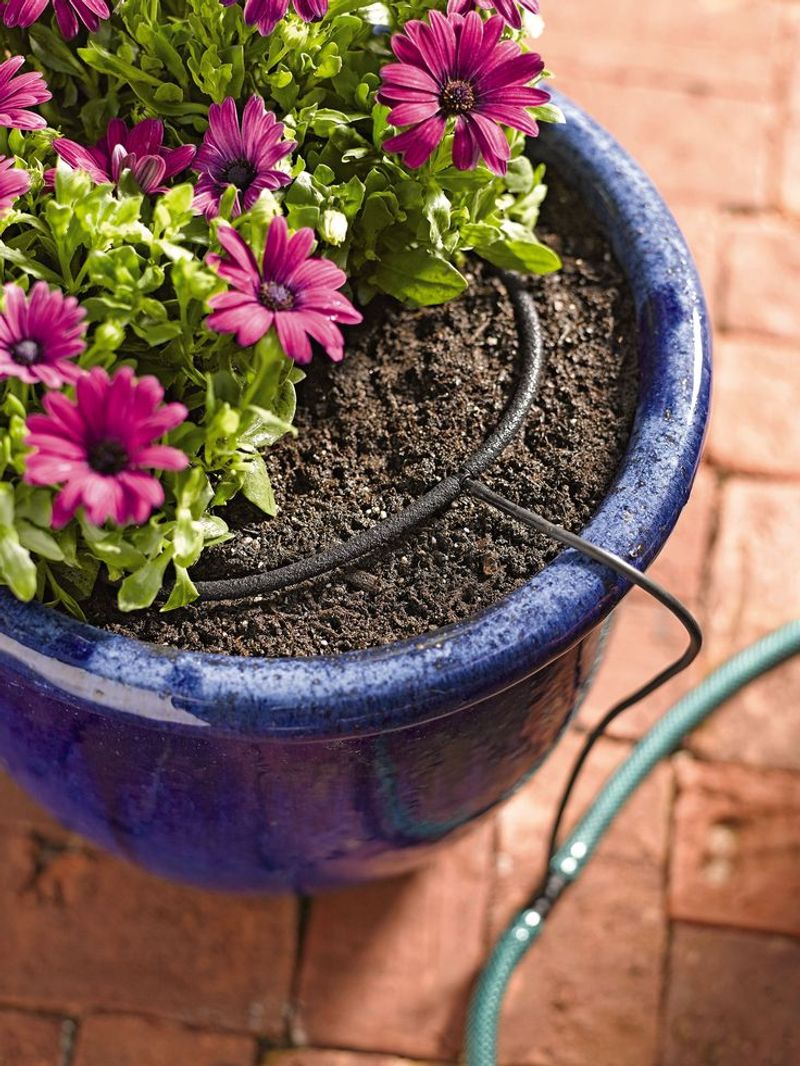
Self-watering containers have a reservoir built into the base. Roots can draw moisture upward as needed, which keeps the root zone more consistently hydrated without daily intervention.
These containers work well in hot climates where soil dries out quickly between visits.
Drip irrigation set on a timer is another reliable option for container gardens. Consistent, low-volume watering keeps soil moisture steadier than occasional deep soaks followed by dry periods.
Roots under steady moisture conditions tend to tolerate heat better because they are not simultaneously stressed by dehydration.
Combining moisture management with the other setup strategies covered here creates a more complete defense against root overheating.
7. Smart Placement Brings The Whole Setup Together
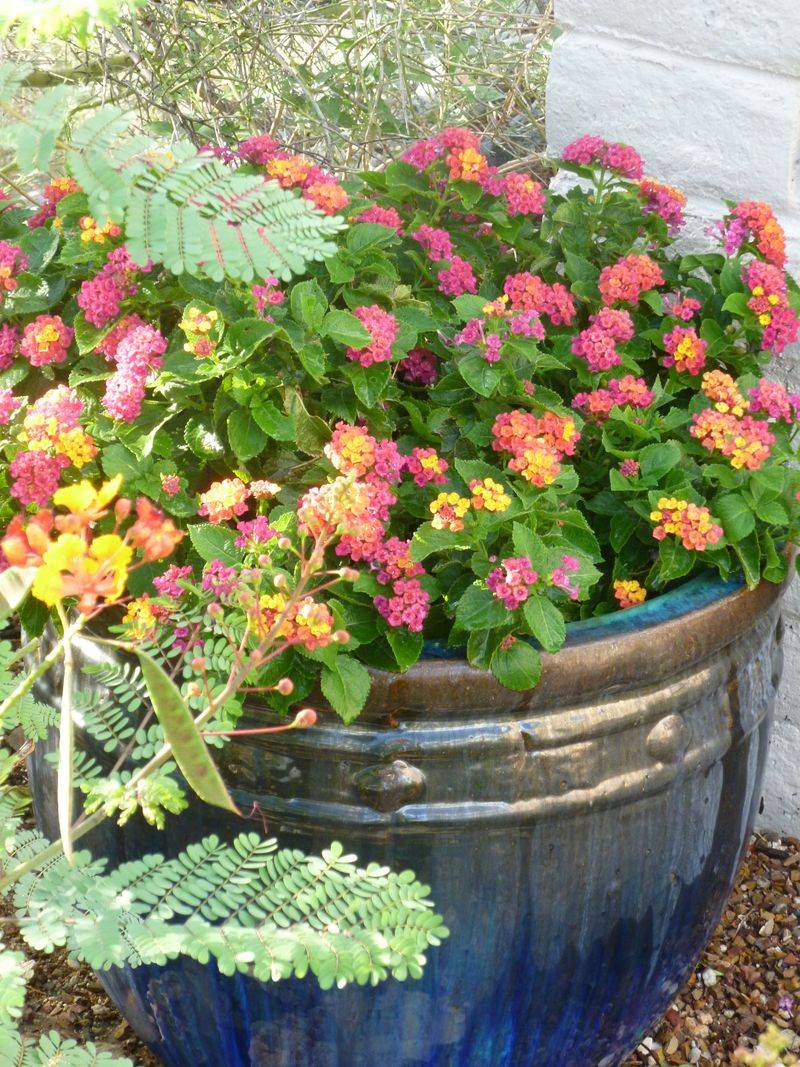
Placement is where every other strategy either works or falls short. A light-colored pot with good mulch still struggles if it sits on scorching concrete in full afternoon sun.
Bringing all the pieces together starts with choosing the right location.
Walk your yard or patio at different times of day. Notice which spots get shade by early afternoon and which ones stay exposed until sunset.
Those observations help you match plants to the spots that fit their heat tolerance.
Grouping pots together creates a microclimate. Clustered containers shade each other, trap a bit of humidity between them, and generally stay cooler than isolated pots spread across an open surface.
Spacing matters, but tight groupings often outperform scattered arrangements in extreme heat.
Walls reflect heat, so placement near south or west-facing walls tends to increase heat exposure rather than reduce it. North and east-facing walls tend to provide more protection during the hottest part of the day.
In Arizona, that wall orientation detail can make a noticeable difference.
Smart placement, the right pot color, enough container space, mulch, and steady moisture all work together to protect roots from extreme heat.
Using several of these strategies at once gives container plants a better chance of staying healthy through the hottest part of summer.