What Black Knot Looks Like On Michigan Cherry And Plum Trees Before Pruning Spreads The Disease
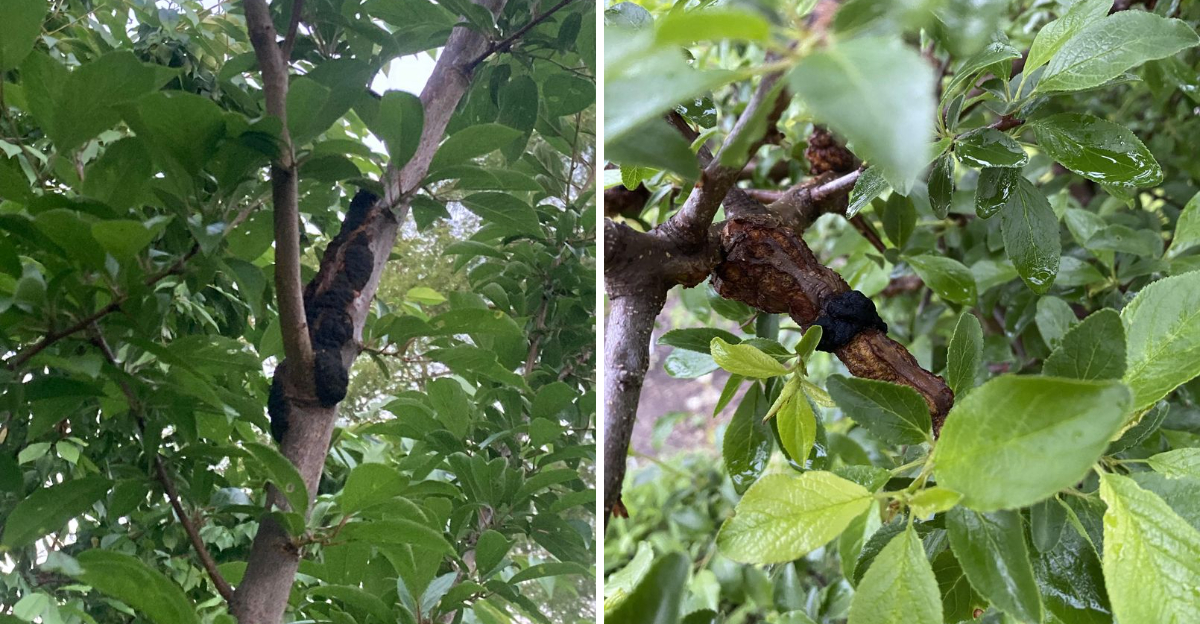
Black knot appears as dark, rough swellings along branches, often resembling burnt or charred growths on Michigan cherry and plum trees.
This fungal disease typically starts small but grows larger each year if left unaddressed, eventually girdling and weakening affected branches significantly.
Checking trees now, before winter pruning season arrives, helps identify exactly which branches need removal to prevent further spread.
Cutting several inches below any visible knot ensures the fungal growth is fully removed rather than left to continue spreading from remaining infected tissue.
Disposing of pruned branches away from the orchard, rather than composting them nearby, prevents spores from reinfecting healthy trees.
Sanitizing pruning tools between cuts also helps avoid accidentally spreading the fungus from one branch to another.
Addressing black knot during dormant winter pruning reduces stress on the tree compared to removal during active growing season. Catching this disease early protects the tree’s long term health and future fruit production.
1. Hard, Black Swellings Wrapped Around Branches
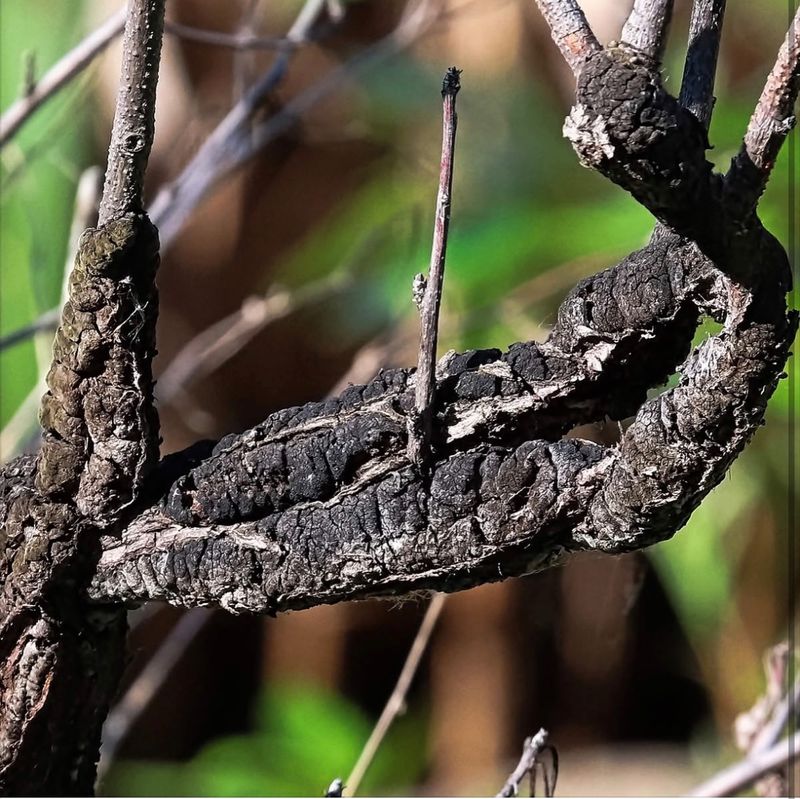
The first thing most people notice is a chunky black lump gripping a branch like a rough, burnt sausage. These swellings feel hard and woody when you touch them, not soft or squishy.
Knots may grow along one side of a twig or branch and can eventually enlarge enough to partially or completely encircle it.
The combination of abnormal swelling, rough texture, and eventual dark coloration helps distinguish black knot from normal bark.
Michigan plum trees are particularly susceptible, while wild and some ornamental cherries can also develop the disease. Winter is actually the best time to see them since the leaves are gone and the bare branches make each lump stand out.
The color is the giveaway. A healthy branch is brown or gray, but black knot turns a deep, tar-like black once it has been around for a full season.
Younger swellings might look olive-green or brown at first, then darken over time. If you catch them while they are still lighter, you have a head start on stopping the spread.
When you spot one of these hard black swellings, mark the branch with a ribbon so you can find it again on pruning day.
Cutting several inches below the lump keeps the infection from creeping deeper into the tree and protects the fruit you look forward to each summer.
2. Rough, Cracked Surface Like Burnt Charcoal
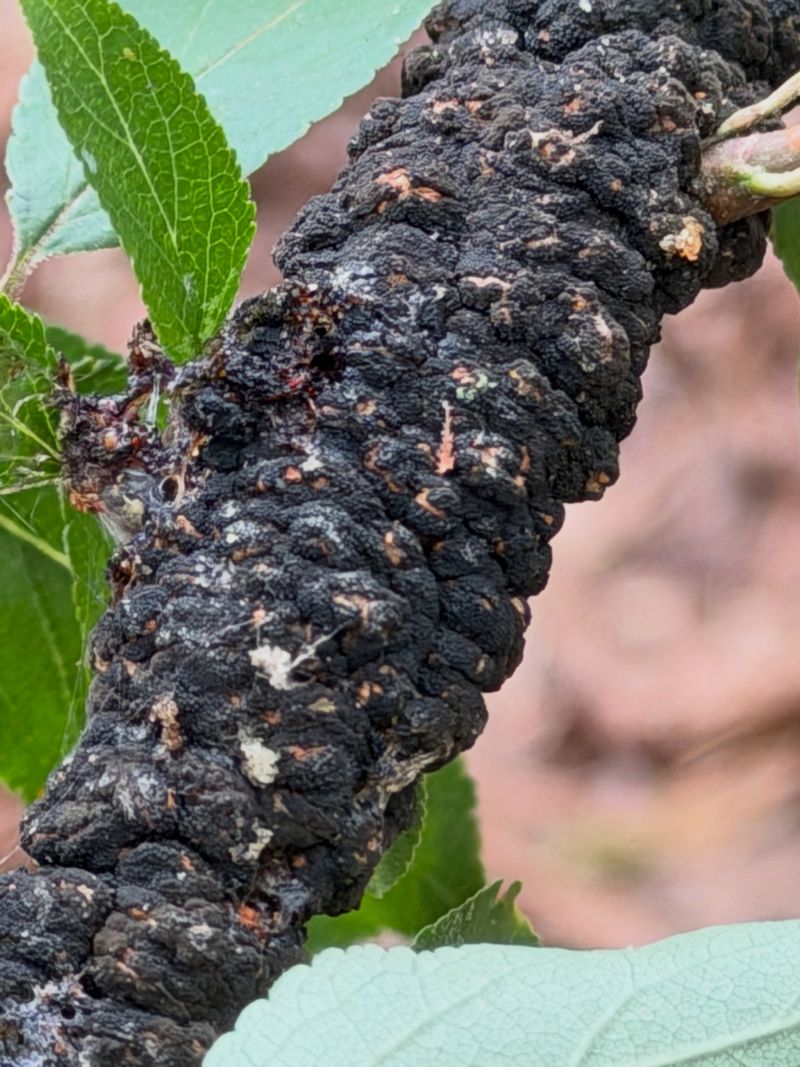
Run your eyes over an older knot and you will see a surface that looks like charcoal left in a campfire. It is bumpy, cracked, and crusty instead of smooth.
This rough texture happens because the fungus keeps growing and pushing the outer layer apart. As it expands, the black covering splits into little chunks and ridges.
Plum trees in Michigan often show this cracked look after the knot has lived through a winter or two. The older the growth, the more broken and flaky it becomes.
Some folks mistake this for damage from a storm or a scrape from a lawn mower. The difference is that black knot feels dry, hard, and swollen, while a wound stays flat and heals over time.
Your Michigan Garden Changes Every Week. Your Plan Should Too.
Gardening in Michigan changes quickly throughout the season. Every Friday you’ll receive a simple weekly plan showing exactly what to plant, prune, fertilize, harvest, and protect so you never miss the right timing.
Those cracks are not just for show. They open up spaces where the fungus can release tiny spores in the spring, which is how the trouble jumps to nearby trees.
Because the cracked surface signals an older, active knot, these are the ones you want to remove first. Removing infected wood before spring spore release reduces an important source of new infections.
Keep your pruning saw clean between cuts by wiping it with rubbing alcohol. That simple step keeps you from carrying the fungus from one branch to another while you work through your trees on a crisp winter day.
3. Olive-Green Baby Knots On New Growth
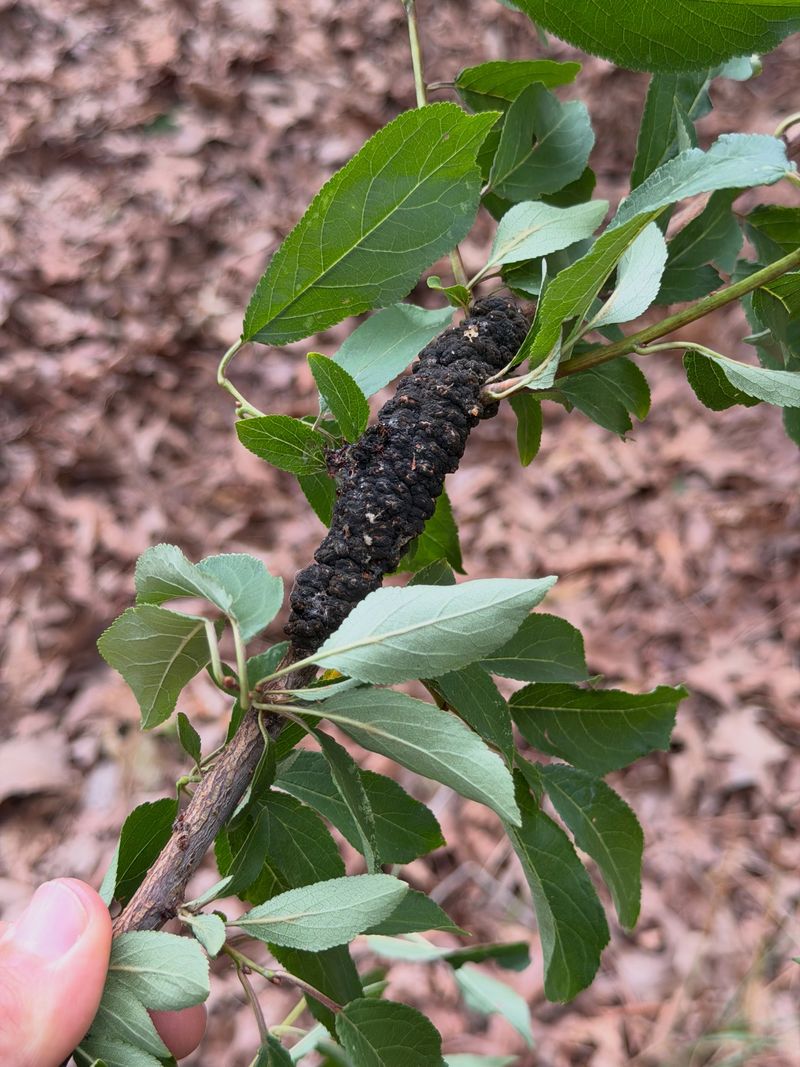
Young black knot infections may appear as small, light-brown or olive-green corky swellings before becoming darker and harder. Many people miss this early stage because it blends in with the young wood.
Young knots may be less hard and conspicuous than mature black knots and can have an olive-green or corky surface. They are small, sometimes no bigger than your fingertip.
Catching black knot at this green stage is a gardener’s dream because the infection has not spread far yet. A quick snip now can stop months of headaches later.
On Michigan cherry trees, watch the tips of branches where new shoots pop out each year. The fungus loves this tender, growing wood since it is easy to invade.
Even though winter pruning is the main event, knowing what young knots look like helps you plan. If you saw green bumps in summer, you know exactly where to focus when the leaves drop.
The green color slowly shifts to brown and then black as the seasons change. So a bump you spot in June may look completely different by December.
Mark any olive-green swellings you find during the warm months with a bright tie. When cold weather arrives and the branches are bare, you will remember right where to make your clean, careful cuts.
4. Twisted, Bent Branches Around The Growth
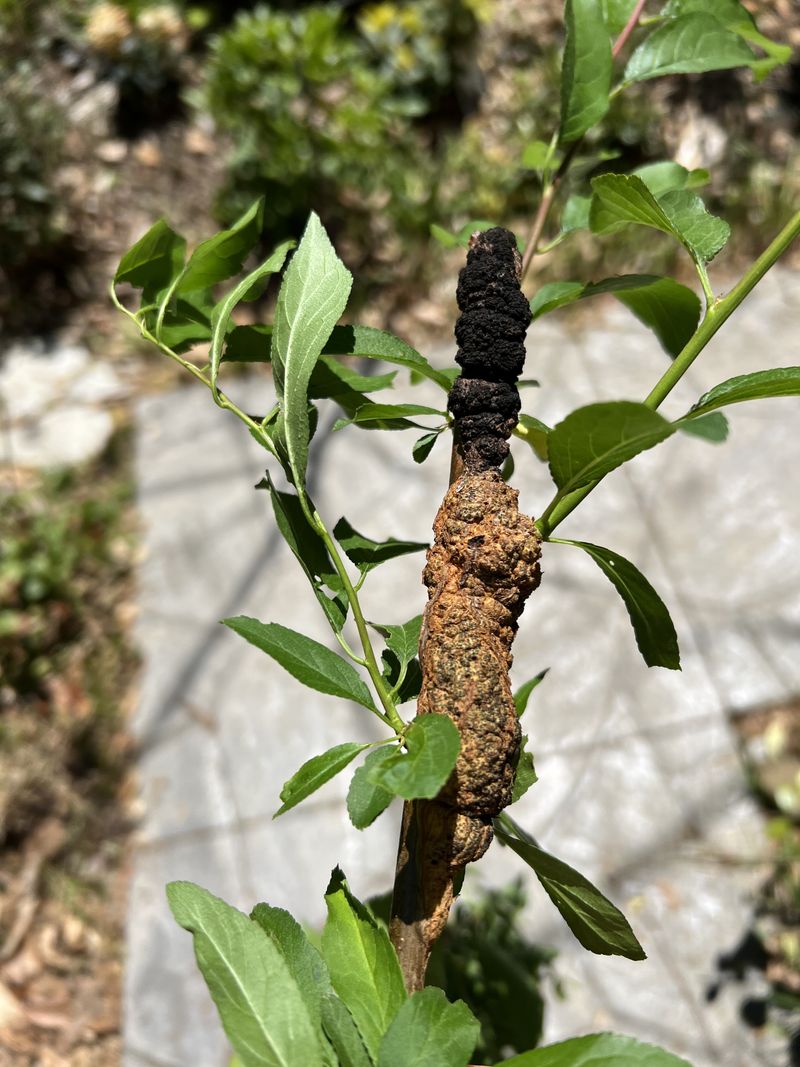
Sometimes the branch itself gives away the problem by bending in a strange way. A knot can make the wood twist, curl, or grow crooked near the swollen spot.
This happens because the fungus messes with how the branch takes in water and nutrients. One side grows faster than the other, and the branch ends up warped.
Take a step back and scan your plum tree’s shape. If a limb suddenly zigzags or kinks near a dark lump, black knot is likely the reason.
Twisted branches are easier to see in winter when no leaves hide the tree’s frame. A healthy tree has smooth, flowing branches, so any sharp bend deserves a closer look.
Severely affected branches may weaken, wilt, or produce less healthy growth. That is another reason to trim them away and let the tree send its energy to strong, straight branches.
When you cut, go well below the twisted section, about six to eight inches under the knot. This makes sure you remove any fungus hiding inside the wood that you cannot see from the outside.
Toss the trimmed branches far from your trees or burn them if your area allows. Leaving them on the ground lets the fungus keep releasing spores, which can undo all your hard work in a single rainy spring.
5. Knots That Circle All The Way Around
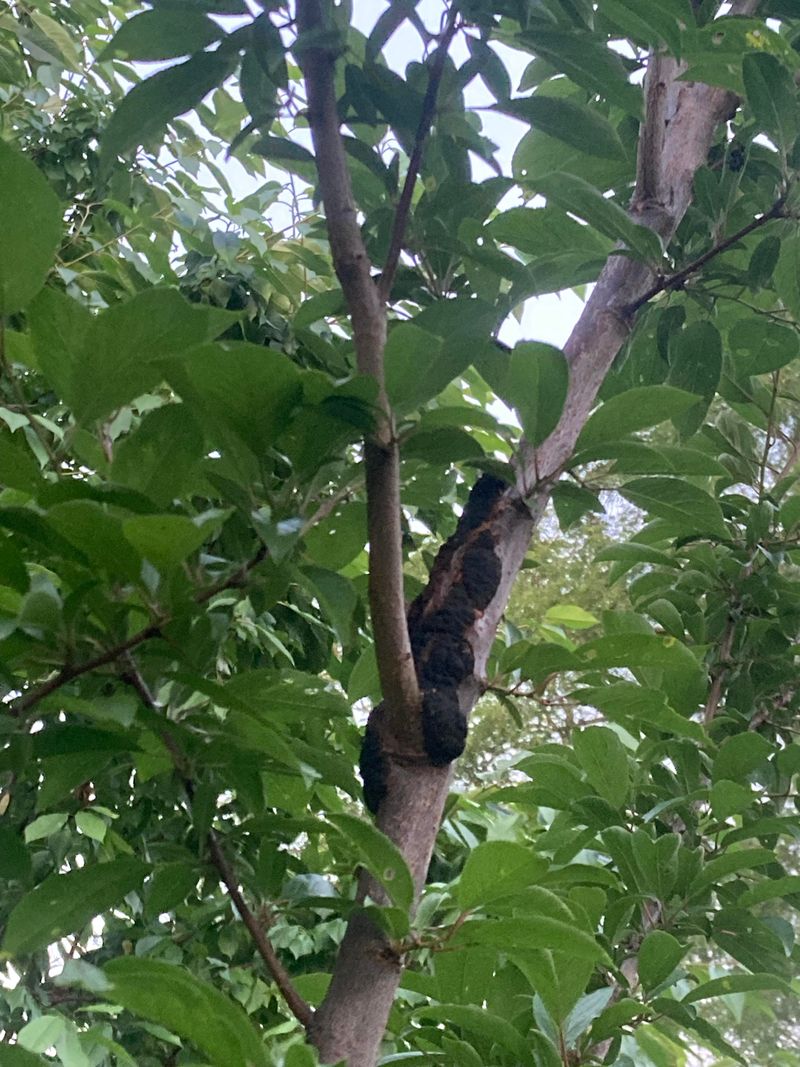
One clear sign of serious black knot is a growth that circles a branch completely, like a black ring choking the wood. This full wrap is different from a bump on just one side.
When a knot goes all the way around, it blocks the flow of water and food to everything past that point. The branch beyond it slowly weakens and stops producing.
Michigan orchard keepers often find these rings on branches that have been infected for more than a year. The longer the fungus stays, the bigger and fuller the wrap becomes.
You can spot these easily by turning the branch or walking around the tree. If the black growth never breaks or shows clean bark, it has likely circled the whole limb.
Branches with full rings need to come off during winter pruning. Since the wood past the ring is already struggling, there is no reason to keep it.
Make your cut at least several inches below the ring, back on healthy wood that looks normal and shows no dark color inside. Peek at the fresh cut to be sure the inner wood is clean and light.
Removing these full-circle knots gives your tree a real chance to bounce back. With the trouble gone, the tree can push new healthy shoots and grow tasty cherries and plums the following season.
6. Growths That Get Bigger Every Year
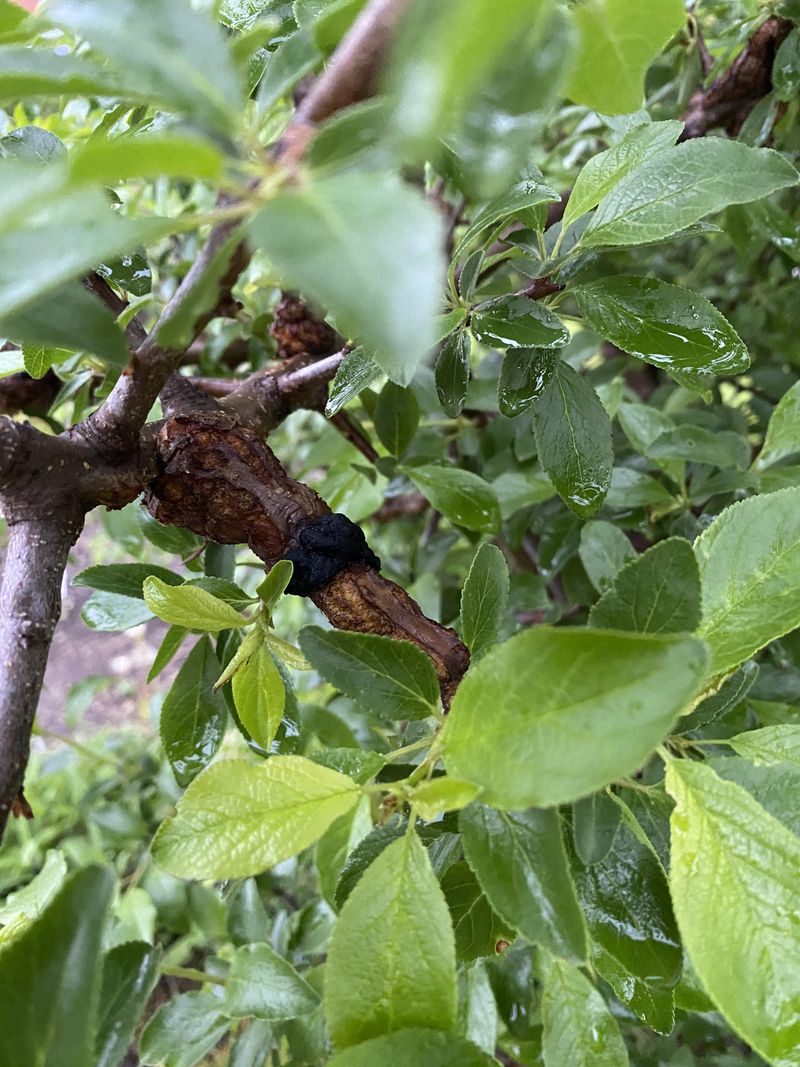
Black knot is not a one-and-done problem. If you leave it alone, each knot keeps growing larger with every passing season.
A knot that started as a small bump can stretch into a lump several inches long after a couple of years. Watching one grow is a clear sign the fungus is still alive and active.
On cherry and plum trees in Michigan, older knots can reach the size of a hot dog or even bigger. Black knot is a perennial infection, and established knots can enlarge during successive growing seasons.
If you took photos last winter, compare them to what you see now. A knot that looks bigger tells you the infection needs quick attention.
Older infected knots can remain important sources of spores and should be removed when practical. That means one ignored lump can spread trouble to many nearby branches and even neighbor trees.
The lesson here is simple: do not wait. The sooner you cut out a knot, the smaller and easier it is to handle.
During winter pruning, treat every knot as a spreading threat, even the tiny ones. Small now does not mean small forever, and a quick snip today saves a big headache next year.
Keep a garden journal with dates and notes about where you find knots. Tracking them helps you catch fast-growing ones early and keep your orchard healthy and strong for many seasons.
7. Sticky Spore Ooze In Warm, Wet Weather
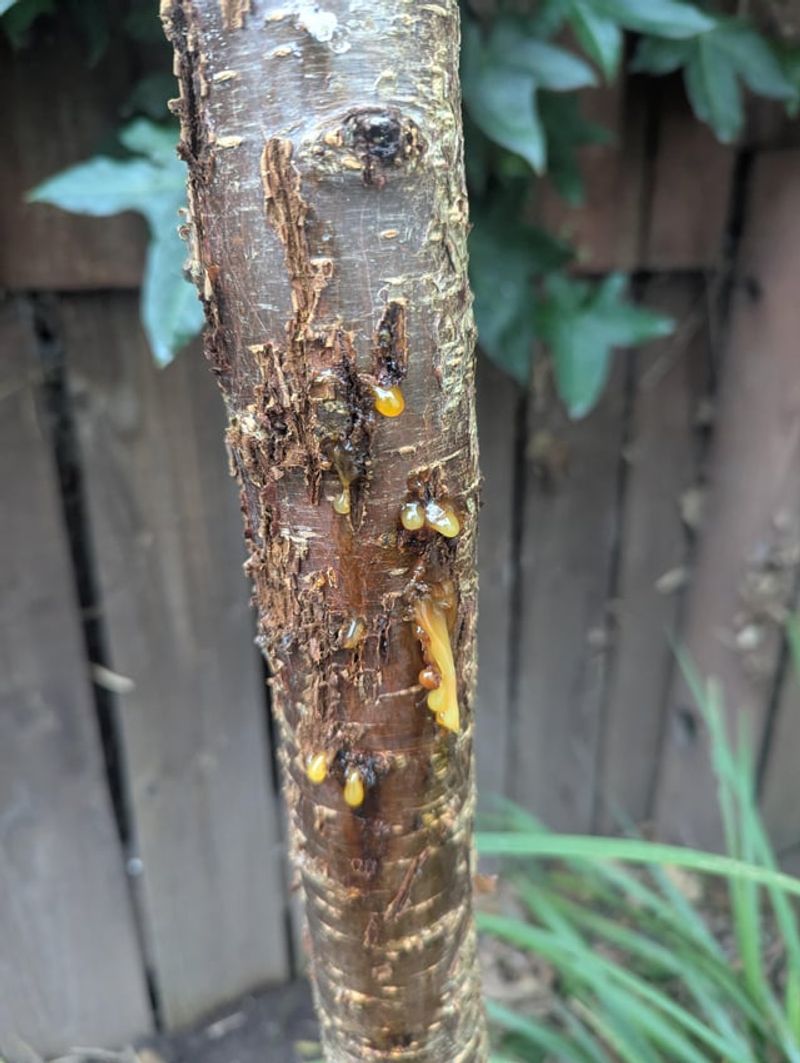
In spring, mature black knots produce fungal spores that are released during periods of rain and prolonged moisture. The spores develop in microscopic fungal fruiting structures within mature knots and are released during wet weather.
Wind and splashing rain can carry spores to susceptible young shoots and other developing tissues.
While you probably will not see this ooze during winter, knowing it happens explains why winter pruning matters so much. Removing infected knots before spring reduces the amount of fungal tissue available to produce spores.
Michigan gets plenty of spring rain, which makes conditions perfect for spores to travel. Infected knots can release spores repeatedly during favorable wet spring conditions.
The spores mostly attack new, tender growth, which is why young twigs get infected first. Removing knots in the cold months breaks this cycle before it can even start.
If you missed pruning and see slimy knots in spring, you can still cut them out. Just work carefully and clean your tools often to avoid spreading spores yourself.
Bag up anything you trim and take it away from your yard right away. Do not leave wet, spore-covered branches lying near your trees where the rain can wash spores onto healthy wood.
Timing your pruning for late winter, before buds swell, gives you the best shot at beating the spores to the punch and keeping your fruit safe.
8. Knots Hiding On Trunks And Big Limbs
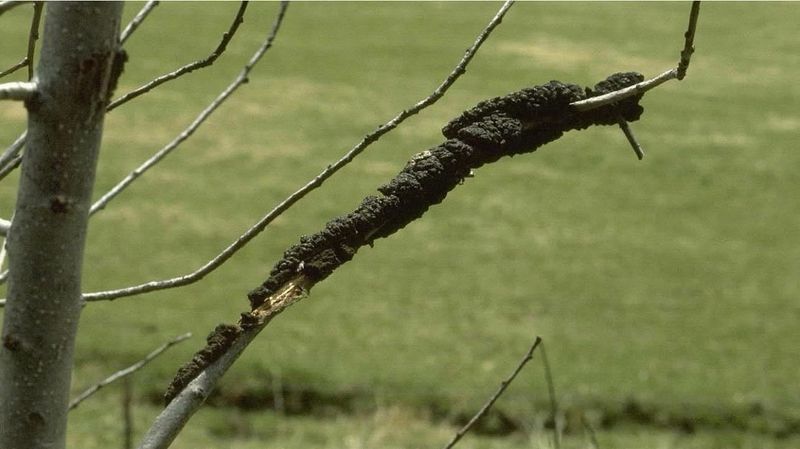
Most people look for black knot on skinny twigs, but the fungus can also settle onto the trunk and thick main limbs. These hidden knots are often the most serious.
When black knot reaches a big limb or the trunk, it becomes much harder to remove without hurting the tree. That is why catching it early on small branches matters so much.
On older Michigan plum and cherry trees, trunk knots can grow huge and rough, sometimes wider than your hand. They may look like a strange, warty black patch on the bark.
These large growths weaken the whole tree because they sit on the main pipeline that feeds every branch.
Knots on the trunk or major scaffold limbs can be especially serious because removing them without causing significant injury to the tree may be difficult.
Unfortunately, you often cannot simply cut a trunk knot off the way you would a branch. In these cases, careful trimming of just the growth may help, but a badly infected tree might need to be removed entirely.
Check the base and main limbs of your trees each winter while the bark is easy to see. Spotting a trunk knot early gives you more choices for saving the tree.
Removing infected branches and nearby sources of black knot reduces the number of spores that can cause new infections elsewhere on the tree.
Early removal of infected wood helps limit disease pressure, but new infections can still occur on other susceptible parts of the tree when spores are present.
9. Winter Pruning Stops The Fungus Before Spring Arrives
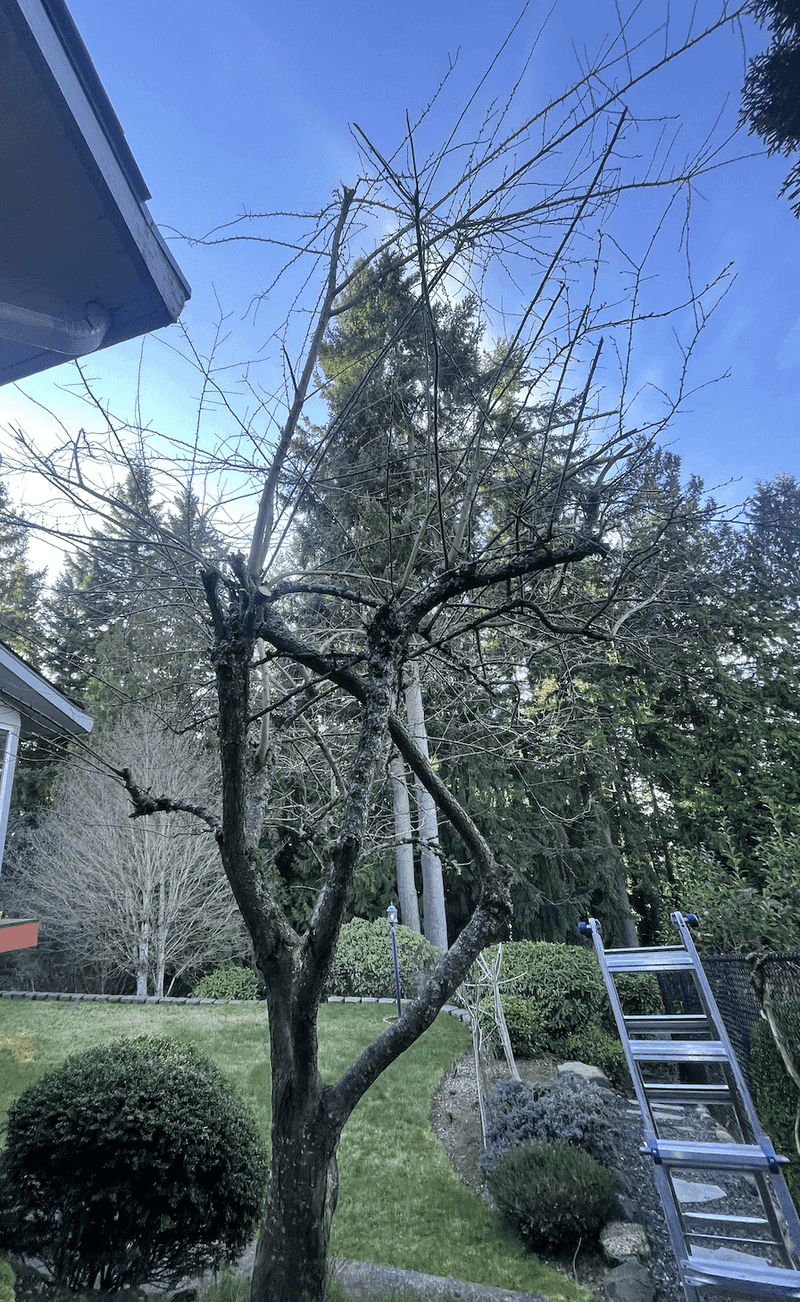
Taking action during late winter gives you the best opportunity to clear out black knot before it causes lasting harm to your fruit trees.
Because the leaves have dropped, bare branches make it easy to spot every dark, swollen knot throughout the canopy.
Removing these growths while the tree is dormant reduces plant stress and ensures you cut out the disease before warm spring rains trigger spore release.
Always prune six to eight inches below any visible swelling to ensure you remove all the hidden fungal threads growing inside the wood.
Clean your shears or pruning saw with rubbing alcohol between every single cut so you do not accidentally transfer fungal spores to healthy limbs.
Once you finish trimming, immediately gather all the infected branches and burn, bury, or bag them for trash collection.
Never leave pruned wood lying on the ground or toss it into a nearby compost pile, as mature knots can continue releasing infectious spores for months.
By combining careful winter cuts with proper sanitation, you break the disease cycle early and give your cherry and plum trees the clean slate they need to thrive.
10. Proper Long-Term Care Keeps Your Fruit Trees Healthy And Productive
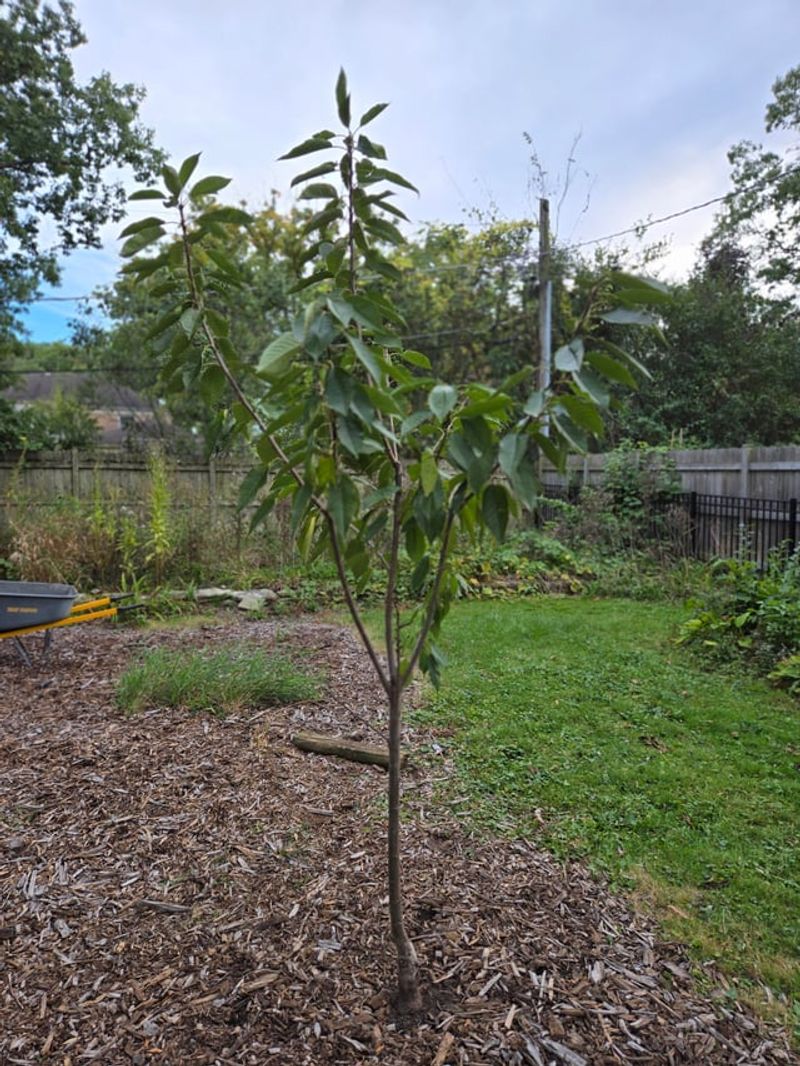
Managing black knot is an ongoing process, but staying proactive makes protecting your orchard simple and stress-free.
Alongside winter pruning, take time during the spring and summer to inspect new shoots for small, olive-green bumps that signal fresh infections.
Marking these early growths with bright ribbon makes them simple to find and remove during your next pruning session.
If black knot is a recurring issue in your neighborhood, applying a protective fungicide spray in early spring, just as the buds begin to swell, can offer an extra layer of defense for tender young growth.
It is also helpful to check surrounding fence lines or woods for wild cherry and plum trees, as unmanaged wild hosts often harbor the fungus and shower nearby gardens with airborne spores.
Maintaining good air circulation through occasional canopy thinning, keeping trees well-watered during droughts, and providing balanced soil nutrients will help your trees stay resilient against disease.
With regular seasonal checkups and clean gardening habits, you can keep black knot completely under control and enjoy abundant, healthy harvests of delicious cherries and plums for years to come.