Arizona Gardeners Are Choosing Texas Sage Instead Of Boxwood For Hot Sunny Yards
Some shrubs look great at the garden center but struggle once they face months of blazing sunshine. That is why Texas sage deserves a closer look for exposed yards.
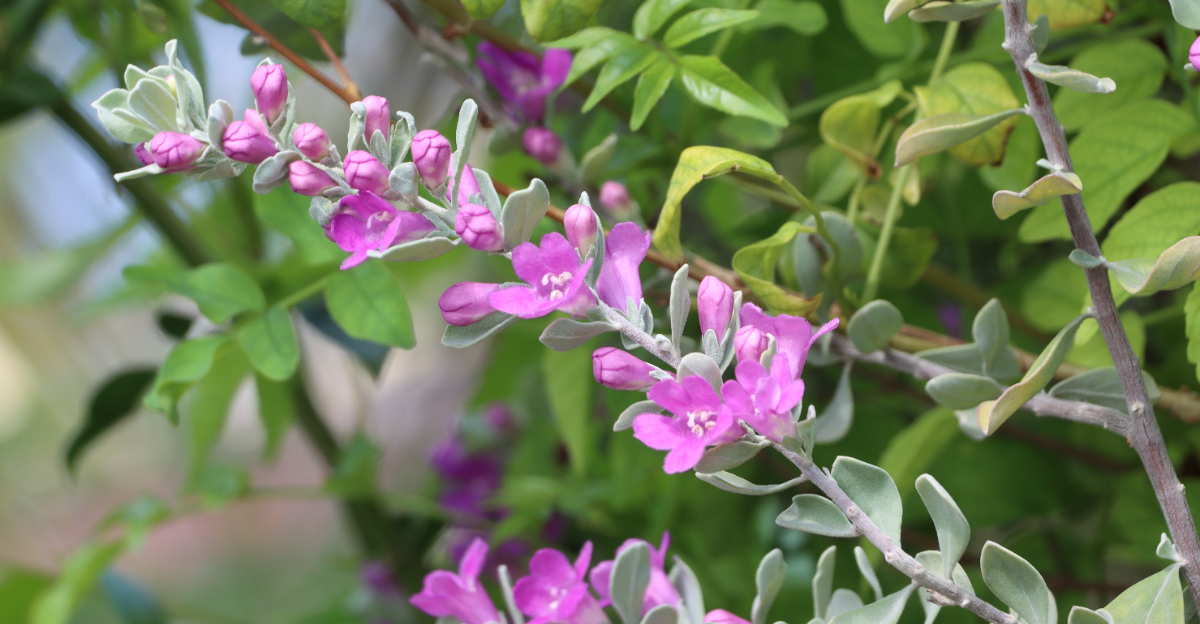
This desert native is naturally comfortable with the conditions Arizona gardeners deal with every summer. It brings silvery foliage, colorful flowers, and a full shape without looking overly formal.
If you have a sunny border or open area that needs structure, consider what your current shrubs require. A better match can make everyday care much simpler.
Texas sage also brings a different character than the traditional boxwood look. Its softer growth feels right at home in warm, dry landscapes.
You still need to choose the planting spot carefully and leave enough space.
For the right yard, switching shrubs can make summer maintenance feel far more manageable.
1. Boxwood Can Struggle When Heat And Sun Become Intense
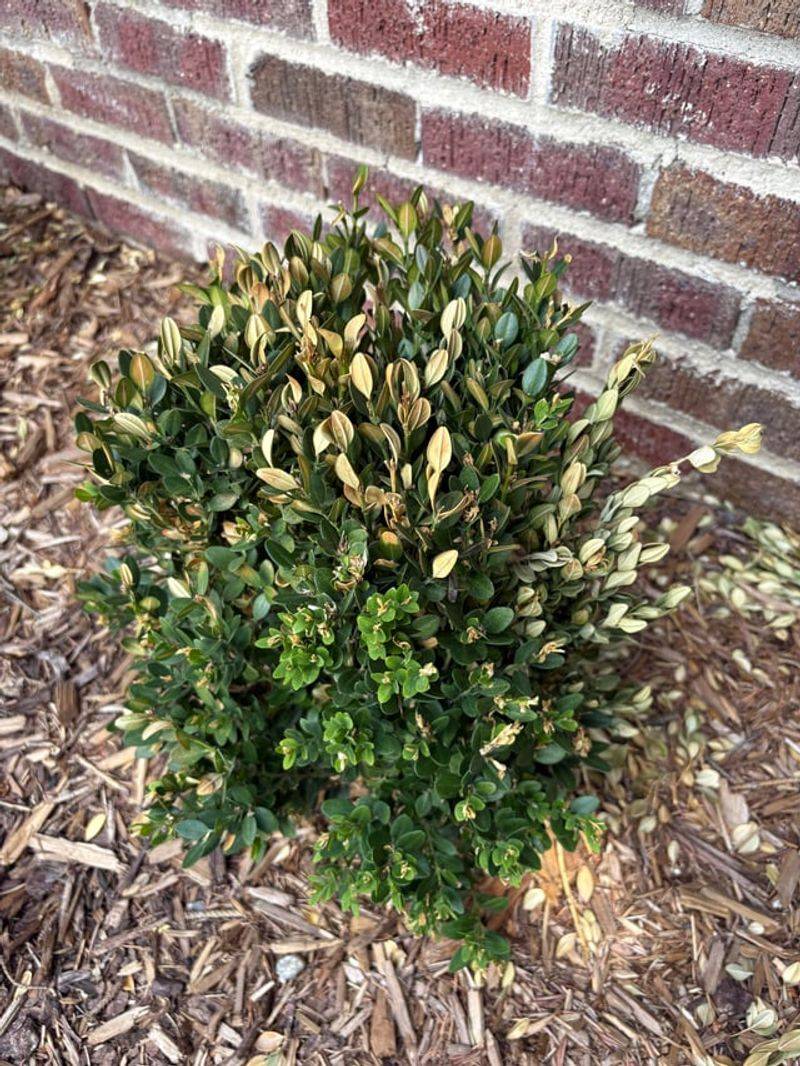
Boxwood has a reputation for looking polished and tidy, but that reputation was built in cooler, wetter climates. Drop it into a yard that gets 110-degree days and almost no summer rain, and the results can be disappointing.
Leaf scorch is one of the first signs of trouble. Leaves turn brown at the tips or edges, and no amount of watering seems to fix it fast enough.
Root rot can also become a problem when gardeners overwater trying to compensate for heat stress.
Boxwood prefers partial shade and consistent moisture. Hot, rocky soil with intense reflected heat from walls or pavement can push it past its comfort zone quickly.
Some varieties hold up better than others, but most are not bred for extreme desert conditions.
Pest pressure adds another challenge. Spider mites and boxwood leafminer tend to attack shrubs that are already stressed.
Once a plant is weakened by heat, it becomes easier for insects to move in and cause more damage.
Replacing struggling boxwood every few years gets expensive. Many gardeners in the desert Southwest have realized that choosing a plant better suited to local conditions saves both money and frustration over time.
Heat-tolerant alternatives are worth a serious look before planting season begins.
2. Texas Sage Is Built For Hot, Bright Conditions
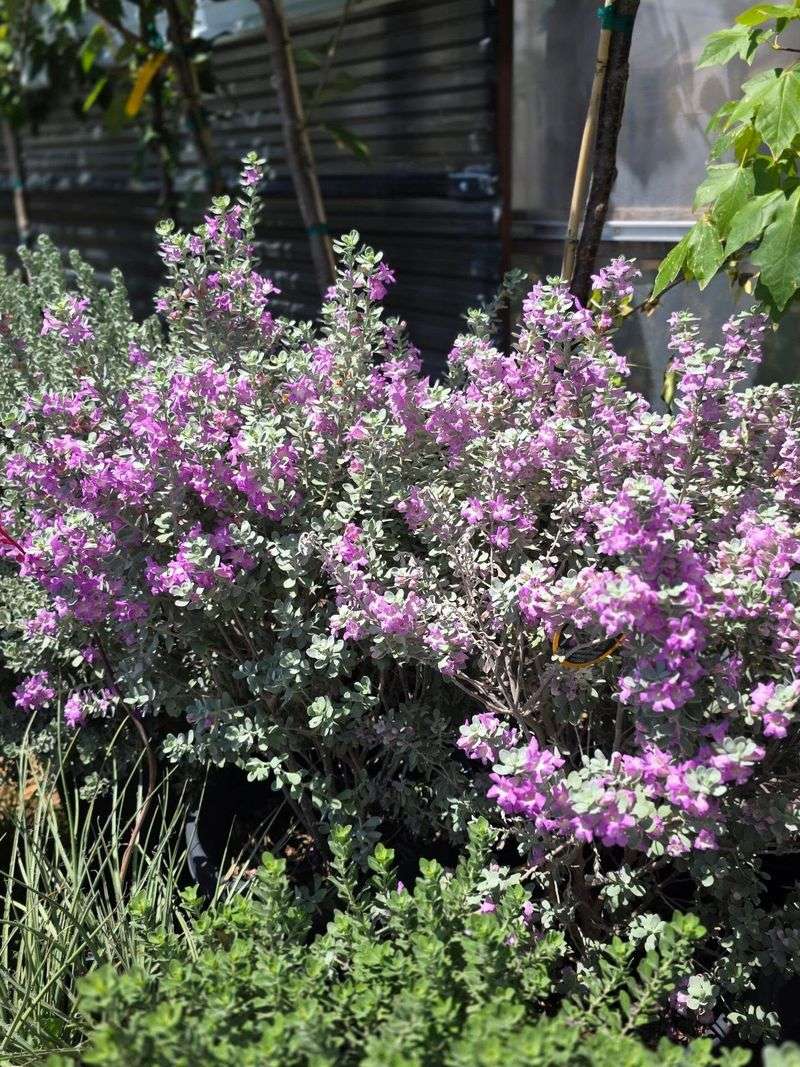
Walk past a Texas sage on a blazing afternoon and you will notice something surprising. It looks completely unbothered.
No drooping, no scorched edges, no signs of stress even in direct sun.
Leucophyllum frutescens is native to the Chihuahuan Desert region, which means hot summers and low rainfall are basically its home turf. It evolved to handle exactly the kind of punishment that breaks down less adapted plants.
That natural toughness makes it a strong candidate for sunny yards in the desert Southwest.
Full sun is where this shrub performs best. It can tolerate partial shade, but growth tends to be looser and blooming may be reduced.
Plant it where it gets at least six hours of direct sunlight daily for the best results.
Soil type matters less than drainage. Texas sage grows well in sandy, rocky, or caliche-heavy ground as long as water does not pool around the roots.
Your Arizona Garden Changes Every Week. Your Plan Should Too.
Gardening in Arizona changes quickly throughout the season. Every Friday you’ll receive a simple weekly plan showing exactly what to plant, prune, fertilize, harvest, and protect so you never miss the right timing.
It is not picky about nutrients either, so heavy fertilizing is not necessary and can sometimes cause problems.
Mature plants typically reach four to eight feet tall and wide depending on the variety. Smaller cultivars like ‘Green Cloud’ and ‘Compacta’ work well for tighter spaces.
Picking the right size variety from the start reduces how much trimming you will need later.
3. Silvery Leaves Reflect Some Of The Sunlight
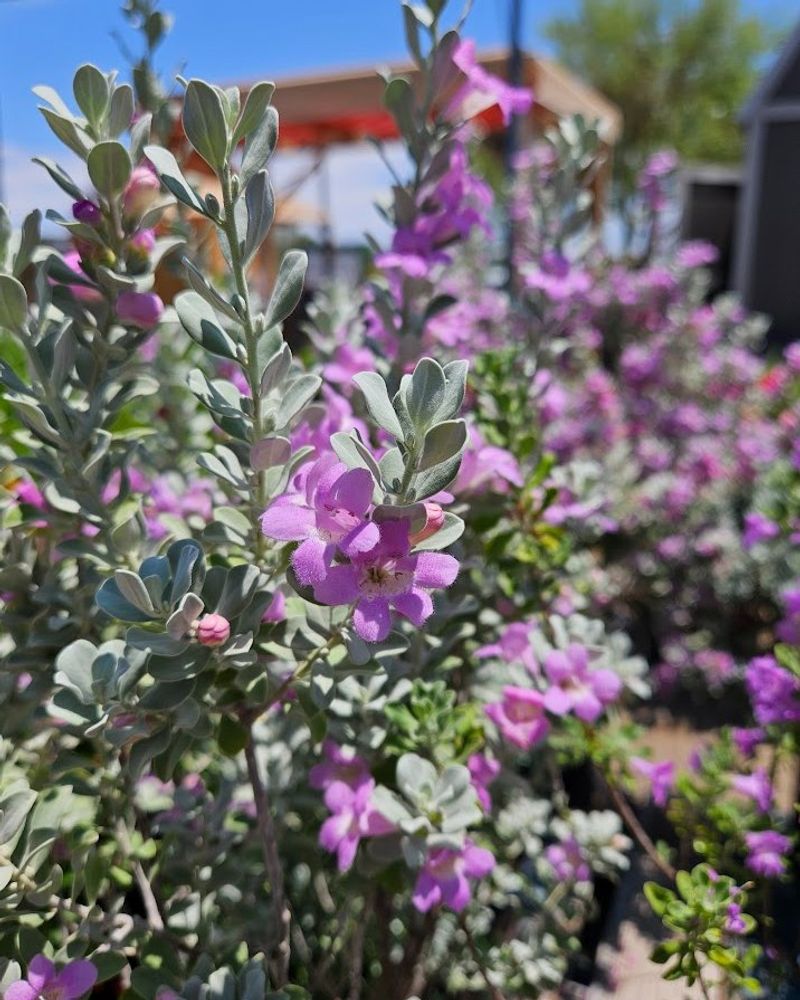
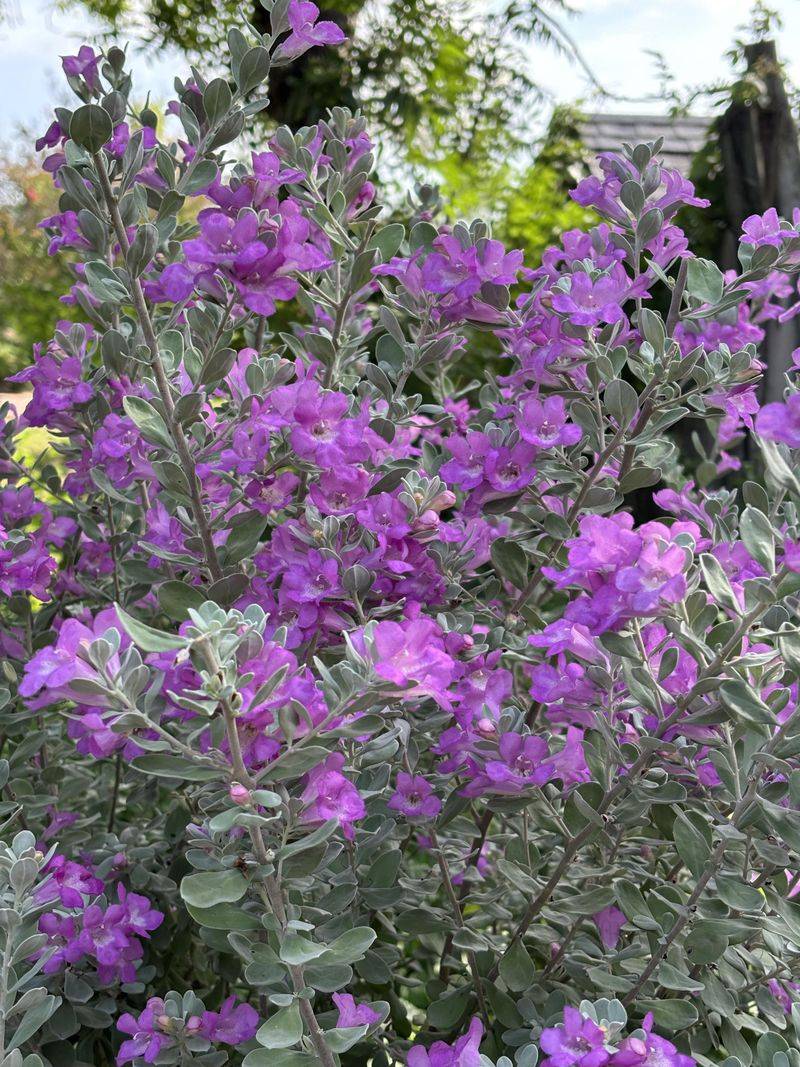
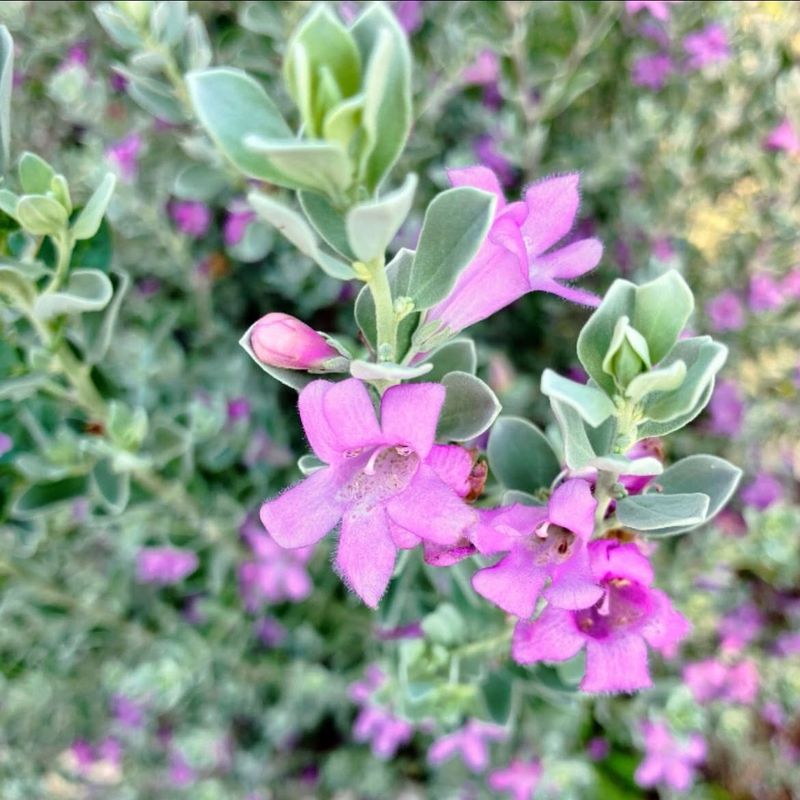
One look at the leaves and you can tell this plant is designed for sun. Texas sage has small, fuzzy, silvery-gray leaves that give the whole shrub a soft, almost dusty appearance.
That texture is not just for looks.
Tiny hairs called trichomes cover the leaf surface. They help reduce water loss by slowing airflow right next to the leaf.
They also reflect a portion of incoming sunlight, which helps keep the leaf tissue from overheating on the most intense summer days.
This adaptation is common in desert plants. Many native shrubs in dry climates use pale or reflective foliage to manage heat.
Texas sage takes that strategy and packages it into a plant that also looks attractive in a landscape setting.
The silvery color pairs well with the purple blooms that appear after summer rain events. Contrast between the cool-toned leaves and the vivid flowers is one reason this shrub gets so much attention from landscapers working in hot, sunny regions.
Beyond the visual appeal, the leaf texture means you are less likely to see sunburn damage. Compare that to boxwood, whose dark green leaves absorb more heat and show stress more visibly.
For yards in Arizona that get relentless afternoon sun, the reflective foliage of Texas sage is a practical advantage worth considering.
4. Established Shrubs Handle Dry Conditions With Less Irrigation
Water restrictions are a real concern in much of the desert Southwest. Planting something that needs frequent irrigation puts pressure on both your schedule and your water bill.
Texas sage offers a practical alternative once it gets established.
Getting there takes patience. During the first growing season, young plants need regular watering to help roots spread deep into the soil.
Skipping irrigation too early can set the plant back significantly. Most gardeners water deeply once or twice a week during that first summer.
After establishment, which typically takes one full growing season, watering needs drop considerably. Many gardeners scale back to once every two or three weeks during hot months, depending on rainfall and soil type.
In cooler months, even less may be needed.
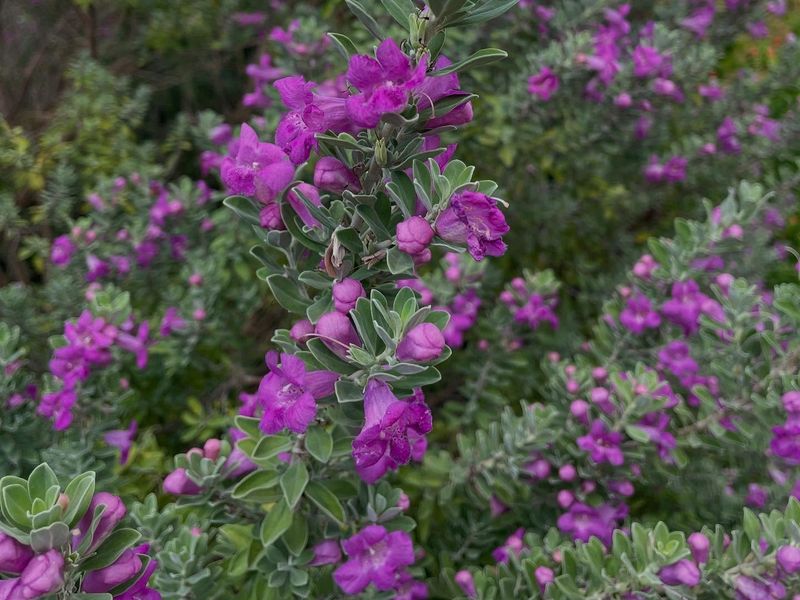
Rainfall triggers are part of what makes this shrub so interesting. Blooming often occurs within days of a significant rain event.
The plant seems to sense the moisture shift and responds quickly with a flush of purple flowers. It is one of the more reliable seasonal signals in a desert garden.
Boxwood, by contrast, needs consistent moisture year-round to stay healthy in hot climates. Letting it dry out even briefly during peak summer can cause visible damage.
For water-conscious gardeners looking to reduce irrigation without sacrificing a tidy, attractive shrub, Texas sage is worth serious consideration.
5. Summer Blooms Bring Extra Color To The Landscape
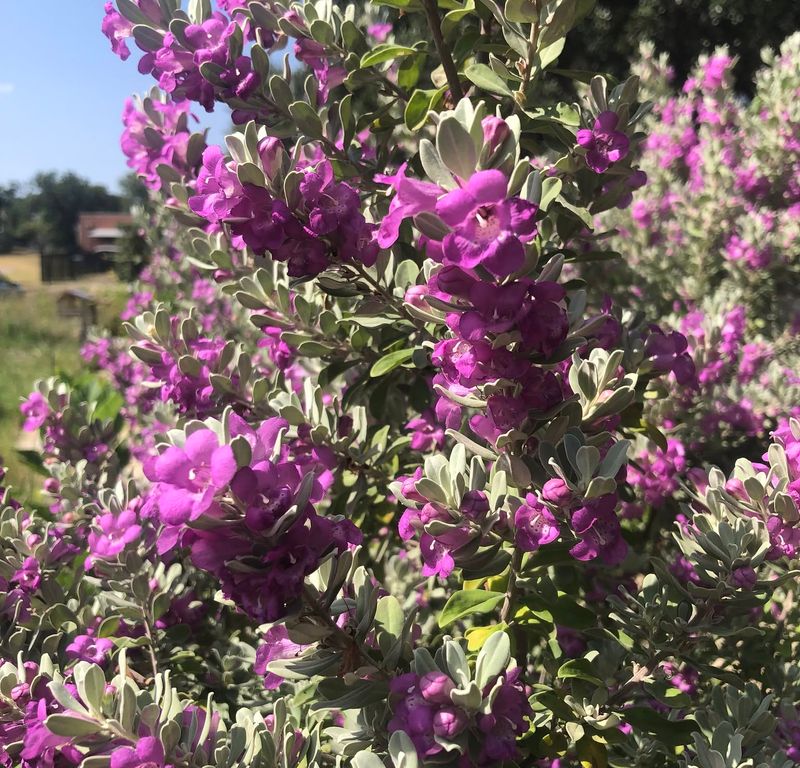
Purple flowers on a silver shrub are hard to ignore. When Texas sage blooms, it can transform from a quiet background plant into one of the most eye-catching things in the yard.
Blooming usually follows summer monsoon rain or a stretch of high humidity.
Flowers appear in clusters along the branches and cover much of the plant during a good bloom cycle. The color ranges from soft lavender to deeper purple depending on the variety.
‘Green Cloud’ tends to produce darker flowers, while ‘White Cloud’ offers a pale, creamy alternative for gardeners who prefer softer tones.
Bloom cycles can happen multiple times through the warmer months if rain or humidity triggers them. Not every cycle is equally dramatic, and some years are more impressive than others depending on weather patterns.
Managing expectations helps, since bloom intensity varies from season to season.
Boxwood does not flower in any showy way. Its appeal is purely structural, which means it relies entirely on foliage to carry the visual interest.
For gardeners who want seasonal color without planting annuals or maintaining a separate flower bed, Texas sage fills that gap naturally.
Pairing Texas sage with other desert bloomers like desert marigold or autumn sage can extend color across multiple seasons.
Layering plants with different bloom windows keeps the landscape looking lively without adding much maintenance overhead to the routine.
6. Good Drainage Helps This Shrub Perform At Its Best
Roots sitting in soggy soil are one of the fastest ways to weaken a Texas sage. Despite its toughness in heat and drought, this shrub has a clear weakness: it does not tolerate waterlogged conditions well.
Drainage is non-negotiable.
Caliche layers are common in desert soils and can trap water just below the surface. Before planting, it is worth breaking through that layer with a breaker bar or auger.
Allowing water to escape freely below the root zone reduces the risk of root problems developing over time.
Raised planting beds are a popular solution in yards where drainage is poor. Elevating the root zone even six to eight inches above grade can make a significant difference.
Mixing native soil with coarse gravel or decomposed granite also helps water move through more quickly.
Avoid planting in low spots where runoff collects after rain. Even a brief period of standing water after a monsoon storm can cause stress.
Choosing a slightly elevated spot or a slope gives the plant the drainage advantage it needs.
Mulching around the base with gravel instead of organic material helps too. Organic mulch holds moisture close to the crown, which can cause problems in wet periods.
Gravel allows faster drying while still insulating roots from extreme temperature swings. Getting drainage right from the start makes long-term care much easier.
7. The Right Location Can Keep Maintenance Relatively Low
Placement decisions made at planting time shape how much work a shrub requires for years afterward. Put Texas sage in the right spot and it largely takes care of itself.
Put it in the wrong spot and you will spend seasons fighting it back or nursing it along.
Spacing matters more than many gardeners expect. Planting shrubs too close together forces you to prune constantly just to keep them from merging.
Check the mature width of the variety you choose before digging. Giving each plant its full spread from the start saves a lot of trimming later.
Avoid planting directly against walls that radiate stored heat at night. Reflected heat from stucco or block walls can be intense, and while Texas sage handles sun well, prolonged nighttime heat near walls can stress even tough plants.
A few feet of clearance usually helps.
Pruning is generally light once the plant reaches its intended size. Removing damaged wood after a cold snap or shaping lightly after a bloom cycle is usually enough.
Hard pruning is rarely needed unless a plant has grown out of bounds.
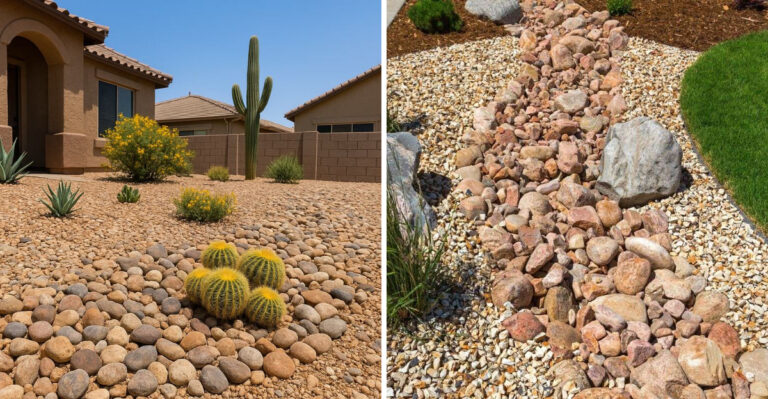
In Arizona, Texas sage fits naturally into water-wise landscape designs that combine native plants, gravel mulch, and minimal irrigation. Pairing it with similarly adapted plants reduces the need for varied watering schedules.
Keeping the overall design simple and plant selections compatible makes long-term maintenance more manageable and less time-consuming.