Why Georgia Tomatoes Are Rotting As Gardens Swing From Drought To Rain
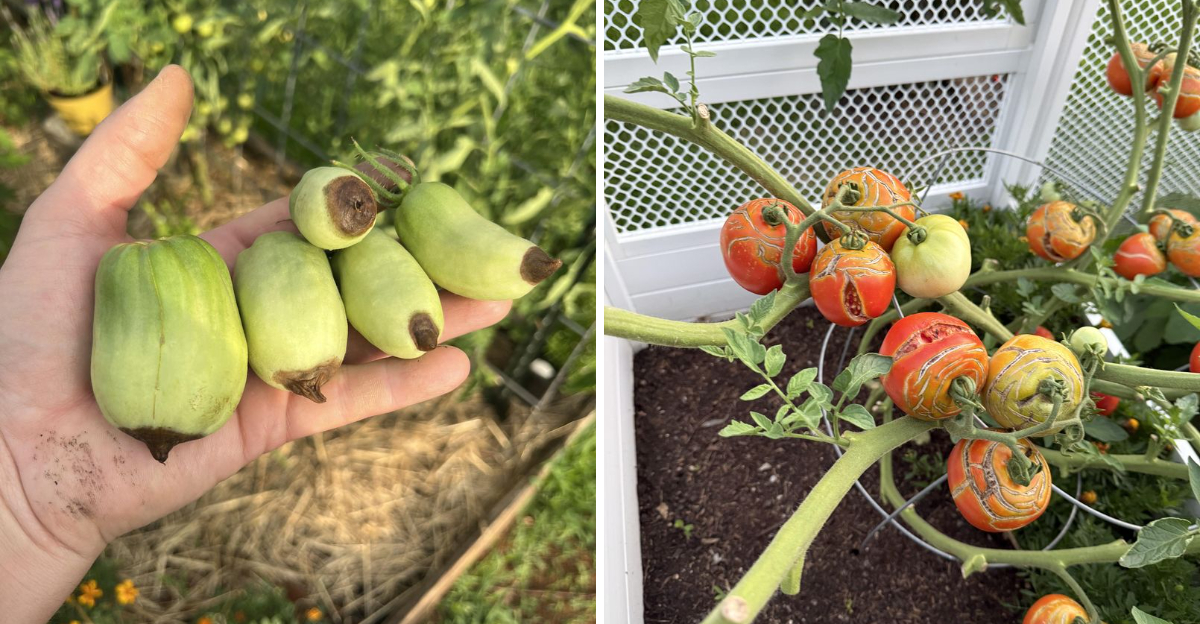
Georgia tomato plants can look healthy right before weather exposes everything that has been building below the surface.
For days, the soil may stay hard and dry while leaves curl through the afternoon. Then storms arrive, beds turn dark with moisture, and fruit that seemed close to harvest suddenly changes.
One tomato splits near the stem. Another develops a dark patch underneath. A third softens around a damaged area before anyone gets it into the kitchen.
Those symptoms can look like one problem.
They are not.
The same swing in weather can push several different processes at once, and the fruit often shows the result before the plant gives a clear explanation.
That makes the next watering decision, mulch check, and harvest timing more important than blaming the rain.
So what is the garden actually telling you?
The answer comes from matching each symptom to the moisture pattern, root condition, and fruit stage that came before it, then keeping the next round of tomatoes from riding the same roller coaster.
1. Uneven Moisture Starts The Trouble
A Georgia tomato bed can handle heat better than it handles repeated swings between very dry and very wet soil.
During a dry stretch, fruit growth can slow while the plant tries to conserve water. Then a heavy storm suddenly raises soil moisture, and roots regain access to far more water than they had during the previous days.
Fast changes in water availability can push fruit to expand quickly, which raises the risk of cracking in susceptible tomatoes.
That does not mean every storm damages fruit.
The bigger problem is the contrast between drought-stressed soil and a sudden soaking. A bed kept reasonably even through dry weather has less ground to make up once the rain returns.
Check moisture below the surface instead of judging by dusty mulch or a crust on top. Push a finger or narrow trowel several inches into the root zone. Dry soil there calls for irrigation. Cool, moist soil calls for patience.
Avoid trying to compensate for a week of drought with one enormous rescue watering.
Water slowly enough to wet the active root zone, then let the soil guide the next round. Sandy ground may need closer checks than Georgia clay, while compacted clay can remain wet long after the top looks dry.
Consistency is the goal, not perfection.
Summer weather will still swing. The gardener’s job is to make the soil beneath the tomatoes swing less dramatically than the sky above them.
2. Rain After Drought Makes Fruit Crack
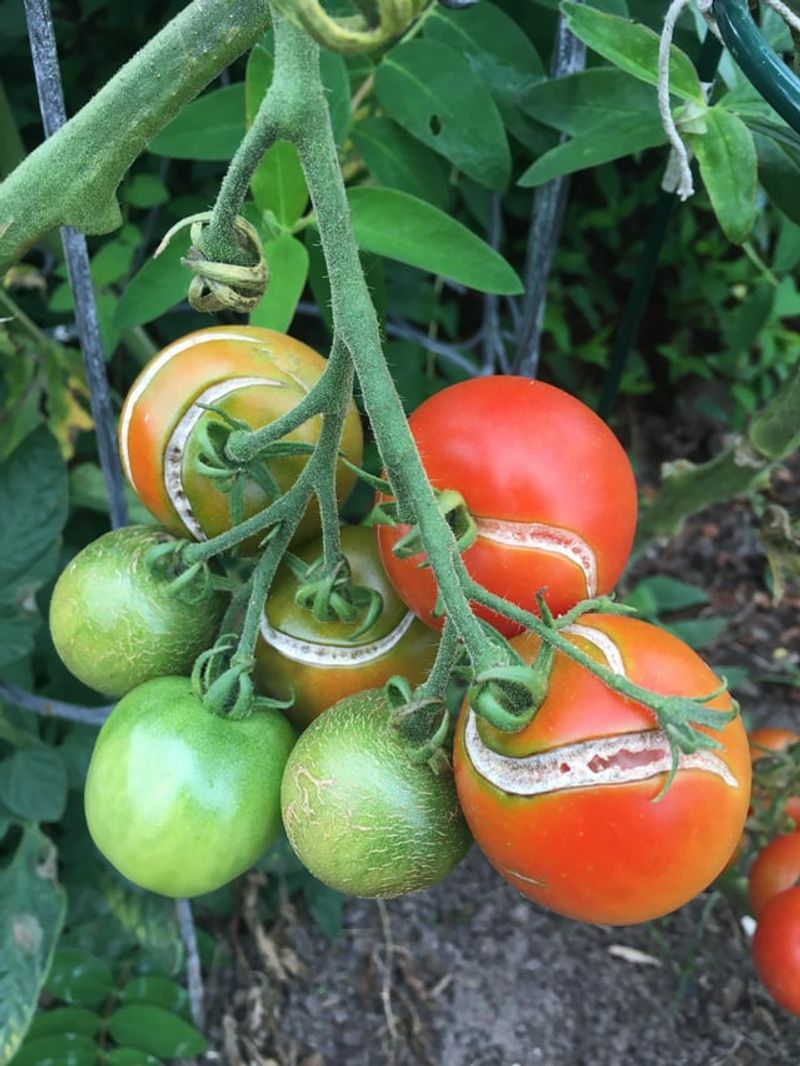
A nearly ripe tomato becomes especially vulnerable when a long dry spell ends with a hard summer storm.
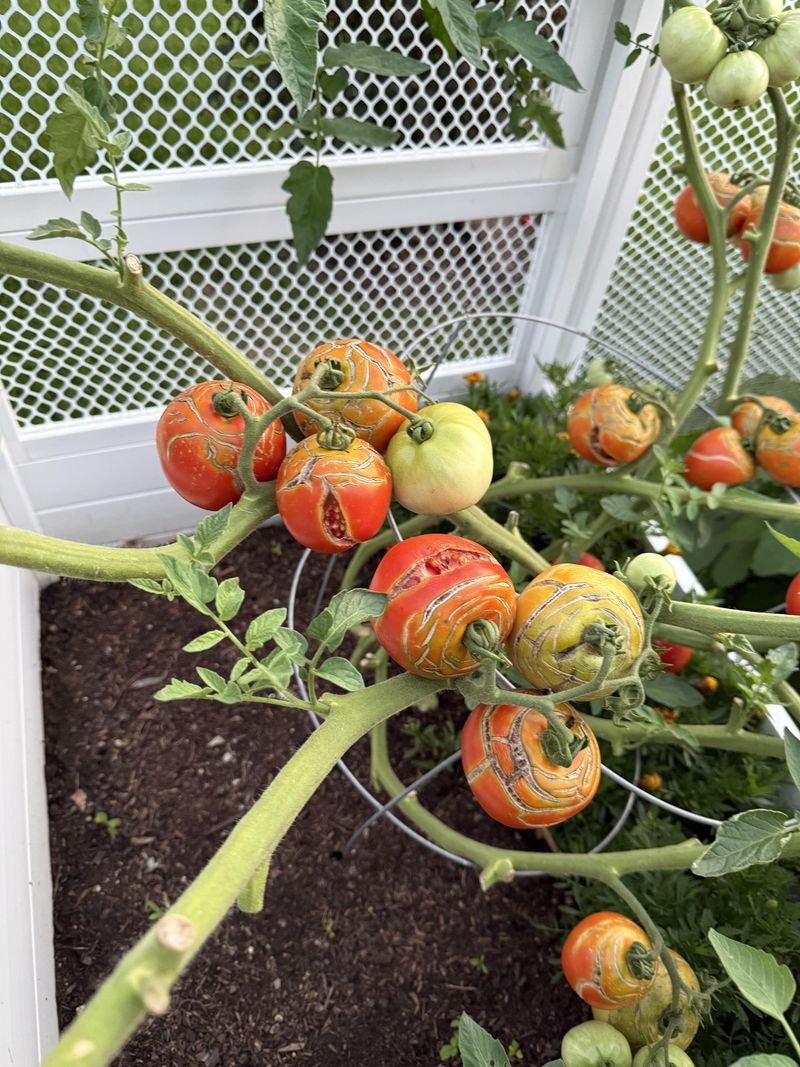
Cracking happens when the inside of the fruit expands faster than the skin can accommodate. Radial cracks often run outward from the stem area, while concentric cracks form in rings around the shoulder.
Both can become more obvious after a sudden increase in available water.
Fruit that has already begun changing color can finish ripening off the vine.
That makes harvest timing one of the easiest ways to protect a crop before forecast rain.
Your Georgia Garden Changes Every Week. Your Plan Should Too.
Gardening in Georgia changes quickly throughout the season. Every Friday you’ll receive a simple weekly plan showing exactly what to plant, prune, fertilize, harvest, and protect so you never miss the right timing.
Pick tomatoes once they have clearly entered the breaker stage, when the first noticeable shift from mature green toward pink, red, orange, or the variety’s mature color has started.
Bring them indoors and let them continue ripening at normal room temperature.
Direct sun on a windowsill is unnecessary and can heat the fruit. A counter or shelf with good air circulation works better.
Cracked fruit is not automatically unusable. A shallow, fresh crack on otherwise sound fruit may still be fine for prompt kitchen use after careful inspection and trimming.
Fruit with deep splits, leaking tissue, mold, sour odor, or obvious soft decay belongs out of the harvest basket.
Variety also matters. Some cultivars crack more readily than others.
For gardeners who see the same problem every wet summer, choosing crack-resistant cultivars next season can reduce frustration, but steady soil moisture still matters even with tougher-skinned fruit.
3. Blossom-End Rot Follows Moisture Stress
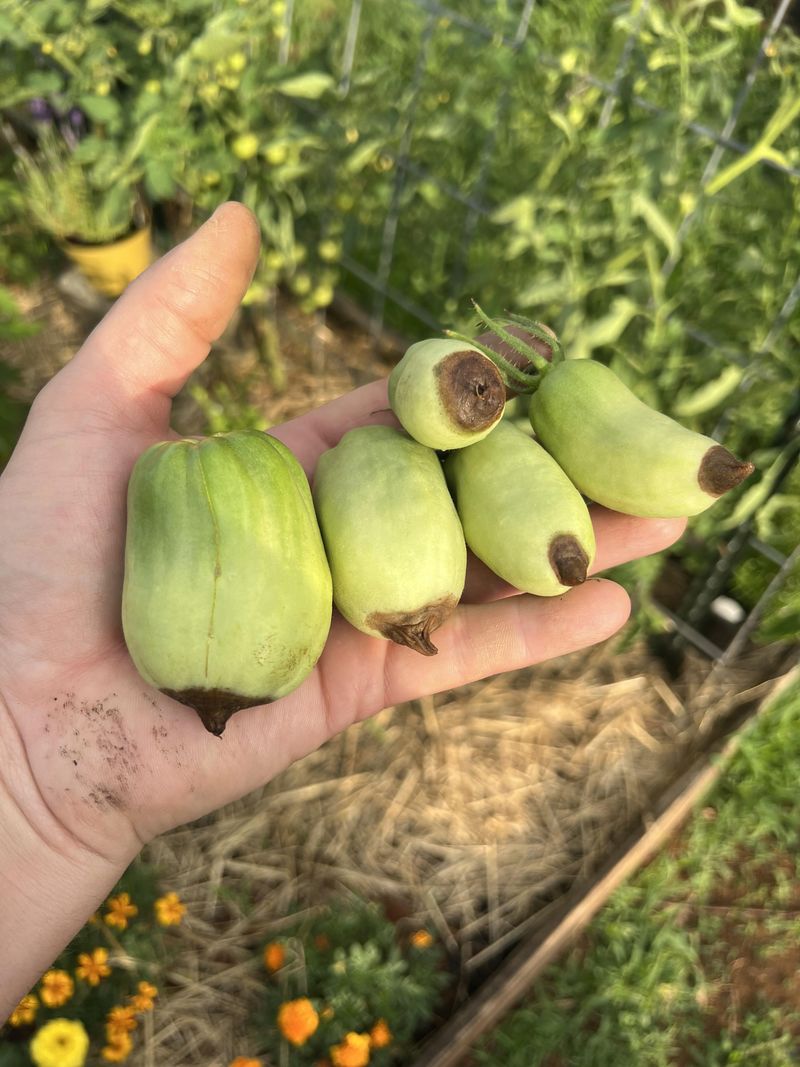
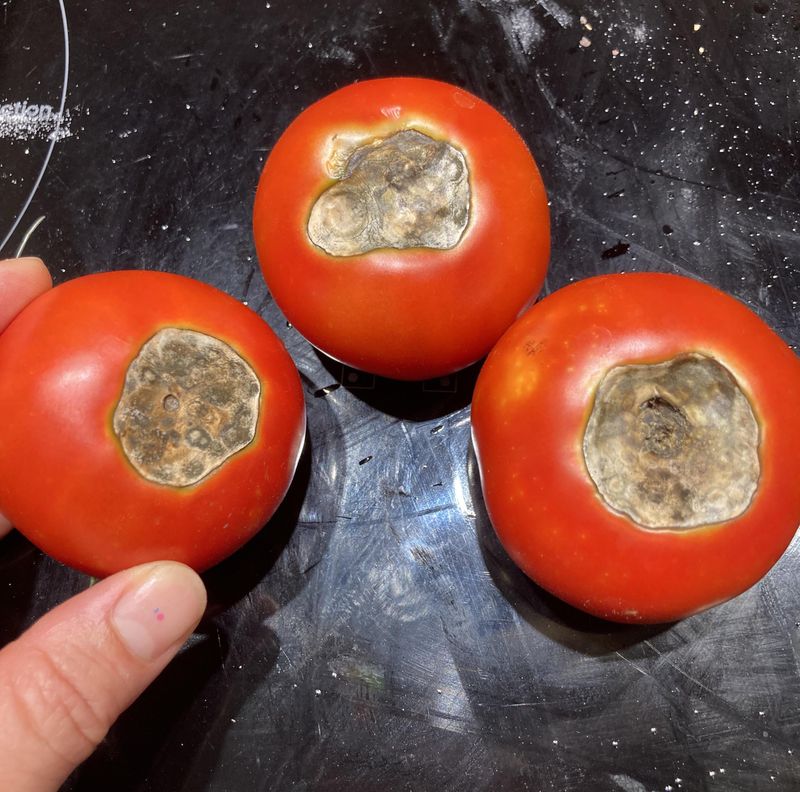
A dark, sunken patch on the blossom end of a tomato is not the same problem as a rain crack.
Blossom-end rot is a physiological disorder tied to inadequate calcium reaching developing fruit tissue. The soil may contain enough calcium while the plant still struggles to move it where it is needed.
Irregular soil moisture, damaged roots, rapid growth, high salts, and other root-zone stresses can all interfere with that process.
This is why drought followed by rain gets blamed so often.
The damage may begin while a small fruit is developing during the dry period, then become visible later. By the time the leathery patch appears, that section of fruit cannot recover.
Remove badly affected fruit and concentrate on protecting the newer crop.
Keep soil moisture more even, avoid damaging roots with deep cultivation, and skip heavy fertilizer applications that push excessive growth during stress.
A soil test is the right reason to add lime or another calcium-containing amendment, not the appearance of one damaged tomato.
Foliar calcium sprays are not a dependable rescue for fruit already showing blossom-end rot.
Calcium movement into fruit depends heavily on plant water relations and root function, so correcting the root-zone problem matters more than coating leaves with a quick fix.
The black patch can look like a disease spreading through the garden. Often, it is the fruit recording a moisture and calcium-transport problem that happened earlier.
The ground keeps the receipts.
4. Saturated Roots Add Another Problem
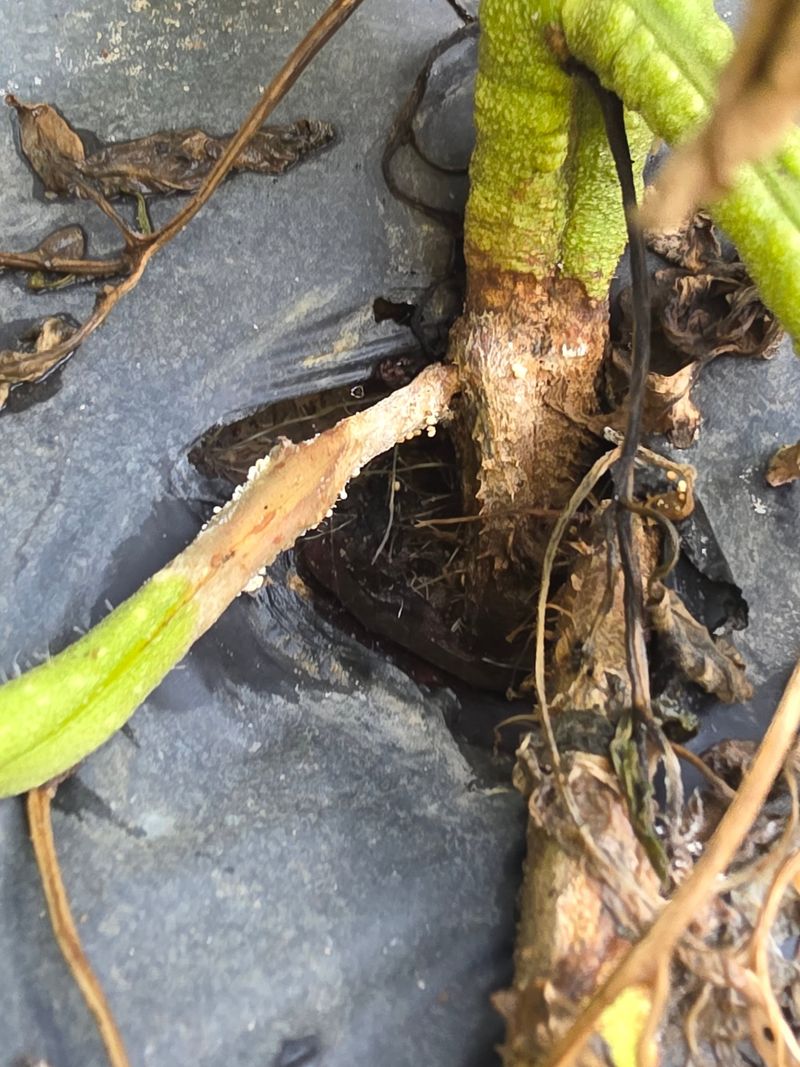
The same storm that ends drought stress can create a completely different problem when water stays trapped around tomato roots.
Roots need oxygen as well as moisture. Once soil pores remain filled with water for extended periods, root function can slow and plants may wilt even while the ground is wet.
That appearance tempts gardeners to water again, which only extends the saturated conditions.
Check the soil before restarting irrigation after a storm.
Georgia clay can hold moisture well below the surface long after puddles disappear. Push a trowel into the bed and inspect the root zone.
Sticky, wet soil needs time. A raised bed or looser, well-structured garden soil may drain faster, but it still deserves a check rather than an automatic watering cycle.
Pay attention to where storm water moves.
Downspouts, slopes, compacted paths, and low spots can funnel water into one section of a tomato bed. Two plants only a few feet apart may experience very different moisture conditions after the same thunderstorm.
Long-term drainage problems need a site solution.
Adding raised beds, improving bed structure with organic matter over time, or redirecting runoff can reduce repeated saturation. Avoid digging aggressively around established tomato roots during the middle of a wet spell.
A wilted tomato in dry soil and a wilted tomato in saturated soil can look remarkably similar from the porch.
The soil test is simple: touch the ground before touching the hose.
5. Wet Foliage Raises Disease Pressure
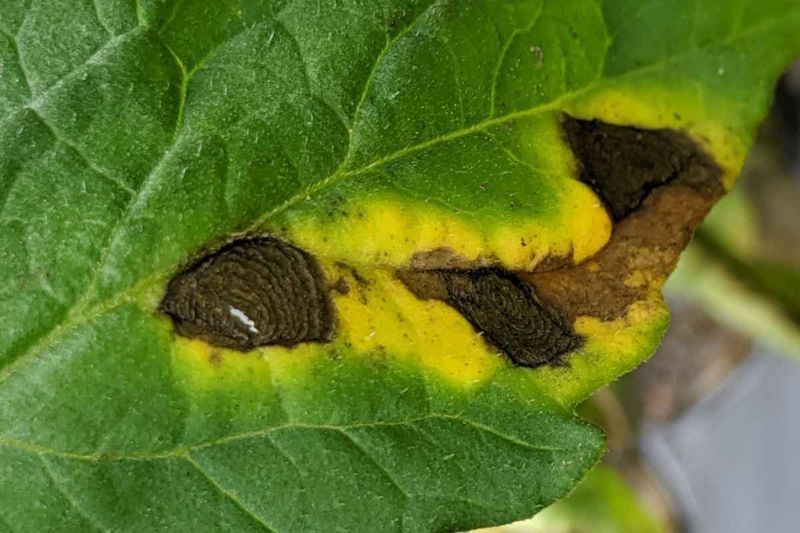
Heavy rain can raise disease pressure, but not every damaged tomato is suffering from the same pathogen.
Wet weather can favor several fungal and bacterial problems because rain spreads contaminated droplets, soil splash reaches lower foliage, and leaves may remain wet for long periods.
Early blight, Septoria leaf spot, bacterial spot, and other diseases can become more noticeable during warm, humid stretches.
Start by looking at where the symptoms are.
Cracks on fruit after rain point toward rapid expansion. A leathery patch on the blossom end points toward blossom-end rot. Spots spreading across leaves, stems, or fruit need a different diagnosis.
Keep lower foliage away from bare soil where practical.
Mulch reduces soil splash during thunderstorms, while adequate spacing and selective removal of badly affected lower leaves can improve airflow around the canopy.
Do not strip a heat-stressed plant of large amounts of healthy foliage, since leaves still shade fruit and power growth.
Rain itself cannot be controlled.
What gardeners can control is extra leaf wetness from irrigation, infected debris left around plants, crowded growth, and unnecessary handling while foliage is soaked.
Fungicides and bactericides only make sense after the problem has been identified and the product label includes the crop and disease.
They work best as part of prevention or early management, not as a universal cure for fruit that is already soft.
Diagnosis comes before the spray bottle.
One rotten-looking tomato can have a very different story from the spotted leaf beside it.
6. Overhead Watering Keeps Leaves Wetter
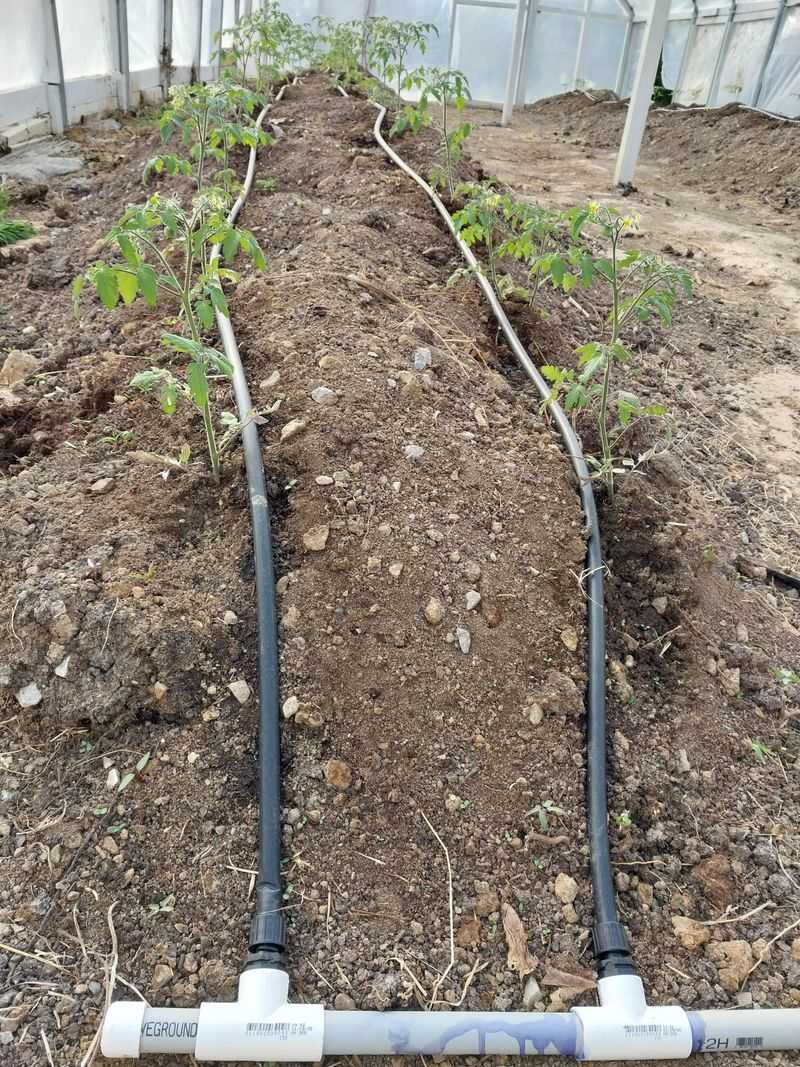
A Georgia thunderstorm already wets every tomato leaf in the garden, so routine irrigation does not need to add another round.
Drip tubing, drip emitters, and soaker hoses deliver water near the roots while keeping most of the canopy dry.
That reduces unnecessary leaf wetness and also makes it easier to control how much water reaches the soil during the dry days between storms.
Place the line where active roots can reach the moisture.
A single emitter pressed against the stem may not wet enough of the root zone around a large plant. Spread water across the bed or use multiple emitters where the system requires it.
Check beneath mulch after irrigation.
A soaker hose can run for a long time without wetting deeply in one soil, while another bed may become saturated much faster. System pressure, hose length, soil texture, and mulch all change the result.
Morning is the better time for overhead watering when no other method is available.
Leaves have more opportunity to dry during daylight, and the garden begins the hottest part of the day with moisture in the root zone. Avoid making evening leaf wetness a routine during humid weather.
There is no need to treat a raindrop as a disease sentence.
Plants outdoors get wet. The practical goal is to avoid extending wet periods unnecessarily and to keep the root zone steady between natural rain events.
The hose should solve a moisture problem below the plant, not create another one above it.
7. Mulch Smooths The Moisture Swing
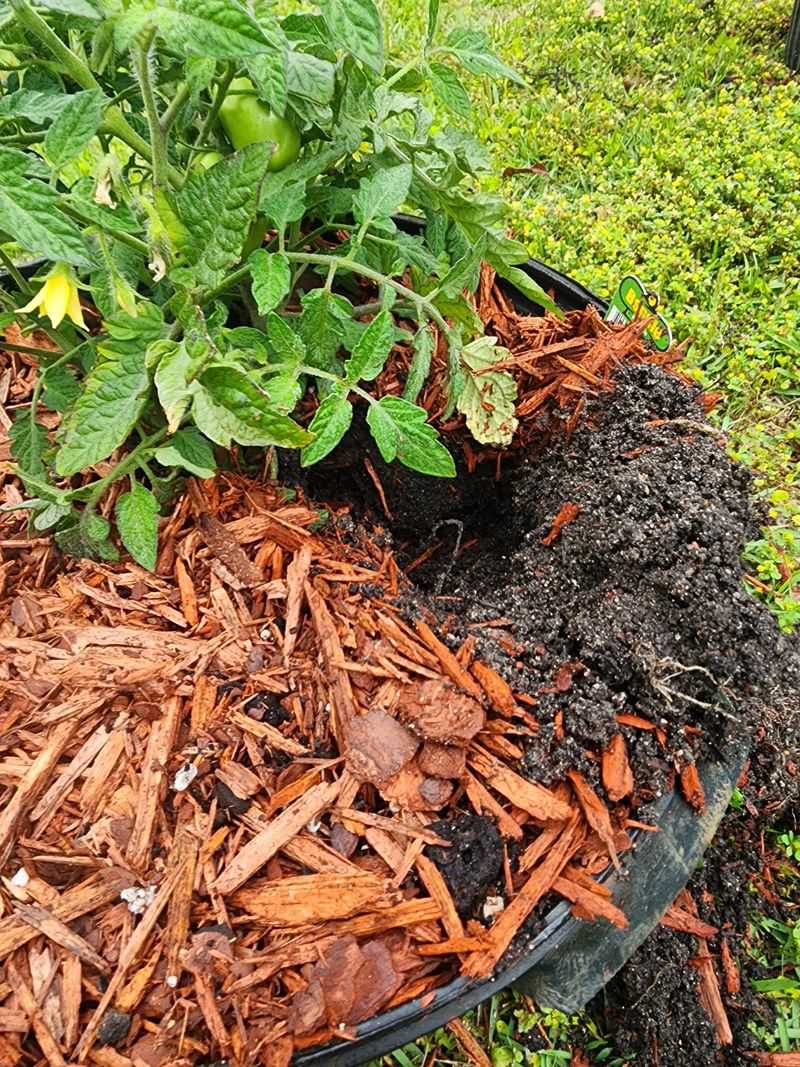
A mulch layer cannot stop a Georgia thunderstorm, but it can make the soil underneath behave more calmly before and after one.
During dry weather, organic mulch shades the surface and slows evaporation. During heavy rain, it softens the impact of droplets and reduces soil splash onto the lower tomato leaves.
Both effects are useful when weather keeps moving from hot and dry to suddenly wet.
Use straw, pine straw, shredded leaves, or another clean organic material suited to the bed.
Spread a moderate layer over exposed soil while keeping the tomato stem and crown clear. Mulch piled tightly around the stem can trap moisture where the plant does not need it.
Check what is already there before adding more.
A thin patch needs refreshing. A deep, matted layer may need loosening instead. Water and air still need to move through the mulch into the soil.
Mulch also makes moisture checks more important.
The top layer can look dry while the soil underneath remains cool and damp. Pull the material aside and check several inches down before irrigating.
This is especially useful after scattered summer storms, when one part of a yard may receive far more rain than another.
Mulch is not a cure for blossom-end rot, cracking, or disease.
It is a buffer that helps reduce the moisture extremes feeding several of those problems.
The weather can keep changing its mind. The tomato bed does not have to copy it every afternoon.
8. Keep Irrigation Consistent Between Storms
The hardest part of Georgia tomato watering is not surviving the storm. It is managing the dry days on either side of it.
Turn off automatic irrigation after meaningful rainfall, then restart only after the root zone begins drying.
A controller set to run regardless of weather can turn a well-watered bed into a saturated one, while abandoning irrigation for a week after one quick storm can send the plants straight back toward drought stress.
Check soil in more than one spot.
Summer thunderstorms can be remarkably uneven. One end of a property may receive a soaking while another gets only a brief shower. Raised beds and containers also dry at different rates from in-ground rows.
Container tomatoes need especially close attention.
Their limited soil volume can move from saturated to dry quickly during 95-degree weather, particularly in small pots exposed to full sun and wind. Large containers provide a wider moisture buffer but still need physical checks.
Keep fertilizing decisions separate from watering panic.
Heavy feeding during stress can raise salt levels around roots or push rapid growth that makes moisture management harder. Follow a soil-informed fertility plan rather than adding fertilizer every time fruit looks imperfect.
The target is simple: moist, aerated soil with fewer dramatic swings.
Georgia gardeners cannot schedule the rain, but they can decide what the root zone experiences between storms.
That steady middle ground protects developing fruit better than bouncing from wilted soil to a flooded bed and back again.