How To Spot Scale Insects On North Carolina Hollies Before They Cause Serious Damage
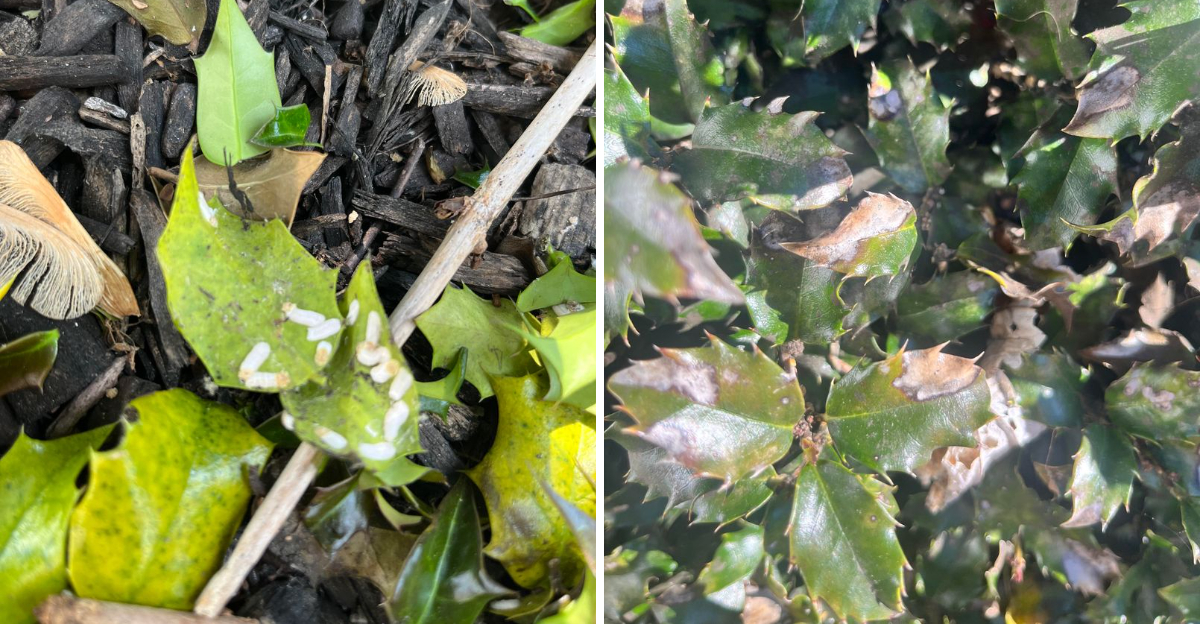
Scale insects often go unnoticed on North Carolina hollies until their small, waxy bumps have already spread across multiple branches.
These pests appear as tiny, immobile shells clustered along stems and the undersides of leaves, sometimes mistaken for natural plant texture.
Early infestations may look like a light dusting of small brown or gray specks rather than an obvious pest problem. Checking closely with a magnifying glass can reveal the insects themselves, along with a sticky residue they leave behind as they feed.
Left unchecked, scale insects can cause yellowing leaves and stunted growth as they continue draining nutrients from the plant.
Pruning out heavily infested branches early prevents the population from spreading further across the entire shrub.
Introducing natural predators like ladybugs can help keep smaller infestations under control without chemical treatments. Catching these early signs protects hollies before scale insects have a chance to spread significantly further.
1. Check The Undersides Of Holly Leaves
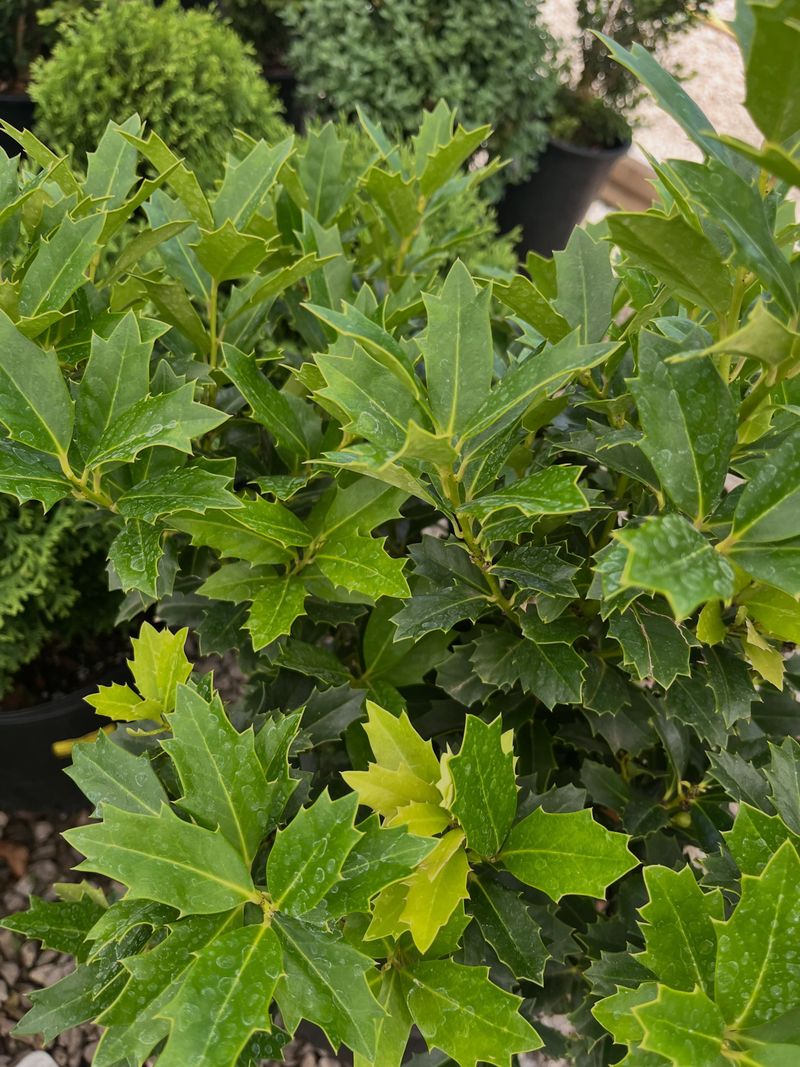
Flipping a holly leaf over might feel like a small thing, but it could be the most important habit you develop all season.
Tea scale, one of the most common scale insects found on hollies in North Carolina, almost always hides on the underside of leaves.
From above, your shrub might look perfectly fine. Turn those leaves over, though, and you could find a completely different story.
Tea scale looks like tiny flattened specks, often white, gray, or brown, pressed tightly against the leaf surface. They tend to cluster along the midrib and main veins, where the leaf tissue is thickest.
Because they are so flat and blend in with the leaf texture, many gardeners walk right past them without a second glance.
Making it a regular habit to check leaf undersides during your weekly garden walkthrough can help you catch infestations while they are still small and manageable.
Focus especially on older, lower leaves closer to the center of the shrub, since scales tend to build up in sheltered spots first. A magnifying glass makes the job much easier and more reliable.
Early detection on the leaf underside is genuinely your best defense. A small population of scales spotted in spring or early summer is far easier to address than a full-blown infestation by late summer.
Train yourself to look under leaves every time you walk past your hollies, and you will stay well ahead of any serious trouble before it has a chance to grow.
2. Look For Tiny Waxy Bumps On Twigs
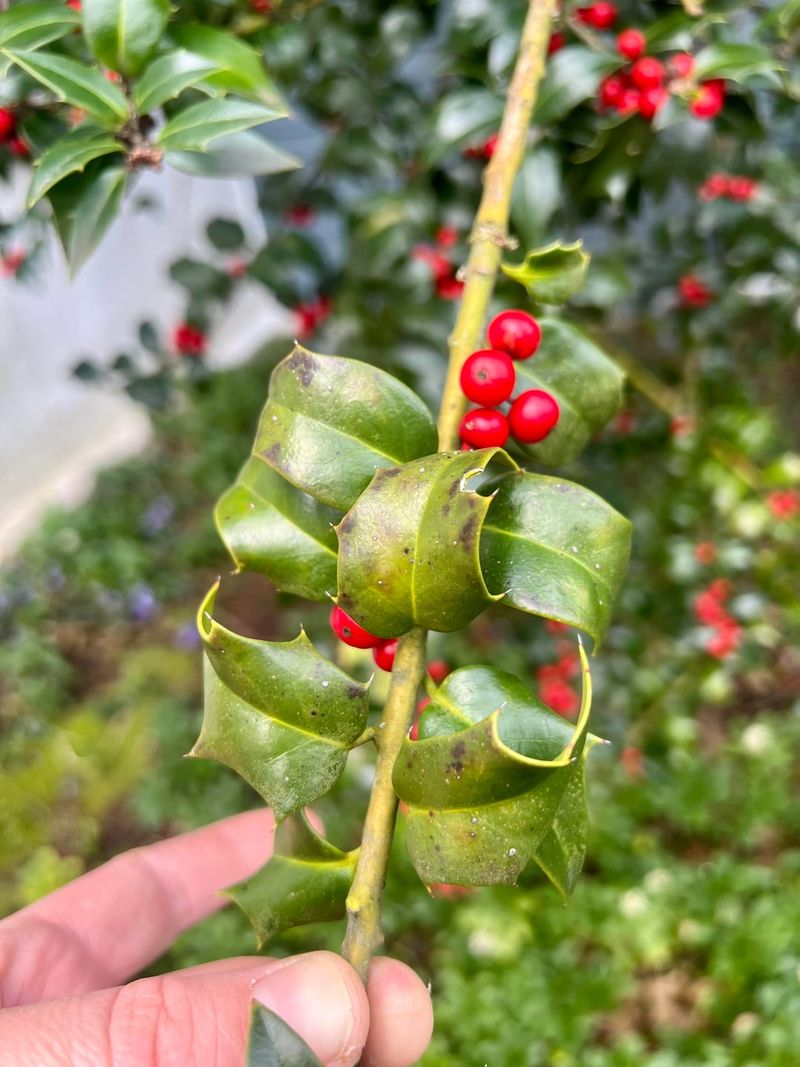
Some scale insects are practically impossible to miss once you know what you are looking at.
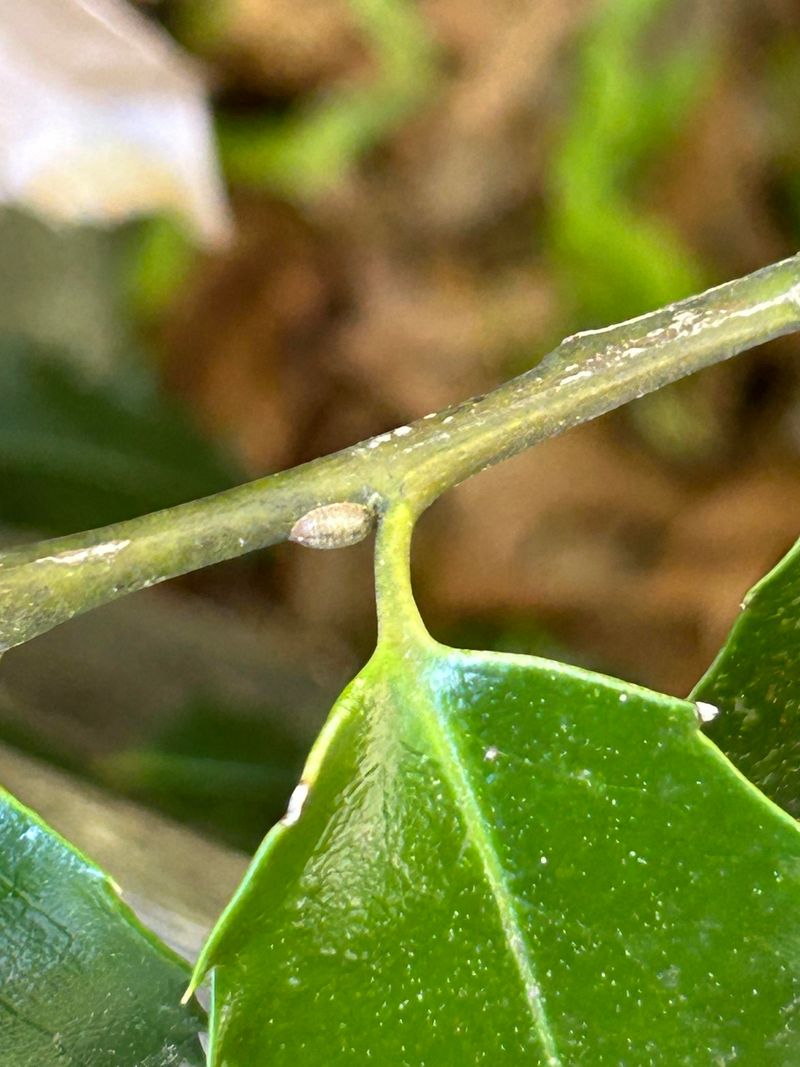
Japanese wax scale is one of the most visually striking pests you might find on your North Carolina hollies, and it shows up directly on the twigs and branches rather than hiding on leaves.
These scales look like small, rounded, waxy white or pinkish bumps stuck firmly to the bark, almost like tiny pearls or blobs of hardened wax.
Up close, Japanese wax scale can be surprisingly large compared to other scale insects, sometimes reaching the size of a small pea.
Your North Carolina Garden Changes Every Week. Your Plan Should Too.
Gardening in North Carolina changes quickly throughout the season. Every Friday you’ll receive a simple weekly plan showing exactly what to plant, prune, fertilize, harvest, and protect so you never miss the right timing.
They tend to cluster together along stems and at branch junctions, which makes heavily infested twigs look almost encrusted.
New growth is especially vulnerable, since the soft bark of young stems is easier for the insects to feed on.
A quick visual scan of your holly branches every few weeks during the growing season can reveal these bumps before populations explode. Run your fingers lightly along a twig and you will feel the hard, waxy shells even before you see them clearly.
Do not mistake them for normal plant features like buds or lenticels, which are the small natural pores in bark.
Japanese wax scale can seriously weaken stems over time if left unchecked. Catching those first few bumps early in the season gives you plenty of time to act before the population spreads to neighboring branches and plants.
Regular twig inspections take only a minute and can save your hollies from months of unnecessary stress.
3. Watch For Yellow Spots On Leaves
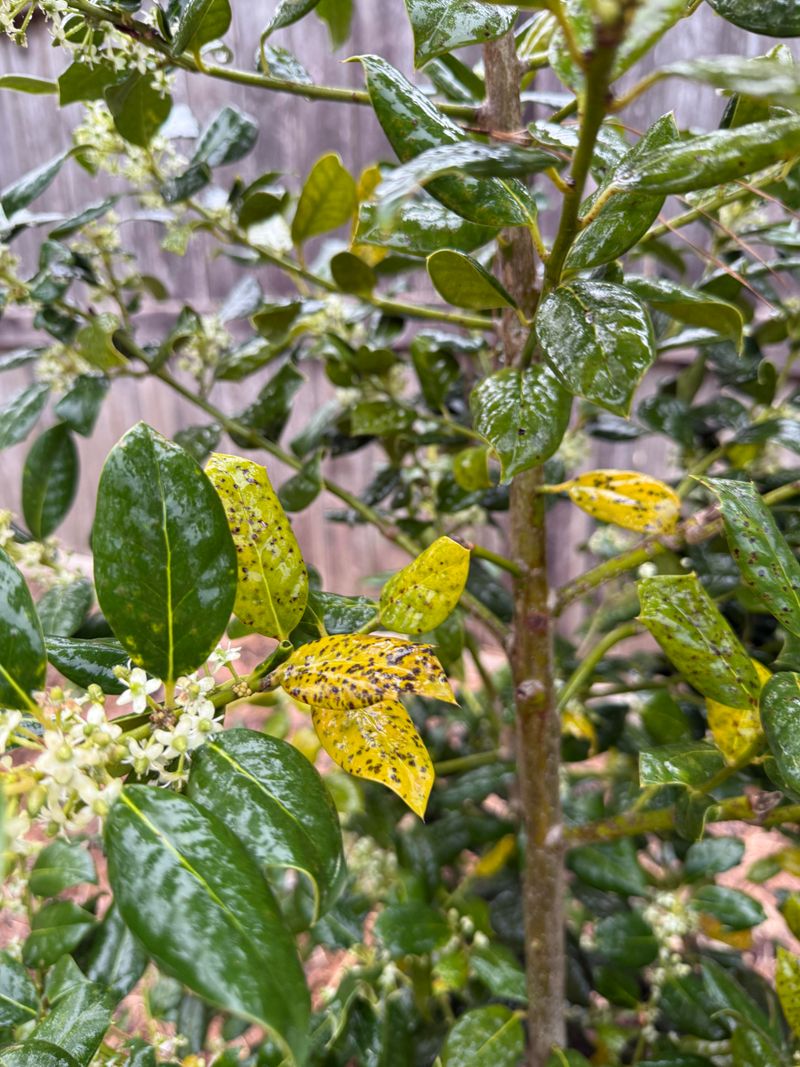
Yellow spots on holly leaves are one of those warning signs that gardeners sometimes chalk up to a watering issue or a nutrient deficiency.
But those pale, irregular patches on the upper surface of the leaf are often a direct signal that something is feeding on the other side.
When scale insects pierce the leaf tissue and drain plant fluids, the area around the feeding site loses its green color and turns yellow or pale green. Tea scale infestations are especially well known for causing this kind of yellowing.
Because the insects feed in clusters on the underside, the yellowing on top tends to appear in matching patterns, sometimes streaky or blotchy rather than evenly spread.
If you notice this kind of discoloration, flip the leaf over immediately and look closely at the underside along the veins.
The connection between underside feeding and upper surface yellowing is a reliable clue that many experienced gardeners use to catch scale early.
You can spot the yellowing from a few feet away, which makes it a useful early warning system even before you get close enough to see the insects themselves. Brighter light conditions make the yellow patches easier to see clearly.
Do not wait to investigate yellow spots, hoping they will resolve on their own. Leaf discoloration from scale feeding tends to spread as the population grows, and heavily yellowed leaves will eventually drop from the shrub.
Catching the pattern early and confirming scale as the cause puts you in a strong position to protect your hollies before the damage becomes widespread.
4. Notice Sticky Leaves And Sooty Mold
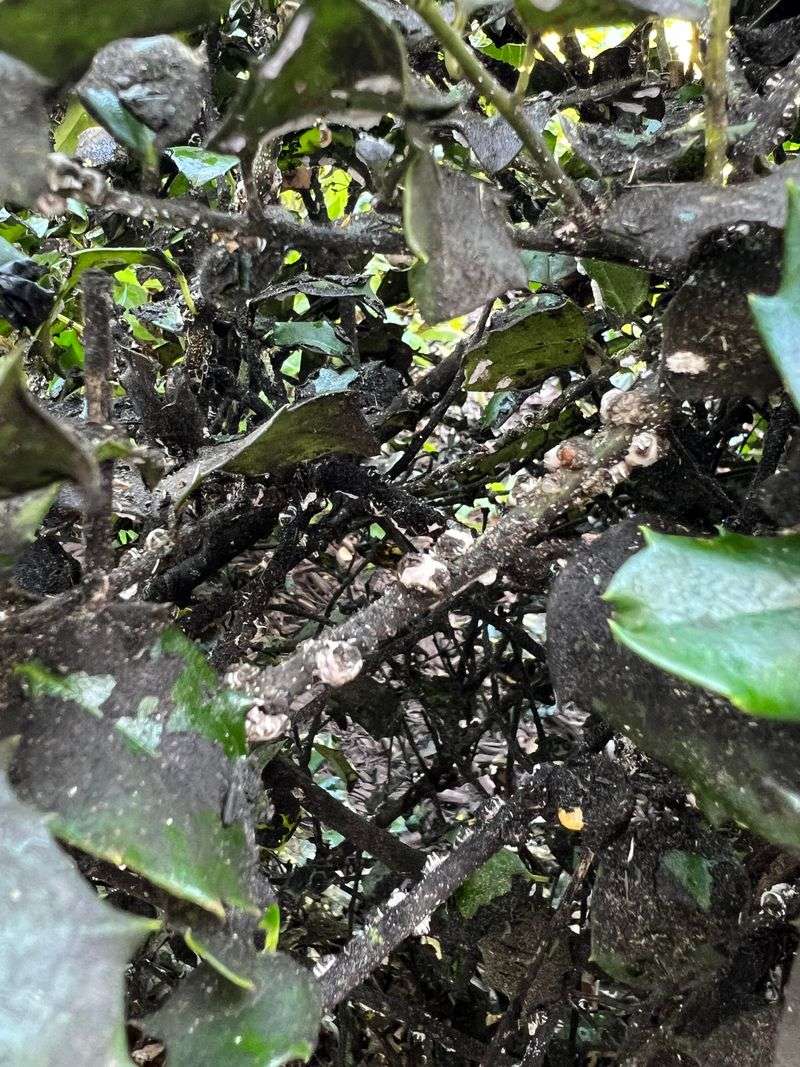
Sticky leaves on a holly shrub are a red flag that something is going on, even if you cannot see any insects right away.
Soft scale insects, including certain species that affect hollies in North Carolina, produce a sugary liquid called honeydew as they feed.
This substance drips onto the leaves below and coats them in a thin, tacky film that you can actually feel when you touch the foliage.
That sticky residue does not stay harmless for long. A black fungus called sooty mold quickly colonizes the honeydew and spreads across leaf surfaces in dark, powdery patches.
Sooty mold does not directly harm the plant tissue itself, but it blocks sunlight from reaching the leaf surface, which reduces the plant’s ability to photosynthesize and produce energy.
Heavy sooty mold coverage makes hollies look unhealthy and neglected. Spotting sticky foliage or sooty mold is actually a useful diagnostic tool.
Since the mold grows on honeydew, and honeydew comes from feeding insects, the presence of sooty mold almost always points to an active insect infestation somewhere on or above the affected leaves.
Check both the infested leaves and the branches directly above them for scale insects.
Ants are another clue worth watching for. Ants are strongly attracted to honeydew and will actively protect scale insects from natural predators in order to keep the honeydew supply flowing.
If you notice ants moving up and down your holly stems in noticeable numbers, that behavior alone is worth investigating further as a potential sign of a scale problem underneath.
5. Inspect The Interior Of The Shrub
Most gardeners focus on the outer surface of a shrub during routine checks, and that makes sense since the outside is what you see every day.
But scale insects often build their largest populations deep inside the shrub, where branches are more sheltered, humidity is higher, and natural predators have a harder time reaching them.
The dense interior of a mature holly is exactly the kind of protected environment where scales thrive and multiply undetected.
Getting into the habit of parting the outer branches and physically looking inside the shrub is one of the most effective things you can do for early detection.
Bring a flashlight if the interior is dark, and look carefully at the stems, branch junctions, and the undersides of any leaves you can reach.
Scale populations on interior branches are often much heavier than anything you would find on the outer growth.
Hollies that have not been pruned in several years are especially prone to this problem. Dense, unpruned growth creates more sheltered pockets where scales can establish and spread without much interference.
Thinning out the interior of the shrub periodically not only improves airflow but also makes it much easier to spot problems before they get out of hand.
When you do find scale on interior branches, take note of how far the infestation has spread. A localized cluster on a few inner stems is a very different situation from widespread coverage across the entire interior canopy.
Mapping out where the insects are concentrated helps you make smarter decisions about how to respond and where to focus your attention first.
6. Do Not Confuse Scale With Other Holly Pests
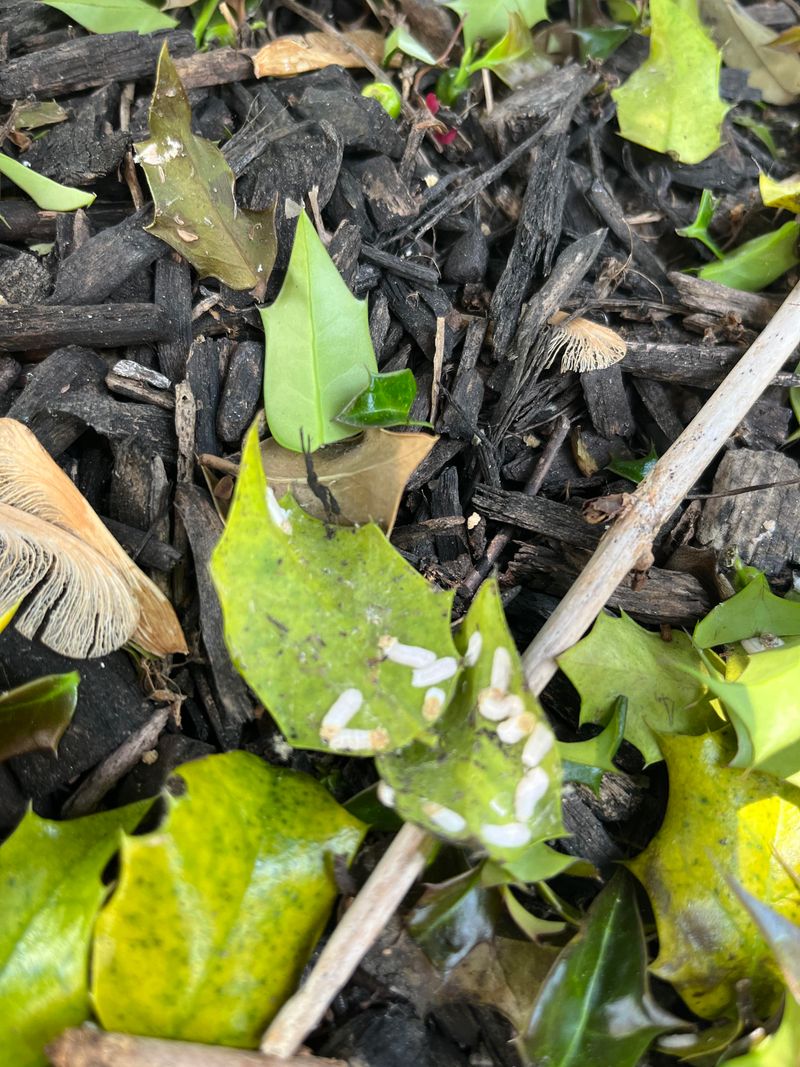
Not every mark or bump on a holly leaf means you are dealing with scale insects. Holly shrubs in North Carolina can host several different pests, and misidentifying the problem can lead you to take the wrong action entirely.
Two common sources of confusion are holly leafminers and spider mites, both of which create visible damage but look very different from scale once you know what to compare.
Holly leafminers are the larvae of a small fly, and they feed by tunneling through the inside of the leaf tissue.
The damage they leave behind looks like winding, discolored trails or blotchy patches within the leaf, almost like someone drew irregular lines under the leaf’s surface.
There are no bumps, no waxy coatings, and no sticky residue involved. The trails are flat and contained within the leaf itself.
Spider mites cause a different kind of damage called bronzing, where the upper leaf surface takes on a dull, grayish-bronze color due to the mites piercing individual leaf cells.
If you look very closely, you might see fine webbing on the undersides of affected leaves. Again, there are no bumps or waxy shells, which is the key visual feature that sets scale insects apart from both of these other pests.
Scale insects are unique because they produce a hard or waxy protective covering over their bodies, which makes them look like part of the plant rather than an insect at all.
Taking a few extra moments to examine the type of damage carefully before jumping to conclusions ensures you are identifying the right pest and responding in the most effective way possible.
7. Take Leaf Drop And Thin Growth Seriously
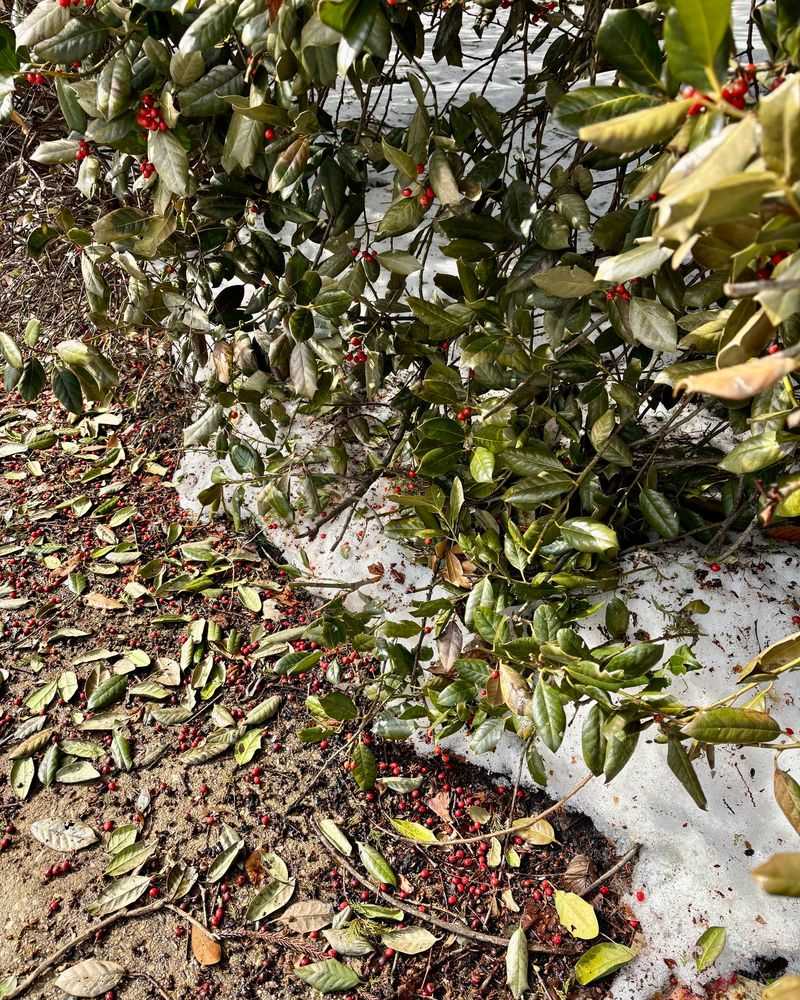
Hollies are tough, resilient shrubs, so when one starts looking sparse or drops more leaves than usual, something is genuinely wrong.
A gradual thinning of the foliage over several months is one of the later signs that a scale insect population has grown large enough to significantly reduce the plant’s overall vigor.
By the time you notice the shrub looking noticeably thinner, the infestation has usually been building for quite a while.
Scale insects feed by piercing plant tissue and extracting sap, which carries the sugars and nutrients the plant needs to grow.
A few insects here and there cause minimal impact, but a large population feeding continuously across many leaves and stems puts serious strain on the plant’s resources.
Over time, the holly produces fewer new leaves, existing leaves yellow and drop earlier than normal, and overall growth slows down noticeably. Premature leaf drop is especially telling during the growing season.
Hollies do shed older leaves naturally, particularly in spring, but if leaves are falling in midsummer or late summer in higher-than-normal quantities, that pattern deserves a closer look.
Pair that observation with an inspection for scale insects on the remaining foliage and stems.
Thin growth at the tips of branches is another sign worth watching. When new shoots emerge smaller than expected or fail to fill out fully by midsummer, reduced sap availability from scale feeding is a plausible explanation.
Acting on these symptoms promptly, rather than waiting to see if the shrub bounces back on its own, gives your holly the best chance to recover fully and regain its healthy, full appearance.
8. Identify The Scale Before Treating It
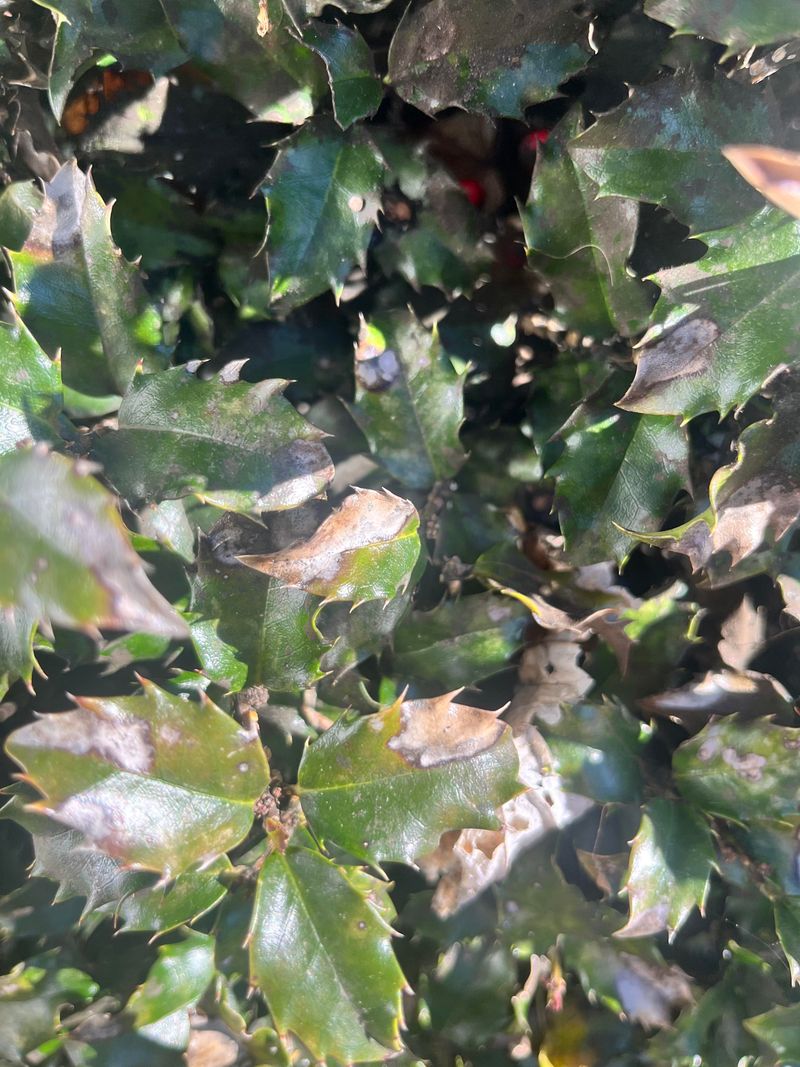
Reaching for a treatment before you know exactly what you are dealing with is one of the most common mistakes gardeners make when they spot a pest problem.
Scale insects are not all the same, and the type of scale on your holly, along with the life stage it is currently in, makes a real difference in which approach will actually work.
Crawlers, which are the newly hatched mobile juveniles, are far more vulnerable to many treatments than hard-shelled adult females.
North Carolina hollies can host several different scale species, including tea scale, Japanese wax scale, and various soft scales. Tea scale has a hard, protective shell and is best targeted during the crawler stage in late spring.
Japanese wax scale, with its thick waxy coating, requires a different timing and approach. Soft scales that produce honeydew may respond differently than armored scales, so knowing which one you have genuinely matters.
You can often identify the scale type by its appearance, location on the plant, and the time of year. Local cooperative extension offices in North Carolina are an excellent resource for confirmation if you are unsure.
Many offices offer free plant diagnostic services, and submitting a sample or a clear photograph can get you a reliable identification quickly.
Protecting beneficial insects while addressing scale is also a priority worth keeping in mind. Natural predators like parasitic wasps and lady beetles help keep scale populations in check, and broad treatments can unintentionally harm these helpful allies.
Targeted, well-timed action based on accurate identification is always the smarter path forward for the long-term health of your hollies and your garden.