The Soap Test Georgia Homeowners Use To Catch Armyworms Early
Your grass looked perfectly fine yesterday. Today it’s thinning out in odd patches, and there’s no obvious reason why.
Something is feeding on your lawn after dark, working fast and leaving almost no trace behind. Georgia homeowners have started noticing the exact same pattern this season, usually right after a warm, humid stretch.
Turns out, a simple mix of dish soap and water can flush the culprit straight out into the open. You don’t need some fancy tool, just a little patience, and about ten minutes stand between you and finally seeing what’s been chewing through your yard.
A Simple Kitchen Ingredient Uncovers What’s Hiding In The Grass
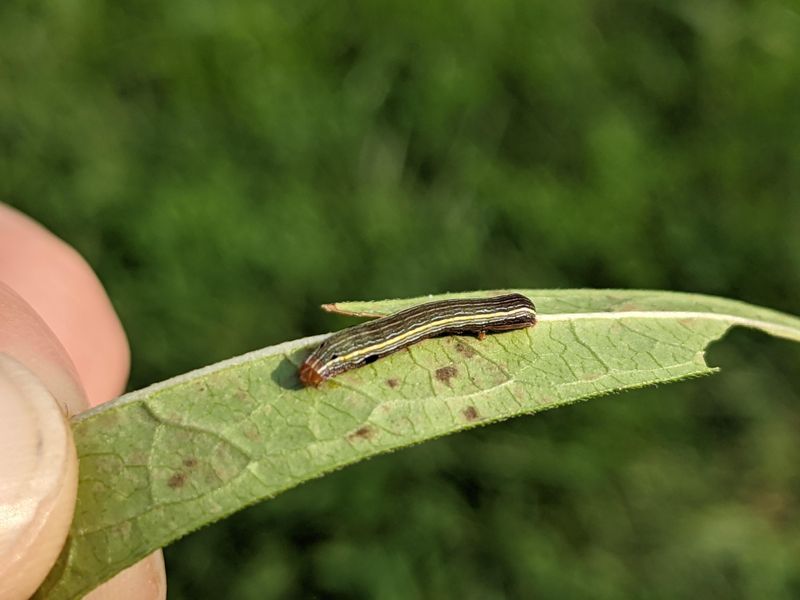
Your dish soap is secretly a lawn detective. Most homeowners never think twice about that bottle sitting next to the sink, but it holds real power against hidden pests.
The soap test is one of the oldest tricks in the turf management playbook. Lawn care pros across the South have relied on it for decades to expose what eyes alone cannot see.
Plain liquid dish soap mixed with water creates what experts call a “flush solution.” Pouring it onto the grass irritates any insects living beneath the surface, forcing them upward fast.
You do not need a fancy brand or a special formula. Any standard dish soap from your grocery store will do the job perfectly well.
One tablespoon of soap mixed into one gallon of water is the standard ratio most lawn professionals recommend. That simple mix is enough to treat a two-square-foot patch of turf.
Used in these small amounts, the soap poses little risk to healthy turf, and any stress usually fades within a day or two.
Timing matters when you run this test. Early morning or late evening works best, since insects are most active during cooler parts of the day.
That bottle by the sink does more than cut grease. It exposes a hidden population before your yard shows a single bare patch.
Georgia Lawns Face This Threat Every Late Summer
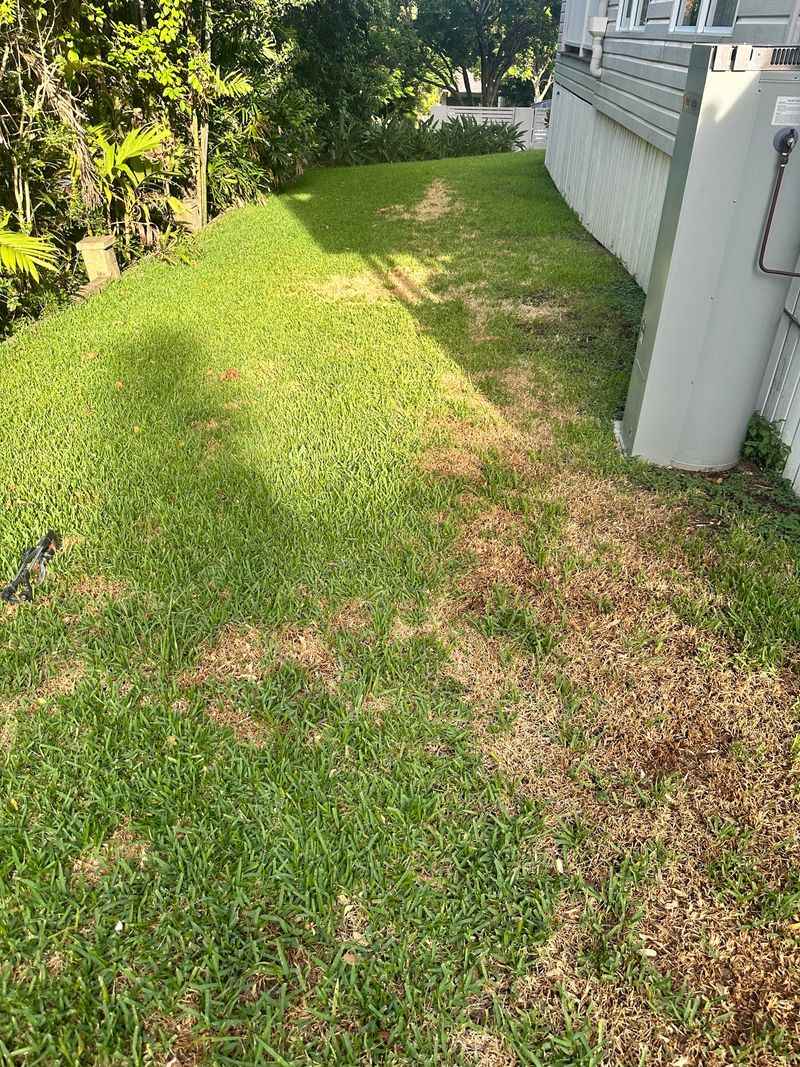
Late August arrives, and so do the armyworms. Every year, like clockwork, lawns across the state start showing mysterious brown patches that seem to appear from nowhere.
Fall armyworms are the most common species targeting Southern turf. They migrate northward from Florida each summer, riding storm systems and warm air currents inland.
Some years bring far worse outbreaks than others. When storm systems track through the Gulf in late summer, they can carry unusually large moth populations hundreds of miles north in a single push.
Bermuda grass is their top target in this region. Zoysia and fescue lawns are also fair game, especially during dry stretches when the turf is already stressed.
A single female moth can lay up to 1,000 eggs in her short lifetime. Those eggs hatch fast, and young caterpillars begin feeding almost immediately after emerging.
Waiting for visible damage means the feeding started days ago. By the time patches show, the population underneath has already multiplied.
Your Georgia Garden Changes Every Week. Your Plan Should Too.
Gardening in Georgia changes quickly throughout the season. Every Friday you’ll receive a simple weekly plan showing exactly what to plant, prune, fertilize, harvest, and protect so you never miss the right timing.
Young caterpillars skeletonize grass blades, leaving a frosted or papery look across the lawn. Older larvae eat entire blades down to the soil level.
Damage spreads quickly because armyworms travel in groups. A small patch can spread across several more square feet within just a few days once feeding picks up.
Knowing the seasonal window helps homeowners stay one step ahead. Checking weekly from late July through October gives you the best shot at catching an infestation early.
A Few Drops Poured On The Turf Reveal The Truth
Grab a bucket and head outside. The actual process of running a soap flush is much simpler than most people expect it to be.
Start by mixing one tablespoon of plain dish soap into one gallon of warm water. Stir it gently so the soap dissolves without creating too much foam.
Pick a spot where you suspect trouble first. Look for areas where birds are pecking frequently, since they often sense insects before humans notice anything wrong.
Pour the solution slowly and evenly over a two-square-foot section of grass. You want the liquid to soak down into the thatch layer where caterpillars hide during daylight hours.
Do not pour too fast or the mixture will run off before it soaks in properly. A slow, steady stream lets the solution penetrate deep enough to make contact with pests below.
After pouring, crouch down and watch the area closely. You are looking for any movement coming up through the grass blades from the soil below.
Test two or three different spots around the yard for a more complete picture. Armyworms rarely concentrate in just one location when an infestation is underway.
You don’t need to wait for more damage to confirm your suspicion. A few minutes is all the grass needs to show its hand.
Squirming Bodies Surface Within Minutes
Watch closely after you pour. Within two to three minutes, the surface of the grass will tell you everything you need to know.
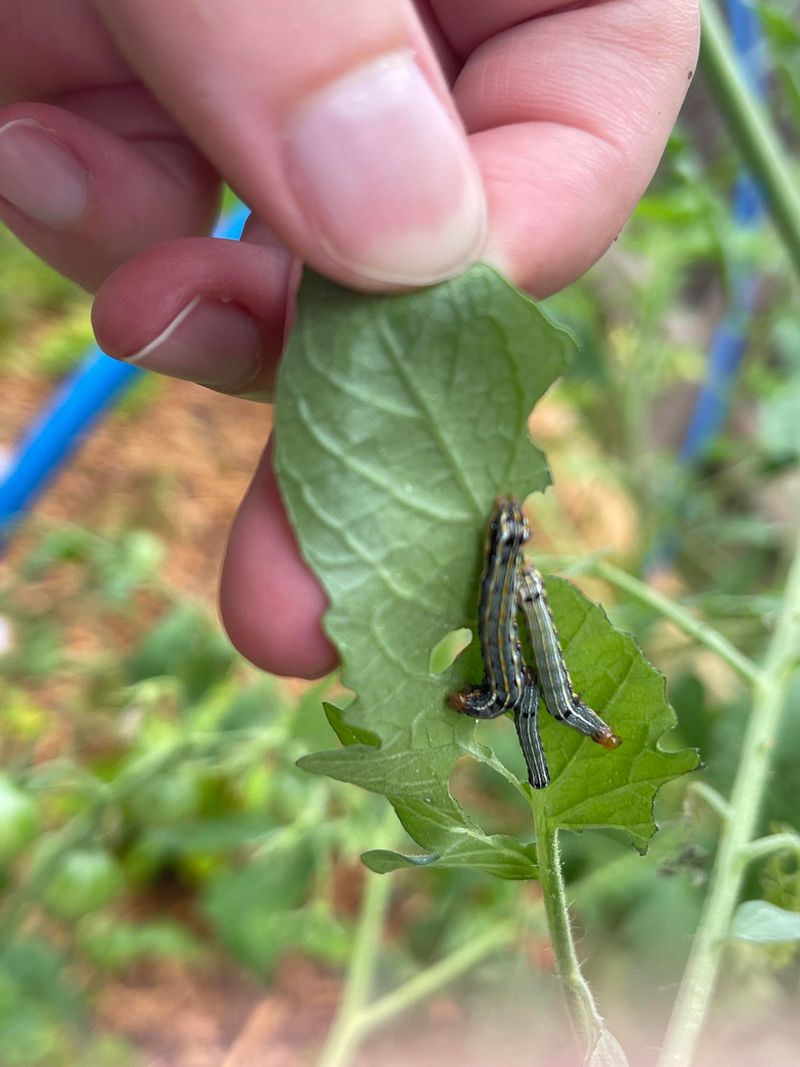
Armyworm larvae cannot tolerate the irritating sensation the soap solution creates. They wriggle upward through the thatch and appear on top of the grass almost immediately.
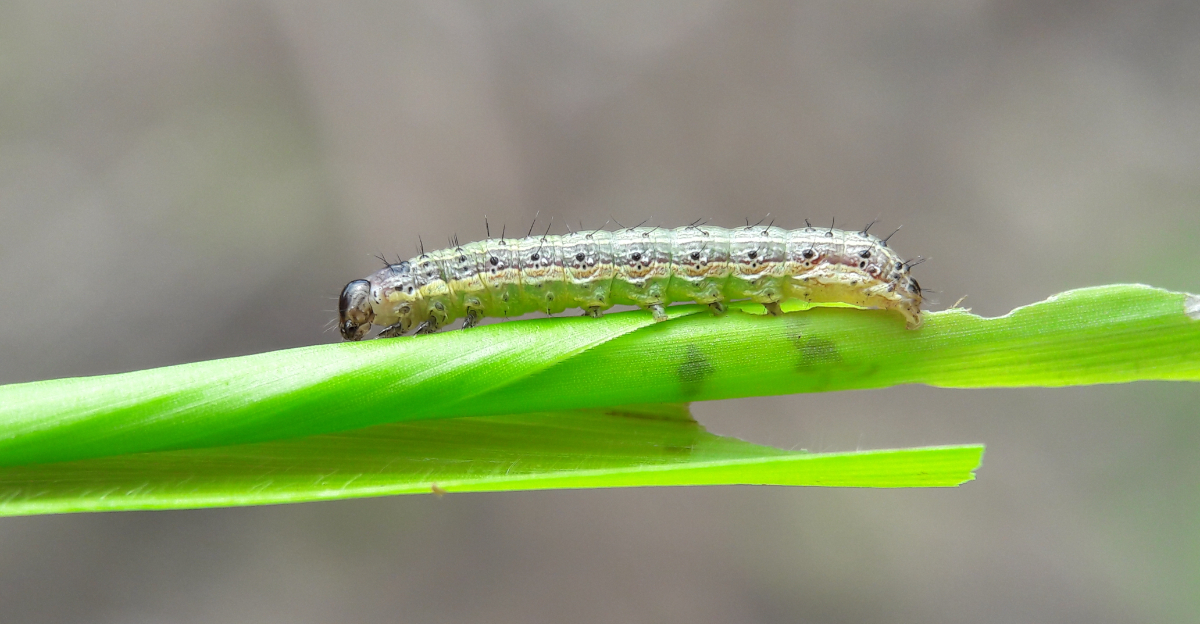
Young larvae look pale green and are easy to miss at first glance. Older caterpillars are darker, often showing stripes of green, brown, and yellow running along their sides.
A healthy lawn will rarely produce more than a caterpillar or two during the flush test. Finding even three or four larvae in a small patch is a sign that a larger population is present.
Pest management thresholds suggest that three or more armyworms per square foot warrants action. At that density, visible turf damage is likely already beginning beneath the surface.
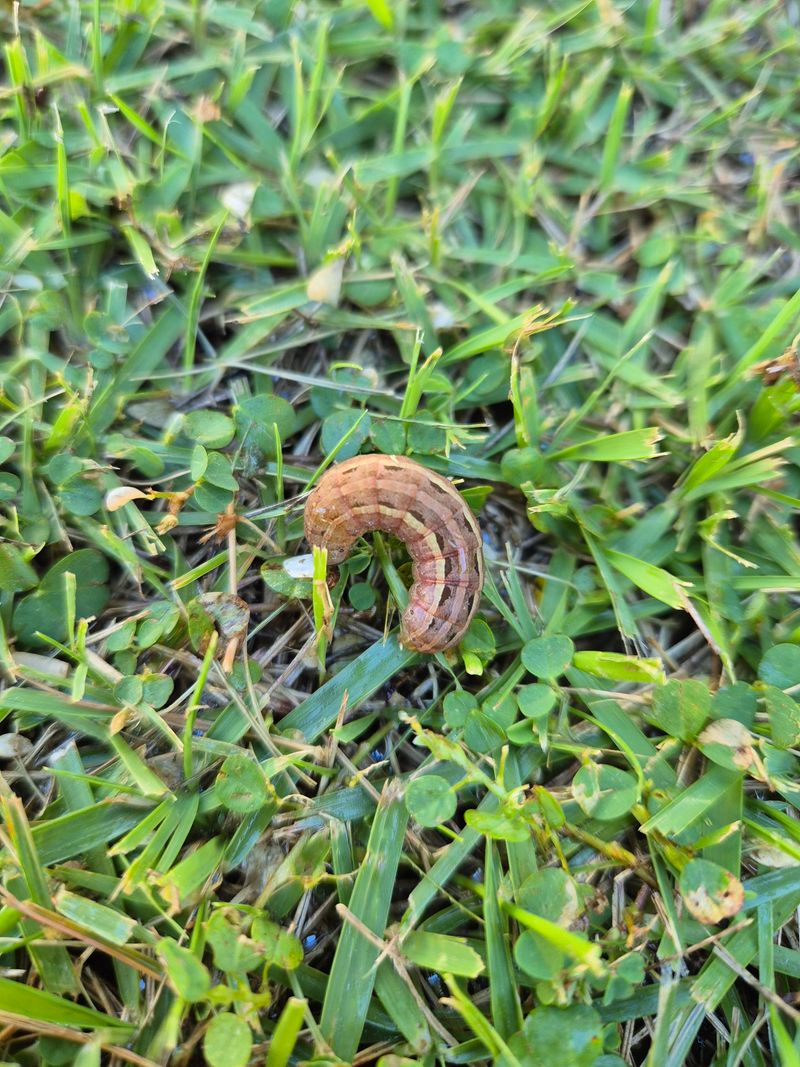
Some homeowners mistake other insects for armyworms during the flush. Cutworms are thicker and curl into a C-shape, while armyworms stay relatively straight when disturbed.
Counting what surfaces helps you gauge the severity of the infestation. More than a dozen larvae appearing in one test patch signals a serious and spreading problem.
Seeing those squirming bodies is actually a relief. Knowing what you are dealing with is the first step toward fixing it before your lawn looks like a disaster zone.
Certain Spots In The Yard Take The First Hit
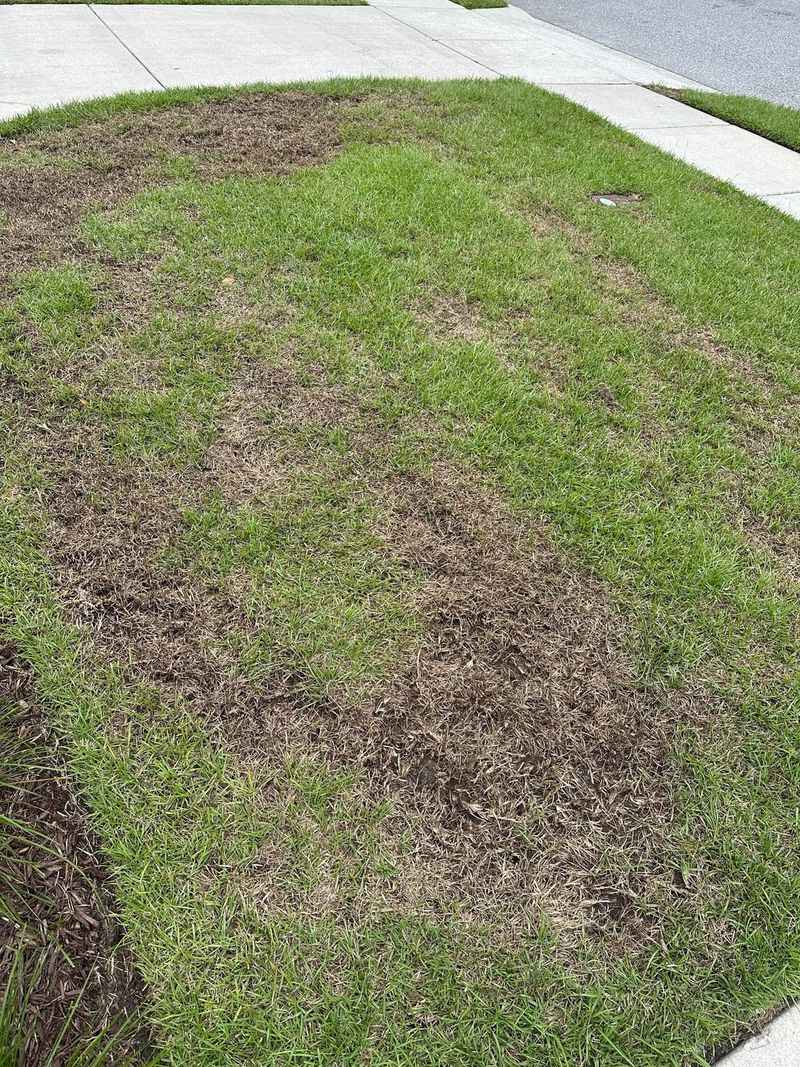
Not every square foot of turf faces equal risk. Armyworms tend to target specific conditions before spreading across an entire lawn.
Newly sodded or seeded areas draw the heaviest early feeding. Tender young grass blades are softer and easier for small larvae to chew through than established turf.
Sunny, south-facing sections heat up faster during the day. That extra warmth speeds up larval development, so populations in these spots often grow before anyone notices activity elsewhere.
Outdoor lighting plays an unexpected role too. Porch lights, streetlamps, and security floodlights attract adult moths at night, and females often lay eggs on nearby grass, fences, or siding within a few yards of the glow.
Lawns already stressed by drought or heavy foot traffic offer less resistance. Weakened turf recovers slower from feeding damage, so the same number of caterpillars can cause visibly worse patches in these areas.
Edges near driveways, sidewalks, and property lines deserve extra attention as well. Moths often land along these borders first before caterpillars fan out across the rest of the yard.
Checking these higher-risk zones first cuts down search time considerably. Instead of testing the entire lawn, homeowners can focus soap flushes on the sections most likely to reveal a problem early.
Knowing where to look is half the work. Georgia yards with a mix of new sod, bright outdoor lighting, and sunny exposure should move these areas to the top of every weekly check.
Acting Fast Saves The Rest Of The Yard
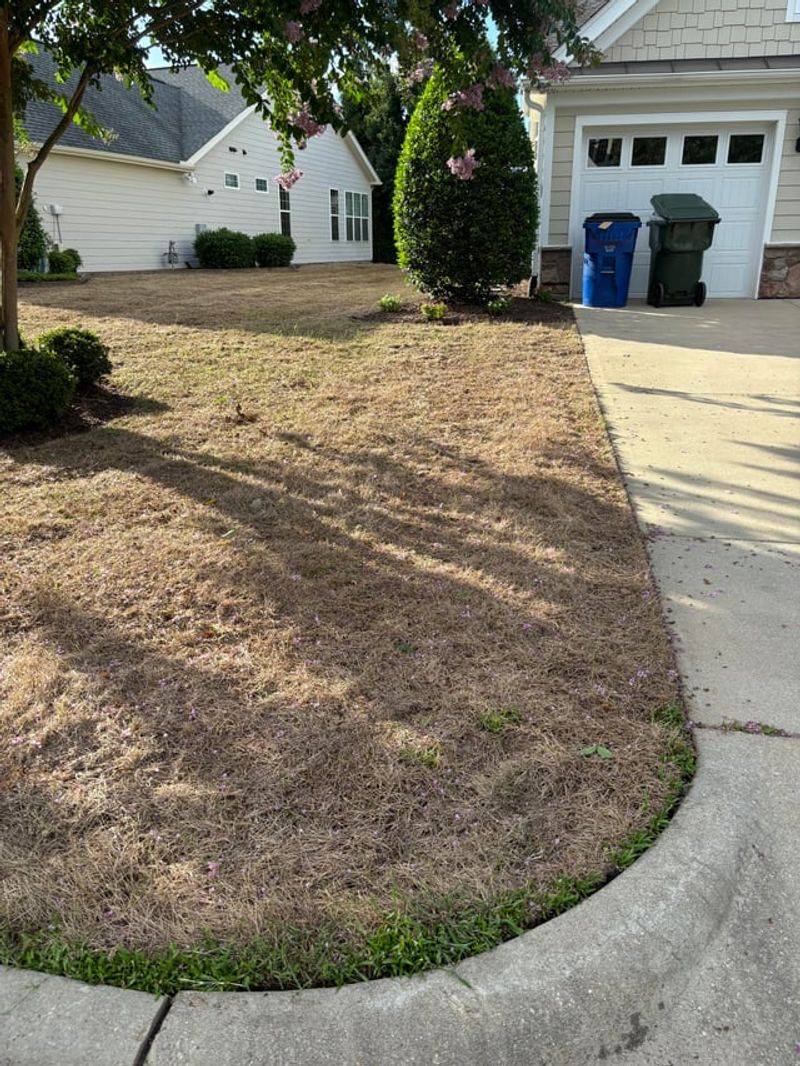
Speed is everything once armyworms are confirmed. These caterpillars can strip a lawn in as little as two to three days when populations are high enough.
Younger larvae are far easier to control than older ones. Catching the infestation in its early stages through the soap test gives treatments a much better chance of working.
Spinosad-based products are a popular choice for homeowners who prefer a lower-impact option. Spinosad is derived from naturally occurring soil bacteria and targets caterpillars effectively without heavy chemical exposure.
Synthetic pyrethroid insecticides also work well against armyworms. Products containing bifenthrin or lambda-cyhalothrin are widely available at garden centers and provide fast results.
Apply treatments in the late afternoon or early evening for best results. Armyworms feed most actively at night, so treating just before their peak feeding window maximizes product contact.
Water the lawn lightly before applying granular treatments. Moisture helps activate the product and carries it down into the thatch where caterpillars are sheltering during daylight hours.
After treatment, run the soap flush test again in five to seven days. A drop in caterpillar count confirms the treatment is working and the infestation is declining.
Early detection buys you options, late detection narrows them fast. Stay ahead of the timeline, and your lawn stays green well past fall.