The Firewise Shrub Spacing Mistake Arizona Homeowners Should Avoid
Shrubs planted too closely together may create the full landscape you want, but that dense growth can become a serious firewise concern. The space between plants matters more than it might seem.
As shrubs mature, branches can spread into nearby plants and turn separate plantings into one continuous mass. That changes how easily flames could move through the landscape.
Take another look at areas where your shrubs have grown together over time. What worked when they were small may no longer provide enough separation.
Firewise landscaping in Arizona requires thinking about mature plant size rather than only how everything looks today.
Spacing also becomes especially important around structures and other combustible materials.
Planning for open gaps can give shrubs room to grow while creating a landscape that is easier to maintain safely.
1. Crowded Shrubs Can Give Flames An Easier Path
Packed-in shrubs are one of the most overlooked fire hazards in residential yards. When plants grow shoulder to shoulder, flames can travel from one shrub to the next without slowing down.
That connected fuel load creates a fast-moving path straight toward your house.
Shrubs that touch or overlap act almost like a fuse. Heat builds between them, dry leaves collect in the gaps, and a single spark can set the whole row moving.
Yards with tight plantings give fire little resistance.
Spacing breaks that chain reaction. Even a modest gap between shrubs forces a fire to work harder to jump from plant to plant.
That extra effort can slow spread significantly, especially during low-wind conditions.
Hot, dry summers are common across the region, and shrubs dry out faster than most homeowners expect. Once moisture drops, even plants that seem green can catch quickly under the right conditions.
Crowded shrubs also hold more dry material inside. Branches shade each other, lower limbs drop leaves, and debris builds up in the center where air barely reaches.
That hidden dry fuel is harder to spot and harder to clean out.
Rethinking plant density is one of the most practical steps you can take. Fewer shrubs with proper spacing between them creates a yard that looks intentional and performs better in fire-prone conditions.
2. Leave Gaps Instead Of Creating One Continuous Hedge
A solid hedge looks tidy, but from a fire safety standpoint, it is one of the riskiest things you can plant near your home. Continuous plant material gives fire a runway.
Flames do not need to jump when everything is already connected.
Breaking up that line with visible gaps changes how fire behaves near your property. Gaps force flames to pause, lose momentum, and sometimes stop altogether before reaching the next cluster of plants.
That pause can matter enormously during a fast-moving brush fire.
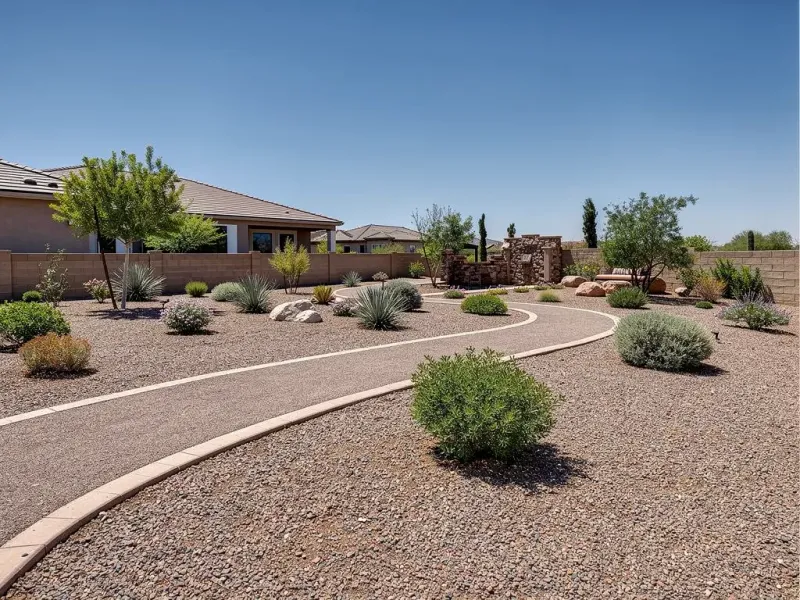
Gaps do not have to be large to be effective. Spacing shrubs two to three feet apart, based on their mature spread, can interrupt fuel continuity without making your yard look bare or unfinished.
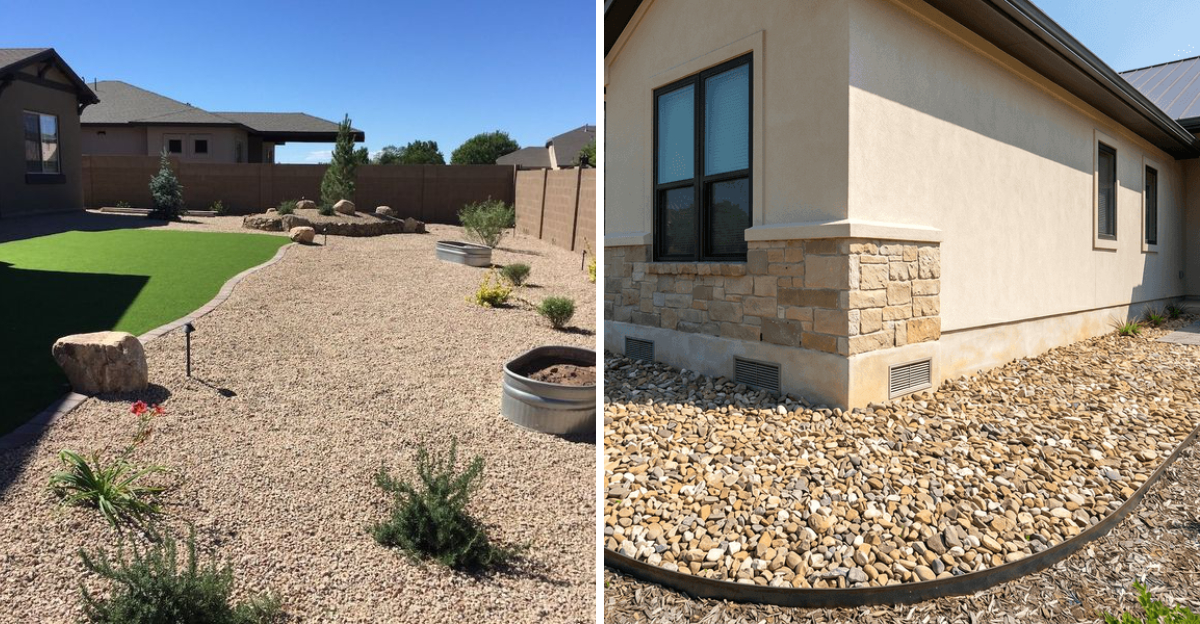
Gravel, pavers, or bare soil between plant groupings work well as natural breaks. These non-combustible materials do not feed flames, so fire has nothing to grab onto as it moves through that space.
Your Arizona Garden Changes Every Week. Your Plan Should Too.
Gardening in Arizona changes quickly throughout the season. Every Friday you’ll receive a simple weekly plan showing exactly what to plant, prune, fertilize, harvest, and protect so you never miss the right timing.
Homeowners often plant hedges for privacy, which makes sense. But privacy and fire safety can coexist.
Staggered groupings of shrubs can block sightlines just as effectively as a solid hedge while still maintaining the spacing that reduces risk.
Rethinking the hedge as a series of smaller clusters rather than one long wall is a practical shift. It keeps your yard functional, visually appealing, and meaningfully safer when fire conditions tighten.
3. Use Mature Plant Size To Plan The Right Distance
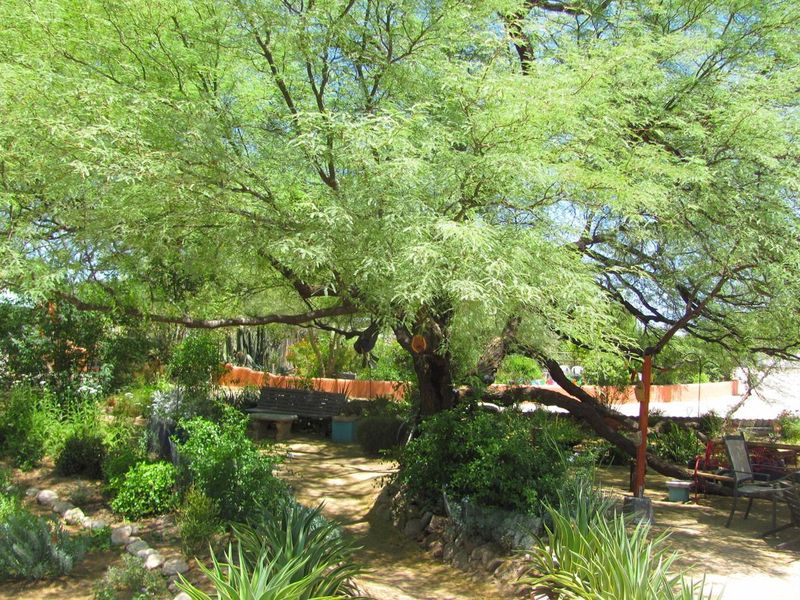
Planting by mature size is something most homeowners skip entirely. A shrub that looks small at the nursery can spread three, four, or even five feet wide once it reaches full growth.
Spacing based on how a plant looks at purchase almost guarantees future crowding.
Check the plant tag before buying. Look for the mature width, not just the height.
That number tells you the minimum space each plant will eventually claim. Use it to calculate how far apart plants should sit from day one.
A common rule in firewise landscaping is to space shrubs so that at maturity, a gap at least equal to the plant’s height exists between each one. That gap reduces fuel continuity without leaving your yard looking empty in the meantime.
Newly planted shrubs with wide spacing between them may look sparse for a season or two. That is normal.
Resist the urge to fill those gaps with more plants. Overcorrecting early leads to exactly the crowding you are trying to prevent.
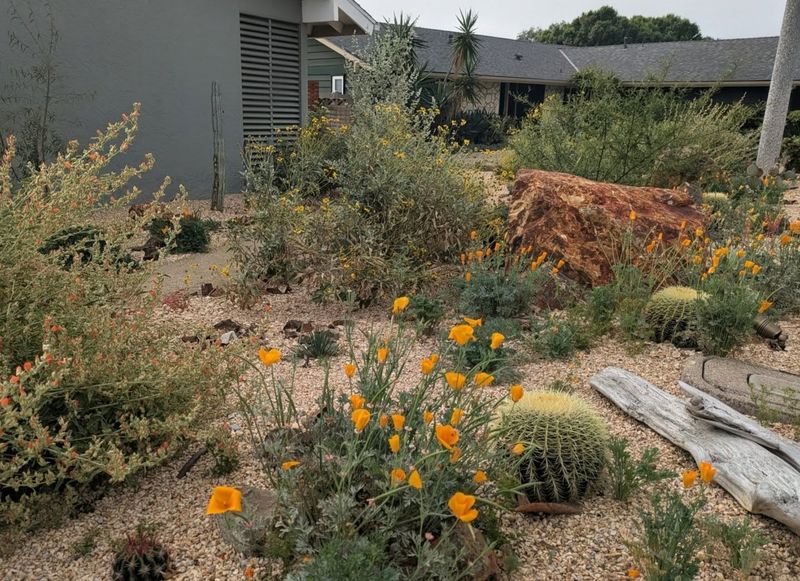
Use low groundcovers, decomposed granite, or decorative rock to fill visual gaps while young plants establish. These materials hold the space without adding combustible material between shrubs.
Planning around mature size takes a little patience but saves significant effort later. Correcting overcrowded plantings after the fact means removing established plants, which is far more work than spacing them correctly from the start.
4. Trim Overgrowth Before Those Open Spaces Disappear
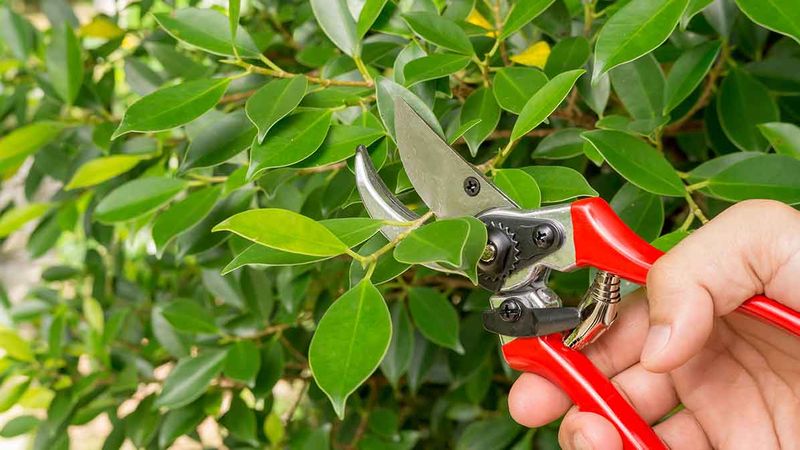
Spacing only works if you maintain it. Shrubs do not stop growing once you plant them.
Over a season or two, branches reach outward, plants lean toward each other, and those carefully planned gaps start to close without much warning.
Regular trimming keeps spacing intact. Pruning back to the plant’s intended footprint prevents gradual creep that slowly reconnects your fuel load.
Catching growth early is far less work than cutting back a shrub that has fully merged with its neighbor.
Late winter or early spring is generally a good time to trim most desert shrubs before the heat of summer sets in. Avoid heavy pruning in extreme heat, since stressed plants in hot, dry conditions can struggle to recover as quickly.
Pay attention to the interior of each plant as well. Removing dry or damaged branches and thinning dense centers reduces the hidden dry material that builds up inside overgrown shrubs.
That interior debris is often the first thing to catch when embers land nearby.
Look at the ground beneath each shrub too. Leaf litter, dropped twigs, and dry debris accumulate fast in the desert.
Raking that material out from under plants and disposing of it regularly removes fuel that fire can use to establish itself before spreading upward.
Keeping your spacing plan alive takes consistent effort through the growing season.
5. Avoid Woody Shrubs Within The First Five Feet
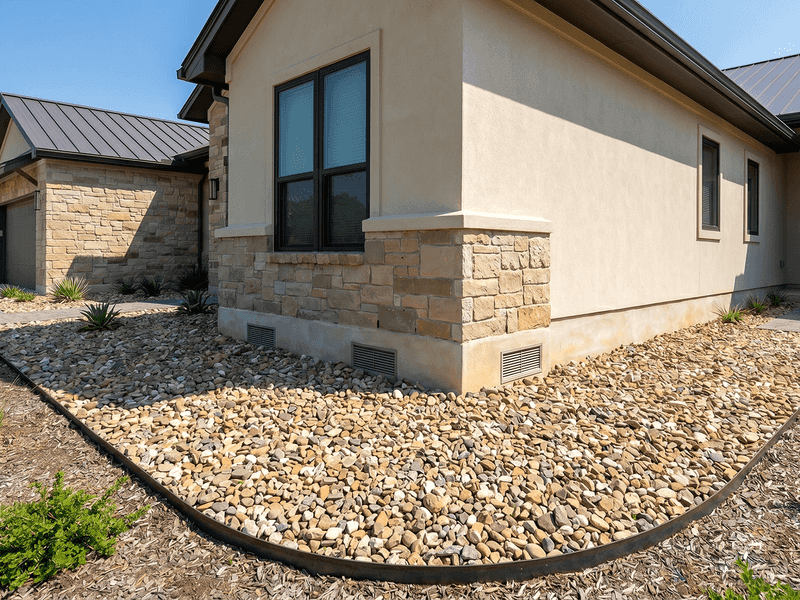
Woody shrubs planted right against your house are a serious concern. The area within five feet of your foundation is considered the highest-risk zone in firewise landscaping.
Anything combustible in that space can ignite quickly and carry flames directly to your structure.
Woody plants hold dry material year-round. Old stems, peeling bark, and accumulated leaf debris make them particularly prone to catching under spark exposure.
When they sit inches from siding or stucco, the margin for error shrinks fast.
Keeping that five-foot zone free of woody shrubs is one of the most straightforward changes a homeowner can make. It does not require a full yard overhaul, just a clear boundary closest to the house.
Succulents with high moisture content, river rock, gravel, or concrete pavers are all solid alternatives for that inner zone. These materials add curb appeal without adding combustible fuel near your walls or windows.
Some homeowners plant low-water succulents like agave or aloe within that space. These plants retain moisture in their tissue and are generally considered lower-risk options compared to dry, woody material.
That said, even succulents can burn under extreme heat, so no plant is entirely without risk.
Treating the first five feet as a non-combustible buffer zone is a practical mindset shift. Once established, that clear perimeter requires minimal upkeep and provides meaningful protection near the most vulnerable part of your home.
6. Break Up Plantings With Gravel Or Hardscape
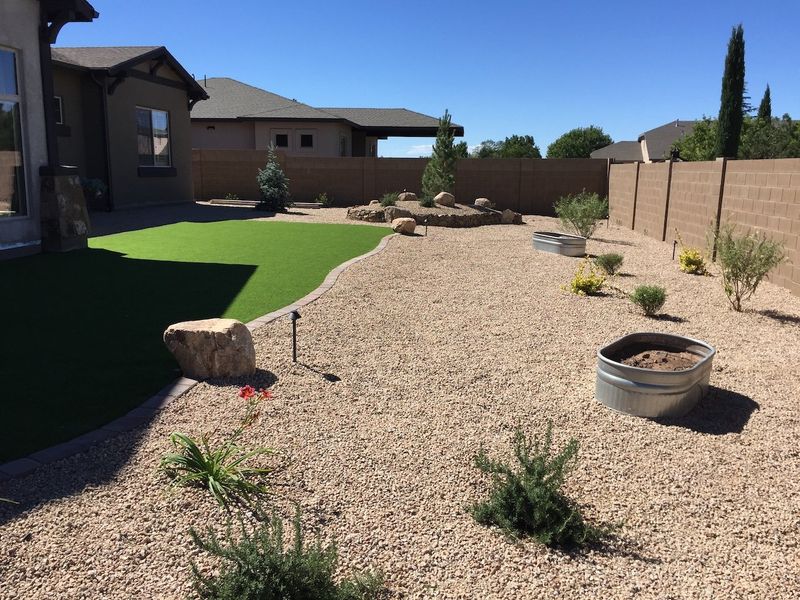
Gravel and hardscape are underrated fire safety tools. Most people think of them as purely decorative, but between plant groupings, they serve a critical function.
Non-combustible surfaces interrupt the fuel path that fire relies on to move across a yard.
Wide gravel paths, flagstone borders, or concrete stepping zones between shrub clusters create physical breaks that flames cannot easily cross. Fire needs fuel to keep moving.
Remove the fuel, and forward movement slows or stops.
Decomposed granite is one of the most practical options in desert settings. It drains well, stays in place, suppresses weeds, and does not contribute to fire spread.
Spreading it generously between plant groupings is both a practical and affordable upgrade.
Pavers serve double duty. They create walkable paths through the yard while also acting as non-combustible buffers between planting beds.
Wider paths between beds offer more protection than narrow decorative strips.
Bark mulch is a common alternative in many regions, but it carries higher fire risk than gravel or rock. Bark dries out quickly in hot weather and can smolder or catch from embers.
Swapping bark for inorganic mulch in fire-prone areas is a practical improvement worth considering.
Hardscape also reduces maintenance. Less planted surface means less watering, less pruning, and fewer leaves to rake.
Combining fire safety with lower upkeep makes this one of the more rewarding changes you can make to a yard in a fire-prone area.
7. Allow Extra Separation When Your Yard Slopes
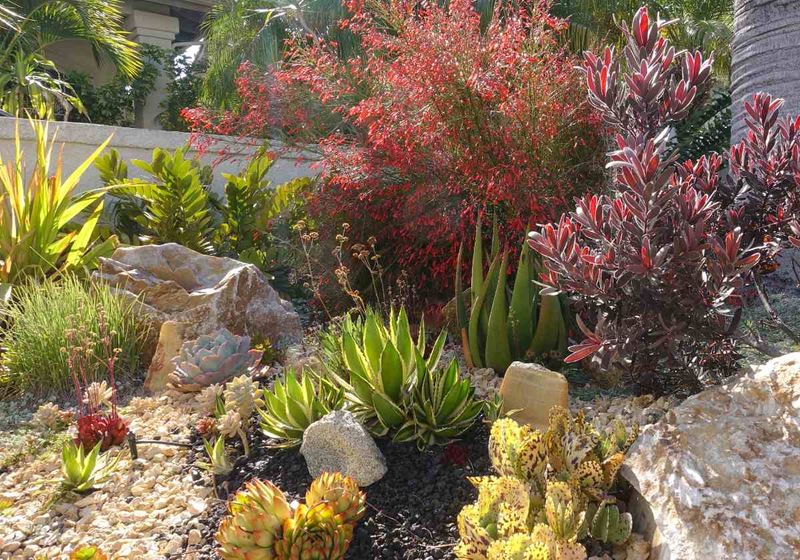
Slope changes everything when it comes to fire behavior. Fire moves uphill faster than it moves across flat ground because heat and flames naturally rise.
A yard that slopes toward your home creates a situation where fire can accelerate as it climbs.
Standard spacing recommendations apply to flat ground. On a slope, those distances need to increase.
The steeper the grade, the more separation you need between shrubs to compensate for faster uphill fire movement.
A general guideline from firewise resources suggests increasing spacing by roughly one-third on moderate slopes and by half or more on steeper terrain.
These are starting points, not fixed rules, since slope, wind patterns, and plant type all interact differently.
Shrubs planted on a downhill slope below your home are a particular concern. Flames climbing toward the house gain speed and intensity as they rise.
Keeping that downhill zone especially clear or minimally planted is worth the trade-off in visual coverage.
Retaining walls, rock terracing, and hardscape steps can help manage slope while also breaking up continuous fuel paths. Structuring the yard in levels with non-combustible materials between each tier adds meaningful protection on graded properties.
Many desert communities in Arizona sit on uneven terrain, making slope a real and common factor for homeowners.
Factoring grade into your spacing plan from the beginning is far easier than trying to correct it after plants are well established and the yard is fully landscaped.