Why Pomegranates Are Splitting Open In Arizona Yards Right Now
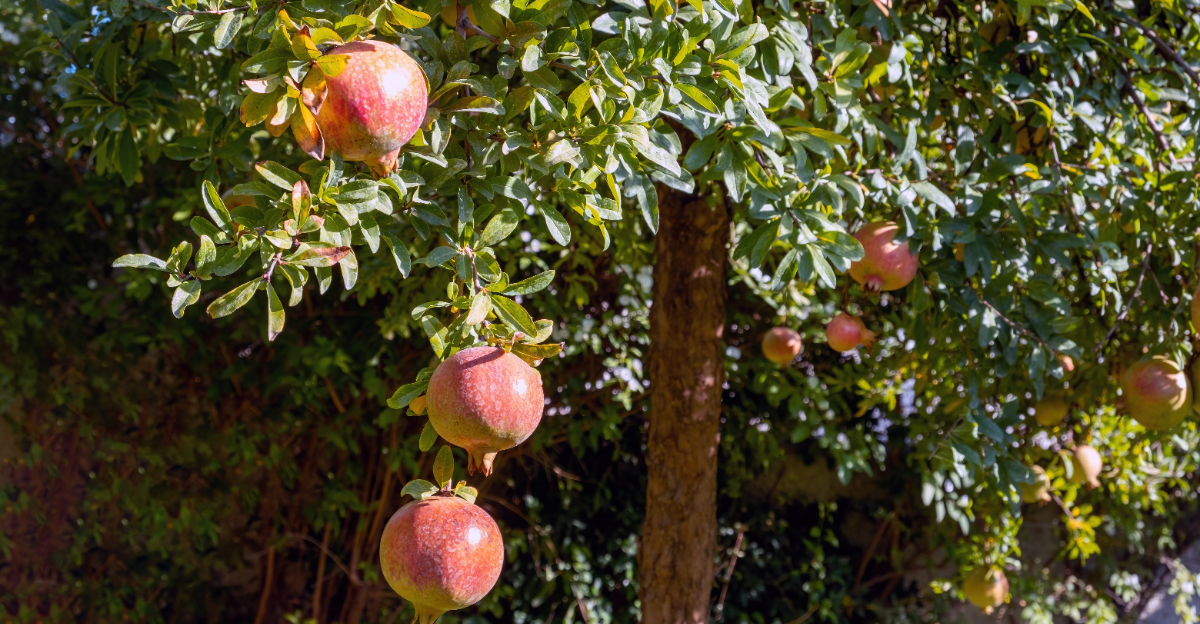
Finding a nearly ripe pomegranate cracked wide open can be frustrating, especially after watching it develop for months. When several fruits start doing this together, something around the tree deserves your attention.
The split may seem sudden, but the conditions behind it often begin before the skin finally breaks. Changes around the roots and fruit can play an important role.
Before blaming pests or assuming the crop is ruined, look at what your tree has experienced recently. Arizona weather can create challenging conditions as pomegranates move closer to harvest.
How you care for the tree during this period matters too. Small adjustments may help protect fruit that is still developing.
Pay close attention when conditions shift quickly around your yard.
Those cracked fruits can offer useful clues about what your pomegranate tree needs now.
1. Sudden Moisture Changes Are Often Behind Cracked Fruit
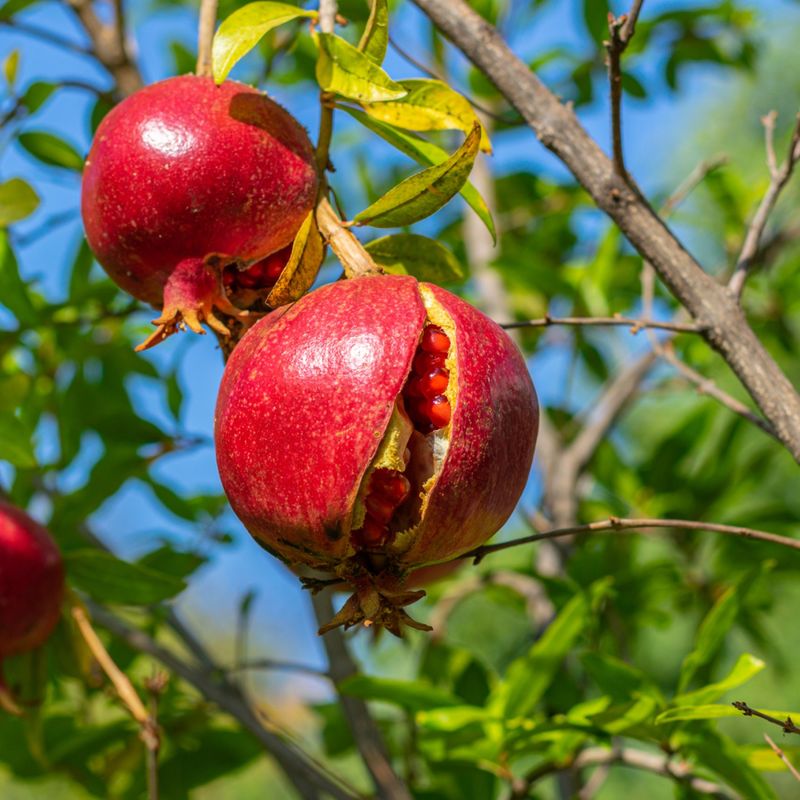
Crack a pomegranate open too fast and you will see exactly what happens in your yard. When a tree gets very little water for a stretch of time, then suddenly receives a big drink, the inside of the fruit swells up quickly.
The outer rind cannot stretch fast enough to keep up.
That pressure gap is what causes the split. Fruit that has been slowly drying out is especially vulnerable because the rind gets a little stiff and rigid.
Once water rushes in, there is nowhere for the expansion to go except outward.
Moisture swings are one of the most common reasons pomegranates crack in home yards. Irregular watering schedules, skipped irrigation days, or even a neighbor’s runoff can all create that sudden shift.
The fruit does not need much to tip over the edge.
Keeping your watering consistent is the most practical thing you can do. Even small improvements to your schedule can reduce the number of split fruits at harvest.
A slow, steady approach gives the rind time to grow along with the interior pulp, which lowers the chance of cracking significantly.
2. Monsoon Rain Can Make The Problem Worse
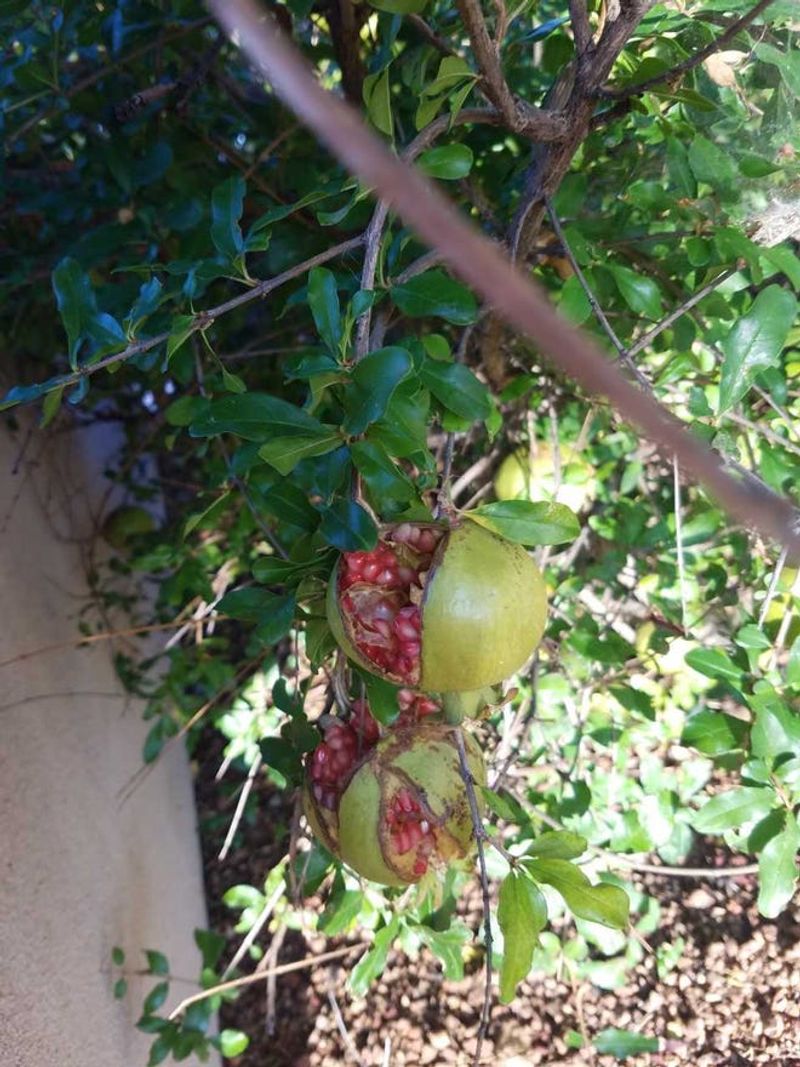
Monsoon season hits hard and fast, and your pomegranate tree feels every drop of it. After weeks of dry heat, a sudden downpour can dump more water in one afternoon than the soil has seen in a month.
Roots soak it all up quickly, and that moisture moves straight into the fruit.
Ripe or near-ripe pomegranates are at the highest risk during these storms. The rind is already stretched close to its limit by that point.
A heavy rain event can push it right past that limit within a day or two.
Monsoon storms in the Southwest are not gentle. They can be intense and clustered together over several weeks, which means the soil never fully dries out between events.
That repeated soaking creates the exact moisture spike cycle that leads to cracking.
You cannot control the rain, but you can adjust your drip irrigation schedule during monsoon weeks. Cutting back on supplemental watering when storms are expected can help balance out the total moisture your tree receives.
Your Arizona Garden Changes Every Week. Your Plan Should Too.
Gardening in Arizona changes quickly throughout the season. Every Friday you’ll receive a simple weekly plan showing exactly what to plant, prune, fertilize, harvest, and protect so you never miss the right timing.
Checking weather forecasts before running your irrigation system is a simple habit that can save a good portion of your fruit before it splits open.
3. Dry Soil Followed By Water Puts Pressure On The Rind
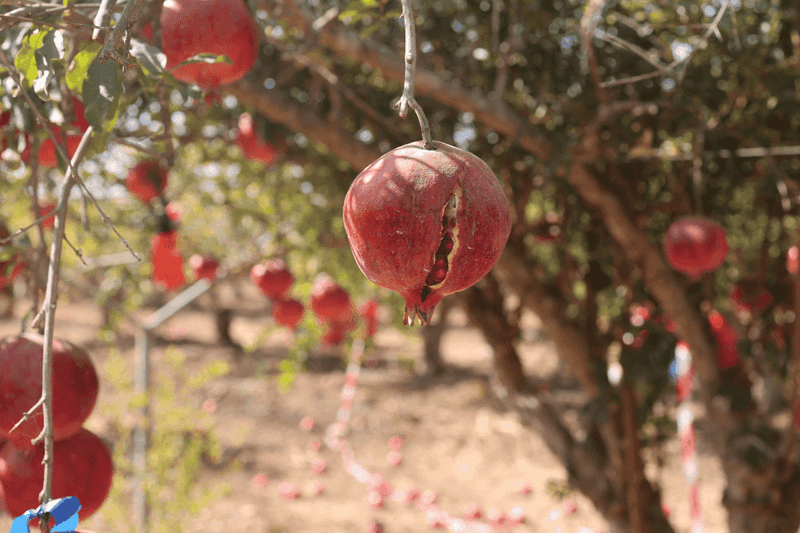
Bone-dry soil does not just stress the roots. It sets up a chain reaction that ends with cracked fruit.
When the ground around your tree gets extremely dry, the roots pull back from their usual intake rhythm. Then water arrives and everything shifts at once.
Roots absorb moisture rapidly after a dry spell. That sudden intake sends a surge of water up into the fruit, where the pulp and seeds swell against the rind from the inside.
A rind that has been sitting in dry conditions becomes less flexible over time.
Soil type matters here too. Sandy or rocky ground drains fast and dries out between waterings more quickly than loamy soil.
In many Arizona yards, the native soil holds very little moisture, which makes the swing between dry and wet even more extreme.
Watering deeply but less frequently is often more effective than frequent shallow watering. Deep watering encourages roots to go down rather than staying near the surface where soil dries out fastest.
When roots have access to steadier moisture deeper in the ground, the tree is less likely to experience the extreme uptake spikes that lead to splitting.
4. Ripening Fruit Is More Likely To Split
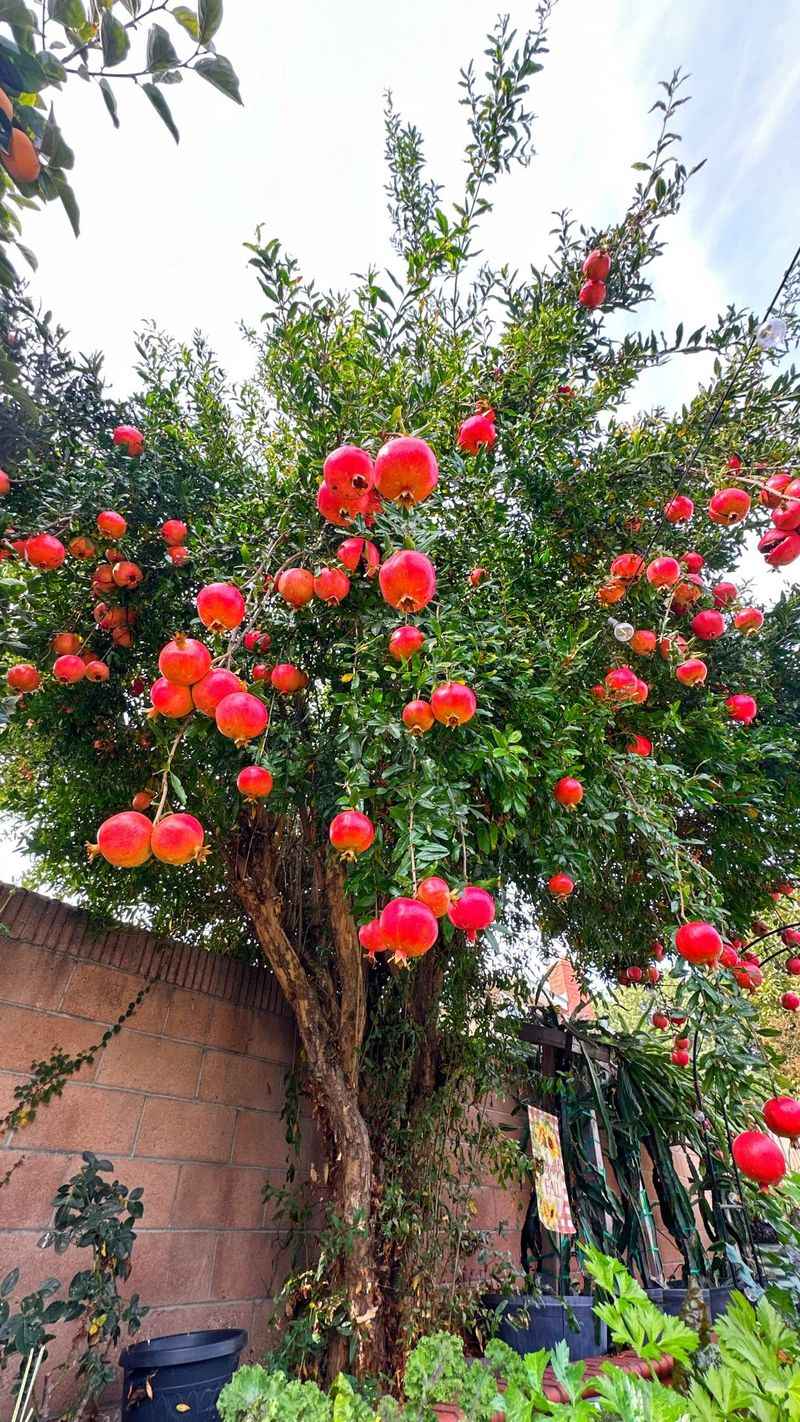
Right before harvest is actually the riskiest time for splitting. Pomegranates near full ripeness have packed in as many seeds and as much juice as they can hold.
The rind is stretched tight, and there is very little room left for any additional swelling.
Earlier in the season, fruit has more flexibility because it is still growing and the rind is actively expanding. As ripening wraps up, that growth slows down, but the rind does not suddenly get tougher.
Any moisture spike at that stage hits differently than it would a month earlier.
Color and size are useful clues. Fruit that has turned deep red and feels heavy for its size is likely close to ripe.
Watching your tree closely during the final weeks before harvest can help you catch fruit before it splits wide open.
Picking pomegranates slightly early is a practical option if splitting is a recurring issue. Fruit picked just before full ripeness will often continue to develop indoors.
Leaving fruit on the tree too long past peak ripeness also increases cracking risk, so timing your harvest carefully matters.
Checking the tree every few days during late summer and early fall gives you a better shot at bringing in fruit that is still intact and usable.
5. Steady Watering Helps Prevent Big Moisture Swings
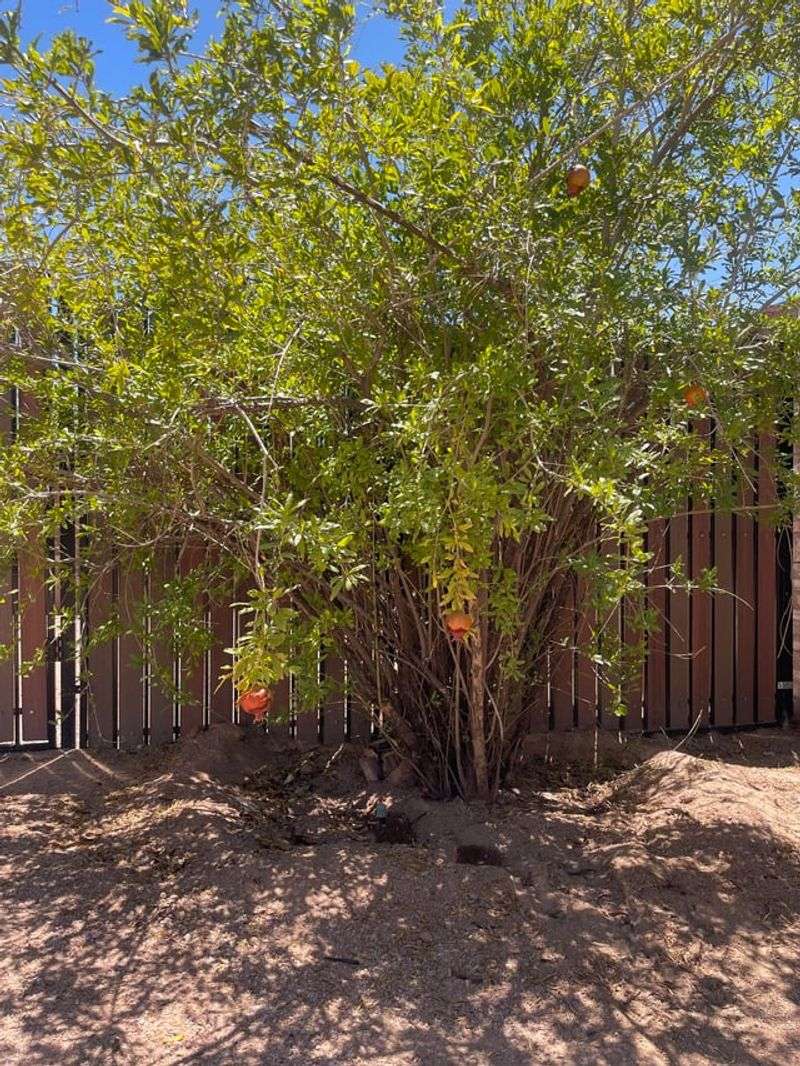
Consistency is genuinely one of the most useful tools a home gardener has against pomegranate splitting. Watering on a regular schedule keeps the soil moisture level from swinging too far in either direction.
Fruit that grows in steady conditions tends to crack far less than fruit that experiences feast-and-famine cycles.
Drip irrigation works well for pomegranates because it delivers water slowly and directly to the root zone. Slow delivery gives the soil time to absorb moisture evenly rather than flooding the surface and running off.
Most drip systems can be set on a timer, which removes the guesswork from your watering routine.
During the hottest months, evaporation pulls moisture out of the soil faster than most people expect. Watering frequency may need to increase in peak summer heat to keep the soil from drying out too much between sessions.
Adjusting your schedule seasonally is a reasonable approach rather than sticking to one fixed setting year-round.
A soil moisture meter is an inexpensive tool worth having if you want to take the guesswork out of it. Checking moisture levels before each watering session gives you real information instead of estimates.
Over time, you will get a feel for how quickly your specific soil and yard conditions shift, which makes it easier to stay ahead of the problem before splitting becomes a regular issue.
6. Mulch Can Help The Soil Stay Evenly Moist
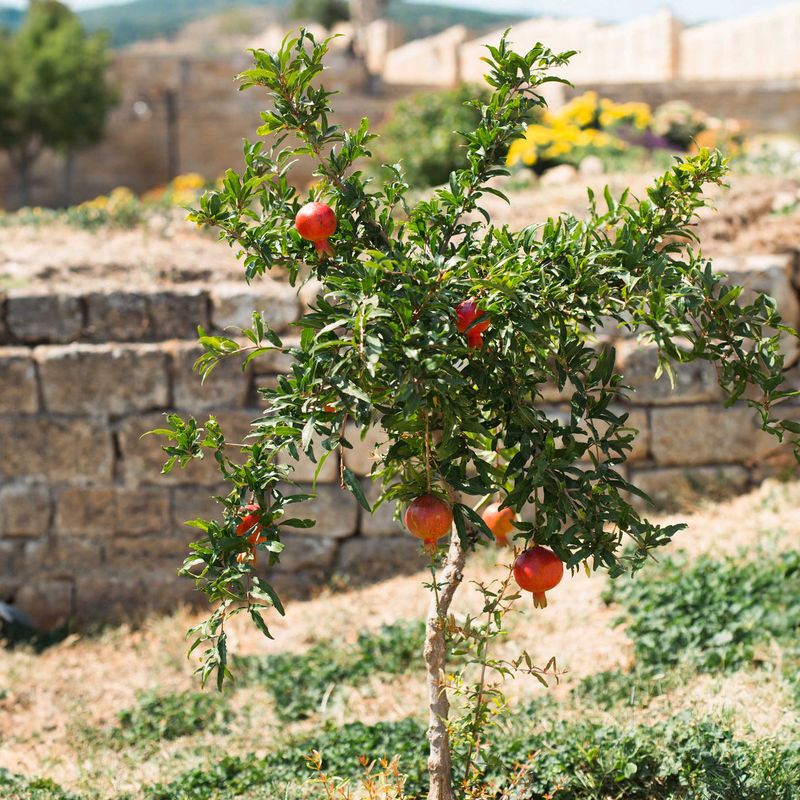
Mulch is a simple addition that can make a real difference in how stable your soil moisture stays. Spreading a few inches of organic mulch around the base of your pomegranate tree slows down evaporation from the soil surface.
Less evaporation means the ground holds onto moisture longer between watering sessions.
Wood chips, straw, and shredded bark are all reasonable options. Avoid piling mulch directly against the trunk, which can hold too much moisture against the bark and cause other problems.
Keep a small gap between the mulch layer and the base of the tree.
In hot, sunny yards, bare soil can dry out surprisingly fast even after a good watering. Mulch acts as a buffer against that rapid drying.
It also helps moderate soil temperature, which can run extremely high in full-sun desert yards during summer months.
A mulch layer does not replace consistent watering, but it does make your watering more effective. The moisture you put into the ground stays available to the roots longer, which smooths out the peaks and valleys that lead to splitting.
Even a two-inch layer can noticeably extend how long the soil stays workably moist after irrigation. Refreshing the mulch once or twice a year helps it keep doing its job as it slowly breaks down into the soil over time.
7. Check Split Fruit Before Bringing It Inside
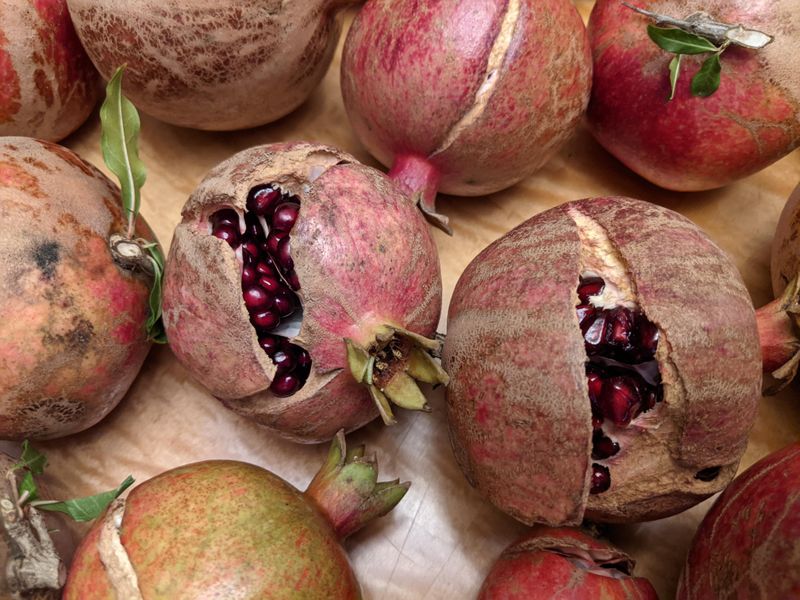
A split pomegranate is not automatically ruined. Some cracked fruit is still perfectly good on the inside, especially if the split just happened and the seeds look clean and bright.
Getting to the fruit quickly after it cracks gives you the best chance of salvaging it.
Fruit that has been open for more than a day or two is more likely to have taken on moisture, attracted insects, or started to ferment. Smell and visual inspection are your best tools.
Seeds that look shriveled, discolored, or smell off should not be eaten.
Birds and insects move in fast once a pomegranate cracks open. Checking your tree every couple of days during ripening season helps you catch split fruit before it becomes a problem.
A quick walk through the yard in the morning takes very little time and can save a surprising amount of fruit.
Cut away the cracked section if it looks compromised, and check the remaining seeds inside. Healthy-looking seeds that smell fresh and taste sweet are generally fine to use.
Split fruit can be juiced, used in cooking, or eaten right away without waiting. Leaving cracked fruit on the tree hoping it will seal up is not a reliable strategy.
Harvesting promptly and sorting carefully is the most practical approach when splitting is already underway in your yard.