The 8 Peony Problems Ohio Homeowners Should Not Confuse With Powdery Mildew
White coating on Ohio peony leaves in late summer and the diagnosis comes fast. Powdery mildew.
Treatment goes on. Nothing improves.
Because it was never powdery mildew. Peonies develop several late season problems that look identical from three feet away.
Different causes, different fixes, and a habit of getting misidentified by gardeners who stopped looking closely enough to tell them apart. The wrong treatment wastes time.
Sometimes it makes the actual problem worse. And the peony that needed something specific arrives at spring having received something completely different.
Several peony problems wear the same white costume in late summer. Knowing which one is actually on the plant changes everything about what happens next.
1. Gray Fuzz Can Point To Botrytis Instead
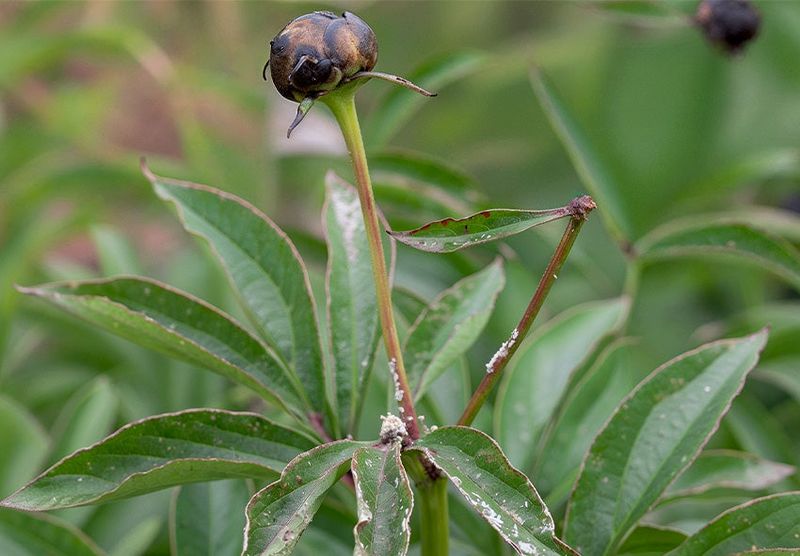
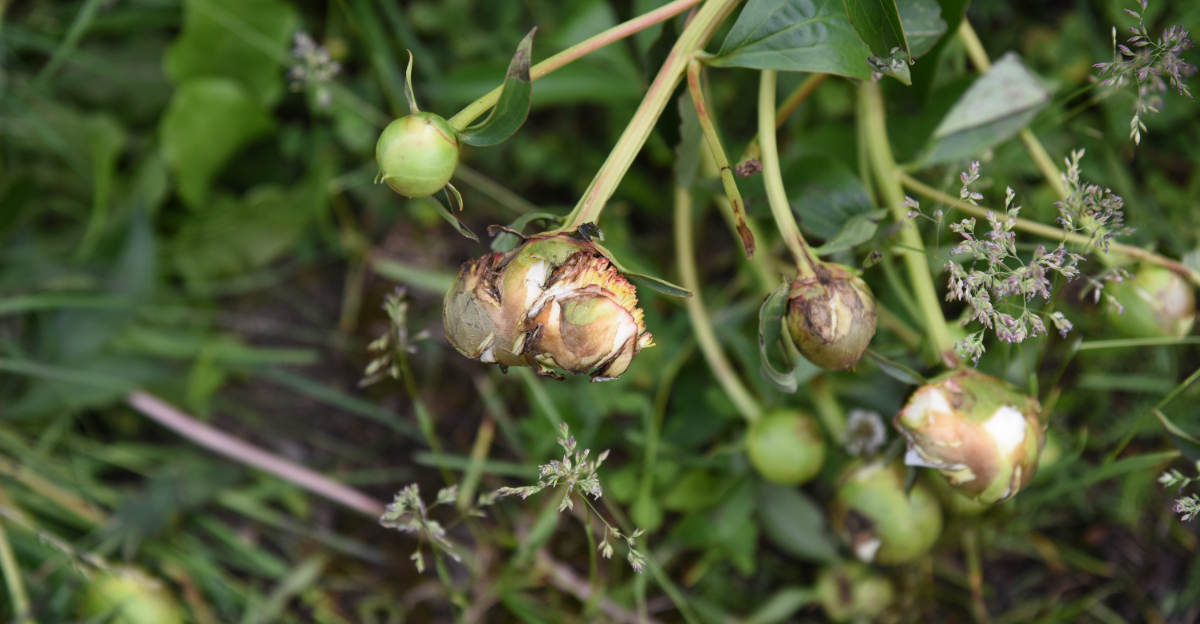
A collapsed peony bud surrounded by a thick, gray, fuzzy mass is one of the more unsettling sights in a spring garden. That texture alone sets it apart from powdery mildew.
Powdery mildew tends to appear as a relatively thin, powdery coating on leaf surfaces. What you are seeing here is something different in both appearance and behavior.
Botrytis blight, caused by the fungal pathogen Botrytis paeoniae and sometimes Botrytis cinerea, can affect young shoots, stems, leaves, flower buds, and open flowers. The gray fuzzy growth is fungal sporulation, but the tissue beneath it matters just as much as what sits on top.
Botrytis typically involves actual tissue damage, including darkened, collapsed, or water-soaked areas under or around the fuzz. Powdery mildew, by contrast, is more characteristically a surface coating without the same degree of underlying tissue collapse.
Moist conditions can favor Botrytis development, though infection involves more than simply wet weather. If Botrytis is suspected, removing and disposing of infected plant material is a commonly recommended step.
Do not compost diseased tissue. Avoid leaving debris around the base of the plant through the growing season.
If symptoms are severe, widespread, or unclear, contact an Ohio State University Extension office or plant diagnostic laboratory. They can help provide a more reliable answer before you take further action.
2. Purple Blotches Are A Clue To Peony Measles
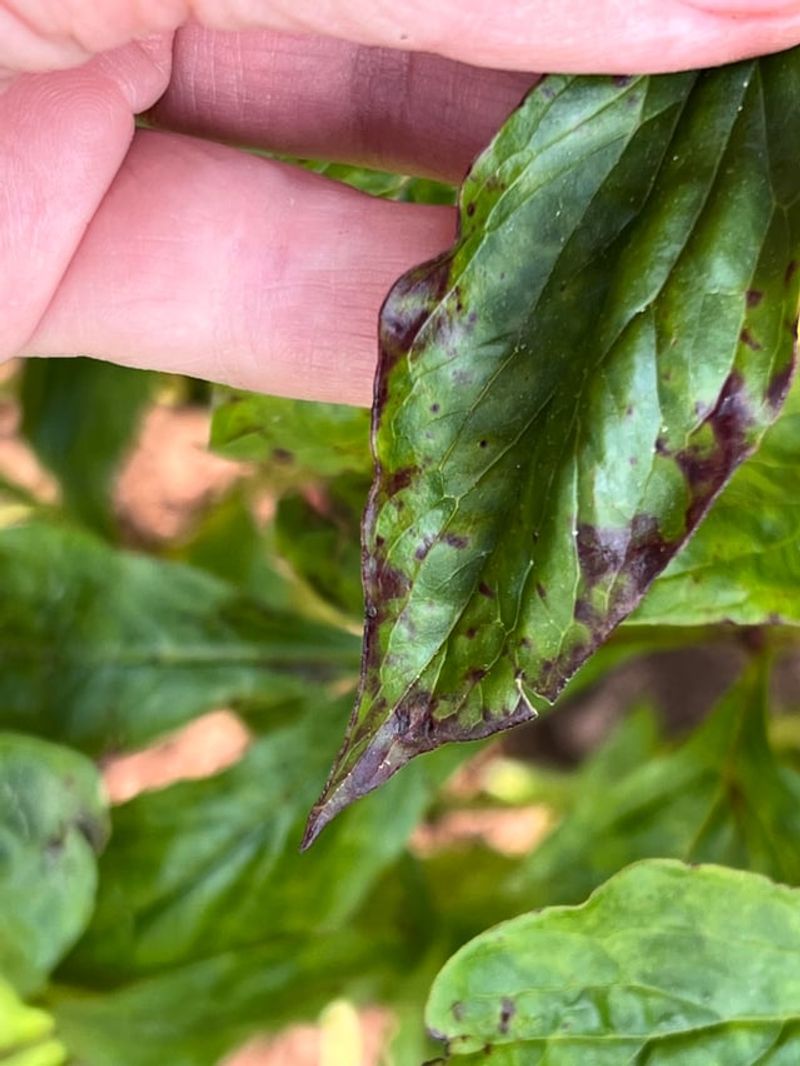
A glossy, reddish-purple lesion spreading across a peony leaf has a very different appearance from any kind of powdery growth. The color alone is a useful clue.
Peony leaf blotch, sometimes called red spot or measles, produces discrete colored lesions rather than a loose surface coating of any kind.
The causal organism is Cladosporium paeoniae, and the resulting spots or blotches can appear red, reddish-purple, or brownish on leaf surfaces. Lesions may also develop on stems.
One characteristic that can help separate this from powdery mildew is the quality of the discoloration. Leaf blotch lesions often appear somewhat glossy or defined, while powdery mildew produces a dull, dusty-looking surface film.
These are fundamentally different types of symptoms.
Late-season leaf blotch infections are sometimes mainly cosmetic and may not significantly affect plant vigor that year. Repeated infections over several seasons, however, can weaken a plant over time.
Not every purple or reddish patch on a peony leaf means leaf blotch. Other causes can alter foliage color, including environmental stress or other pathogens.
Your Ohio Garden Changes Every Week. Your Plan Should Too.
Gardening in Ohio changes quickly throughout the season. Every Friday you’ll receive a simple weekly plan showing exactly what to plant, prune, fertilize, harvest, and protect so you never miss the right timing.
If lesions are spreading aggressively or symptoms are unclear, contact a university plant diagnostic service. That gives you a more grounded starting point than relying on a visual guess.
Sanitation, including removing and discarding infected leaves and stems at the end of the season, is generally supported by Ohio Extension guidance.
3. Spreading Brown Lesions May Be Anthracnose
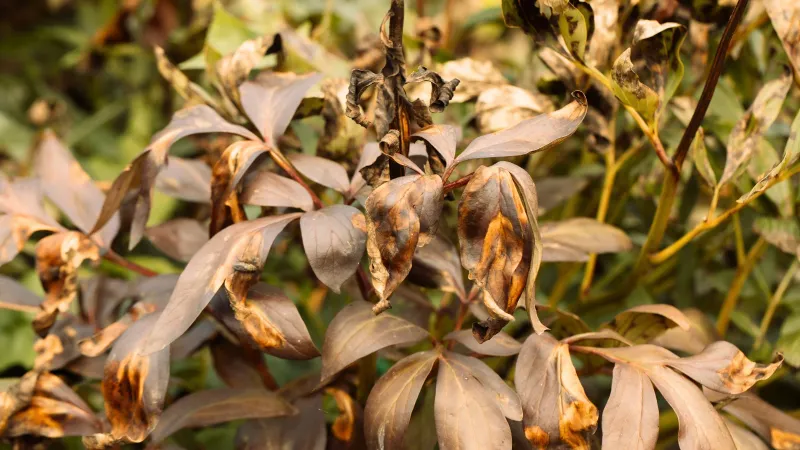
Brown tissue on a peony leaf can come from several sources, and that is exactly why a single symptom rarely points to one answer. Anthracnose is reported on peonies and can produce brown spots or expanding lesions on leaf tissue and sometimes on stems.
Anthracnose is worth distinguishing from powdery mildew because the symptoms differ. Powdery mildew creates surface fungal growth, while anthracnose produces lesions that may expand and merge over time.
Even so, brown lesions alone are not enough to identify anthracnose with confidence. Peony leaf blotch, Botrytis, environmental injury, and other problems can all create brown or damaged tissue.
The pattern of the lesion, its margins, and whether it is expanding in a particular way may offer additional clues. Fruiting structures of the pathogen can sometimes appear on lesion surfaces.
Accurately identifying them usually requires laboratory examination rather than a backyard inspection.
If brown lesions are spreading, affecting much of the plant, or accompanied by stem damage, consider sending a sample for diagnosis. A university plant diagnostic laboratory is a reasonable option.
Trying to manage a disease without a reliable diagnosis can lead to treatments that miss the actual cause. A diagnostic service can examine the lesion characteristics more closely.
It can help confirm whether anthracnose or another problem is responsible for what you are seeing.
4. Black Sunken Stems Can Signal Phytophthora
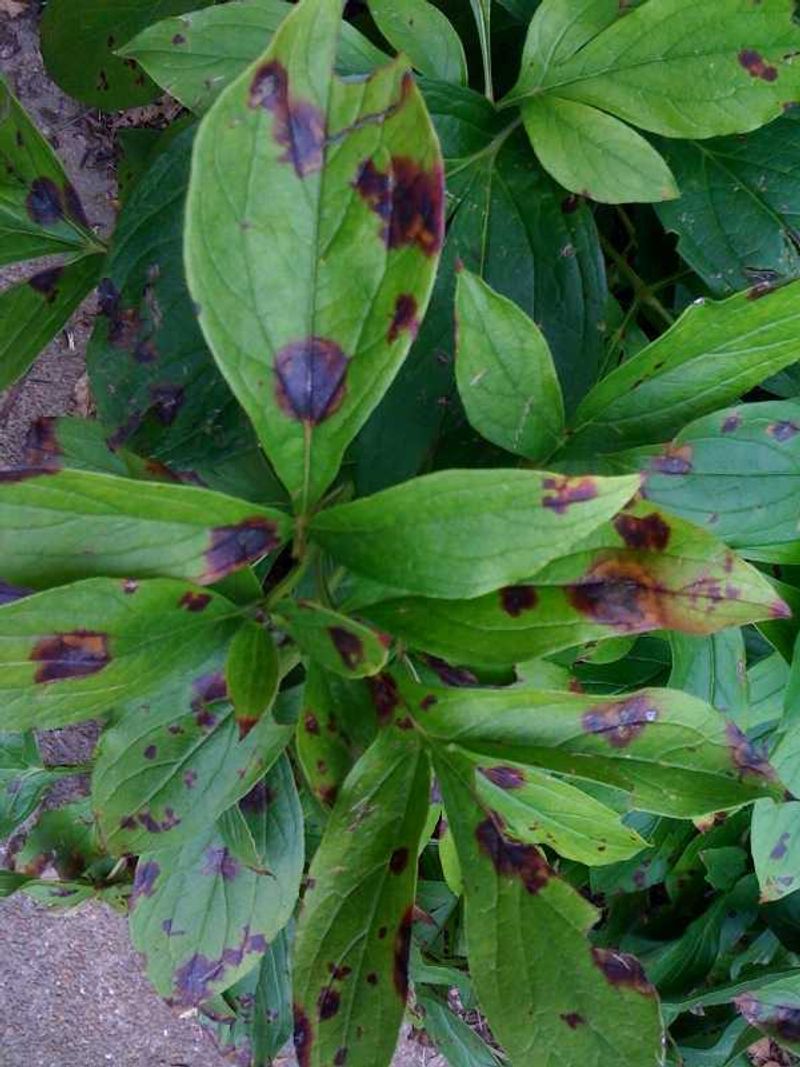
Dark, sunken tissue beginning near the base of a peony stem is a symptom pattern that deserves careful attention. It is also one that differs substantially from anything powdery mildew produces.
Powdery mildew appears on leaf and stem surfaces as a coating. A collapsing or blackened stem with sunken lesions near the crown points toward a very different category of problem.
Phytophthora blight is associated with water mold pathogens in the genus Phytophthora. In peonies, it may cause darkened stems, sunken lesions, wilting shoots, and crown tissue damage.
Poorly drained soils and waterlogged conditions can favor disease development, but wet soil alone does not mean Phytophthora is present. A pathogen must be there for infection to occur.
Improving drainage can reduce conditions that favor the disease, but it will not reverse damage in a plant that is already severely affected.
Other stem diseases, including Botrytis, can also darken peony tissue, so a black stem is not automatically a Phytophthora diagnosis. If crown infection is suspected and the plant is declining rapidly, laboratory diagnosis is appropriate.
Do not rely on a photograph alone to separate Phytophthora from other stem diseases. Stem base condition, soil drainage history, and crown tissue appearance all contribute useful information.
An Ohio State University Extension office can help connect you with a diagnostic laboratory if needed.
5. A Wilting Plant May Be Fighting Verticillium
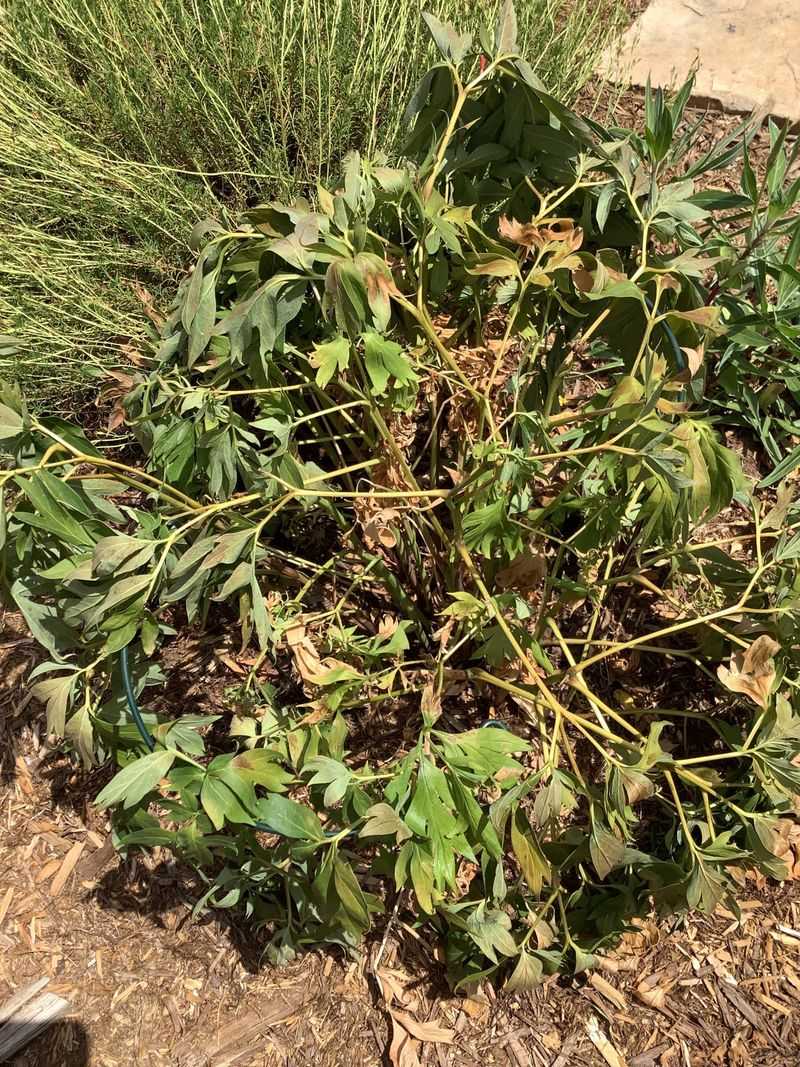
One section of a peony wilting while the soil nearby still feels moist raises questions that watering alone cannot answer. Wilt is one of the most non-specific symptoms a plant can show.
Drought, excess moisture, root injury, crown disease, and vascular pathogens can all produce wilting under different circumstances.
Verticillium wilt is documented as a problem that can affect peonies. The pathogen invades vascular tissue and interferes with water movement through the plant.
This is fundamentally different from powdery mildew, which is primarily a surface phenomenon. A plant affected by Verticillium may wilt progressively, sometimes on one side or one section before spreading.
Vascular discoloration inside stems has been associated with Verticillium in some plants. Accurately identifying it in peonies requires careful examination rather than a casual cut.
Do not assume wilt means Verticillium without ruling out other causes first. Check soil moisture, look at the crown for signs of rot, and consider recent weather patterns.
Temporary midday wilt during heat is not the same as persistent wilt that continues through cooler parts of the day.
If wilt persists without a clear water-related explanation, and especially if the plant is declining despite reasonable care, laboratory diagnosis may be appropriate.
An Ohio university diagnostic service can examine root and stem tissue more thoroughly than a visual inspection in the garden allows.
6. White Cottony Growth Can Mean Sclerotinia Stem Rot
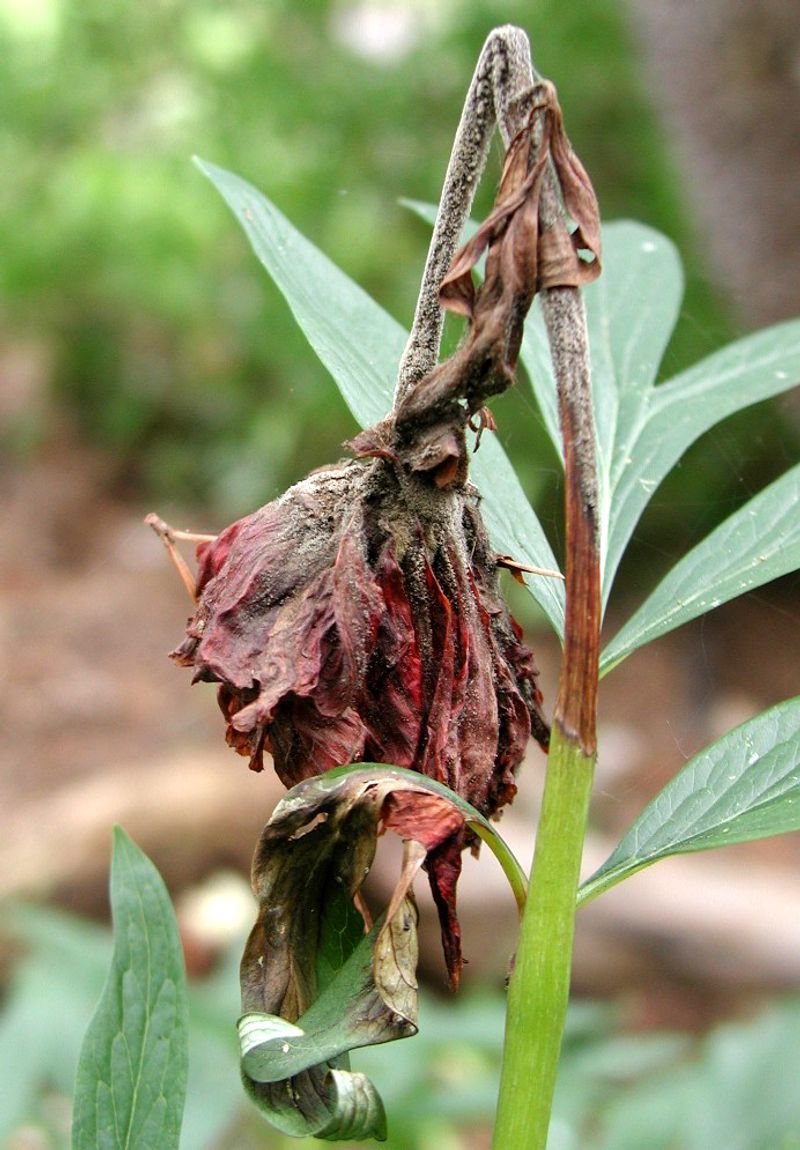
Cottony white fungal growth clinging to a peony stem is one of the more visually striking symptoms you might encounter. It is also one of the easier symptoms to confuse with powdery mildew at a quick glance, because both involve white material on plant tissue.
The difference becomes clearer when you look at texture and what lies beneath.
Sclerotinia stem rot, caused by Sclerotinia sclerotiorum, can affect peonies and may produce thick, fluffy, or cottony white fungal growth on infected tissue. This is a different texture from the thin, powdery film associated with powdery mildew.
Beneath the cottony growth, the stem tissue itself is often water-soaked, bleached, or collapsed. Powdery mildew does not typically cause that kind of structural stem damage.
Sclerotinia can also produce small, dark, hard resting structures called sclerotia inside or on infected tissue. These are roughly the size and color of small seeds and are visible without magnification in some cases.
Not every patch of white fuzz on a stem is Sclerotinia. Botrytis and other organisms can also produce visible fungal growth.
If the underlying stem tissue is collapsed and white cottony growth is present, that combination raises suspicion for Sclerotinia more than for powdery mildew. Removing and disposing of infected plant material is generally recommended.
When the diagnosis is uncertain, a plant diagnostic laboratory can examine the tissue and provide a more confident answer.
7. Crispy Foliage Can Come From Drought Stress
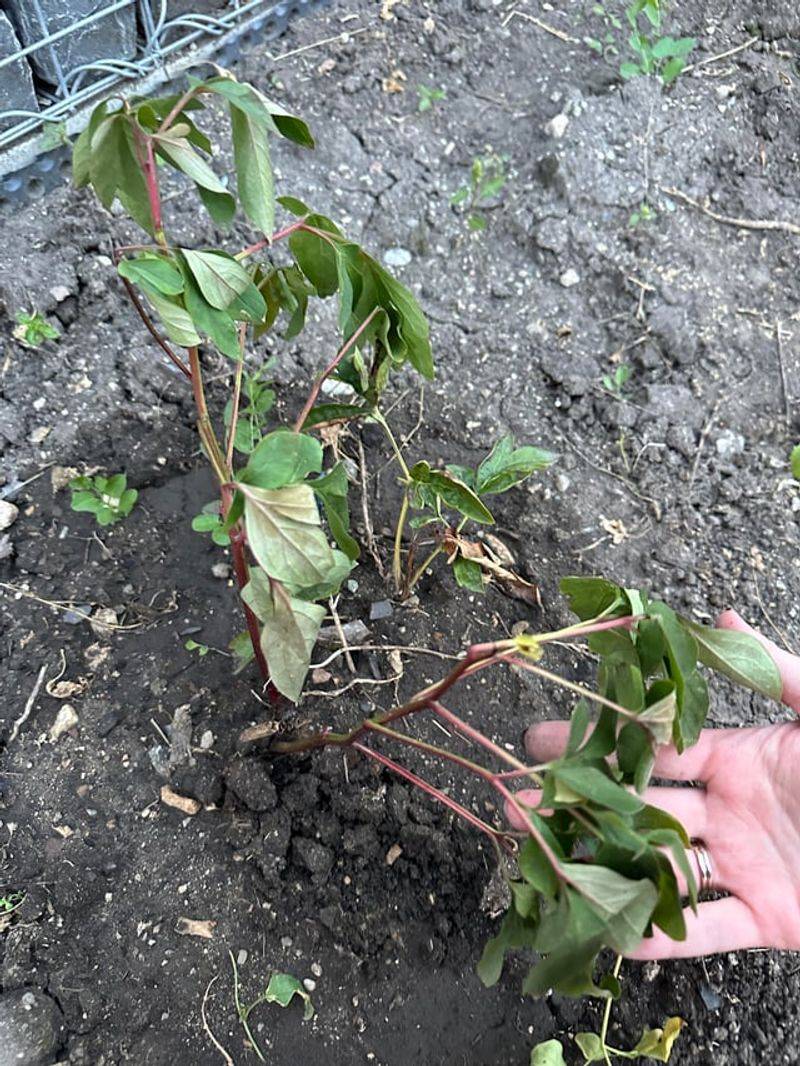
Crisp, brown leaf margins on a peony during a dry stretch are easy to misread as a late-season disease problem. The foliage looks damaged, and when powdery mildew is already on your mind, it is tempting to assume any decline must be fungal.
Drought stress produces a different kind of damage, though, and the distinction matters before you reach any conclusion.
Water shortage can cause leaf edge browning, dry patches, curling, and foliage that feels brittle rather than soft or coated. There is no powdery surface growth involved.
The damage tends to begin at leaf margins and tips, where tissue loses moisture first. Checking soil conditions before assuming disease is a reasonable first step.
Push a finger several inches into the soil near the root zone and feel for moisture. Dry, crumbly soil during a hot or dry period is a strong clue that water availability may be the primary issue.
Water needs vary by soil type, rainfall, temperature, plant size, and root establishment, so no single rigid schedule applies everywhere in Ohio. Tissue that has already turned brown and dry will not recover its green color after watering.
Green, functioning leaves on the same plant are still doing useful work for the plant and should not be removed simply because some foliage looks stressed.
If both drought symptoms and fungal growth appear on the same plant, more than one problem may be present at the same time.
8. Waterlogged Roots Can Make The Whole Plant Look Sick
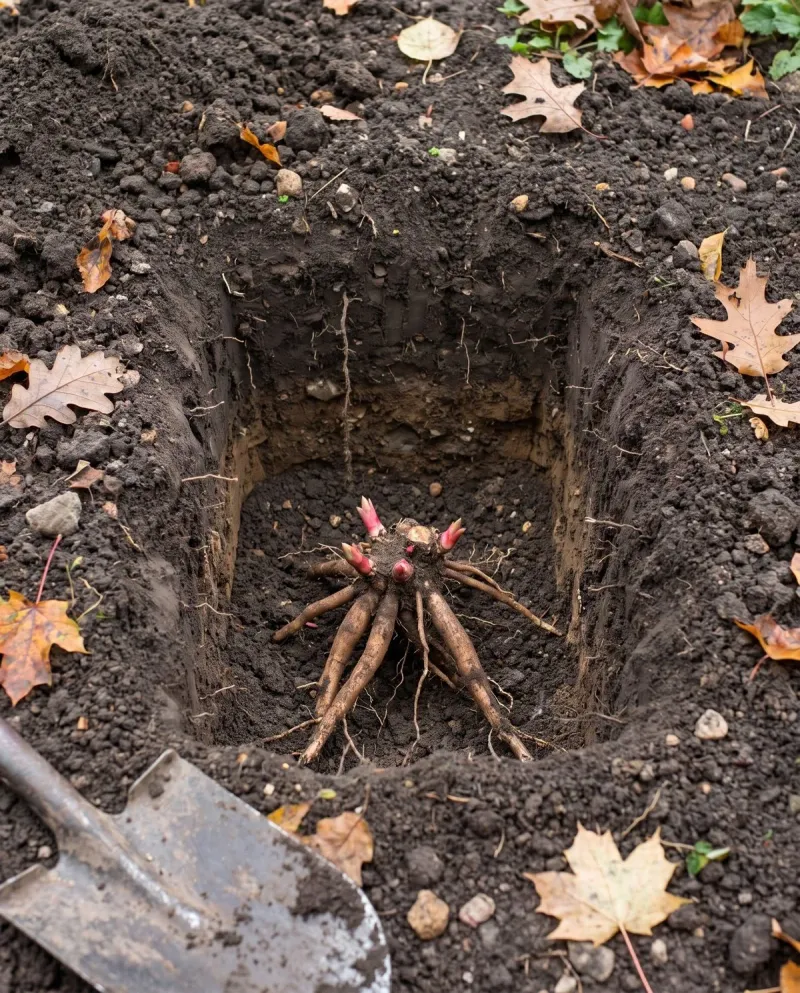
Soggy soil beneath a peony that still appears to be wilting is a combination that confuses many Ohio growers. The instinct is often to add more water, but that can make the situation worse.
Saturated soil limits oxygen availability to roots, and roots under those conditions may struggle to function even when surrounded by moisture.
Excess soil moisture and poor drainage can cause general plant decline without any pathogen being involved. Symptoms may include wilting despite wet soil, yellowing foliage, reduced vigor, and stem decline.
These symptoms overlap with several infectious diseases, which is part of what makes diagnosis complicated. A peony planted in a low spot where water collects after rain faces very different conditions from one growing on well-drained ground.
Poor drainage can also create conditions that favor certain pathogens, including Phytophthora. But waterlogged soil alone is not a diagnosis of any disease.
A pathogen must be present and confirmed before a disease label applies. If improving drainage is a reasonable option, keeping it practical matters.
Drastic excavation around an established crown without horticultural guidance can cause more harm than the drainage problem itself.
White powdery coatings, colored lesions, cottony stem growth, vascular wilt, and saturated root zones each point in different directions.
Observing texture, lesion color, stem condition, and soil moisture together gives you a more complete picture than any single symptom can provide on its own.