Ohio Hummingbirds Need One Thing Before They Migrate In August
August hummingbird activity in Ohio carries urgency that June sightings never do. The birds moving through yards right now are not casual visitors.
They are preparing for one of the most demanding journeys in North American wildlife. What they find in Ohio yards before they leave matters.
A yard that provides what they need becomes a reliable fueling stop. One that does not gets a flyover.
One thing matters more than anything else a yard can offer a hummingbird preparing to migrate. Not the feeder, not the water source.
Something that delivers the concentrated energy a bird burning fuel at hummingbird rates actually needs before a journey that does not allow for many mistakes. Ohio yards still have time to provide it.
1. Late Summer Is When Every Good Food Source Starts To Matter
Yard activity can shift quickly once August arrives. A bird that seemed settled all summer may vanish without warning, replaced by a stranger passing through on its way south.
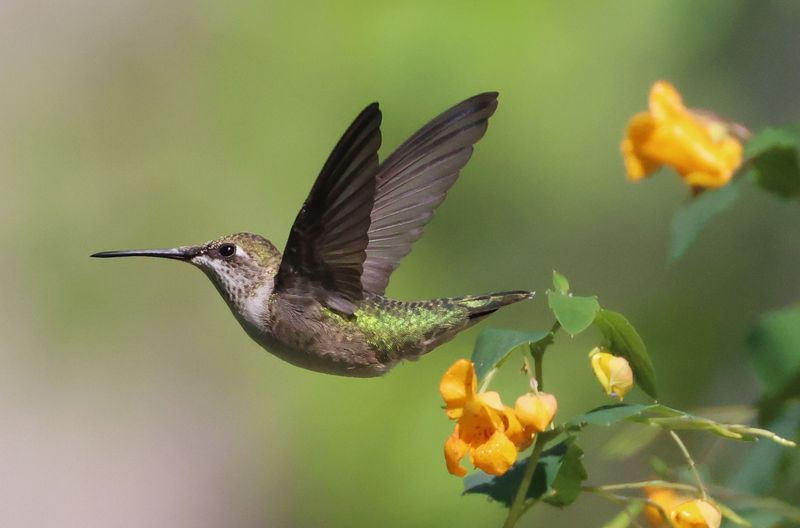
Ruby-throated Hummingbirds prepare for a long southward journey, and the energy they carry into that trip shapes how well they manage it.
According to Cornell Lab of Ornithology, Ruby-throated Hummingbirds nearly double their body mass before migration by storing fat. That process depends on finding enough food during the weeks leading up to departure.
A yard with only one food source gives a bird fewer options when that source runs low or disappears.
Nectar from flowers, supplemental feeders, and small insects each serve a different role. Flowers offer natural nectar in forms birds have relied on long before feeders existed.
Feeders provide a predictable backup when blooms thin out. Insects supply nutrients that no sugar source can match.
No single item on that list covers everything a bird needs. That is why the answer to what hummingbirds need before migration is not as simple as putting out one feeder or planting one flower.
A yard that offers several overlapping food sources gives passing and resident birds the best chance to find what they need. Thinking about variety now, before the season shifts, is the most practical step a backyard observer can take.
2. Keep Nectar Flowers Going When Earlier Blooms Begin To Fade
Many of the flowers that drew hummingbirds into local gardens through June and July start winding down by mid-August. When those blooms fade, birds that depended on them have to search farther.
Planting species that bloom later in the season can keep nectar available exactly when it matters most.
Trumpet vine (Campsis radicans) is an Ohio native climber that blooms from summer into early fall across much of the eastern United States.
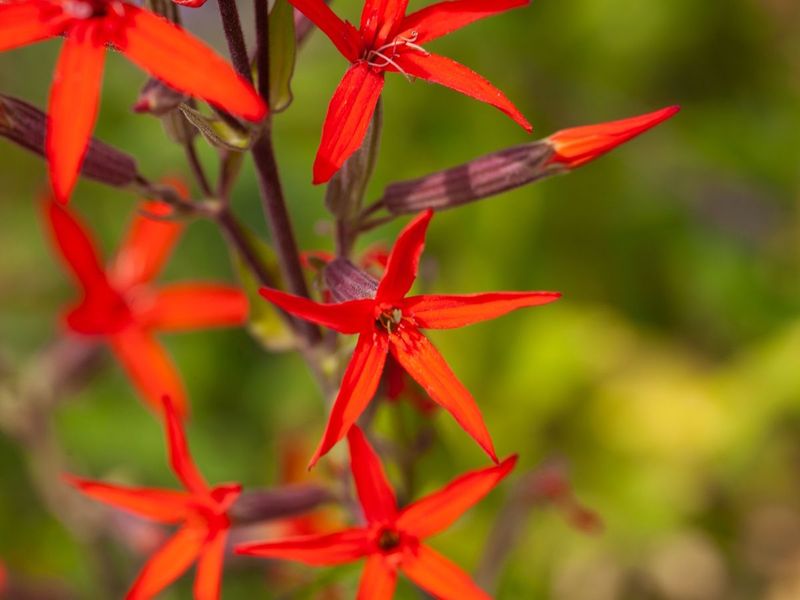
Cardinal flower (Lobelia cardinalis) is another native species known for producing nectar-rich blooms that Ruby-throated Hummingbirds use actively.
Both are well-documented by sources including the Lady Bird Johnson Wildflower Center as plants appropriate to this region.
Flower color is less important than nectar availability. While hummingbirds do respond to red and orange hues, a tubular flower with accessible nectar will attract feeding visits regardless of color.
Your Ohio Garden Changes Every Week. Your Plan Should Too.
Gardening in Ohio changes quickly throughout the season. Every Friday you’ll receive a simple weekly plan showing exactly what to plant, prune, fertilize, harvest, and protect so you never miss the right timing.
Focusing on bloom time rather than color alone leads to better choices for late-season support.
Overlapping bloom periods matter because gaps in flowering can push birds to search elsewhere. A garden that has something opening just as something else finishes gives birds a reason to keep returning.
No single plant will anchor a migrating bird in one spot. However, a sequence of late bloomers can make a yard worth stopping at during a journey that demands constant refueling.
3. A Clean Feeder Can Fill Gaps Between Trips To The Flowers
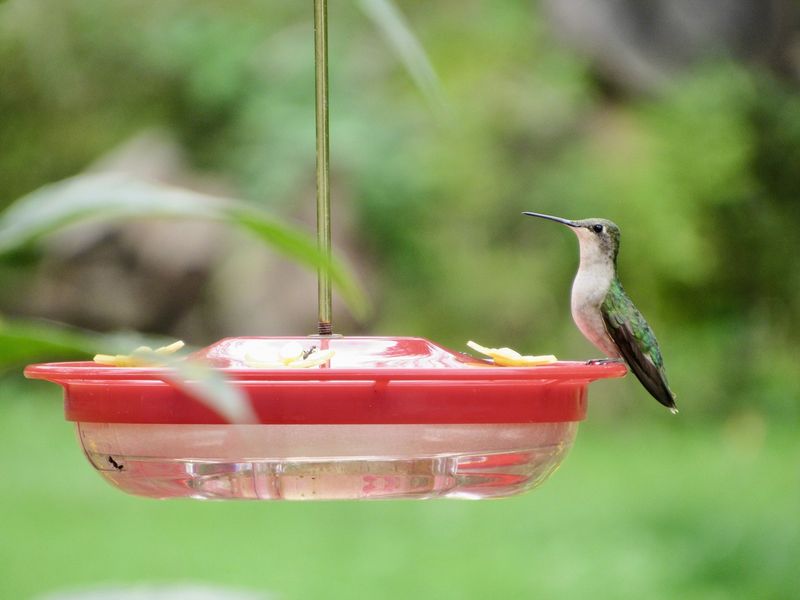
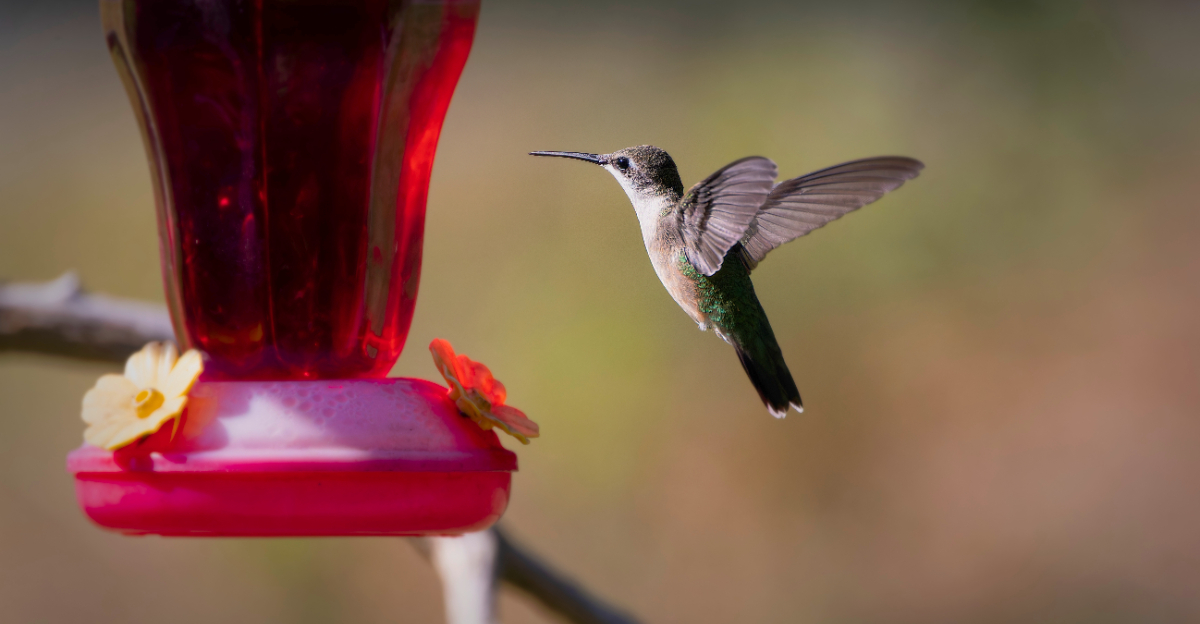
Supplemental feeders work best when they are treated as one part of a larger food environment rather than the whole solution. A well-maintained feeder can provide reliable nectar when garden blooms are sparse.
It gives birds a place to feed without traveling farther than necessary.
Cornell Lab of Ornithology recommends a nectar solution of one part plain white granulated sugar dissolved in four parts water. That ratio closely matches the sugar concentration found in many natural flower nectars.
No additives are needed or recommended. Red dye, honey, brown sugar, and artificial sweeteners should all be left out.
Placement can make a feeder more useful. Positioning it near shelter, such as shrubs or trees, gives birds a place to perch and rest between visits.
A feeder placed in partial shade may also help slow nectar spoilage during warm weather, though shade alone is not a substitute for regular cleaning and refilling.
A feeder that has gone unattended for too long can do more harm than good. Cloudy nectar, visible mold, or an unpleasant smell are signs that the solution needs to be replaced immediately.
Staying ahead of those problems, rather than reacting to them, keeps the feeder genuinely useful. During the weeks surrounding migration, even a brief gap in feeder quality can mean a bird moves on before it has taken in what it needed.
4. Tiny Insects Supply More Than A Sugar Water Feeder Ever Can
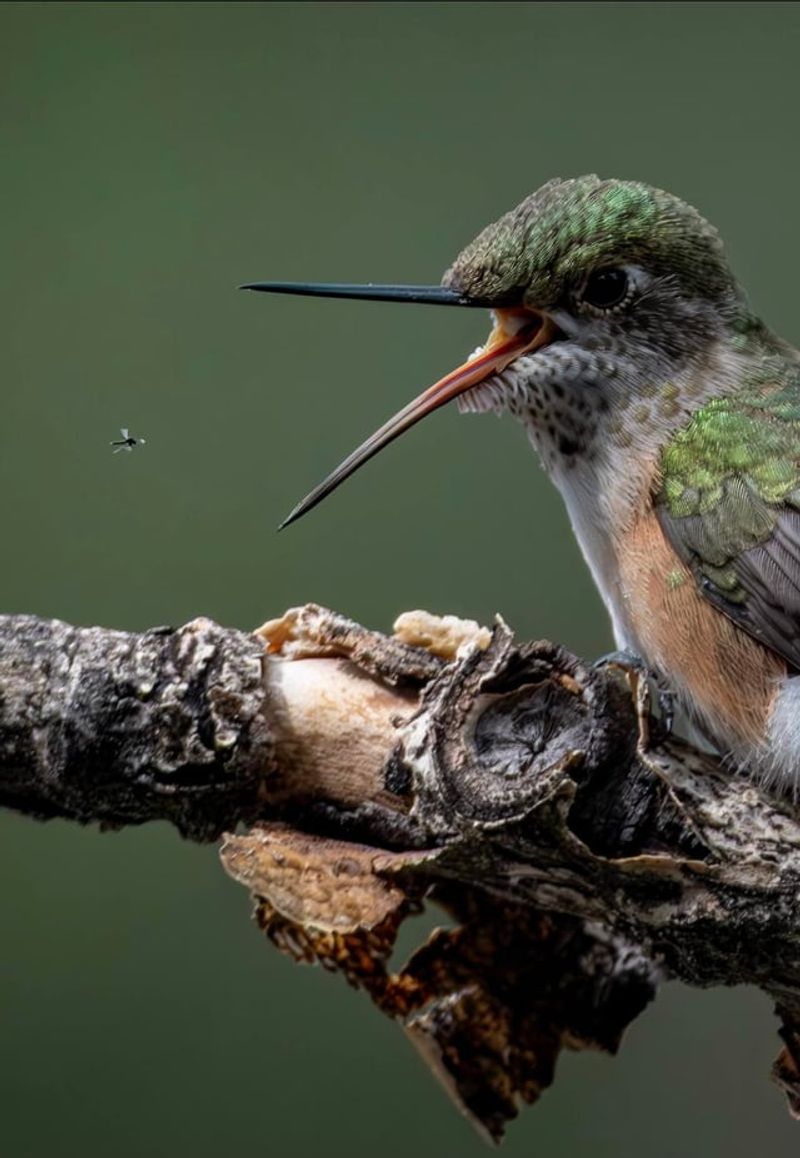
Most people think of hummingbirds as nectar feeders, and nectar is certainly central to what they eat. But a diet built on sugar water alone would leave serious nutritional gaps.
Small insects and spiders are a regular part of what Ruby-throated Hummingbirds consume, and that part of their diet becomes especially relevant as migration approaches.
According to Cornell Lab of Ornithology, Ruby-throated Hummingbirds eat insects and spiders to obtain protein, fat, and other nutrients that nectar does not provide.
They catch small flies, gnats, and aphids by gleaning them from leaves and bark, and they also snatch insects from the air.
Spiders are taken from webs and sometimes eaten along with the insects caught in those webs.
A yard with dense, varied plantings tends to support more insect activity than a heavily manicured lawn. Leaf litter, Ohio native shrubs, and trees all create habitat where small arthropods live.
Broad pesticide use can reduce that insect population significantly. Many cooperative extension programs and wildlife conservation groups recommend reconsidering routine pesticide applications in areas where birds are actively foraging.
No one needs to introduce insects or create an infestation to help hummingbirds. Simply reducing unnecessary pesticide use and allowing some plant diversity can make a yard more productive for foraging birds.
Sugar water keeps a bird visiting a feeder. Insects help sustain a bird through the demands of a long seasonal journey.
5. Native Flowers Can Keep The Buffet Open Into Migration Season
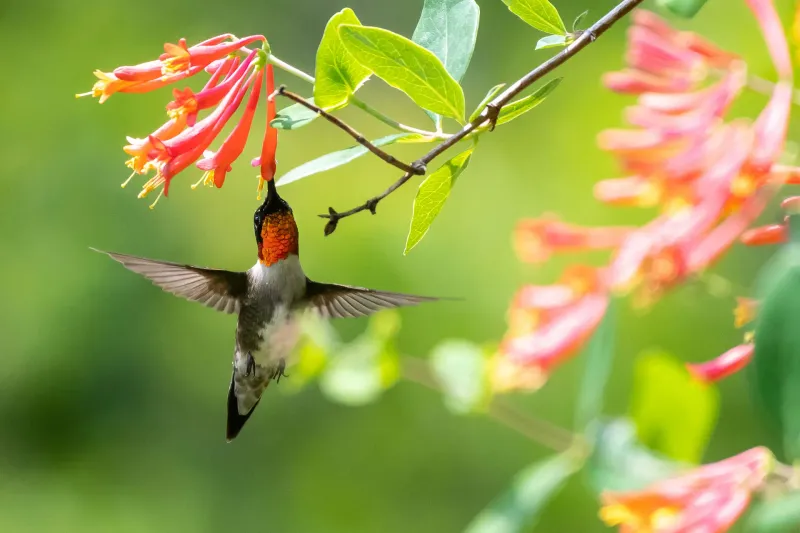
Choosing plants with regional roots does more than support nectar feeding. Ohio native plants have evolved alongside local insects over long periods, which means they often support the kind of small invertebrate life that hummingbirds also depend on.
A yard planted with locally appropriate species can function as both a nectar source and a foraging ground.
Bee balm (Monarda didyma) is a native perennial documented as a hummingbird plant by Cornell Lab and the Lady Bird Johnson Wildflower Center. It blooms through mid-summer and into late summer depending on conditions.
Wild bergamot (Monarda fistulosa) is a related native species that often blooms slightly later, which can extend the window of available nectar from that genus alone.
Native plants also tend to require less intervention once established, which makes them practical choices for gardeners who want low-maintenance late-season coverage. That said, native status should be verified before a plant is purchased or recommended.
Not every plant sold as a native is appropriate for this specific region. Some widely sold species also have invasive tendencies worth knowing about before planting.
Staggering bloom periods across several native species creates a longer corridor of food availability. A yard that produces nectar from early summer through mid-fall gives both resident birds and passing migrants more opportunities to feed.
That extended availability is what separates a functional habitat from a yard that simply looks good for a few weeks.
6. Fresh Nectar Matters More When August Heat Speeds Up Spoilage
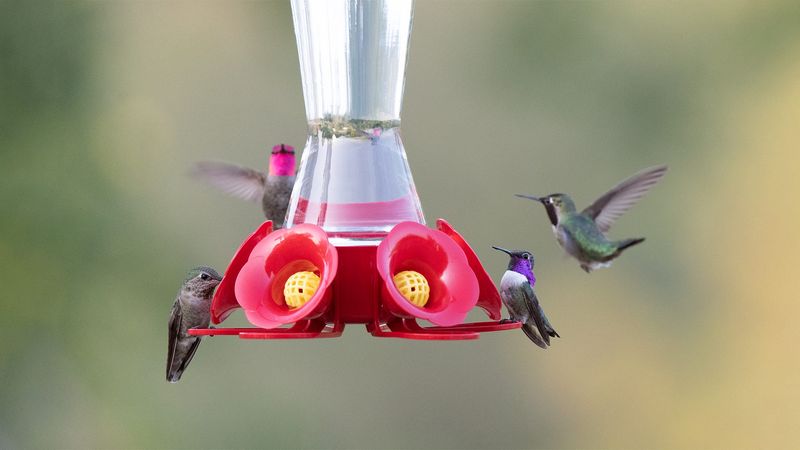
Warm late-summer temperatures in Ohio can turn feeder nectar from a food source into a problem faster than many people expect.
Sugar solutions left in heat begin to ferment and can develop mold or cloudiness that signals the nectar is no longer safe for birds to consume.
Staying on top of that process is one of the most practical things a feeder owner can do in late summer.
The Cornell Lab of Ornithology notes that nectar should be changed more frequently during hot weather. In temperatures above 90 degrees Fahrenheit, that may mean replacing nectar every day or two.
In milder conditions, every three to five days may be sufficient. Visible cloudiness or any sign of mold means the feeder should be cleaned and refilled immediately, regardless of when it was last changed.
Cleaning should go beyond a quick rinse. Warm water and a bottle brush can remove residue from the reservoir and feeding ports.
Diluted white vinegar can help with stubborn buildup and is safe when the feeder is thoroughly rinsed afterward. Avoid bleach unless you follow specific guidance from a reliable bird care source, and always rinse completely before refilling.
Simply topping off an old batch of nectar is not the same as a proper cleaning and refill. Old nectar left at the bottom of a feeder can contaminate a fresh batch quickly.
During the warmest stretch of late summer, treat feeder maintenance as a regular task rather than an occasional one. This keeps the resource genuinely useful to any bird that stops by.
7. Do Not Take Feeders Down Just Because Migration Has Started
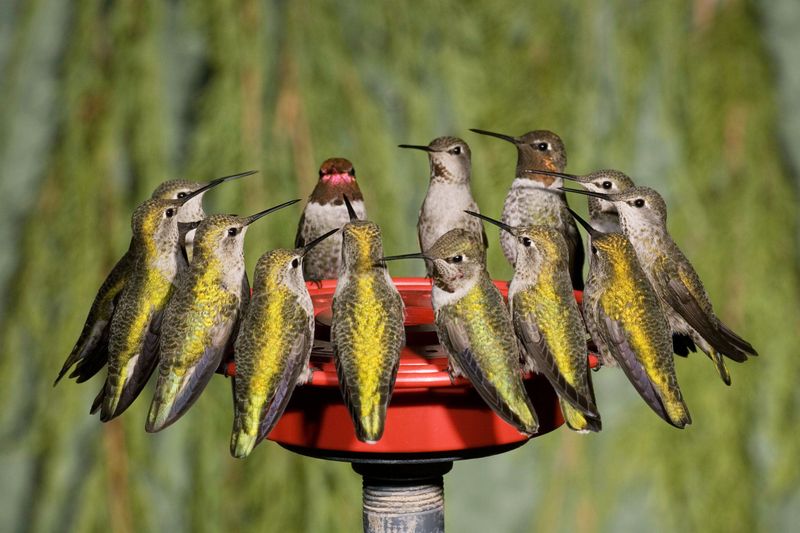
A common piece of advice passed around every fall is that feeders should come down early to push hummingbirds toward migration. That idea is not supported by bird biology.
Migration in Ruby-throated Hummingbirds is governed by internal seasonal cues, particularly changes in day length, not by whether a feeder is available.
Cornell Lab of Ornithology states clearly that leaving feeders up does not cause hummingbirds to delay migration. Birds that are ready to move will move regardless of what is in the yard.
Taking feeders down early does not help resident birds and may leave later migrants without a food source when they need one.
Migration timing varies considerably. Adult males often begin moving south before females and young birds.
Birds that hatched earlier in the season may depart at different times than those from late broods. A bird seen at a feeder in September is not necessarily a straggler in trouble.
It may simply be on a different schedule, or it may be a bird from farther north passing through the region.
Keeping feeders clean and stocked through at least mid-fall gives any late traveler a place to stop. There is no single date that works for every yard or every bird.
Watching feeder traffic over several weeks gives a much better sense of when activity has truly wound down than any fixed calendar date could. Patient observation is more reliable than guessing.
8. Leave Late Travelers Something To Find After Your Regulars Are Gone
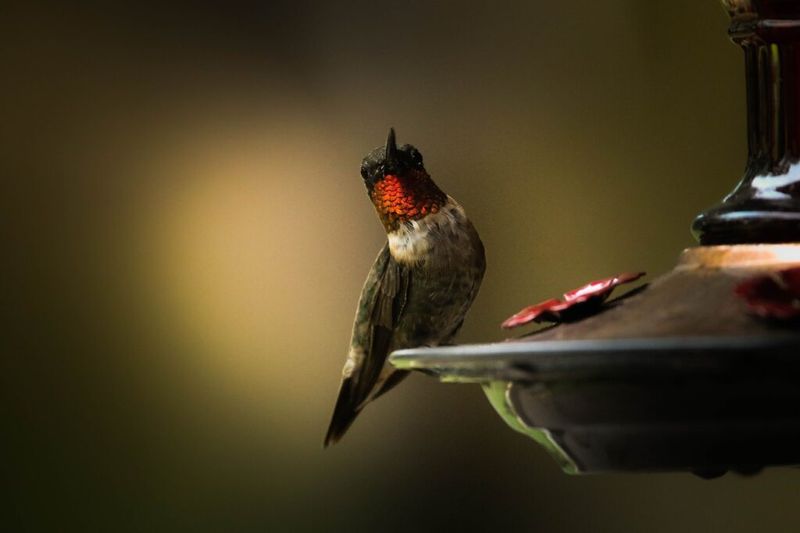
Familiar birds disappearing from your Ohio yard does not mean hummingbird season is finished. Some of the most interesting feeder activity of the year can happen after local residents have moved on.
Birds moving through from elsewhere may stop briefly, feed, and continue south, leaving little trace other than a moment at the feeder.
The Ohio Department of Natural Resources notes that Ruby-throated Hummingbirds can be observed statewide during fall migration. In some years, movement continues into October.
Individual timing varies based on age, weather, and other factors. A quiet feeder during one week does not mean birds have stopped moving through the area entirely.
Maintaining clean feeders and keeping late-blooming plants in reasonable condition through early fall gives passing birds something to find. A bird mid-journey does not have the luxury of searching long for food.
A yard that offers an easy stop is genuinely useful to a bird that needs to keep moving.
Occasional rare hummingbird species have also been documented in the eastern United States during fall, though such sightings are uncommon. Paying attention to any late visitor and noting its field marks is worthwhile.
Most will be Ruby-throats, but the season rewards careful observation. Supporting late movement is less about dramatic gestures and more about keeping what already works running a little longer into the season.