How Michigan Gardeners Are Using Beneficial Wasps To Control Lily Leaf Beetles
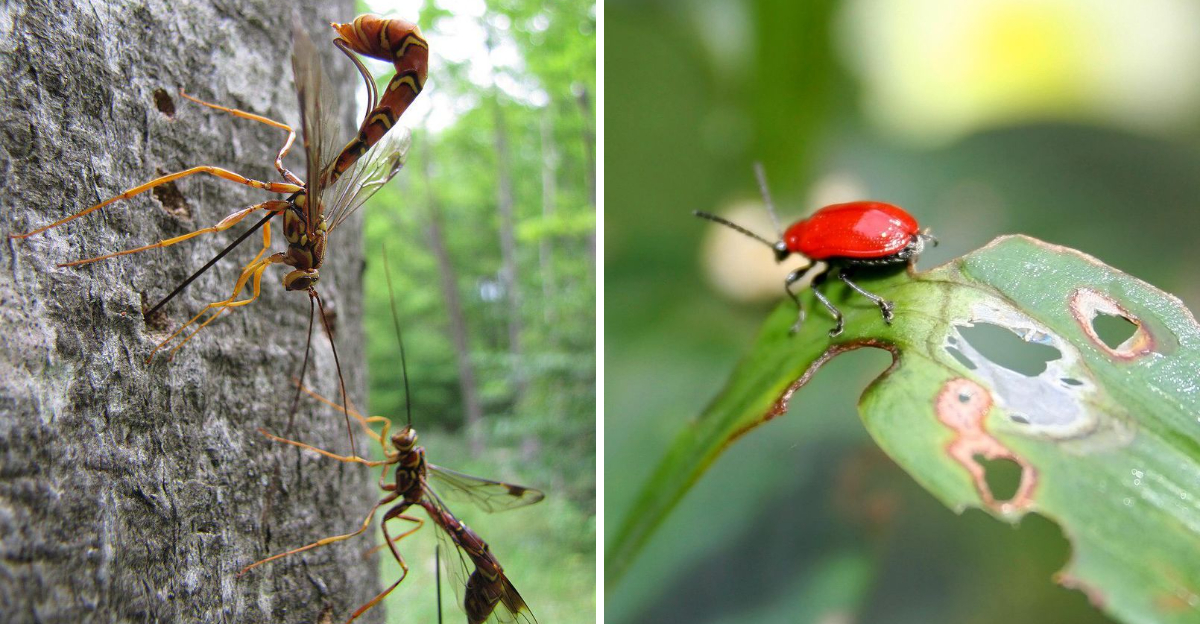
A flash of red on a Michigan lily used to mean one thing: start checking every leaf.
Now there is a player in the bed.
Researchers released thousands of specialized parasitoid wasps at Michigan sites in the state’s first biological control program for lily leaf beetle.
The goal is not an instant disappearance of the pest. These wasps need to survive winter, reproduce, find beetle larvae, and establish populations before gardeners see meaningful relief.
That makes this season especially interesting.
The wasps are far smaller and less noticeable than the scarlet beetles they target. They do not patrol gardens like yellowjackets around a picnic. Their work happens quietly inside lily leaf beetle larvae.
So can Michigan gardeners finally count on them?
Not yet.
The releases are a carefully managed research effort, not a box of insects homeowners should order and scatter themselves.
For now, gardeners have another role: protect lilies, scout beetles, avoid disrupting beneficial insects, and watch what happens at release sites over the next few years.
1. Meet The Tiny Parasitoids Behind Biocontrol
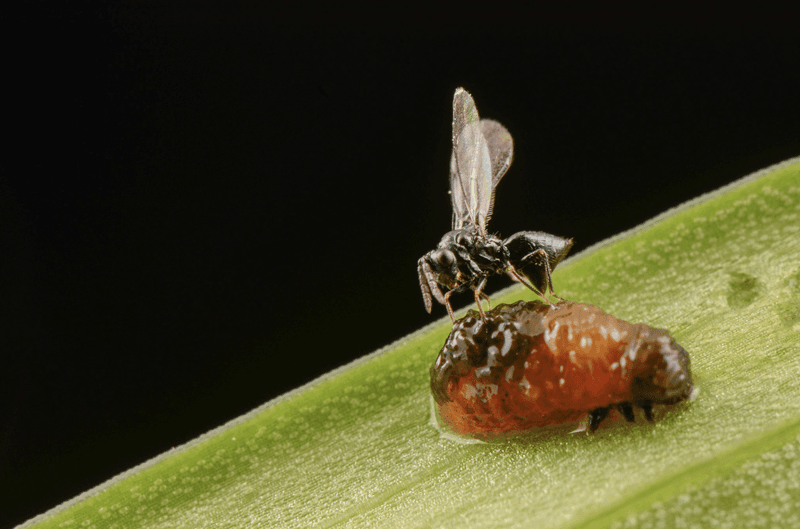
The wasps in this story are not the striped picnic raiders most gardeners picture.
Michigan’s new biocontrol program uses three very small parasitoids: Tetrastichus setifer, Diaparsis jucunda, and Lemophagus errabundus.
All three evolved with lily leaf beetles in Europe and were selected because research showed strong host specificity.
That specialization is the whole point.
A female parasitoid searches lily foliage for beetle larvae, then places eggs into a suitable host. The developing wasp young use that larva as a nursery and food source, preventing it from becoming another adult beetle.
Tetrastichus setifer is especially interesting because several offspring can develop within one beetle larva. The other two species are solitary parasitoids, with one developing individual using a host.
For Michigan gardeners, these insects should look more like invisible backup than backyard wasps. They are tiny, easy to overlook, and not interested in joining you at lunch.
Their value comes from what they do inside the beetle population.
Researchers want the introduced parasitoids to reproduce, overwinter, and build self-sustaining populations that keep lily leaf beetles at lower levels over time.
That is very different from an insecticide application that works immediately and then disappears.
The beetle is bright enough to demand attention.
Its new opponent prefers to work behind the scenes.
2. Learn How Wasps Target Beetle Larvae
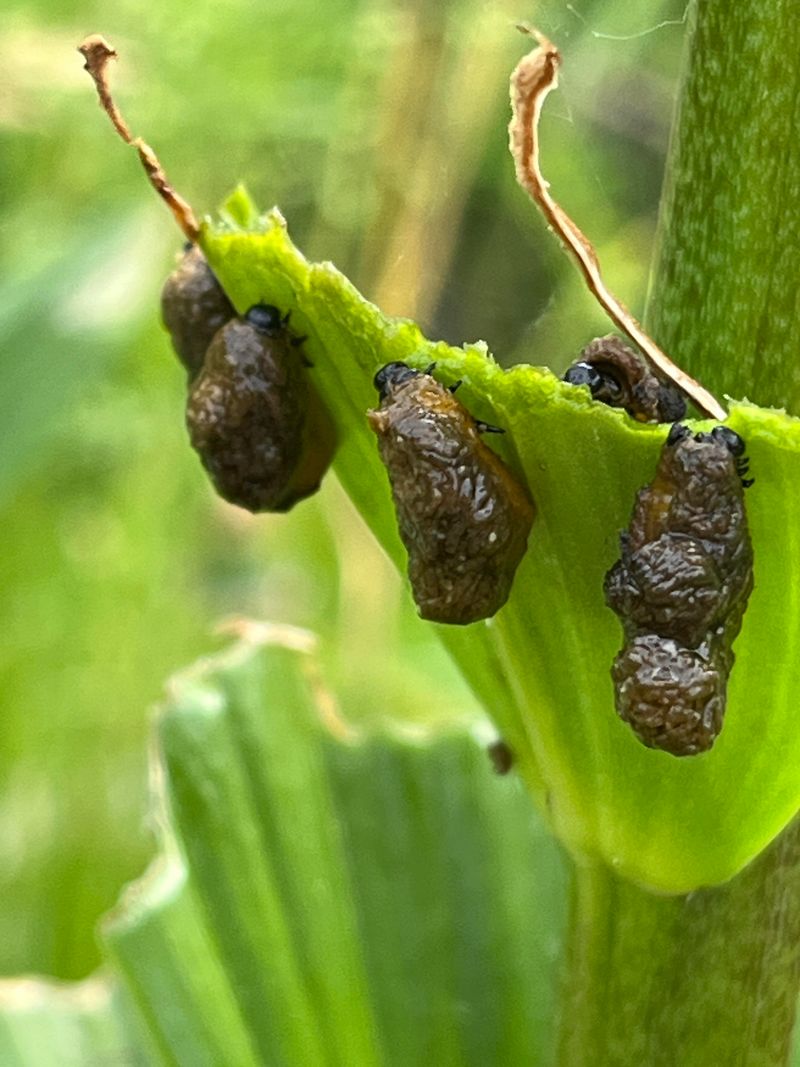
That messy, dark blob crawling across a lily leaf is exactly where the biocontrol story gets interesting.
Lily leaf beetle larvae cover themselves with a shield of their own waste while feeding. It looks unpleasant, but it does not make them invisible to the specialist parasitoids researchers released in Michigan.
All three approved species target the larval stage.
Female wasps locate suitable beetle larvae and insert eggs into them. Tetrastichus setifer can attack all four larval instars, and several wasp larvae may develop inside a single host.
Diaparsis jucunda and Lemophagus errabundus are also larval parasitoids.
That corrects one important misconception in older garden explanations: these three are not a coordinated team split neatly among beetle eggs, larvae, and adults.
Your Michigan Garden Changes Every Week. Your Plan Should Too.
Gardening in Michigan changes quickly throughout the season. Every Friday you’ll receive a simple weekly plan showing exactly what to plant, prune, fertilize, harvest, and protect so you never miss the right timing.
Their timing still differs, and researchers selected them because their biology can complement one another across the beetle’s larval period.
After feeding, lily leaf beetle larvae normally leave the plant and pupate in the soil. Parasitized individuals carry the developing wasps into that stage instead, allowing the beneficial insects to continue their life cycle.
For a gardener, none of this looks dramatic from six feet away.
You may still see red adults and damaged leaves while the wasps are getting established.
Biocontrol works more like changing the population’s future than erasing today’s chewing.
The beetle gets the spotlight.
The parasitoid gets the long game.
3. Separate East Coast Success From Michigan Use
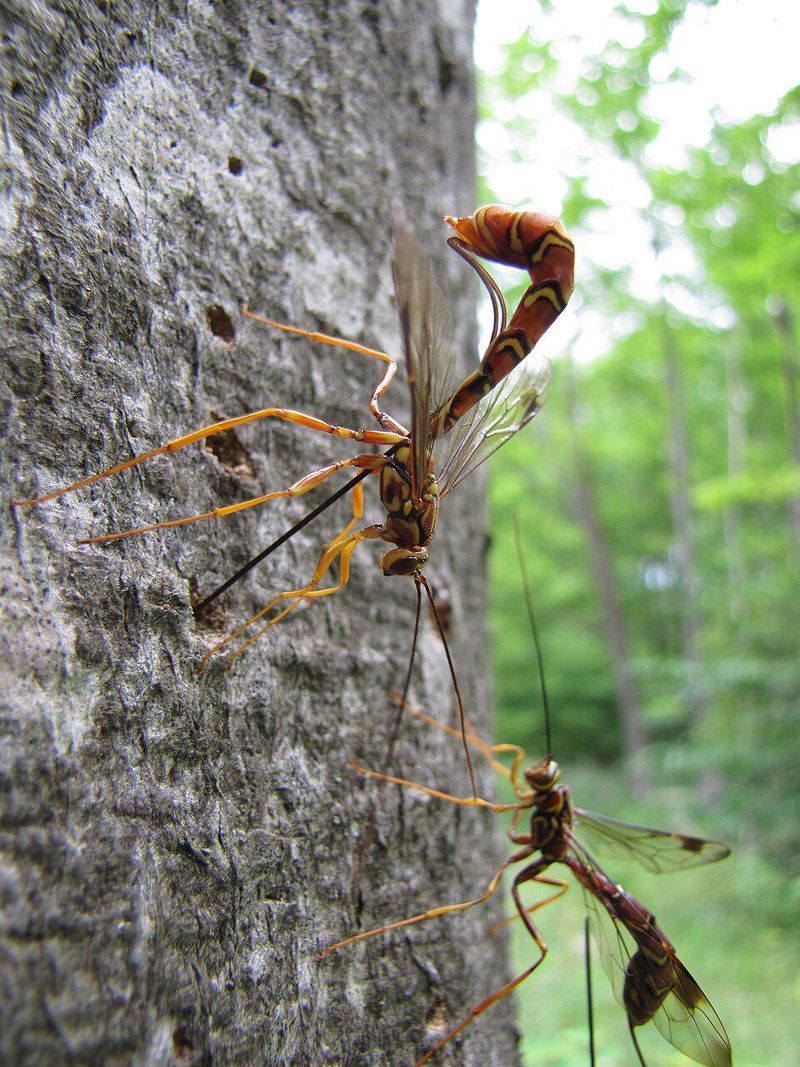
Michigan did not invent this strategy from scratch.
The 2026 program builds on decades of work in New England, where researchers began releasing lily leaf beetle parasitoids in 1999.
Tetrastichus setifer, Diaparsis jucunda, and Lemophagus errabundus became established in parts of the Northeast and spread beyond original release locations.
That history matters because biological control needs proof beyond a laboratory cage.
Researchers had to know the parasitoids could survive outdoors, find their hosts, reproduce, overwinter, and eventually reduce beetle pressure without creating unacceptable problems for other insects.
Long-term work in New England produced the encouraging part of the story.
Established parasitoid populations have been associated with major reductions in lily leaf beetle abundance at monitored locations.
The University of Rhode Island now reports all three species established in parts of New England and dispersing through the region and New York.
Michigan’s climate still gets its own test.
A parasitoid that succeeds farther east must now cope with local winters, beetle densities, gardens, and landscapes around Michigan release sites. Researchers cannot simply assume identical results.
That is why patience belongs in every conversation about the new program.
Gardeners may want the tiny cavalry to arrive, reproduce, and fix a badly chewed lily bed by next June.
Nature rarely signs that contract.
New England’s success is the reason Michigan tried the approach.
It is not a promise that every Michigan lily bed gets instant relief.
4. Check What MSU Is Testing Right Now
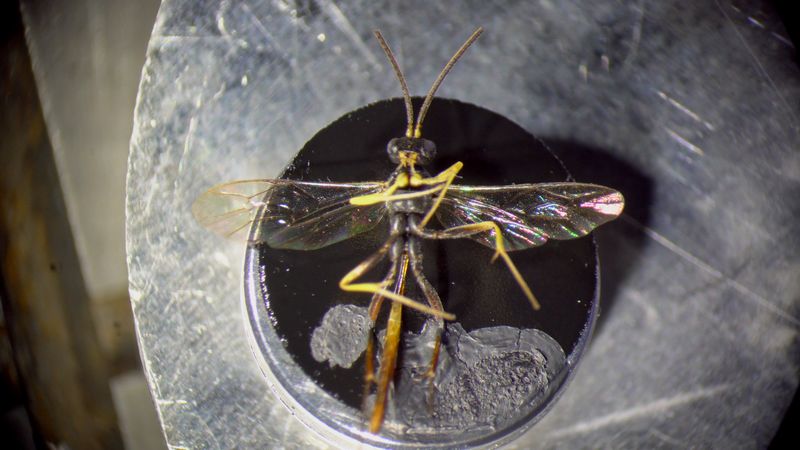
This is the part that changed dramatically in 2026.
Michigan is no longer merely considering a parasitoid program. Michigan State University researchers carried out the state’s first releases during the 2026 field season, placing more than 4,400 beneficial wasps at 11 sites.
Most were Tetrastichus setifer.
The program released 4,190 of that species, along with 224 Diaparsis jucunda and 70 Lemophagus errabundus. That makes the project real, active, and much further along than older Michigan guidance suggested.
The next stage is less visible.
Researchers need to return to release locations and determine whether the parasitoids survived, reproduced, and made it through Michigan winter conditions.
Lily leaf beetle populations were unusually low during 2026, which could slow the initial buildup because the wasps need beetle larvae as hosts.
No additional releases are currently planned, according to MSU’s July 2026 update.
That does not mean the project stopped. Monitoring now becomes the important work. Successful sites could eventually provide parasitoids for redistribution elsewhere in Michigan, speeding up a spread that would otherwise happen slowly.
So a Michigan gardener hearing about “beneficial wasps for lily beetles” is no longer hearing about a distant East Coast experiment.
The experiment has reached Michigan soil.
Just do not confuse a first release year with a finished solution.
The wasps have arrived.
Now researchers need to see whether they decide to stay.
5. Do Not Release Wasps Casually
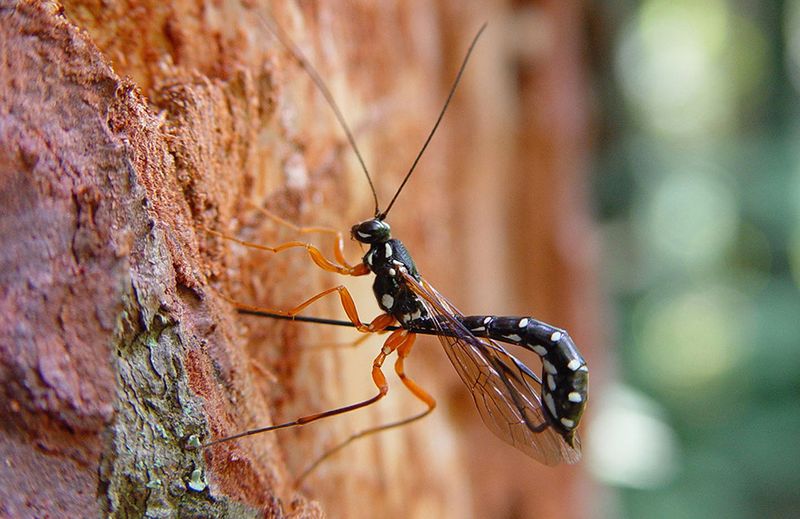
A successful research release is not an invitation to start shopping for mystery wasps online.
These parasitoids reached Michigan through a formal biological control program after host-specificity work, regulatory review, collection, rearing, and coordinated releases.
That process matters because moving living biological control organisms can require federal permits and state review.
USDA APHIS currently requires PPQ 526 authorization for many activities involving the importation, interstate movement, or environmental release of biological control organisms.
That makes do-it-yourself redistribution a bad shortcut.
Even a correctly named species can create regulatory problems when it is moved without the required authorization. A mislabeled shipment adds an ecological problem on top of that.
Michigan gardeners can support this effort much more effectively without becoming amateur insect importers.
Follow MSU Extension updates. Report lily leaf beetle observations when researchers request them. Protect known release work from unnecessary pesticide exposure.
Most importantly, let researchers decide when and where redistribution should occur.
MSU says redistribution from successful Michigan sites may eventually be useful once establishment is confirmed.
That would happen as part of the program, not through gardeners scooping up insects and mailing them around the state.
The enthusiasm is good. The shipping box full of unidentified parasitoids is not.
Biological control works best when the “biological” part gets just as much care as the “control” part.
6. Scout Lilies Before Beetles Build

A bright red adult sitting on fresh lily growth is your cue to slow down and inspect the whole plant.
Michigan’s lily leaf beetles overwinter as adults, then return to host plants in spring. True lilies and Fritillaria are the main targets, and both adults and larvae can chew foliage, stems, and flowers.
Start scouting when lilies emerge.
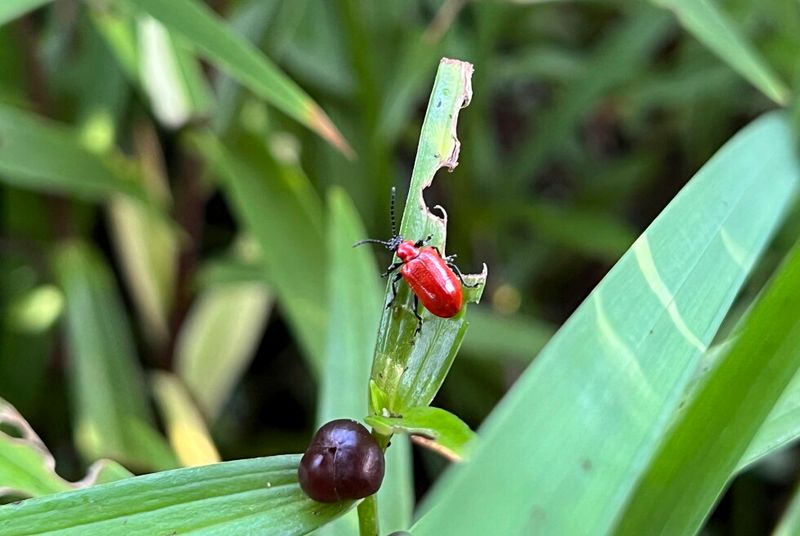
Adults are glossy scarlet above with black undersides, legs, and antennae. They are also talented escape artists, often dropping from the plant when disturbed.
Eggs usually appear in small rows on leaf undersides, changing from orange toward darker reddish tones as they develop.
Then comes the stage gardeners remember forever.
Larvae are soft-bodied and cover themselves with dark waste while feeding. Heavy populations can strip foliage quickly, so finding them early gives you more management options before the plant looks shredded.
Regular scouting also matters to the biological control program.
Gardeners need to distinguish actual lily leaf beetle activity from ordinary leaf damage before changing pest-management practices.
Reports from areas where the beetle is still spreading can also help researchers understand its distribution.
Check plants methodically rather than waiting for obvious defoliation.
Look at both leaf surfaces, new growth, stems, and nearby lilies.
The red adults are easy.
The eggs and larvae require a little detective work.
Consider it one garden pest that arrives wearing a warning color and still somehow manages to hide the important evidence underneath the leaves.
7. Handpick Adults Eggs And Larvae
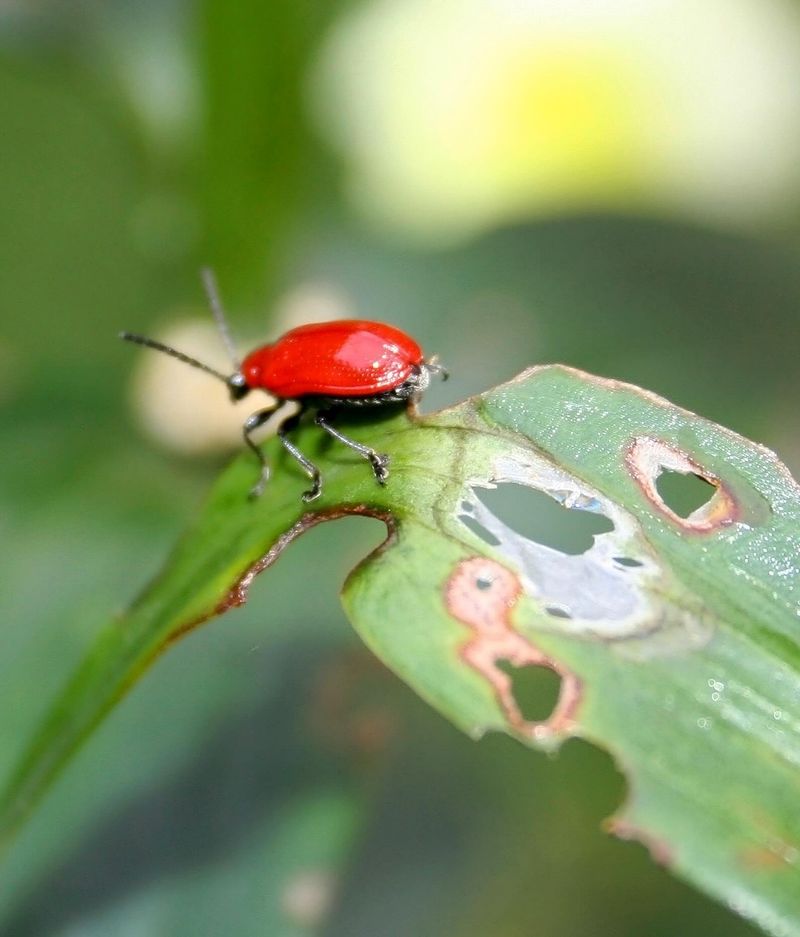
A small lily bed does not need a complicated control program while Michigan’s wasps find their footing.
Hand removal remains one of the most practical options for light infestations. It reduces beetle numbers without leaving pesticide residue that could interfere with parasitoids or other beneficial insects. MSU has long recommended handpicking for smaller infestations.
Start with adults.
Hold a container beneath the plant before reaching toward them because disturbed beetles often drop quickly. Collect them rather than chasing them through mulch after the escape act.
Then turn leaves over.
Remove visible egg clusters before they hatch, and check for the dark, waste-covered larvae that do most of the heavy feeding. Gloves make that particular chore much more pleasant.
Repeat the inspection regularly through the active period.
One pass rarely finishes the job because adults can arrive later and new eggs can appear after your first round. Consistency matters more than turning one Saturday into an epic beetle hunt.
There is another advantage now.
Mechanical control lets gardeners protect lilies while giving the newly released parasitoids a better chance to persist at or near participating sites. MSU notes that repeated insecticide use can also affect beneficial insects.
That does not mean every gardener in Michigan already has parasitoids in the yard.
Most do not know that yet.
But handpicking buys you control without having to guess.
The tiny wasps can handle the sophisticated biology.
You get the bucket.
8. Protect Beneficial Insects During Treatment
A badly chewed lily can make the spray bottle feel very tempting.
Michigan gardeners still have insecticide options when beetle pressure becomes too high for hand removal, but 2026 adds a new reason to use them carefully.
The state now has deliberately released parasitoids whose success depends on surviving around lily leaf beetle populations.
Broad treatments can work against more than the target pest.
MSU Extension advises gardeners to read labels carefully and avoid exposing pollinators when treating flowering plants.
Products labeled for ornamental plants may list active ingredients that can suppress lily leaf beetles, but the legal directions, application site, timing, and pollinator precautions on the current label control how that product can be used.
That makes targeted treatment the smarter mindset.
Scout first. Confirm the pest. Treat only where needed. Avoid spraying open flowers or surrounding plants unnecessarily, and choose the least disruptive effective option available for the situation.
Gardeners near research release sites should be especially cautious and follow any instructions from the program.
The long-term goal is not to replace every beetle with repeated spraying.
It is to give biological control a chance to become part of Michigan’s pest-management toolbox while gardeners still protect valuable lilies in the meantime.
A little restraint now could help the smallest garden helpers establish later.
For once, doing less with the spray bottle may be part of doing more for the lilies.