Why Sage Bush Might Be The Most Useful Plant You Can Grow In A Michigan Garden
Many Michigan gardeners grow sage for one reason: stuffing.
It sits in a pot by the back door, gets raided in November, and spends the rest of the year existing without much attention or appreciation.
Sage is one of the few herbs that functions equally well as a kitchen staple, a pollinator magnet, and a border plant with real ornamental presence.
It thrives in the exact conditions that challenge other plants in a Michigan summer, including dry soil, full sun, and minimal irrigation.
Does your garden have a spot like that? A dry, sunny area where things tend to struggle? That is exactly where sage earns its reputation.
The plant has been cultivated for centuries across multiple continents for reasons that go well beyond flavor.
Michigan gardeners who understand what it actually offers tend to plant considerably more of it than they originally planned.
1. Sage Flowers Bring Bees To The Garden
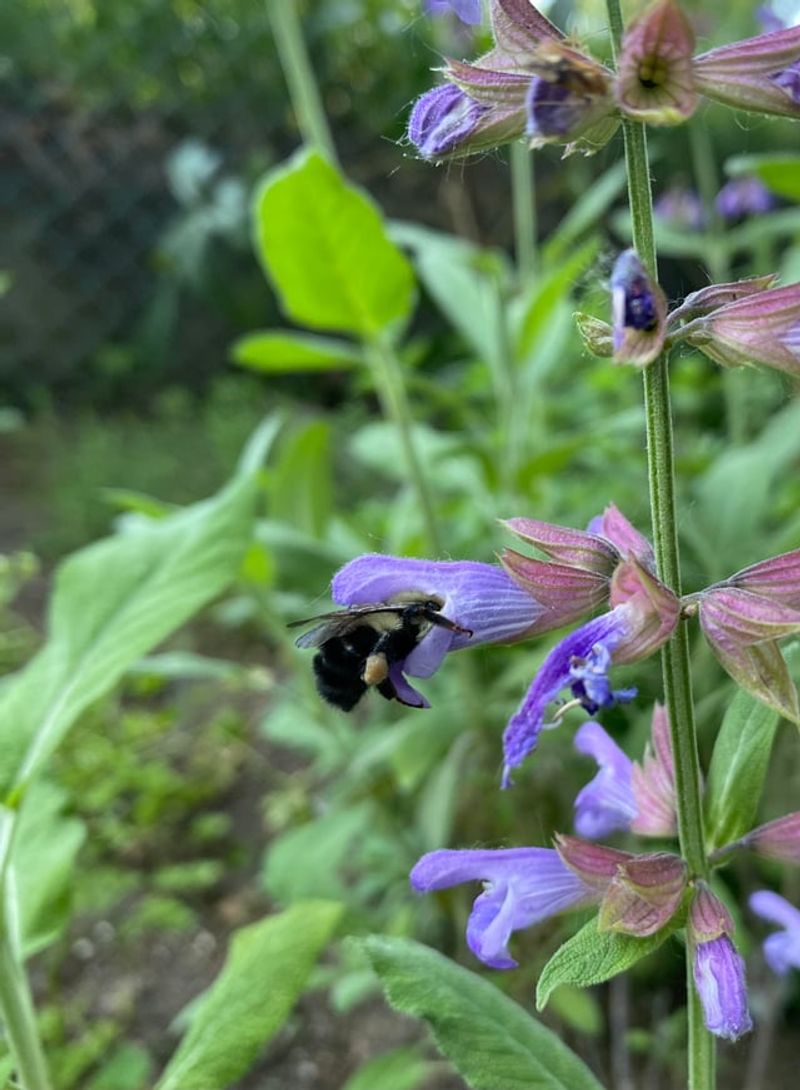
Walk past a blooming sage bush on a warm June morning in Michigan and you will hear it before you see it.
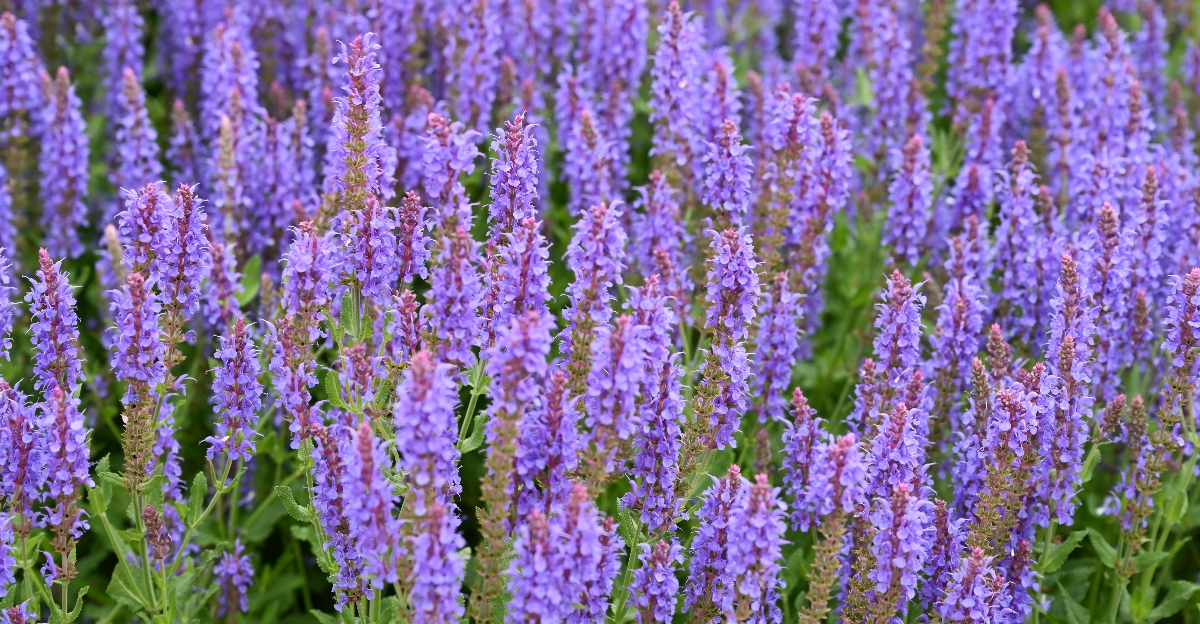
The buzzing is almost constant. Culinary sage produces spikes of tubular purple-blue flowers that native bees, honeybees, and bumblebees find genuinely difficult to pass up.
The blooms appear in late spring to early summer, filling a gap when many other garden flowers have not yet peaked.
Bumblebees are particularly drawn to the tube-shaped blossoms. The flower shape and bee body size match closely, which is not coincidence.
Sage and bees developed alongside each other over a very long time, and that relationship shows up in every visit.
Planting sage near vegetable beds means pollinators traveling between blooms will also stop at your squash, peppers, and tomatoes.
A few well-placed plants near edibles creates measurably more pollinator activity without requiring a dedicated pollinator garden.
For the best bloom production, let at least some plants flower fully rather than harvesting all the stems before blooms open. Light trimming after flowering encourages fresh growth without removing buds for next season.
Morning is when the flowers are most active with visitors. Standing near a blooming sage plant on a June morning and listening to the level of activity gives a real sense of how much work is happening in a small space.
Sage brings the bees. The bees bring the harvest. It is one of the better chain reactions available to a Michigan kitchen gardener.
2. The One Plant That Feeds Both Your Kitchen And Your Garden
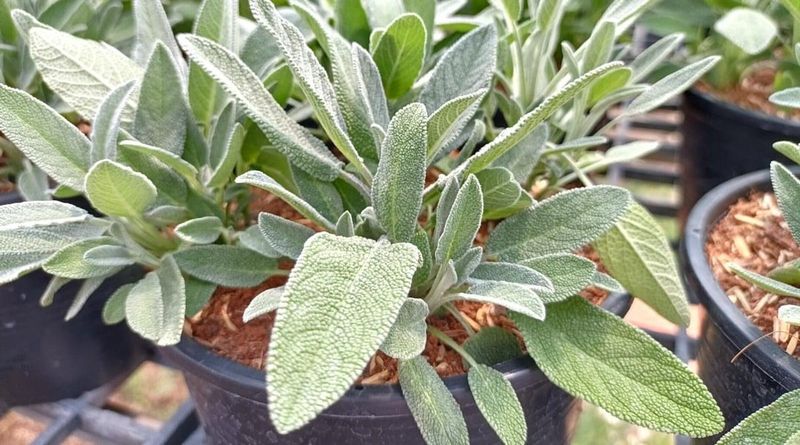
Sage earns its place before a single flower opens.
The leaves are thick, velvety, and covered in fine hairs that create a silvery sheen and a texture unlike almost anything else in the herb garden.
Run a finger across a leaf and the scent releases instantly. Earthy, slightly peppery, unmistakable. It is one of those smells that triggers an immediate sensory memory for most people.
In the kitchen, sage goes well beyond Thanksgiving stuffing. Pasta with brown butter and crispy sage leaves.
Roasted root vegetables. Bean soups. Grilled meats. Fresh leaves have a more complex and less bitter flavor than dried, which makes garden-grown sage a genuine improvement over anything in a jar.
Your Michigan Garden Changes Every Week. Your Plan Should Too.
Gardening in Michigan changes quickly throughout the season. Every Friday you’ll receive a simple weekly plan showing exactly what to plant, prune, fertilize, harvest, and protect so you never miss the right timing.
The leaf texture also creates visual interest in the garden that most herbs cannot offer. Sage sits low and mounded with a soft, fuzzy quality that contrasts sharply against glossy, smooth, or feathery foliage nearby.
Garden designers use this kind of textural contrast intentionally. Sage delivers it without requiring any intentional effort from the gardener.
Harvesting is simple. Snip stems in the morning after dew dries, taking no more than one-third of the plant at once. Fresh leaves keep well in a damp paper towel in the refrigerator for several days.
Sage feeds the kitchen and improves the garden simultaneously. Most plants only manage one of those things at a time.
3. Sage Thrives Exactly Where Other Michigan Plants Struggle
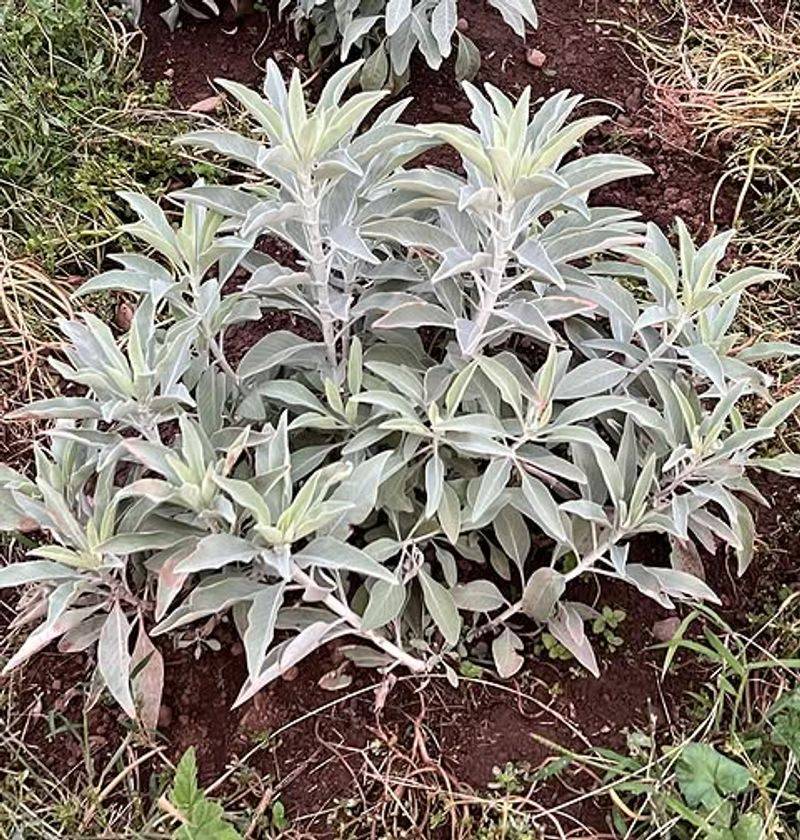
Sage has a very clear opinion about where it wants to grow, and wet shade is not on the list. This plant is native to the rocky, sun-baked hillsides of the Mediterranean.
It evolved in conditions that most Michigan plants would find punishing, and that background shapes everything about how it performs in a garden. Full sun and fast-draining soil are not preferences. They are requirements.
Six to eight hours of direct sunlight per day is the practical minimum. Anything less and the plant grows leggy, weak, and increasingly vulnerable to root problems as the season progresses.
Heavy clay soil is where sage consistently underperforms in Michigan gardens. Clay holds moisture around the roots, and sage cannot tolerate that for long.
A bed that stays wet after rain is not the right location for sage until the drainage issue gets addressed. Amending with coarse horticultural grit or perlite, or building a raised bed, converts a problem spot into a productive one.
Sandy and loamy soils found across western and southwestern Michigan are naturally well-suited to sage. Gardeners in those areas often find the plant thrives with almost no soil preparation at all.
Once established, sage handles Michigan summers without much supplemental watering. Water deeply but infrequently during the first growing season and then largely step back.
The spots in a Michigan garden that challenge other plants are often exactly where sage performs best.
That is either very convenient or a very well-designed plant. Probably both.
4. Its Silver Foliage Makes Every Border Look More Intentional
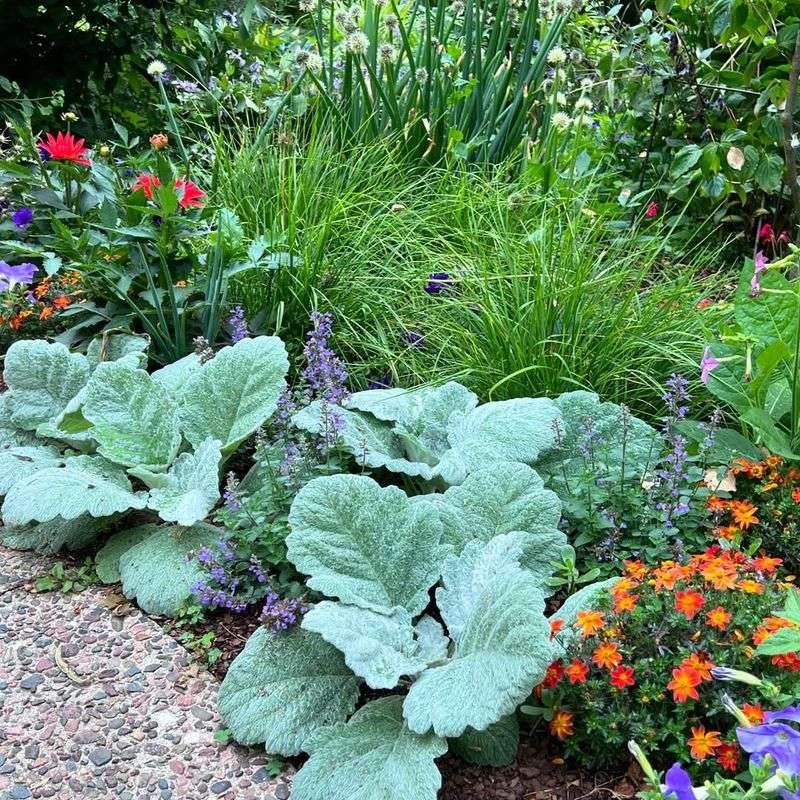
Not every plant earns a spot at the front of the border. Sage earns it without much argument.
That soft, silver-gray foliage functions like a natural highlighter in a planting, brightening the space around it and making neighboring plants read more clearly against it.
Varieties like Berggarten have especially wide, rounded leaves with an almost luminous quality that catches light from morning through evening.
Garden designers use silver and gray-toned plants deliberately to separate bold colors or smooth out combinations that would otherwise clash.
Sage handles that role while also being edible, fragrant, and genuinely useful in the kitchen. That combination of ornamental value and practical function in a single plant is hard to replicate with most other options.
Along path edges and border fronts, sage stays compact without sprawling aggressively. A mature plant reaches one to two feet tall and roughly two feet wide, forming a neat, predictable mound.
For the most effective visual contrast, pair sage with dark-leaved plants like purple basil or deep green rosemary. The difference in color and texture creates a border that looks considered rather than accidental.
Trim lightly after flowering to maintain the mounded shape. Avoid cutting into the old, woody stems at the base since sage regenerates most reliably from newer green growth higher on the plant.
Sage is one of very few plants where the kitchen and the garden designer are in complete agreement about its value. That kind of consensus is rare.
5. This Herb Holds Your Garden Together Through Winter
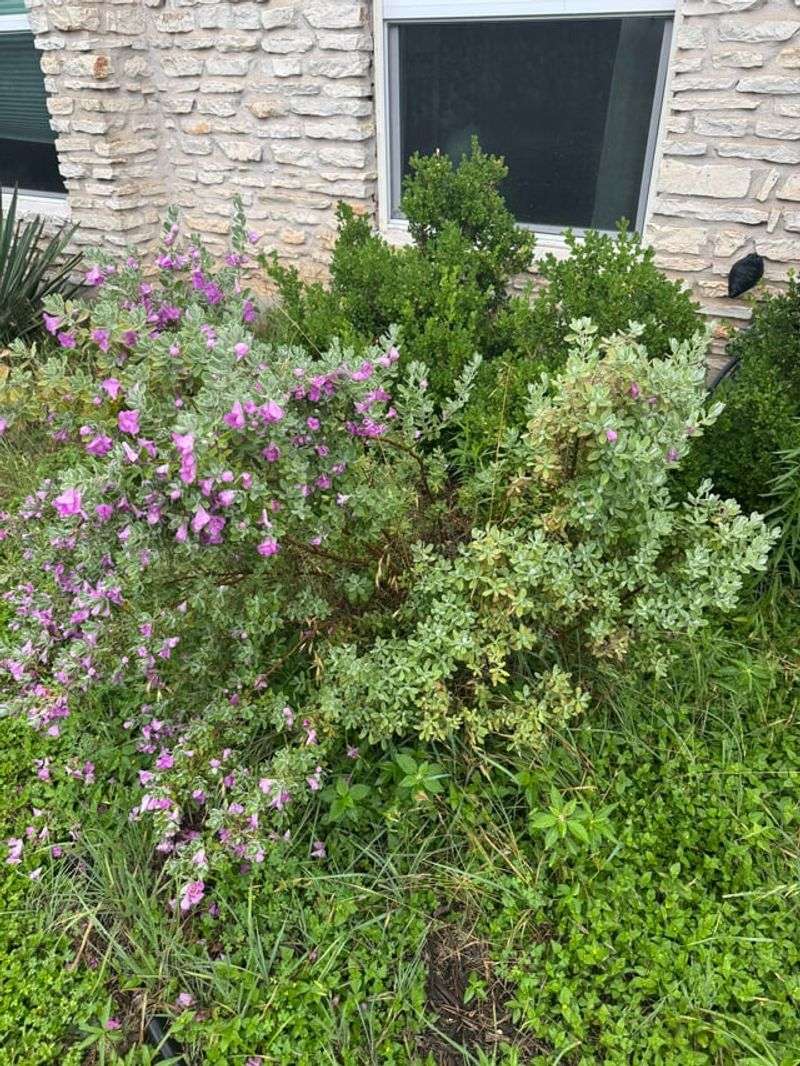
By October in Michigan, many kitchen herbs are finished. Basil is long gone. Parsley is fading. The herb bed starts looking empty and flat.
Sage is still there, and it looks like it belongs.
As sage matures, the base becomes woody and semi-shrubby, giving it a physical presence that persists through the seasons when everything around it has retreated.
That structural quality is genuinely useful in a mixed border that would otherwise look bare and underdeveloped from late fall through early spring.
Culinary sage is a semi-woody perennial that is generally hardy to USDA Zone 5, covering most of Michigan’s Lower Peninsula.
It can experience some dieback in harsh winters, particularly in colder zones, but established plants with good drainage and light root mulch often push back from the base once spring arrives.
The key detail is established. First-year plants going into their first Michigan winter benefit from a little extra protection.
The woody base also gives sage more visual substance than annual herbs. It holds a composition together when neighboring plants are dormant, providing the mid-border anchor that keeps a planting looking intentional rather than abandoned.
One practical note: do not cut sage back hard in fall. Leave the woody stems intact through winter and prune in early spring once new growth makes the recovery point clear.
Soft herbs offer flavor for a season. Sage offers flavor plus structure for years.
6. A Single Sage Plant Can Make A Noticeable Difference In Your Vegetable Bed
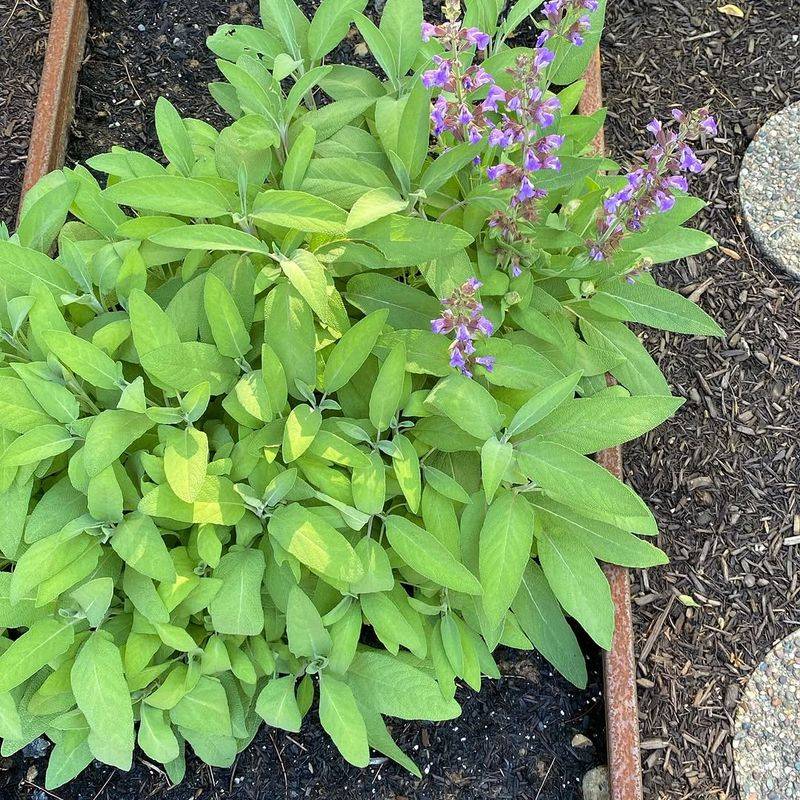
Bees do not read garden plans. When they visit a sage bloom, they are responding to scent and color, nothing more. But the route they travel through the garden after that visit is where sage delivers its broader value.
Pollinators moving between flowering herbs and vegetable plants carry pollen from plant to plant, supporting fruit set and seed development across the entire bed.
A sage plant positioned near productive edibles creates a more active and consistent pollinator environment than the same vegetables growing alone. Tomatoes, peppers, cucumbers, squash, and beans all benefit from reliable pollinator presence.
A single sage plant near a vegetable bed does not replace a full pollinator garden. But it helps keep beneficial insects working in your space rather than moving on to a neighboring yard.
The bloom timing is part of what makes this work. Sage flowers in late spring to early summer, which overlaps with the period when vegetable plants are beginning to set fruit and need active pollination.
A steady nectar source nearby during that window keeps bees cycling through rather than passing through.
Positioning sage at the edge or corner of a vegetable bed avoids shading taller crops while keeping the flowers visible to passing bees from a distance. Good airflow and full sun keep the plant healthy and blooming through that critical window.
Bees find it. Bees use it. Everything growing nearby benefits from the visit. Sage is essentially running a pollinator referral service, completely free of charge.
7. It Keeps Producing All Season With The Right Harvesting Approach
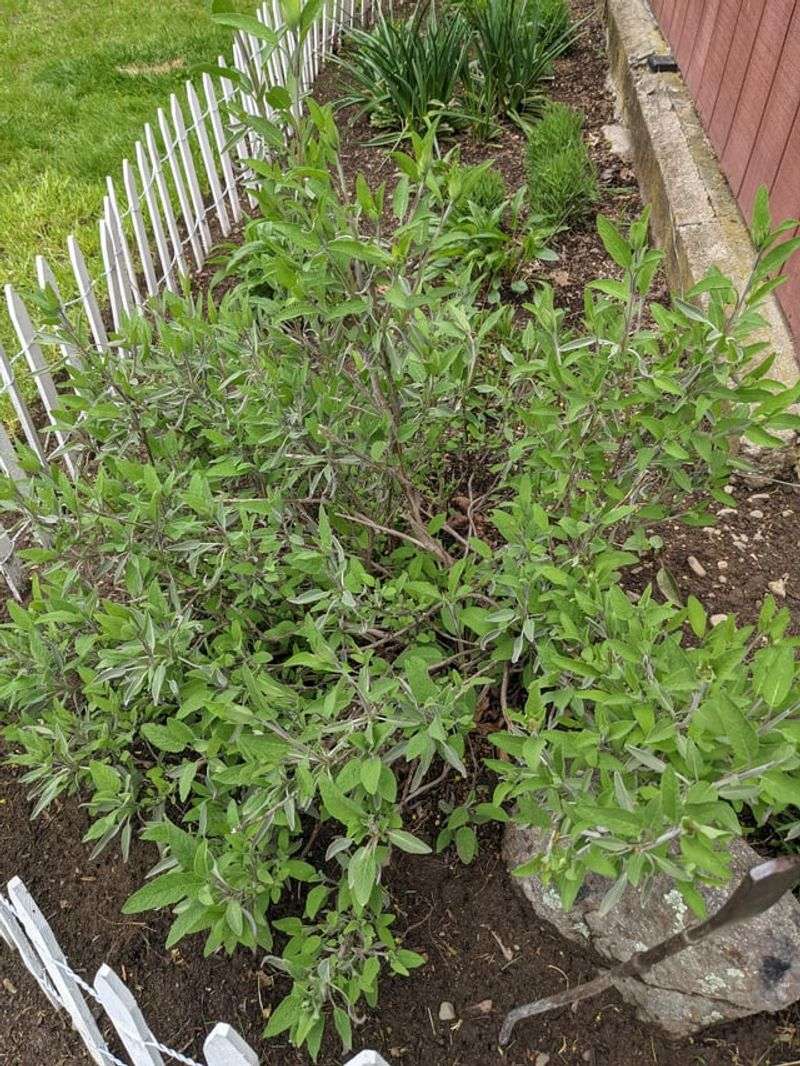
Heavy harvesting is one of the fastest ways to turn a healthy sage plant into something that looks like it needs an intervention.
Sage responds well to light, frequent harvesting. The more gently and consistently it gets trimmed, the bushier and more productive it becomes. Each careful snip encourages branching rather than depleting the plant.
The practical guideline is the one-third rule. Never remove more than one-third of the plant’s total growth in a single harvest.
Morning is the best time, after dew has dried but before heat builds. Essential oil concentration in the leaves is highest at that point, which means better flavor in the kitchen and better scent when dried.
For cooking, target the soft newer growth at the stem tips. Those younger leaves are more tender and noticeably less bitter than older leaves lower on the stem.
Cutting just above a leaf node encourages the plant to branch outward, building the full, compact shape that works so well in a border or herb bed.
Late summer and fall are not the time for heavy harvesting. Sage needs to harden its new growth before Michigan winters arrive.
Cutting late in the season stimulates tender shoots that may not handle the cold well. Winding down harvesting by late August and giving the plant a light shaping trim sets it up for a stronger return in spring.
Treat sage gently and it keeps producing. Treat it like a pinecone at Thanksgiving and it will remember.
8. One Drainage Fix Unlocks Everything Sage Can Do In Michigan
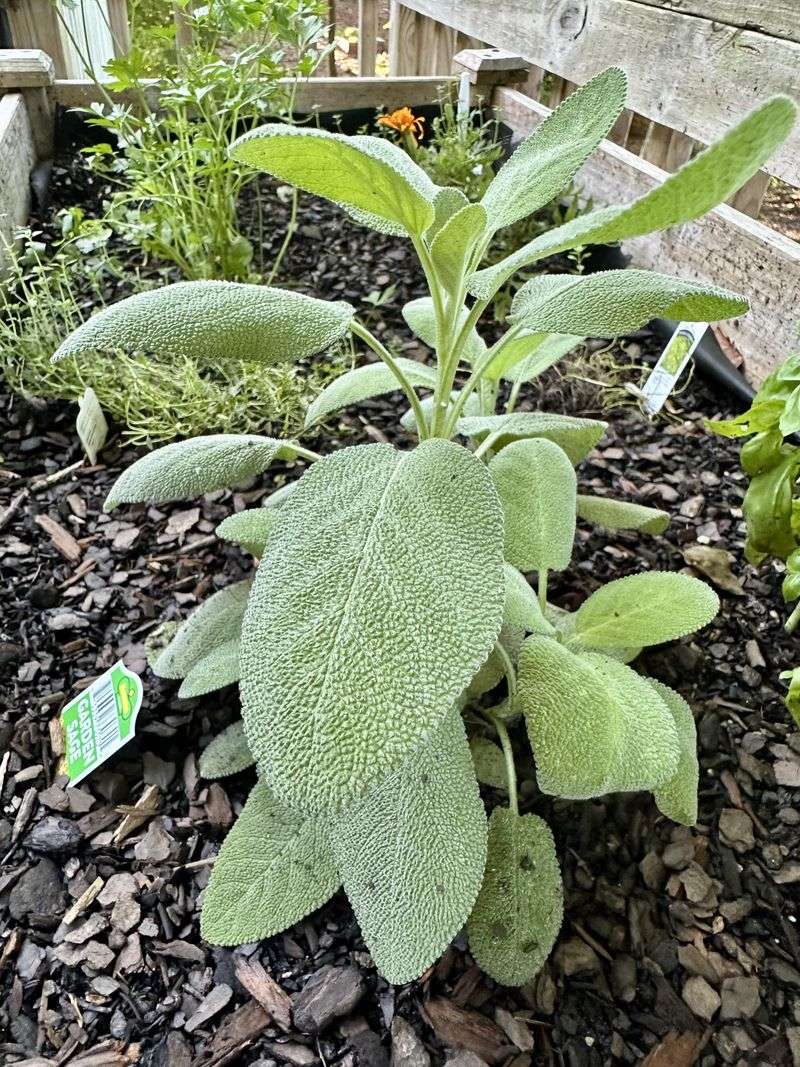
Ask an experienced Michigan herb gardener what consistently causes sage to underperform and the answer is almost always the same.
Wet feet.
Sage roots sitting in waterlogged soil for extended periods create the conditions for root rot, weak growth, and a plant that never quite establishes itself. The fix is not complicated, but it does require some thought before planting.
Raised beds are one of the most dependable solutions for Michigan gardens with heavy clay or low-lying ground.
Elevating the root zone even six to eight inches above grade improves drainage and soil warmth in a way that sage responds to immediately. The improvement in performance between in-ground clay and a raised bed can be genuinely striking.
Container growing offers another reliable path. A large terracotta or unglazed clay pot filled with a gritty, well-draining potting mix gives sage the sharp drainage it genuinely prefers.
Containers also allow the plant to be moved to a sheltered location during unusually harsh Michigan winters, which extends its productive life in colder parts of the state. At least one large drainage hole at the bottom is non-negotiable.
For in-ground planting, mixing coarse horticultural grit or perlite into native soil at roughly one part grit to three parts soil improves drainage noticeably. Avoid peat-heavy mixes that hold moisture. A soil pH between 6.0 and 7.0 suits sage well.
Sage is an easy plant in the right conditions. Wet soil makes it difficult. Dry, sunny, well-drained soil makes it the most cooperative plant in the garden.
It has one real requirement. Give it that and it gives back generously.