What It Actually Means When A Snake Shows Up Near A Florida Pool
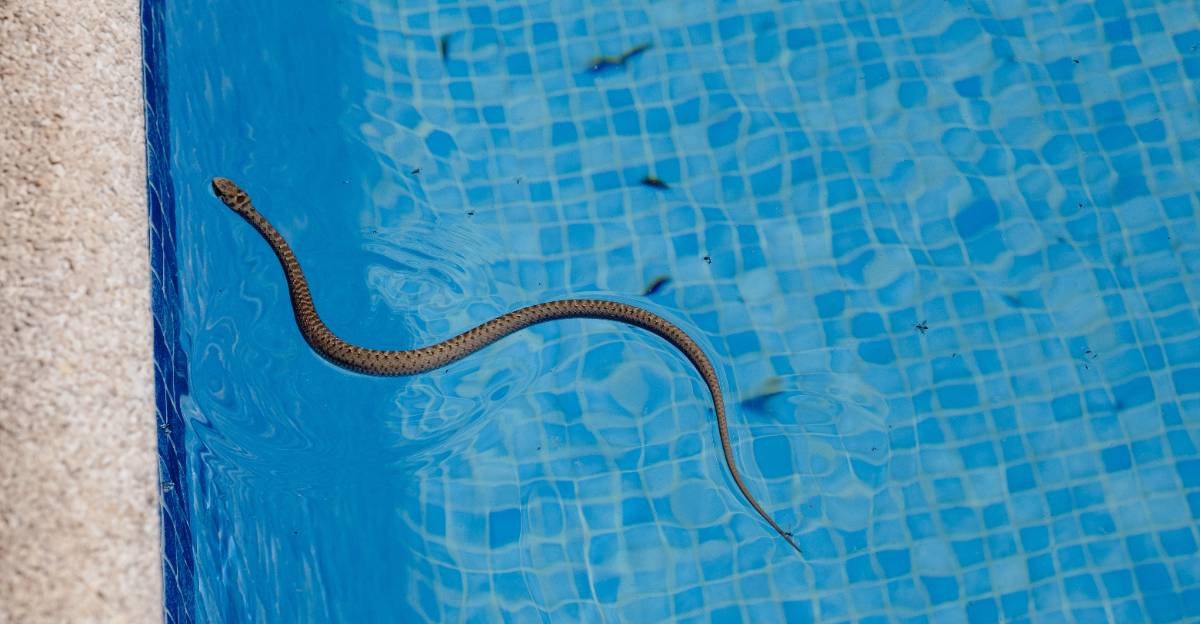
A snake near your pool doesn’t mean what most people assume it means, and that assumption usually leads to the wrong reaction. Water draws every kind of wildlife in Florida heat, and pools sit right in the path of animals just passing through.
Snakes show up hunting frogs, chasing lizards, or simply cooling off on a hot deck, not hunting you. Most sightings end the same way: the snake moves on within minutes, long before anyone panics and grabs a shovel.
Species matters more than most homeowners realize. A few venomous snakes do turn up near Florida homes, but far more pool visitors turn out to be harmless watersnakes or garter snakes doing exactly what snakes do near any water source.
Knowing the difference changes everything about how you respond. Here’s what to actually look for, and when a snake near your pool calls for real caution instead of blind fear.
1. That Poolside Snake May Just Be Passing Through
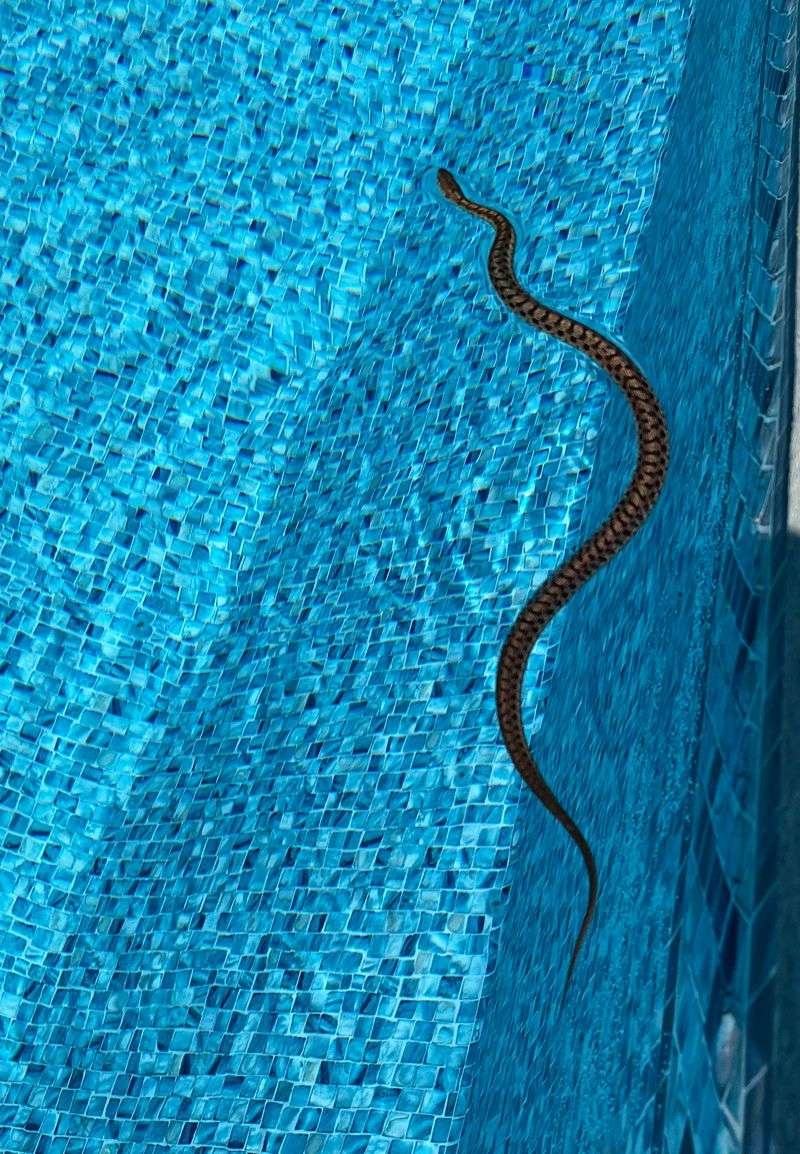
Most homeowners assume that spotting a snake beside the pool means one has taken up permanent residence nearby. That assumption is rarely accurate.
Snakes regularly move through residential landscapes while searching for food, mates, or habitat. The Florida Fish and Wildlife Conservation Commission notes this natural movement pattern.
A single sighting is not evidence of a den, a nest, or any kind of infestation. Larger snake species can travel through surprisingly wide areas as part of their normal activity, especially during warmer months when movement increases.
The animal you spotted this morning may already be gone by afternoon.
Developed neighborhoods still contain patches of natural habitat that snakes use as corridors. A snake crossing your pool deck is often doing exactly what wildlife does: moving from one place to another.
Landscaping, fences, and structures simply happen to be in the way.
Repeated sightings in the same location over several days or weeks are a different story. That pattern is worth paying closer attention to, since it may suggest a nearby food source or suitable shelter.
One encounter, though, is almost always just a wildlife moment rather than a wildlife problem. Watching quietly from a safe distance and letting the animal move on is often the simplest and most sensible response available.
2. The Pool May Be A Trap, Not A Destination
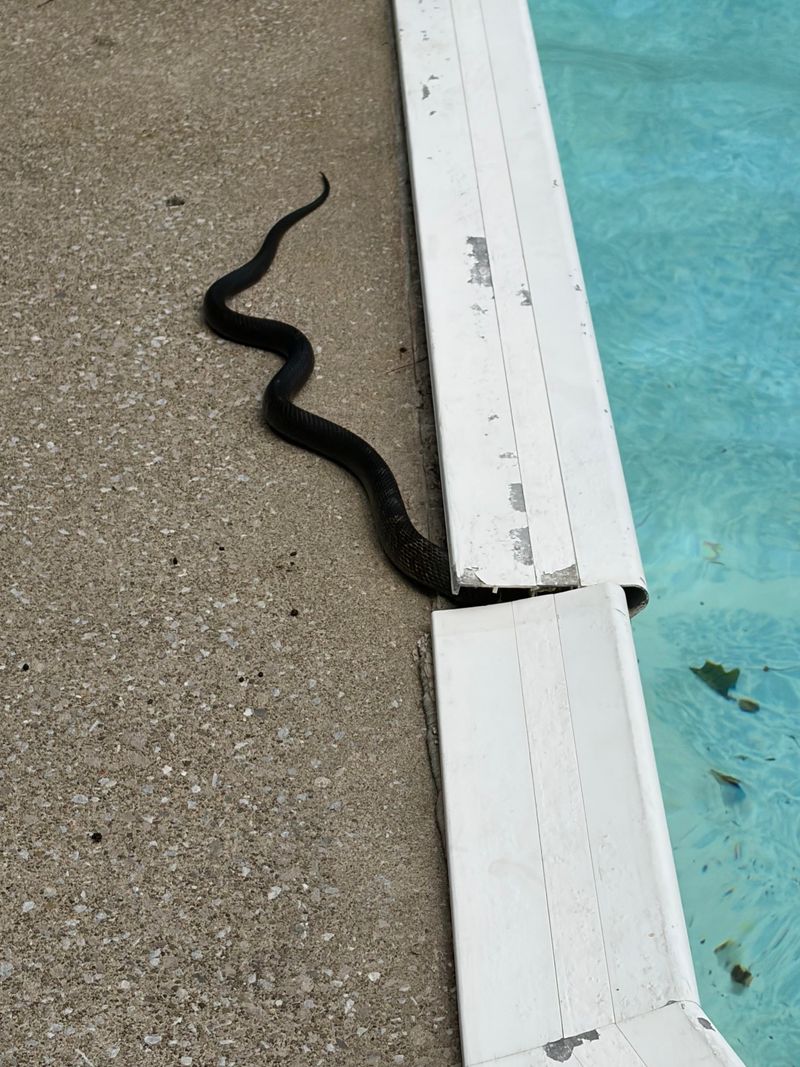
Finding a snake actually swimming inside the pool can feel alarming, but the animal may not have chosen to be there. Snakes are capable swimmers, yet entering the water does not always mean the animal intended to stay.
Some snakes end up in pools while crossing a yard or investigating the area around the water’s edge.
Once inside, escape can become a serious problem. The University of Florida IFAS Extension notes that small snakes may struggle to climb out of pools because smooth walls and high coping offer no grip.
An animal that cannot find an exit point will keep swimming until exhaustion sets in.
This is an important distinction. A snake in your pool is not necessarily evidence that it was drawn there by the water itself.
Your Florida Garden Changes Every Week. Your Plan Should Too.
Gardening in Florida changes quickly throughout the season. Every Friday you’ll receive a simple weekly plan showing exactly what to plant, prune, fertilize, harvest, and protect so you never miss the right timing.
It may simply be an animal that wandered in and cannot figure out how to get back out. The pool became a trap rather than a resting spot.
If you observe a snake in the pool and cannot confidently identify the species, keep everyone away from the water. Do not attempt to handle the animal.
A long-handled pool skimmer can be used to offer an exit point, but only when the species is clearly not a concern. When in doubt, contact a licensed wildlife professional for guidance.
3. Smooth Pool Walls Can Leave Small Snakes Stuck
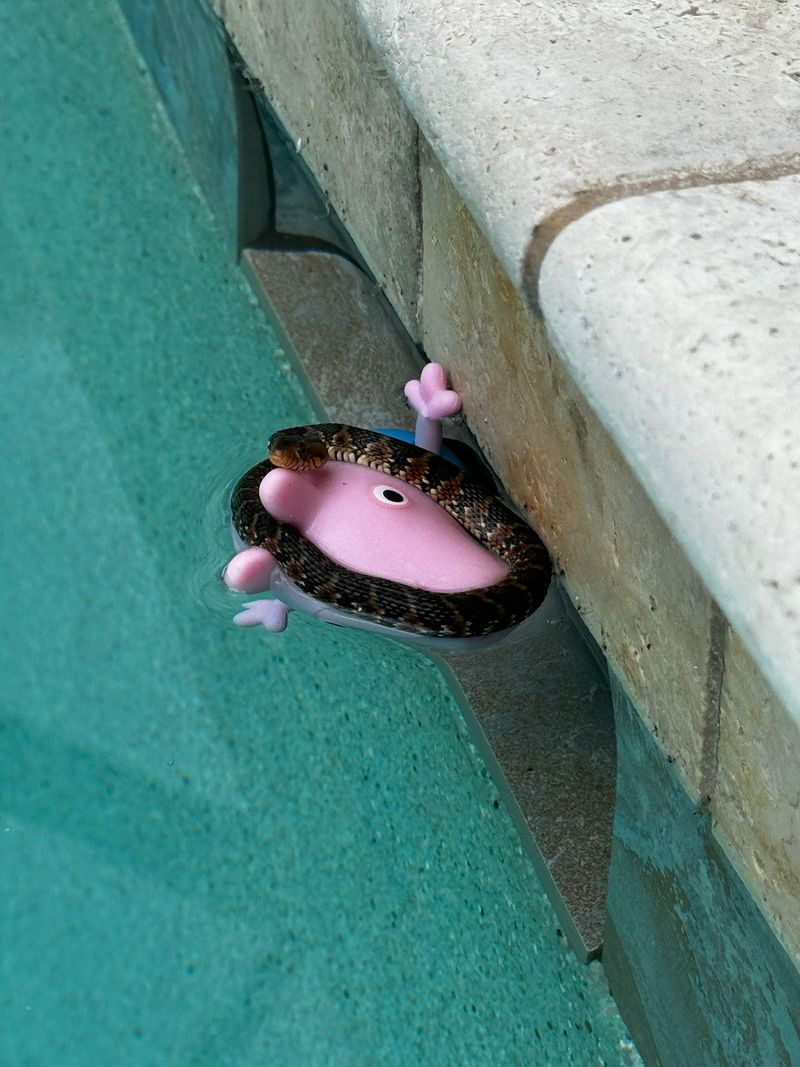
Pool design creates a specific hazard for small wildlife. Steep, smooth walls combined with raised coping edges give tiny animals almost nothing to grip.
A snake that slips or drops into the water faces a very different situation than one crossing an open lawn.
The Florida Museum of Natural History notes that ring-necked snakes are among the small species occasionally found in residential pools in the state.
These slender snakes are not particularly strong climbers, and a standard pool wall can be an impossible barrier for them.
Other small species may face similar challenges depending on their size and physical condition.
Wildlife escape ramps and rope-style exit devices designed for pools can give small animals a surface to grip. Some wildlife organizations recommend these products for pool owners in areas with regular wildlife activity.
Checking with your local UF/IFAS Extension office can help you find guidance appropriate for your specific situation.
Regardless of the species, approaching any unknown snake to assist it carries real risk. A stressed or exhausted animal may still respond defensively when a person gets close.
Taking a clear photograph from a safe distance can help a wildlife professional or extension agent identify the species. That identification should always come before any attempt to intervene physically.
4. Frogs And Other Prey Can Keep Snakes Nearby
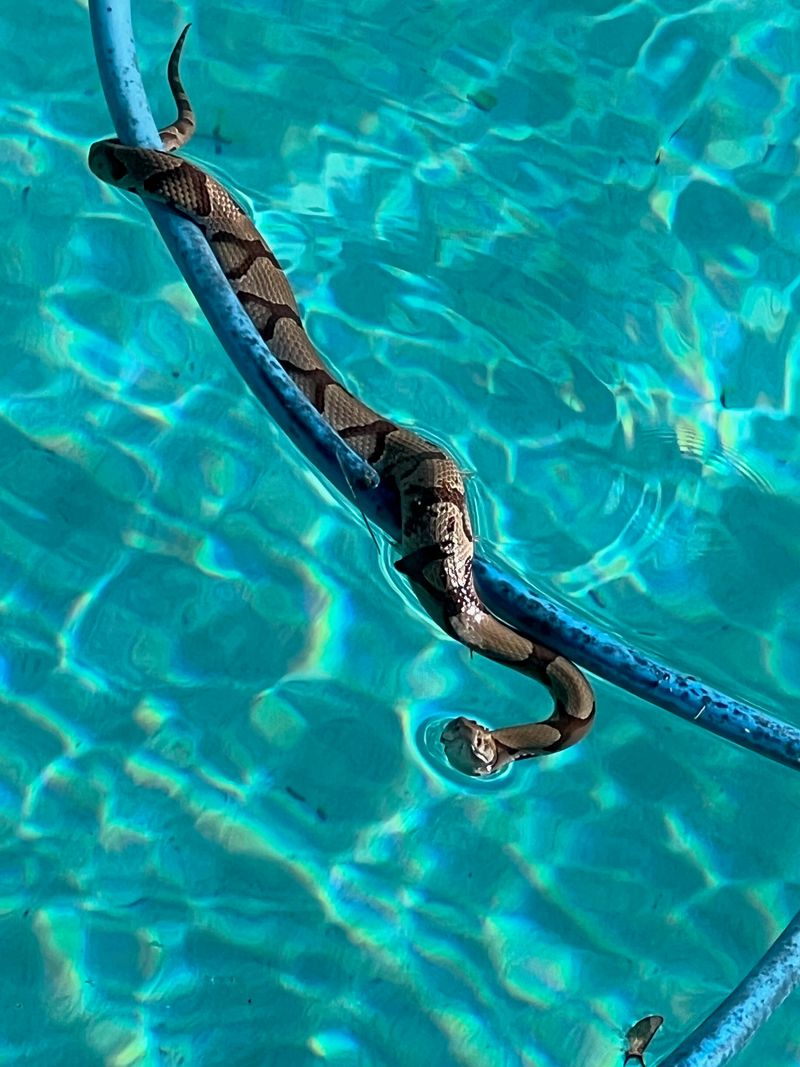
Look beyond the pool itself and you may find the real reason a snake lingered nearby. Pools, water features, and damp landscaping can attract frogs, lizards, and insects.
Some snake species feed on exactly these animals, and a yard full of active prey is a productive hunting area.
Southern toads, green tree frogs, and Cuban treefrogs are all documented prey for certain snake species, according to resources from the Florida Museum of Natural History.
Moist pool surroundings, landscape lighting that draws insects at night, and decorative ponds can all support healthy frog populations.
A snake does not need to be a dedicated watersnake to find a pool area worth investigating.
Different snake species have very different diets. Not every snake near your pool is hunting frogs.
Some feed primarily on lizards, earthworms, or small rodents. The specific prey in your yard will influence which species are most likely to move through.
Reducing unnecessary prey habitat around the pool area can help lower the overall activity level of wildlife in that zone. Fixing leaky irrigation, clearing leaf litter where frogs shelter, and managing landscape lighting are practical starting points.
These steps will not guarantee a snake-free yard, but they can reduce the food-related reasons certain species find the area worth revisiting.
5. Cool Hiding Spots Make The Pool Deck More Appealing
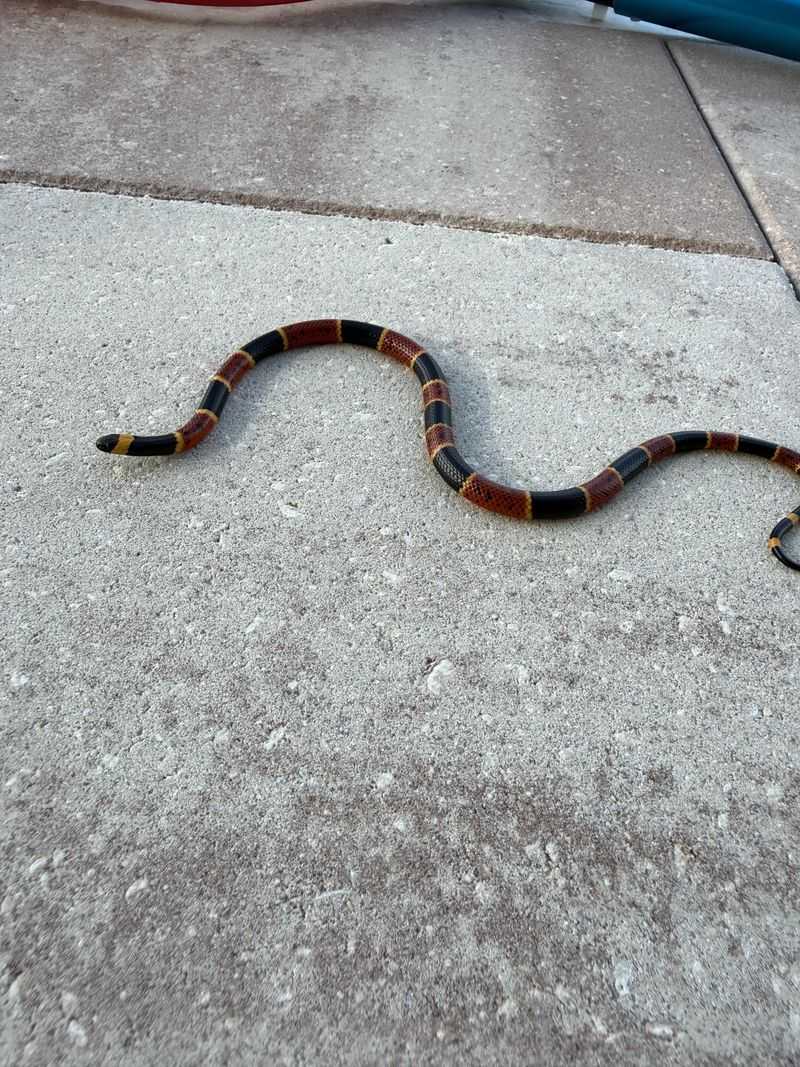
A well-shaded pool deck with equipment storage, stacked chairs, dense border plants, and gaps beneath the coping offers a lot more than a place to swim. From a snake’s perspective, those features look like cover.
Shaded, enclosed spaces provide protection from heat, predators, and disturbance.
UF/IFAS Extension guidance on snakes around homes points to gaps around patios, stored materials, brush piles, and thick vegetation as common temporary shelter spots. A snake does not need a permanent den to find a pool area attractive for a few hours.
Loose pavers, stacked pool noodles, or a gap beneath an equipment cabinet can all serve as short-term cover.
Reducing clutter around the pool deck is practical and straightforward. Storing pool accessories in sealed containers, keeping vegetation trimmed back from the deck edge, and checking for gaps around structures can make the area feel less sheltered.
None of this requires turning your yard into a bare concrete lot.
Eliminating unnecessary hiding spots is different from removing every plant or natural feature from the property. A tidy, well-maintained pool area simply offers fewer reasons for wildlife to pause and settle.
Gaps around pipes, conduit, or equipment bases that lead toward the structure are worth sealing with appropriate materials, especially near the home’s foundation or pool equipment housing.
6. Repeat Sightings Can Point To Rodents Nearby
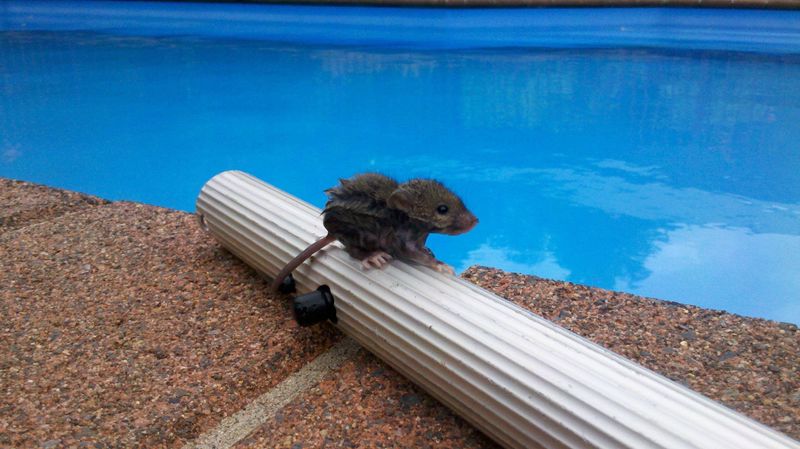
One snake beside the pool is a wildlife encounter. Several snakes seen near the same structure over a few weeks is a clue worth investigating.
FWC and UF/IFAS Extension guidance notes that frequent snake activity near buildings can sometimes be connected to rodent populations in or around the structure.
Rats and mice are documented prey for several snake species common to residential properties. A reliable food source can give a snake reason to spend more time in a particular area.
Repeated sightings do not prove a rodent infestation, but they are worth treating as a prompt to check for signs.
Rodent indicators include droppings along walls or near cabinets, gnaw marks on stored materials, disturbed pet food or bird seed, and nesting material in sheltered spaces.
Checking around pool equipment cabinets, stored furniture, and the base of fences can reveal activity that might otherwise go unnoticed.
Addressing rodent attractants is a practical step regardless of snake activity. Securing garbage containers, storing bird seed in sealed bins, removing spilled pet food promptly, and checking for entry points around the home are all supported by extension guidance.
Reducing the rodent population in an area can also reduce one specific reason certain snakes spend extended time near residential structures. That connection is worth understanding without overstating it.
7. An Unknown Snake Deserves Distance, Not Guesswork
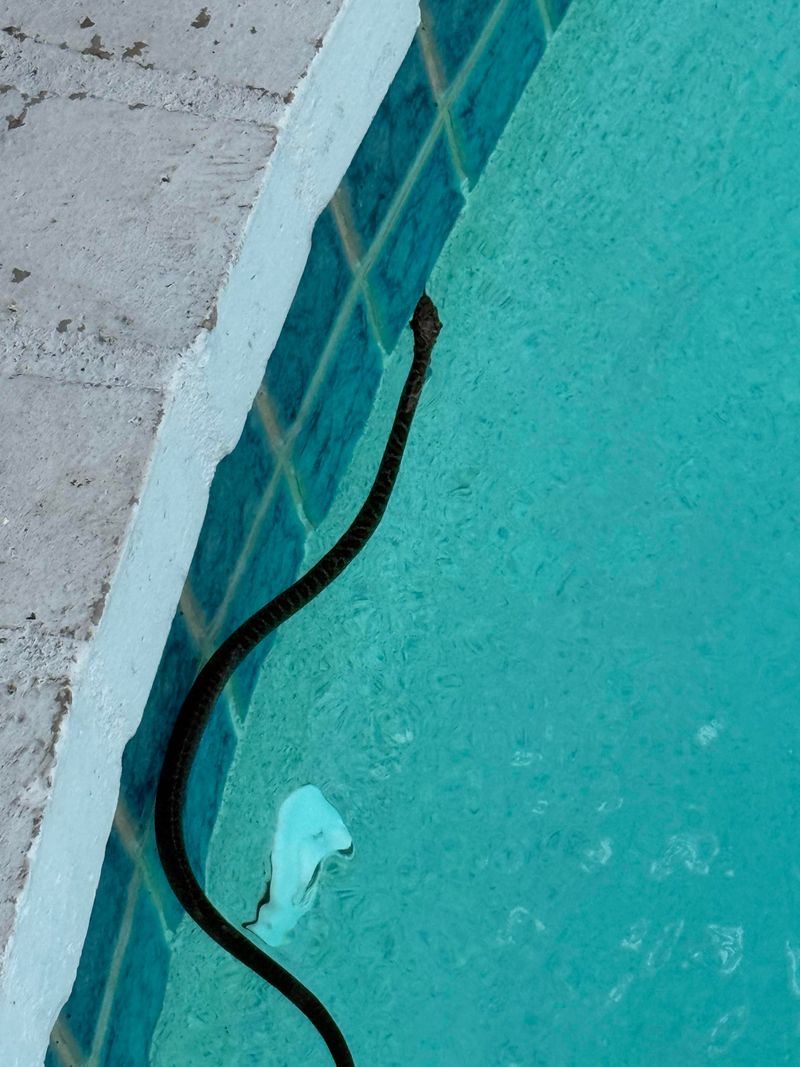
Trying to figure out whether a snake is venomous from a few feet away is a situation that regularly leads to poor decisions. Head shape, body color, banding patterns, and swimming behavior are all features that can look similar across very different species.
Experienced herpetologists use multiple characteristics together, not a single visual shortcut.
The safest first step is distance. Keep children and pets away from the area and observe the animal without approaching it.
If you want a photograph for identification purposes, use your phone’s zoom function from well back. Getting closer to frame a better shot is not worth the risk.
UF/IFAS Extension and the Florida Museum of Natural History both offer identification resources that go well beyond simple color or head-shape guides.
iNaturalist is another tool that lets you upload a photo and receive input from a community of naturalists. These resources are more reliable than trying to recall a pattern you read online.
A snake that feels cornered or threatened may flatten its body, vibrate its tail, or strike in a defensive response. That behavior is not aggression in the predatory sense.
It is a stress response. Giving the animal space and time to move on eliminates the conditions that trigger it.
If a snake has entered a living space or cannot be safely avoided, contact a licensed wildlife removal professional rather than attempting to handle it yourself.
8. Less Cover Gives Snakes Fewer Reasons To Linger
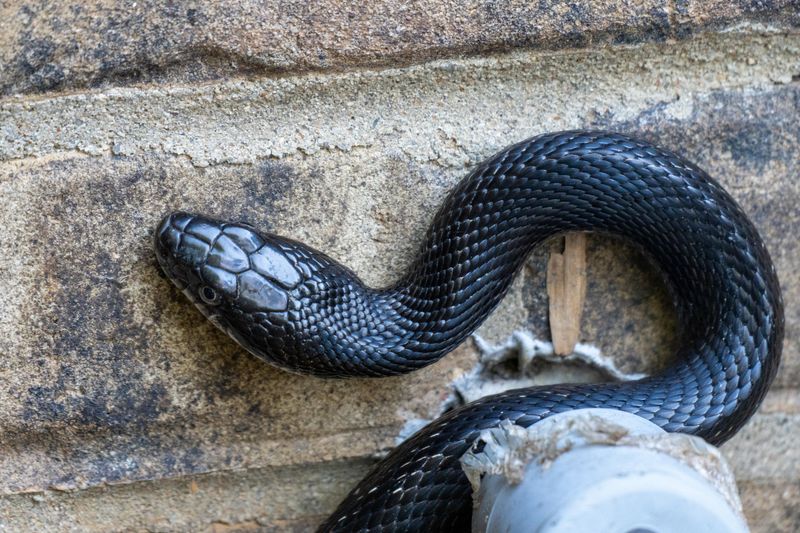
A poolside area that offers little shelter, few prey animals, and no accessible food sources is simply less interesting to passing wildlife. That is the practical goal behind most yard-management advice related to snakes.
Reducing attractive conditions is more realistic than expecting a property to be completely wildlife-proof.
Clutter reduction is a good starting point. Stacked wood, loose debris, unused pool equipment, and thick ground cover near the deck all create the kind of sheltered microhabitats that small animals use.
Keeping the pool area tidy limits those options without requiring major landscaping changes.
Sealing gaps around pool equipment housings, conduit runs, and the base of fences can reduce access points near structures. UF/IFAS Extension guidance supports sealing appropriate openings as part of general home and yard maintenance.
Focus on gaps large enough to admit a small animal rather than trying to caulk every hairline crack.
Spilled bird seed, unsecured pet food, and open garbage containers can all support rodent populations, which in turn may attract certain snake species. Addressing those attractants is a straightforward maintenance habit with benefits beyond snake management.
No single yard change will prevent every future wildlife encounter. What these steps do accomplish is make the area around your pool a less productive place for wildlife to spend extended time.
That shift in habitat quality is the most honest goal a homeowner can work toward.
9. Florida Has More Snake Species Than Most Homeowners Realize
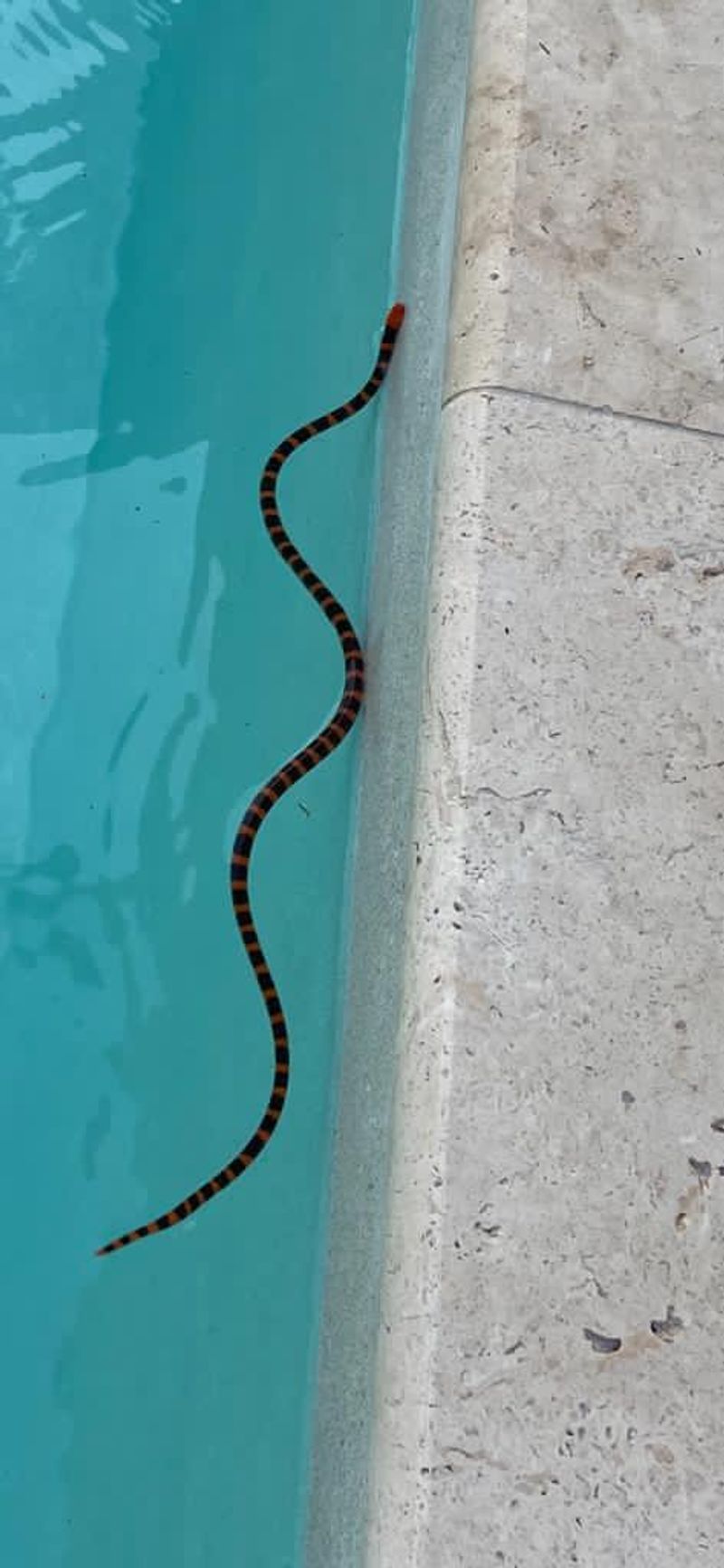
Florida is home to more than 50 native snake species, according to the Florida Museum of Natural History. Only six of those are venomous.
That ratio matters when a homeowner spots an unfamiliar animal near the pool and immediately assumes the worst.
The sheer variety of species means that appearances can be genuinely confusing. Several nonvenomous snakes have banding, coloring, or body shapes that resemble venomous species to an untrained eye.
The scarlet kingsnake and the eastern coral snake are a classic example of two species that look remarkably similar but are entirely different animals.
Understanding that diversity does not mean being relaxed about every snake encounter. It means being realistic about what you are likely seeing.
The vast majority of snakes that end up near a residential pool belong to harmless species that pose no threat to people who leave them alone.
A field guide specific to Florida reptiles, combined with the identification resources available through UF/IFAS and the Florida Museum, gives homeowners a much better foundation than internet searches or social media posts.
Local UF/IFAS Extension offices can also connect residents with educational programs about native wildlife.
Knowing what lives in your region helps you make informed decisions rather than reactive ones when wildlife shows up unexpectedly in your yard.