Why Are Michigan Boxwoods Turning Brown In Patches This Summer?
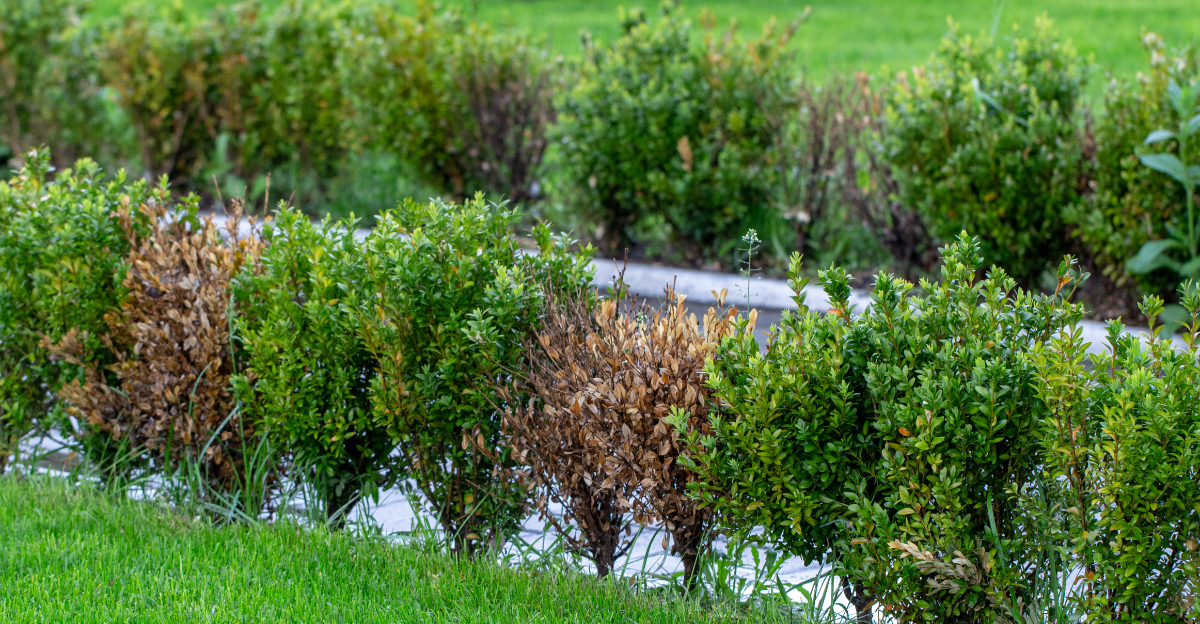
Your boxwoods looked perfect only days ago. Brown patches now cover entire branches without warning.
Michigan yards are showing this exact damage right now. Nobody expects healthy shrubs to fail this quickly. Local patterns already show clusters forming across several counties.
Heat gets blamed first, but that’s rarely the real cause. Something hidden beneath the leaves is doing far more harm. Every yard responds differently depending on drainage and sun.
Few homeowners notice the real signs early enough. Ignoring it for even a short time can destroy entire hedges. This summer’s Michigan heat made the spread faster than usual. That kind of delay rarely helps tender shrubs recover.
Waiting won’t fix what’s already taking hold. Find out what’s really damaging your boxwoods before it spreads further.
The Culprit Behind This Season’s Boxwood Trouble Is A Fungus
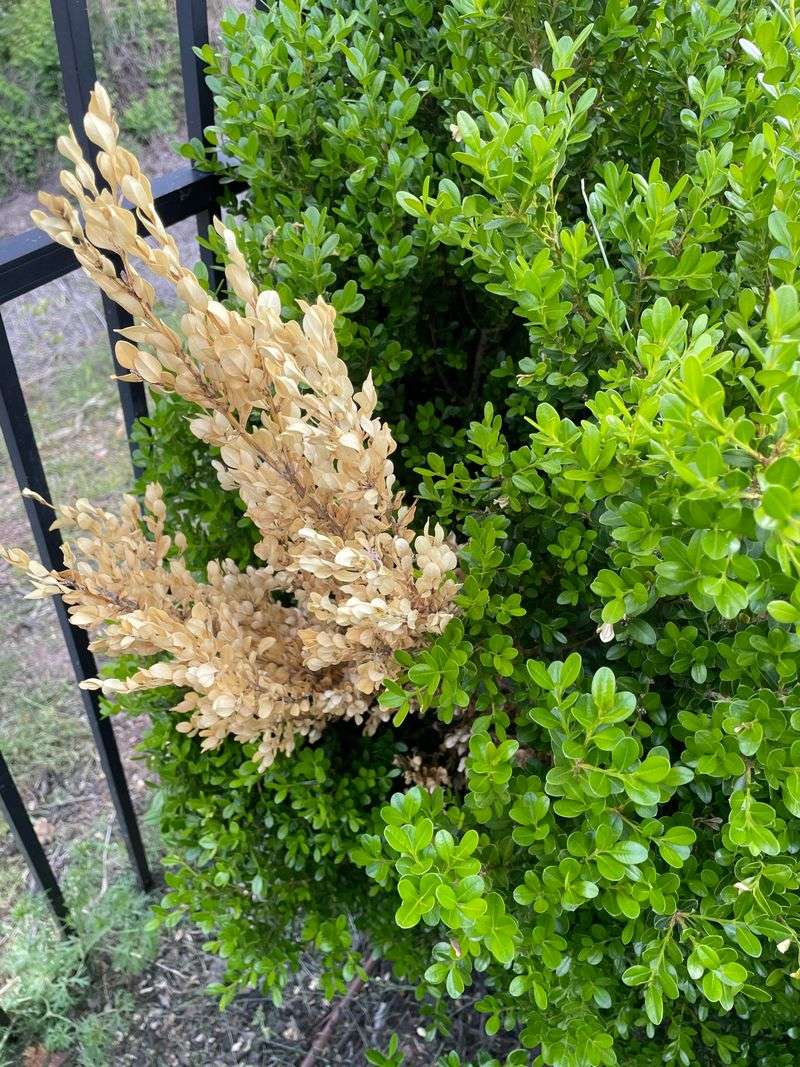
Something sneaky is attacking your shrubs. The main culprit behind patchy browning on boxwoods this summer is a fungal disease called boxwood blight.
It is caused by a pathogen named Calonectria pseudonaviculata, and it has been spreading across the Midwest. Boxwood blight does not just turn leaves yellow first.
It hits fast, turning foliage brown and causing rapid leaf drop within days of infection. The speed of damage is what shocks most homeowners.
You will also notice dark, water-soaked spots on the leaves before they brown out. Those spots are an early warning sign that fungal spores have already taken hold.
Catching these early spots can make a real difference. The stems are another place to check immediately.
Infected stems show distinctive dark brown or black streaks that look almost painted on. If you see those streaks, the blight has moved beyond the leaves.
Boxwood blight thrives in warm, humid conditions, which makes summer in this region a perfect storm for an outbreak. The fungus produces spores that can survive on plant debris for years.
That is why problems seem to pop up out of nowhere. Many gardeners confuse blight with winter burn or drought stress.
Unlike those issues, blight spreads in an irregular, patchy pattern across the shrub. Once you know what to look for, the difference becomes obvious. Identifying boxwood blight early is your best defense this season.
How This Fungus Spreads So Quickly In Patches
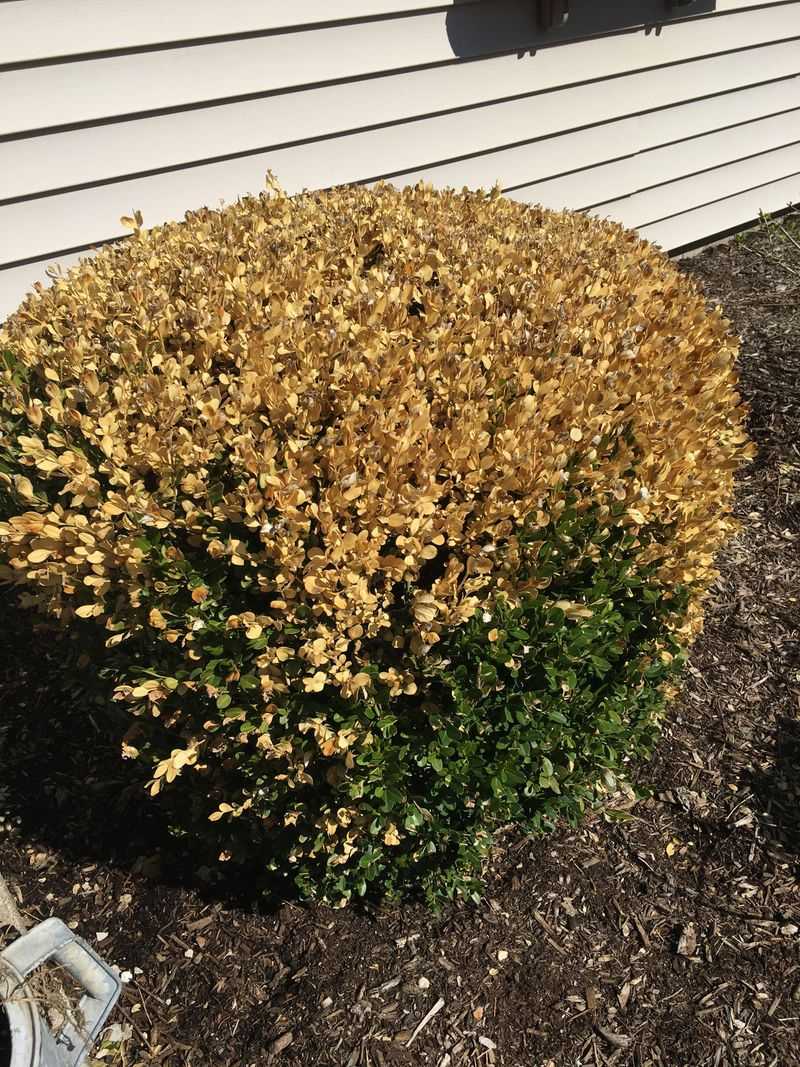
Patches appear fast, and that speed is no accident. Boxwood blight spreads through spores that travel by water, wind, animals, and even your own gardening tools.
One infected plant can contaminate an entire hedge row quickly. Rain is one of the biggest movers of this fungus.
When water hits an infected leaf, it splashes spores onto nearby branches and neighboring shrubs. That splashing pattern explains why damage often appears in irregular clusters.
Your garden gloves and pruning shears can carry spores too. If you trim an infected plant and then move to a healthy one without cleaning your tools, you transport the problem yourself.
This is a very common way blight jumps from shrub to shrub. Birds and small animals brushing through infected plants also carry spores on their fur or feathers.
Your Michigan Garden Changes Every Week. Your Plan Should Too.
Gardening in Michigan changes quickly throughout the season. Every Friday you’ll receive a simple weekly plan showing exactly what to plant, prune, fertilize, harvest, and protect so you never miss the right timing.
Even a squirrel running along your hedge can leave a trail of fungal material behind. Nature does not respect garden boundaries.
Buying new plants from a nursery is another risk factor. Infected nursery stock can look perfectly healthy at the time of purchase.
The fungus may be present but not yet showing visible symptoms. Dense plantings make spreading even easier because leaves constantly touch.
Airflow between plants slows down, and moisture lingers longer on foliage. Those two factors create the perfect launch pad for rapid spread.
Understanding how fast this moves helps you act quickly and protect the healthy shrubs still standing in your yard.
Conditions That Make This Summer Especially Risky
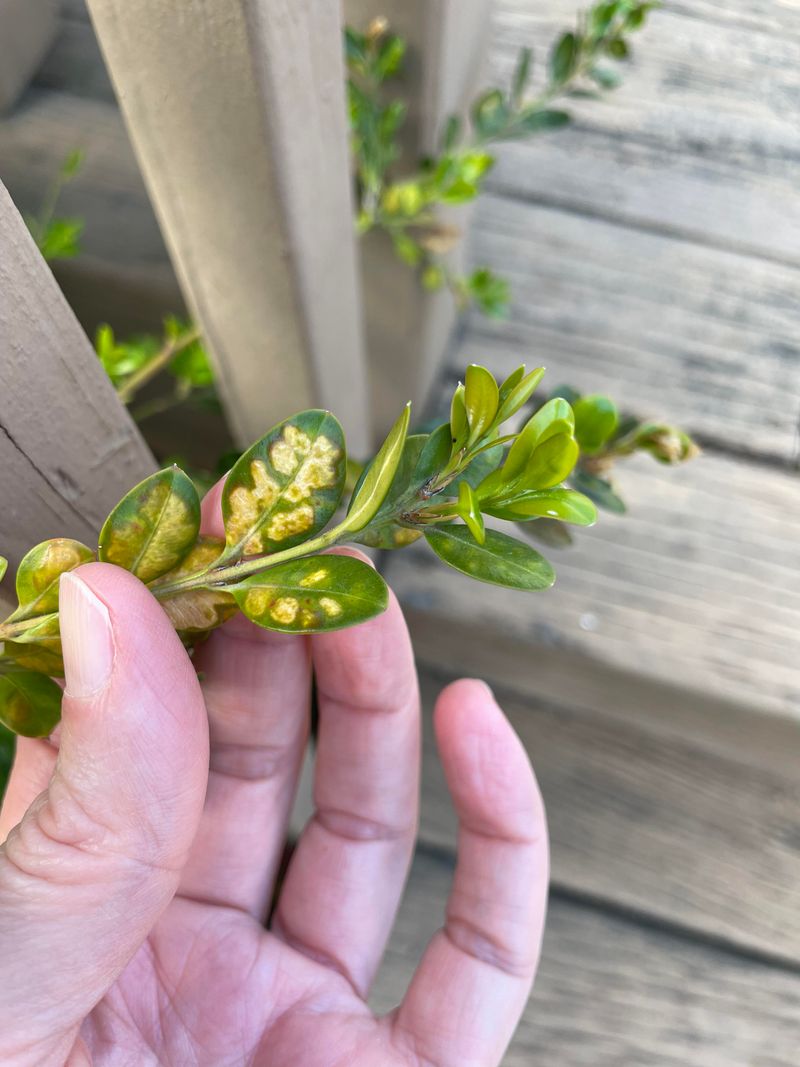
This summer has been a tough one for boxwoods. Warm temperatures paired with above-average rainfall have created nearly perfect conditions for fungal outbreaks.
Humidity levels across the Great Lakes region have stayed stubbornly high for weeks. Boxwood blight needs leaf wetness to germinate and spread.
When leaves stay wet for extended periods, spores have enough time to penetrate plant tissue. This summer has delivered that kind of prolonged moisture repeatedly.
Overnight temperatures staying above 60 degrees Fahrenheit add extra fuel to the problem. Fungi love warmth and do not slow down when nights stay mild.
A cooler summer would naturally limit how fast the pathogen moves. Heavy mulching around shrub bases, while normally helpful, can trap moisture near the root zone.
That extra ground-level humidity creates a humid microclimate around the lower branches. Those lower branches are often where blight first appears.
Crowded plant spacing reduces airflow dramatically. When shrubs are planted close together for a full, lush look, leaves stay wet longer after rain.
That lack of air circulation is a gift to any fungal pathogen. Overhead irrigation systems also add risk when they wet foliage instead of targeting roots.
Watering in the evening means leaves stay damp all night. Switching to drip irrigation or morning watering can lower that risk significantly.
This season stacked one risk factor on top of another, and that combination is why so many yards saw damage seem to appear overnight.
Signs The Damage Is Getting Worse, Not Better
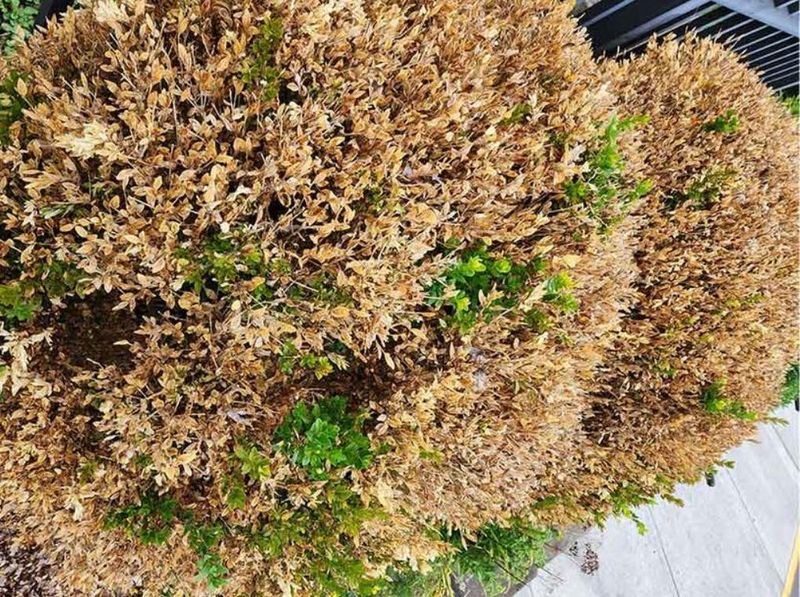
Brown patches that grow bigger week after week are a red flag. If the affected areas on your shrubs are expanding rather than stabilizing, the fungus is still active and spreading.
Waiting to see if things improve on their own rarely works with blight. Leaf drop is one of the clearest signs the situation is escalating.
Boxwoods naturally hold their leaves tightly, so significant shedding is abnormal. A carpet of brown leaves under your shrubs means the infection has progressed beyond early stages.
Check the stems closely after leaf drop occurs. Bare stems with dark streaking indicate that the fungus has moved into the woody tissue.
Once stems are heavily infected, recovery for those branches becomes much harder. New growth showing brown tips shortly after emerging is another alarm signal.
Healthy new growth should be bright green and firm. When fresh growth browns within days, the plant is fighting an active infection it cannot outpace.
A white, cottony coating on the undersides of infected leaves is a telltale sign of active sporulation. That fuzzy layer means the fungus is actively producing spores right now.
Every breeze carries those spores to neighboring plants. Patches that jump to previously healthy sections of the same shrub confirm the spread is ongoing.
If the brown areas are no longer contained to one side or section, the infection has moved through the interior branches. Recognizing these escalating signs pushes you toward action before the whole shrub is lost.
Steps To Stop It From Spreading Further
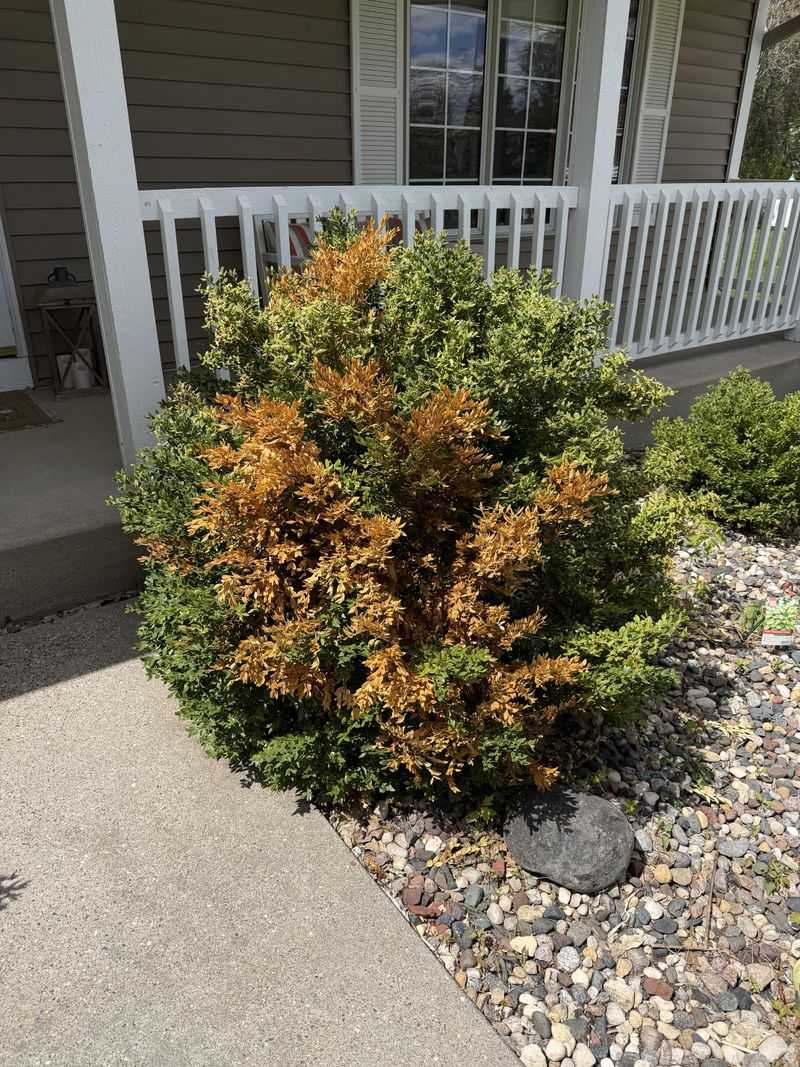
Stopping the spread starts with your hands and your tools. Remove all visibly infected branches by cutting at least two inches below the last visible sign of damage.
Seal those clippings in a plastic bag immediately and dispose of them in the trash, not the compost pile. Sterilize your pruning shears between cuts.
A 70 percent isopropyl solution or a 10 percent bleach mix works well for this. Skipping this step between cuts is one of the fastest ways to spread blight further yourself.
Rake up and bag all fallen leaves beneath infected plants right away. Those leaves carry active spores that can re-infect the same plant or spread to nearby shrubs.
Do not let debris sit on the ground through the rest of the season. Apply a fungicide labeled for boxwood blight as soon as possible.
Products containing chlorothalonil, tebuconazole, or thiophanate-methyl have shown good results. Follow the label instructions carefully and plan for multiple applications throughout the season.
Avoid overhead watering while managing an active outbreak. Water the root zone only, using a soaker hose or drip system.
Dry foliage slows spore germination significantly between treatments. Space out any remaining healthy shrubs if overcrowding is an issue.
Better airflow is one of the most underrated prevention strategies available. A little breathing room goes a long way toward keeping healthy plants protected. Fast action gives your garden the best chance this season.
How To Help Your Boxwoods Recover This Season
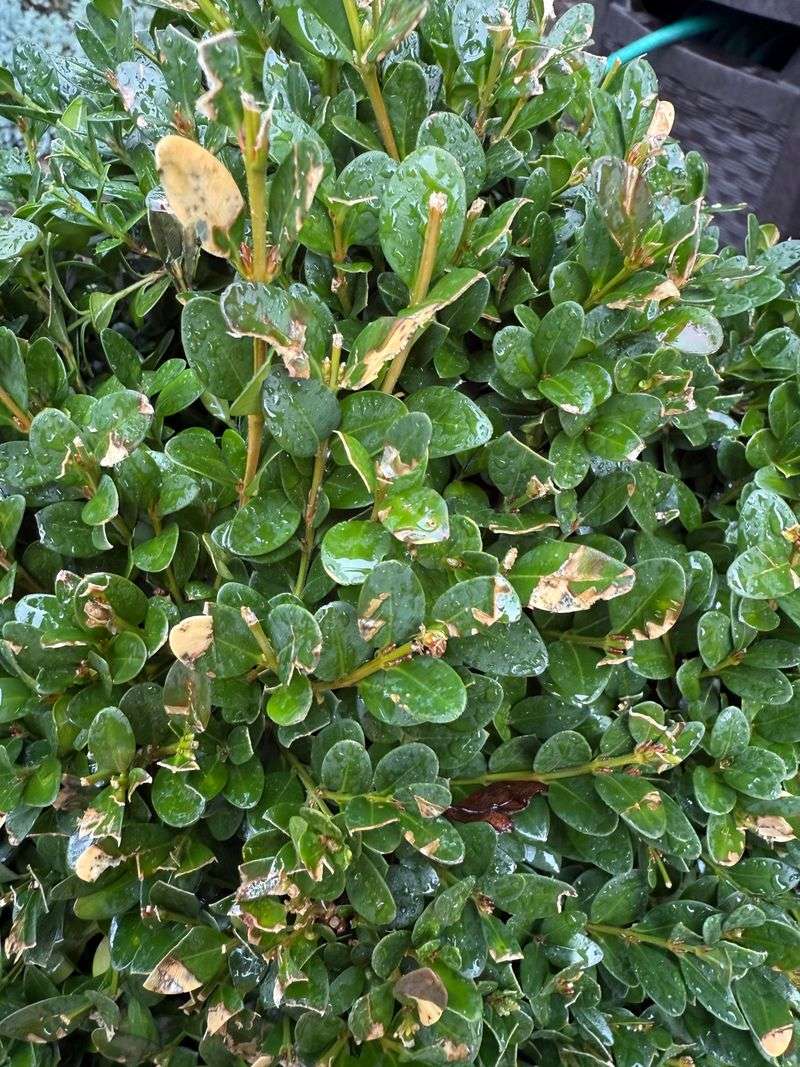
Recovery is possible, and it starts with patience. After removing infected material and applying fungicide, give your shrubs a few weeks before expecting visible improvement.
Too much fertilizer too soon can stress an already weakened plant. Once the infection is under control, a balanced slow-release fertilizer helps rebuild plant strength.
Look for a formula designed for shrubs and apply it according to package directions. Strong, well-fed plants resist future outbreaks more effectively than stressed ones.
Mulching around the base of your shrubs helps regulate soil moisture and temperature. Use a two-to-three inch layer of wood chips or shredded bark, keeping mulch a few inches away from the stems.
That gap prevents excess moisture from sitting against the bark. Pruning out affected wood encourages the plant to redirect energy toward healthy growth.
Even after the fungus is gone, damaged branches block light and airflow inside the shrub. Clear out that damaged wood so the plant can breathe and grow more efficiently.
Some boxwood varieties are simply more susceptible to blight than others. Cultivars like English boxwood tend to be far more vulnerable.
A blight-resistant variety like “NewGen Independence” can save you years of headaches. Keep monitoring your shrubs weekly through the rest of summer.
Catching any new patches early makes retreatment faster and more effective. With consistent care, brown, blighted boxwoods can bounce back stronger by fall.