Why Coatimundis May Start Showing Up In Southern Arizona Yards
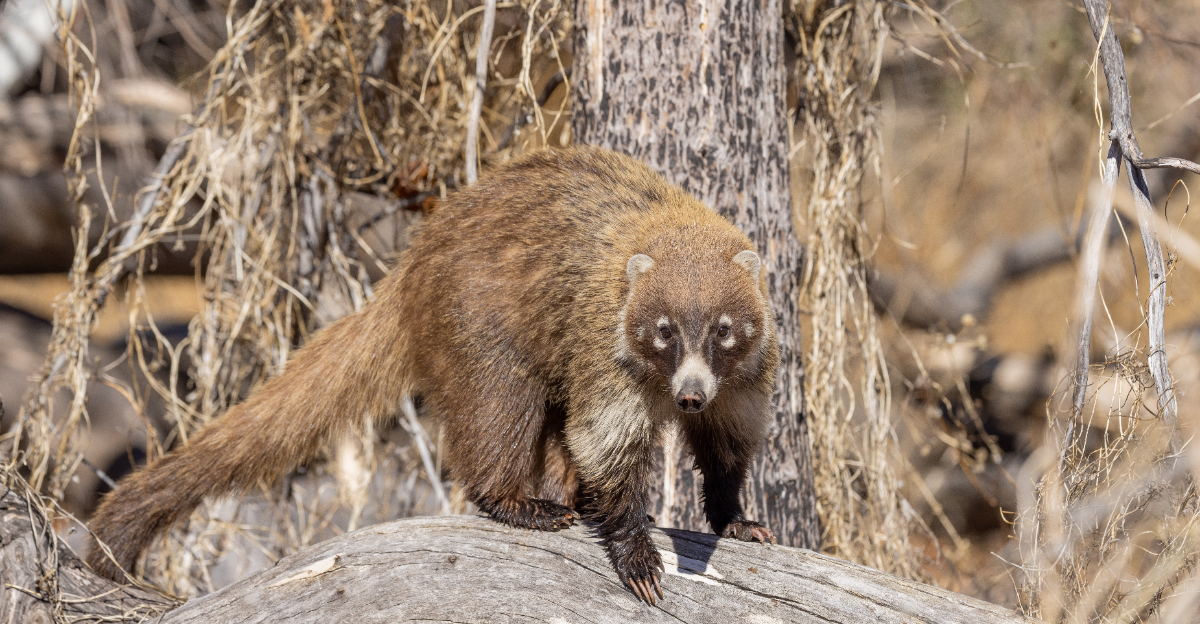
Something with a striped tail and a long nose wandering across your yard can make you look twice. Coatimundis are hard to miss once they step out of the surrounding desert and into spaces around homes.
These curious animals live in parts of southern Arizona, especially near mountains, canyons, and wooded areas. Their search for food can sometimes bring them closer to yards and neighborhoods.
Seeing one does not automatically mean it plans to stay. Coatis travel while searching for insects, fruit, and other easy meals they can find along the way.
Your property can become more interesting when those food sources are readily available.
Knowing what draws a coati closer helps you understand why one suddenly appeared.
That unusual backyard visitor may simply be exploring before moving on to another feeding spot nearby.
1. Late Summer Changes Where Coatimundis Search For Food
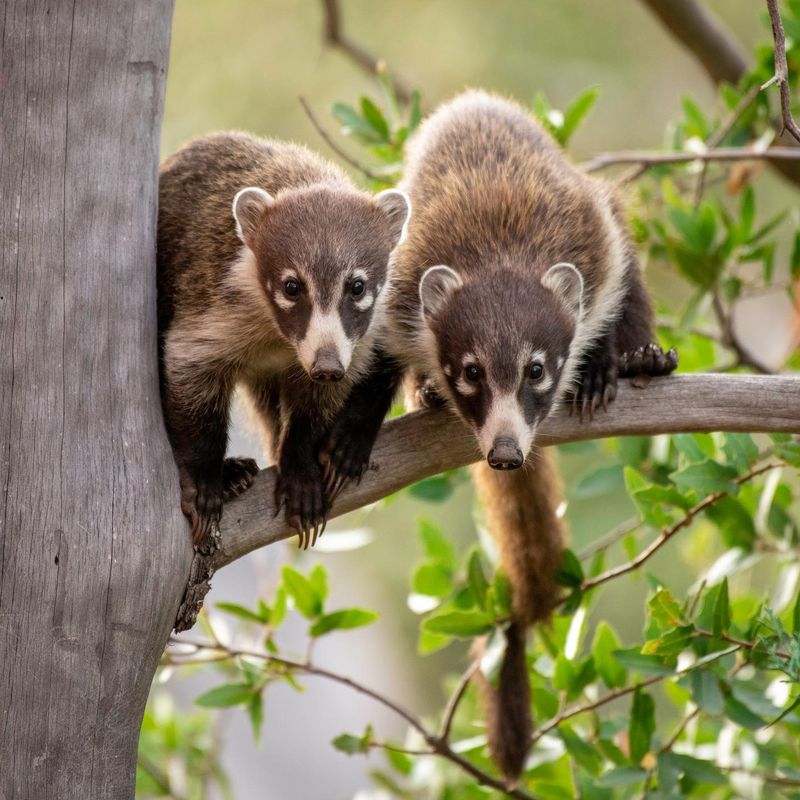
Late summer flips a switch for coatimundis. Food that was once easy to find in the wild starts to thin out, and that pushes them to explore new areas.
Coatimundis are opportunistic feeders. Beetles, grubs, lizards, and small invertebrates make up a big part of their diet.
When those resources become harder to find in open desert terrain, coatimundis adjust their range and wander farther from their usual habitat.
Residential yards often sit right at the edge of natural desert. That puts homes in the direct path of a hungry coatimundi looking for its next meal.
Fallen fruit, pet food left outside, and compost piles can look like a jackpot to them. Their long, flexible snouts are built for rooting around in soil and leaf litter.
Once they find something worth eating, they tend to linger.
Coatimundis are not aggressive by nature, but they are persistent. Removing outdoor food sources before late summer arrives can help discourage them from treating your yard like a regular stop.
Keeping an eye out starting in July or August gives you a head start before visits become a habit.
2. Monsoon Rains Bring More Food Into The Desert
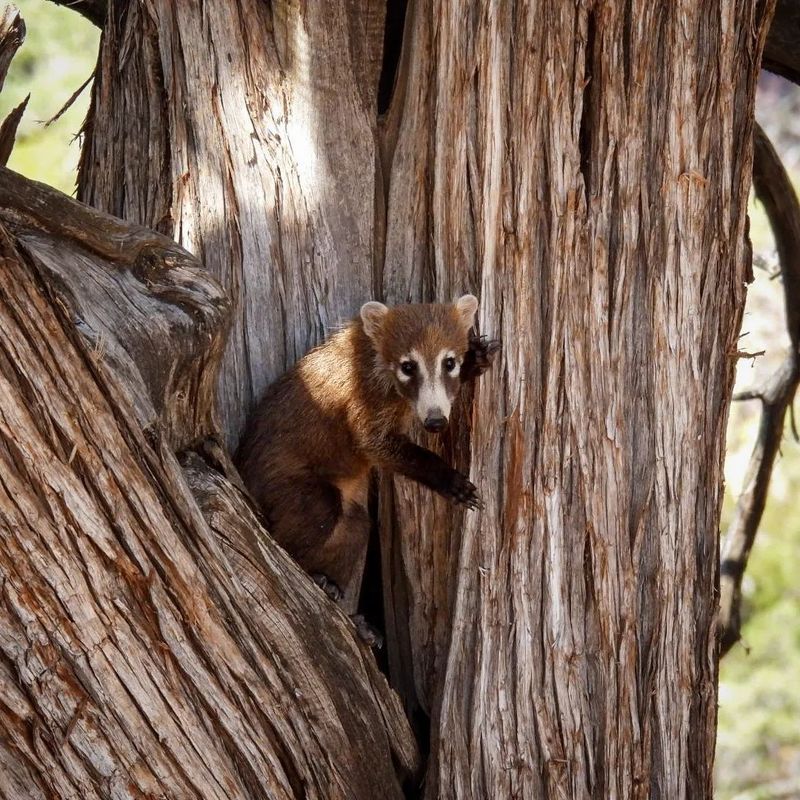
Monsoon season changes everything in the Sonoran Desert. Rain that pours in from July through September triggers a burst of plant and animal activity that spreads across the landscape.
Insects hatch in huge numbers after rain soaks the ground. Beetles, ants, and other invertebrates become much more abundant.
Coatimundis, which rely heavily on insects as a food source, follow that activity wherever it leads.
Fruit also ripens fast after monsoon rains. Prickly pear cactus pads swell with moisture, and their red fruits become sweet and accessible.
Saguaro fruits may already be past their peak, but other native plants produce food that draws coatimundis out of the mountains and into lower elevations.
Lower elevations often include suburban neighborhoods along washes and foothills. Tucson and surrounding communities sit right in that zone.
Coatimundis that normally stay higher up may drift downslope as food abundance shifts after heavy rain events.
Yards with fruit trees, garden beds, or bird feeders can attract them quickly. Even a small amount of accessible food is enough to make a coatimundi curious.
Your Arizona Garden Changes Every Week. Your Plan Should Too.
Gardening in Arizona changes quickly throughout the season. Every Friday you’ll receive a simple weekly plan showing exactly what to plant, prune, fertilize, harvest, and protect so you never miss the right timing.
Monsoon season is a good time to tighten up outdoor spaces and reduce anything that might smell like an easy meal.
3. Insects And Ripe Fruit Can Lead Them Toward Yards
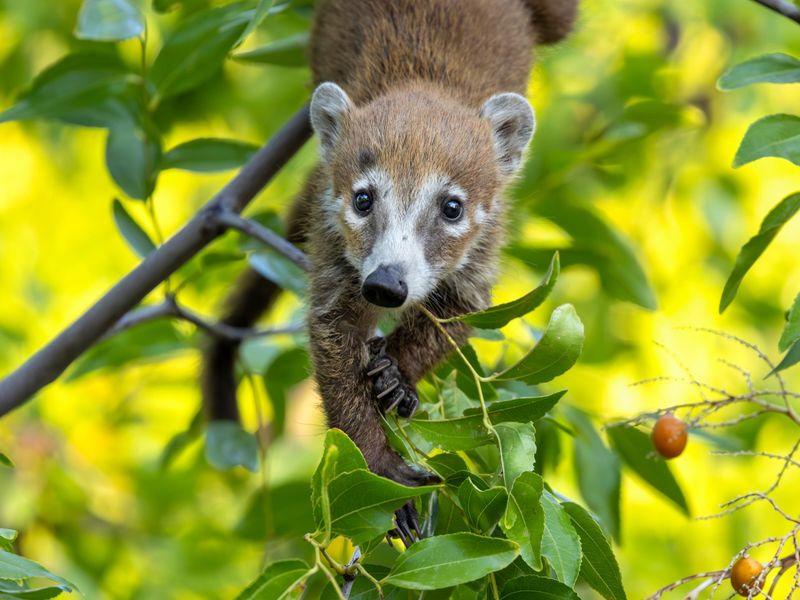
Ripe fruit on the ground is one of the strongest signals that pulls coatimundis toward homes. Citrus trees, fig trees, and even mulberries can drop enough fruit to make a yard worth visiting repeatedly.
Coatimundis have an excellent sense of smell. They can pick up the scent of fermenting or rotting fruit from a surprising distance.
Once they catch that smell, they follow it without hesitation.
Insects drawn to ripe fruit add another layer of attraction. Flies, beetles, and other bugs cluster around fallen produce.
That combination of fruit and insects is hard for a coatimundi to pass up.
Gardens with vegetable beds can also attract them. Squash, melons, and tomatoes all carry strong scents.
Coatimundis are not picky. If it smells like food, they will investigate.
Picking up fallen fruit quickly is one of the most effective ways to reduce coatimundi interest in your yard. Clearing fruit from the ground every day or two during peak season makes a real difference.
Covering compost bins tightly also helps, since decomposing organic material carries the same kind of smell that draws them in. Small changes in yard habits can shift coatimundi behavior noticeably over time.
4. Water Sources Give Them Another Reason To Stay Nearby
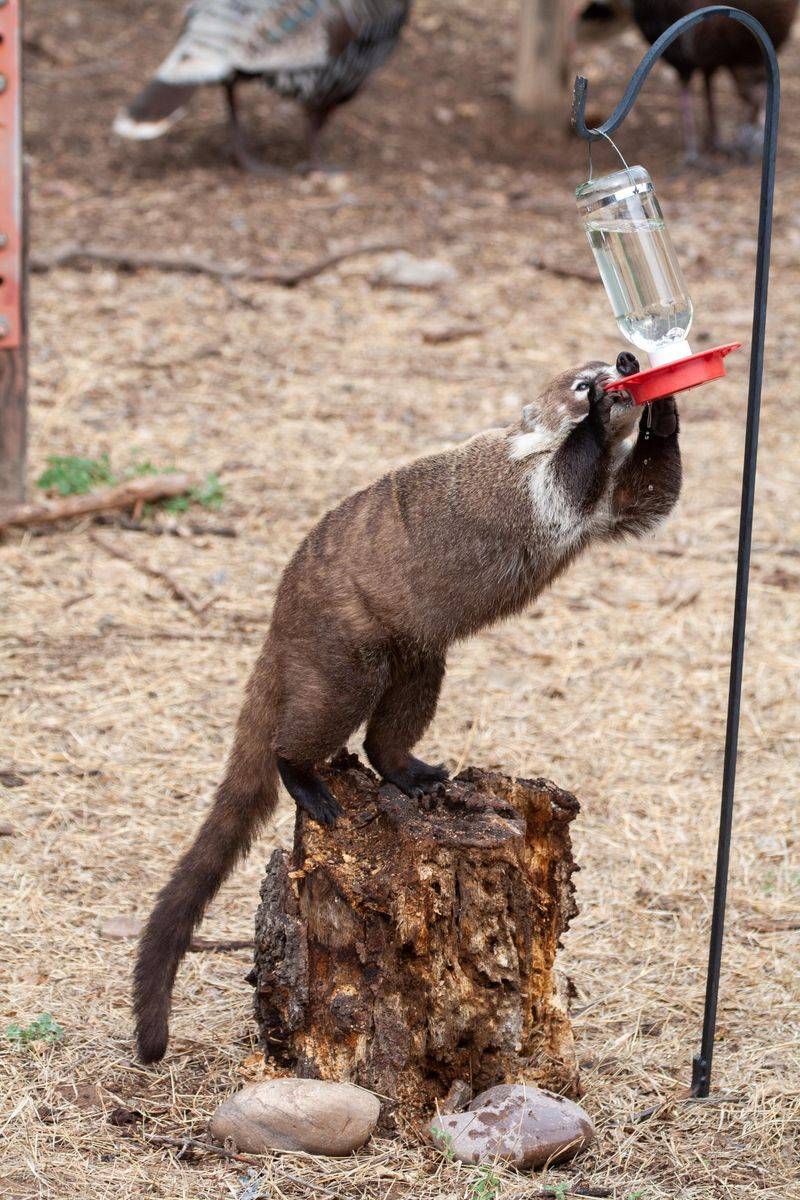
Water is scarce in the desert, especially between rain events. Coatimundis need to drink regularly, and they will travel to find reliable water sources when natural ones dry up.
Birdbaths, pet water bowls, garden ponds, and drip irrigation puddles all qualify. Even a small amount of standing water can attract a coatimundi, especially during the hottest and driest stretches of summer before monsoon rains arrive.
Once a coatimundi finds water in a yard, it may return to that same spot consistently. Animals are creatures of habit when resources are dependable.
A yard with both food and water becomes a very appealing destination.
Bringing pet water dishes inside at night can help reduce visits. Covering or elevating birdbaths makes them harder to access.
Fixing drip irrigation leaks that leave puddles on the ground removes another draw.
None of these steps are guaranteed to stop every visit, but reducing water access alongside food access gives you a much better chance of discouraging regular stops. Coatimundis will move on if a location stops offering what they need.
Consistency matters. Making your yard consistently less rewarding is more effective than any single action taken once.
5. Family Groups May Make These Visits More Noticeable
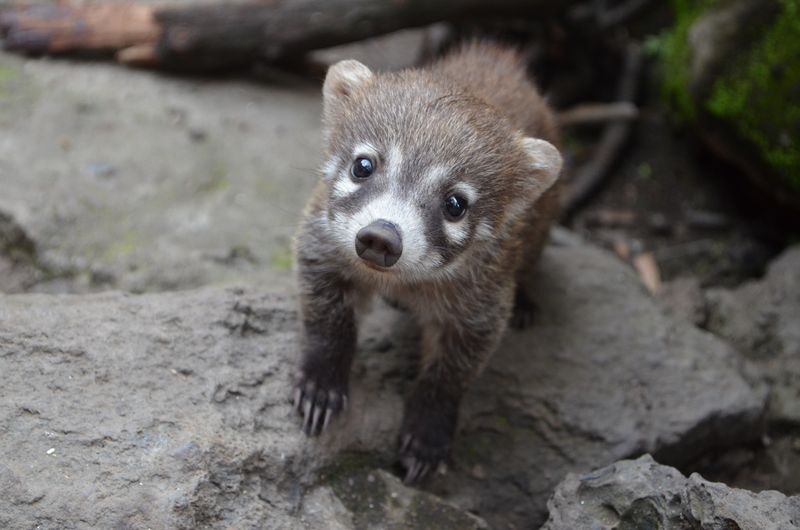
Coatimundis are social animals. Females and their young travel together in groups called bands, which can range from just a few individuals to over a dozen.
Spotting one coatimundi often means others are close by. When a band moves through a yard, the visit is hard to miss.
They spread out, root around in different spots, and make enough noise to get anyone’s attention.
Juvenile coatimundis are especially bold. Young animals tend to explore more freely and show less caution around unfamiliar spaces.
That can make a family group seem more intrusive than a lone adult would.
Adult males typically travel alone outside of mating season. A solo coatimundi is usually a male, while a group almost always includes females with young.
Knowing the difference helps make sense of what you are seeing.
Group visits can cause more disruption in a yard simply because there are more animals involved. Overturned planters, scattered mulch, and disturbed garden beds are common signs.
Securing loose items and using wire mesh around garden beds can reduce the impact. Coatimundi bands tend to move through an area rather than settle in one spot, so most visits are temporary if the yard does not offer consistent rewards.
6. Daytime Activity Makes Them Easier To Spot
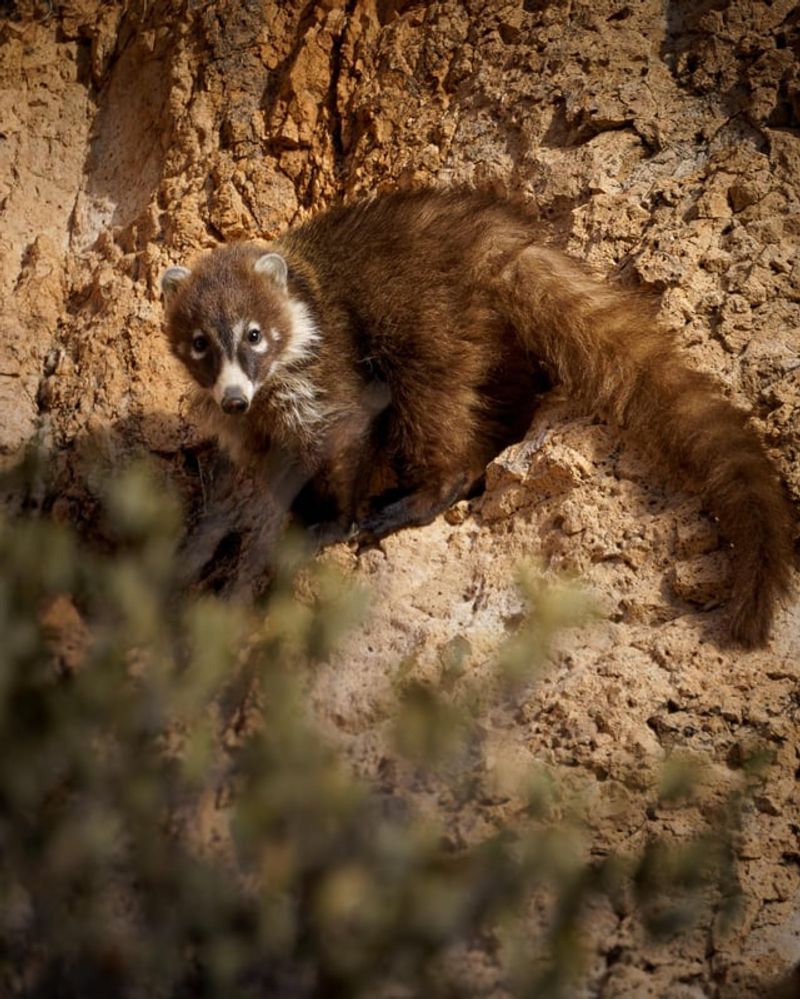
Unlike many desert mammals, coatimundis are active during the day. That diurnal behavior makes them far more visible than nocturnal animals like raccoons or ringtails.
Most backyard wildlife encounters happen at night, so people are often surprised to see a coatimundi strolling through in broad daylight. Seeing them during morning or afternoon hours is completely normal behavior for this species.
Coatimundis forage actively through the day, pausing to rest during the hottest midday hours. Early morning and late afternoon tend to be peak activity times.
Yards near washes, hillsides, or natural desert edges see the most daytime traffic.
Their long, upward-curved tails are usually held high while they walk, which makes them easy to spot even from a distance. That distinctive posture, combined with their pointed snouts and ringed tails, sets them apart from other local wildlife at a glance.
Daytime visibility means they are more likely to be noticed by residents, pets, and children. Keeping dogs inside or supervised during peak activity hours reduces the chance of a stressful encounter for both the animal and your pet.
Coatimundis are not prone to confrontation, but any wild animal may react defensively if it feels cornered or threatened. Giving them space is the simplest and safest approach.
7. Removing Easy Food Sources Can Reduce Repeat Visits
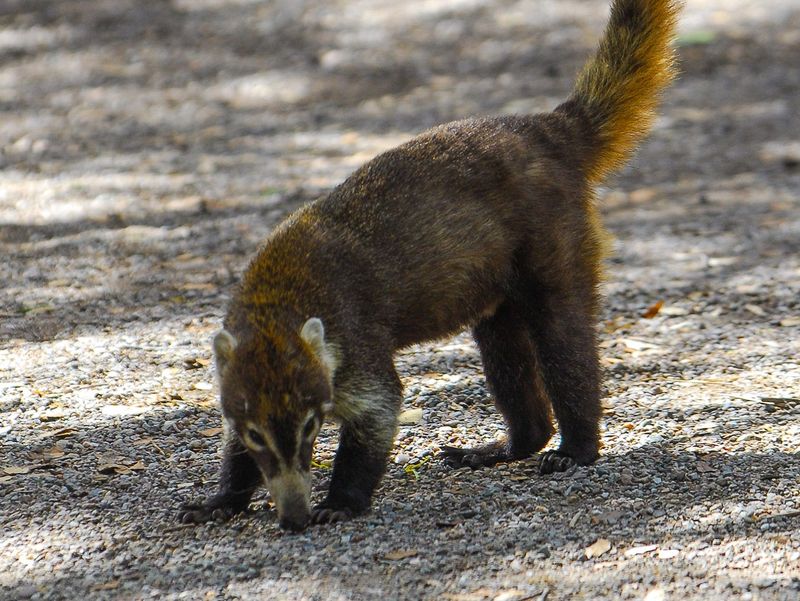
Coatimundis are smart and adaptable. Once they learn that a yard reliably offers food, they will keep coming back.
Breaking that pattern starts with removing what brought them there.
Fruit trees are one of the biggest attractants. Picking fruit before it drops and cleaning up fallen produce promptly makes a yard far less interesting.
Even small amounts of rotting fruit on the ground can be enough to trigger a visit.
Pet food is another common draw. Feeding pets indoors or bringing bowls inside after meals eliminates that source entirely.
Unsecured trash cans and open compost bins are equally problematic. Using bins with locking lids reduces odor and access.
Bird feeders present a trickier challenge. Seed and suet attract insects, which attract coatimundis.
Switching to a feeder style that limits ground spill can help reduce insect buildup beneath it.
Motion-activated lights or sprinklers may deter coatimundis in some cases, though results vary depending on the individual animal and how frequently it has visited before. Habituation is real.
An animal that has visited many times may be less deterred by sudden lights or water than one encountering your yard for the first time.
Consistent removal of food and water sources remains the most practical long-term approach for keeping coatimundis from settling into a routine around your home.