The Plants That Make Narrow Oregon Side Yards Feel Wider
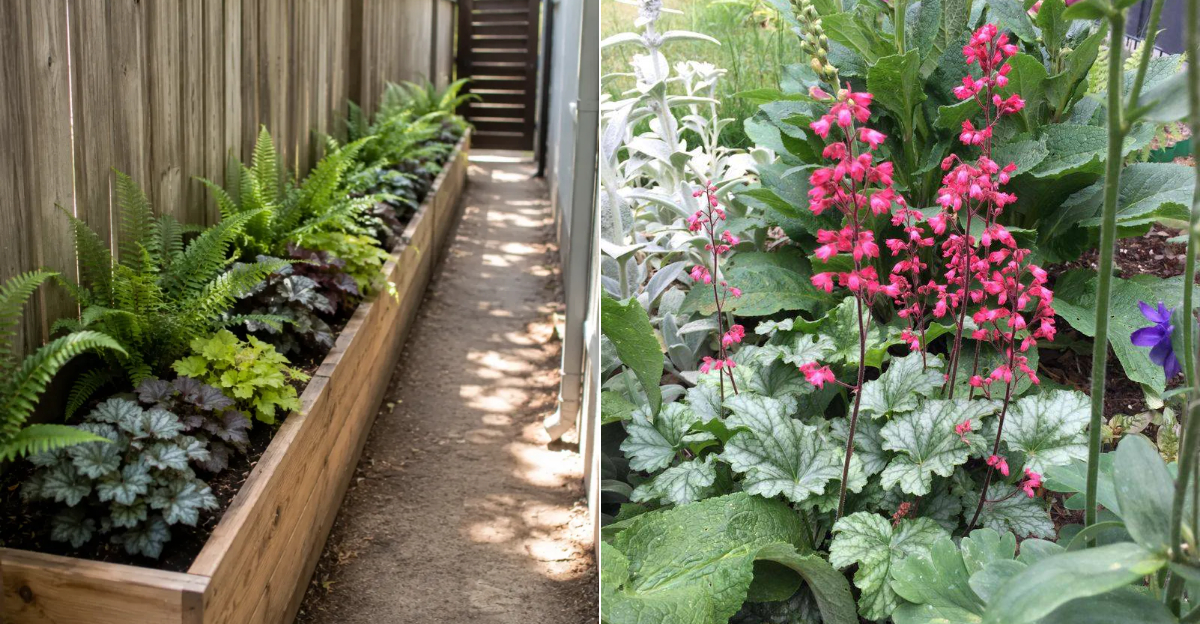
Narrow Oregon side yards can feel more like passageways than actual garden spaces. Add a fence on one side and the house on the other, and even a decent stretch of ground can start to feel surprisingly cramped.
Plant choice can completely change that impression. Some shapes, textures, and growth habits pull the eye through a space instead of making it feel boxed in.
Others can add softness without stealing precious walking room or turning the path into a leafy obstacle course.
The fun part is that a small footprint does not have to mean a boring planting plan. Carefully chosen greenery can bring height, movement, color, and seasonal interest while helping the area feel more open.
Tiny yard, big ambitions. Oregon’s mix of rain, shade, summer sun, and regional climate differences adds another layer to the decision.
The right plants can help a skinny side yard feel intentional rather than squeezed between two structures.
With a few smart choices, that overlooked strip beside the house can become one of the most inviting parts of the landscape.
1. Daylilies Fill Skinny Beds Without Heavy Maintenance
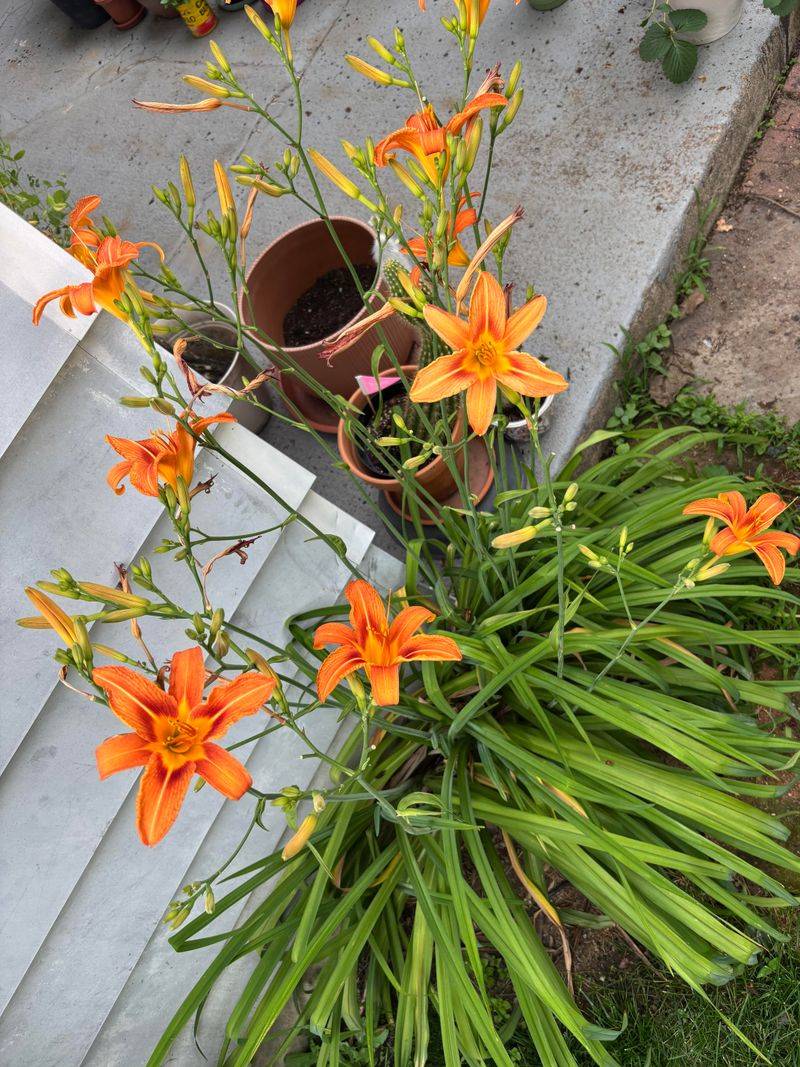
Few plants are as forgiving and cheerful as daylilies. These tough perennials grow in clumps that spread slowly outward rather than flopping over fences or sprawling across paths.
That makes them a great fit for narrow beds where space is limited but color is still wanted.
Daylilies produce strap-like leaves that grow upright and fan out in a tidy arch. The leaves stay close to the base, so they do not eat into your walking space.
Each flower only blooms for one day, but the plants produce so many buds that the show lasts for weeks at a time.
They grow well in full sun to part shade, which gives them a lot of flexibility in side yards with changing light. Watering needs are low once they settle in, and they rarely need fertilizer to perform well.
Dividing the clumps every few years keeps them healthy and looking their best. Colors range from pale yellow to deep red, so you can mix varieties for a long season of bloom.
Shorter varieties like Stella de Oro stay under two feet tall, which keeps the bed looking neat. Taller varieties work well at the back of a narrow bed to add height without bulk.
Daylilies also resist most pests and diseases without much help from you. They are a reliable, low-fuss choice that brings real color to a tight side yard all summer long.
2. Dwarf Conifers Add Structure Without Spreading Too Far
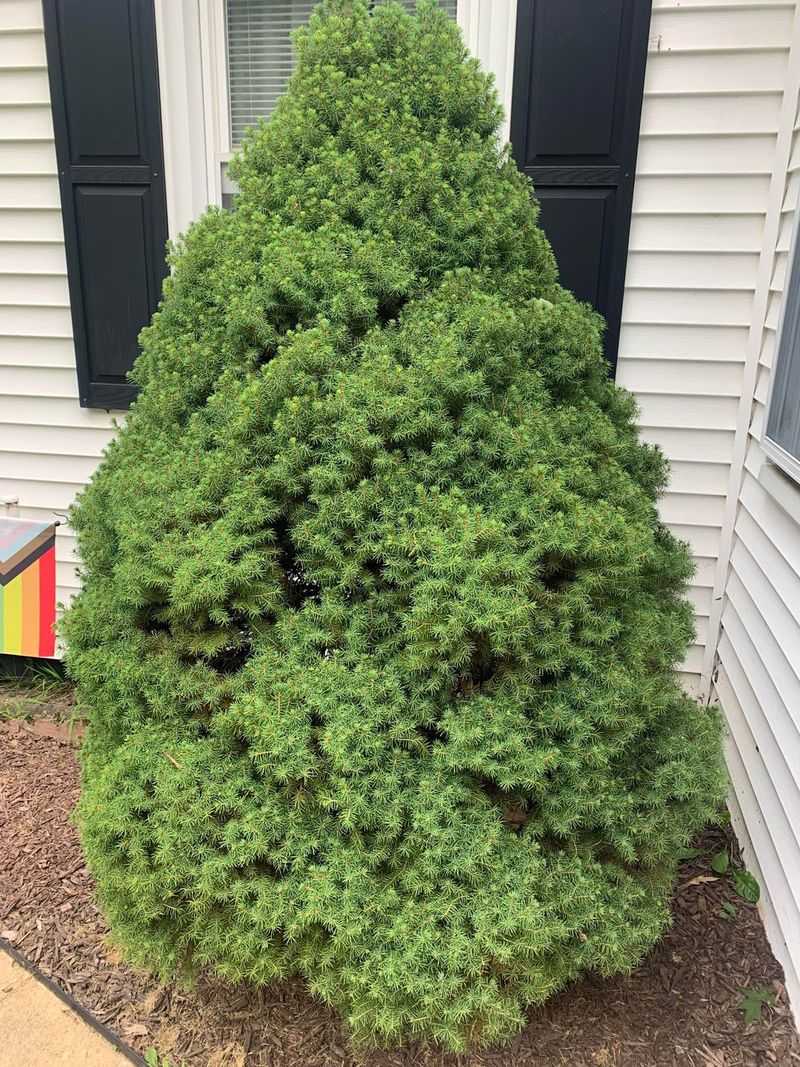
Structure matters a lot in a narrow side yard. Without it, a long skinny space can look messy or unfinished.
Dwarf conifers are one of the best tools for adding that sense of order without taking up too much room.
These small evergreen shrubs come in a wide range of shapes. Some grow in tight rounded balls.
Others form neat pyramids or low spreading mounds. Because they are slow growers, you do not have to worry about them suddenly taking over the path or crowding neighboring plants.
Your Oregon Garden Changes Every Week. Your Plan Should Too.
Gardening in Oregon changes quickly throughout the season. Every Friday you’ll receive a simple weekly plan showing exactly what to plant, prune, fertilize, harvest, and protect so you never miss the right timing.
Most dwarf conifers stay under five feet tall even after many years of growth. That keeps them in scale with a narrow bed and prevents them from making the space feel closed in.
Their year-round foliage also means your side yard looks tidy even in the middle of winter when other plants have gone dormant.
Good choices for narrow spaces include Dwarf Alberta Spruce, Blue Star Juniper, and Little Giant Arborvitae. Each stays compact and behaves well in tight spots.
They also pair nicely with softer plants like heuchera or ferns to create contrast in texture and form.
Maintenance is minimal once they are established. An occasional light trim keeps them looking sharp.
Dwarf conifers work especially well in Oregon gardens because they handle wet winters and dry summers without much fuss. They are a solid, long-term investment in your side yard design.
3. Lavender Works Well Along Sunny Side Paths
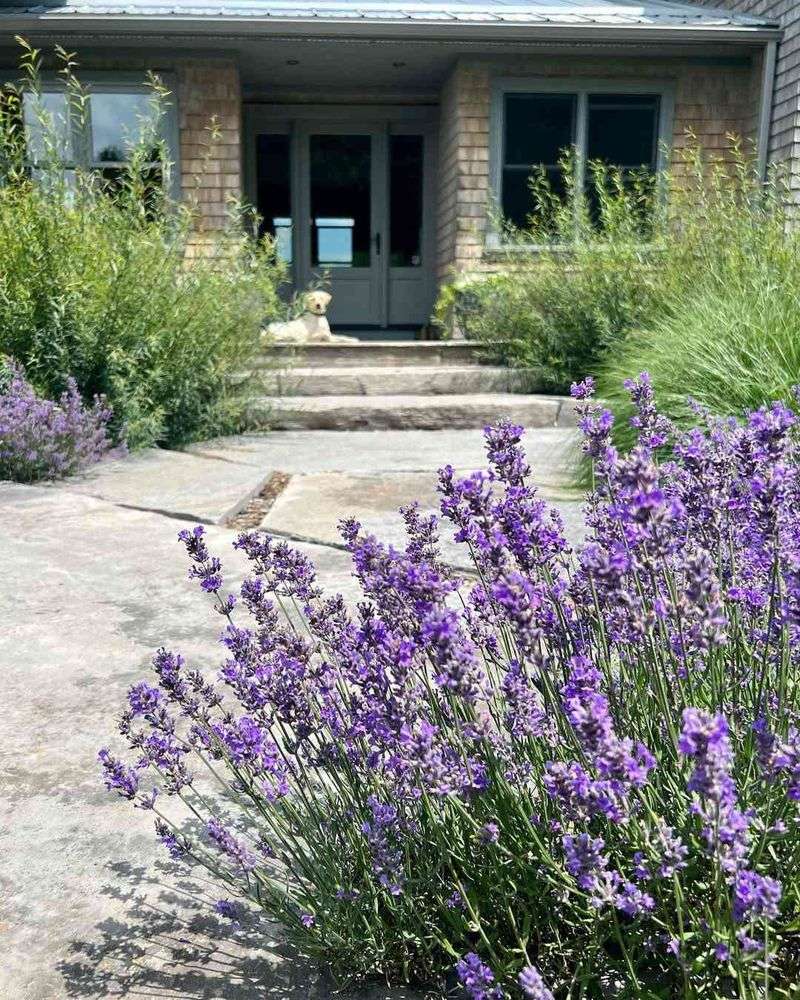
There is something almost instantly calming about lavender. The soft purple flower spikes, the silvery-green leaves, and that unmistakable scent make it one of the most loved garden plants around.
Along a sunny side path, it thrives and rewards you with season after season of beauty.
Lavender loves heat and good drainage, which makes it a natural fit for south- or west-facing side yards that get full sun most of the day.
It grows in a compact mound that stays tidy without much pruning. Most varieties top out between one and three feet tall, so they line a path without blocking it.
One of the best things about lavender is how little water it needs once established. In the dry Oregon summers, that is a real advantage.
Avoid planting it in soggy spots because wet roots cause problems over time. Raised beds or gravel mulch can help improve drainage in heavier soils.
English lavender varieties like Hidcote and Munstead are popular picks because they stay compact and bloom heavily.
Spanish lavender blooms earlier and has a slightly different flower shape that some gardeners love. Both work well in narrow beds as long as the sun is there.
Cutting back the stems after blooming keeps the plant from getting woody too fast. Lavender also attracts bees and butterflies, which adds life and movement to a narrow space. It is a sensory experience as much as it is a visual one.
4. Heuchera Adds Color Without Growing Too Tall
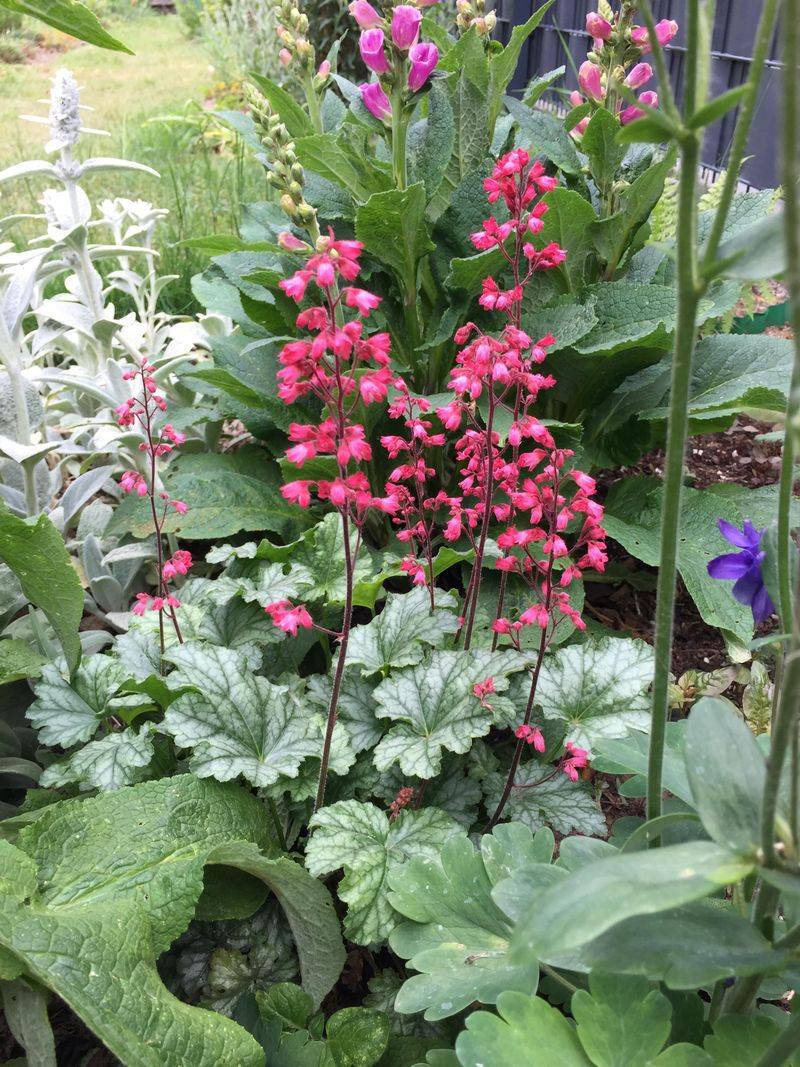
Bold leaf color in a small package is exactly what heuchera delivers. Also called coral bells, this perennial is one of the most versatile plants you can put in a narrow side yard.
It stays low, spreads slowly, and comes in an almost overwhelming range of foliage colors. Leaf colors include deep burgundy, bright lime green, caramel orange, silver, and even near-black.
That variety means you can mix several plants together for a patchwork effect that looks intentional and polished.
Each plant forms a neat mound that rarely grows taller than eighteen inches.
Heuchera handles shade better than most colorful plants, which makes it ideal for side yards that do not get much direct sunlight. It also tolerates part sun, giving it a wide range of useful spots.
Pairing it with ferns or hostas in a shady bed creates a layered look that feels rich and full. In late spring and early summer, heuchera sends up thin stems topped with tiny bell-shaped flowers.
Hummingbirds are drawn to these blooms, which adds a fun bonus to planting them near a path. The flowers are delicate and airy, so they never feel heavy or overwhelming.
Heuchera is an evergreen or semi-evergreen plant in mild climates, which means it holds its color through much of the year.
Replacing it every few years keeps the display looking fresh and vibrant. It is a low-effort plant with a high visual payoff in any narrow bed.
5. Ferns Fill Shady Corners Without Feeling Heavy
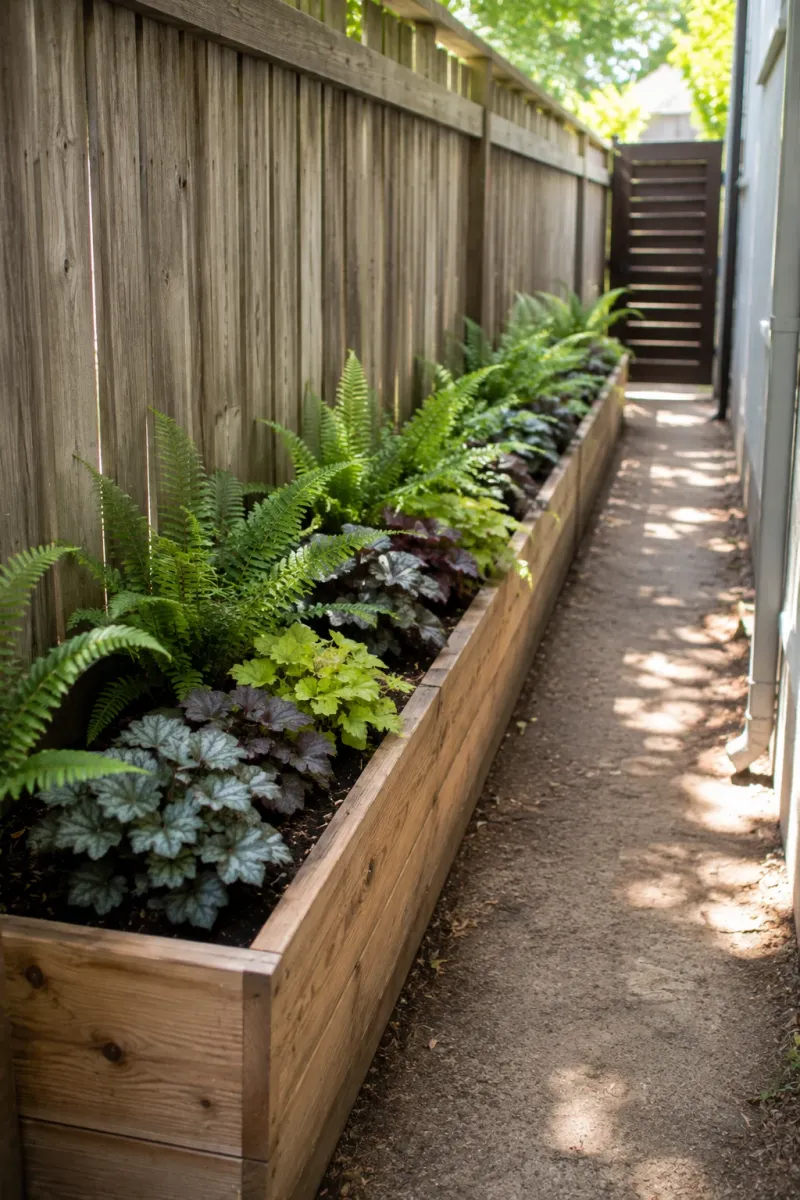
Shady side yards can feel dark and forgotten, but ferns know how to change that story. Their delicate, arching fronds bring a lightness to dim spaces that almost no other plant can match. They make shade feel intentional rather than accidental.
Native ferns like the Western Sword Fern are especially well suited to Pacific Northwest gardens. They are adapted to the wet winters and dry summers that come with the territory.
Once established, they need very little water and almost no maintenance beyond occasional cleanup of old fronds in late winter.
Sword ferns grow in graceful arching clumps that reach two to four feet tall. That height is enough to add presence without blocking light or making the space feel smaller.
Their dark green color stays consistent all year, which keeps the side yard looking tidy in every season.
For a lighter, more feathery look, Japanese painted ferns are a beautiful choice. Their silver and green fronds catch whatever light filters through and seem to glow softly in the shade.
They stay smaller than sword ferns, usually under two feet, which works well in very tight spaces.
Mixing fern varieties creates texture and depth without using a lot of plants. A few well-placed ferns can make a narrow shaded corridor feel like a lush woodland path.
They also pair well with heuchera and hostas, creating a layered planting that looks thoughtfully designed and full of life.
6. Columnar Yew Adds Privacy Without Spreading Wide
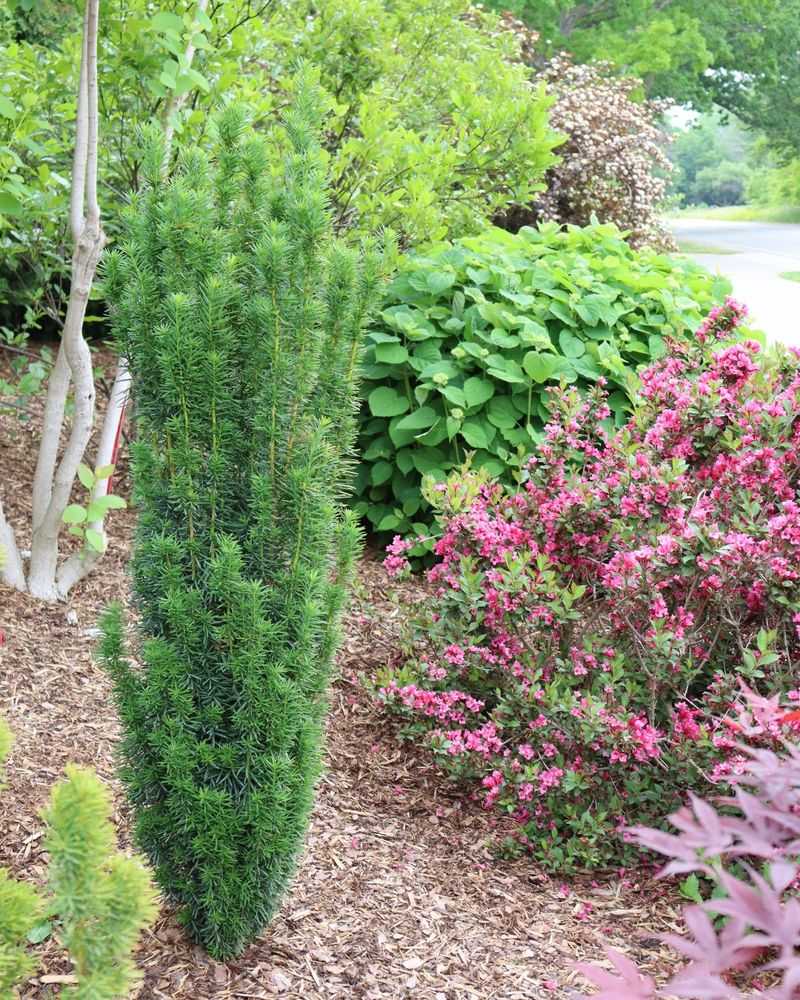
Privacy is one of the top reasons people plant along a side yard, and columnar yew handles that job better than almost anything else.
Its naturally upright form grows tall without growing wide, making it the perfect screen for a tight space between two properties.
Taxus x media Hicksii and similar columnar yew varieties stay just two to four feet wide while reaching heights of ten feet or more over time.
That narrow footprint means you can plant them close to a fence or wall without them pushing into the walking path. They fill vertical space without stealing horizontal space.
Yew tolerates both full sun and deep shade, which makes it one of the most adaptable evergreens available. It also handles pruning extremely well, so you can keep it at exactly the height and width you want.
Shaping it once or twice a year is all it takes to maintain a clean, formal look. The dense dark green foliage creates a solid visual barrier that blocks sightlines from neighboring yards.
That sense of enclosure actually makes a narrow side yard feel more like a private garden room. When a space feels defined, it feels more intentional and less like a leftover strip of land.
Yew grows slowly, so patience is part of the deal. But once established, it is one of the most durable and dependable evergreens you can plant in a Northwest garden. It is a long-term investment that pays off year after year.
7. Slender Hinoki Cypress Gives Height In A Small Footprint
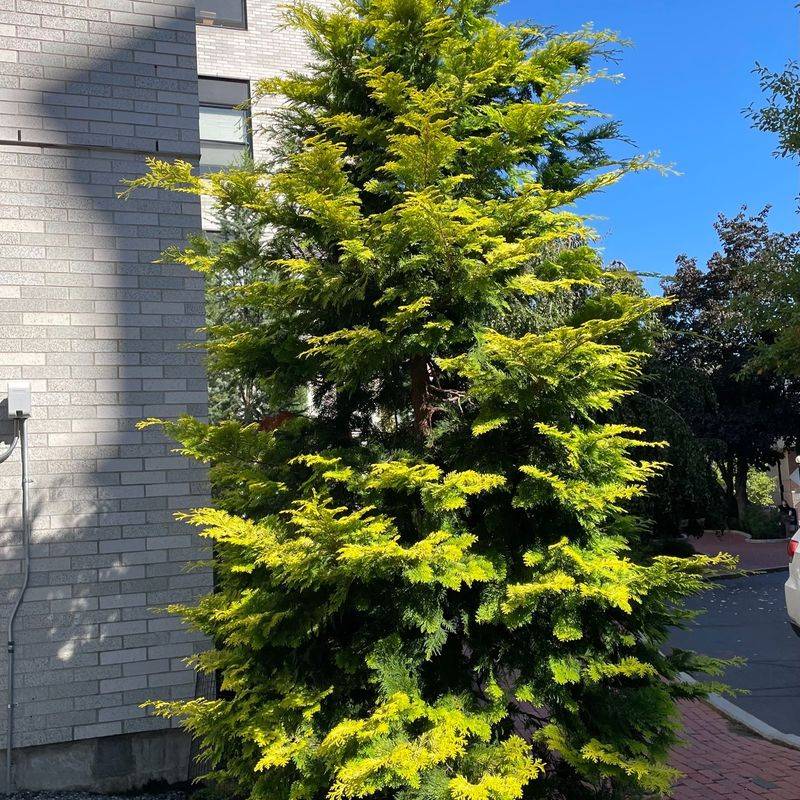
Not every tall plant belongs in a small space, but Hinoki cypress is the exception. The slender varieties of this elegant tree grow in a narrow, almost column-like form that adds serious height without taking up much ground space.
It is one of the most graceful vertical accents available for tight side yards. Chamaecyparis obtusa Gracilis is one of the most popular slender forms.
It grows slowly to about fifteen feet tall while staying just four to five feet wide at the base. The layered, fan-shaped branches have a sculptural quality that gives the tree a refined, almost Japanese garden feel.
The foliage is a rich, glossy dark green that holds its color through all four seasons. Unlike some conifers that look dull or brown in winter, Hinoki cypress stays vibrant and attractive year-round.
That consistency makes it a reliable anchor plant in a side yard design. Slender Hinoki cypress grows best in full sun to part shade and prefers well-drained soil.
It handles the wet Oregon winters well as long as the roots are not sitting in standing water. Mulching around the base helps retain moisture during dry summer months.
Pruning is rarely needed since the tree naturally maintains its shape over time. Planting one or two of these at key points along a side yard draws the eye upward, which makes the space feel taller and less cramped.
Height creates the illusion of more room, and this tree delivers that effect beautifully.