The Fast-Growing Trees Oregon Homeowners Should Keep Away From Foundations
Oregon is a genuinely wonderful place to grow trees, and that is exactly what makes this conversation necessary.
Because some trees that thrive beautifully in the Pacific Northwest have absolutely no business being planted close to your house.
Wet winters, shifting soils, older neighborhoods with foundations that already have their quirks, and narrow planting strips next to driveways and patios create the perfect conditions for certain trees to become very expensive regrets.
To be clear, healthy foundations are tough and tree roots rarely crack solid concrete on their own.
But large, fast-growing, or suckering trees can worsen existing issues, crowd hardscape, block maintenance access, and create drainage problems that add up over time.
A little knowledge before you plant can save you a genuinely painful conversation with a contractor later.
1. Tree-Of-Heaven Sends Shoots Far From The Trunk
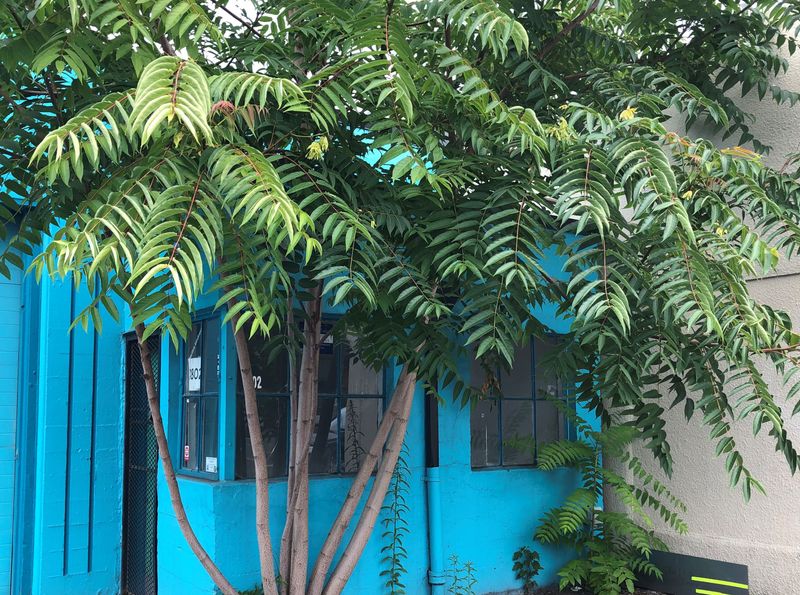
Few trees in Oregon have earned a worse reputation near homes than Tree-of-Heaven. Originally brought to North America as an ornamental plant, it has since become one of the most aggressively spreading trees in the region.
It grows extremely fast, sometimes adding several feet in a single season, and it spreads not just by seed but by sending up shoots from its roots, often well away from the main trunk.
Near a foundation, that root-suckering habit is a serious concern. Shoots can appear in cracks in sidewalks, along driveways, or even through gaps in older hardscape.
The roots travel far and wide, making removal genuinely difficult once a plant is established. Cutting the tree down often encourages more vigorous suckering from the remaining root system.
Oregon’s Department of Agriculture lists Tree-of-Heaven as an invasive species, meaning it can also spread beyond your yard into neighboring areas and natural spaces.
For Oregon homeowners with tight foundation beds or older sidewalks nearby, this tree belongs nowhere near the house.
A large open space far from structures is the only setting where its aggressive nature would not create lasting problems for your property.
2. Weeping Willow Roots Need A Large Wet Space
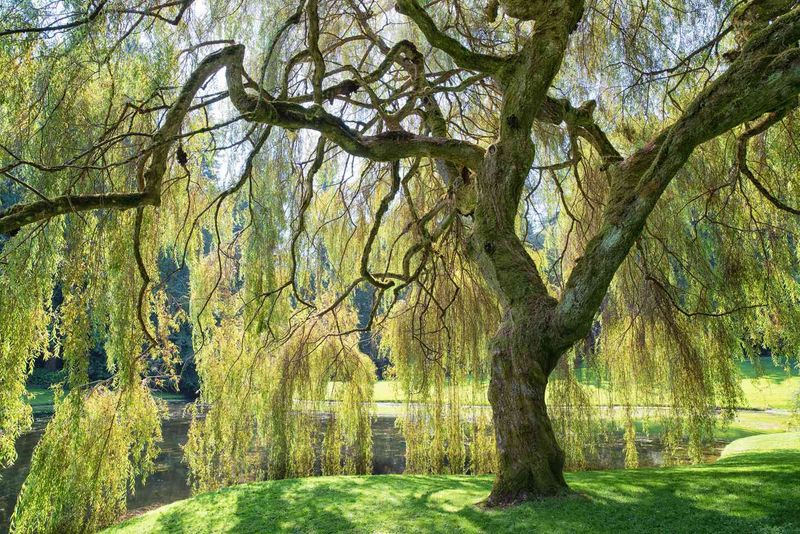
Weeping Willows have a romantic, sweeping look that many homeowners find appealing, but placing one near a foundation is a decision that tends to cause regret. These trees are built for large, moist sites, and they grow quickly to reach an impressive size.
A mature Weeping Willow can spread its canopy and roots across a surprisingly wide area, far beyond what most foundation beds or side yards can accommodate.
The roots are well known for seeking out moisture, which means they can move toward irrigation lines, drainage systems, and any area where water collects near the house.
Oregon’s wet winters provide plenty of soil moisture, but the roots do not stop growing during dry summer stretches either.
Over time, surface roots can become visible near patios, walkways, and lawn areas close to where the tree was planted.
Branch litter is another practical concern. Weeping Willows drop twigs and small branches regularly, which can pile up against a foundation or clog gutters if the tree is planted too close.
Your Oregon Garden Changes Every Week. Your Plan Should Too.
Gardening in Oregon changes quickly throughout the season. Every Friday you’ll receive a simple weekly plan showing exactly what to plant, prune, fertilize, harvest, and protect so you never miss the right timing.
This tree genuinely shines when given a roomy Oregon property with a pond or low wet area far from any structure, where its size and moisture-seeking roots have plenty of space to spread naturally.
3. Poplars And Cottonwoods Grow Too Fast For Foundation Beds
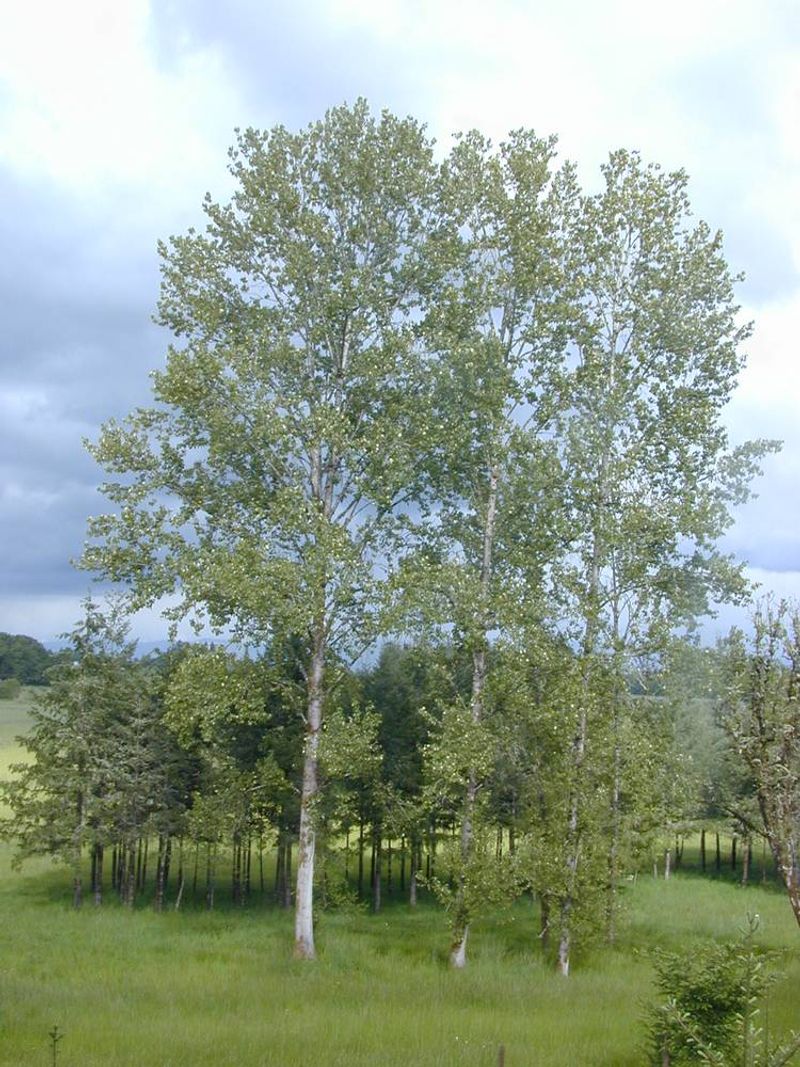
Speed is the defining quality of poplars and cottonwoods, and that speed is exactly what makes them risky near a foundation. These trees can put on several feet of growth per year under good conditions, and Oregon’s moist soils give them plenty to work with.
What starts as a modest planting can become a very large tree in a surprisingly short time, often before a homeowner realizes how much space it actually needs.
Both poplars and cottonwoods tend to develop wide-spreading root systems that can extend well beyond the drip line of the canopy.
Near a foundation edge, a driveway, or an older sidewalk, those roots can begin to create surface irregularities and crowd out nearby plants.
Cottonwoods in particular are native to Oregon’s riparian areas and are accustomed to spreading their roots broadly in search of water.
The fluffy seed cotton that cottonwoods release each spring can also be a nuisance near homes, collecting against foundations and in window wells.
For Oregon homeowners who love the look of these trees, placing them in a large open area well away from any structure gives them the room they need without the long-term spacing issues that come with planting them too close to the house.
4. Lombardy Poplar Makes A Tall Screen Too Quickly
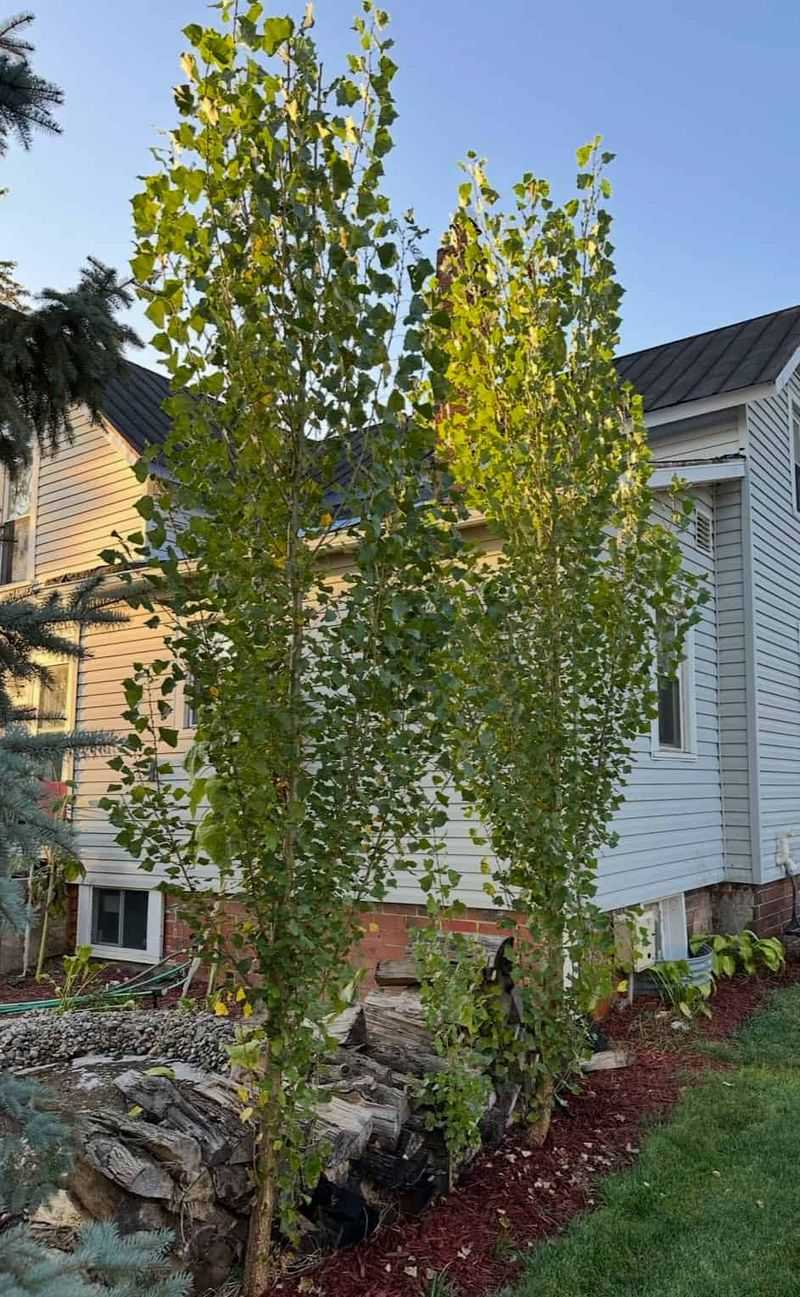
Tall, narrow, and fast-growing, the Lombardy Poplar is one of the most commonly planted privacy screens in Oregon neighborhoods. It goes up quickly, which is exactly why so many homeowners reach for it when they want to block a view or create a windbreak in a hurry.
The problem is that quickly often means too quickly, and before long the tree outgrows the space it was given.
Lombardy Poplars are well documented as relatively short-lived trees, often developing canker diseases that cause branches and whole sections to decline after a decade or two.
Near a foundation or a narrow side yard, a declining tree of that size creates a maintenance and removal challenge that many homeowners do not anticipate when they plant a small sapling.
The root system also spreads laterally, which can cause issues near driveways, utility lines, and hardscape.
Oregon’s older neighborhoods are full of examples where Lombardy Poplars were planted as quick screens and eventually became a liability.
If a privacy screen is truly needed near a structure, a smaller or slower-growing shrub or hedge plant would serve the purpose more safely over time.
Lombardy Poplars work better as a temporary windbreak in a large open area where removal would not threaten nearby structures or hardscape.
5. Leyland Cypress Can Overwhelm A Small Yard
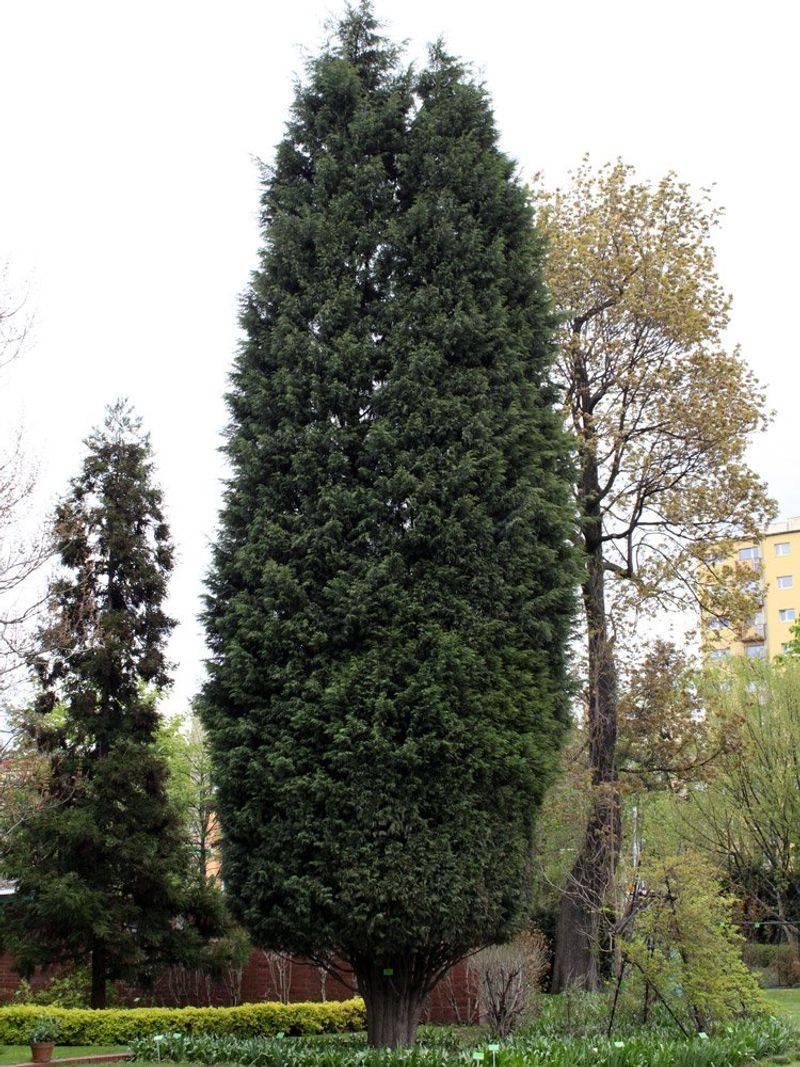
Leyland Cypress has been a popular privacy tree in Oregon for decades, and for good reason. It grows fast, stays green year-round, and creates a dense screen that blocks views and wind.
The issue is that many homeowners underestimate just how large these trees can get, especially in Oregon’s mild, moist climate where growing conditions are favorable for much of the year.
A Leyland Cypress planted in a narrow foundation strip or along a tight side yard can quickly outgrow the available space.
As the tree matures, its lower branches can press against the house, trap moisture against siding, and make routine maintenance like painting or gutter cleaning very difficult.
The root system, while not typically as aggressive as some other trees on this list, still needs room that most foundation beds simply do not offer.
Crowding Leyland Cypress too close together or against a structure also increases the chance of disease pressure and poor air circulation, which can cause browning and decline in interior branches.
Oregon homeowners who want an evergreen screen near the house are often better served by a smaller cultivar or a different species altogether.
When given a generous open space farther from the foundation, Leyland Cypress can be a genuinely useful and attractive landscape tree.
6. Freeman Maple Needs More Room Than A Foundation Edge
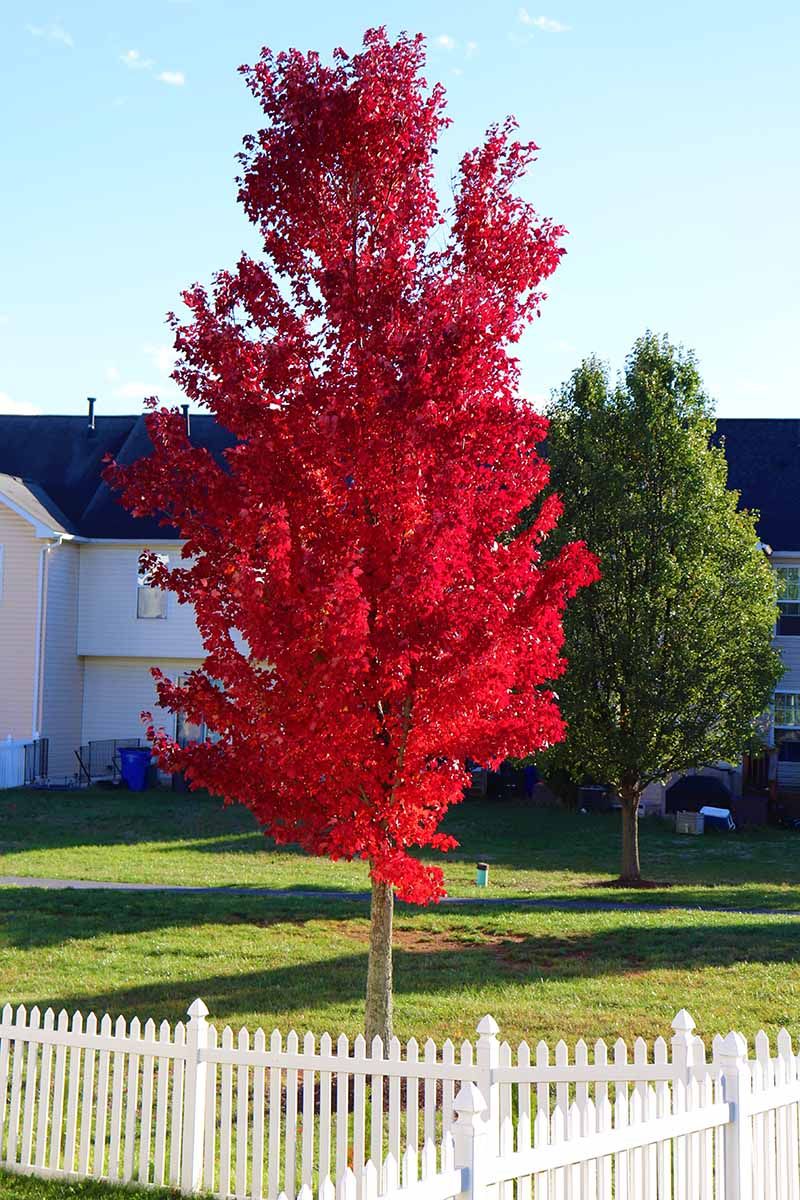
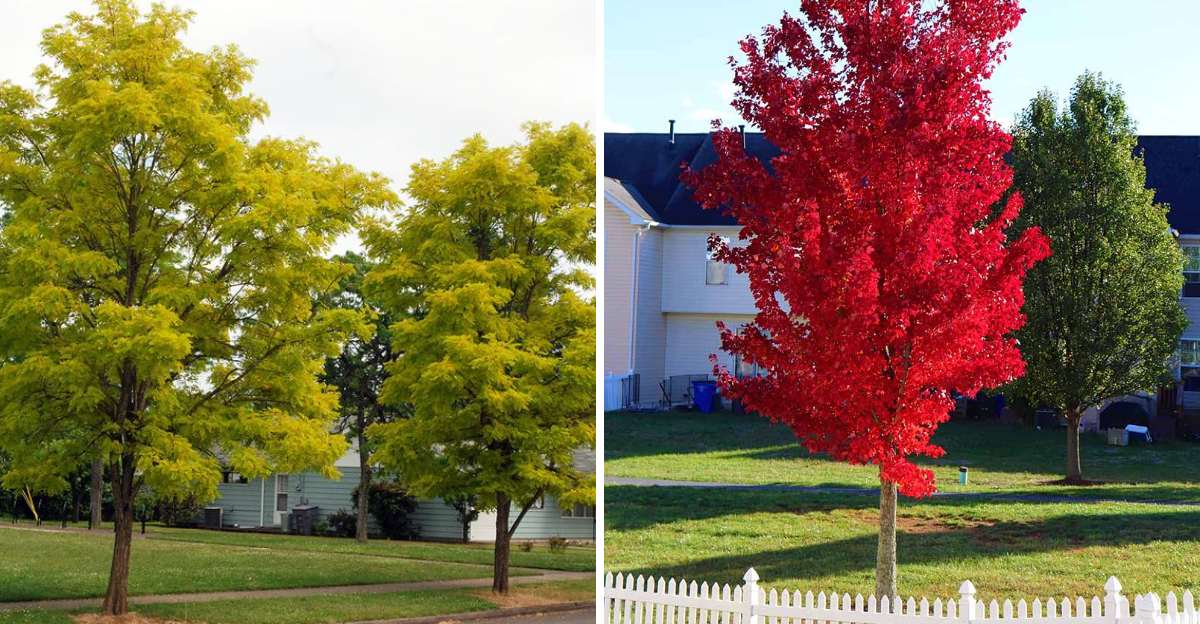
Freeman Maple is a handsome shade tree that turns stunning shades of orange and red in fall, making it a popular choice in Oregon neighborhoods. It is a cross between Red Maple and Silver Maple, and it tends to inherit fast growth from both parents.
Under good conditions in Oregon’s climate, a Freeman Maple can develop into a large, wide-canopied tree within a relatively short time.
That impressive growth is part of the appeal, but it also means the tree needs a lot of room. Planting a Freeman Maple against a foundation edge or in a narrow side yard sets up a situation where the tree will eventually outgrow its space.
As the canopy spreads, large surface roots can begin to appear near the base, sometimes lifting nearby hardscape or making lawn mowing and edging more difficult.
Freeman Maple is genuinely a wonderful tree for the right Oregon property. A large front yard, an open lawn area, or a wide parkway strip gives it the space to develop its full shape without crowding anything nearby.
Near a foundation, though, the combination of fast growth, large mature spread, and surface root tendencies makes it a tree that belongs farther from the house than most foundation planting areas allow.
7. Red Maple Can Bring Surface Roots Too Close
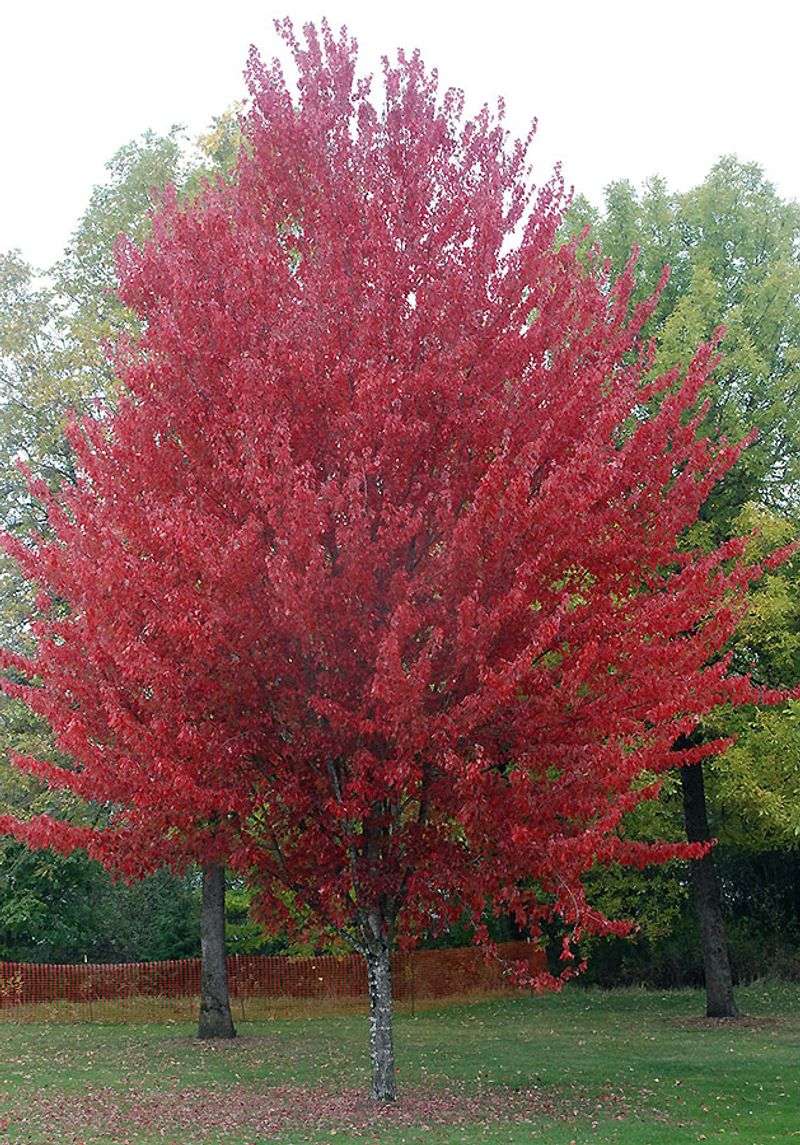
Walk through almost any older Oregon neighborhood in October and you will likely spot a Red Maple blazing with red and orange color. These trees are widely loved for their seasonal display, and many cultivars are available at nurseries across the state.
The challenge is that some of the faster-growing cultivars can develop surface roots and a large mature canopy that creates real spacing issues when planted near a house.
Surface roots are one of the most common concerns with Red Maple near hardscape. As the tree matures, roots near the soil surface can begin to disrupt nearby sidewalks, patios, and driveways.
In Oregon’s older neighborhoods, where foundation beds are often narrow and sidewalks run close to homes, this can become a noticeable problem within ten to fifteen years of planting.
The size of the mature canopy is also worth considering. Larger Red Maple cultivars can reach heights and spreads that overwhelm a tight planting space, making maintenance access difficult and shading out other plants nearby.
Red Maple is absolutely a tree worth growing in Oregon, but it performs best when given a generous open area well away from the foundation.
Choosing a smaller, slower-growing cultivar and placing it thoughtfully can make a big difference in long-term results.
8. Norway Maple Roots Can Crowd Nearby Hardscape
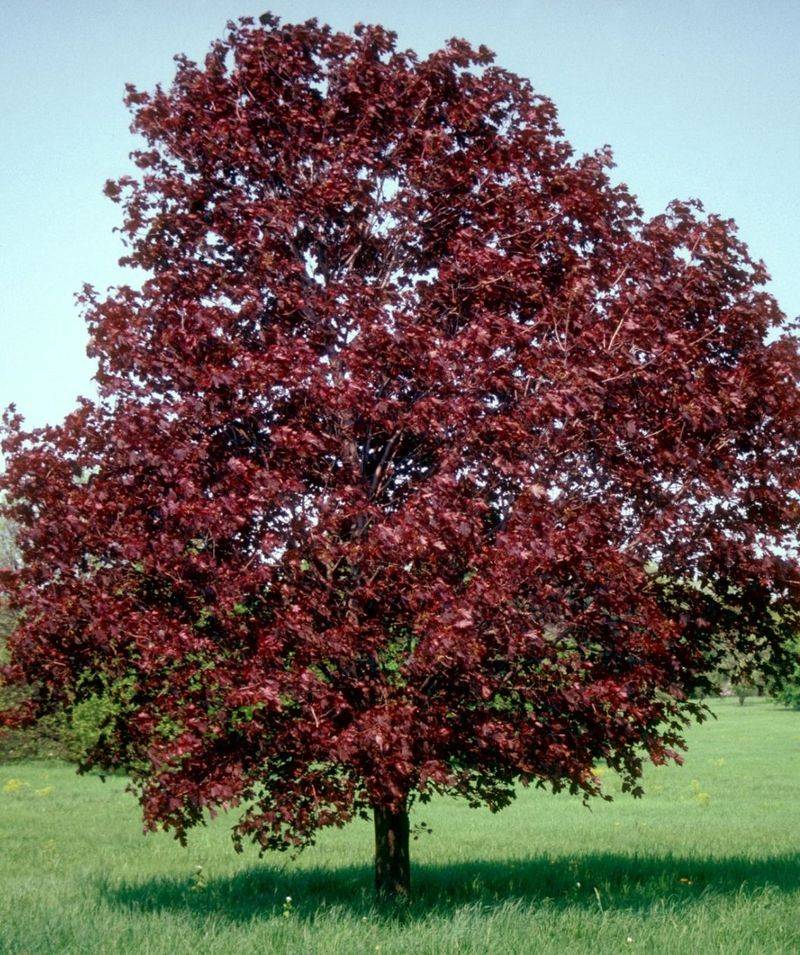
Norway Maple has been planted widely across Oregon for generations, valued for its dense shade and tolerance of urban conditions. It adapts well to a range of soils and handles Oregon’s dry summers reasonably well once established.
Those qualities made it a go-to street and landscape tree for many years, but its shallow, spreading root system has led many homeowners and municipalities to reconsider where it belongs.
The roots of Norway Maple tend to stay close to the soil surface and spread broadly, which makes them a poor match for tight foundation planting areas. Near sidewalks, driveways, or patios, the roots can begin to cause heaving and uneven surfaces over time.
Lawn grass often struggles to grow under a mature Norway Maple because the shallow roots compete aggressively for both moisture and nutrients.
Norway Maple is also considered invasive in some parts of the Pacific Northwest, as it self-seeds readily and can spread into natural areas beyond the yard.
For Oregon homeowners with older homes and narrow foundation beds, this tree is a mismatch from the start.
A large open yard with plenty of distance from any hardscape or structure is the kind of site where Norway Maple can be useful without creating the crowding issues it is known for near foundations and paved surfaces.
9. Black Locust Sends Up Suckers Near Structures
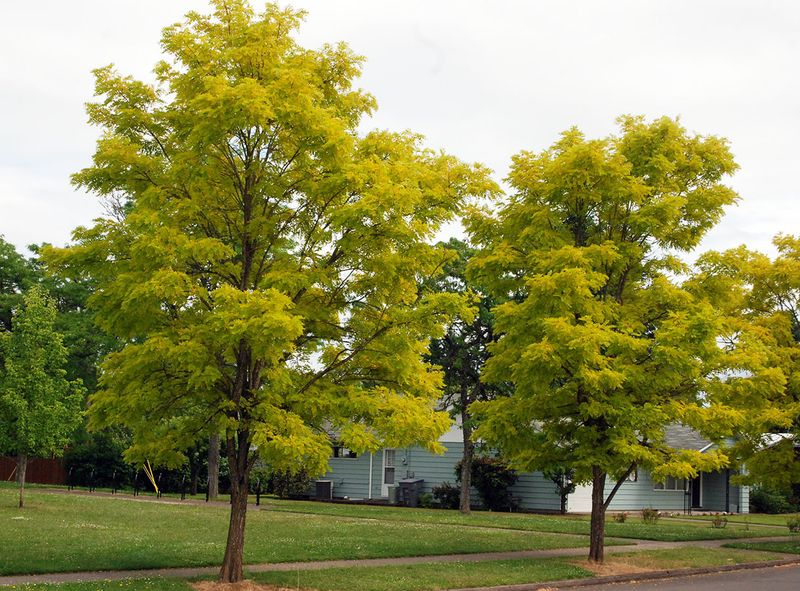
Black Locust is a tough, fast-growing tree that can handle dry, poor soils, which is one reason it shows up so often in Oregon landscapes. Its fragrant white flower clusters are genuinely beautiful in late spring, and the wood is incredibly durable.
However, near a foundation or any structure, Black Locust has a habit that causes real headaches: it sends up vigorous suckers from its root system, especially when the roots are disturbed or cut.
Those suckers can emerge several feet away from the main trunk, popping up through lawn areas, along fences, and near foundations or retaining walls.
Trying to remove them by cutting often encourages more growth rather than less, which can turn a manageable tree into a persistent problem.
In Oregon’s older neighborhoods where utility work, grading, or construction may disturb roots, the suckering response can become especially noticeable.
Black Locust can also spread by seed, and it is considered a plant of concern in some naturalized areas of Oregon.
The combination of aggressive suckering, fast growth, and thorny branches on many individuals makes it a tree that needs a lot of open space and careful placement.
Keeping it well away from foundations, fences, and tight side yards is the most practical approach for Oregon homeowners considering this species.
10. Bitter Cherry Can Form Thickets From Spreading Roots
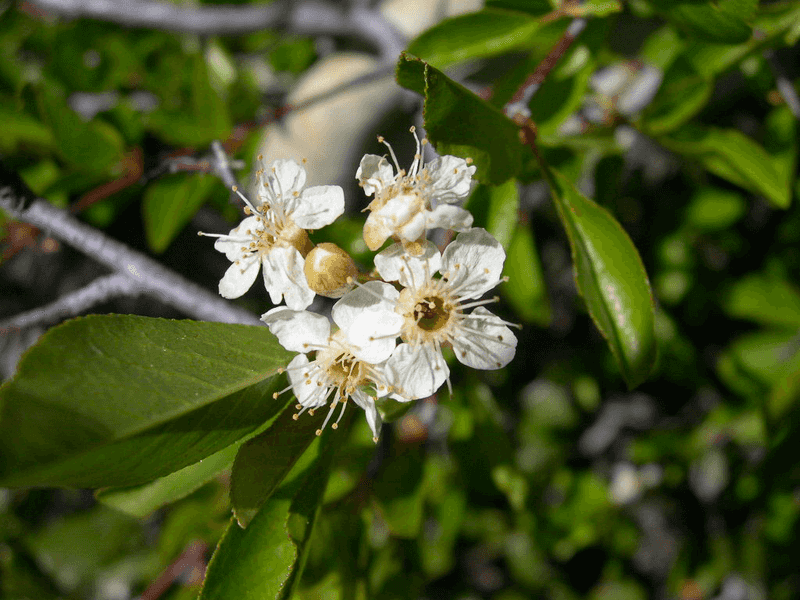
Bitter Cherry is a native Oregon tree with genuine ecological value, providing food and habitat for birds and other wildlife across the state.
Its clusters of small white flowers in spring are a welcome sight in natural areas, and the tree plays a meaningful role in Oregon’s native plant communities.
The challenge comes when it is planted or allowed to grow near a foundation, fence line, or narrow side yard, where its natural habit of spreading from the roots can quickly become a problem.
Like Black Locust, Bitter Cherry has a tendency to produce root sprouts that can emerge some distance from the original plant. Over time, these sprouts can form a dense thicket if they are not regularly managed.
In a tight space near a house, that thicket-forming habit means constant maintenance to keep the area clear. Oregon’s moist winters encourage vigorous growth, which only accelerates the spreading.
The tree is genuinely well suited to open woodland edges, naturalized areas, and larger Oregon properties where its spreading habit has plenty of room to express itself without crowding structures or hardscape.
Near a foundation, though, the ongoing effort required to manage its root sprouts and spreading stems makes it a poor fit.
Homeowners who appreciate native plantings near the house are usually better served by smaller, clumping native shrubs that stay in bounds.