Why Florida Crepe Myrtles Start Dropping Leaves Early In September – And When It’s A Problem
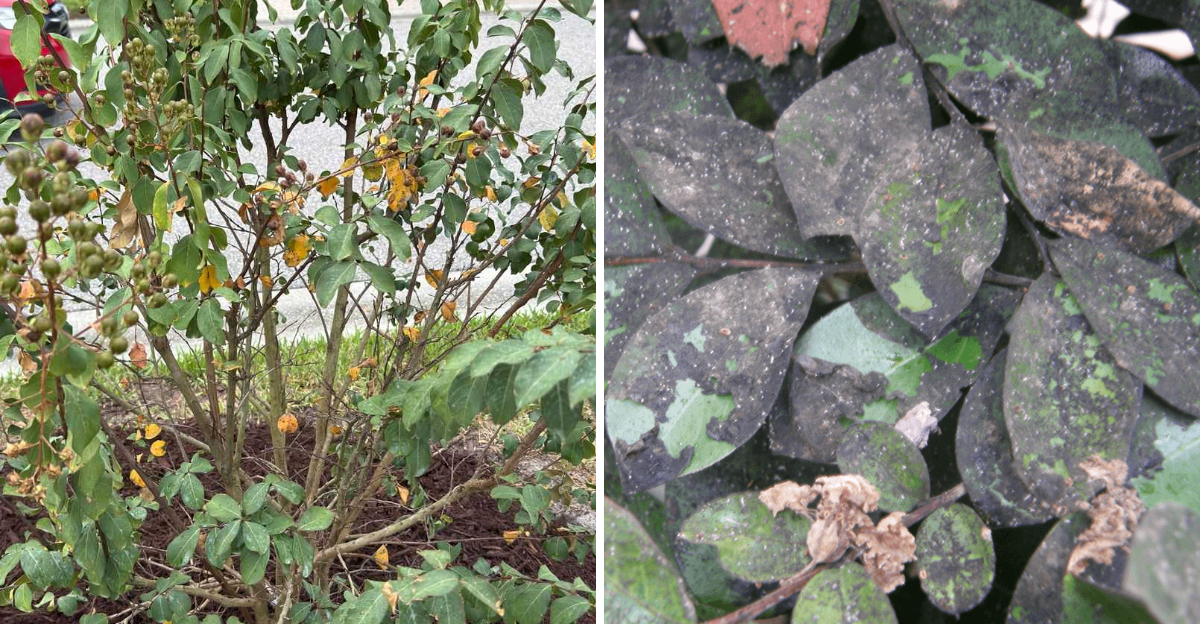
September can make a Florida crepe myrtle look like it skipped ahead on the calendar. Leaves lose their grip, bare patches appear in the canopy, and a tree that looked full in August can suddenly seem off.
That change gets attention fast, especially when nearby crepe myrtles still look lush. Early leaf loss does not always point to trouble, but it can reveal how the tree has handled Florida’s heat, rain, soil, and late-summer stress.
The tricky part is that normal seasonal change and a genuine problem can look surprisingly similar from across the yard. Color, leaf condition, branch appearance, and the pace of the leaf loss all add pieces to the picture.
Before you assume September came too early for your tree, take a closer look. Crepe myrtles tend to leave clues, and the leaves on the ground are only part of the story.
1. Brown Spots Before Yellow Leaves Point To Cercospora
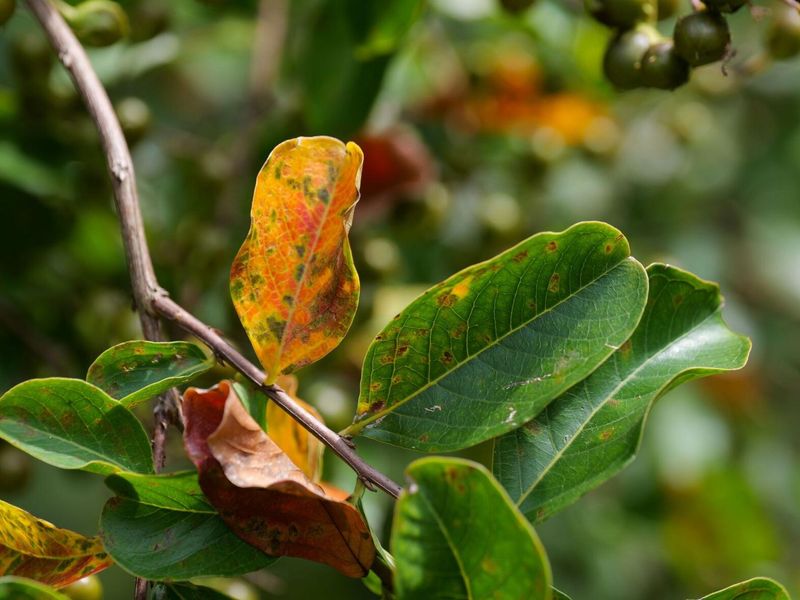
Spotted leaves that fall weeks before the rest of the canopy drops are one of the more telling signs that something beyond seasonal change is happening.
Cercospora leaf spot, caused by the fungus Cercospora lythracearum, is a common culprit behind early defoliation on crepe myrtles across the South.
According to UF/IFAS, this disease produces small, circular brown or reddish-brown spots on the upper leaf surface.
What makes the pattern worth recognizing is the order it follows. Spots appear first, then the surrounding leaf tissue turns yellow, and then the leaf drops.
Seeing that sequence repeated across a tree is a stronger clue than spotting a few yellow leaves on their own. Severely infected trees can drop a large portion of their canopy well before seasonal dormancy would normally begin.
Not every spotted leaf means Cercospora is present. Leaf spots can come from several causes, and a single discolored leaf is rarely reason for alarm.
The concern rises when spots appear on many leaves at once and are followed quickly by yellowing and shedding across the canopy. Checking a few affected leaves closely before drawing conclusions is a practical first step.
If the brown-spot-to-yellow-to-drop pattern keeps repeating, Cercospora deserves serious consideration as the reason behind the early leaf loss.
2. A Wet Summer Can Set Up Early September Leaf Drop

September often gets blamed for early leaf drop, but the real setup usually happened months earlier. Cercospora thrives when leaves stay wet for extended periods.
Afternoon storms, high humidity, and poor air circulation give the fungus ideal conditions to spread. UF/IFAS notes that leaf wetness duration plays a significant role in how quickly fungal diseases develop on ornamental trees.
July and August in Florida can deliver repeated cycles of rain followed by warm, humid nights. Those conditions keep foliage damp long enough for spores to germinate and penetrate leaf surfaces.
By September, infections that started weeks earlier may already be well established. Leaves can begin spotting and dropping in noticeable numbers by then.
Overhead irrigation adds to the problem when it keeps foliage wet during evening or nighttime hours. Trees planted in low spots where air does not move freely are also at greater risk.
Your Florida Garden Changes Every Week. Your Plan Should Too.
Gardening in Florida changes quickly throughout the season. Every Friday you’ll receive a simple weekly plan showing exactly what to plant, prune, fertilize, harvest, and protect so you never miss the right timing.
September itself does not trigger the disease. The calendar just happens to be when the accumulated damage from a wet summer becomes hard to ignore.
Recognizing that timing gap helps explain why a tree can look healthy in July. Six or eight weeks later, it may begin dropping leaves heavily without any obvious new change in conditions.
3. Powdery White Leaves Point To A Different Fall Problem
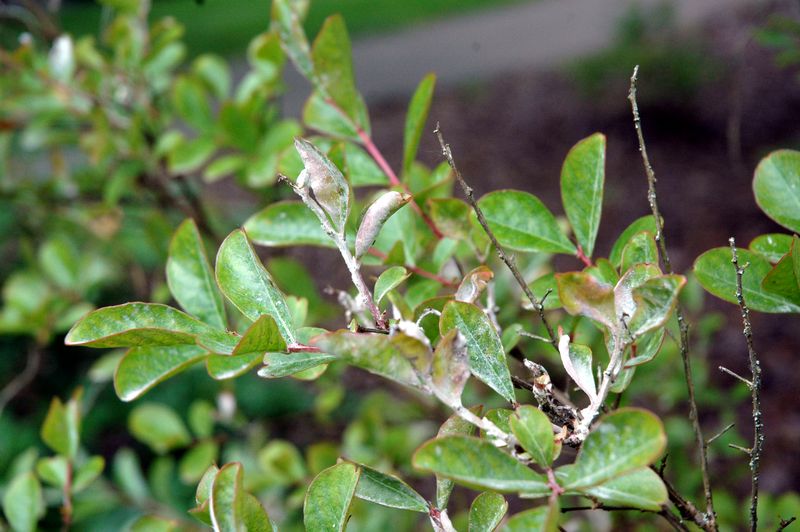
White or gray powder dusted across leaves, new shoots, or flower buds tells a completely different story from dark leaf spots. Powdery mildew, caused by Erysiphe australiana, is a well-documented problem on crepe myrtles in Florida.
It produces a distinctive surface coating rather than the sunken brown lesions associated with Cercospora. UF/IFAS identifies powdery mildew as one of the most common fungal diseases affecting crape myrtles in the Southeast.
Unlike Cercospora, powdery mildew does not require prolonged leaf wetness to spread. Moderate temperatures combined with high humidity and dry leaf surfaces can actually favor its development.
That difference matters when identifying what is affecting your tree. The wet conditions that promote Cercospora are not necessarily what drives a powdery mildew outbreak.
Severe infections can distort young growth and contribute to premature leaf drop, though mildew is more often a cosmetic problem than a life-threatening one.
Leaves coated in white powder may yellow and fall earlier than expected, especially on susceptible cultivars.
Seeing white surface growth rather than brown spots is the key visual clue that separates this disease from Cercospora. Treating both conditions the same way would be a mistake, so getting the identification right first makes a real difference in how you respond.
4. Sticky Black Leaves Can Trace Back To Aphids
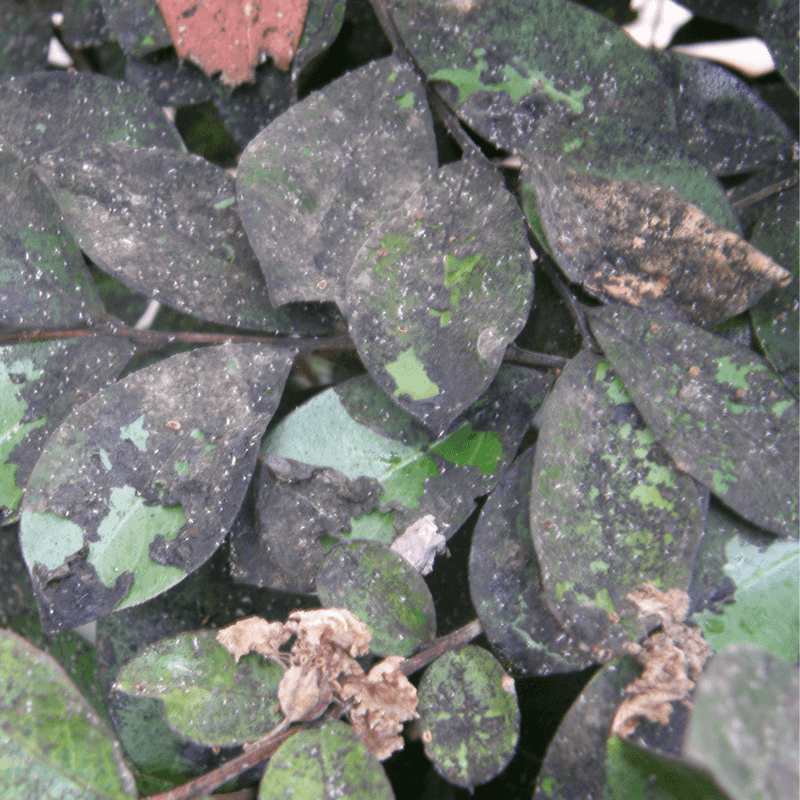
Leaves that feel sticky to the touch and then turn black are not suffering from a fungal infection in the traditional sense. Crape myrtle aphids, known scientifically as Sarucallis kahawaluokalani, feed on plant sap and excrete a sugary liquid called honeydew.
That sticky coating lands on leaves, bark, and anything beneath the tree, and a black fungus called sooty mold grows on top of it.
Sooty mold does not penetrate or infect healthy leaf tissue directly. It grows on the honeydew residue left behind by the aphids.
The black coating blocks sunlight from reaching the leaf surface, which reduces the tree’s ability to photosynthesize efficiently. UF/IFAS notes that heavy aphid infestations can cause significant honeydew buildup on crape myrtles.
Ant activity around the base or canopy can also indicate aphids feeding above.
Not every thinning canopy is caused by aphids. But when sticky residue and black-coated leaves appear together, check the undersides of leaves for small, pale green insects.
Heavy pest pressure over a full season can contribute to early leaf loss as the tree deals with ongoing stress. Catching an aphid problem early gives the tree a better chance of holding its canopy into the normal dormancy period.
5. Crispy Edges And Dry Soil Point To Water Stress
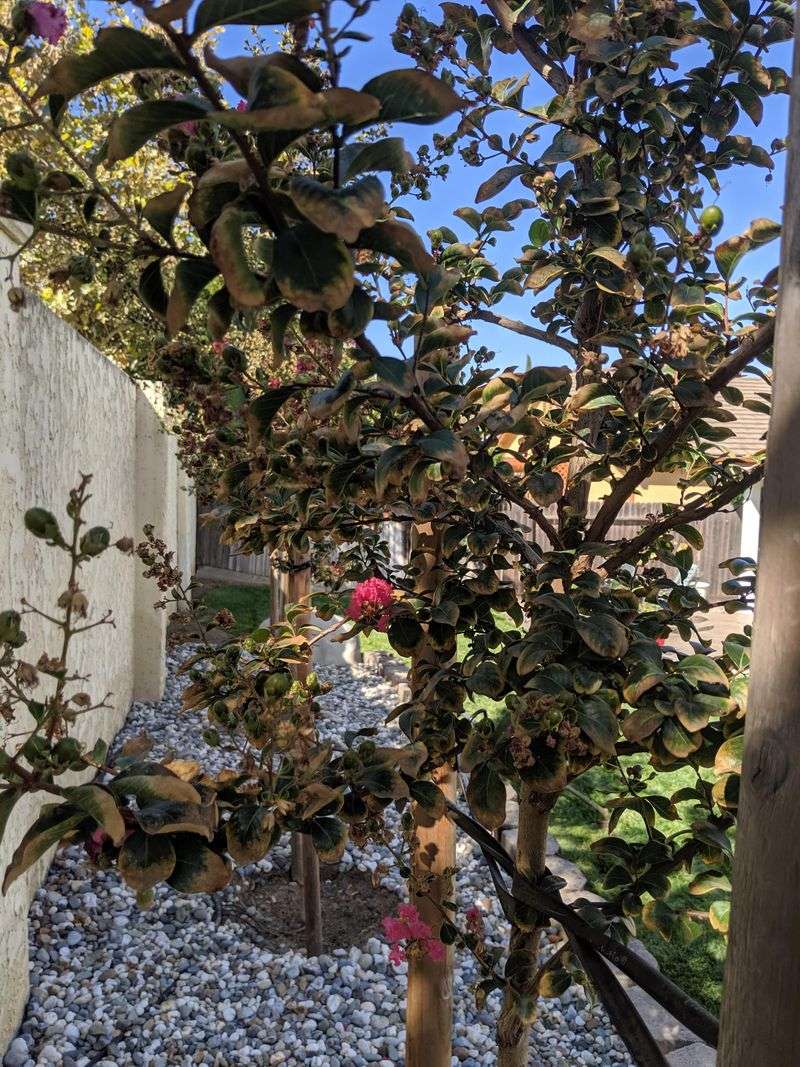
Browning that starts at the leaf margins and works inward, combined with leaves that feel papery and dry, points toward a moisture problem rather than a fungal one.
Prolonged dry conditions can cause wilting, edge scorch, and eventually premature leaf drop as the tree conserves resources.
Established Florida crepe myrtles are genuinely drought-tolerant, but drought tolerance does not mean immunity to moisture stress when conditions are severe enough.
Checking the soil before drawing any conclusions is a practical habit worth building. Push a screwdriver or finger several inches into the ground near the root zone.
Bone-dry soil at that depth during a period of little rainfall is a meaningful clue. A tree dropping leaves in late summer with dry, cracked soil beneath it is telling a different story than one dropping leaves after a month of heavy rain.
Scorch symptoms from drought tend to appear more uniformly across the canopy rather than in isolated patches.
Leaves may yellow before dropping, but the browning typically starts at the edges rather than in the center of the leaf, which differs from many fungal patterns.
Young trees and recently transplanted specimens are more vulnerable than trees that have had several years to develop a deep root system. Giving the soil an honest look before reaching for a fungicide can save time and prevent the wrong response to the real problem.
6. Soggy Roots Can Cause Trouble From The Other Direction
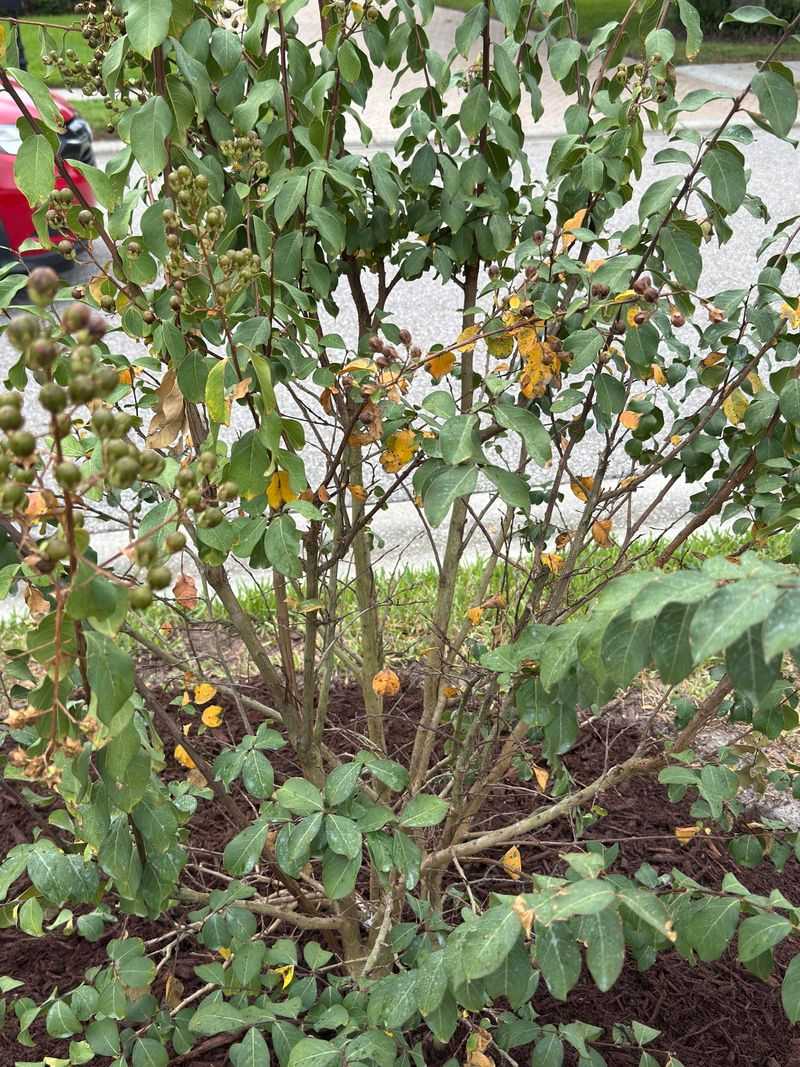
Saturated ground creates a completely different set of problems, and the foliage symptoms can sometimes look deceptively similar to drought stress at first glance.
Crepe myrtles generally perform best in well-drained soil, and roots sitting in persistently wet conditions struggle to take up oxygen.
When roots cannot function properly, the canopy often responds with yellowing, wilting, and early leaf drop even though there is no shortage of water.
Poor drainage, low-lying planting sites, or overly frequent irrigation can all keep soil wetter than crape myrtles prefer. A tree planted in a spot where water pools after every rain is at ongoing risk of root stress throughout the growing season.
UF/IFAS recommends well-drained sites for crape myrtle establishment precisely because standing water around the root zone creates long-term problems.
Distinguishing this from drought stress requires a simple soil check. Soggy or muddy soil at root depth, combined with a declining canopy, suggests excess moisture rather than a shortage.
Increasing irrigation on a tree already sitting in saturated ground would make things considerably worse. Improving drainage, adjusting irrigation schedules, or relocating a tree to a better site are more appropriate responses.
A tree with yellow, dropping leaves and sopping wet soil at its feet is sending a clear message that the problem is coming from below, not from above.
7. September Leaf Drop Is Usually Too Early To Blame On Winter
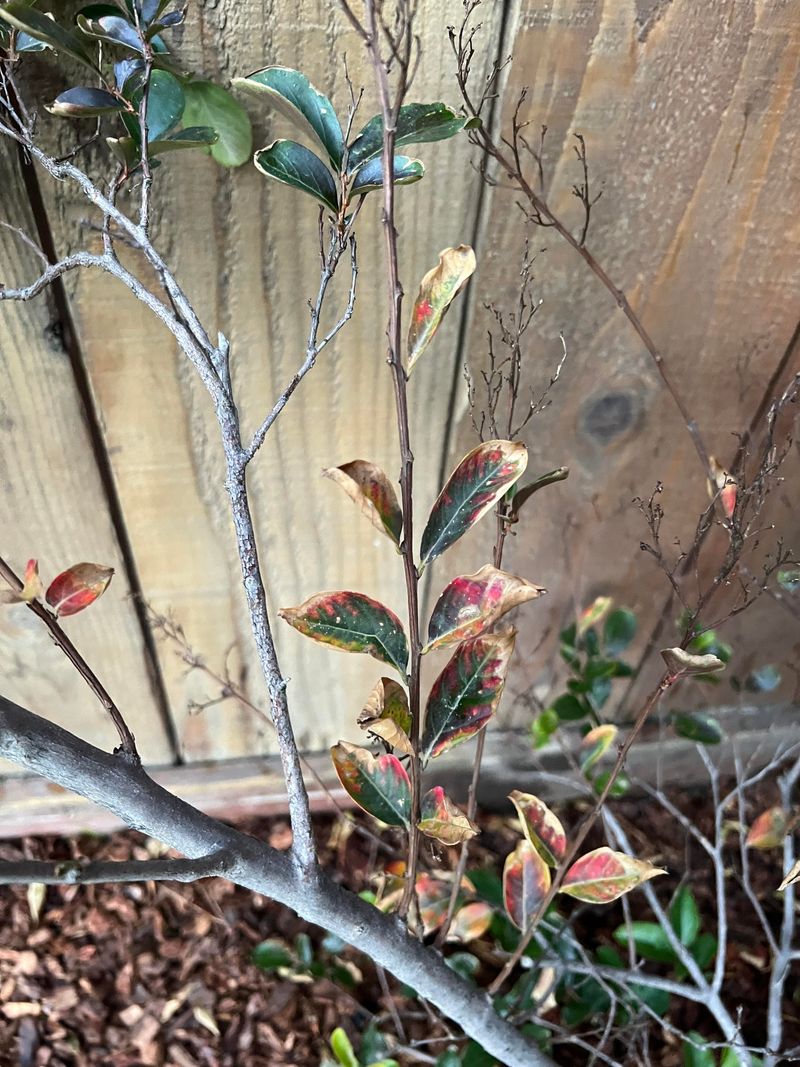
Crepe myrtles naturally shed their leaves as they move toward winter dormancy. That process does not follow one schedule across every region, cultivar, and weather pattern.
A few leaves changing color in September is not automatically cause for concern. Gradual leaf change that begins in the outer canopy and progresses slowly can be normal.
Rapid, widespread thinning while temperatures are still warm is a different pattern.
Region, cultivar, and local weather all influence when a crape myrtle begins its seasonal transition. A tree in northern Florida may begin showing earlier signs of dormancy than one planted in a warmer southern part of the state.
Some cultivars are also naturally earlier to drop than others. Claiming one universal date for normal leaf fall across all crape myrtles would not be accurate.
September is worth paying attention to precisely because it sits in a gray zone. Temperatures in many parts of the South are still quite warm, and most neighboring deciduous trees have not yet begun their fall transition.
A crape myrtle rapidly losing the bulk of its canopy in early September, while conditions remain warm and no other trees are changing, is worth a closer look.
A few yellow leaves near the branch tips are far less concerning than a canopy that goes from full to bare in a couple of weeks.
8. The Pattern Tells You When Early Leaf Drop Is A Problem

One fallen leaf proves nothing. A canopy thinning rapidly in early September while other trees stand full and green is a different matter entirely.
The amount of leaf loss and the clues that appear before or alongside the dropping are what separate a seasonal shift from a problem worth addressing. Several symptoms can point to something beyond normal dormancy.
These include brown spots followed by yellowing, white powdery coatings, sticky black leaves, or heavy ant activity.
Soil condition adds important context. Crispy leaf edges above bone-dry soil point one direction.
Yellowing and decline above saturated ground point another. Wilting combined with either extreme deserves attention rather than a wait-and-see approach.
UF/IFAS notes that cultivar selection also matters. Some crape myrtle varieties have better resistance than others to powdery mildew and Cercospora.
Repeated severe defoliation in the same tree across multiple seasons is a stronger signal than a single rough year in Florida. A tree that bounces back fully each spring after modest September leaf loss is likely managing a stress it can handle.
One that thins heavily every year from the same pattern of spots, mold, or pest pressure may benefit from a change in care, site conditions, or cultivar.
September leaf drop is worth investigating when symptoms appear before the leaves fall, the canopy thins fast, or the same pattern returns year after year.