How To Replace Useless Florida Lawn With Plants That Actually Do Something
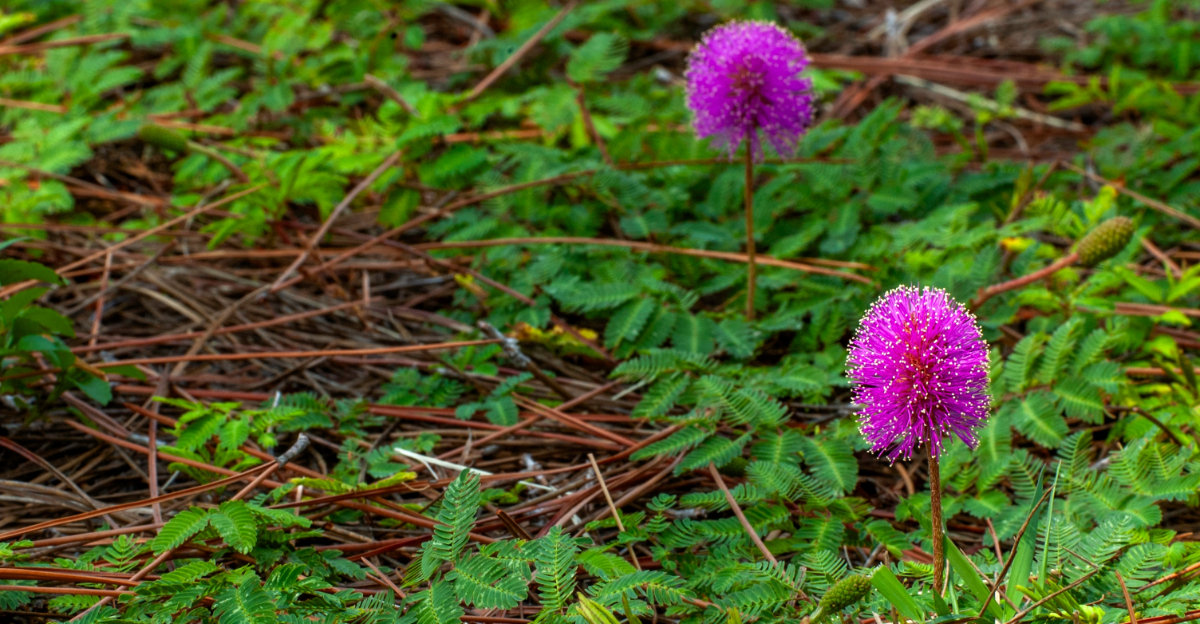
Most Florida lawns are working harder against their owners than for them. Water bills, fertilizer runs, mowing schedules, and pest treatments all add up.
So does the relentless battle against heat, drought, and soil that drains before the grass ever gets a real drink. All of that effort for a surface that sits there, looks green for a few months, and gives nothing back.
There is a better use for that space. Florida yards that trade lawn for intentional planting get more out of every square foot.
They also lower maintenance over time and support something beyond the appearance of a tidy exterior. The transition does not have to happen all at once.
Start with the worst-performing sections of lawn. Replacing them with plants that feed pollinators, produce food, manage water, or support wildlife changes the math quickly.
A Florida yard should do something. Most lawns are just real estate waiting to be put to work.
1. Frogfruit Turns Bare Lawn Edges Into Pollinator Groundcover
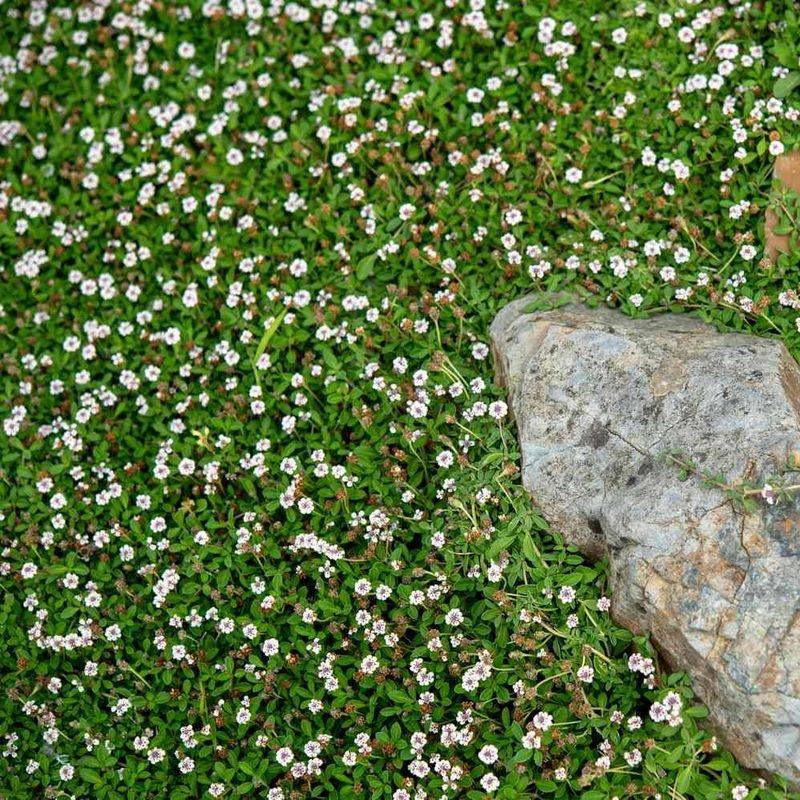
That burned-out strip between your sidewalk and the street is one of the hardest places in any yard to keep green. Frogfruit, known botanically as Phyla nodiflora, is a Florida native low ground cover that handles exactly that kind of tough, sunny, compacted edge.
It spreads by creeping stems that root as they go, forming a dense mat that shades out bare soil and reduces erosion.
Small white and pink flowers bloom nearly year-round in warm months, attracting bees, butterflies, and other native pollinators. According to the Florida Wildflower Foundation, frogfruit is a larval host plant for the white peacock and phaon crescent butterflies.
That is something no patch of St. Augustine can claim.
Frogfruit handles sun well and tolerates moderate drought once established. It does not look like manicured turf.
The texture is looser, the growth is informal, and it will spread beyond where you planted it if left unmanaged. Edging or a mowing strip helps keep it contained along walkways and beds.
It is not a plant for deep shade or soggy ground. Sunny strips, informal path edges, and pollinator transition zones are where it performs best.
Water regularly during the first season to help it establish, then reduce irrigation as roots settle in. Think of it as a living mulch that earns its keep every single week.
2. Sunshine Mimosa Replaces Struggling Turf With Pink Blooms
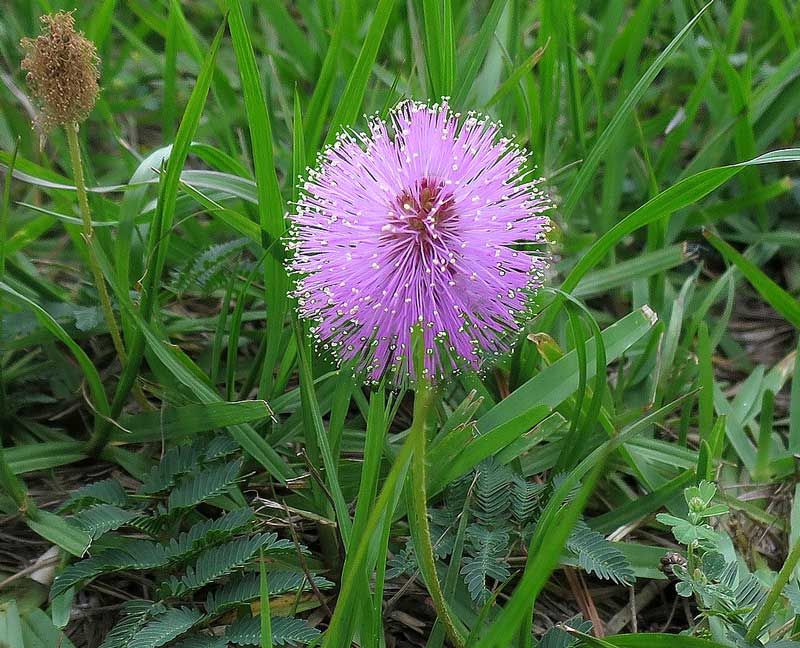
Sandy sunny turf that never quite fills in is one of the most common lawn frustrations in this state. Sunshine mimosa, Mimosa strigillosa, is a native ground cover that thrives where grass gives up.
It spreads low across the ground, rooting as it goes, and covers bare sandy soil with soft ferny foliage.
The blooms are what stop people in their tracks. Pink powderpuff flowers appear from spring through fall, drawing in bees and butterflies with reliable nectar.
Once established, sunshine mimosa handles dry spells well. Its roots fix nitrogen in the soil, which means it actually improves the ground it grows in, something struggling turf rarely manages to do.
Your Florida Garden Changes Every Week. Your Plan Should Too.
Gardening in Florida changes quickly throughout the season. Every Friday you’ll receive a simple weekly plan showing exactly what to plant, prune, fertilize, harvest, and protect so you never miss the right timing.
Full sun is a firm requirement. Shaded spots or constantly wet soil will cause it to thin out and underperform.
It needs time to fill in after planting, so patience during the first growing season matters. Water consistently until the plant is established, then back off as drought tolerance builds.
Sunshine mimosa spreads steadily and can move beyond its original planting area over time. A mowing strip or edging helps define its boundaries near walkways or beds.
According to UF/IFAS, it is well suited to sunny lawns, roadsides, and naturalistic landscapes across much of this state. Use it where sunny sandy turf has never really worked, and let it do the heavy lifting.
3. Muhly Grass Adds Movement Where Grass Looks Flat
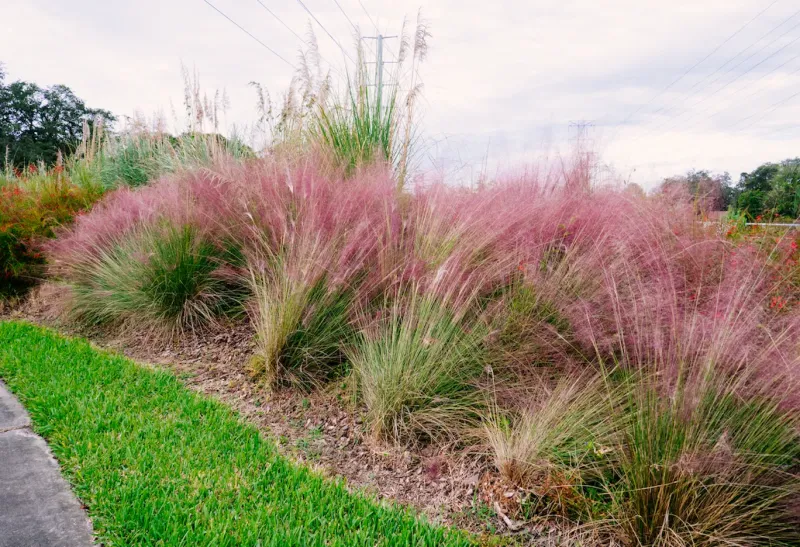
There is a moment every fall when muhly grass earns its place in any yard. Soft pink and purple plumes rise above the foliage in a cloud of color, catching light and moving with even the lightest breeze.
No patch of flat lawn produces anything close to that kind of seasonal drama.
Muhlenbergia capillaris is a native grass that works beautifully in unused lawn patches, open bed borders, and sunny slopes where turf looks tired and flat. Plant it in drifts or repeated clumps for the most visual impact.
Full sun is essential. Drought tolerance builds steadily after establishment, making it a good fit for sandy sites and areas where irrigation is limited.
Wildlife value is real. Seeds attract birds, and the open clump structure provides cover for small creatures.
UF/IFAS notes that muhly grass is a reliable ornamental for landscapes, particularly in northern and central regions where fall color is most dramatic.
Muhly grass is not a walking surface. It belongs in a planted bed or border, not as a turf substitute where foot traffic happens.
Cut clumps back in late winter before new growth starts. Avoid heavy mulch piled against the base, which can cause rot in humid conditions.
Space plants about two to three feet apart so each clump can develop its full natural form without crowding. Let the plumes stand through winter for birds and seasonal interest.
4. Coontie Gives Empty Lawn Corners Evergreen Structure
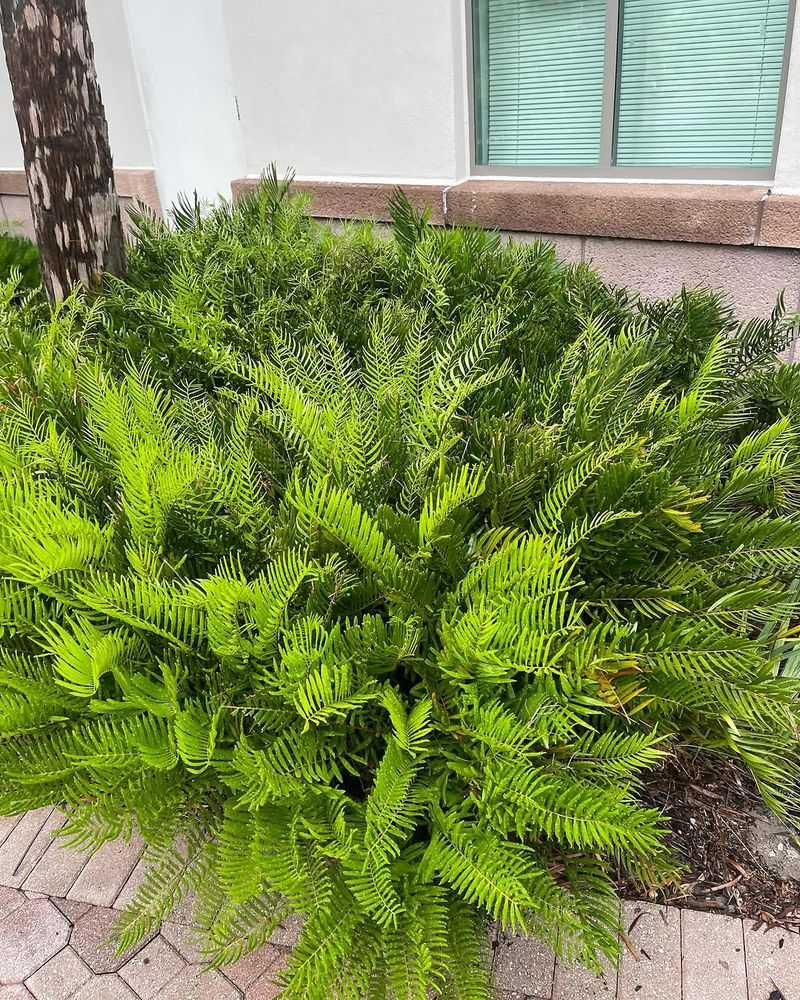
Awkward lawn corners near foundations, entry beds, and low-traffic edges often get mowed out of habit rather than necessity.
Coontie, Zamia integrifolia, is a native cycad that transforms those neglected spots into structured, evergreen plantings with almost no ongoing effort once established.
Dark green arching fronds give coontie a bold, sculptural look that holds interest year-round. Unlike seasonal plants that go dormant or look ragged in winter, coontie stays full and tidy through every month of the year.
Drought tolerance after establishment is strong. Sandy soils suit it well, and it handles both full sun and partial shade, which gives it flexibility across many yard situations.
Coontie is the sole larval host plant for the Atala butterfly, a striking native species that was once considered locally extinct in this state.
Planting coontie supports Atala recovery, which makes it one of the more ecologically meaningful choices a homeowner can make.
The Florida Native Plant Society recognizes its importance to this relationship.
Space plants carefully near walkways and foundations. Coontie is a cycad, not a true palm, and its root system and eventual spread deserve proper room.
Allow about three to four feet between plants and structures. Do not crowd it.
Seeds and foliage can be toxic if ingested, so keep that in mind around children and pets. Use it as a low structural anchor in corners, entry beds, and edges where lawn has never performed well.
5. Tropical Sage Brings Color And Nectar To Sunny Gaps
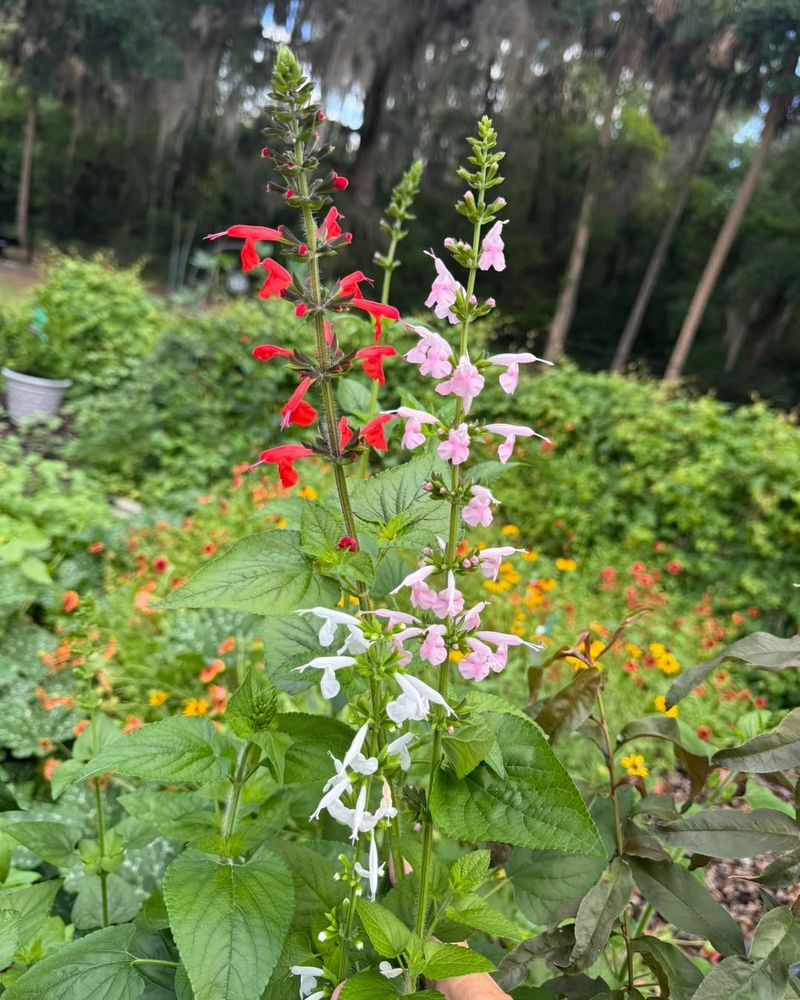
A sunny gap in the yard where lawn never quite closed in is one of the easiest spots to reclaim with color. Tropical sage, Salvia coccinea, is a native wildflower that fills open sunny areas with upright stems and tubular flowers in red, pink, or white.
It blooms for much of the year in warm conditions, which in this state means a very long season of interest.
Hummingbirds seek it out reliably. Bees and butterflies work the flowers too, making it one of the more wildlife-productive plants for a sunny replacement patch.
According to the Florida Wildflower Foundation, tropical sage is a strong nectar source and a consistent performer in home landscapes across the state.
Reseeding is part of its nature. Once comfortable in a site, it will drop seeds and return on its own the following season.
That self-renewing quality reduces replanting costs, but it also means seedlings will pop up nearby. Editing those seedlings keeps the planting from spreading beyond its intended area.
The look is natural and informal, not clipped or tidy. Trimming spent stems encourages fresh growth and keeps plants from flopping over in rainy season.
Full sun is a firm requirement. Plants in too much shade stretch and produce fewer flowers.
Use tropical sage in sunny gaps, bed borders, and informal patches where a loose, wildlife-friendly look fits the overall yard style. It rewards low-input care with consistent seasonal color.
6. Twinflower Covers Low Borders Without Acting Like Turf
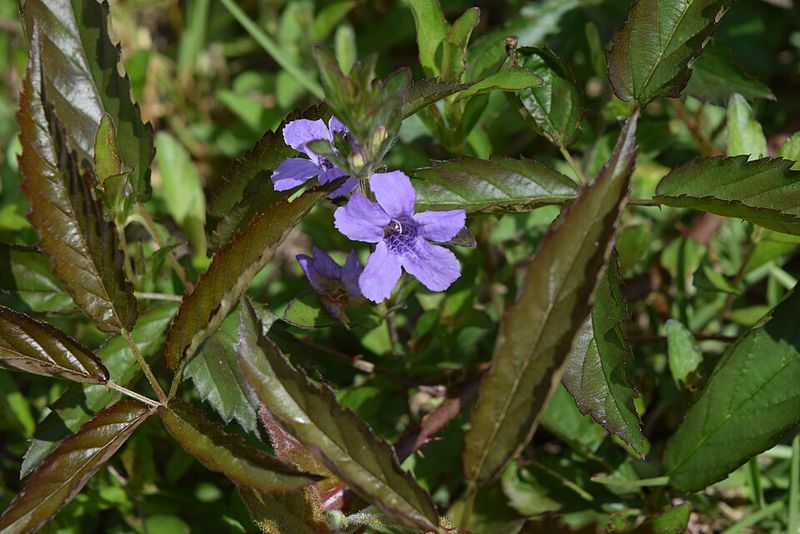
Soft edges matter in a yard. The transition between a bed and a lawn, a path and a planting, or a border and open space can look rough and unfinished without a low plant to bridge the gap.
Twinflower, Dyschoriste oblongifolia, is a Florida native that handles exactly that role with quiet charm and consistent purple blooms.
Plants grow low and spread gradually, forming a soft mat of small green leaves dotted with lavender-purple flowers through much of the warm season. Bees visit the flowers regularly, adding pollinator value to a spot that a lawn edge would never provide.
The overall effect is relaxed and natural, which suits informal beds, cottage-style yards, and naturalistic borders well.
Twinflower adapts to partly sunny conditions better than many other native ground covers. It does not demand full blazing sun all day, which makes it useful along bed fronts and partially shaded edges where other plants struggle to bloom.
Moisture should be moderate. Consistently waterlogged soil is not a good match.
This plant is not a replacement for turf in high-traffic areas. Foot traffic will thin it out quickly.
Use it where people do not walk, along bed borders, front edges of planting areas, and spots where a softer, lower alternative to mulch is needed. Match it to the right light and moisture conditions.
It will slowly fill in to create a tidy, pollinator-friendly edge that requires very little ongoing management to maintain.
7. Dune Sunflower Brightens Sandy Spots With Living Coverage
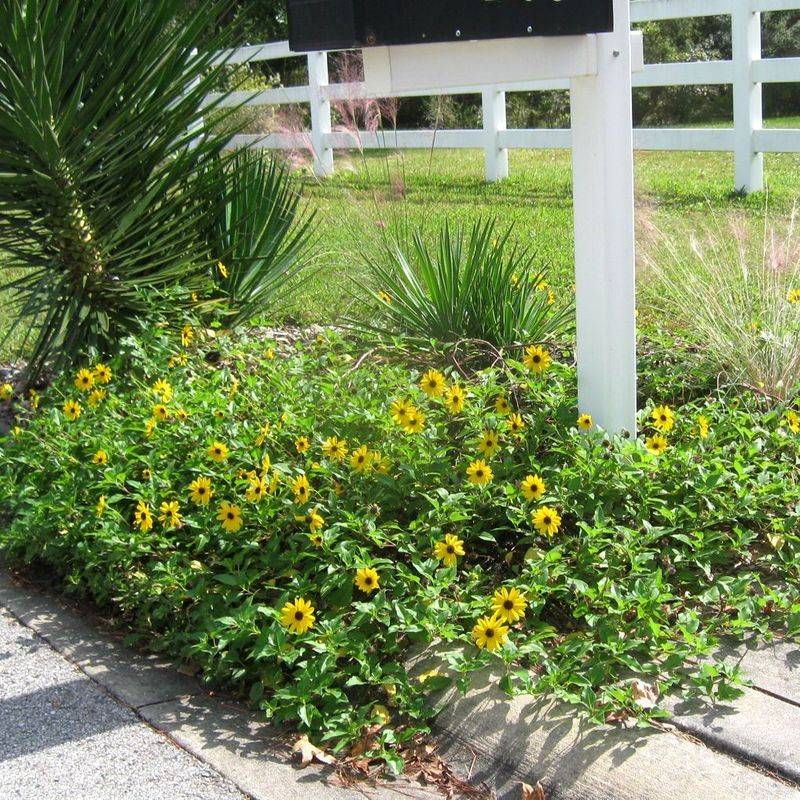
Hot sandy patches near fences, coastal edges, and open sunny slopes are some of the toughest spots in any yard to keep planted. Dune sunflower, Helianthus debilis, covers that kind of ground fast and does it with cheerful yellow blooms that pollinators cannot resist.
It is a native built for exactly the conditions that defeat most ornamental plants.
Stems spread low and wide, rooting as they go and forming a sprawling mat of living coverage over bare sandy soil. Flowers appear almost year-round in warm regions, providing a long season of nectar for bees and butterflies.
Birds eat the seeds too, so the value extends well beyond the flowering period. The Florida Wildflower Foundation recognizes dune sunflower as one of the state’s most reliable native ground covers for sunny, sandy sites.
Spreading is part of its character. In a site it likes, dune sunflower will move outward and reseed freely.
That energy makes it a great fit for naturalistic areas, coastal edges, and informal slopes. It is not the right choice for tight formal beds or small spaces where spread needs to stay controlled.
Trim plants back periodically to keep them from becoming woody and sprawling too far. Remove unwanted seedlings before they establish if the planting area has defined edges.
Sandy, well-drained soil suits it best. Avoid heavy clay or constantly wet ground.
Once established, irrigation needs drop significantly. Use it where you want fast, reliable, wildlife-friendly coverage and do not mind a relaxed, natural look.
8. Beautyberry Turns Lifeless Lawn Space Into Bird Habitat
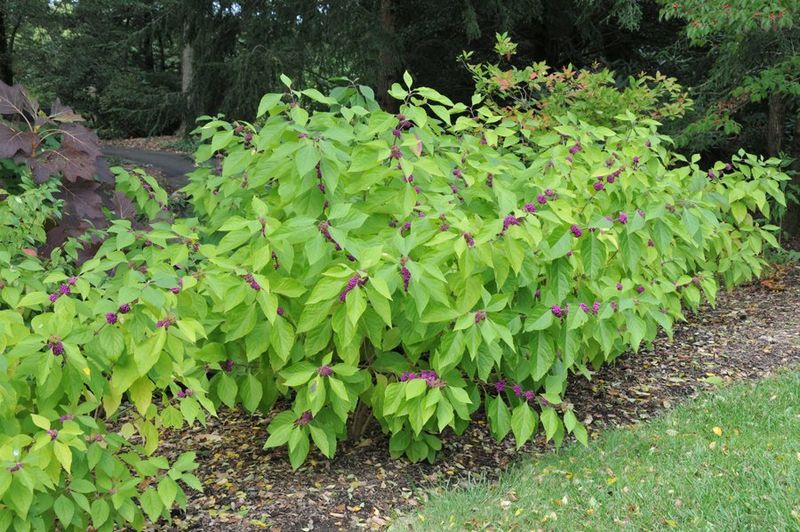
Fence lines, back corners, and partly shaded edges where lawn slowly thins out are often the least productive spaces in a yard. American beautyberry, Callicarpa americana, changes that entirely.
Clusters of vivid magenta-purple berries line the arching stems in late summer and fall, creating one of the most striking wildlife displays a home landscape can offer.
Birds flock to beautyberry when the fruit ripens. More than 40 bird species have been recorded feeding on the berries, according to UF/IFAS, including mockingbirds, robins, cardinals, and towhees.
That kind of consistent wildlife traffic turns a neglected lawn corner into a genuine habitat patch without requiring much from the gardener.
The plant grows as a loose, arching shrub reaching six to eight feet in height and spread at maturity. It is deciduous, dropping leaves in winter and looking bare for a few months.
That seasonal quality means it works best as part of a layered planting that includes evergreen companions, rather than standing alone as a year-round focal point.
Partial shade to full sun both work well. Beautyberry tolerates sandy soils and adapts to the dry conditions common along fence lines and under tree canopies.
Cut it back hard in late winter before new growth starts to keep the form tidy and encourage strong berry production. Do not shear it like a hedge.
Its natural arching shape is part of its appeal. Give it room to spread and let it do what lawn never could.