The Palm Damage Hawaii Homeowners Usually Blame On Drought
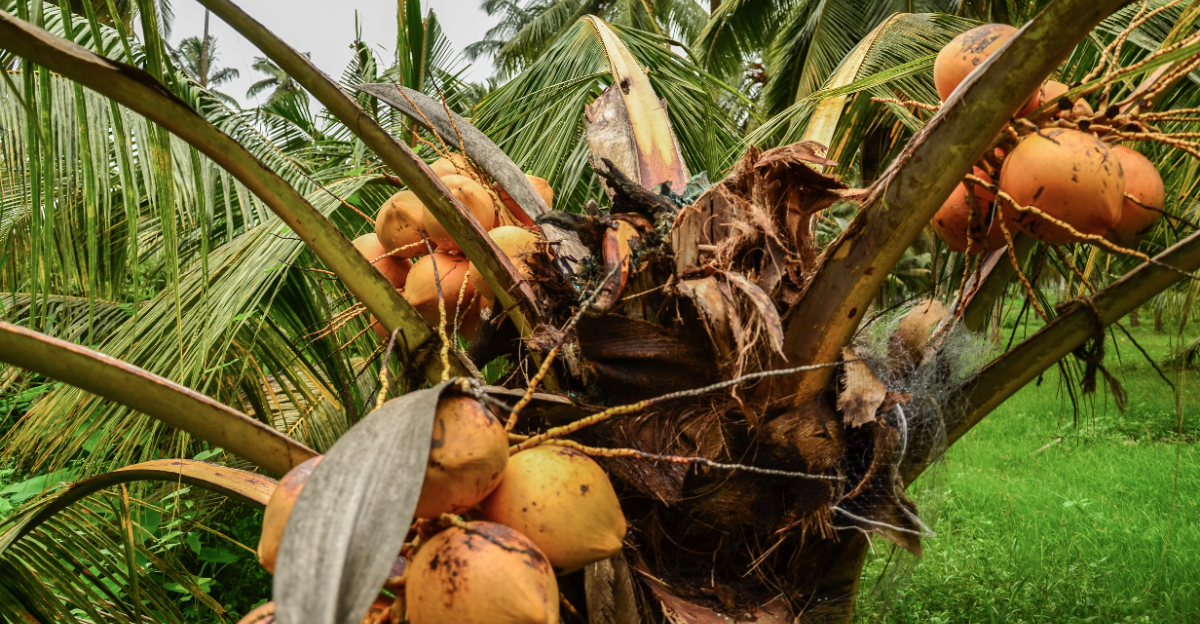
Shredded fronds on your palm are not weather damage, no matter what you assumed. Drought gets blamed first, but you deserve the real answer.
Hawaii is dealing with a beetle problem most residents never suspect. Rhinoceros in name only, this insect bores straight into your palm’s crown while you sleep.
Damage shows up fast, turning your fronds into ragged, V-shaped cuts within weeks. Nobody warns you that an insect smaller than your fist can outmatch a tree built to survive storms.
Yet you are watching it happen in your own yard right now. Homeowners across Hawaii keep mistaking this destruction for heat stress, and you might be one of them.
Meanwhile the beetle keeps feeding, unseen, unbothered, and entirely uninterested in your assumptions. Once you know what is actually damaging your palm, walking away from that knowledge stops being possible.
Coconut Rhinoceros Beetles Bore Into The Crown And Cut Emerging Fronds
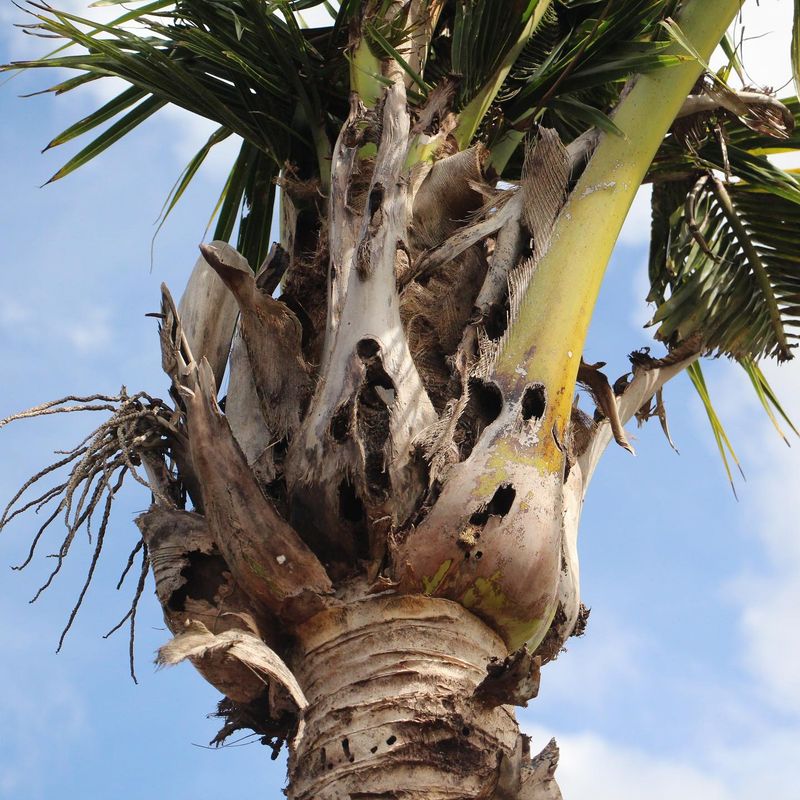
Picture a beetle the size of your thumb punching straight into the top of your palm. That is exactly what the coconut rhinoceros beetle does, and it is not subtle about it.
This insect is a serious invasive species that arrived in Oahu around 2013. Adults can reach up to two inches long, and they look like something out of a sci-fi movie with a curved horn jutting from their head.
The beetle targets the crown of the palm, which is the growing center at the very top. It bores through the base of the fronds before they even get a chance to open fully.
As the beetle tunnels inside, it feeds on the soft tissue beneath the surface. The damage happens where you cannot easily see it, which is part of why it gets misread as drought stress for so long.
Emerging fronds get sliced as the beetle moves around inside the crown. When those fronds finally unfurl, they come out looking torn, tattered, and misshapen.
One beetle can do a surprising amount of harm in a short time. Multiple beetles feeding on the same tree can severely weaken the crown and reduce the palm’s ability to produce new growth.
A single infested tree can host beetles for months before the damage becomes obvious from the ground. Catching it early gives your tree a real fighting chance at recovery.
The V Shaped Notches That Confirm Beetle Feeding
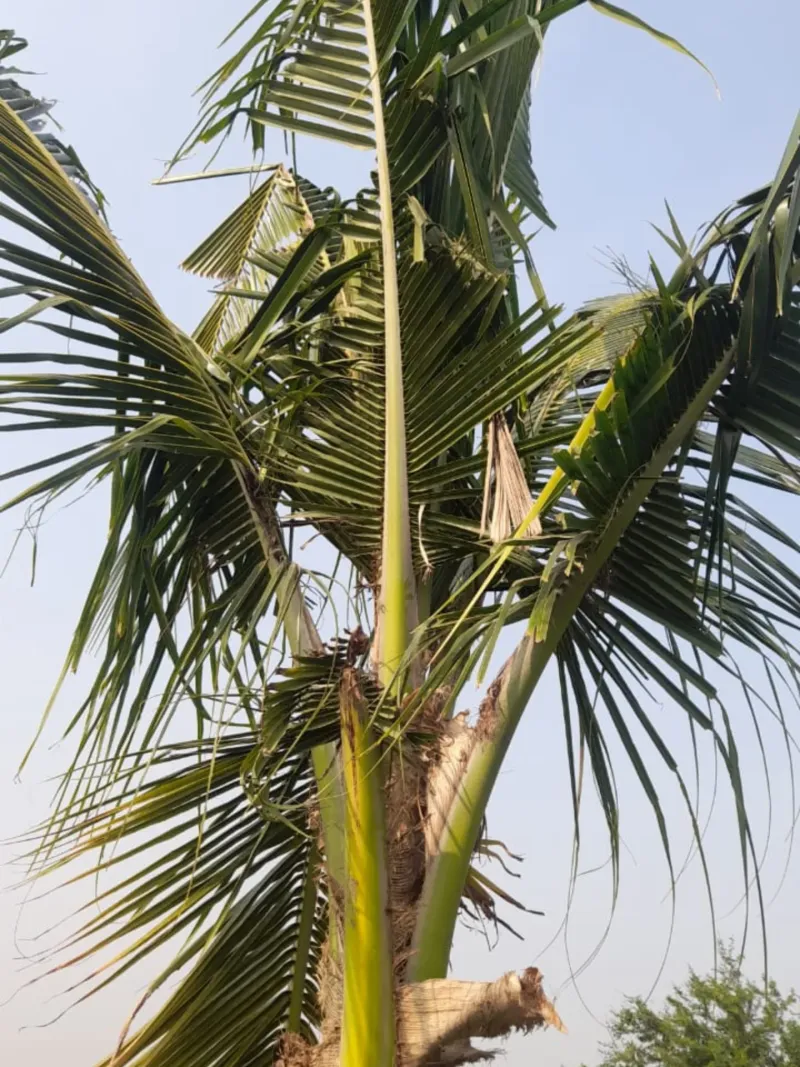
There is one clue that separates beetle damage from almost every other palm problem. Look closely at the fronds that have just opened, and search for clean, V-shaped cuts along the edges.
Those notches are the beetle’s signature. As it moves through the crown, its body physically slices through the tightly rolled fronds before they unfurl.
When the frond opens, those cuts spread out into a pattern of V-shapes or triangular gaps. The cuts are precise and consistent, not ragged or irregular like wind damage.
Drought stress causes fronds to turn yellow or brown, often starting at the tips. Nutrient problems create discoloration in specific patterns, but neither one leaves behind those sharp, geometric notches.
Homeowners who spot this pattern finally have a concrete answer. The notches are essentially the beetle leaving behind its calling card in plain sight.
Sometimes only one or two fronds show the marks. Other times, several consecutive fronds will all display the same V-shaped cuts, suggesting the beetle spent a good amount of time feeding.
Photographing these notches clearly is important, especially if you plan to report the sighting to state officials. A sharp image taken in good lighting will help experts confirm the identification quickly.
Once you know what to look for, you will never mistake this damage again. The V-shape is the detail that changes everything about how you respond to a struggling palm.
How The Damage Differs From Drought Stress And Nutrient Deficiency
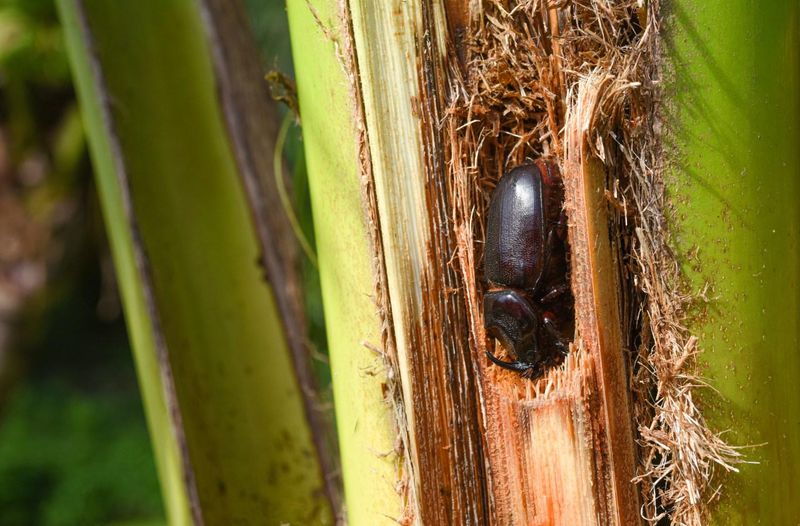
Telling these three problems apart can feel like a puzzle, but the differences are actually pretty clear once you know what to look for. Each one leaves a different kind of evidence on the tree.
Drought stress usually shows up as overall browning, starting at the leaf tips and working inward. The whole canopy may look dull, limp, or faded when a palm has not had enough water.
Nutrient deficiency often targets specific fronds in a predictable pattern. Potassium deficiency, for example, causes older fronds to turn orange-yellow while newer growth stays green.
Beetle feeding is different because it focuses on the newest fronds first. The damage appears at the crown level, not evenly across the whole tree.
Drought and nutrient issues do not create physical cuts or holes in the leaf tissue. Beetle damage does, and that is the clearest way to rule out environmental causes.
A palm stressed by dry conditions will still produce fronds that open normally. Beetle-damaged fronds come out pre-cut, with that telltale notched pattern already formed inside the crown.
Sometimes a tree has more than one problem at the same time. A drought-weakened palm is actually more vulnerable to beetle attack, so you might be dealing with both issues together.
Checking for V-shaped notches first will help you prioritize your response. That single detail decides whether you’re watering a healthy tree or losing time a real infestation doesn’t give you.
The Mulch Piles And Green Waste That Breed Larvae
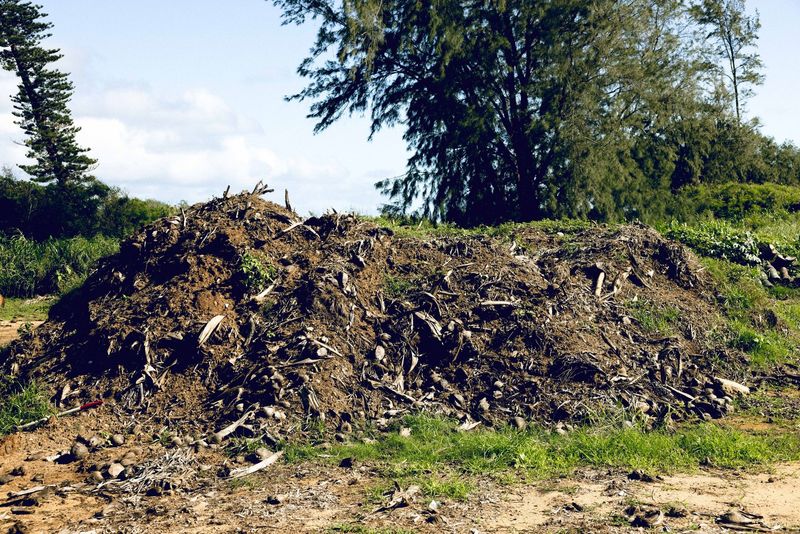
Here is something most people do not realize about this beetle. The adult is the one doing damage to your palm, but the real population problem starts underground, in your yard waste.
Female beetles lay their eggs in decomposing organic material. Rotting wood, compost heaps, mulch piles, and piles of cut green waste are all perfect breeding spots.
The larvae, which look like fat white grubs, spend months feeding inside that decaying matter. They grow slowly, and by the time they emerge as adults, they are ready to fly straight toward the nearest palm.
Hawaii generates a lot of green waste because of its lush landscape. Tree trimmings, fallen fronds, and chipped wood can pile up fast in a typical yard.
A mulch pile that sits undisturbed for several months becomes an ideal nursery. Temperatures inside a decomposing pile stay warm, which speeds up larval development.
The problem is that many homeowners create these piles without realizing the risk. Spreading mulch thinly and keeping it dry dramatically reduces its appeal as a breeding site.
Logs and large wood debris left on the ground are also high-risk. Beetles prefer material that is already breaking down, so fresh cut wood is less attractive than older, wetter pieces.
Cleaning up your yard waste is one of the most powerful things you can do to protect your palms. Less breeding habitat means fewer adult beetles searching for a crown to invade.
What To Report And Where To Send Photos In Hawaii
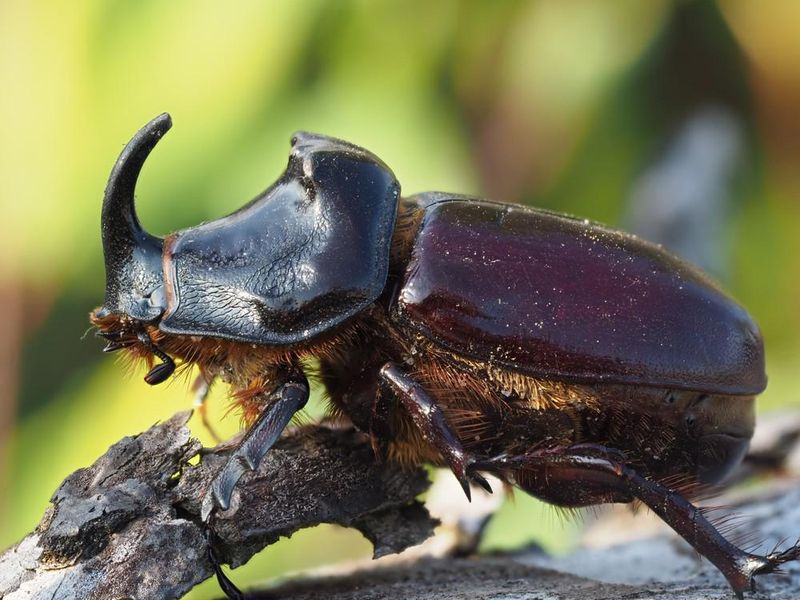
Spotting a coconut rhinoceros beetle or its damage is not something to keep to yourself. Reporting it quickly helps state and federal teams track where the population is spreading.
The Department of Agriculture and Biosecurity, formerly known as the Hawaii Department of Agriculture, runs a dedicated reporting system for this pest. You can submit photos and location details online at 643pest.org.
The University of Hawaii also runs the College of Tropical Agriculture and Human Resources, which actively monitors beetle activity. Their website has identification guides and contact information for reporting suspected sightings.
When you take photos, capture the V-shaped notches as clearly as possible. Include a shot of the full tree, a close-up of the damaged frond, and, if you find an actual beetle, a photo of that too.
Try to note your exact address or GPS coordinates when you file the report. Precise location data helps response teams prioritize where to inspect next.
You can also call the state’s toll-free pest hotline at 808-643-PEST (7378). Trained staff can walk you through the reporting process and answer questions about what you found.
Do not try to move a captured beetle to another location. Keeping it contained and reporting it in place gives officials the best chance to assess the situation accurately.
Your report genuinely matters in the fight to control this pest. Every confirmed sighting adds to the map that guides containment efforts across the islands.
How To Manage Yard Waste So Beetles Cannot Breed In It
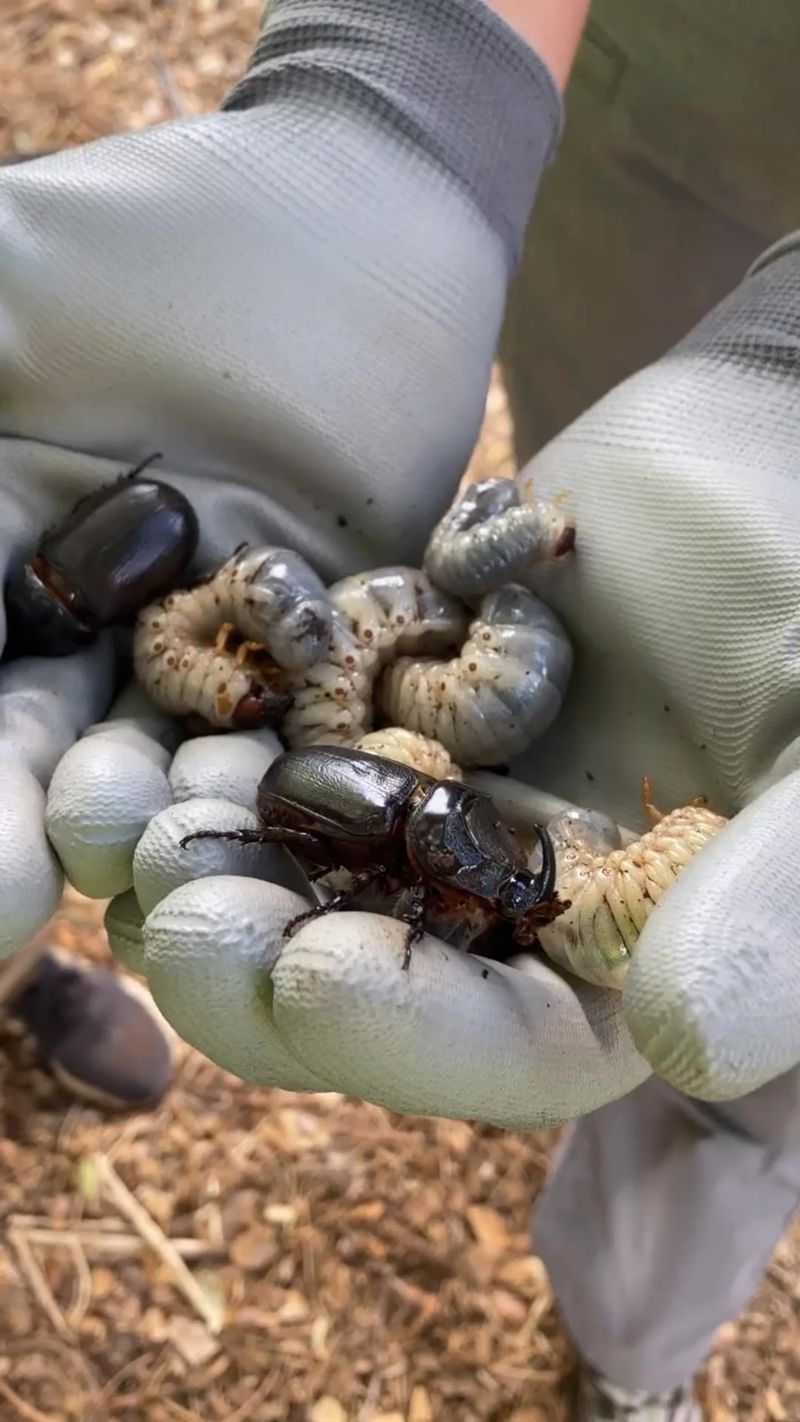
Managing your yard waste properly is one of the best defenses you have against this beetle. A tidy yard is a far less inviting place for a female beetle searching for a place to lay eggs.
Start by avoiding large, deep mulch piles. Spread mulch no deeper than two to three inches so it dries out faster and stays less hospitable to developing larvae.
Turn compost piles regularly to disrupt any eggs or early-stage larvae inside. Frequent turning also raises internal temperatures enough to harm developing grubs.
If you have tree trimmings or palm fronds to dispose of, do not let them sit in a heap for weeks. Bag them promptly and schedule a curbside green waste pickup as soon as possible.
Large logs or stumps left on the ground are a serious risk. Grinding stumps down and hauling away the debris removes a prime beetle habitat from your property.
Chipping woody material into fine pieces reduces its value as a breeding site. Fine chips dry out much faster than chunky wood pieces, making them far less attractive.
If your city offers a green waste drop-off program, use it consistently. Getting organic debris off your property quickly is always better than storing it, no matter how tidy the pile looks.
A few smart habits now can be the difference between a palm that recovers and one you end up removing. Prevention costs you far less than a beetle infestation ever will.