Why Michigan Gardeners Are Planting Nannyberry Instead Of Burning Bush This Fall
Burning bush has long been a popular choice for fall color, but Michigan gardeners are increasingly steering away from it as fall planting season approaches.
A quieter, more resilient native shrub has been gaining attention instead, offering its own seasonal appeal without the drawbacks burning bush tends to bring along with it.
This shift isn’t just about appearance either, though the alternative holds its own beautifully in that department too.
There’s a practical reason behind this growing trend, one that becomes obvious once you understand how each shrub actually behaves in a Michigan yard over time.
Gardeners making the switch often mention the same handful of reasons once you ask what pushed them toward this change.
It’s a swap that’s quietly gaining popularity, even though most neighbors probably haven’t noticed the difference yet. Once you know what to look for, you’ll start spotting this alternative everywhere.
1. Burning Bush Comes With An Invasive Problem
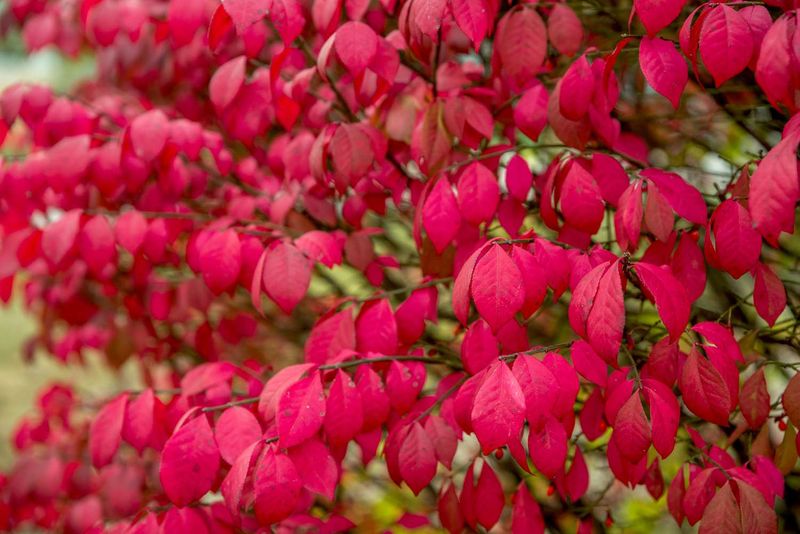
That famous red shrub has a hidden downside that surprises a lot of homeowners. The Michigan Department of Natural Resources lists winged burning bush as an invasive plant because it does not stay put in the yard.
Birds happily gobble up its seeds and then carry them far and wide. Those seeds sprout in forests, along trails, and in open fields where nobody planted them.
Once they take hold, the young shrubs form thick patches that crowd out native wildflowers and tree seedlings.
The trouble grows quietly. A single shrub in your garden might look tidy and well behaved, yet the plants it creates in the wild can spread across whole woodlands over time.
When native plants lose their space, the animals and insects that depend on them lose out too. Forests slowly turn into a tangle of one bushy species instead of the rich mix nature intended.
Some Michigan nurseries have already stopped selling burning bush for these very reasons. Neighboring states have gone further and banned it outright, which shows how seriously the problem is being taken.
Choosing not to plant it is a small step with a big payoff for the land around you. You skip the worry of accidentally feeding an invasion while still getting the fall drama you crave.
The good news is that a native shrub can give you the same eye-catching color without the ecological baggage. That plant is nannyberry, and it shines in nearly every category that made burning bush popular in the first place.
2. Nannyberry Is Native To Michigan
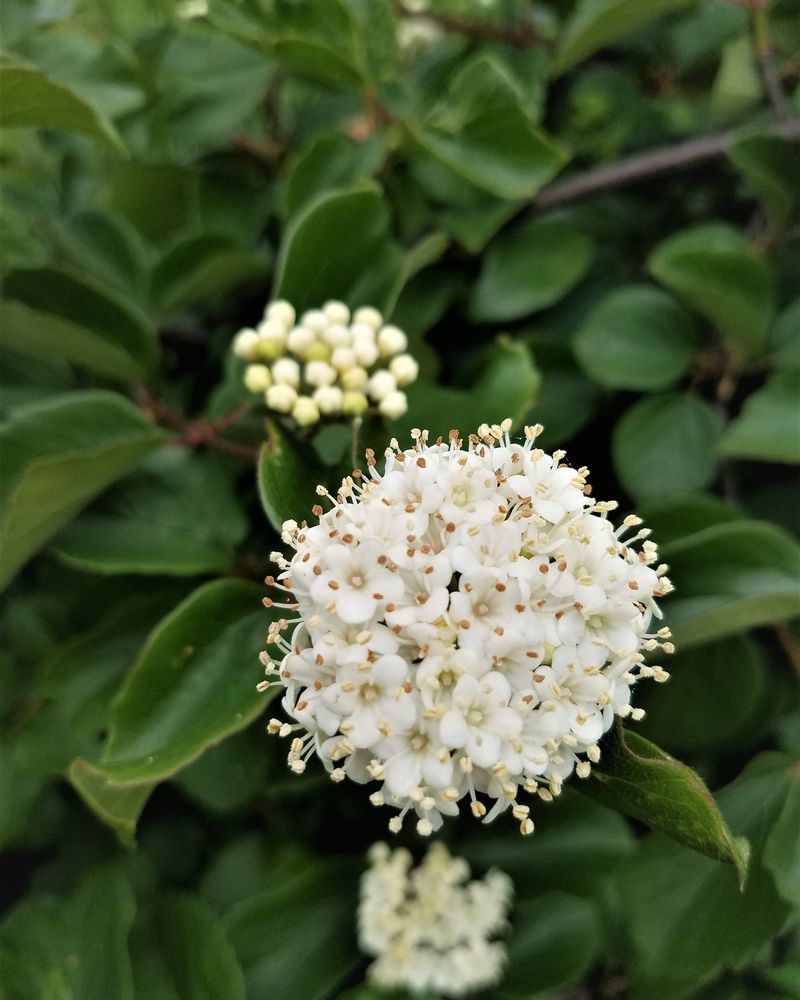
Say hello to a shrub that has called Michigan home for thousands of years. Nannyberry, known to plant lovers as Viburnum lentago, grows naturally across much of the state without any help from gardeners.
You can spot it in moist woods, along stream banks, in meadows, and at the sunny edges of forests. Because it already belongs here, it fits right into the local landscape like an old friend returning to the neighborhood.
Native plants have a special advantage that imported shrubs cannot match. They evolved alongside Michigan’s soil, weather, insects, and animals, so they know exactly how to handle a cold winter and a humid summer.
Your Michigan Garden Changes Every Week. Your Plan Should Too.
Gardening in Michigan changes quickly throughout the season. Every Friday you’ll receive a simple weekly plan showing exactly what to plant, prune, fertilize, harvest, and protect so you never miss the right timing.
That long history means fewer surprises for you. A nannyberry rarely needs babying, and it shrugs off many of the pests and diseases that trouble fussier ornamental plants.
Planting native also connects your yard to the wider web of life around it. Local bees, butterflies, and birds recognize this shrub as a familiar source of food and shelter.
There is something satisfying about growing a plant that truly belongs to your region. Instead of copying a look from far away, you celebrate the natural beauty already woven into Michigan’s countryside.
Best of all, nannyberry does not sacrifice looks for the sake of being native. It brings flowers, fruit, and fiery fall color to the table, proving that a homegrown choice can be just as showy as anything from a catalog.
3. Its Fall Color Can Rival Burning Bush
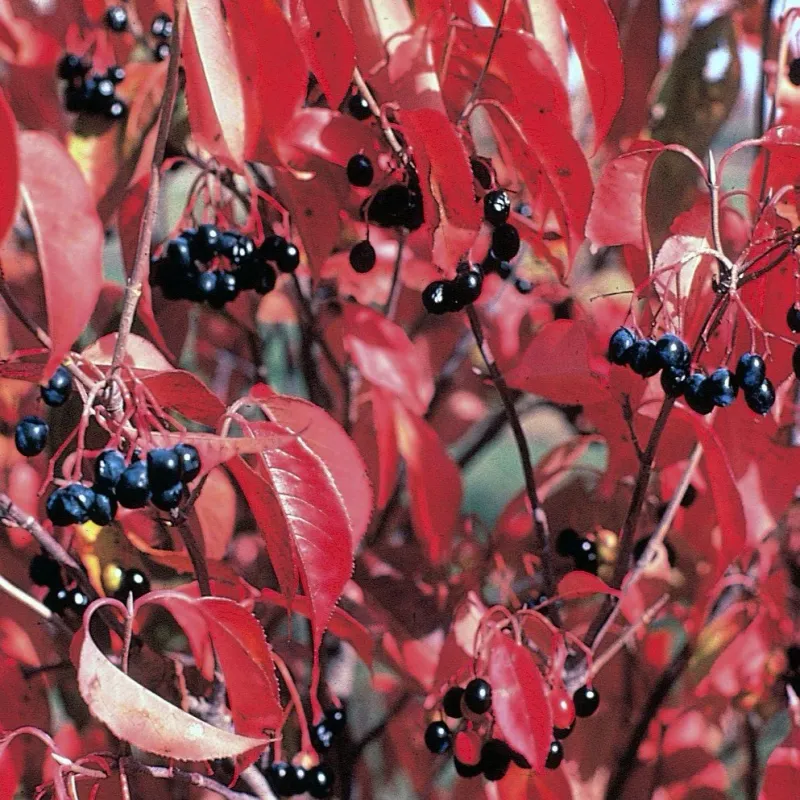
Here is the reason most people planted burning bush in the first place: that jaw-dropping autumn glow. The wonderful surprise is that nannyberry puts on a color show of its own.
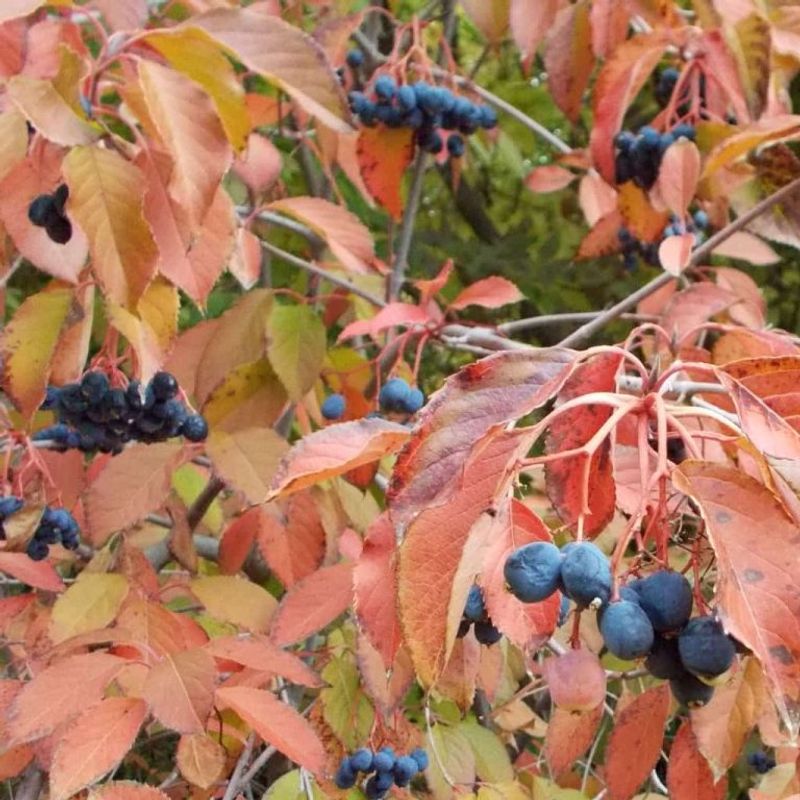
As the days shorten and the air cools, its glossy green leaves begin to transform. They shift into warm shades of orange, deep red, and rich purple that light up a garden bed.
The change does not happen all at once, which makes it even more fun to watch. One week you notice a blush of red at the leaf tips, and the next the whole shrub seems to catch fire with color.
Paired against a blue autumn sky or a backdrop of evergreens, those tones really pop. Photographers and porch-sitters alike find plenty to admire.
Unlike a plant that offers just a single blaze of red, nannyberry mixes several colors together. That blend gives your landscape a layered, painterly look instead of one flat shade.
You can plant a row of them for a hedge that changes with the season, or tuck a single specimen where its fall display will steal the spotlight. Either way, the effect feels dramatic.
So the swap does not force you to give up the seasonal fireworks you love. It simply trades one bright shrub for another that carries the same visual punch while doing far more good for the world outside your fence.
4. The Fruit Gives Birds Something To Eat
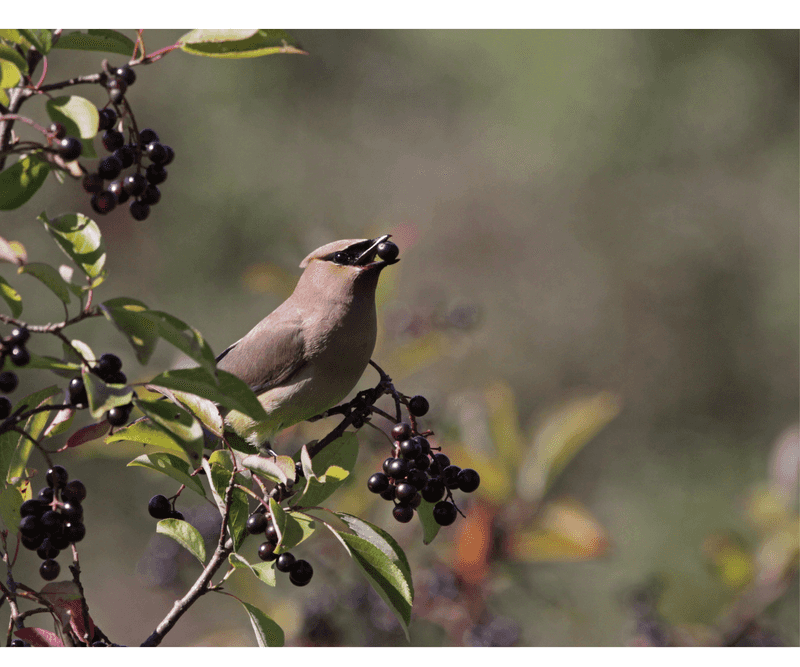
Picture a garden that hums with life instead of sitting quiet and still. Nannyberry makes that happen thanks to the fruit it produces each year.
After summer fades, the shrub hangs heavy with small berries that ripen to a lovely blue black color. These little fruits dangle on reddish stems and look almost like jewelry against the changing leaves.
Birds absolutely love them. Robins, cedar waxwings, thrushes, and many other species stop by to feast, especially as the weather turns and food grows harder to find.
By offering a natural snack bar, your yard becomes a welcome rest stop for feathered travelers. That means more birdsong in the morning and more fluttering visitors to watch from your window.
The fruit also lingers on the branches well into the colder months, which stretches out the buffet. Late-season eaters appreciate a reliable meal when other plants have gone bare.
Burning bush produces seeds too, but those seeds spread an invasive plant across the landscape. Nannyberry berries feed wildlife without unleashing that same harm on native forests.
Curious folks might like to know the fruit is edible for people as well, tasting a bit like a sweet raisin or date once fully ripe. Some gardeners nibble a few, though the birds usually claim the harvest first.
Choosing this shrub turns an ordinary planting into a small act of kindness for local wildlife. Your garden gives back, and the creatures around you reward you with plenty of cheerful activity.
5. Spring Flowers Add Another Season Of Interest
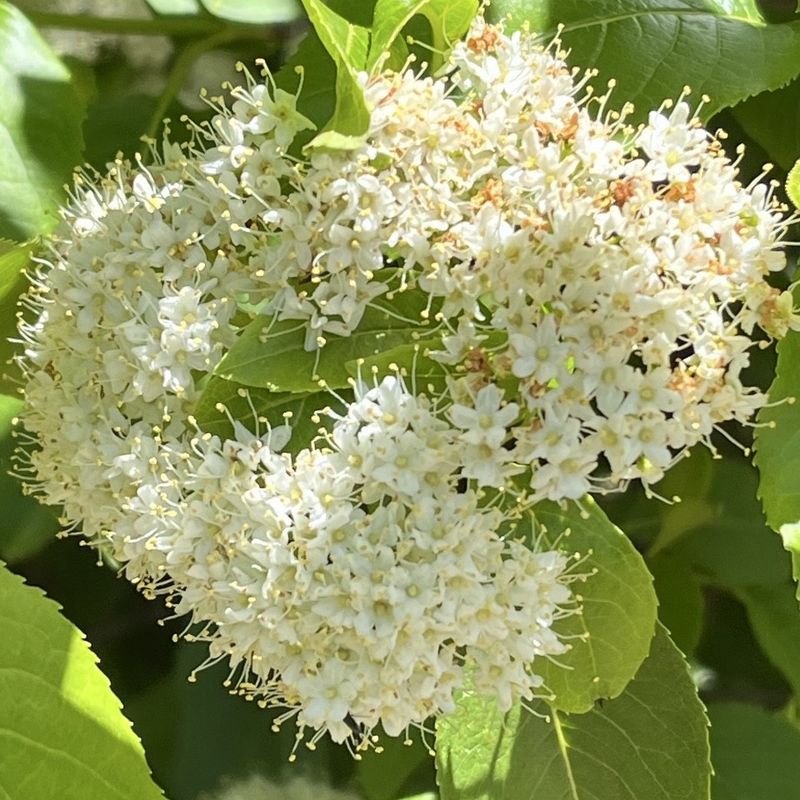
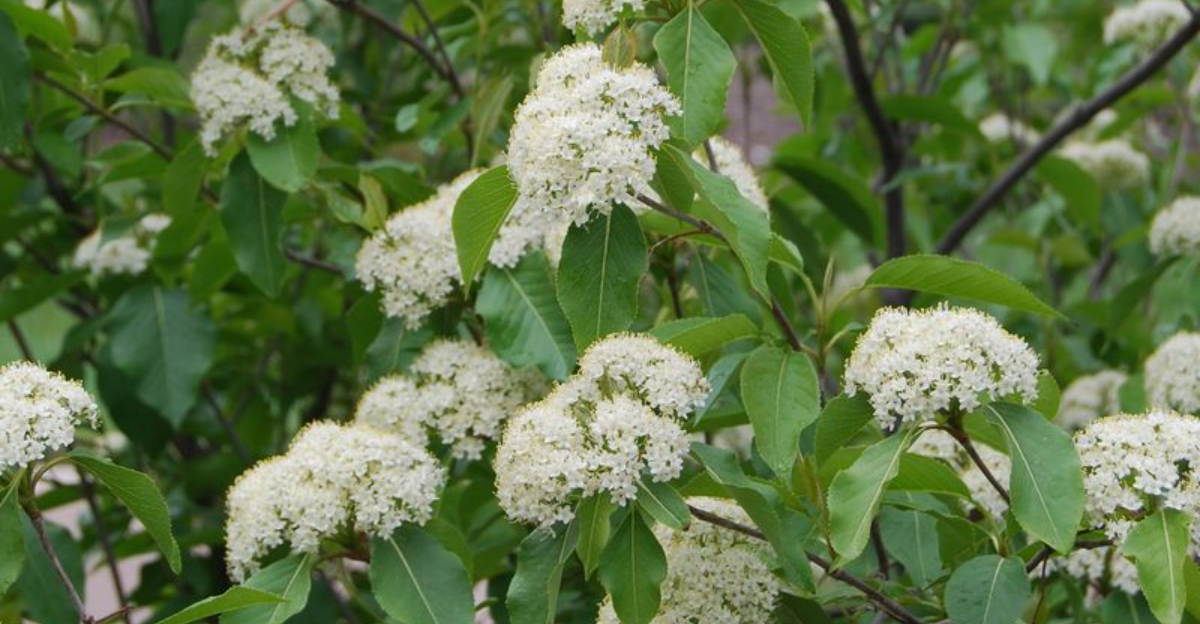
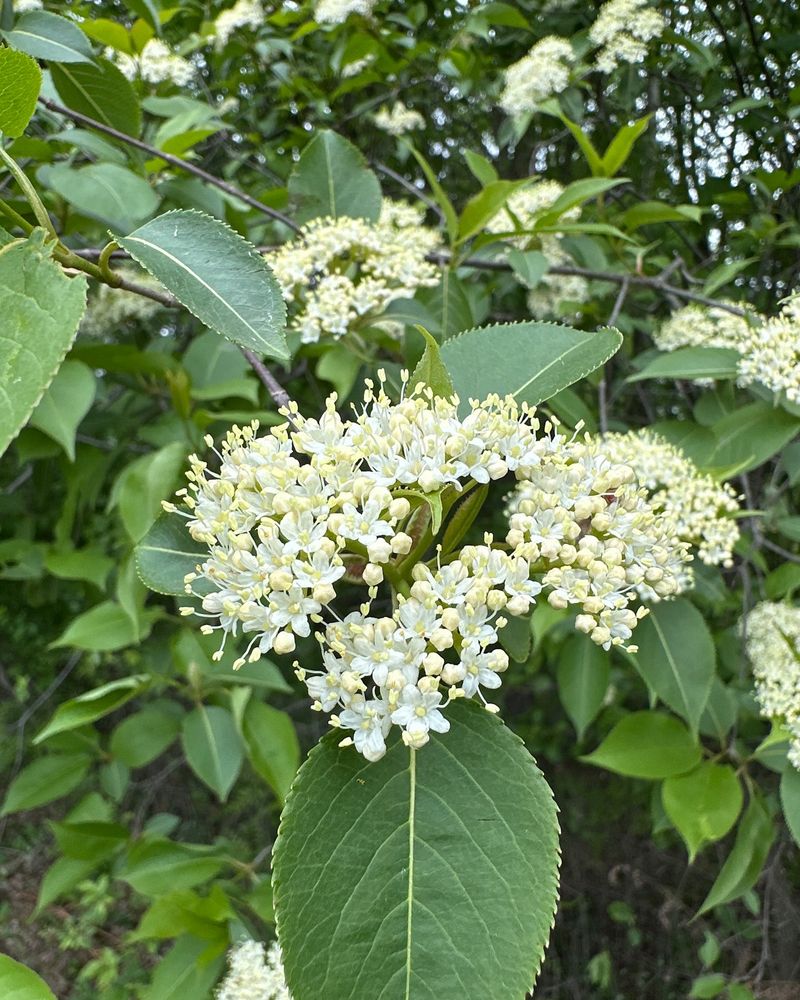
Long before the fall color arrives, this shrub throws a party of its own. In late spring, nannyberry bursts into bloom with clusters of creamy white flowers.
The blossoms grow in flat, rounded bunches that sit right on top of the branches. From a distance they look like little bouquets scattered across the whole plant.
Bees, butterflies, and other pollinators find those flowers irresistible. On a warm May afternoon, you may hear a gentle buzz as insects work their way from cluster to cluster gathering nectar.
That early bloom matters because pollinators need food when many other plants have not yet flowered. Nannyberry helps fill that hungry gap in the season.
The flowers also carry a soft, pleasant scent that drifts across the yard. Standing near a shrub in full bloom feels like a quiet welcome to the growing year.
Once the petals fade, the show is far from over. Those same flower clusters slowly turn into the green berries that later ripen to blue black in autumn.
So a single plant hands you three seasons of beauty: white blooms in spring, colorful fruit in summer and fall, and fiery leaves before winter. That is a lot of payback for one shrub.
Burning bush simply cannot compete with that kind of year-round interest. Its flowers are tiny and easy to miss, while nannyberry gives you something worth watching from the first warm days all the way through the harvest season.
6. Nannyberry Handles A Range Of Conditions
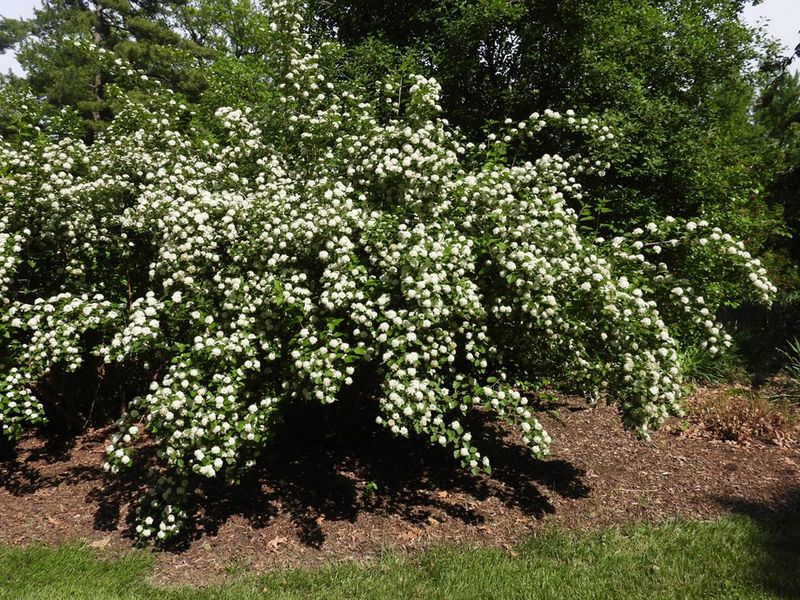
Some plants demand the perfect spot or they sulk. Nannyberry is refreshingly easygoing and adapts to whatever your yard throws at it.
Give it full sun and it thrives, offering the brightest flowers and the boldest fall color. Tuck it into partial shade and it still grows happily, which makes it a smart pick for tricky corners.
Soil moisture is another area where this shrub stays flexible. It naturally grows in moist and even wet ground, so those soggy low spots that stump other plants become a good home for it.
At the same time, it copes just fine with ordinary garden soil that stays reasonably watered. That range gives you plenty of freedom when deciding where to dig.
Gardeners with rain gardens or damp areas near downspouts especially appreciate this trait. Nannyberry soaks up extra moisture and turns a problem patch into a lush green feature.
Its toughness does not stop there. Michigan winters can be harsh, yet this native shrub is fully hardy and bounces back season after season without special protection.
Fewer demands mean less work for you. You will not spend weekends fussing over the perfect conditions or racing to rescue a struggling plant.
That reliability is a big reason gardeners feel confident making the switch. Instead of babying a fussy import, you get a sturdy native that settles in, adapts, and keeps looking good with very little effort on your part.
7. Give This Shrub Plenty Of Room
Before you grab a shovel, take a moment to think about size. Nannyberry is not a tiny foundation plant, and knowing that upfront saves you headaches later.
Left to grow, it can reach anywhere from fifteen to twenty feet tall and spread six to twelve feet wide. That means it behaves more like a large shrub or even a small tree than a compact bush.
Many gardeners actually love this feature. With a little pruning of the lower branches, you can shape it into a graceful multi-stemmed tree that anchors a corner of the yard.
If you prefer a fuller, bushier look, simply let it branch out naturally and use it as a tall privacy screen. Either style works beautifully.
The key is picking the right spot from the start. Plant it too close to your house, a fence, or power lines and you will be fighting its size for years.
Give it open space instead, and it rewards you with a strong, handsome form that fills the area without crowding. A back property line or the edge of a wooded area often makes an ideal home.
Spacing several plants correctly also lets air move freely between them, which keeps the foliage healthy. Aim to set individual shrubs at least six to eight feet apart.
A few minutes of planning now means your nannyberry can stretch to its full, lovely potential. Respect its mature size, and it will thank you by becoming a standout feature for decades.
8. Fall Is A Good Time To Get It Established
There is a reason nurseries buzz with activity every autumn. Cool fall weather happens to be one of the best times to plant a shrub like nannyberry.
When the air turns crisp, the stress of summer heat fades away. The soil, however, stays warm from months of sunshine, and that warm ground is perfect for growing new roots.
A shrub planted now spends the next several weeks quietly settling in below the surface. While the leaves drop and the top of the plant rests, the roots keep reaching out into the soil.
Fall also tends to bring steady rain, so you water less and nature does much of the work for you. That gentle moisture helps the young plant feel right at home.
Come next spring, your nannyberry already has a head start. Instead of scrambling to build roots and grow leaves at the same time, it can focus its energy on fresh growth.
That early advantage really pays off when summer returns. A well-rooted shrub handles heat and dry spells far better than one planted just weeks earlier.
To help things along, spread a few inches of mulch around the base to hold in moisture and protect the roots as temperatures drop. Keep the mulch a little away from the main stems.
Water it well until the ground begins to freeze, then let it rest. With that simple care, your new native shrub will wake up strong and ready to shine for many seasons to come.