Stop Ignoring Spongy Bases On Your Agave Before Destructive Weevils Spread In Arizona
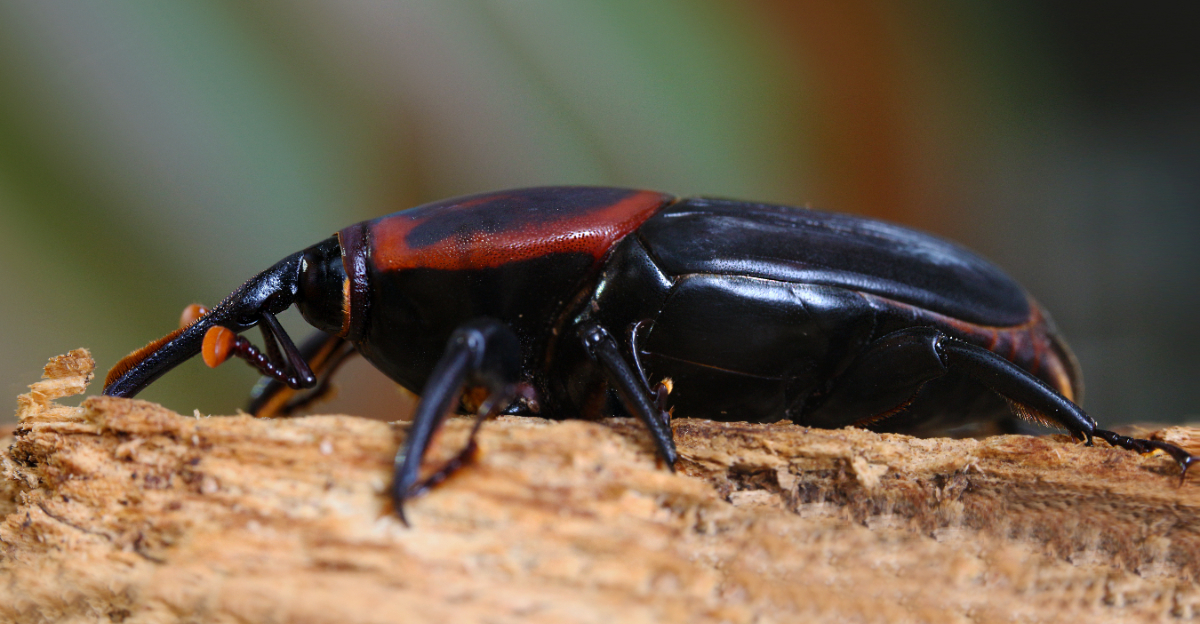
Last week, your agave looked strong enough to shrug off the entire desert summer without effort. Now the base feels soft under your palm, and that softness rarely happens without a serious reason.
Lower leaves have started flopping toward soil you have tended for years. A faintly rotten smell drifts up whenever you crouch close enough to check.
Beneath that soft flesh, an invader is already tunneling quickly through tissue you cannot see or stop. Arizona’s brutal climate gives this underground assault the perfect cover to spread quietly while you are not looking.
Your neighbors across Arizona are already watching the same rot spread silently through entire collections this season. Every rosette you have shaped over years sits far closer to collapse than you realize right now.
You cannot wait for next week to find out what is happening underground.
Agave Snout Weevil Larvae Hollow Out The Crown From Inside
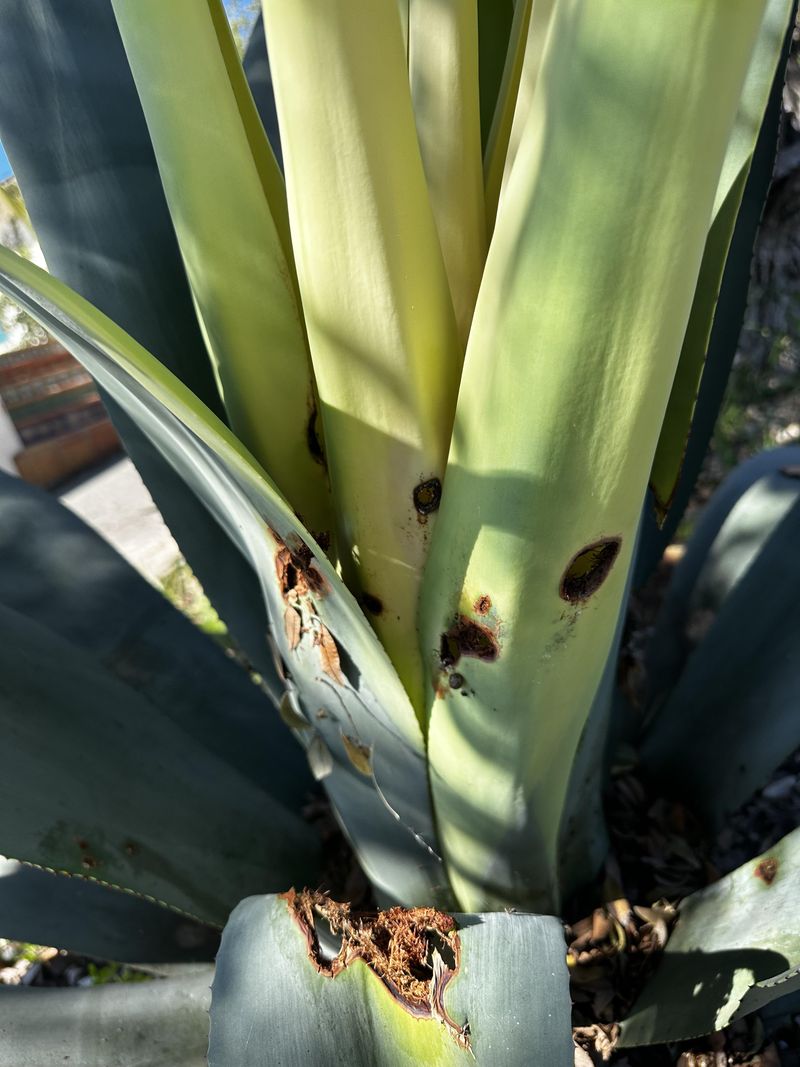
Picture a tiny crew working in total darkness. That is exactly what agave snout weevil larvae do once a female weevil deposits her eggs near the base of your plant.
The adult female chews a small hole into the crown tissue. She lays her eggs deep inside, where no spray can reach them easily.
When the eggs hatch, the larvae begin eating immediately. They target the soft, starchy tissue at the very center of the rosette, which is the part the plant needs most to survive.
Within days, the crown becomes a hollow shell. The larvae work outward from the inside, consuming everything they encounter along the way.
Spongy bases on your agave are often the first external clue that larvae are already active inside. By that point, the internal damage is usually severe and widespread.
Gardeners often mistake early collapse for drought stress or overwatering. That misdiagnosis costs precious time while the larvae keep feeding undisturbed.
A healthy agave crown feels firm and solid when you press it gently. If it gives under light pressure, something has been eating it from within.
Catching this stage early requires regular hands-on inspection of every agave in your Arizona yard. Weekly checks during spring and early summer are your best defense against a larvae takeover, so press the base gently and watch for any give. A soft crown that yields under light pressure is a warning sign you should not ignore.
Soft Tissue And Collapsing Lower Leaves Appear Together
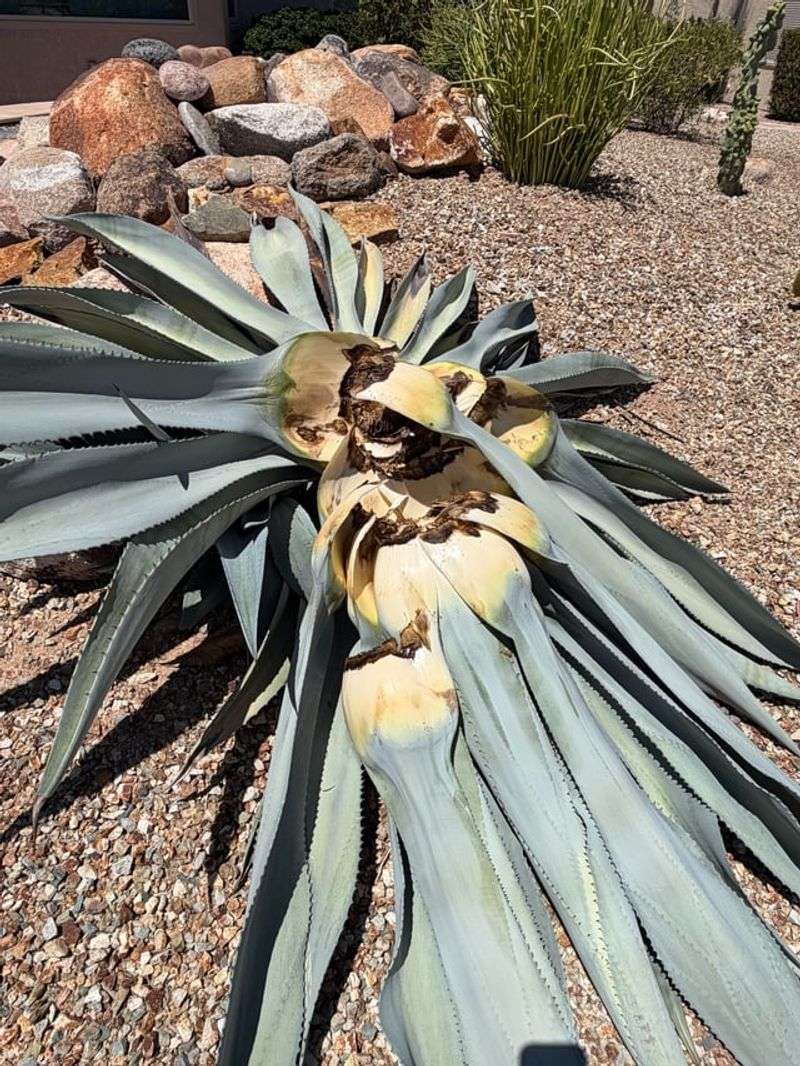
Leaves that once stood stiff and proud are now folding toward the ground. When you see that paired with a base that feels like wet cardboard, you are looking at a two-part warning system.
Soft tissue and collapsing lower leaves rarely appear for innocent reasons. Together, they signal that structural damage has already reached the outer layers of the plant.
The lower leaves of an agave are anchored into the crown. When larvae hollow that area out, those leaves lose their support and begin to droop or pull away entirely.
Pressing gently at the base tells you more than looking ever could. Healthy tissue resists pressure firmly, while compromised tissue sinks in like a wet sponge.
Your Arizona Garden Changes Every Week. Your Plan Should Too.
Gardening in Arizona changes quickly throughout the season. Every Friday you’ll receive a simple weekly plan showing exactly what to plant, prune, fertilize, harvest, and protect so you never miss the right timing.
Some Arizona gardeners notice a faint sour smell near the base of affected plants. That odor comes from bacteria that move in after the larvae open up the tissue.
Spongy bases on your agave paired with leaf collapse mean the infestation is no longer in its earliest stage. Acting within days, not weeks, becomes urgent at this point.
Pull gently on one of the lower leaves near the base. If it slides out with almost no resistance, the crown connection has been severely weakened by larval feeding.
Catching this combination of symptoms early gives you a narrow window to act. Missing it means the plant will likely fall over on its own within a matter of weeks, so use your eyes and hands together as your sharpest diagnostic tools in the garden.
Mature Agaves Nearing Bloom Are Targeted First
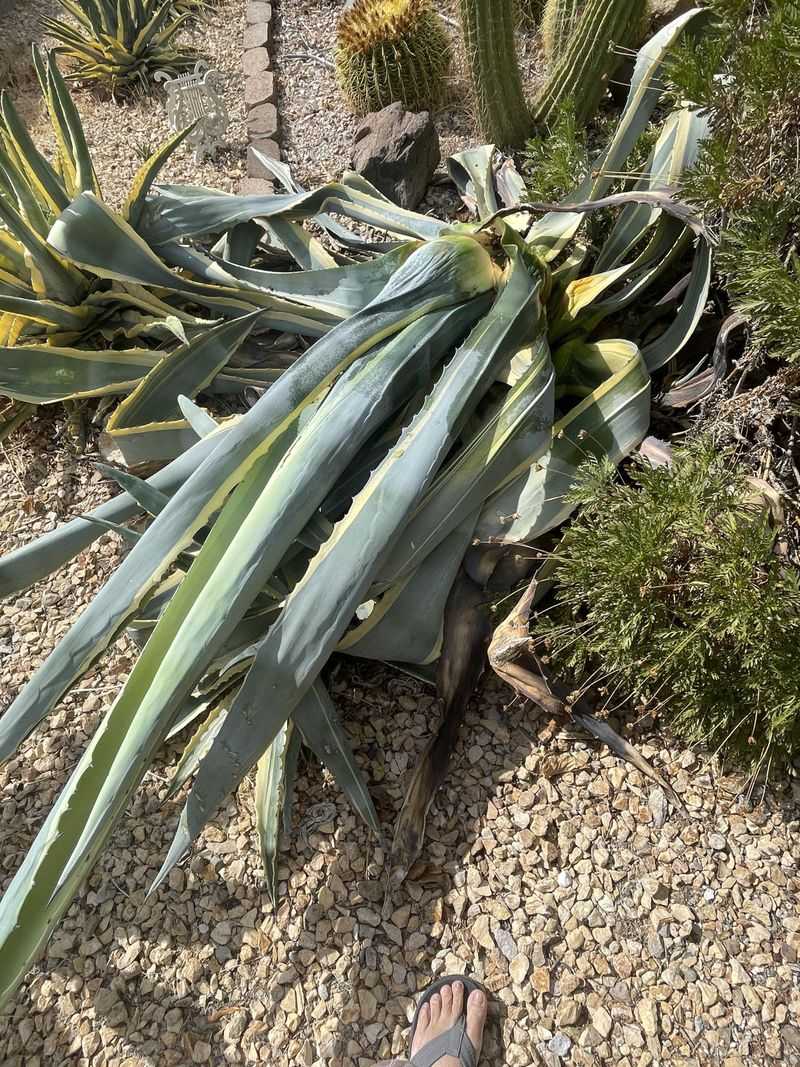
There is something almost cruel about how the agave snout weevil picks its targets. It almost always goes for the biggest, most mature plants in your collection first.
Scientists believe the weevil is drawn to chemical signals that a blooming agave releases. As the plant prepares to flower, it produces compounds that act like a dinner bell for these pests.
A mature agave nearing its bloom cycle has a large, starchy crown packed with nutrients. For a female weevil looking to lay eggs, that crown is the ideal nursery.
Smaller, younger agaves are sometimes passed over entirely in favor of these giants. That makes your most impressive specimens your most vulnerable ones.
Gardeners who grow large agave species like Agave americana or Agave weberi should watch their mature plants extra closely. These large-crowned species are particularly attractive targets during bloom season.
The bloom stalk emerging from the center is one visual cue to start intensifying your inspections. At that stage, check the base every single week without skipping.
Spongy bases on your agave that are blooming should be treated as an emergency. The combination of nutrient-rich tissue and an open entry point makes infestation almost inevitable without protection.
Applying a preventive soil drench of imidacloprid around mature agaves before the stalk emerges can significantly reduce your risk. Timing that application correctly is everything when it comes to protecting these irreplaceable plants.
Bacterial Rot Follows The Feeding Wounds Within Weeks
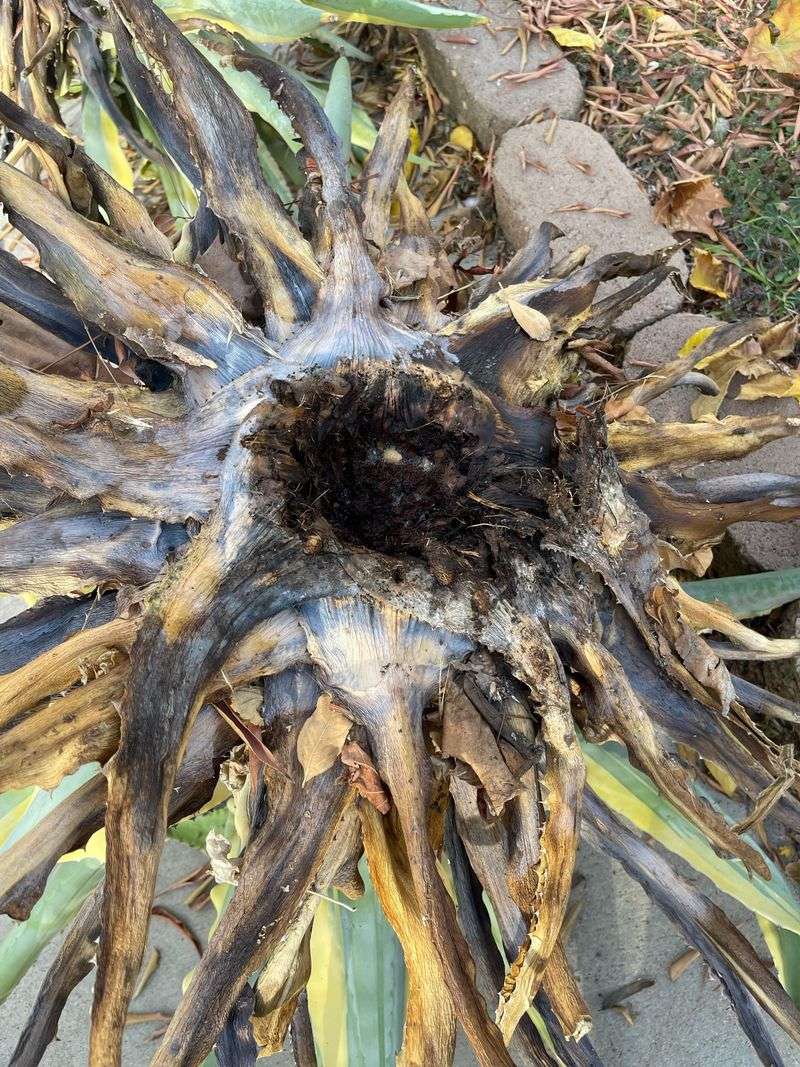
Where larvae chew, bacteria follow close behind, and that combination accelerates destruction faster than most Arizona gardeners expect.
Larval feeding creates open wounds inside the crown tissue. Those wounds are warm, moist, and full of plant sugars, which makes them a perfect environment for bacterial colonies.
Bacteria are the most common culprits in agave rot cases. They spread rapidly through the wounded tissue, turning firm plant matter into dark, foul-smelling mush within a few weeks.
By the time you smell that rot from outside the plant, the bacteria have usually spread well beyond the original wound site. What looks like a small soft spot on the surface often hides extensive internal decay.
Spongy bases on your agave that have turned dark brown or black have reached the bacterial rot stage. At this point, saving the plant becomes much harder and sometimes impossible.
Some gardeners try cutting away the rotted tissue and treating the wound with a fungicide or copper spray. That approach can work on minor cases, but only if healthy tissue still remains at the core.
Cutting into a compromised crown reveals the true extent of the damage. Green, firm tissue means there is something worth saving, while brown mush throughout signals that removal is the better choice.
Acting before bacterial rot sets in is usually the smarter path. Once the bacteria spread widely, the plant becomes a risk to everything growing nearby.
Removing And Bagging Affected Plants Before Larvae Move On
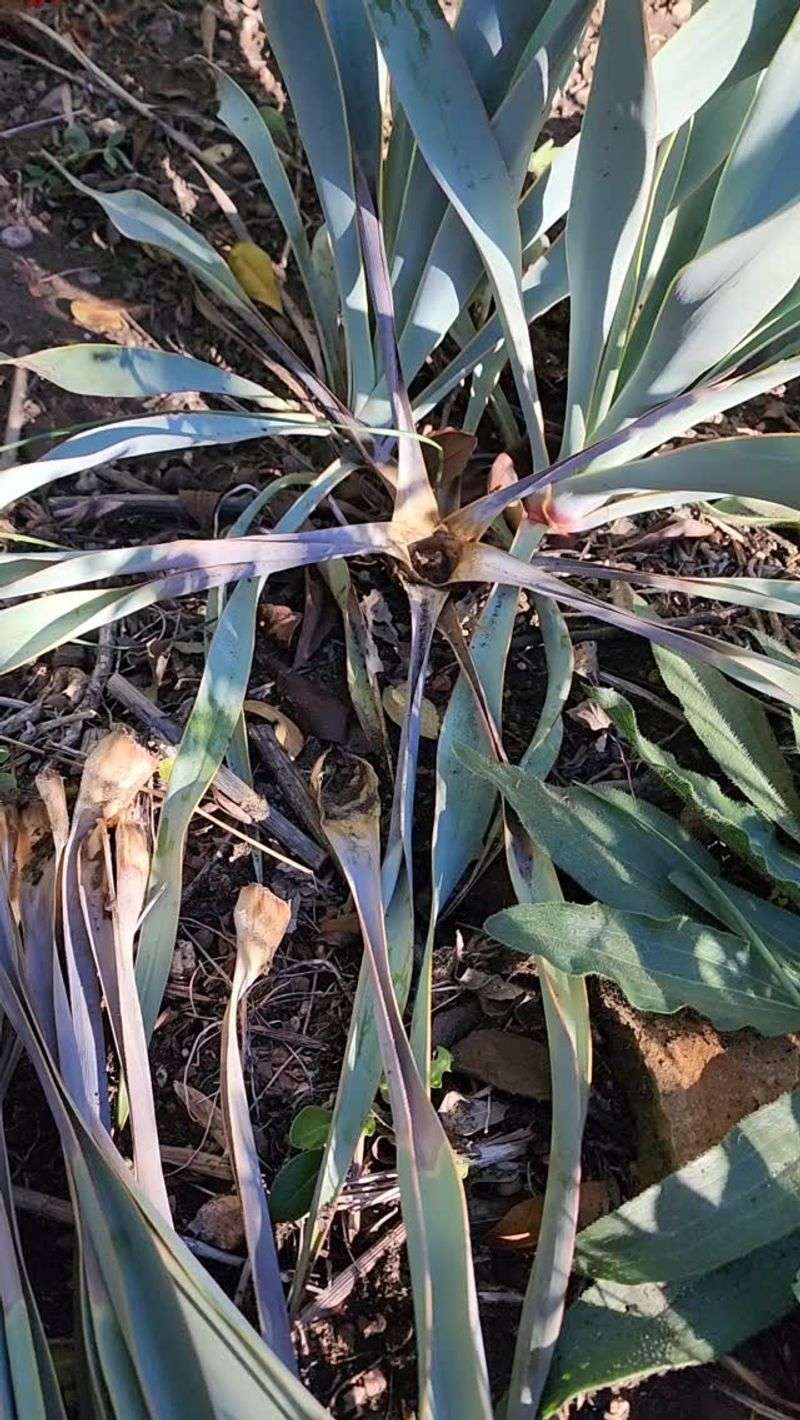
Speed matters more than almost anything else at this stage, because once larvae finish feeding inside one plant, they pupate in the surrounding soil and emerge as adults ready to attack the next agave.
Removing an infested plant quickly breaks that cycle before it can repeat. Leaving a collapsing agave in place is essentially gifting the weevil population a free nursery for the next generation.
Start by cutting the plant down to the base using a sharp saw or heavy pruning shears. Wear thick gloves because agave spines are unforgiving, and the rotted tissue can carry bacteria.
Bag every piece of the plant immediately in thick contractor-grade plastic bags. Do not toss trimmed leaves or crown pieces loosely into a wheelbarrow where larvae can escape into the soil.
Tie the bags securely and place them directly into your trash bin for municipal pickup. Do not compost any part of an infested agave, no matter how tempting it seems to recycle the material.
Next, dig out the root ball and as much surrounding soil as you can manage. Larvae often drop into the soil to pupate before you even notice the plant is struggling.
Spongy bases on your agave are your cue to start this removal process without delay. Every day you wait gives the larvae more time to mature and migrate outward.
Treat the empty planting hole with an appropriate soil insecticide before replanting anything. Skipping that step is how a single infestation turns into a garden-wide spread.
Soil Drenches And Spring Timing That Protect Nearby Rosettes
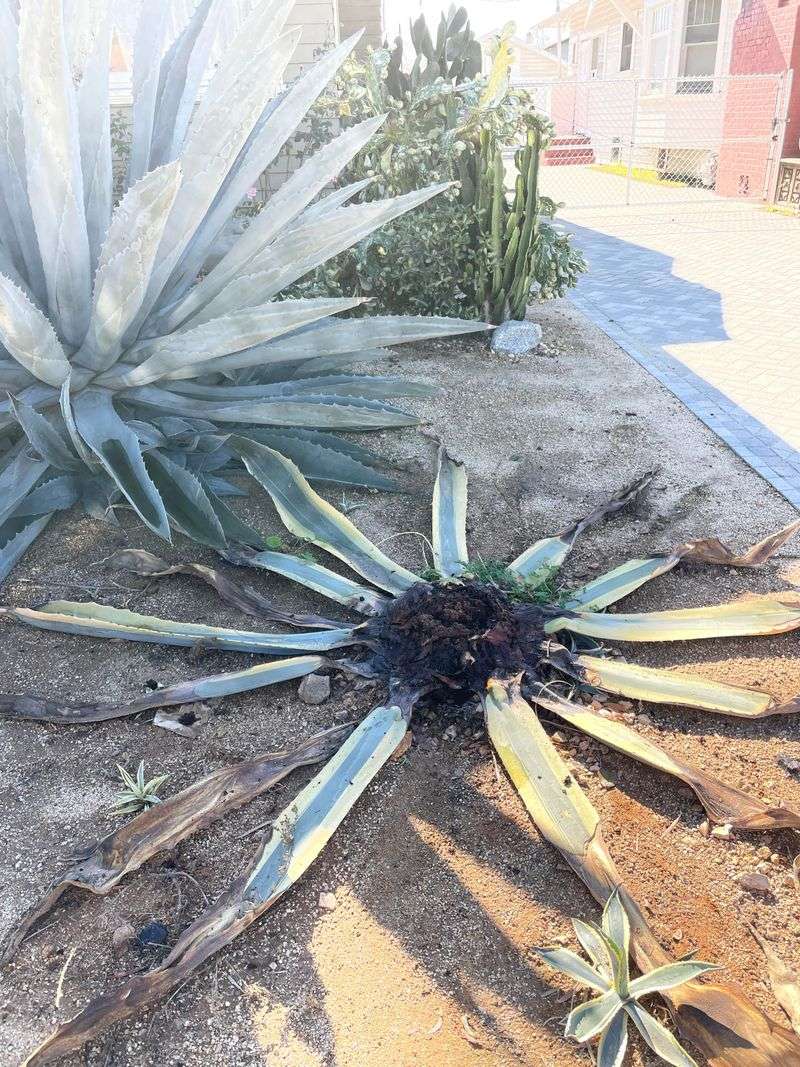
A well-timed soil drench applied in early spring can protect your remaining agaves through the entire weevil season, and prevention consistently beats emergency treatment.
Imidacloprid is the most widely recommended systemic insecticide for agave snout weevil control. When applied as a soil drench, the plant absorbs it through its roots and carries it into the crown tissue.
Female weevils that chew into treated tissue are exposed to the insecticide before they can lay eggs. That breaks the reproductive cycle right at the moment of infestation.
Apply the drench in late February or early March in most Southwest regions. That timing puts the chemical in place before adult weevils become most active in April and May.
Mix the product according to label directions and pour it slowly around the base of each rosette. Allow the soil to absorb the solution fully before watering again to avoid runoff.
Repeat the application in fall if your region has a second period of weevil activity. Some areas in Arizona and Southern California see adult weevils emerging in both spring and autumn.
Spongy bases on your agave should prompt immediate treatment of all nearby rosettes, not just the affected one. Weevils spread outward in a radius, so your whole collection is at risk.
Protecting healthy agaves with preventive drenches and seasonal timing is the smartest long-term strategy. A little effort each spring keeps your desert garden standing tall for years to come.