8 Reasons Your Potted Hydrangea Dries Out Too Fast
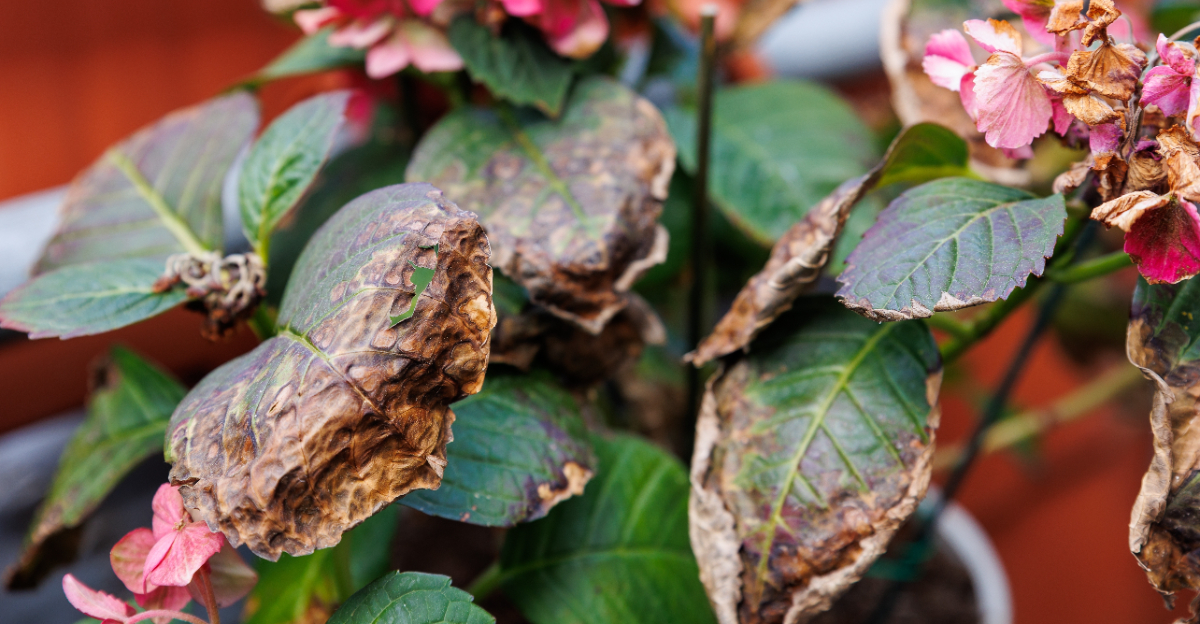
Watching those blooms droop by mid afternoon feels personal, even though it isn’t. Something in the setup, not the plant itself, is working against you. Nothing about that pattern is set in stone.
Pots create a far tougher environment than garden soil ever will. Roots trapped in a container cannot chase water the way they would in open ground.
Leaves that size demand more moisture than most containers can hold. Sun exposure, pot material, and soil texture each pull in a different direction. Timing matters just as much as quantity when it comes to watering.
Small details you have never questioned are quietly draining that pot dry. None of them work alone, and none of them are impossible to fix.
Real adjustments, made today, change the pattern within days. Your hydrangea’s afternoon collapse is about to make a lot more sense.
1. Broad Leaves Move Water Faster Than Roots Can Replace It
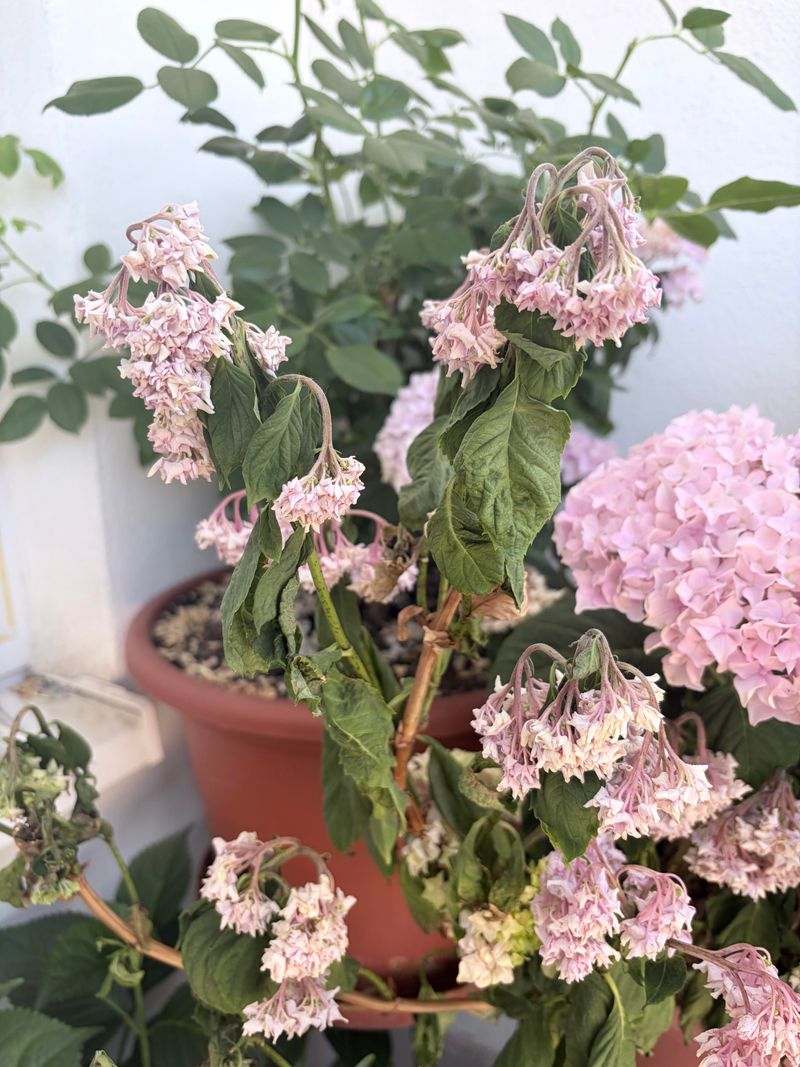
Hydrangea leaves are huge, and that size comes with a hidden cost. Every leaf surface releases moisture into the air through tiny pores called stomata.
On a warm day, a single hydrangea can lose a surprising amount of water through its leaves alone. Roots simply cannot pull water up from the soil fast enough to match that loss.
This process is called transpiration, and it runs fastest once temperatures climb into the 80s. Bright light and low humidity crank the rate even higher.
Potted plants face a tougher version of this challenge than in-ground ones. A garden bed holds far more soil moisture as a buffer against rapid leaf loss.
Wind speeds things up even more by sweeping away the thin layer of humid air that normally sits just above each leaf. Moving your pot to a sheltered spot can slow the cycle noticeably.
Grouping several plants together creates a pocket of shared humidity that benefits all of them. Misting the leaves in the early morning adds a brief but useful buffer on especially dry days.
Cutting back a few of the oldest or largest leaves during a heat wave reduces the total surface area losing water. Your plant stays hydrated longer without any change to your watering schedule.
Understanding transpiration changes how you think about this plant entirely. The leaves are not the problem, they are just doing their job at full speed.
2. Container Volume Sets The Limit On Moisture Reserves
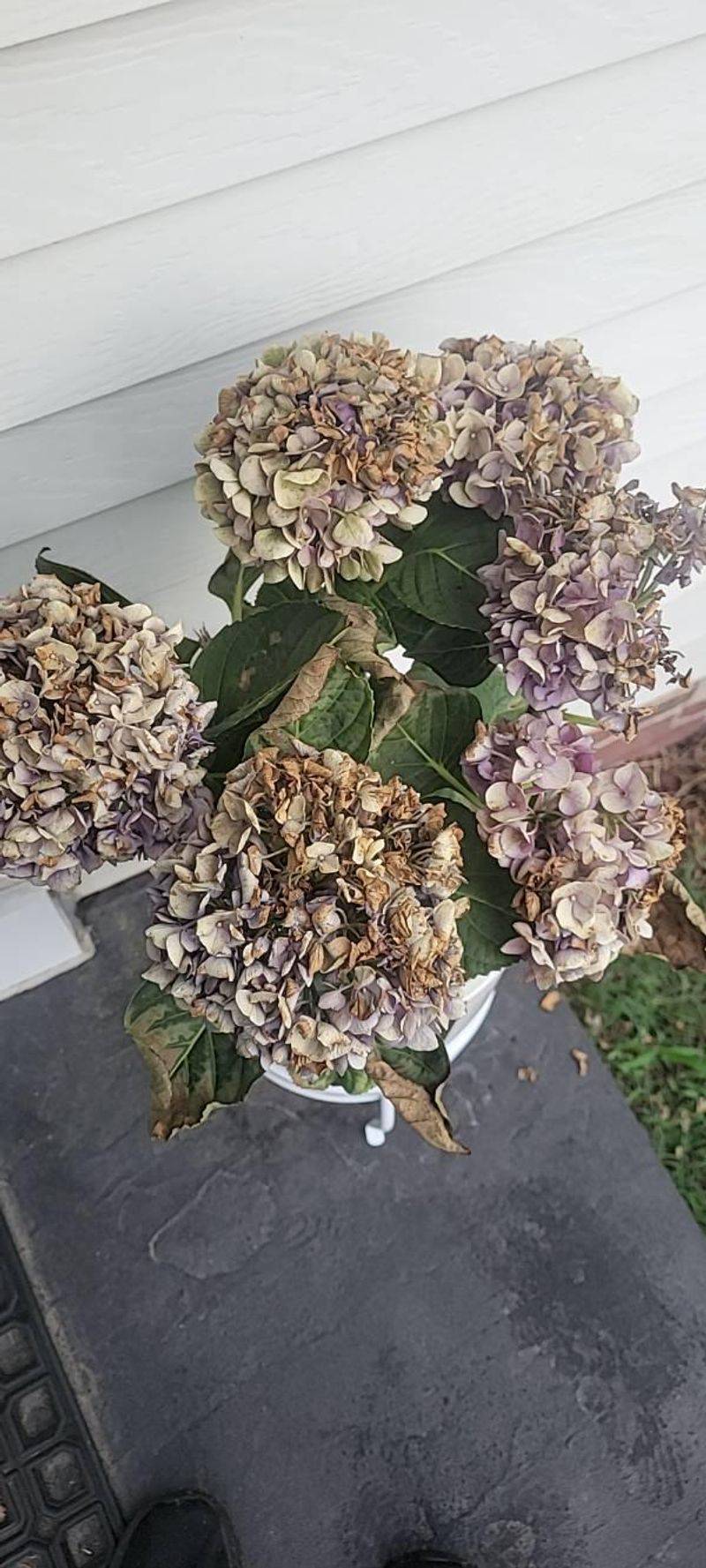
Think of your pot like a gas tank. A small tank runs empty faster no matter how efficiently you drive.
Hydrangeas are thirsty shrubs that evolved in moist, deep soil. A container shrinks their available moisture reserve down to whatever fits inside the walls.
Most decorative pots sold with hydrangeas at garden centers are undersized for long-term growing. A plant that looks fine in spring will struggle badly by midsummer when heat and growth peak together.
The general rule is to choose a pot at least two inches wider and deeper than the current root ball. Going bigger gives roots more soil to draw from between watering sessions.
Heavier pots also stay cooler because more soil mass insulates the roots from surface heat. That cooler environment slows moisture loss from the root zone significantly.
A pot with a water reservoir built into the base is a smart upgrade for anyone who forgets to check daily. These self-watering designs extend the interval between sessions without stressing the plant.
Lightweight plastic containers dry out faster than heavier ceramic or thick resin ones. Swapping materials is one of the easiest fixes with an immediate payoff.
Sizing up your container is often the single biggest improvement you can make. More soil means more stored moisture, and more stored moisture means a happier, more resilient plant.
3. Terracotta And Unglazed Clay Wick Water Out Through The Walls
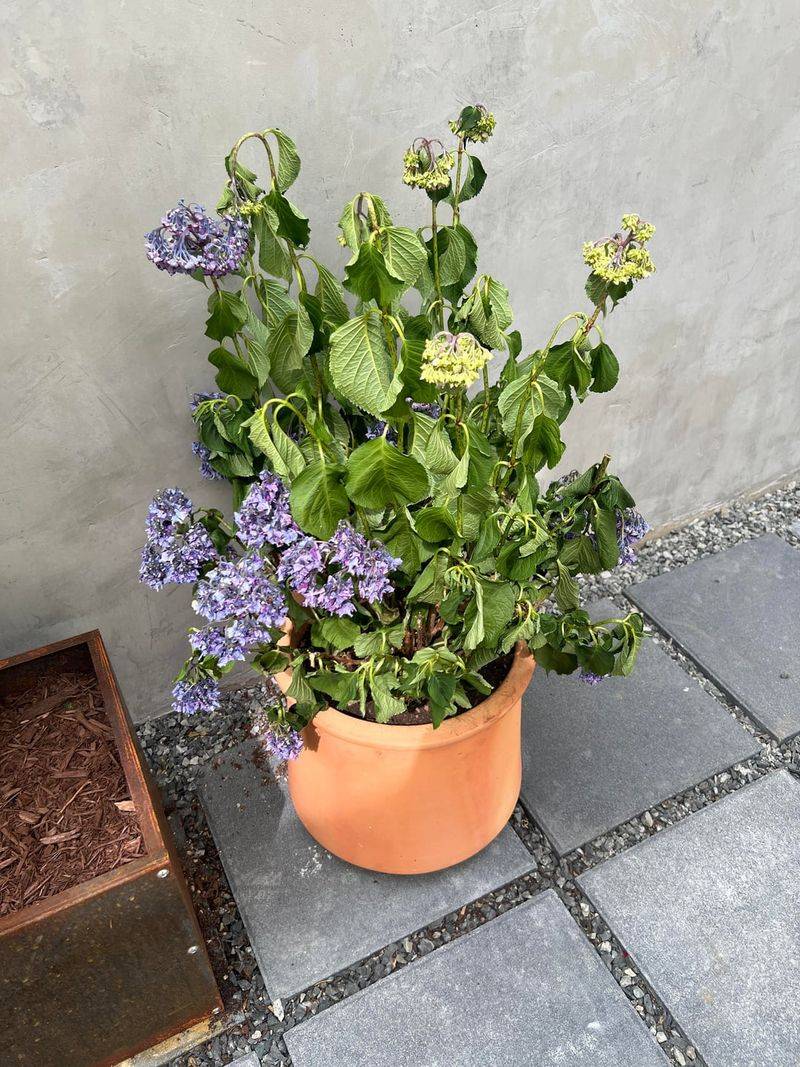
Terracotta looks beautiful on a patio, and it breathes well, but that breathability has a serious downside. Unglazed clay is porous, meaning water passes right through the walls and evaporates from the outside surface.
A terracotta pot can lose a significant portion of its moisture through wall evaporation alone on a dry, sunny day. Your plant is essentially competing with the pot itself for every drop you add.
This is not a flaw in the material. Terracotta was designed to keep roots aerated, which works beautifully in humid climates or shaded spots.
In a sunny American backyard during July or August, though, the math stops working in your favor. The pot pulls water out faster than most people expect.
One easy fix is to place a plastic liner inside the terracotta pot before filling it with soil. The liner blocks wall evaporation while the clay exterior still looks classic and charming.
You can also seal the inside of the pot with a non-toxic waterproofing paint designed for garden use. Two coats dramatically slow moisture loss without harming roots.
Switching to glazed ceramic or thick plastic achieves the same result without any extra steps. Both materials hold moisture far more efficiently than raw clay.
If you love your terracotta pots too much to swap them out, the liner trick costs almost nothing and works immediately. Your hydrangea will thank you by staying perky much longer between waterings.
4. Dark Pots Pull Heat Straight Into The Root Zone
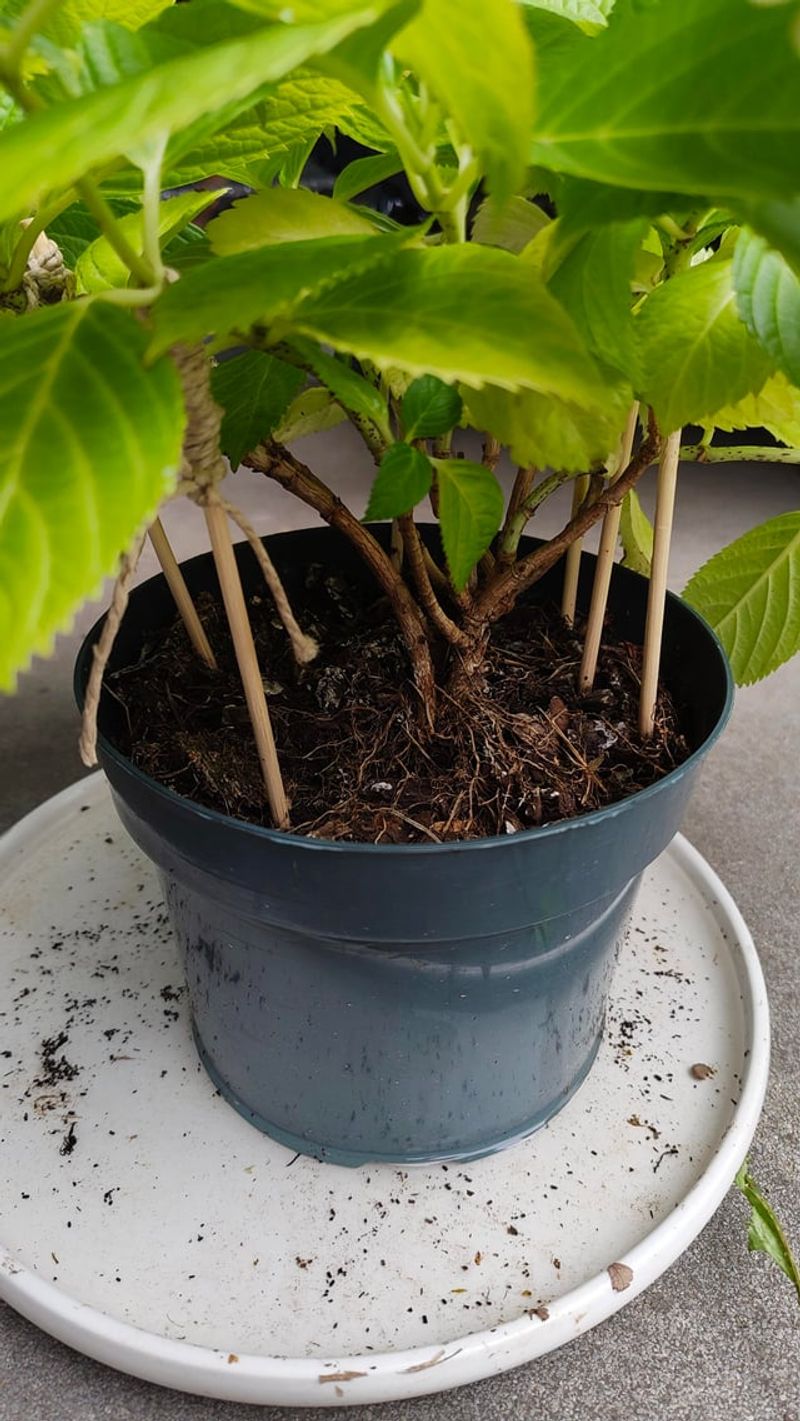
Color matters more than most gardeners realize when picking a container. Dark pots absorb sunlight and convert it directly into heat that bakes the soil from the outside in.
A black pot sitting in afternoon sun can easily exceed 120 degrees on its outer surface. That heat transfers inward and warms the root zone to levels that accelerate moisture evaporation rapidly.
Roots in overheated soil struggle to function properly even when moisture is present. Warm water also holds less oxygen, which stresses roots further and reduces their ability to pull up nutrients.
Light-colored pots reflect sunlight rather than absorbing it. White, cream, or pale gray containers stay measurably cooler and protect the root environment much more effectively.
If you already own dark pots you love, wrapping them with burlap or a light-colored cover during peak summer months helps significantly. Even a layer of reflective bubble wrap tucked around the outside cuts heat absorption noticeably.
Placing a dark pot inside a slightly larger light-colored pot creates an air gap that insulates against heat transfer. This double-pot method is simple, inexpensive, and surprisingly effective.
Moving pots onto a wooden deck surface rather than concrete or stone also helps. Hard paving materials hold heat and radiate it upward, adding extra warmth to the base of the container.
Choosing the right pot color is a free fix available at any garden center. A pale pot on a shaded surface is one of the easiest wins for a struggling potted hydrangea.
5. Bound Roots Leave Almost No Soil Left To Hold Water
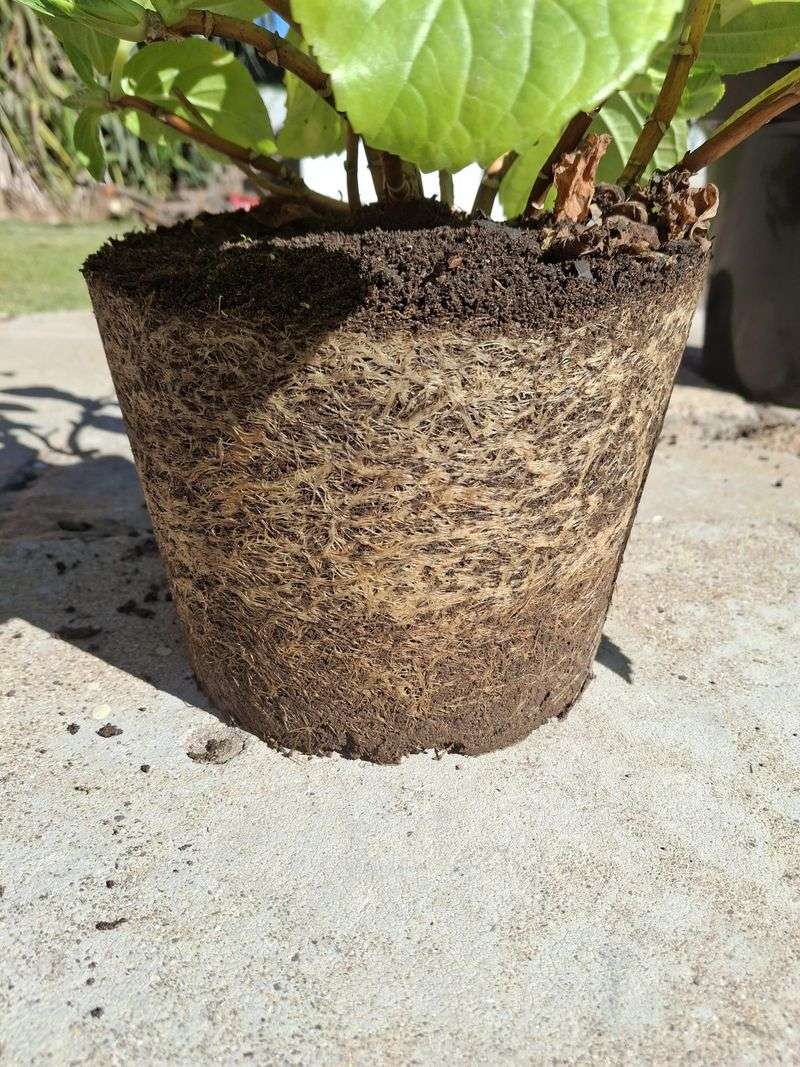
Pull a hydrangea out of its pot after a season or two and you might be shocked. Sometimes what you find is a dense mass of roots with barely any soil left between them.
When roots fill every inch of a container, the soil-to-root ratio flips dramatically. There is almost no growing medium left to absorb and hold the water you pour in.
Water flows straight through root-bound pots and drains out the bottom within seconds. You think you are watering thoroughly, but the plant barely gets a sip.
The roots themselves can only hold so much moisture. Without loose soil acting as a sponge, nothing slows the water down long enough for absorption to happen.
Check for root-bound conditions by looking at the drainage holes. If roots are poking out or circling visibly at the bottom, it is time to act.
Repotting into a container two sizes larger solves this immediately. Fresh potting mix fills the gaps, restores the sponge effect, and gives roots room to spread out.
When repotting, gently loosen the outer root mass before placing the plant in its new home. Breaking up the tight ball encourages roots to grow outward into fresh soil instead of continuing to circle.
A well-spaced root system is a healthier, more efficient root system. Giving your plant room to breathe underground shows up fast in what you see above the soil line.
6. Afternoon Sun Exposure Compounds Every Other Factor
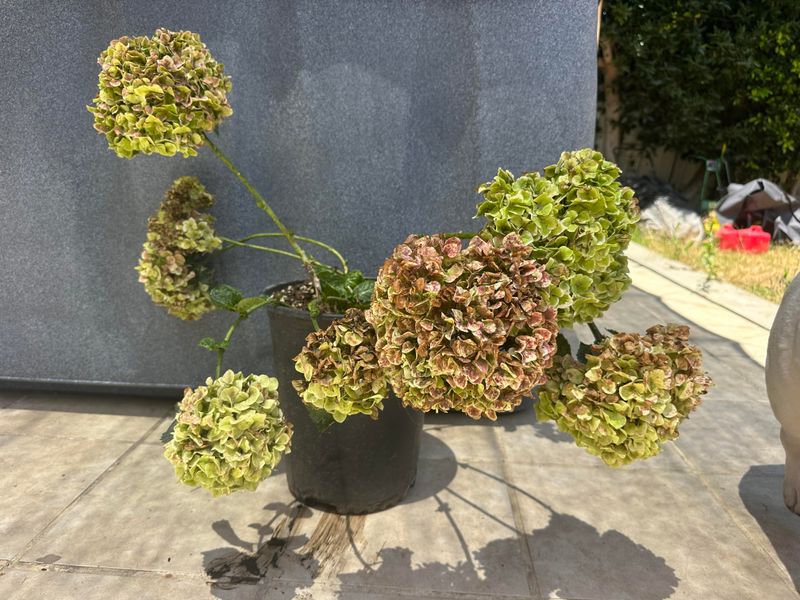
Morning sun and afternoon sun are not the same thing, not even close. Morning light is gentle, cool, and manageable for most plants.
Afternoon sun arrives when temperatures have already peaked and the air is at its driest. A potted hydrangea sitting in western exposure takes the full force of the hottest hours.
Every other problem on this list gets worse when afternoon sun enters the picture. Leaf transpiration spikes, pot temperatures climb, and whatever moisture remains in the soil burns off fast.
Moving your plant to a spot with east-facing exposure is often the single quickest fix. Morning sun, afternoon shade is the ideal formula for a potted hydrangea in most American climates.
North-facing patios or spots dappled by a tree canopy work beautifully too. The goal is bright, indirect light during the hottest part of the day, roughly between noon and five in the afternoon.
If moving the pot is not practical, a shade cloth rated at 30 to 40 percent provides meaningful relief. Garden centers and online retailers carry lightweight options that clip easily to fences or pergola frames.
Timing your watering for early morning maximizes efficiency on high-sun days. Soil that starts the afternoon moist has a better chance of staying manageable until evening.
Sun placement is the invisible variable that controls everything else. Fix the exposure, and your other efforts finally start paying off the way they should.
7. Peat Heavy Mixes Repel Water Once They Go Dry
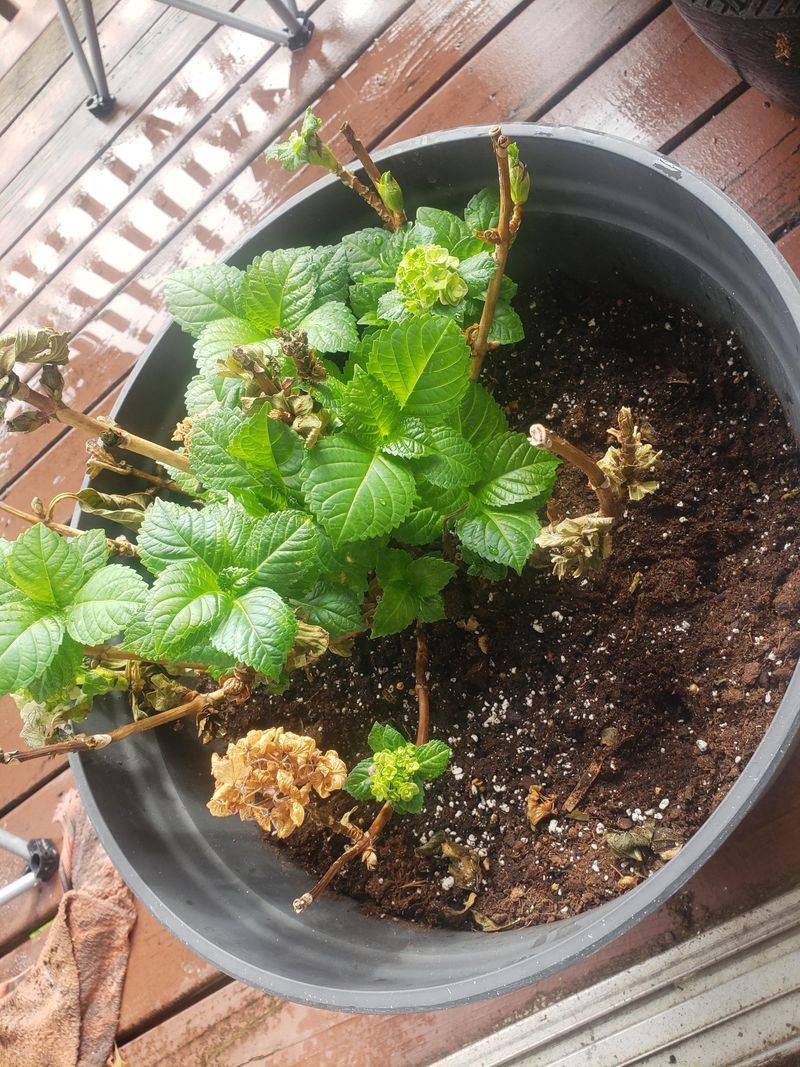
Peat moss is in almost every bag of standard potting mix sold in American garden centers. It holds moisture well when it stays damp, but it becomes hydrophobic once it dries out completely.
Hydrophobic means water-repelling. When peat-heavy soil dries past a certain point, water poured on top simply beads up and runs straight to the drainage holes without soaking in.
You can pour a whole watering can into a dry peat mix and watch most of it drain straight through. The plant gets almost nothing because the soil physically rejects the water.
This is one of the sneakiest reasons a potted hydrangea seems impossible to keep hydrated. The fix is not watering more often, it is changing how you water.
Bottom watering solves the problem beautifully. Place the pot in a basin of water for 20 to 30 minutes and let the soil absorb moisture slowly from below.
Capillary action pulls water upward through even the most stubborn dry peat. After soaking, lift the pot out and let it drain before returning it to its spot.
Switching to a peat-free or coir-based potting mix prevents this problem from recurring. Coconut coir rewets easily even after drying and holds moisture more consistently across temperature swings.
Adding a small amount of wetting agent to your water helps too. One drop of plain dish soap per gallon breaks surface tension and allows water to penetrate resistant soil much more effectively.
8. Repotting, Mulching, And Watering Changes That Extend The Interval
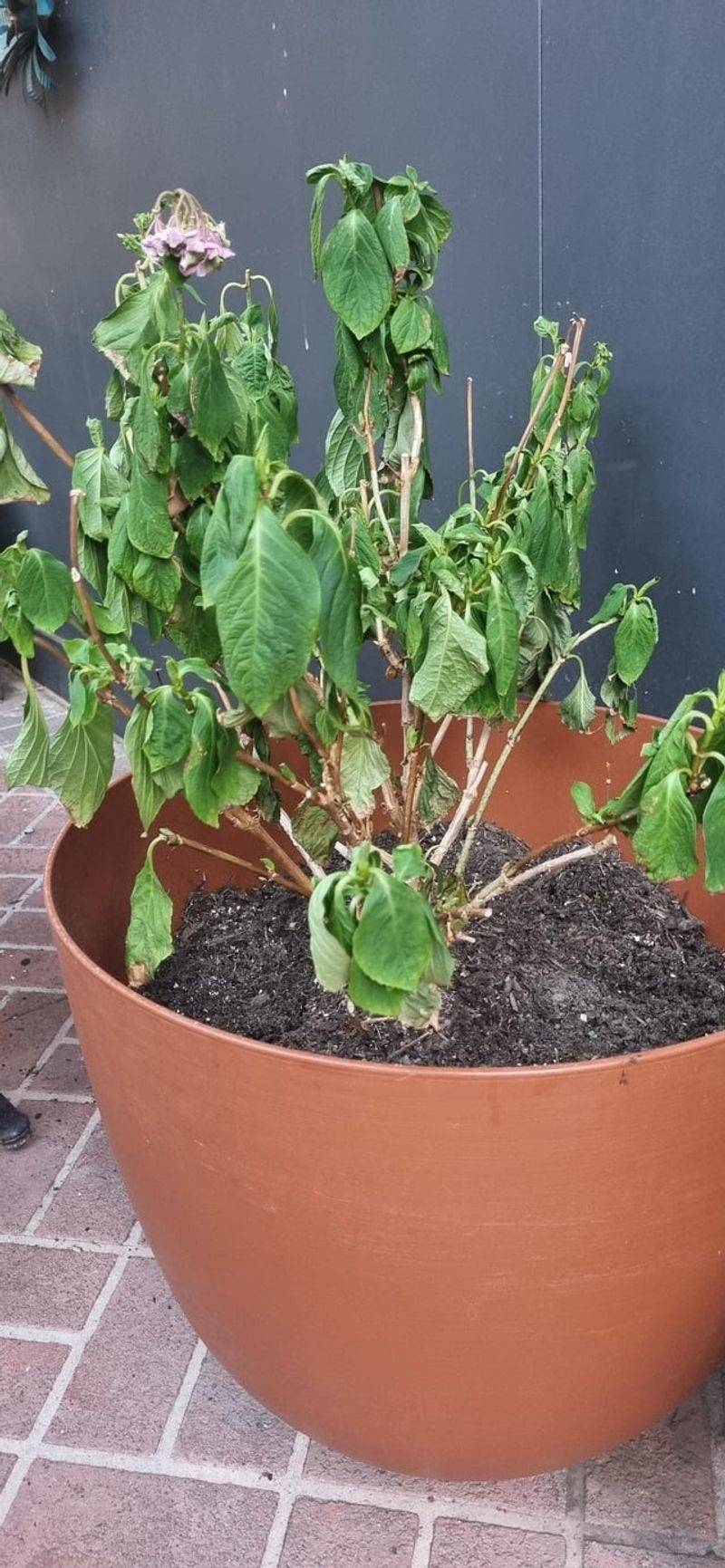
You now know why your potted hydrangea dries out too fast, and that knowledge is genuinely powerful. The next step is putting a few simple strategies together into a routine that actually works.
Repotting every one to two years keeps the soil-to-root ratio healthy. Fresh mix restores the moisture-holding capacity that compacted or depleted soil loses over time.
Adding a one-inch layer of mulch on top of the potting mix makes a real difference for container plants. Bark chips, shredded leaves, or even decorative pebbles slow surface evaporation dramatically.
Mulch also keeps the top layer of soil from forming a crust that deflects water. A loose, covered surface absorbs every drop you give it far more efficiently.
Deep, slow watering beats frequent shallow watering every single time. Aim for water to drain from the bottom holes before you stop, which ensures the entire root zone gets saturated.
A moisture meter is an inexpensive tool that removes most of the guesswork. Stick it into the soil before watering and let the reading tell you whether the plant actually needs water yet.
Grouping your potted hydrangea with other plants raises local humidity and reduces leaf moisture loss for everyone in the cluster. It is a simple trick that costs nothing and pays off all season.
Keeping your potted hydrangea consistently moist is entirely achievable once you address the root causes. Stack two or three of these changes together, and you will stretch the watering interval from daily to every few days.