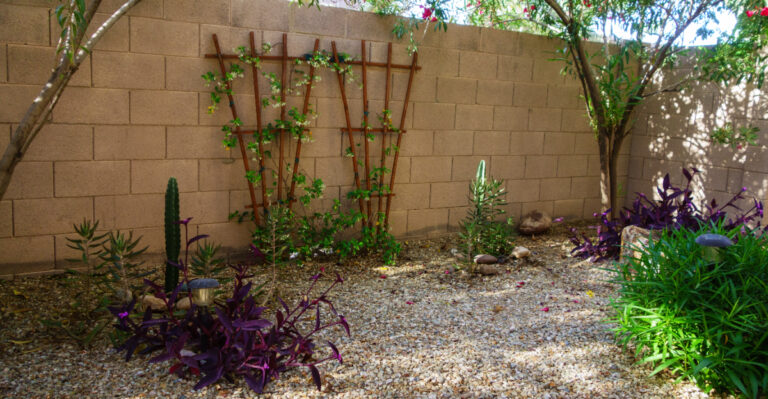
Why A Vinegaroon In Your Arizona Yard Is Nothing To Worry About
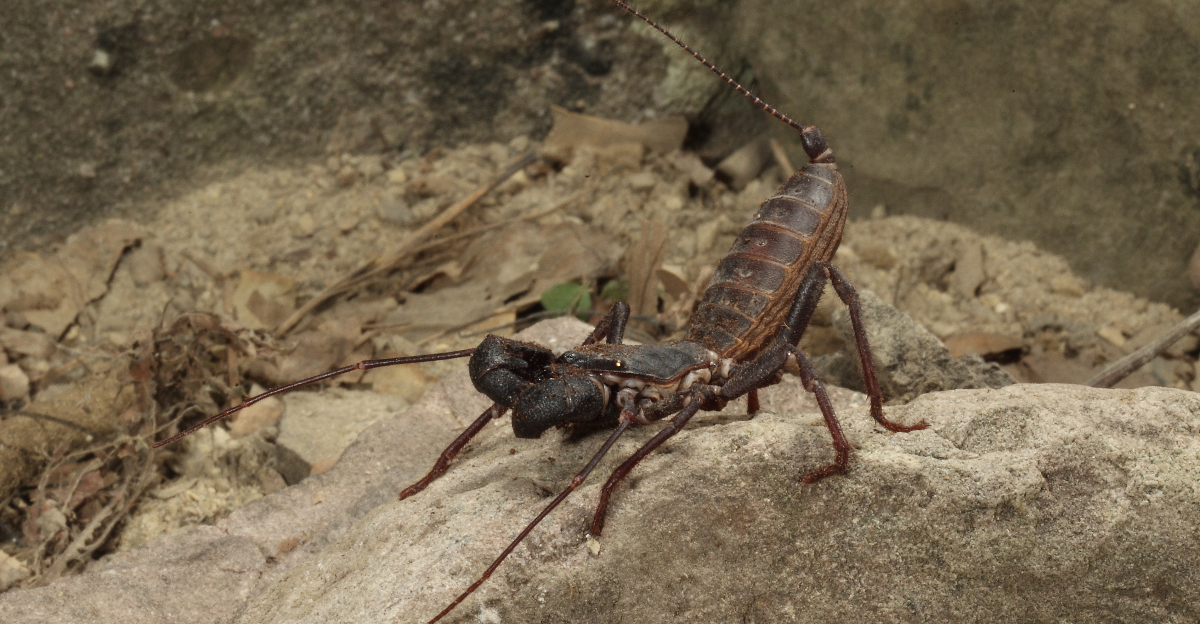
Spotting a large, dark creature with intimidating pincers can make you reconsider walking barefoot through the yard. Vinegaroons certainly look fierce, but their appearance tells only part of the story.
These unusual Arizona residents are mostly active after dark, when they search the ground for small prey. Seeing one nearby does not automatically signal a serious problem.
Give it space rather than trying to touch, corner, or handle it. Vinegaroons generally prefer avoiding confrontation and use their defenses when they feel threatened.
Their presence can even tell you something interesting about the tiny creatures sharing your outdoor space. Much of their nighttime activity happens unnoticed.
Knowing their behavior changes how you view an unexpected encounter.
Once you understand what vinegaroons are doing outside, that startling visitor becomes much easier to leave alone and appreciate.
1. This Strange-Looking Visitor Seems Scarier Than It Is
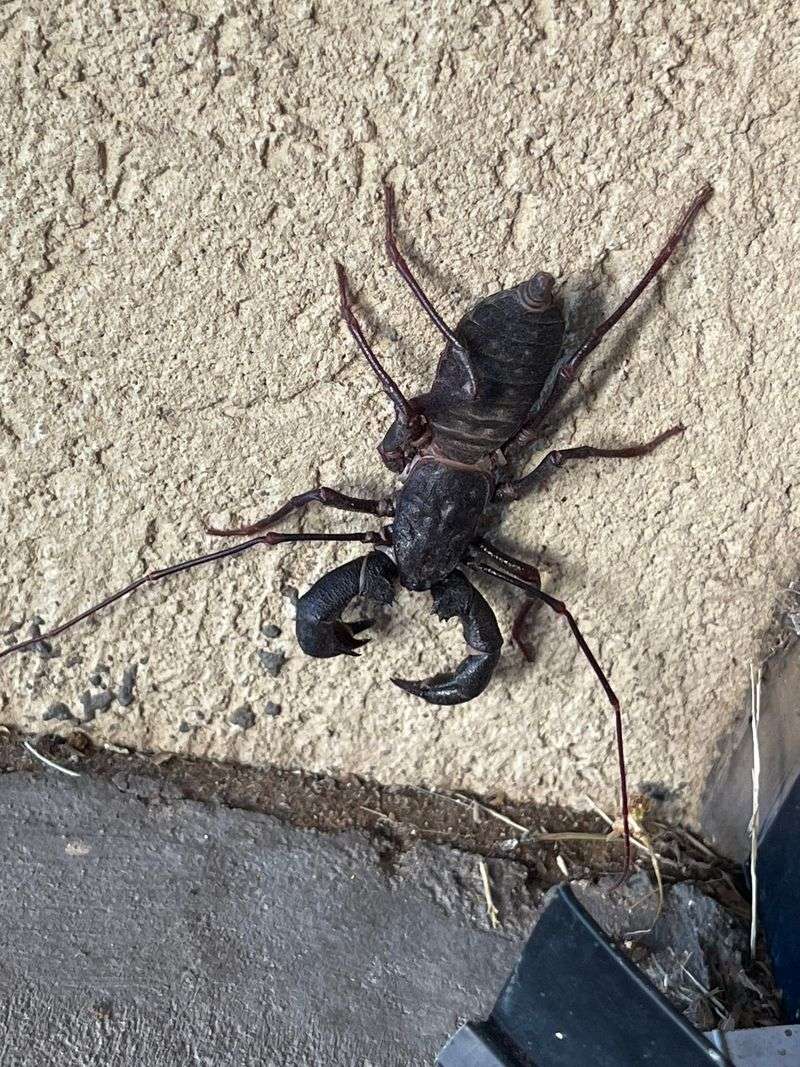
Picture this: you walk outside at night and something dark, multi-legged, and whip-tailed scurries across your patio. Your first instinct is probably panic.
Most people assume the worst when they see a vinegaroon for the first time.
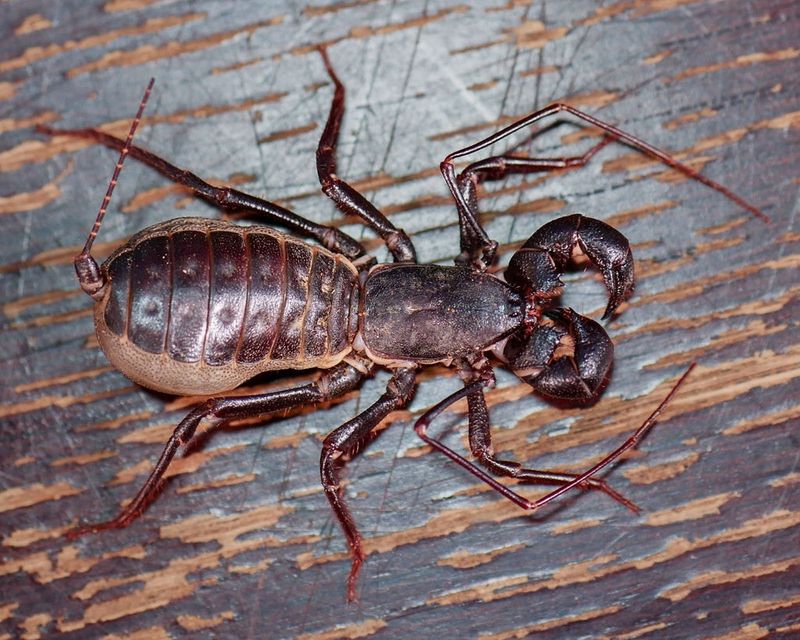
Vinegaroons belong to the order Uropygi. They are arachnids, meaning they are related to spiders and scorpions, but they are not the same as either.
Their bodies are flattened and dark, usually brownish-black, and they can grow up to about three inches long.
That long, thin tail sticking out from the back? Purely sensory.
It helps the vinegaroon feel its surroundings. It does not sting, inject anything, or cause harm.
Their front appendages, called pedipalps, look like thick claws. These are used to grab prey, not to attack humans.
Despite their intimidating appearance, vinegaroons are not aggressive creatures toward people.
Seeing one in your yard likely means your outdoor space has decent moisture, shelter, and a food supply. Vinegaroons tend to show up where conditions suit them.
That is not necessarily a bad sign for your yard.
Plenty of people in the desert Southwest have encountered these creatures and walked away completely unharmed. Understanding what you are looking at makes a real difference in how you react.
2. Vinegaroons Are Not Venomous
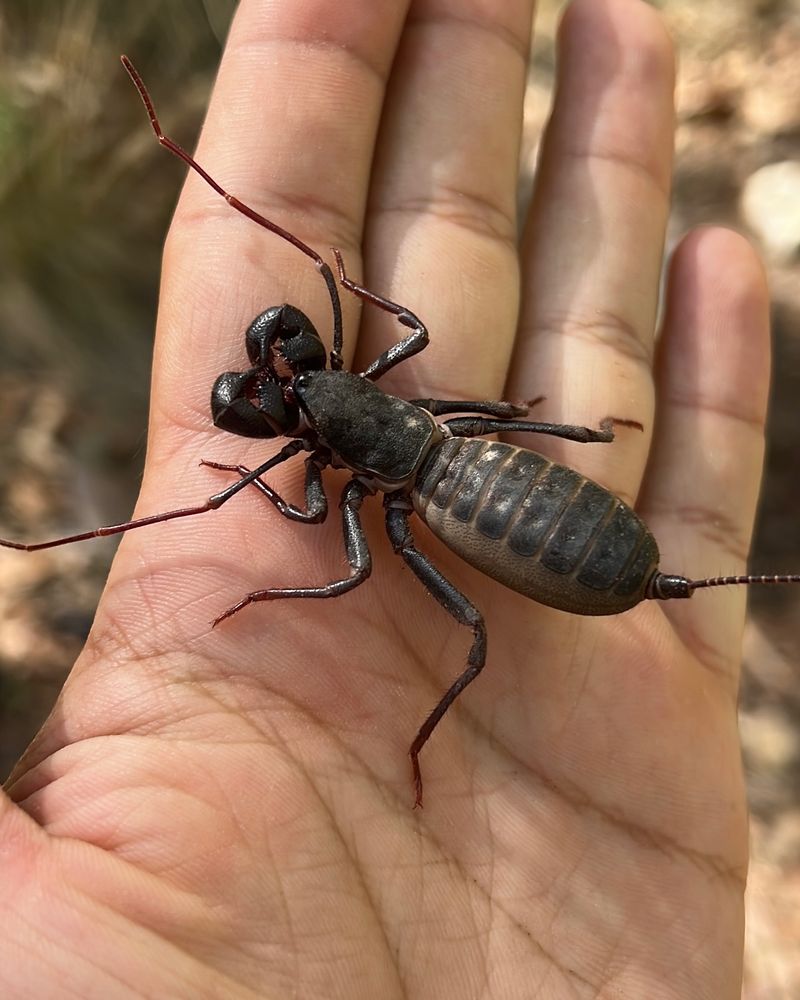
No venom. That is the big takeaway right here.
Unlike scorpions or certain spiders, vinegaroons do not produce or inject venom at all.
Many people lump them in with other desert creatures that can cause real harm. That comparison is not fair or accurate.
Vinegaroons have no venom glands and no stinging mechanism anywhere on their bodies.
So what do they have? A spray.
Vinegaroons can release an acidic mist from a gland near the base of their tail when they feel threatened. That spray contains acetic acid, which is basically the same compound found in vinegar.
That is exactly where their name comes from.
Skin contact with the spray may cause mild irritation, similar to a splash of vinegar. It is not medically dangerous for most people.
Rinsing the area with water is generally enough to handle any minor discomfort.
People with sensitive skin or allergies should take extra care, but serious reactions are uncommon. The spray is a defensive tool, not a weapon meant to cause lasting harm.
Your Arizona Garden Changes Every Week. Your Plan Should Too.
Gardening in Arizona changes quickly throughout the season. Every Friday you’ll receive a simple weekly plan showing exactly what to plant, prune, fertilize, harvest, and protect so you never miss the right timing.
Knowing that vinegaroons carry no venom should change how most people feel about finding one nearby. Scary-looking does not mean dangerous.
In this case, the creature’s reputation is much worse than the reality.
3. Most Spend Their Time Hunting Small Pests
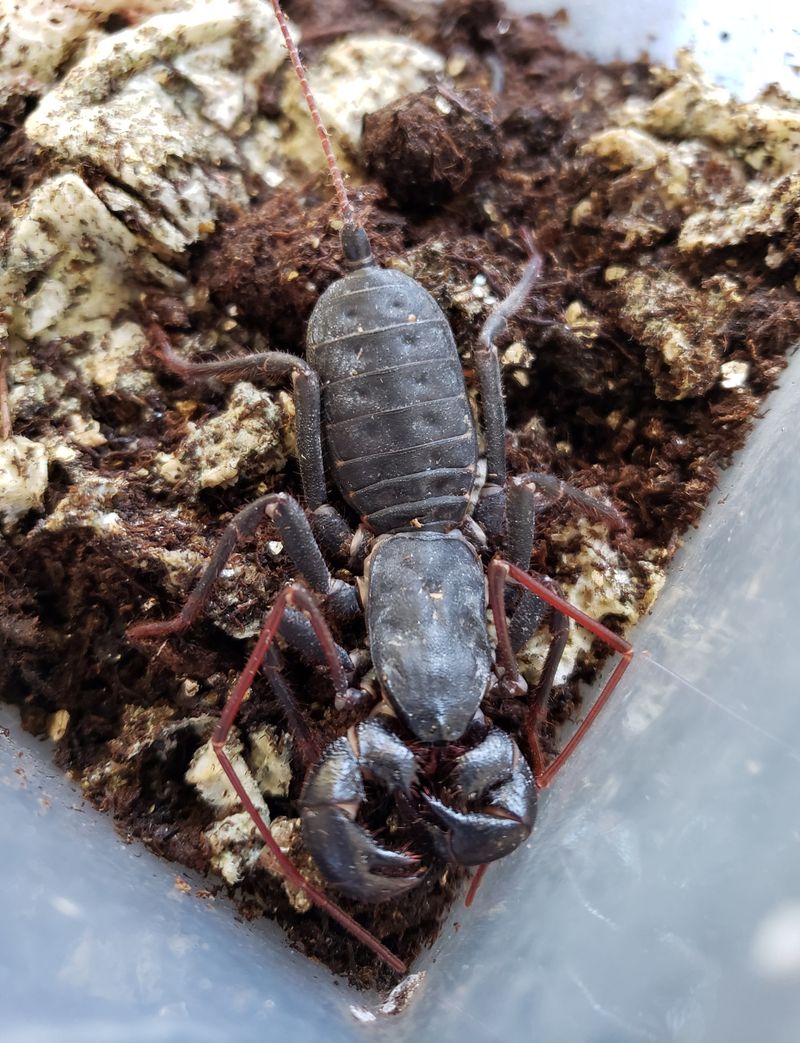
Vinegaroons are hunters. Every night, they move through the dark searching for food, and their menu is made up of creatures most homeowners would rather not have around.
Crickets, cockroaches, beetles, and similar insects make up a large part of what vinegaroons eat. They also eat other small invertebrates they come across during their nightly roaming.
Having one in your yard can mean fewer of these unwanted visitors over time.
They use their whip-like tail and sensitive front appendages to detect movement and vibration. Once they locate prey, they grab it with their pedipalps and consume it.
The process is efficient and quiet.
Vinegaroons are not picky about where they hunt. Leaf piles, garden beds, woodpiles, and the edges of structures are all fair game.
Anywhere insects tend to gather is a potential hunting ground.
Homeowners who deal with cricket infestations or roach problems might actually benefit from a vinegaroon’s presence. It is not a guaranteed solution, but it contributes to natural pest reduction in a low-effort way.
Thinking of them as free, natural pest control reframes the whole situation. Plenty of desert yard visitors cause damage or spread problems.
Vinegaroons do neither. They simply hunt, eat, and move on without bothering your plants or property.
4. Dark Sheltered Spots Give Them Places To Hide
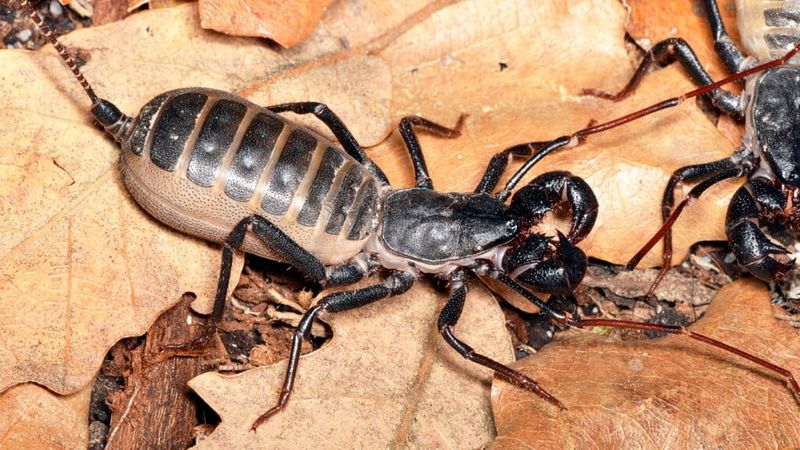
Vinegaroons are not wanderers by nature. When morning comes, they look for somewhere dark, cool, and sheltered to spend the day.
Your yard might offer exactly what they need.
Rocks, wood piles, debris piles, garden borders, and the undersides of outdoor furniture are all potential hiding spots. Loose soil near walls or fence lines is another common resting place.
Any shaded area with some moisture nearby tends to attract them.
Knowing their preferred hiding spots helps you avoid startling one accidentally. Picking up a flat rock or moving a wood pile without checking first is how most unplanned encounters happen.
A quick look before grabbing is a simple habit worth forming.
Vinegaroons prefer to stay hidden during daylight hours. Finding one under something in your yard does not mean your space is overrun.
It likely means one individual found a comfortable resting spot.
If you prefer not to have them resting near high-traffic areas, reducing clutter and debris can help discourage them from settling close to doorways or seating areas.
That said, they are not likely to enter your home unless a gap or crack gives them a path inside.
Sealing foundation gaps and door gaps reduces the chance of an indoor encounter. Simple maintenance steps go a long way toward keeping outdoor creatures where they belong.
5. Nighttime Is When You Are Most Likely To See One
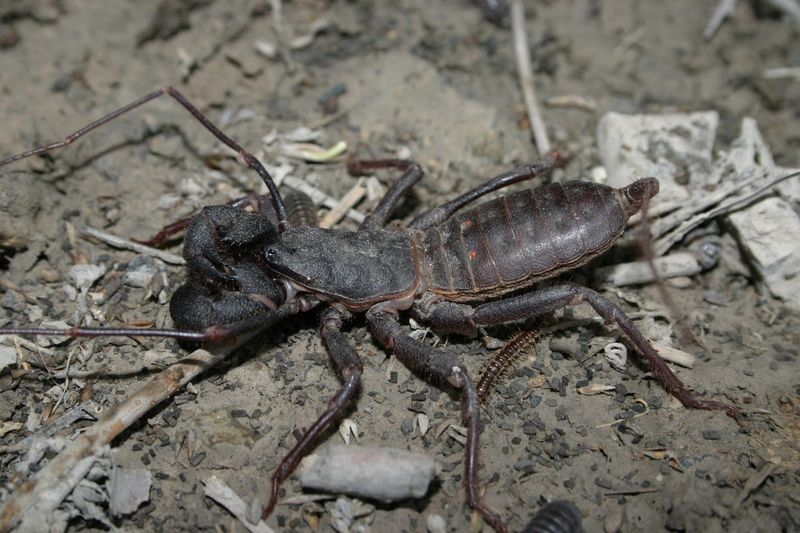
Vinegaroons are nocturnal. Daytime sightings are rare because they spend daylight hours tucked away in cool, dark hiding spots.
Once the sun goes down, they become active.
Warm summer nights in the desert Southwest bring them out most frequently. Arizona’s monsoon season, roughly from late June through September, creates the humid conditions vinegaroons tend to prefer.
Sightings often increase during this period.
Walking outside at night without shoes or checking before stepping in dim areas is worth thinking about. Not because vinegaroons are dangerous, but because surprising any creature in the dark can startle both of you.
A little awareness goes a long way.
Outdoor lighting can sometimes attract the insects that vinegaroons hunt. If your porch light draws in crickets and beetles, you may occasionally see a vinegaroon nearby.
It is following the food, not seeking out your company.
Most nighttime encounters end with the vinegaroon retreating quickly. They are shy by nature and would rather avoid contact than engage with something much larger than themselves.
Giving them space usually resolves the situation fast.
Flashlights are handy tools if you spend time in your yard after dark during warmer months. A quick scan of the ground before sitting or walking barefoot is a smart, low-effort habit that keeps encounters calm and uneventful.
6. Their Vinegar-Like Spray Is Mainly For Defense
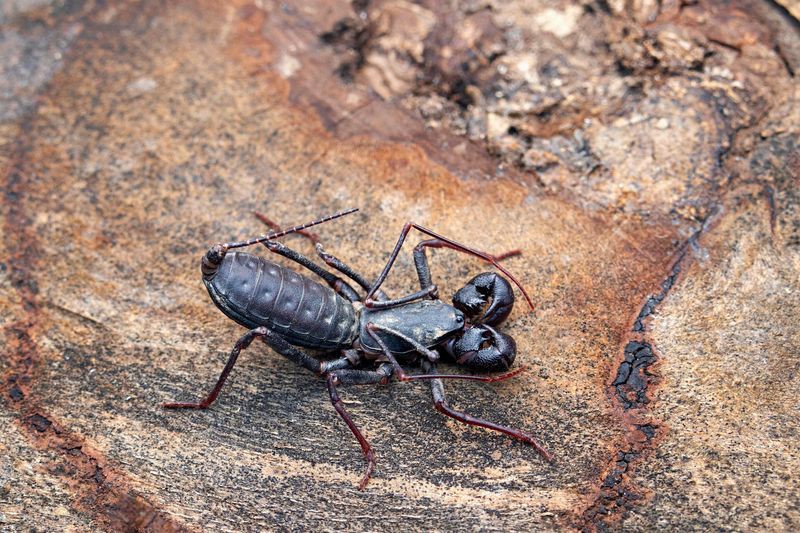
That sharp, sour smell is the vinegaroon’s way of saying back off. When it feels cornered or threatened, it releases a fine mist from a gland near the base of its tail.
The smell is unmistakable.
Acetic acid makes up the bulk of the spray. Acetic acid is the same compound that gives vinegar its smell and mild bite.
Some vinegaroon sprays also contain small amounts of caprylic acid, which gives it a slightly different edge depending on the individual.
Skin contact may cause temporary irritation, especially on sensitive areas. Eyes are more vulnerable, so avoiding rubbing your face after any contact with one is wise.
Rinsing with water handles most situations without any further steps needed.
Importantly, the spray is a last resort. Vinegaroons do not spray randomly or without reason.
Provoking one repeatedly or handling it roughly is what typically triggers a response. Leaving it alone usually means no spray at all.
Pets that get too curious might get a face full of the mist. It smells unpleasant but is not medically dangerous for most animals.
A rinse and some fresh air typically resolves the issue quickly.
Knowing the spray is defensive and not aggressive changes how you should approach a vinegaroon encounter. Calm, unhurried space is all it usually takes to avoid any spray entirely.
7. Leaving One Alone Is Usually The Best Move
Hands-off is the smartest approach with vinegaroons. Most encounters resolve on their own within minutes if you simply step back and give the creature room to move.
Vinegaroons are not territorial toward humans. Finding one in your yard does not mean it plans to stick around permanently.
Many individuals move through an area for a night or two, then continue elsewhere following food and shelter.
If you want to move one away from a doorway or high-traffic area, use a broom and dustpan or a container to guide it gently.
Avoid picking one up with bare hands, not because of venom, but because handling causes stress to the animal and increases the chance of a spray response.
Relocating it to a shaded, quiet corner of your yard or a nearby natural area works fine. You do not need pest control for a vinegaroon.
Calling an exterminator for one is an overreaction in most cases.
Educating kids in the household about what vinegaroons are can turn fear into curiosity. Explaining that it sprays vinegar instead of stinging tends to land well with younger audiences.
Kids often find the vinegar detail genuinely funny.
Peaceful coexistence with desert wildlife is part of living in this region. Vinegaroons have been part of this landscape long before backyards existed here.