Arizona Native Plants That Hold A Sloped Yard In Place When The Monsoon Rains Race Down It
When the summer monsoon hits, rain can rush down a sloped yard fast enough to wash your soil straight into the street. The good news is that Arizona has tough native plants whose deep roots grab the ground and hold it tight.
These desert survivors shrug off heat, sip very little water, and invite hummingbirds and bees while they work. Here are eight native picks that keep your hillside anchored when the storms roll through.
1. Creosote Bush (Larrea tridentata)
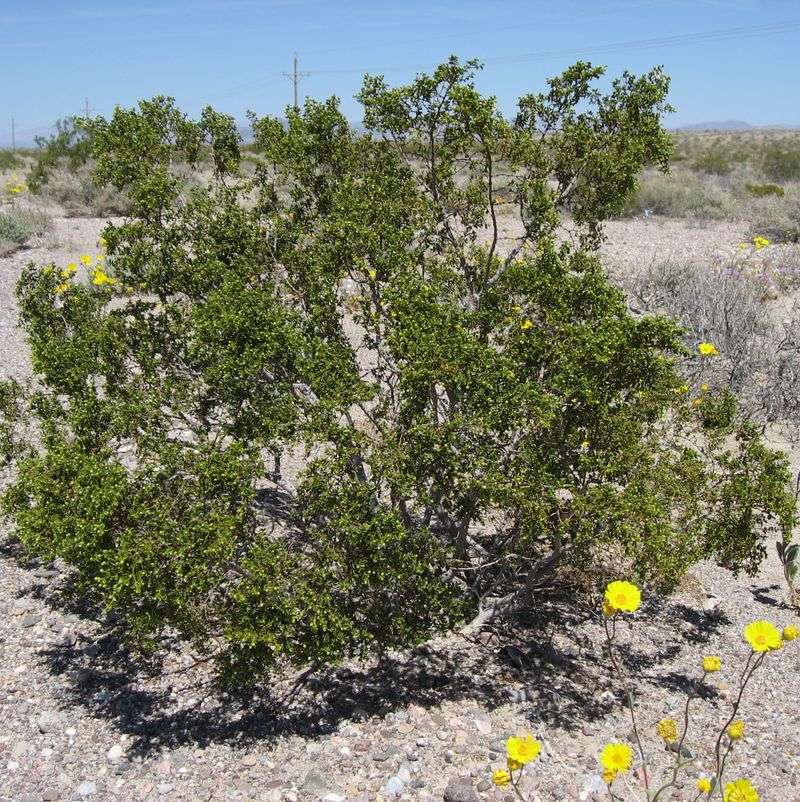
Few plants say Sonoran Desert quite like creosote, the shrub that gives the air that unmistakable smell right before a monsoon storm. Its taproot digs deep and its side roots spread wide, weaving a natural net that keeps loose slope soil from sliding away.
Heat that would fry a lawn barely fazes it. Creosote laughs off 100-degree days, thrives in poor caliche soils, and can survive on rainfall alone once it settles in.
Expect slow to moderate growth, roughly 6 to 18 inches a year, up to a mature height of 3 to 9 feet.
Beyond holding your hillside together, this evergreen is a true keystone plant. It supports more than 60 insect species, including native bees, and feeds birds and small mammals through the seasons.
Bright yellow blooms pop in spring and again after summer rains, and the resinous, waxy leaves reflect heat while trimming water loss. Plant it in fall so those roots grip the ground before the next storm season arrives.
2. Chuparosa (Justicia californica)
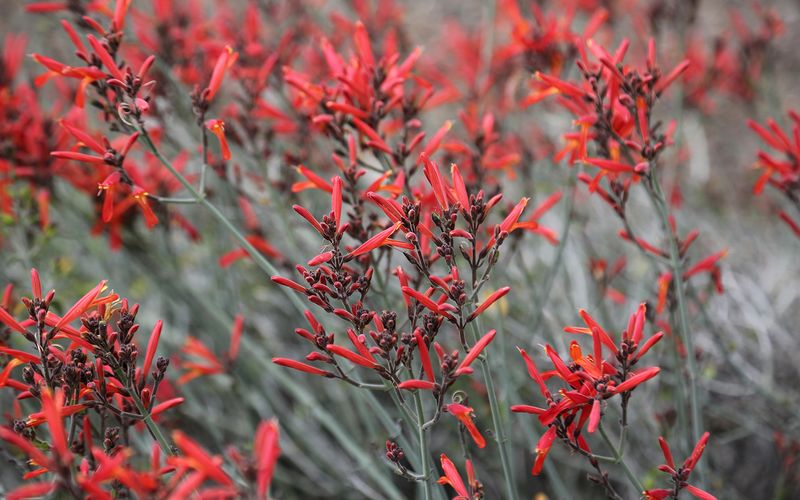
If you want a slope stabilizer that doubles as a hummingbird buffet, chuparosa earns its spot fast. Its dense, tangled growth and deep roots knit the soil together so water sheets off gently instead of carving gullies.
The show-stealer, though, is the flowers. Brilliant red tubular blooms cover the plant from November through May in the Phoenix area, exactly when hummingbirds are hunting for nectar and other options are scarce.
Tough is an understatement here. Chuparosa handles full sun to part shade, takes the reflected heat bouncing off block walls and rock, and shrugs off Arizona’s stubborn caliche without complaint.
Water needs stay refreshingly low. Once established, it often carries on with nothing but natural rainfall, making it a smart pick for a water-wise, low-fuss hillside.
For the best results, tuck it into your slope in fall so the roots have cool months to spread before summer arrives. The payoff is erosion control, year-round structure, and a steady stream of tiny winged visitors buzzing your yard.
3. Desert Willow (Chilopsis linearis)
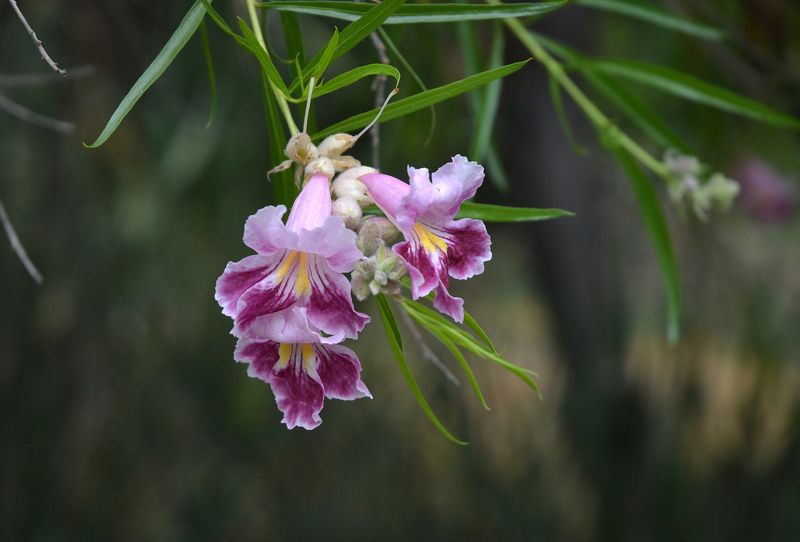
Picture standing under a small tree that drips with orchid-like blooms while butterflies drift past and the ground beneath stays firmly in place. That is desert willow doing double duty as a shade maker and slope guardian.
Its extensive root system reaches deep to lock down soil structure, and the roots stay non-invasive, so they won’t wander into pipes or foundations. On a hillside, that deep anchoring is exactly what you need when the rain comes racing down.
Your Arizona Garden Changes Every Week. Your Plan Should Too.
Gardening in Arizona changes quickly throughout the season. Every Friday you’ll receive a simple weekly plan showing exactly what to plant, prune, fertilize, harvest, and protect so you never miss the right timing.
Wildlife adores it. Blooms from late spring into summer, plus bonus flowers after rainfall, pull in birds, butterflies, and hummingbirds all season long.
Heat and drought are no obstacle. Once established, desert willow is a genuinely low-water tree, though young ones appreciate more frequent drinks while their roots stretch out.
Give it a sunny spot with well-drained soil and let it grow into a canopy that cools the yard on brutal afternoons. Planting in fall gives this fast starter a head start, so by the time monsoon season rolls around, your slope has both shade above and a strong grip below.
4. Bursage (Ambrosia deltoidea or Ambrosia dumosa)
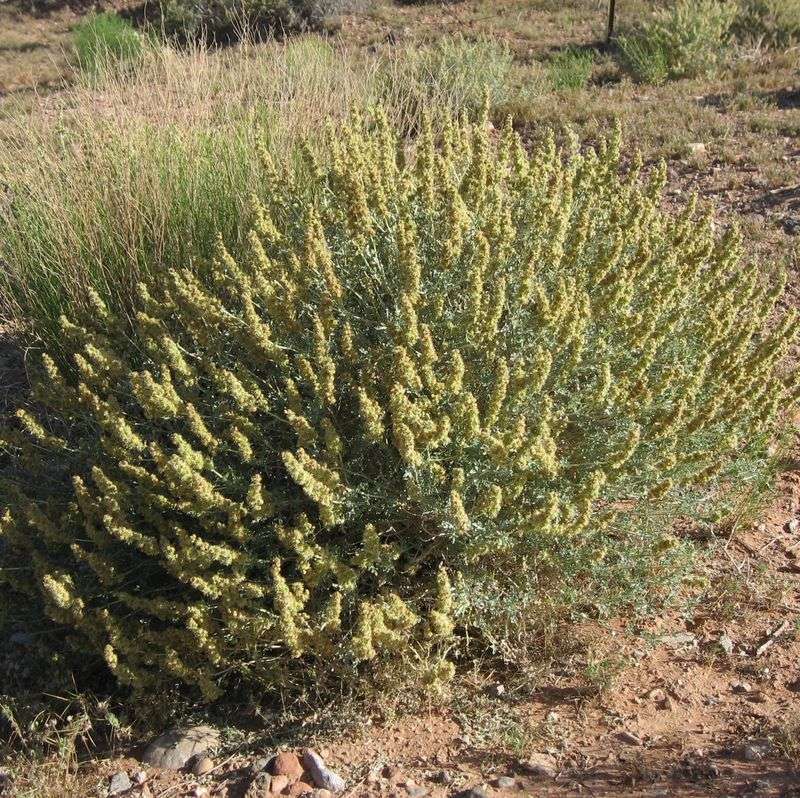
Bursage is the quiet workhorse of the desert, the plant you barely notice until you realize it is holding an entire rocky hillside together. Both triangleleaf and white bursage send out spreading, extensive roots that stabilize slopes and hold soil where gravity would rather pull it downhill.
Small in stature, big in function. These low shrubs reach just 1 to 3 feet tall and 2 to 4 feet wide, spreading into a living groundcover that suppresses weeds and helps trap precious soil moisture.
Drought barely registers. Bursage thrives in full sun and blistering reflected heat, often surviving on nothing more than natural rainfall once its roots are established.
It also pulls real ecological weight, offering food and shelter for native bees, birds, and other Sonoran wildlife that keep a yard humming with life.
One honest heads-up: its pollen may bother allergy-sensitive folks, so keep that in mind before planting near patios. For an unfussy, spreading anchor that fills in the gaps between larger shrubs on a slope, this humble native is hard to beat.
5. Baja Fairy Duster (Calliandra californica)
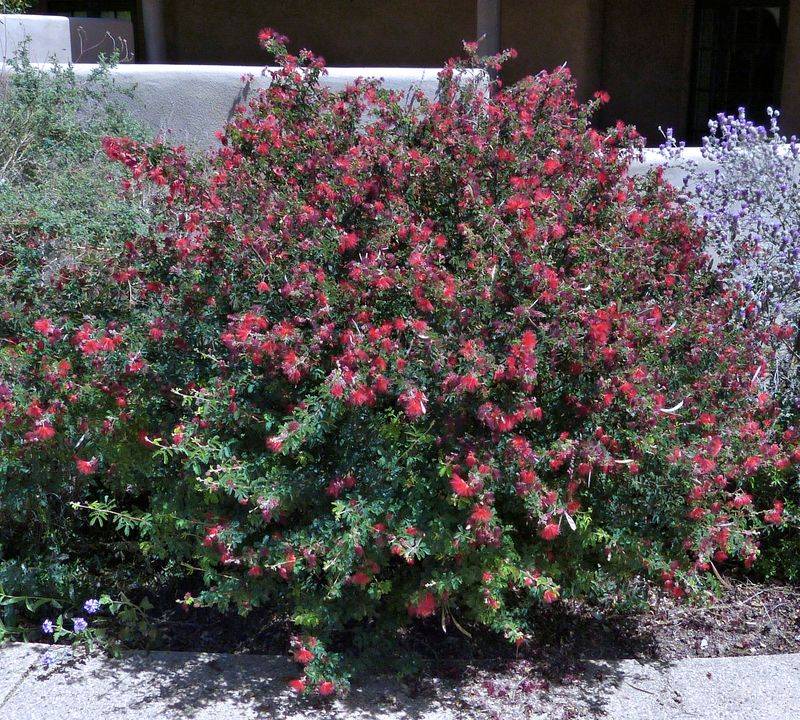
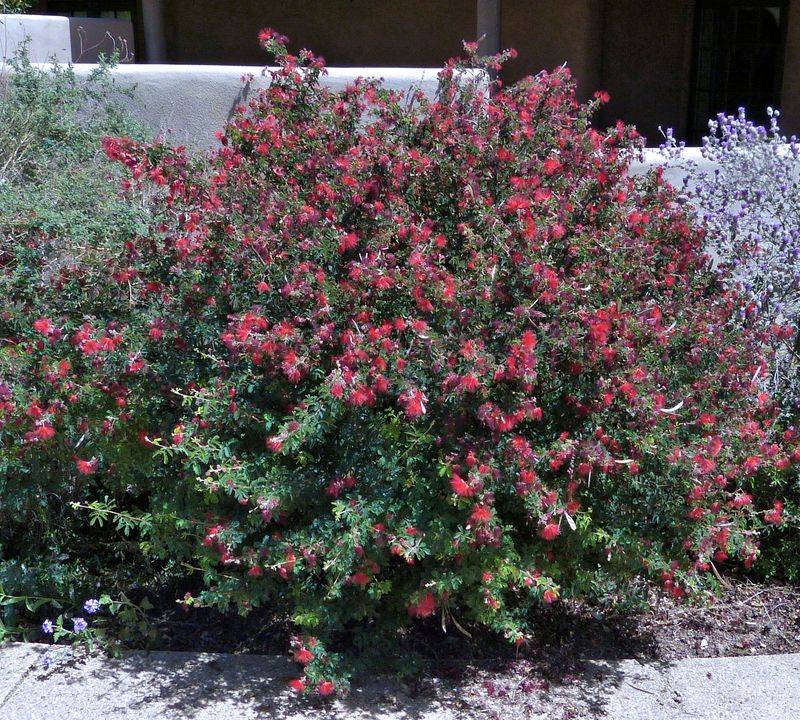
Fluffy red blooms that look like tiny fireworks give baja fairy duster instant curb appeal, but underneath the flair sits a serious erosion fighter. It grows into a dense, bushy form that shields bare slope soil from pounding rain and holds it firmly in place.
Speed is one of its best tricks. Fast-growing and thornless, it fills in a slope quickly and asks only for regular water until it settles, then downshifts into easy, low-maintenance mode.
Hummingbirds treat it like a favorite diner. Those bright red, feathery blossoms appear off and on all year, with big bursts in spring and fall that keep the pollinator traffic steady.
Tough conditions suit it fine. Baja fairy duster loves full sun and reflected heat, and it isn’t picky about soil as long as drainage is decent.
Plant it where you want a lush, forgiving shrub that softens a harsh slope while doing real anchoring work below the surface. For homeowners who want quick coverage, constant color, and buzzing wings without a demanding care routine, this cheerful native delivers on every front.
6. Smooth Edge Agave (Agave desmettiana)
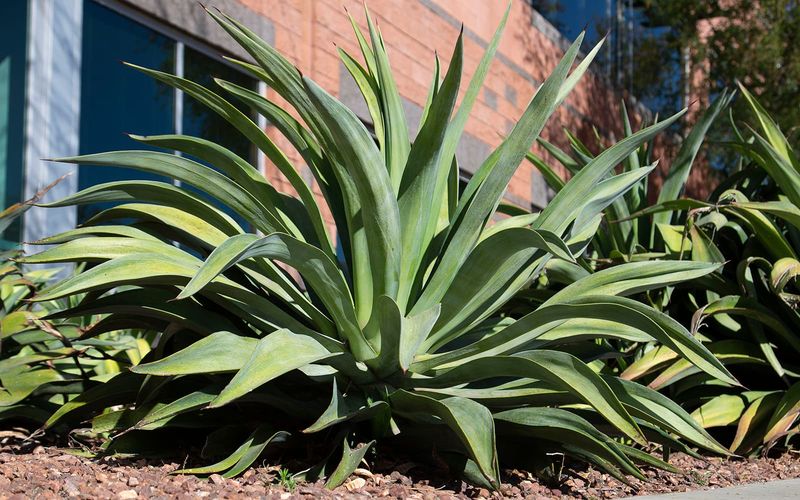
Bold, sculptural, and refreshingly safe to brush past, smooth edge agave brings architecture to a slope without the wicked spines of its cousins. Its glossy rosette makes a striking anchor point, especially when paired with rock barriers and terracing to slow water on a hillside.
Agaves shine in the harshest spots. Extremely low-maintenance and water-wise once established, they thrive in hot, dry, full-sun conditions that would defeat fussier plants, making them xeriscape royalty in the low desert.
Growth here is quicker than many agaves, so you get that dramatic form without waiting forever. On degraded, erosion-prone ground, agaves are often used in restoration work precisely because they help hold soil in tricky spots.
There is a payoff for pollinators too. When an agave finally sends up its towering bloom stalk, hummingbirds and butterflies flock to the flowers.
One caution rules them all: overwatering is the top killer, so plant in fast-draining soil and resist the urge to pamper. Slip it into your slope alongside rocks, keep it dry, and enjoy a low-effort centerpiece that quietly guards the ground.
7. Queen Victoria Agave (Agave victoriae-reginae)
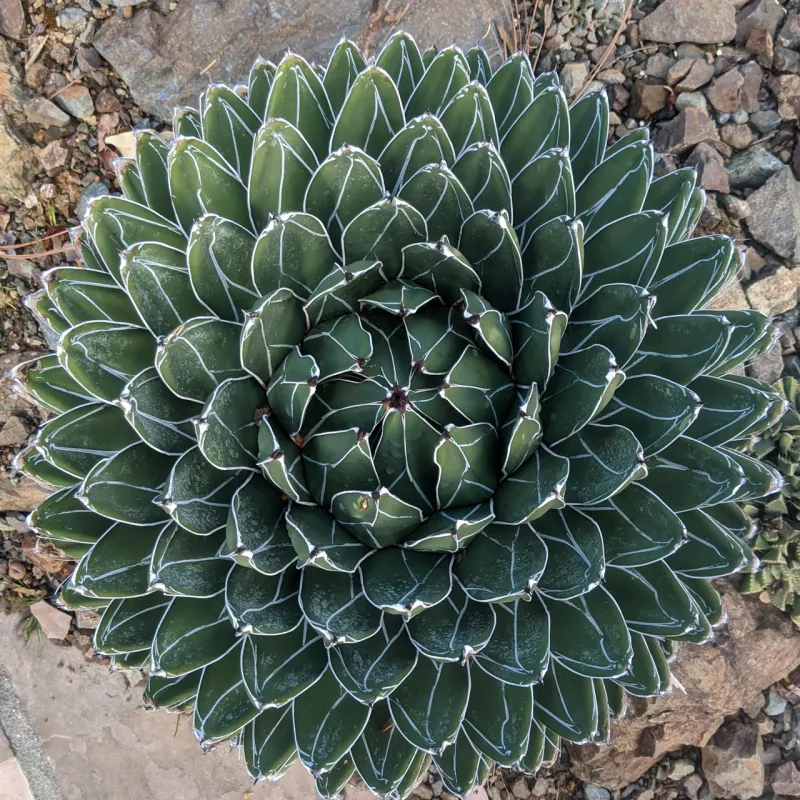
Some plants earn their royal name, and this compact beauty does it with dark green leaves painted in crisp white pinstripes forming an almost perfect geometric dome. Queen Victoria agave stays small and tidy, ideal for tucking between rocks on a slope where a larger plant would crowd the space.
Beneath that neat rosette, it grips the ground like every agave should. Set among rock barriers and terraced steps, it helps break the momentum of racing monsoon water and keeps soil from washing out around it.
Care could hardly be simpler. It wants full sun, sharp drainage, and very little water once established, thriving on the same hot, dry treatment that stresses non-desert plants.
Patience is part of the deal. This slow grower takes its time, but the reward is a long-lived, sculptural gem that needs almost no attention year after year.
When it eventually blooms late in life, the flower stalk draws hummingbirds and butterflies for a grand finale. Just keep it dry, since overwatering remains the fastest way to lose any agave you plant on your hillside.
8. Fall Planting And Terracing Strategy
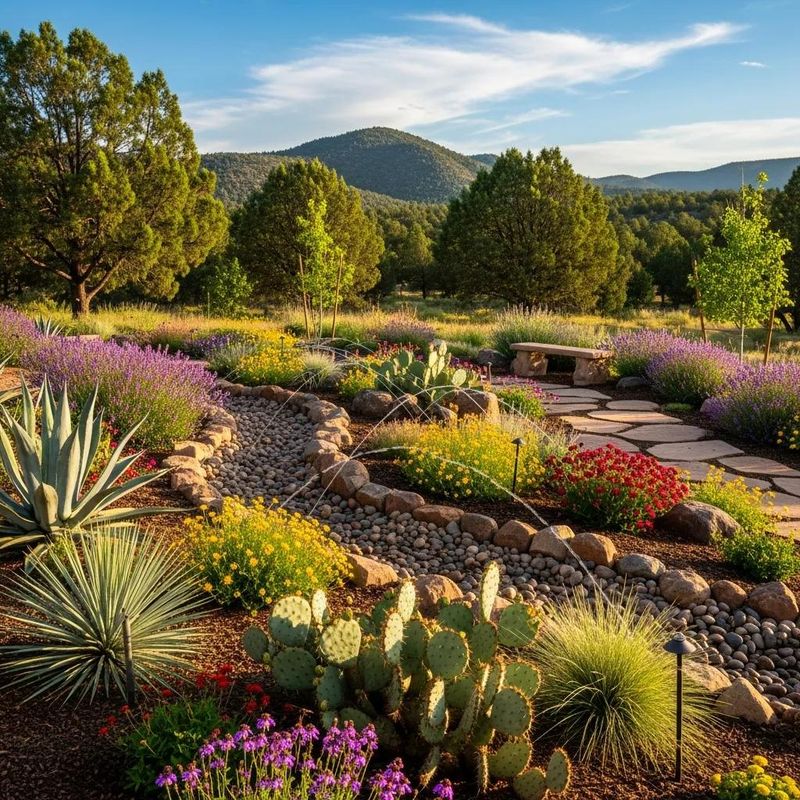
Even the toughest native won’t save your slope if it goes in the ground at the wrong time or without a plan. Timing is everything in the low desert: aim for fall, roughly October through November, or early spring, so roots can establish in mild weather before summer heat and monsoon downpours arrive.
Think in layers rather than single plants. Pair deep-rooted shrubs like creosote and chuparosa up top with spreading bursage and rock-loving agaves lower down, so different root depths grab the soil at every level.
Rocks are your friends. Combining plants with rock barriers, terracing, and a gravel mulch slows racing water, gives roots time to drink, and keeps soil from sprinting toward the street.
Watering deserves a gentle hand. Give new plantings regular water while roots stretch out, then taper off, because most of these natives can eventually run on rainfall alone.
Skip the temperate-climate habits borrowed from cooler regions and lean into desert-adapted choices. Do that, and your hillside becomes a living, wildlife-friendly system that holds firm when the rain comes racing down.