California Native Plants For Narrow Side Yards That Won’t Swallow The Walkway
Four feet wide. Maybe five.
That’s the space between your house and the fence, and something about it makes people lose all sense of proportion.
Someone plants a shrub there. Ten years later you’re turning sideways to carry the recycling out.
The plant did nothing wrong. It grew to the size printed on the tag, which nobody read.
California natives can fix this, and not for the reason most people assume. The real advantage isn’t drought tolerance, though that helps.
It’s that the native palette includes plants which actually stay small. Genuinely small. Not “small for a ceanothus” small.
A few of them top out at a foot. One handles deep shade along a north wall. Another puts hummingbirds at shoulder height in a corridor nobody walks through for pleasure.
The trick has almost nothing to do with pruning and everything to do with what you buy in the first place.
So which natives keep the walkway walkable and still make the strip worth looking at?
1. Plant California Fuchsia For Vertical Color
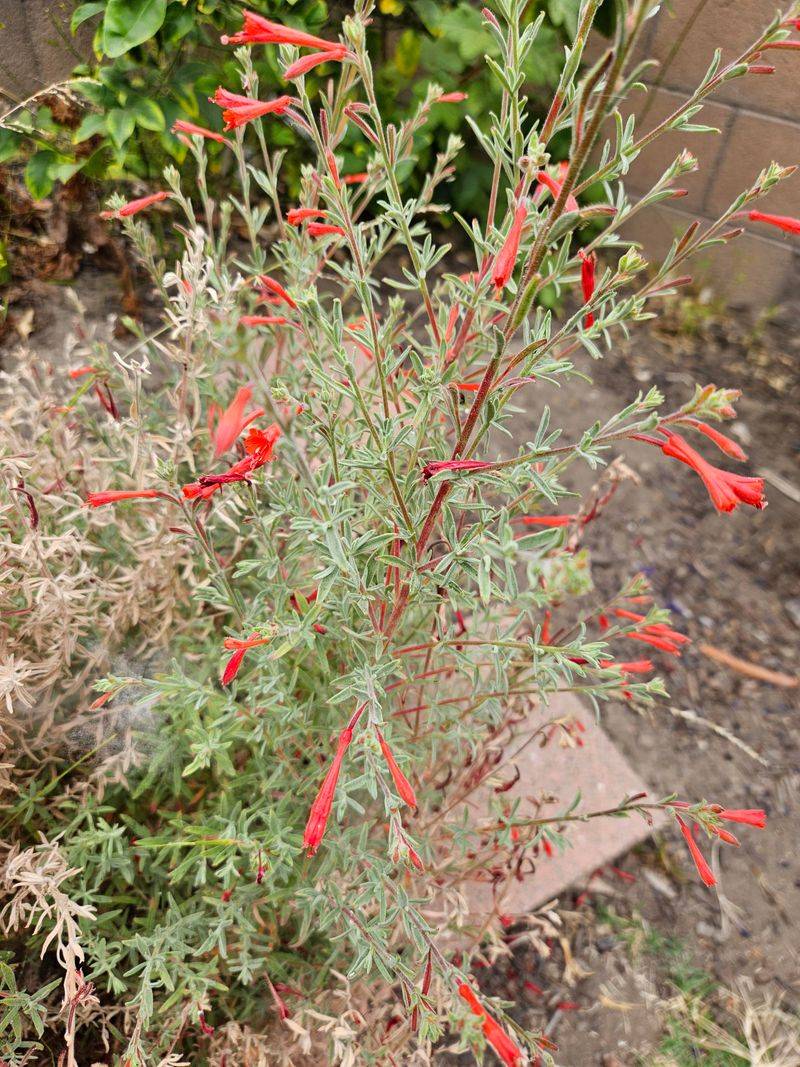
Few natives put on a brighter late summer show than California fuchsia.
Side yards look tired by August, and this plant arrives right then. Orange red flowers appear when most of the garden has quit.
Growth habit works in your favor here. Many garden selections reach about one to two feet tall and spread modestly in lean soil and full sun.
Spreading habits vary by cultivar though. Some forms travel by underground runners more enthusiastically than others, so check the specific selection before planting.
Place it toward the back edge of a narrow bed, roughly twelve to eighteen inches from the walkway. Stems then sway without brushing ankles.
That gap also leaves room for gravel, mulch, or shorter natives in front.
Hummingbirds work the tubular blooms steadily. A passage most people hurry through becomes a small wildlife lane.
Full sun, fast draining soil, and light summer water after the first season cover its needs. Rich soil often produces looser, less tidy growth.
Cut old stems back in late winter. The clump returns fresh and the planting stays neat.
Pair it with blue eyed grass or yarrow for contrast down low. Height where you want it, habitat value at no extra cost, and a path that still feels like a path.
2. Add Cleveland Sage For Fragrant Texture
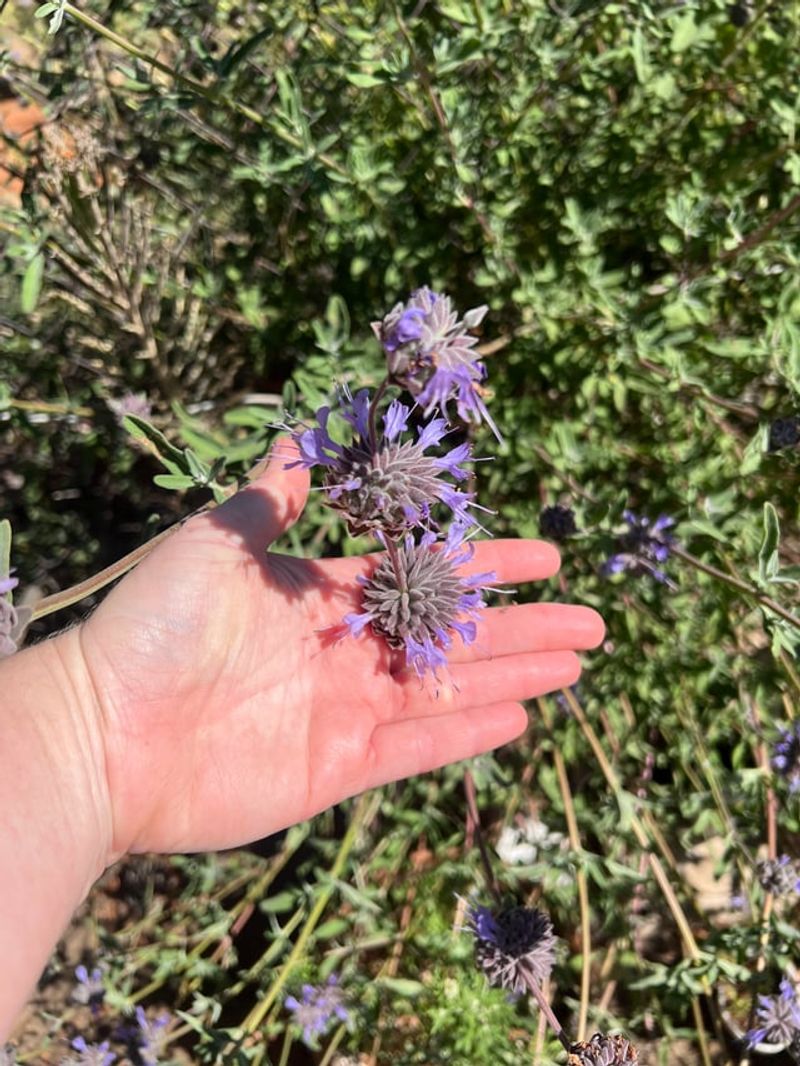
Brush past Cleveland sage once and the scent stays with you.
That resinous fragrance gives a narrow side yard something no ornamental shrub delivers. Many selections also stay compact enough for tight borders.
Form matters as much as size. It usually builds a rounded mound with small leaves and fine stems rather than sprawling toward the path.
Expect roughly three to four feet tall and wide with good siting and light annual pruning. Some cultivars like Winnifred Gilman run smaller, which suits slim beds better.
Full sun and fast drainage are the real requirements. Reflected heat off fences and walls rarely bothers it.
Leave at least two feet between the shrub and the walkway. Brushing stems is pleasant occasionally, less so daily with full hands.
Your California Garden Changes Every Week. Your Plan Should Too.
Gardening in California changes quickly throughout the season. Every Friday you’ll receive a simple weekly plan showing exactly what to plant, prune, fertilize, harvest, and protect so you never miss the right timing.
Soft lavender blue flowers draw heavy bee traffic. A corridor turns into an active stop for a few weeks each year.
Low water after establishment keeps growth dense. Too much irrigation produces broader, lankier plants that eventually crowd the path.
Cleanup after bloom is generally enough. Avoid cutting hard into old wood, since many salvias resprout poorly from bare stems.
Gravel mulch, stepping stones, and a low edging plant complete the look. A side yard that smells like a hillside is a strange luxury, but a real one.
3. Use Monkeyflower For Small Space Drama
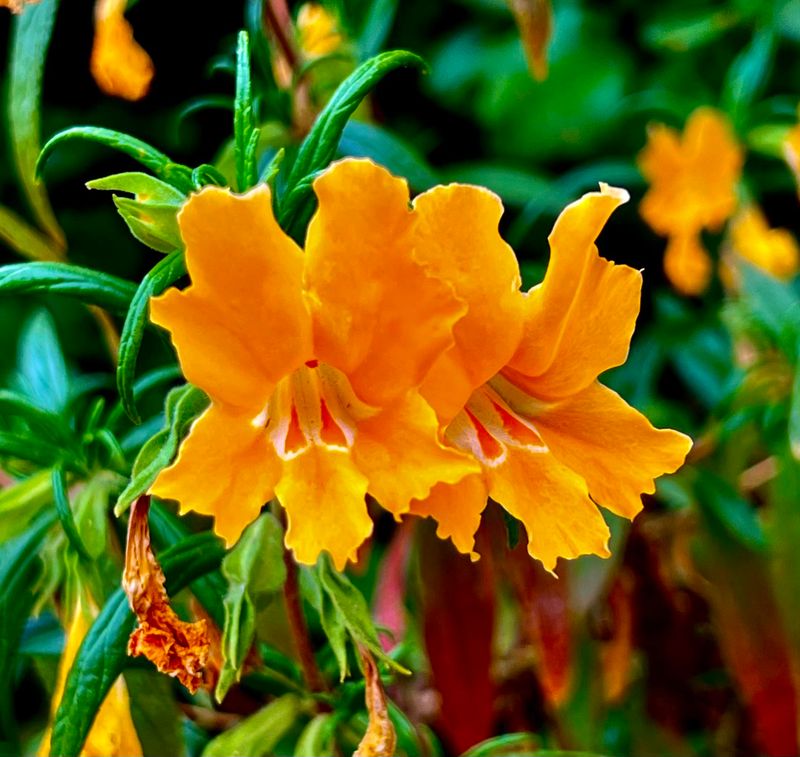
Monkeyflower has a theatrical streak that suits tiny spaces.
One clump in bloom can carry an entire skinny border. That counts in side yards where every plant needs a purpose.
Many native monkeyflowers stay small enough for front edges, low banks, or containers beside a walkway. Trumpet shaped flowers come in yellows, oranges, reds, and pinks.
Naming has shifted over the years, which trips people up at nurseries. Sticky monkeyflower has moved between Mimulus and Diplacus, so both names may appear on tags for the same plant.
Species range from coastal bluffs to inland slopes, so regional match matters. Local native plant nurseries can point you toward the right one.
Containers help in extra narrow spots near utility lines or gates. A pot controls spread and height while keeping the flowers close.
Hummingbirds and native bees both visit regularly. A plain passage gains movement it never had.
Light trimming after a bloom cycle encourages fuller growth. Heavy fertilizer produces floppy plants that lean into walkways.
Summer dormancy is normal for some shrubby types. Foliage may look sparse in the hottest months and return with fall rain.
Flower power without a shrub taking over is the whole appeal. Bold show, polite footprint, and no wrestling match in year five.
4. Grow California Lilac For A Slim Evergreen Screen
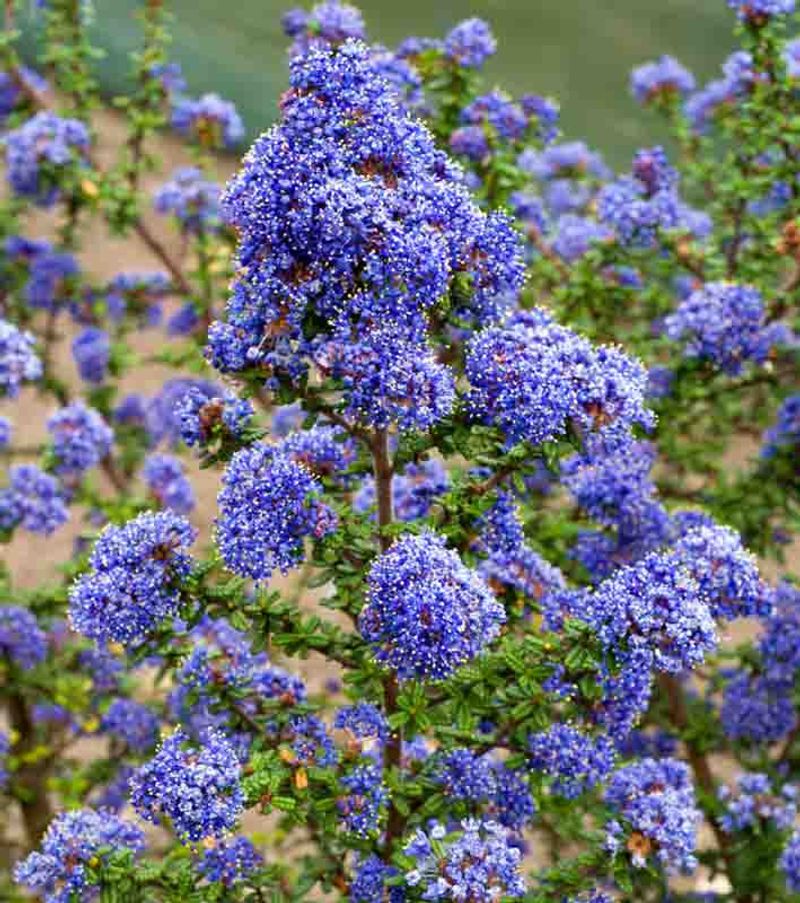
California lilac sounds like a plant for wide gardens, and often it is.
The right ceanothus changes that. Compact and upright selections exist, and they behave very differently from the sprawling giants.
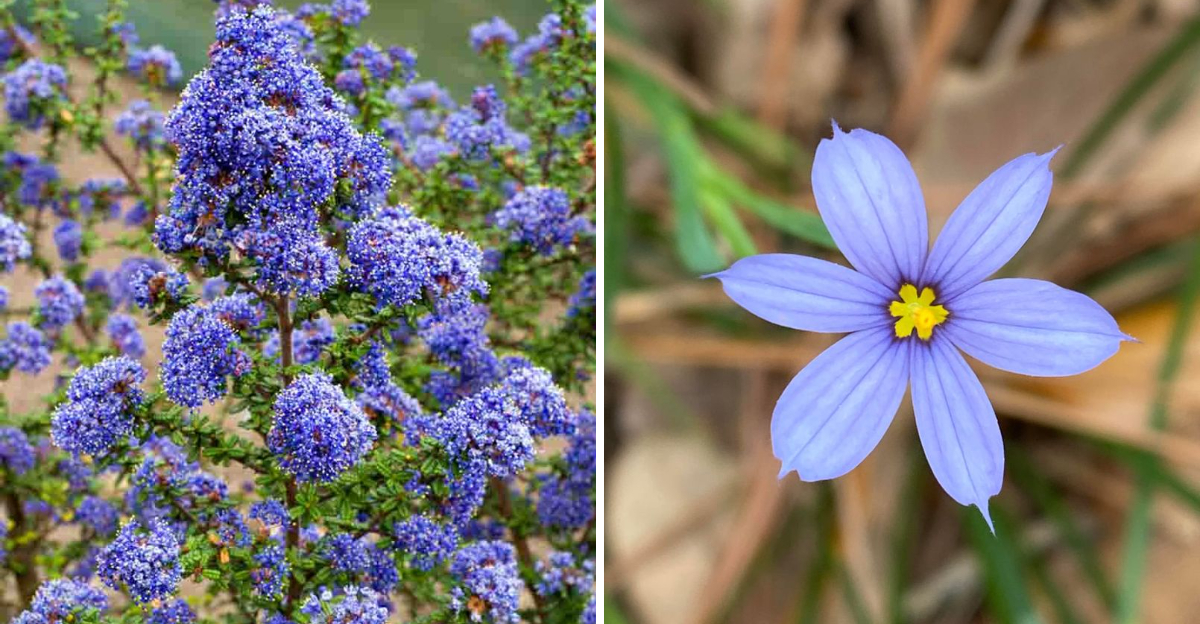
Look for varieties maturing around three to six feet tall. Sizes vary enormously across the genus, so reading the tag carefully prevents years of squeezing past branches.
Blue flower clusters are the payoff. In spring, even a slim evergreen screen can look completely covered and busy with pollinators.
Full sun suits coastal gardens, while light shade helps inland where summers run hotter. Excellent drainage matters more than soil richness.
Many ceanothus prefer little to no summer water after the first year. Summer irrigation is a common cause of decline, since some species are susceptible to root rot in warm wet soil.
Place the shrub closer to the fence than the path. Prune only after bloom, and only lightly.
Frequent shearing ruins the graceful form and rarely solves a size problem anyway. Buying smaller works better than cutting harder.
Lifespan runs shorter than people expect, often ten to fifteen years for garden plants. Worth knowing before treating one as permanent structure.
Year round structure without stiffness is what you get. Choose carefully and it stays a slim green backdrop rather than a barrier pushing everyone sideways.
5. Plant Yarrow For Easy Side Yard Coverage
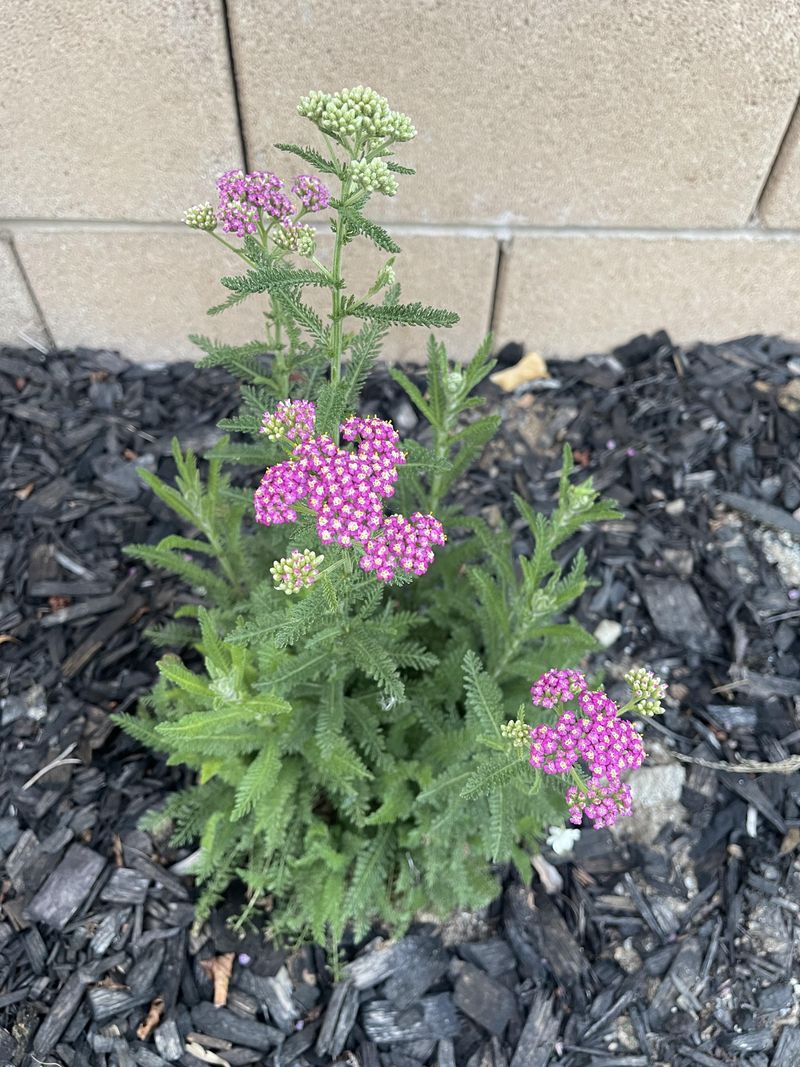
Yarrow makes a side yard easier almost immediately.
Feathery foliage softens sharp edges. Flat flower clusters hold color for a long stretch.
Height stays manageable, often around one to two feet in bloom. Clumps do spread wider over time through rhizomes.
That spreading habit cuts both ways. In slim beds it fills soil usefully, though it can wander into neighboring plants if unmanaged.
Drought tolerance once established makes it a fit for beds sprinklers never reach. Deep occasional watering encourages roots to reach down.
Pollinators arrive in numbers. Bees, hoverflies, and butterflies all use the flat flower heads as landing pads.
Planting in repeating groups keeps the look calm rather than patchy. Random single plants tend to read as accidental.
Maintenance stays simple. Shear spent stalks for a possible second flush, and divide crowded clumps every few years.
Native Achillea millefolium differs from the many garden hybrids sold in bright colors. Both grow well, though the native form generally handles dry inland conditions better.
Guide the spread instead of fighting it. Let yarrow carpet the ground between taller accents, and the planting reads roomy while the walkway stays clear.
6. Add Hummingbird Sage In Shaded Corners
Some side yards never get the blasting sun most California natives want.
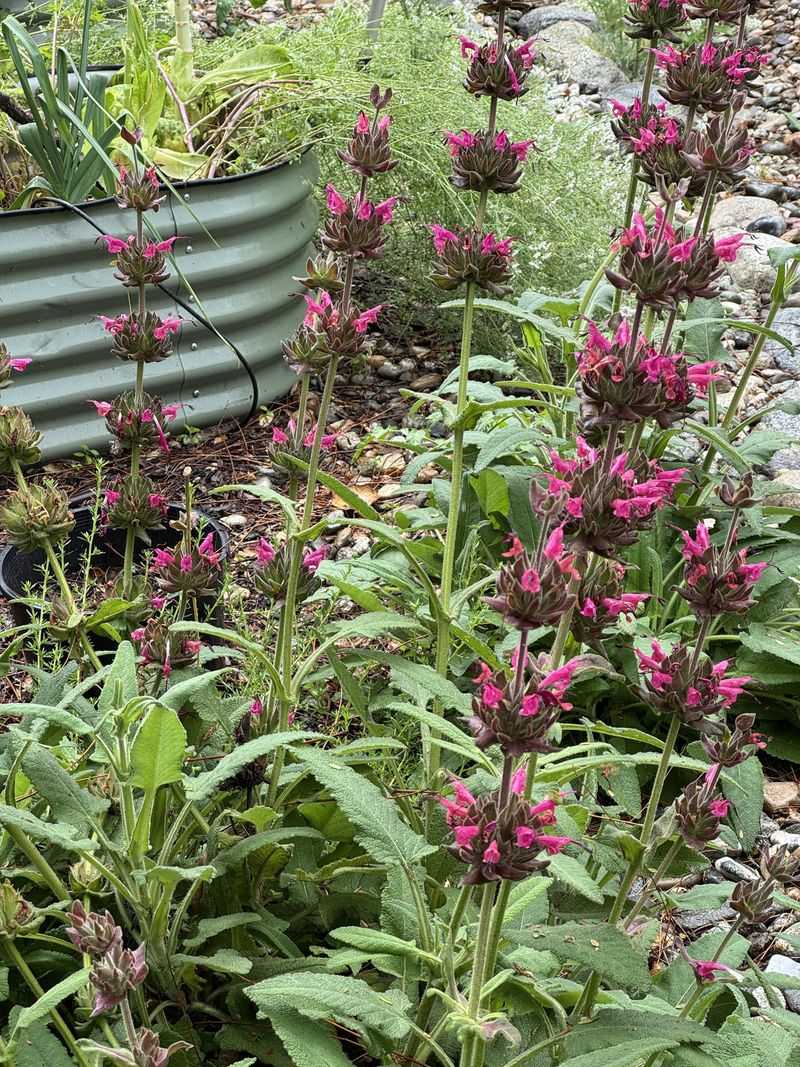
Hummingbird sage prefers the opposite. Part shade to light shade suits it, which makes it useful along a cooler house wall or fence.
Broad, soft textured leaves create a lush look without demanding much water once established. Flower spikes rise above the foliage in spring in rosy pink to magenta tones.
Spreading habit deserves attention in narrow spots. This salvia travels by rhizomes and can form a wide colony over several years.
Tuck it into wider pockets or corners rather than the tightest pinch point beside the walkway. Used that way, it softens edges nicely.
Hummingbirds visit the flowers eagerly, which earns the name every spring. That activity changes how a shaded passage feels.
Decent drainage plus moderate summer water keeps it looking freshest inland. Coastal gardens generally need less.
Summer dieback is common, particularly in hotter areas. Foliage may retreat and return with cooler weather, which is normal rather than a failure.
Light cleanup after bloom is enough. Harsh shaping serves no purpose on a relaxed mounding plant.
Pair it with blue eyed grass or stepping stones for a soft look in shade. A gloomy strip gains fragrance, flowers, and traffic without losing any width.
7. Choose Blue-Eyed Grass For Tiny Borders
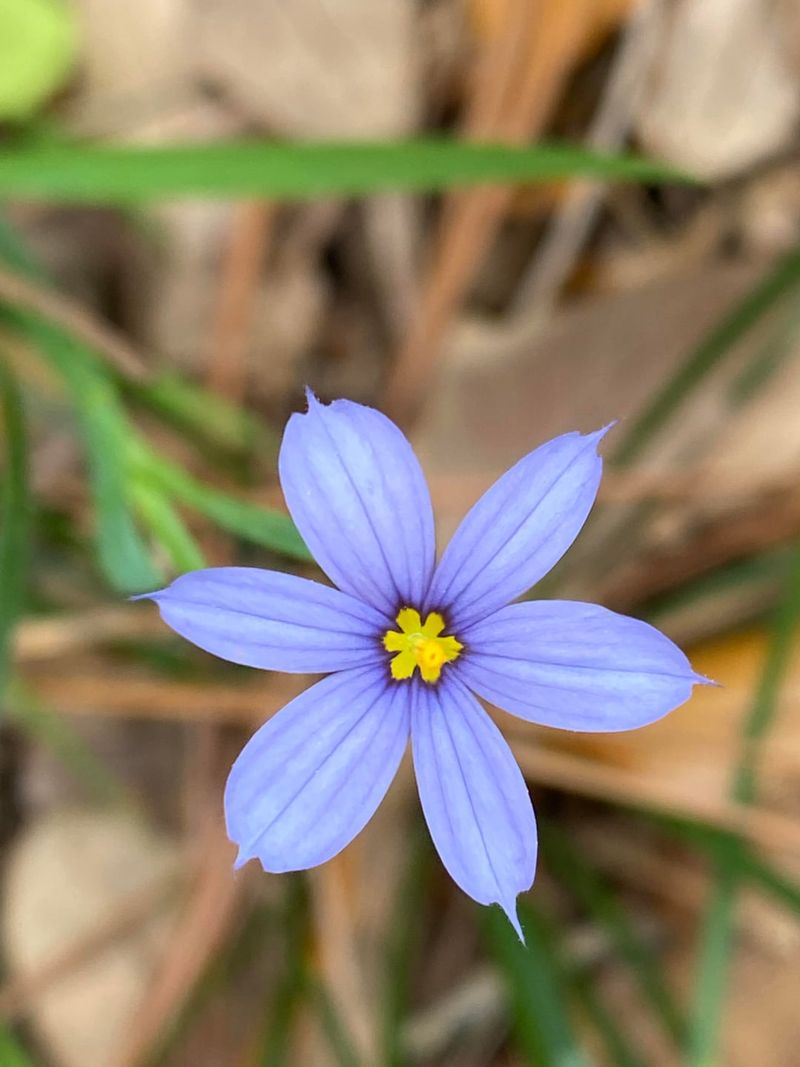
Blue-eyed grass has one genuinely useful talent. It slips into awkward edges where larger natives look clumsy.
Despite the name, it is not a grass at all. Sisyrinchium bellum belongs to the iris family.
Neat grassy clumps send up small starry flowers, usually blue violet with yellow centers. Narrow upright foliage outlines paths without spilling over.
Use it in the skinniest bands of soil, between stepping stones, or at the front of mixed beds. Containers work too.
Flowers are small individually, so planting several together makes a stronger showing. A drift of clumps looks deliberate against plain gravel or mulch.
Moisture needs run higher than many dry garden natives, particularly while settling in. Occasional summer water helps in hot inland spots.
Summer dormancy is standard behavior. Foliage often browns and disappears in the dry season, then returns with fall and winter rain.
That habit catches new gardeners off guard. Plants are not lost, just resting, so hold off on replacing them.
Trim foliage when it looks tired and divide crowded clumps to refresh the planting.
For the narrowest borders, few natives behave more politely. It fills gaps, softens hard lines, and never once threatens to take over anything.
8. Layer Native Plants Instead Of Building A Hedge Wall
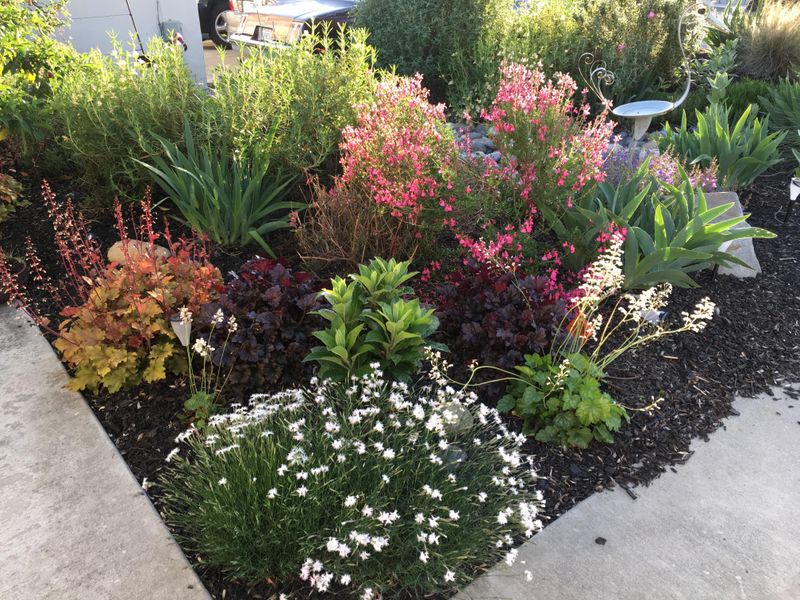
Narrow side yards often get treated as a problem requiring one row of shrubs.
That approach usually backfires. A hedge wall makes the passage darker, tighter, and harder to maintain than mixed planting does.
Three levels is a workable framework. A slim shrub or two near the fence, medium mounding plants through the middle, low edging plants along the walkway.
Each layer then gets room to show without swallowing the route.
Mixed planting also mirrors how native plant communities actually grow. Varied heights, textures, bloom times, and scents support more birds and insects than a clipped green wall.
One workable combination pairs California lilac for evergreen structure with California fuchsia for late color and blue eyed grass at the edge. Monkeyflower or yarrow fit wherever space allows.
Spacing matters as much as plant choice. Mature width, not the size in the pot, should drive the layout.
Leave real breathing room beside the path. Mulch, gravel, or stepping stones handle the rest without adding maintenance.
Water needs vary across natives, so group plants with similar requirements. Mixing a summer dry ceanothus with something wanting regular water rarely ends well for either.
Layering keeps the walkway usable and the planting richer. Light reaches the lower plants, pruning stays simple, and nobody has to walk sideways to reach the gate.