Why Young Michigan Trees Struggle When Mulch Is Piled Against The Trunk
Mulch is supposed to help your trees, so it can be confusing when a young tree starts struggling even though you’ve been diligent about spreading it around the base every year.
In Michigan, this is a more common problem than most homeowners realize, and the culprit often has nothing to do with how much mulch you’re using and everything to do with where it’s placed.
Piling mulch directly against the trunk creates conditions that quietly work against your tree’s health, even though it looks like you’re doing everything right.
The bark stays damp, pests find an easy hiding spot, and the roots underneath can start behaving in ways that weaken the whole tree over time.
It’s an easy mistake to make since it seems harmless on the surface. Once you understand what’s actually happening beneath that mulch pile, though, protecting your young trees becomes a lot more straightforward, and a lot less mysterious.
1. The Trunk Was Not Meant To Stay Buried
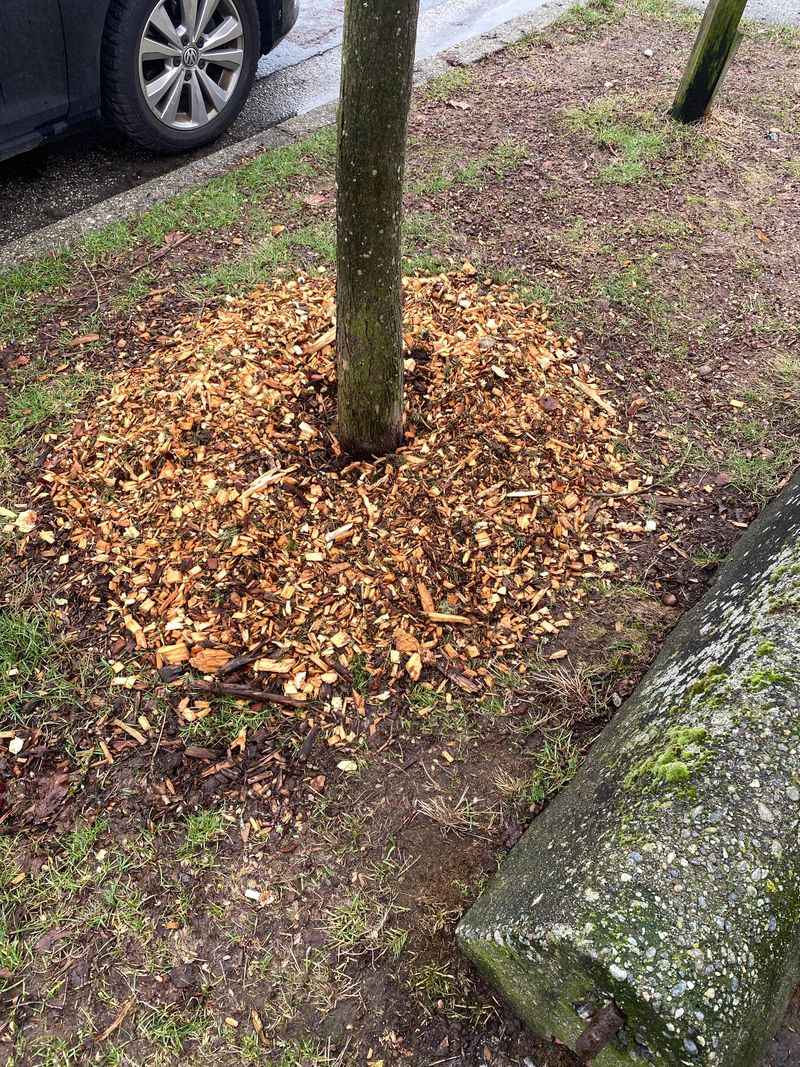
Bark works like a jacket for a tree, protecting the living tissue underneath from bugs, weather, and injury. That jacket was built to breathe in open air, not to sit smothered under a mound of damp wood chips.
When you pile mulch right up against the trunk, you change the whole environment around the bark. Instead of drying out after rain, the covered area stays soft and soggy for days. Soft bark becomes an easy doorway for fungus, insects, and rot to sneak inside.
Below ground, roots love moisture and darkness, which is exactly why they belong there. Above ground, the trunk needs air and sunlight to stay firm and healthy. Mixing those two worlds by burying the trunk confuses the tree and weakens its defenses.
Young Michigan trees face plenty of stress already, from cold snaps to hungry rodents. Adding a wet, packed collar around the base just piles on more trouble they do not need.
A helpful habit is to picture the trunk like your own ankle. You would not want to stand in a bucket of wet leaves all season long, and neither does your tree.
Keep the base open so you can always see where the trunk meets the ground. When bark stays dry and visible, the tree can guard itself the way nature intended. This one small choice sets the stage for stronger growth season after season.
2. Hidden Root Flares Cause Problems
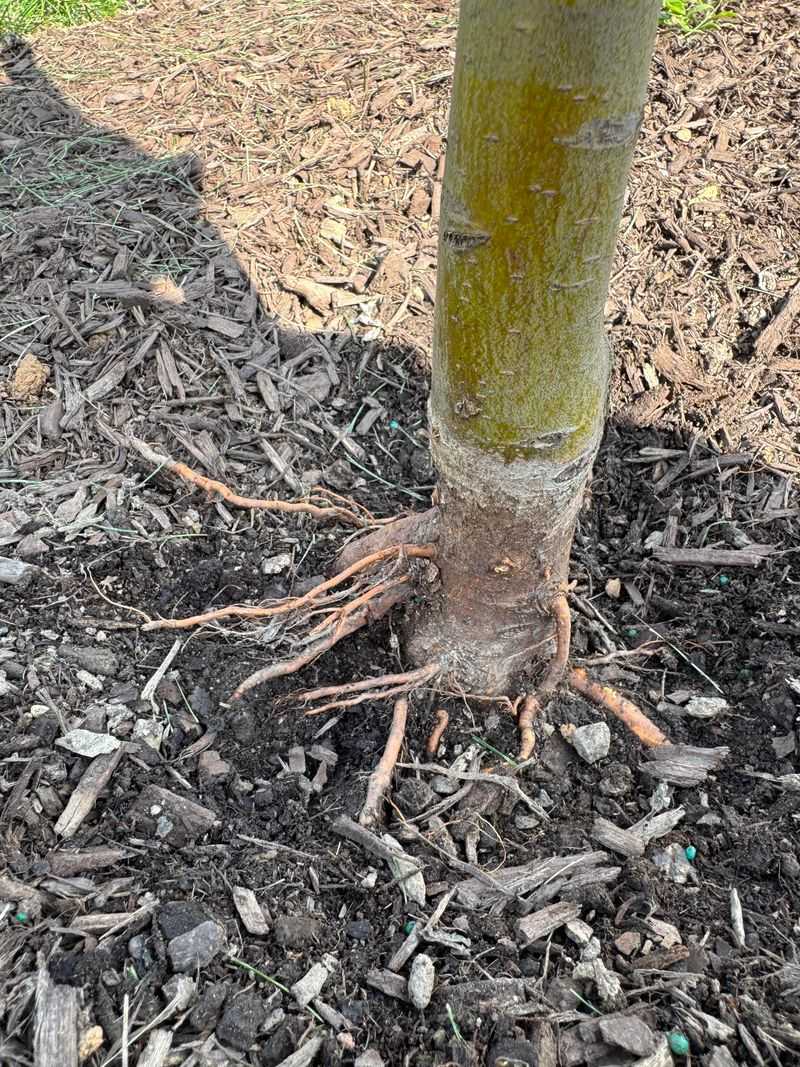
Near the bottom of every healthy tree, the trunk gently widens out like the base of a wine glass. Arborists call this spot the root flare, and it should always stay in plain view.
Think of the flare as the tree’s belt line. Once mulch or soil rises above it, the tree loses that natural marker between the part meant for air and the part meant for dirt.
When the flare disappears under a mound, the trunk starts acting like it is planted too deep. Moisture clings to the lower bark, and the tree may push out strange roots that circle around instead of spreading wide.
Your Michigan Garden Changes Every Week. Your Plan Should Too.
Gardening in Michigan changes quickly throughout the season. Every Friday you’ll receive a simple weekly plan showing exactly what to plant, prune, fertilize, harvest, and protect so you never miss the right timing.
Those circling roots can eventually wrap the trunk and squeeze it, almost like a rope tightening over the years. That slow pressure blocks water and nutrients from moving up the way they should.
Spotting a buried flare is easy once you know what to look for. If your tree goes straight into the ground like a telephone pole, something is covering the flare and needs to come off.
Gently brush the mulch away from the base until you see the trunk begin to widen. That gentle curve is your goal, and it tells you the tree is sitting at the right height.
Checking the flare on newly planted trees can save you big headaches down the road. A visible flare means good airflow, better balance, and a much happier root system underneath.
3. Constant Moisture Can Damage Bark
Rain falls, snow melts, and morning dew settles, all part of normal life for a tree. Bark handles these just fine because it dries out again in the open air.
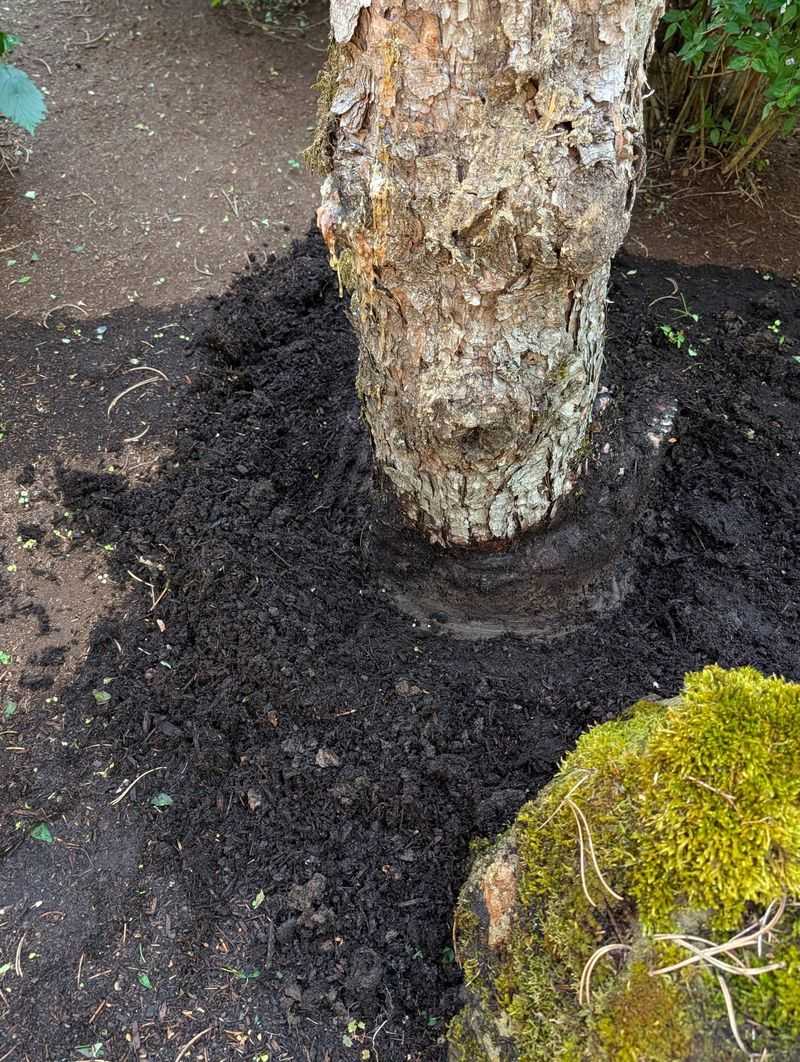
Trouble starts when mulch hugs the trunk and holds that moisture in place. The bark never gets a chance to dry, so it stays damp week after week.
Bark that stays wet turns soft and loses its strength. Soft bark cannot fight off the fungi and bacteria that thrive in warm, moist spots.
Over time, small patches of the outer layer begin to break down. Once the protective covering weakens, the tender tissue that carries food and water becomes exposed and vulnerable.
Insects notice these soft spots too, since damaged bark is far easier to chew through than dry, firm bark. A tree fighting rot and bugs at the same time has little energy left for growing tall.
Michigan weather makes this problem worse because our springs bring frequent rain and our humid summers keep everything moist. Mulch against the trunk basically traps a mini swamp around the base.
The fix is refreshingly simple. Keep a gap of a few inches between the mulch and the bark so air can circulate freely.
Run your hand along the lower trunk now and then to check for dampness or soft spots. Dry, firm bark is a great sign that your tree is well protected and ready to thrive through every season.
4. Young Trees Have Less Room For Mistakes
Picture a toddler learning to walk versus a grown adult crossing a room. The little one wobbles and needs more help, and young trees are much the same.
Newly planted trees are still building their root systems, so they cannot bounce back from stress the way older, established trees can. Every extra challenge hits them harder.
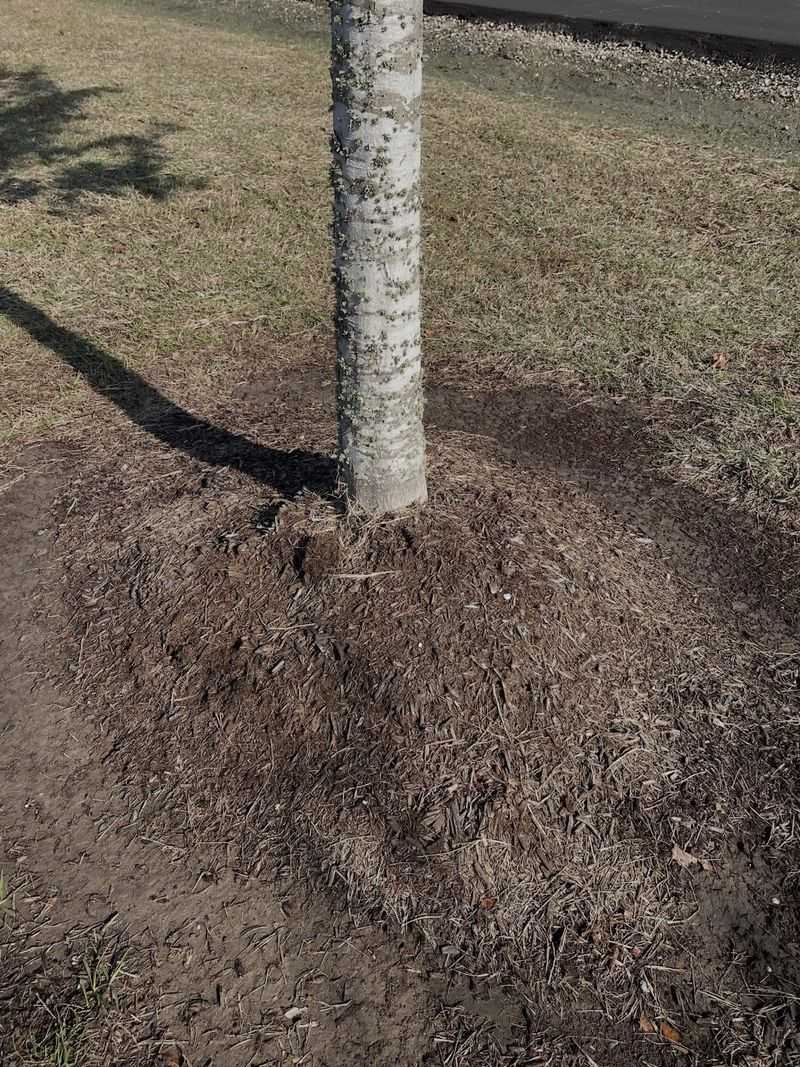
Their trunks are thin and their bark is young and tender. A layer of wet mulch pressed against that soft bark does far more harm to a sapling than to a thick, mature tree.
During the first two or three years, a young tree spends most of its energy growing roots underground. If a mulch volcano weakens the trunk during this time, the tree has fewer reserves to fall back on.
Small problems that a big tree might shrug off can set a young one back a whole season. Slow starts often lead to weak, struggling trees that never quite reach their potential.
Giving a sapling proper care early pays off enormously later. Strong roots and a healthy trunk in year one mean faster, sturdier growth for decades to come.
Think of good mulching as an investment in your tree’s future. A few careful minutes now protect all the years of shade and beauty ahead.
Watch your young trees closely and treat them gently. The habits you build while they are small will shape how tall and full they grow.
5. Deep Mulch Can Affect Root Growth
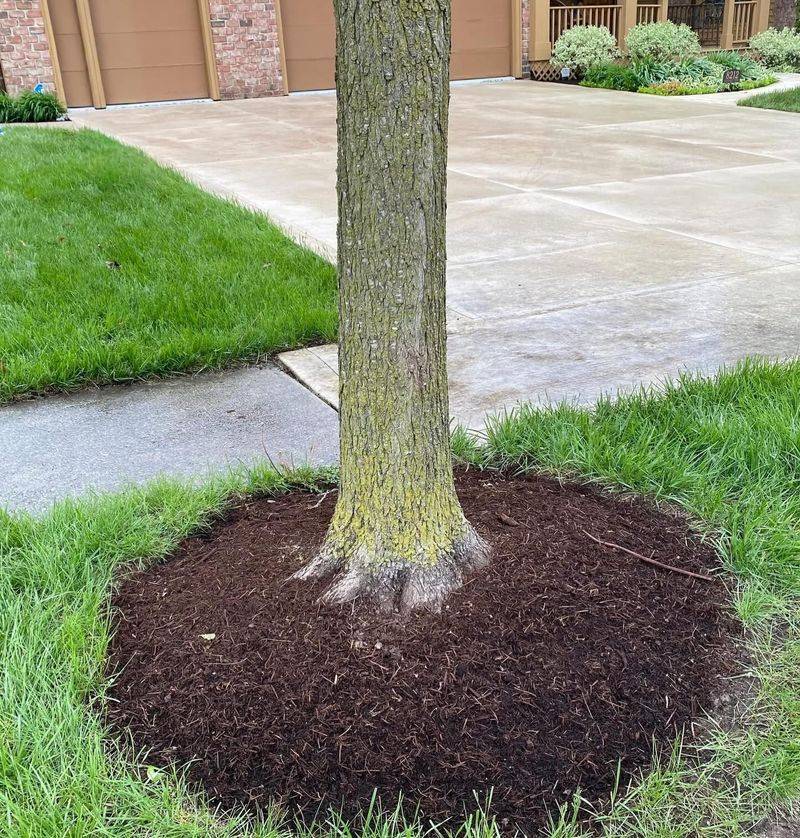
Roots are clever, and they always grow toward whatever gives them water and air. When mulch piles up too thick, roots sometimes chase the easy moisture right up into the mulch itself.
Instead of digging deep and wide, those roots stay near the surface. Shallow roots may seem fine at first, but they leave the tree wobbly and poorly anchored.
A tree with surface roots struggles during Michigan’s dry summer stretches. The top layer dries out fast, and roots up high cannot reach the steady moisture found deeper down.
Wind becomes a bigger threat too, since shallow roots cannot hold the tree firmly in a storm. A well anchored tree needs its roots spreading out into real soil.
Thick mulch can also block oxygen from reaching the roots that are trying to grow the right way. Roots need to breathe, and too much material on top acts like a heavy blanket.
When air and water cannot move through properly, root growth slows and the whole tree becomes weaker. Everything a tree does depends on a strong, healthy root system below.
Keeping mulch to a modest depth of two to three inches solves this nicely. That thin layer holds moisture and blocks weeds without smothering anything.
Give roots the chance to grow down and out where they belong. A tree with a deep, spreading root network stands tall, drinks well, and handles whatever the weather sends its way.
6. Mulch Should Form A Donut, Not A Volcano
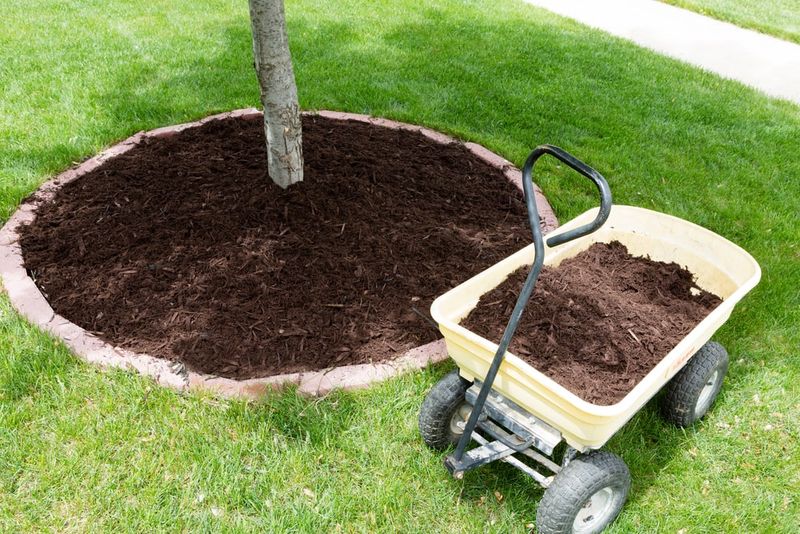
Here is a fun way to remember the golden rule of mulching. Think donut, never volcano.
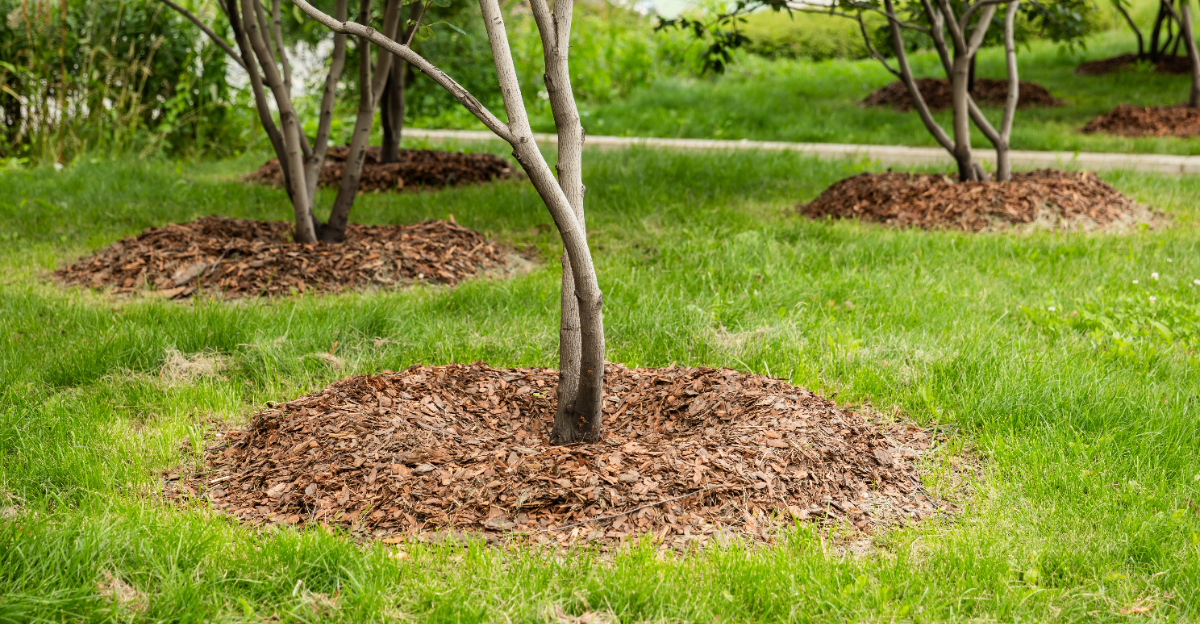
A volcano is that tall cone of mulch heaped up against the trunk, and it causes every problem we have talked about. A donut is a wide, flat ring with an open hole in the middle where the trunk stands free.
To build the perfect donut, spread mulch in a circle around your tree, keeping the layer only two to three inches deep. Extend that ring outward as far as the branches reach if you can.
Leave a clear gap of three to four inches between the mulch and the trunk. That open space lets the bark breathe and keeps moisture where it belongs.
The wide shape does something wonderful for the roots. It holds water across a big area, blocks thirsty weeds, and keeps the soil temperature steady through hot and cold spells.
Spreading mulch this way also protects the trunk from mowers and string trimmers. A gentle buffer zone means no accidental nicks to that tender young bark.
Once a year, refresh the mulch and rake it back into that flat donut shape. Fluffing it up also stops the layer from packing down too hard.
A neat mulch ring looks tidy and does its job beautifully. Your tree gets moisture, protection, and airflow all at once, which is exactly the combination that helps it flourish.
7. Fix The Problem Before Winter
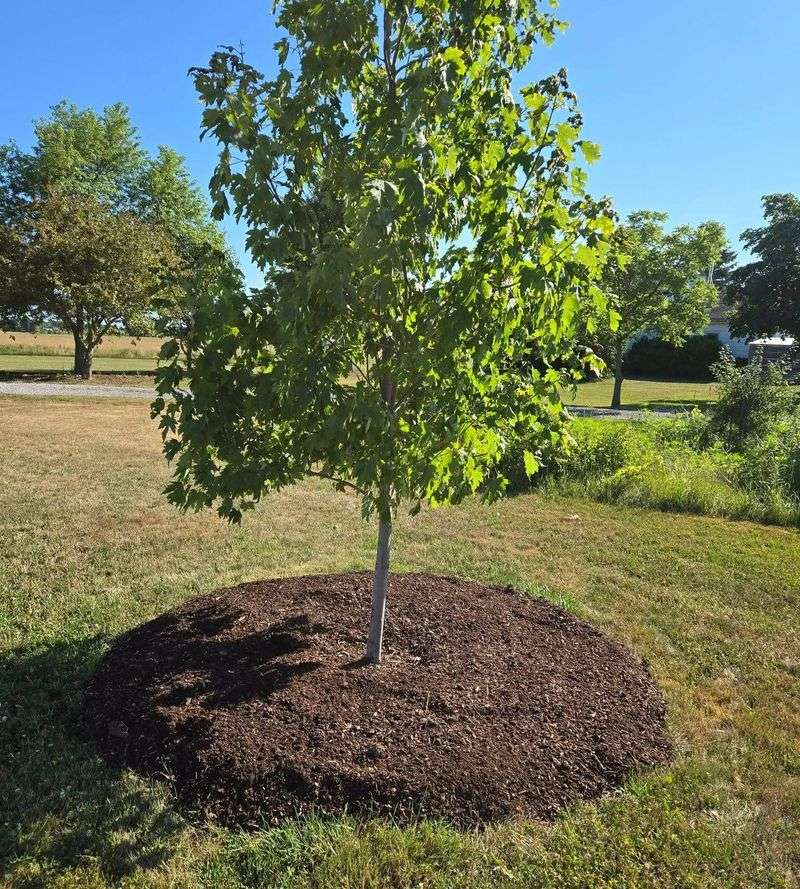
Michigan winters do not play around, and your trees feel every bit of the cold. Before the snow arrives, take a few minutes to check the base of each young tree.
Mulch piled against the trunk over winter creates a cozy hideout for mice and voles. Those hungry critters love to chew on soft bark when other food gets scarce under the snow.
Bark damage around the base can circle the trunk and cut off the flow of nutrients. Pulling mulch back removes that snug shelter and keeps the rodents from setting up camp.
Trapped moisture is another cold weather worry. When mulch holds water against the bark and temperatures swing above and below freezing, the wet spots can crack and split.
Take a rake or your gloved hands and gently pull the mulch a few inches away from the trunk. Double check that the root flare is showing before the ground freezes solid.
Autumn is the ideal time for this simple task, right around when you clean up fallen leaves. Getting it done early means you are not out there fighting frozen mulch later.
A quick fall check-up sets your tree up for a safe, restful winter. Come spring, that healthy trunk and visible flare will greet the warm weather ready to grow. Small effort, big payoff. Your future shade tree will thank you for the care.