The Pale Grubs Crawling Out Of Maryland Acorns Every September
Every September in Maryland, something pale and plump starts crossing the sidewalk in slow motion. It bends, stretches, and scoots along without a single leg to help it.
Rain seems to bring out more of them, especially under the big shade trees in older neighborhoods. Kids usually spot them first, and the questions start rolling in right away.
The oddest part is the arrival, because these little travelers seem to come from nowhere at all. Their hiding place is lying right there in the grass by the hundreds, wearing a tiny brown cap.
The identity behind this yearly sidewalk parade is stranger than it looks, and easy to spot once you know the signs.
Curculio Larvae Take The Blame
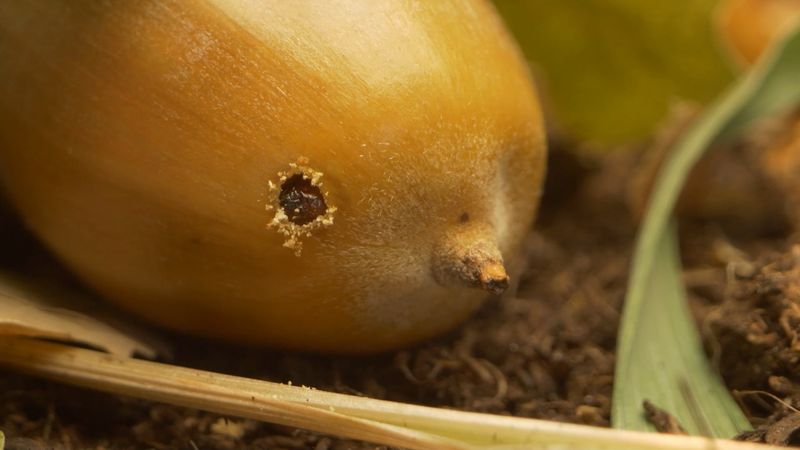
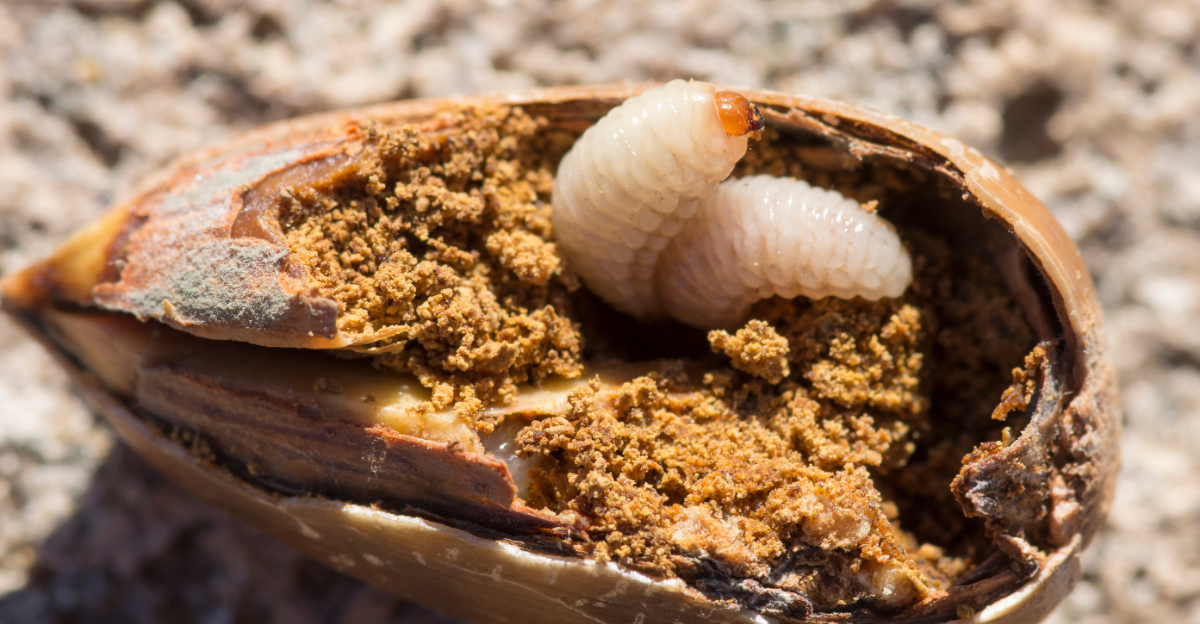
Crack open a fallen acorn in a Maryland backyard and you may meet a plump, cream-colored guest curled inside like a small comma. That’s the larva of an acorn weevil, usually from the genus Curculio, living rent-free since midsummer.
Legless and soft-bodied, it travels with a slow scooting motion. Its head is a tan or brown capsule with strong jaws built for chewing acorn meat, and full grown it measures about a quarter to a third of an inch.
Folks often blame the tree, but healthy Maryland oaks produce grub-filled acorns every autumn. A big share of a crop can be occupied in a heavy year, and squirrels take notice, tossing the lighter nuts aside.
What surprises most people is how tidy the arrangement looks from the outside. The shell stays smooth and glossy while the inside slowly turns into crumbly powder and one hollow chamber.
Handling one is perfectly safe. They rarely bother people, pets, or furniture, and a grub stranded on a patio table is simply lost and hunting for soil.
Fun fact: on some Curculio species, the adult snout is longer than the entire rest of the body, and that odd tool is exactly where this whole story begins.
Long-Nosed Parents Behind The Mystery
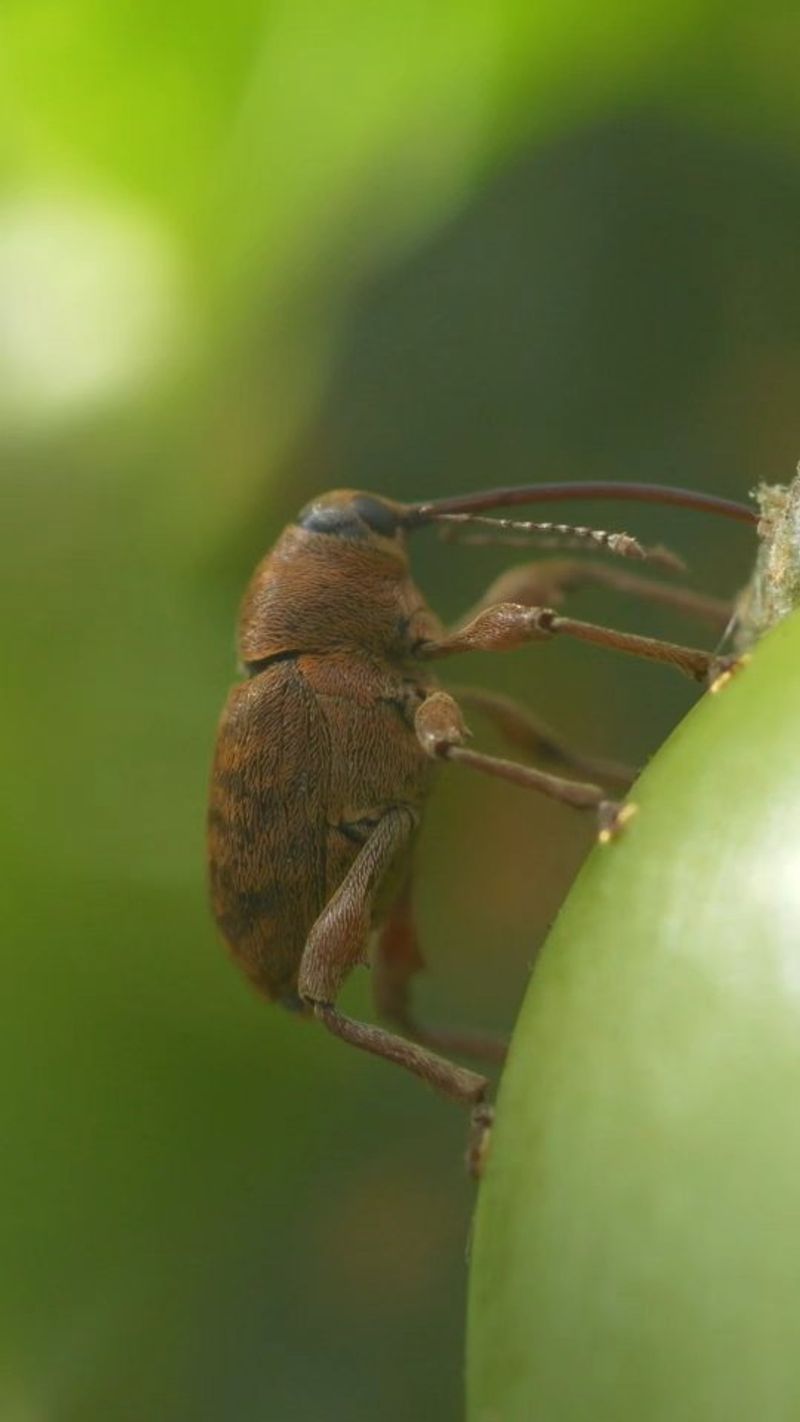
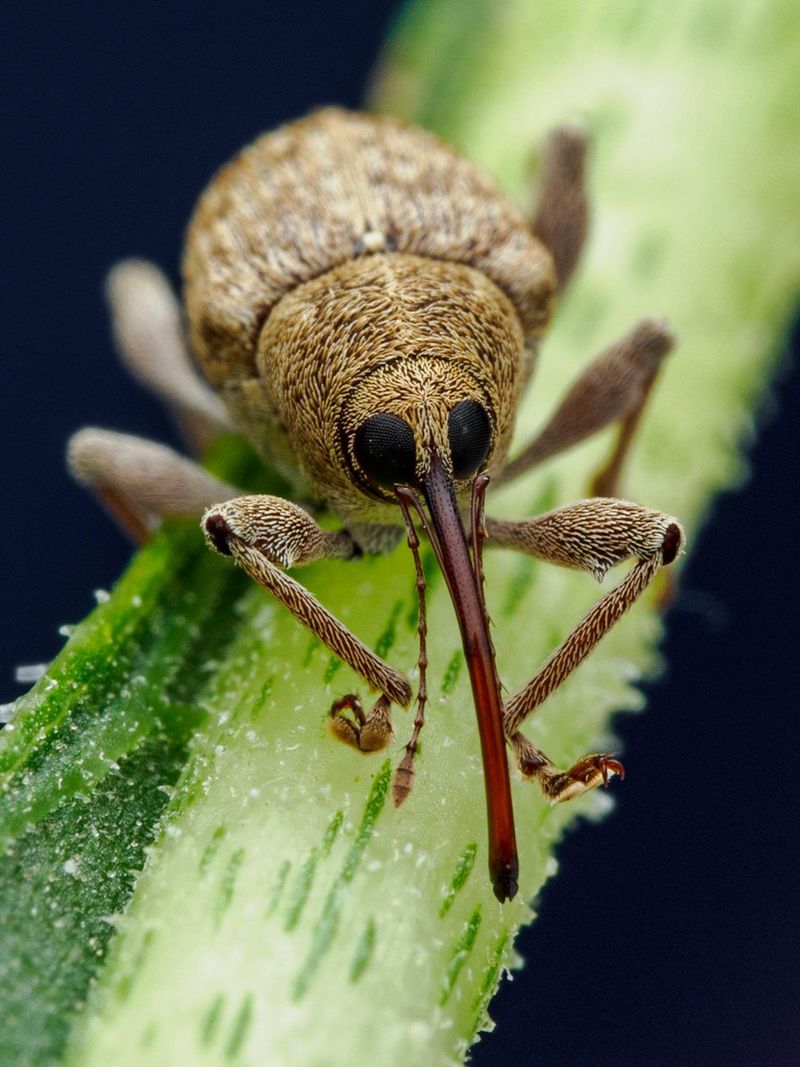
Picture a beetle with a snout like a curved drinking straw, longer than the rest of its body, and you have the female acorn weevil. During July and August she climbs into Maryland’s oak canopy and starts drilling.
That snout, called a rostrum, carries microscopic jaws at the very tip. She works for hours boring through the green shell until she reaches soft tissue, then turns around and slips one or two eggs into the tunnel she made.
Timing matters a great deal to her. An acorn that is too young may drop early, while one that has hardened becomes tough to pierce, so she works inside a narrow window.
Different weevil species favor different oaks. White oak acorns mature in a single season and attract one group, while red and black oak acorns take two years and draw others.
Eggs hatch in roughly one to two weeks. From that point the larva feeds steadily inside a sealed pantry, tucked away from birds, weather, and most predators.
Adults are easy to miss because they are small, brown, and fond of playing possum, folding their legs and dropping the moment they are disturbed. Shake a low oak branch over a white bedsheet in August and a few may tumble out, snouts and all.
Your Maryland Garden Changes Every Week. Your Plan Should Too.
Gardening in Maryland changes quickly throughout the season. Every Friday you’ll receive a simple weekly plan showing exactly what to plant, prune, fertilize, harvest, and protect so you never miss the right timing.
Gardeners sometimes mistake them for large mosquitoes at first glance, thanks to that thin, comically long beak sticking out front.
Timing Of The Great Escape
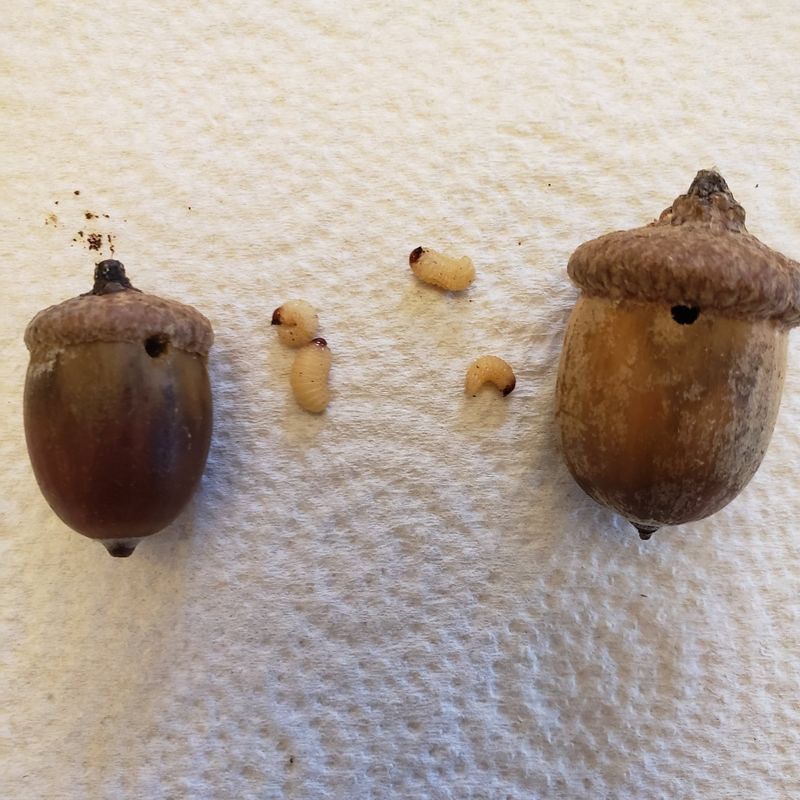
Late summer heat gives way to cooler nights, and Maryland oaks begin letting go of their crop. Acorns thud onto decks, driveways, and trail edges from late August into October, and every one that hits the ground gets a wake-up call.
The larva inside has finished feeding by then, having turned most of the kernel into powder. Impact and cooler temperatures signal that the ride is over, so it starts chewing outward with those tiny dark jaws.
Cutting an exit takes anywhere from a few hours to a couple of days, depending on shell thickness. September rain matters too, because soft, damp ground is far easier to burrow into than baked summer clay.
Homeowners usually notice the parade all at once. Grubs turn up on patios, in gutters, inside garages, and occasionally in a bowl of acorns carried indoors by a curious kid.
Warm Septembers can pull the schedule earlier, while a long dry stretch may hold larvae inside the shell a bit longer. Either way, most of the traffic wraps up by mid-October across central Maryland.
There is a neat bit of strategy hidden in the rush. Leaving the acorn quickly lowers the odds of being swallowed along with the nut by a squirrel or a hungry white-tailed deer.
Watch a sidewalk after an evening shower and you may spot several inching along at once. They travel only a few feet before digging, which is why they cluster near the trees that dropped them.
Perfectly Round Exit Holes
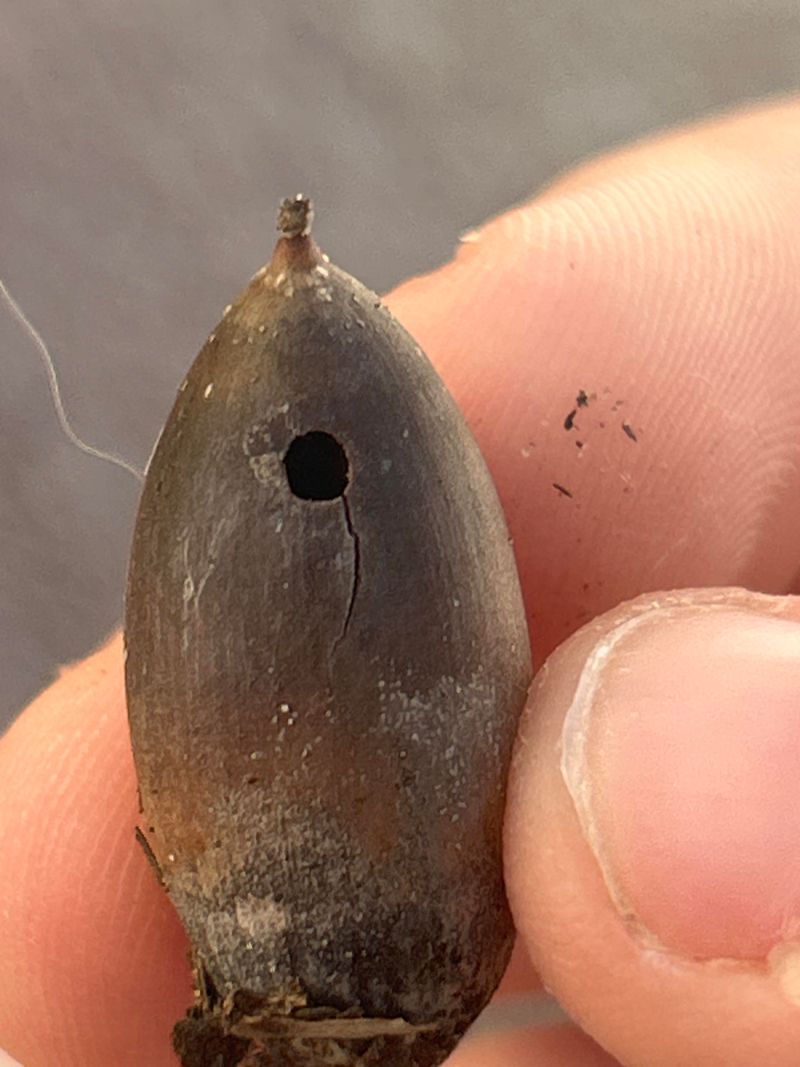
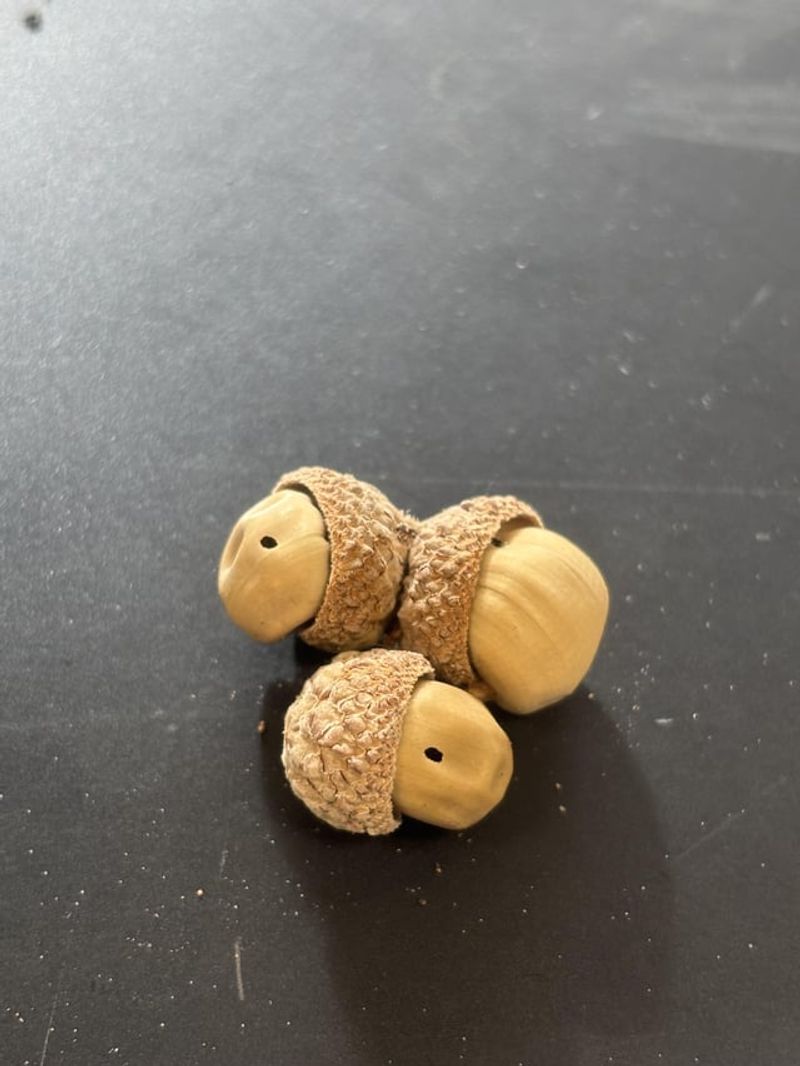
Hold a handful of acorns up to the light and look for a hole about the width of a pencil lead. Clean, round, and slightly ragged at the rim, it is the calling card of a grub that has already moved out.
A hole means the visitor is gone. No hole does not mean the acorn is empty, since the egg entered through a puncture so small that the growing shell sealed it over.
Try the float test with a bucket of water. Acorns that bob at the surface are often hollowed or drying, while heavy sinkers are usually solid and worth saving for planting or crafts.
Weight in the palm tells a similar story. A sound white oak acorn feels dense, almost like a marble, while an occupied one feels oddly light for its size.
Shake a few next to your ear. A faint rattle can mean loose frass, the sawdust-like crumbs left behind by weeks of feeding.
Splitting one open with garden pruners settles the question fast. Inside you may find a curled grub, a chamber packed with brown powder, or a clean pale kernel that squirrels would fight over.
Maryland’s white, chestnut, and northern red oaks each show slightly different hole patterns, since shell thickness varies by species. Foresters use the same quick checks, and backyard growers can borrow the trick in minutes.
Filbertworm Lookalikes And Other Acorn Squatters
Not every squirmer in an acorn wears the same uniform. Pull apart a dozen nuts and you may meet the filbertworm, a caterpillar with a cream body, an amber head, and three pairs of true legs up front.
Legs are the giveaway. Weevil grubs are legless and scoot along, while caterpillars crawl and leave silky webbing mixed into their crumbs. Both shapes end up doing the same job, which is turning a solid nut into powder.
Acorn moth larvae arrive later, often taking over shells that a weevil already emptied. Think of them as second-shift tenants recycling the leftovers.
Gall wasps add another wrinkle. Their young live inside swollen, woody lumps on twigs and leaves rather than in the nut, though those bumpy growths often get blamed for acorn trouble.
Filbertworm moths deserve a look under a hand lens. Their wings carry coppery bands that shimmer like a miniature stained glass window when sunlight catches them.
These creatures pose little to no risk to people, pets, or homes. They have no interest in chewing wood, fabric, or pantry food, and any that wander indoors will typically dry out within a day or two
Maryland’s mixed oak and hickory woods host all of them at once, so a single September haul can include several kinds of visitors. For anyone gathering seed to grow oaks, the practical routine stays the same: sort, float, and treat the keepers.
Life Underground After The Crawl
Once a grub reaches soil, it digs like a tiny excavator, working down three to eight inches over a day or so. Down there it hollows out a small earthen cell and settles in.
What follows is a long wait. Many acorn weevils spend one full year underground, and certain Curculio species stay put for two, three, or even five years before changing form.
Scientists think the staggered schedule works like insurance. Oaks produce enormous crops some seasons and almost nothing in others, so spreading emergence across years improves the odds of finding acorns later.
Pupation happens near the end of the wait, usually in late summer. The soft grub reorganizes into a hard-shelled adult with that famous curved snout, then tunnels upward to find a mate.
Plenty of grubs are discovered before they get that far. Box turtles, shrews, moles, ground beetles, and wild turkeys treat the September crawl like a buffet, and Maryland woodlands are full of them.
Some gardeners worry about grubs in the soil harming their lawns. These are not the root-chewing beetle larvae that damage turf; acorn weevil larvae are only passing through and feed on nothing once buried.
Turn over mulch beneath an oak in October and you might expose one, pale and motionless. Cover it back up and let it finish its long nap. Researchers have kept individual larvae in test soil for years just to learn when they finally surface.