Are Your Georgia Sweet Potato Vines Turning Yellow? Here Is What It Means For Your Harvest
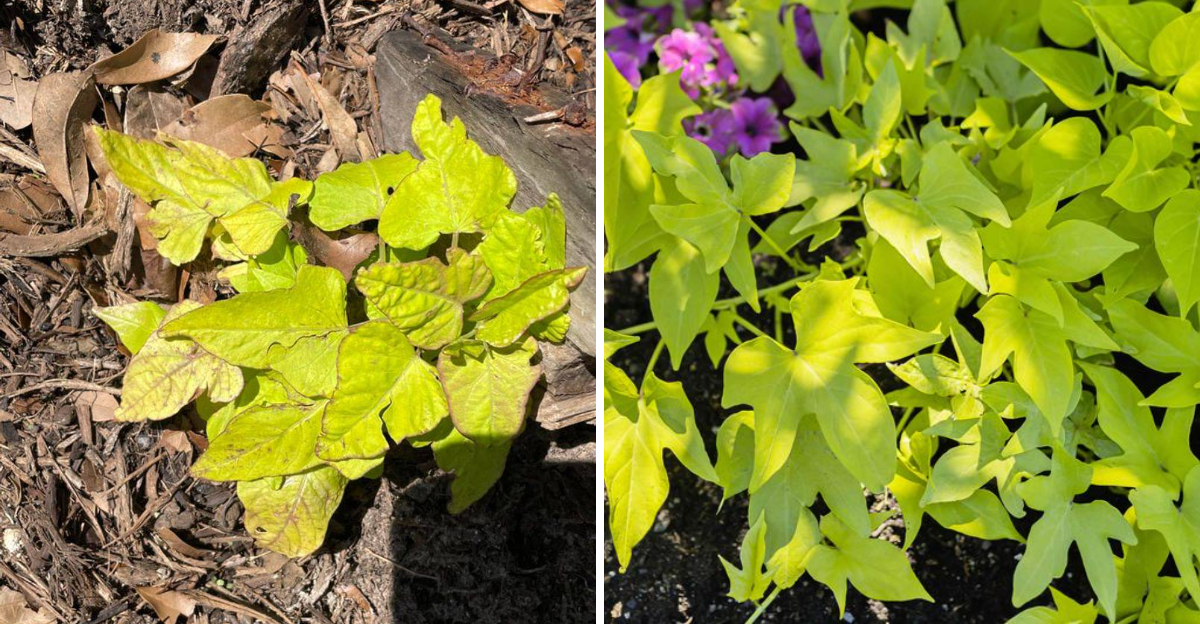
You walk out on a cool Georgia morning and something has changed overnight. Those vines were bright green all summer. Now there’s yellow spreading through them.
Your first thought is probably the right question. Does this mean it’s time to dig? Maybe. It could also mean something else entirely, and the difference matters enormously.
Here’s the trap: yellow leaves in September can signal a crop finishing exactly on schedule, or a plant that’s been struggling for weeks with a problem you can still fix.
Dig too early and you pull up skinny disappointing roots that never reached size. Wait too long and frost gets involved, which affects both the crop and how long it keeps in storage.
The leaves alone will not tell you which situation you’re in. Three other pieces of evidence will, and one of them takes about four minutes with a garden fork.
Curious what those vines are actually reporting?
1. Understand Why Sweet Potato Leaves Yellow
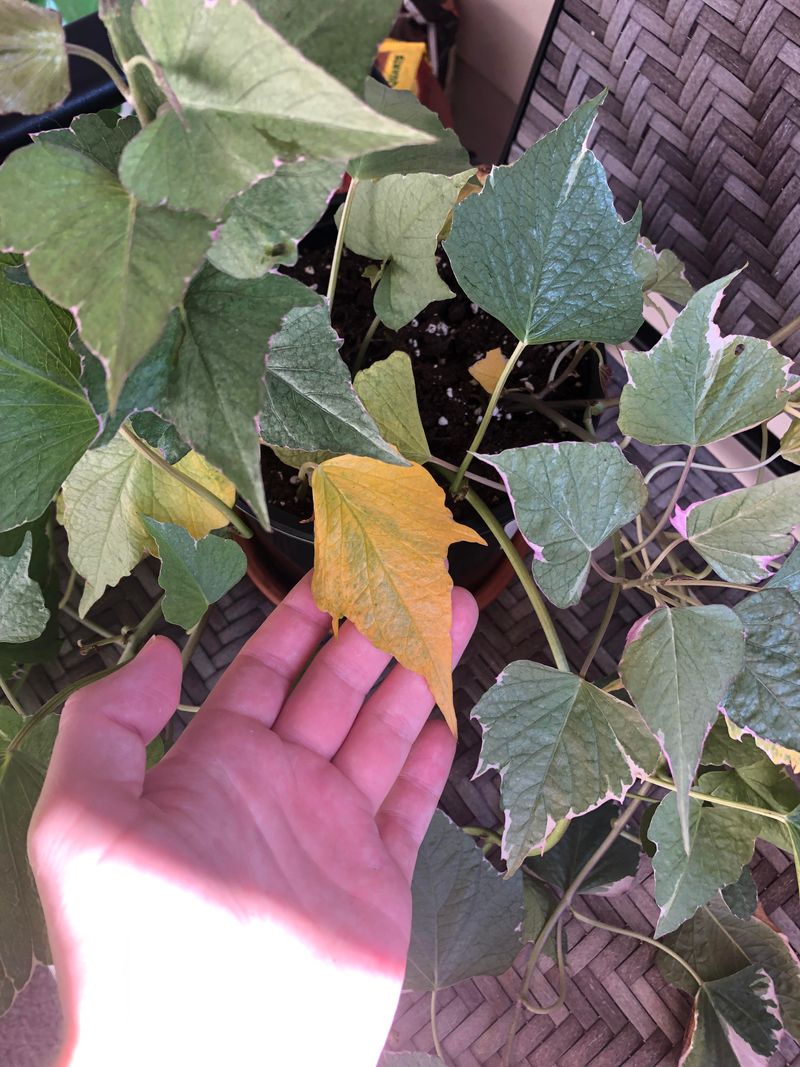
Yellow leaves are like a note your plant leaves you, but the message can say very different things. According to University of Georgia Extension, sweet potato foliage naturally begins fading as the season winds down and the roots finish growing underground.
Not every yellow leaf points to trouble, though. Disease, nutrient shortages, and water stress can all paint leaves yellow too. That is why looking at the whole picture matters more than reacting to one dull-looking vine.
Think about timing first. If your plants have been growing for their full season and cooler weather has arrived, gentle yellowing is usually just the plant slowing down as it stores energy in the tubers.
On the other hand, yellow patches showing up in midsummer, spreading unevenly, or coming with spots and wilting often signal a problem you need to investigate. Fungal issues and low nitrogen can both cause pale, sickly foliage.
Water plays a role as well, which we will cover soon. For now, remember that color alone is not proof your harvest is ready.
The best approach is to slow down and gather clues. Check your calendar, feel the soil, and look closely at the leaves and stems.
By treating yellowing as a starting point rather than a final answer, you protect your crop and avoid digging too early. Careful observation beats guessing every single time in the garden.
2. Check Harvest Timing Before Digging
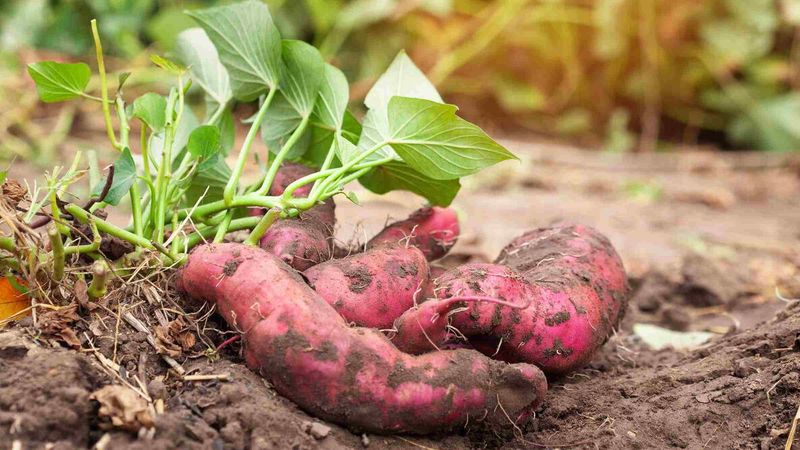
Before you grab a shovel, grab your planting notes. UGA Extension explains that most sweet potato varieties need roughly 90 to 120 days from transplanting to reach harvest size, so your calendar is a powerful tool.
Count the days from when you set your slips into the ground. If you planted in late spring, many Georgia gardens hit that maturity window in early to mid fall.
Matching the calendar with what you see on the vines gives you a much clearer answer than color by itself. Yellowing that appears right around the days-to-maturity mark lines up nicely with natural decline.
Your Georgia Garden Changes Every Week. Your Plan Should Too.
Gardening in Georgia changes quickly throughout the season. Every Friday you’ll receive a simple weekly plan showing exactly what to plant, prune, fertilize, harvest, and protect so you never miss the right timing.
Yellow leaves that show up long before that window, however, usually mean stress rather than ripeness. In that case, digging early could leave you with small, disappointing roots.
Write down your variety name too, since Beauregard, Covington, and others each have slightly different timelines. Keeping a simple garden journal saves a lot of guesswork next season.
Weather matters as well. A cool snap can nudge vines toward fading faster, while a warm, wet stretch may keep them green longer than expected.
Use the calendar as your anchor, then let vine appearance and a test dig confirm the story. Combining these signals is the surest path to a good haul.
Rushing rarely rewards you here, so let time and evidence guide your shovel.
3. Look For Water Stress Signs
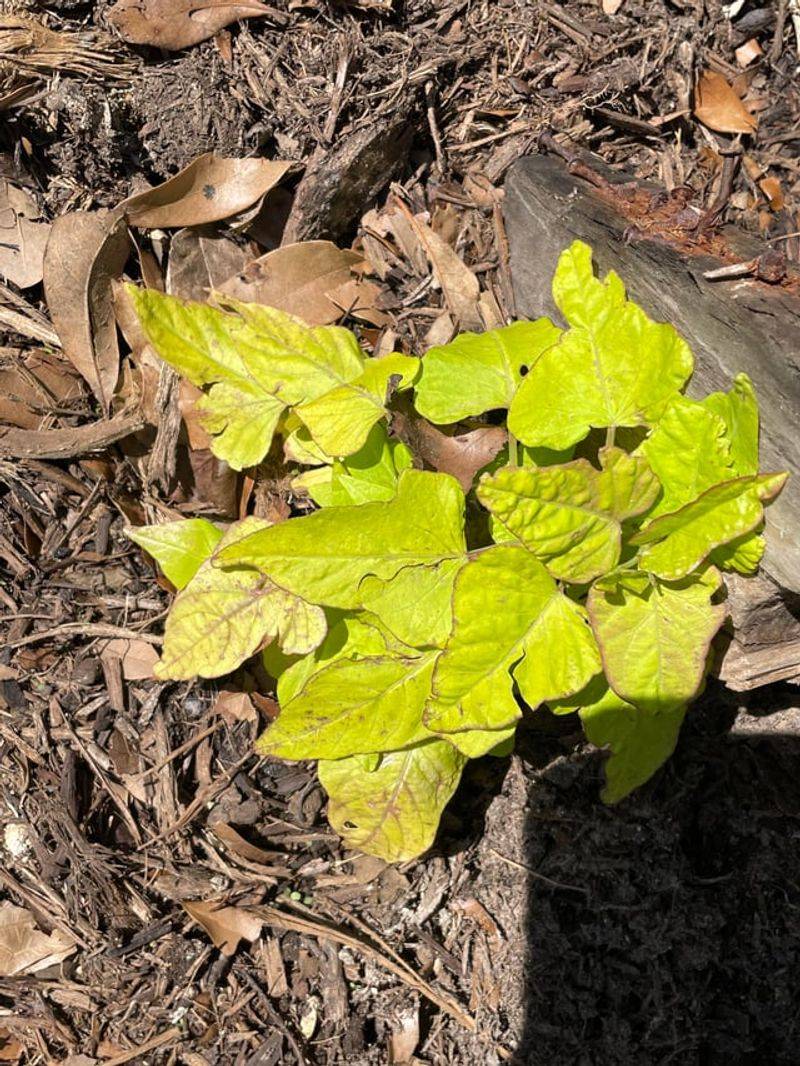
Water is a sneaky culprit when leaves start looking off. Both too little and too much moisture can turn foliage yellow, and telling them apart saves your crop.
When the soil goes bone dry, the plant cannot pull nutrients up properly, so leaves may yellow, curl, and feel crispy. You might also notice the vines drooping during the hottest part of the day.
Overwatering causes a different look. Soggy soil starves roots of oxygen, leading to soft, pale, yellow leaves that can drop even while the ground stays wet.
A quick finger test helps a lot. Push your finger a couple inches into the soil; if it feels dust-dry deep down, your plants need a drink, while mud that clings signals too much water.
Georgia summers can swing from drought to heavy afternoon storms, so conditions change fast. Watching the weather alongside your soil keeps you ahead of stress.
Consistent, moderate watering usually keeps sweet potatoes happiest. They prefer soil that stays lightly moist rather than swinging between flooded and parched.
If you spot water-related yellowing, adjust your routine before assuming the plant is finished. Fixing the moisture may bring the vines back to healthy green.
Distinguishing water stress from normal fading matters because one calls for a change in care, while the other simply means the season is closing. Read the clues carefully and respond.
4. Identify Normal Late Season Changes
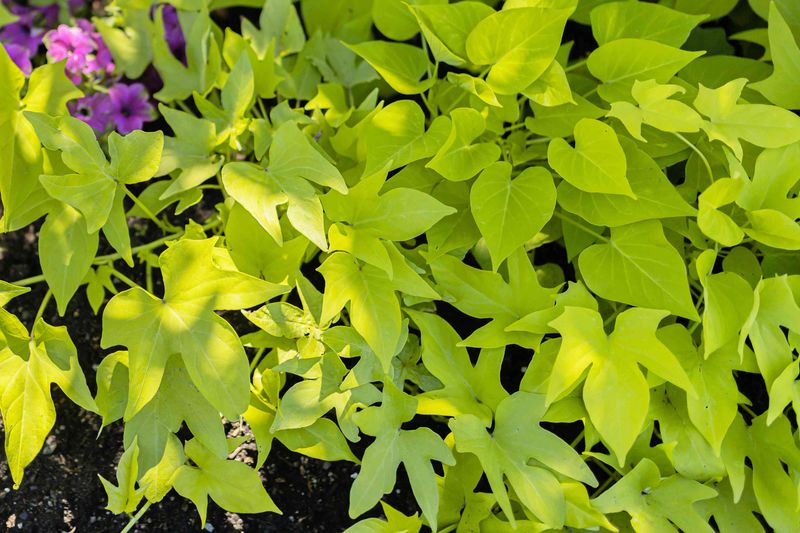
Some yellowing is completely expected and nothing to worry about. As the growing season closes, sweet potato vines naturally begin fading, and that gentle decline is a normal part of the plant’s life cycle.
During this stage, the plant moves its stored energy down into the roots. Leaves gradually lose their deep green, thin out, and soften as the tubers below plump up.
UGA Extension notes that cooler fall temperatures often trigger this slowdown. The change tends to spread evenly across the plant rather than showing up in sudden, spotty patches.
Healthy late-season decline usually looks calm and steady. You will not see mushy stems, oozing spots, or a foul smell, which are hints of disease instead.
Think of it like trees losing color in autumn. The plant is simply preparing to rest after a long, productive summer.
Even so, fading vines are only one clue and not a green light on their own. Pairing this appearance with your calendar keeps you honest about readiness.
If the vines are declining right on schedule and the weather has turned cool, you are likely close to harvest time. That is exactly when a test dig becomes your best friend.
Recognizing harmless changes helps you relax instead of panicking over every pale leaf. Knowing what normal looks like makes spotting real trouble much easier, and it keeps your harvest decisions grounded in real evidence.
5. Inspect Roots Before Harvest Decisions
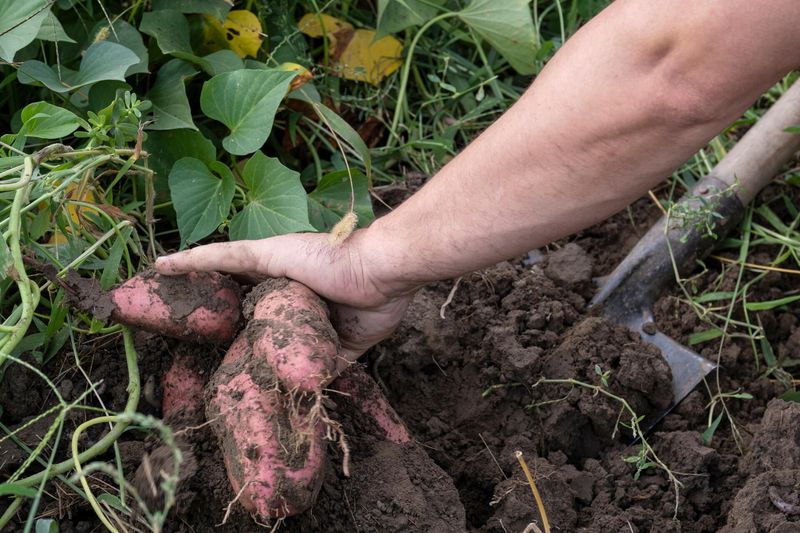
Here is the single most reliable move you can make: dig a test hole. UGA Extension recommends checking a plant or two before committing to a full harvest, because the roots tell the real story.
Pick one plant near the edge of your bed. Using your hands or a garden fork, gently loosen the soil around the base and lift out a few tubers.
Look at their size and shape closely. If the sweet potatoes are plump and a good eating size, your patch is likely ready for the main dig.
Small, skinny roots are a sign to wait a bit longer, weather permitting. Giving them extra time can turn tiny nubs into satisfying, full-sized potatoes.
Handle everything carefully during this check. Sweet potato skins are thin and bruise easily, so rough digging can damage what you find.
A test dig also lets you spot hidden problems like rot, pests, or cracking that leaves alone cannot reveal. Catching trouble early helps you decide whether to harvest now or address the issue.
Combining the test dig with your calendar and vine appearance gives you three solid data points. Together they beat relying on leaf color alone every time.
Do not skip this step just because the vines look ready. A quick peek underground removes the guesswork and protects the crop you worked all season to grow.
6. Avoid Overwatering Near Harvest Time
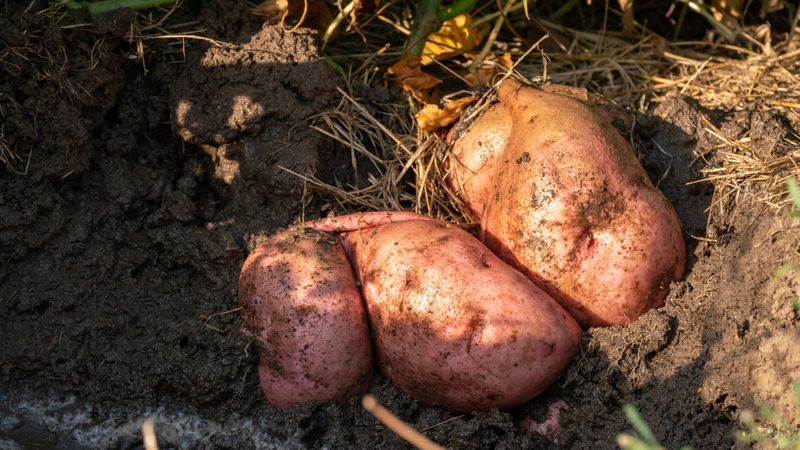
As harvest approaches, less can truly be more when it comes to water. Piling on moisture in the final weeks can hurt the very tubers you are hoping to enjoy.
Too much water close to digging can cause roots to crack or split as they swell quickly. It can also make the flesh watery, which affects both flavor and texture.
Excess moisture invites rot as well. Soggy soil around mature tubers creates a welcoming home for fungus and bacteria that shorten storage life.
USDA guidance on sweet potato production points to careful water management for quality and good keeping ability. Cutting back gradually as the season ends supports firmer, longer-lasting roots.
In Georgia, late-season storms can undo your careful watering habits. When heavy rain is in the forecast, there is little you can do except make sure your beds drain well.
Raised beds and loose, sandy soil help extra water move away from the tubers. Good drainage is one of the best defenses against harvest-time waterlogging.
Try easing off irrigation in the last week or two before you plan to dig. Slightly drier soil also makes lifting the roots cleaner and gentler.
Managing water at the finish line protects all your earlier hard work. A little restraint now rewards you with sweet potatoes that store well and taste great through the coming months ahead.
7. Protect Tubers During Final Growth
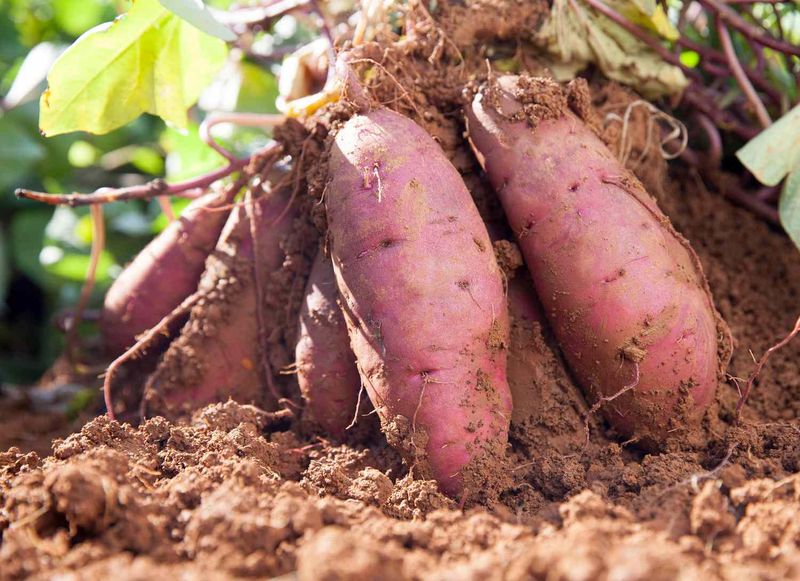
The last few weeks of growth are a delicate stretch for your buried crop. Sweet potatoes keep sizing up underground, and rough treatment now can leave scars that follow them into storage.
Try to keep foot traffic and heavy digging away from the bed. Compacted soil and careless poking can bruise tubers before you ever pull them out.
When you do that test dig, work slowly and gently. Loosening soil with your hands or a fork, rather than stabbing straight down, helps you avoid slicing into the roots.
Skin at this stage is still tender and easily nicked. Even small cuts create entry points for rot once the potatoes go into storage.
Mulch can offer a helpful buffer. A light layer keeps soil temperature steady and shields shallow tubers from sudden weather swings common in Georgia falls.
Keep an eye out for exposed roots too. If any sweet potato shoulders poke above the soil, cover them so sunlight and pests cannot damage them.
Watch for the first sign of frost as well, since cold can injure both vines and the roots near the surface. Harvesting before a hard freeze protects your crop.
Treating these final weeks with a gentle touch pays off big. Undamaged, carefully grown tubers cure better, store longer, and reward all the patience you have shown throughout the entire season.
8. Know When Sweet Potatoes Are Ready
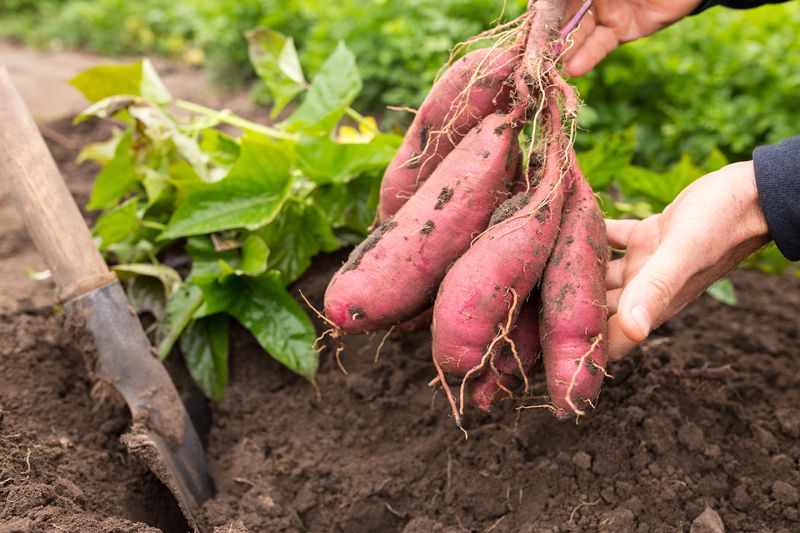
Putting it all together makes the harvest decision simple and confident. Rather than trusting one clue, lean on three signals working as a team.
Start with days to maturity. Check your planting date and variety, and confirm your plants have had their full 90 to 120 days as UGA Extension suggests.
Next, read the vines. Gentle, even fading that matches your calendar supports the idea that the roots have finished sizing up below the surface.
Then comes the deciding step, the test dig. Lifting a plant or two shows you whether the tubers are plump and ready or need a little more time.
Weather rounds out the checklist. In Georgia, aim to harvest before the first hard frost, since cold soil can damage roots and ruin storage quality.
Here is your quick recap: confirm the calendar, watch for natural decline, dig a test plant, and beat the frost. When those line up, grab your fork with confidence.
Remember that yellow leaves alone never give you the full answer. They open the conversation, but the calendar and the roots finish it.
After harvesting, cure your sweet potatoes in a warm, humid spot for about a week to boost sweetness and shelf life. That final touch turns a good dig into a great pantry.
Trust the evidence, and your Georgia harvest will reward the care you gave it.