Garden Spiders Are Building Webs Across Georgia Porches And That’s A Good Sign
That giant web across your porch can look like a problem, especially when it stretches across a spot you use daily. Before grabbing the broom, take a closer look.
Garden spiders choose these spaces for a reason, and their presence can reveal useful yard activity.
Once the web catches your attention, the spider itself may seem harder to ignore. Its size and bold markings can make the setup look more alarming than it is.
That first impression is why so many webs get cleared away before homeowners understand what is happening.
In Georgia, these porch visitors can play a helpful role around gardens and outdoor spaces. Give them room before deciding they need to go.
Knowing what they are doing may completely change how you see that web tomorrow.
1. Those Large Porch Webs Did Not Appear Overnight
Size is the giveaway. That spider filling your porch corner has been growing since spring, quietly and mostly out of sight.
Garden spiders hatch small. Spiderlings emerge in warm weather and spend months eating tiny insects, molting as they outgrow their skin.
Most of that growth happens in shrubs, tall grass, and garden beds where nobody notices them.
By August, the female has reached full size. Her web is wide, her body is bold black and yellow, and suddenly she looks like she teleported in.
She did not. She was in your yard the whole time.
The web itself is rebuilt often, sometimes daily. Orb weavers commonly eat the old silk and spin a fresh one, which is why a web can vanish and reappear in the same spot.
That rebuilding habit explains a lot of confusion. People sweep a web down at night and find a new one by morning, assuming a fresh spider moved in.
Usually it is the same resident, doing routine maintenance.
Across Georgia, this pattern lines up with the growing season. Warm months mean steady insect activity, and steady insects mean a spider can afford to invest energy in a big web.
So the sudden appearance is really just the final chapter. Months of slow growth happened first, in the mulch and hedges you walk past every day.
2. Late Summer Is When Garden Spiders Become Hard To Miss
August through October is prime spider season in the South. That timing is not random.
Female orb weavers reach maturity late in the year. Bigger bodies need bigger webs, and bigger webs are impossible to overlook.
Males are much smaller and often go unnoticed entirely.
Insect numbers also peak in the same stretch. Gnats, moths, beetles, and flies are everywhere, giving spiders plenty of reason to set up in busy spots.
A porch happens to be one of the busiest.
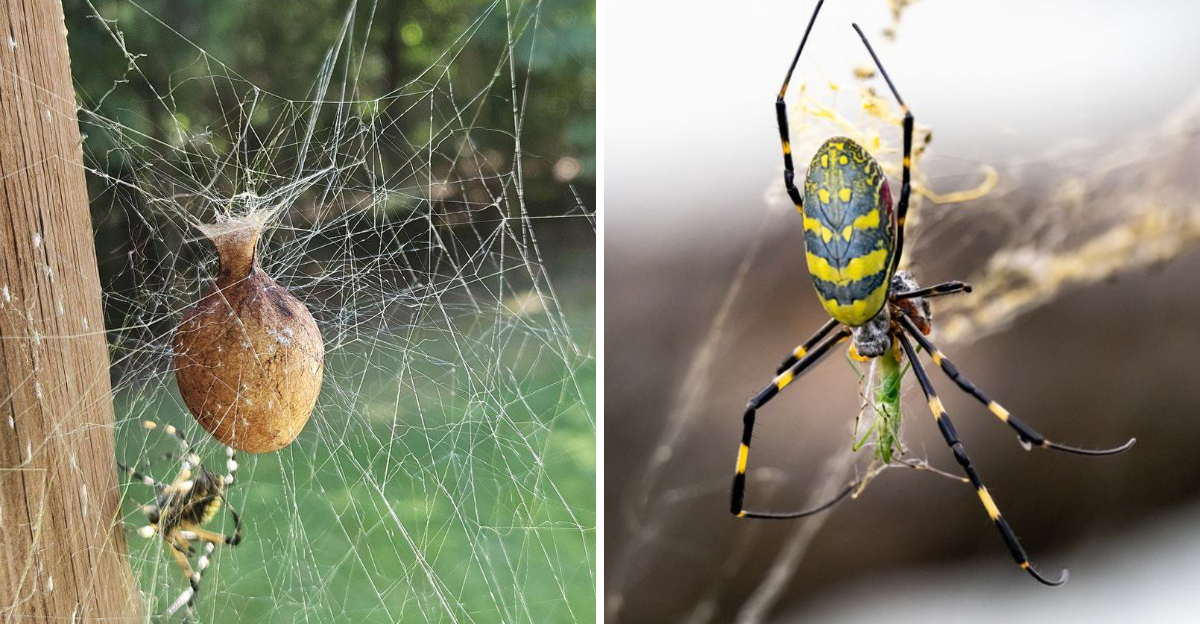
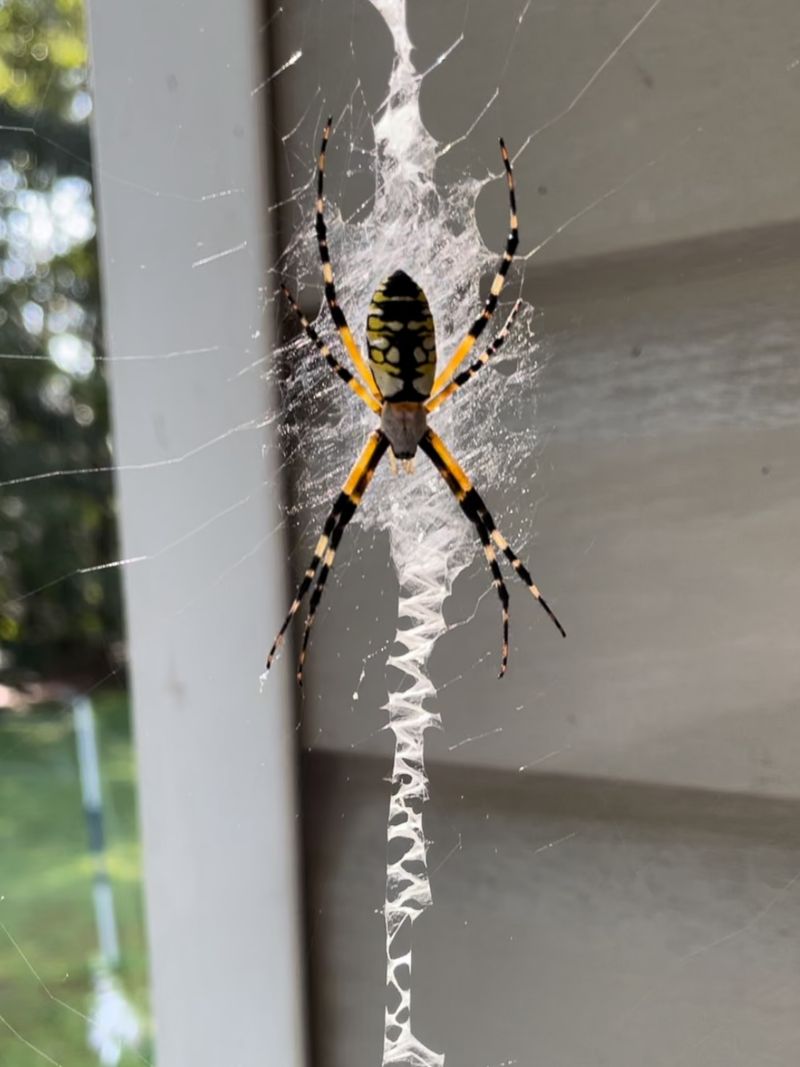
Yellow garden spiders often add a thick zigzag of silk down the center of the web. That band is called a stabilimentum.
Ideas differ on its purpose. Some suggest it warns birds away from flying through, others think it affects how prey sees the web, and it may serve more than one function.
Your Georgia Garden Changes Every Week. Your Plan Should Too.
Gardening in Georgia changes quickly throughout the season. Every Friday you’ll receive a simple weekly plan showing exactly what to plant, prune, fertilize, harvest, and protect so you never miss the right timing.
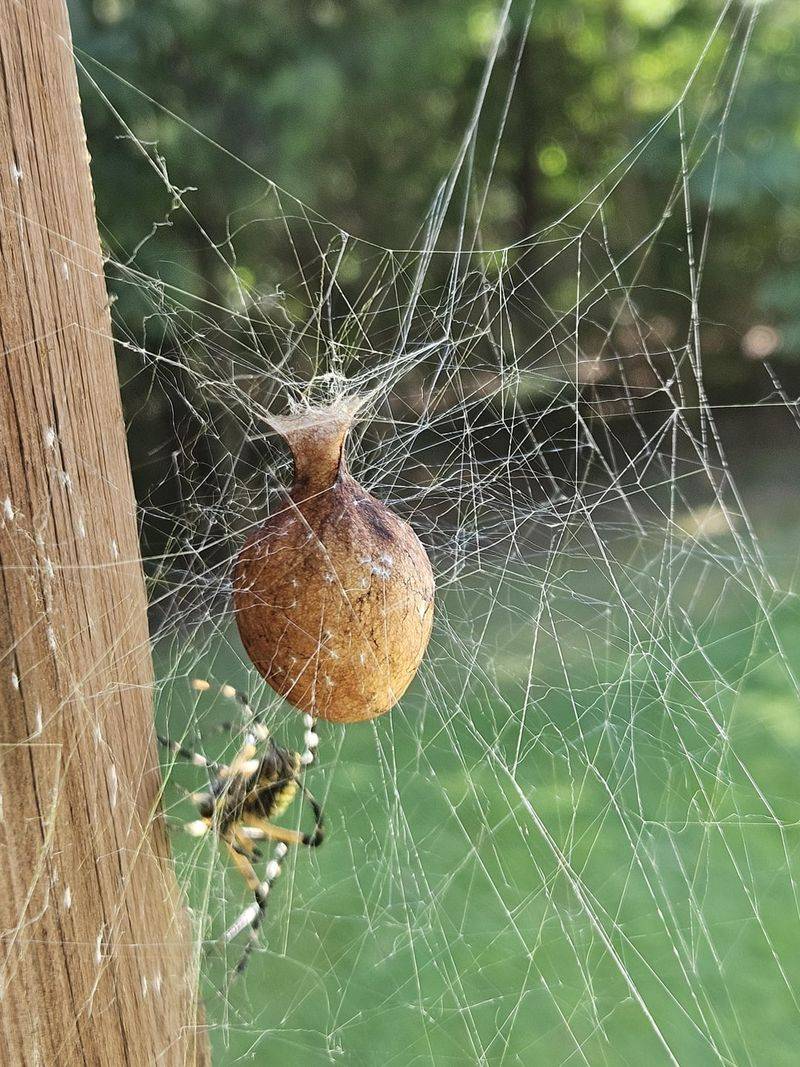
Egg sacs show up in this season too. Females produce papery brown sacs, often tucked near the web or under an eave.
Cooler weather ends the adult season. Most garden spiders in Georgia do not survive hard frost, though the eggs inside those sacs carry the next generation forward.
That short adult window matters if you are deciding whether to remove a web. The spider on your railing in September is not a long-term tenant.
She has weeks, not years, in that corner.
3. Porch Lights Can Turn Webs Into Productive Hunting Spots
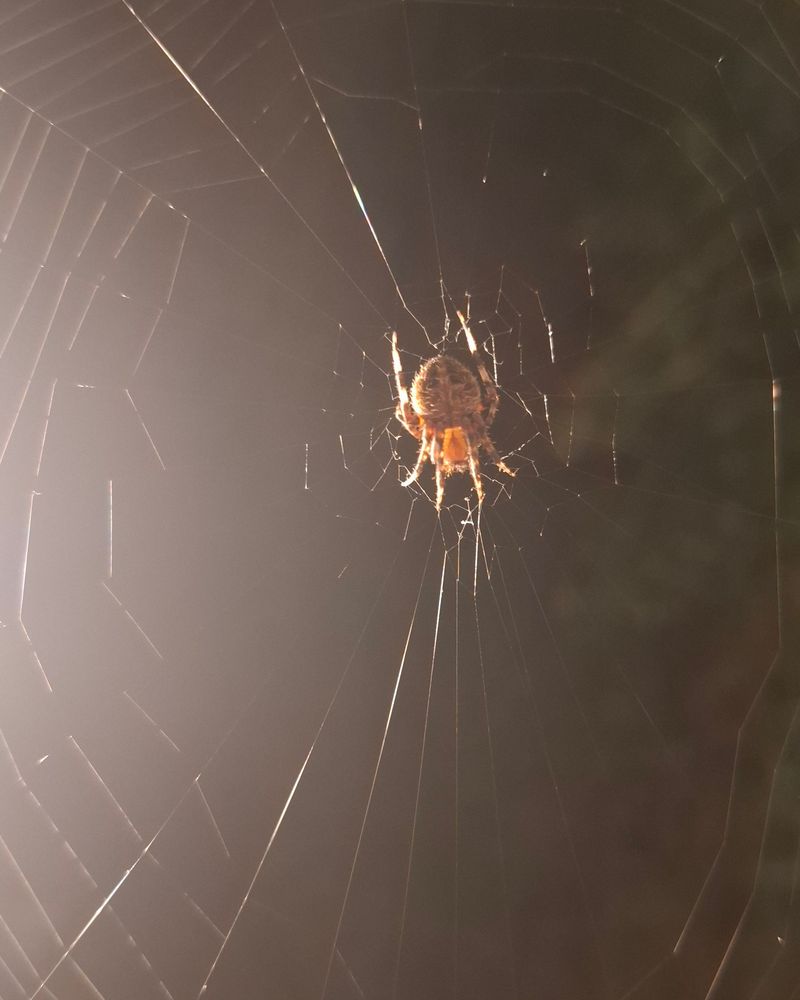
Follow the bugs and you find the spiders. Porch lights pull in moths, midges, and beetles after dark, and orb weavers know a good thing when they find it.
Web placement near lighting is common. A spider that spins beside a bright fixture gets deliveries all night.
That is why the biggest webs often sit right by the door.
Warm white and yellow bulbs tend to attract fewer flying insects than harsh white ones. Swapping a bulb can shift the whole scene.
Fewer moths at the light usually means fewer spiders setting up nearby.
Motion sensors help too. Lights that stay off most of the night do not build up the same insect crowd.
Neither change works perfectly. Weather, nearby water, and how much vegetation surrounds the house all play a role in insect pressure.
Georgia homes with wooded lots or standing water close by tend to see more activity no matter what bulb is installed.
Some people go the other direction on purpose. They keep one light on to draw insects toward a corner spider and away from seating areas.
Results vary, and there is no guarantee, but the logic holds.
Worth noting: a web at a porch light is not a sign of a dirty house. Bright bulbs and warm nights explain it just fine.
4. These Web Builders Help Catch Insects Around The Landscape
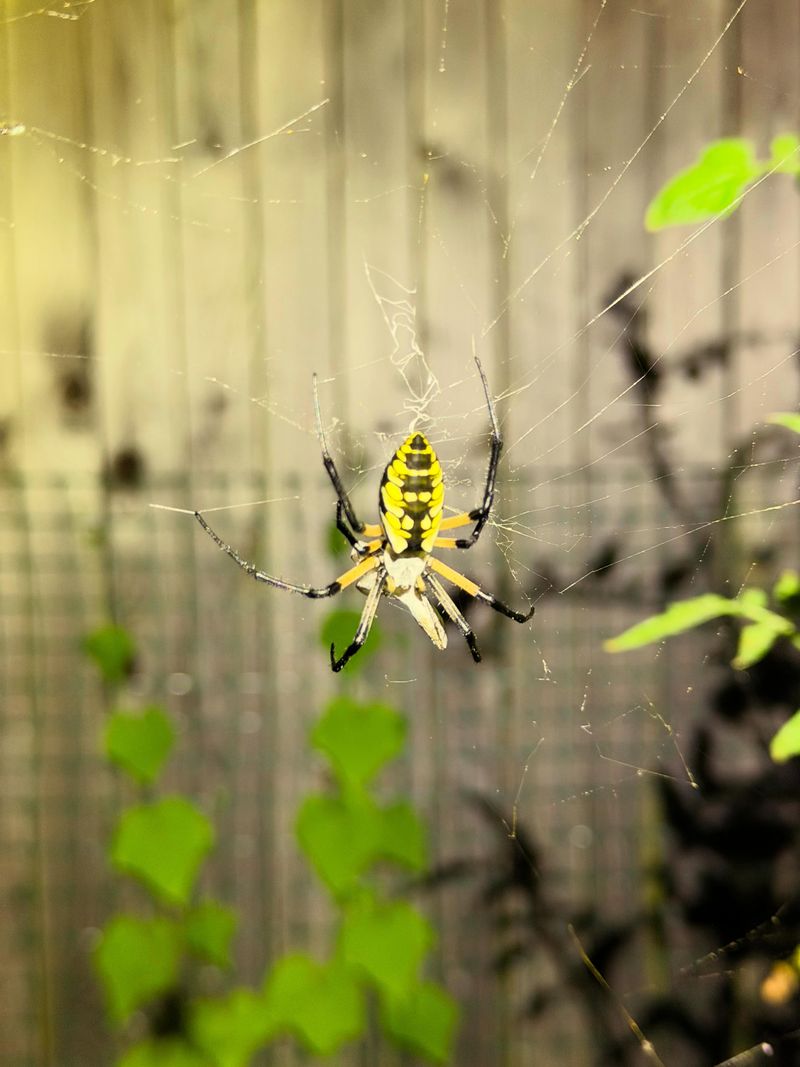
Free pest patrol, no batteries required. Orb weavers eat what flies into them, and that list includes plenty of insects gardeners would rather not host.
Mosquitoes, flies, moths, and small beetles all end up in webs. A large female can work through a steady load during peak season.
She does not choose her prey. Whatever hits the silk gets wrapped.
That means pollinators occasionally get caught too. Honeybees and small wasps are not exempt.
Spiders are not selective, so calling them purely beneficial oversells it.
Still, the overall effect on a yard tends to lean positive. Predators like these are part of a functioning food web, and their presence suggests insect life is abundant enough to support them.
Birds notice as well. Some songbirds gather old web silk for nest building in spring.
Broad pesticide spraying cuts both ways. Knock out the insect population and the spiders leave or fail to thrive, which removes a natural check on the pests that bounce back first.
Gardeners across Georgia often see more orb weavers in yards with native plantings and less spraying. That connection is not a coincidence.
Diverse plants support diverse insects, and diverse insects support predators.
None of this replaces good garden practice. Think of the spider as one helper among many, not a solution on its own.
5. Several Orb Weavers May Be Behind Those Impressive Webs
Not every big web belongs to the same spider. Several orb weaver species share porches in the Southeast, and they look nothing alike.
Yellow garden spiders are the famous ones. Bold black and yellow markings, wide webs, and that signature silk zigzag.
Spiny orb weavers are much smaller and crablike, white with red or black spines.
Those tiny ones string webs across walkways at face height. Anyone who mows around shrubs has walked through a few.
Marbled orb weavers bring orange and cream patterning. They tend to hide in a rolled leaf beside the web rather than sitting in the middle.
Then there are the large brown spotted orb weavers that only spin after dark.
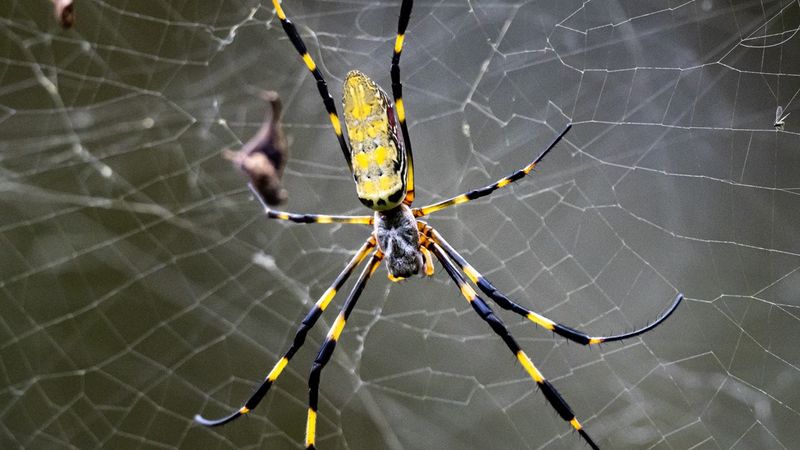
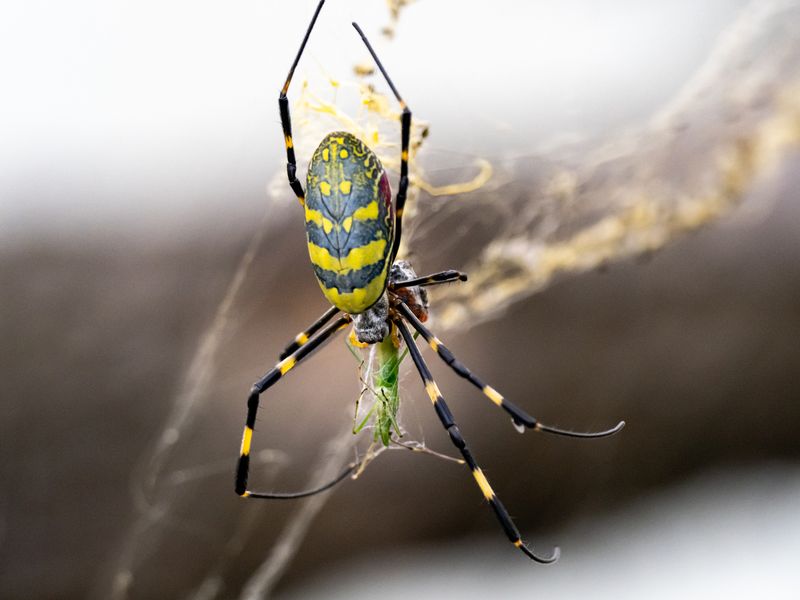
Joro spiders have spread widely through north Georgia in recent years. Bright yellow and blue-black, with golden silk and webs that can span several feet.
Identification helps you set expectations. A spiny orb weaver web is small and easy to clear, while a Joro web may need more effort.
Behavior differs too. Some species rebuild nightly, others leave a web up for days.
None of the common orb weavers here are considered medically significant to people. They bite rarely, and mostly when pinned against skin.
Learning two or three by sight makes the whole porch situation feel manageable instead of mysterious.
6. Not Every Web Needs To Stay Where A Spider Builds It
A web across the front door is a problem. Nobody should have to duck under silk carrying groceries.
Removal is fine when placement is bad. The goal is moving the spider, not clearing the yard.
A long stick works well. Lift the web edge and coax the spider onto the stick, then carry it to a shrub or fence line.
Spiders relocated a short distance usually rebuild within a night or two. Give them somewhere with cover and insect traffic.
Doorframes, grill handles, and mailbox posts are worth clearing every time.
Timing helps. Working in the morning is easier because many orb weavers are less active and sitting still.
A quick spray from the hose knocks a web down without much fuss. The spider often drops to nearby plants and starts over elsewhere.
Repeat visits are common in the same corner. Sheltered spots with good insect flow are valuable real estate.
Blocking the anchor points helps more than repeated sweeping. Trimming a branch or shifting a planter removes the frame she needs.
Homeowners around Georgia often find one or two problem spots and leave the rest alone. That approach keeps walkways clear without turning into a weekly chore.
Chemical sprays on porches are rarely necessary for orb weavers. Physical removal handles the situation with less collateral effect on other insects.
7. Leaving Out Of The Way Spiders Alone Can Benefit Your Yard
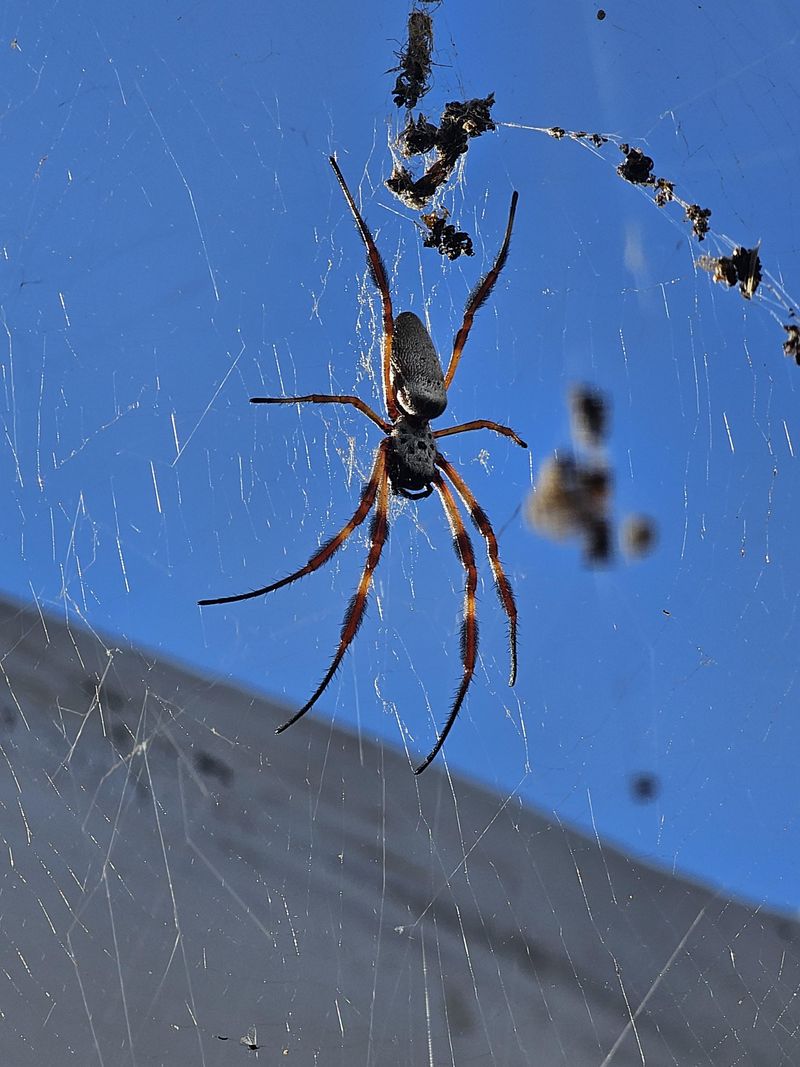
Corner webs cost you nothing. If a spider picks a spot nobody walks through, letting her stay is the easy call.
Eaves, porch corners, and gaps between railings are all low-traffic real estate. She works nights, eats bugs, and asks for nothing.
Kids often find them fascinating once the surprise wears off.
Watching one over several weeks is genuinely interesting. You see the web rebuilt, prey wrapped, and eventually an egg sac appear.
Egg sacs can be left in place or moved to a hedge if the location bothers you.
Cold weather ends the season on its own. Adult orb weavers fade out after frost, so a fall web is temporary by nature.
That takes pressure off the decision. Waiting a few weeks often solves the problem without any effort.
Yards with more plant variety tend to hold more of these spiders. Native shrubs, unsprayed beds, and a bit of leaf litter all help.
Across Georgia, homeowners who ease up on broad spraying often report more orb weavers by late summer. That shift usually comes with more birds and pollinators too.
Balance matters here. Clear the doorway, leave the quiet corners, and let the yard sort itself out.
Nobody needs a spider-free porch to have a clean home. A few webs in the right places are just part of southern living.