The Biggest Mistake To Avoid If You Spot A Joro Spider In Georgia
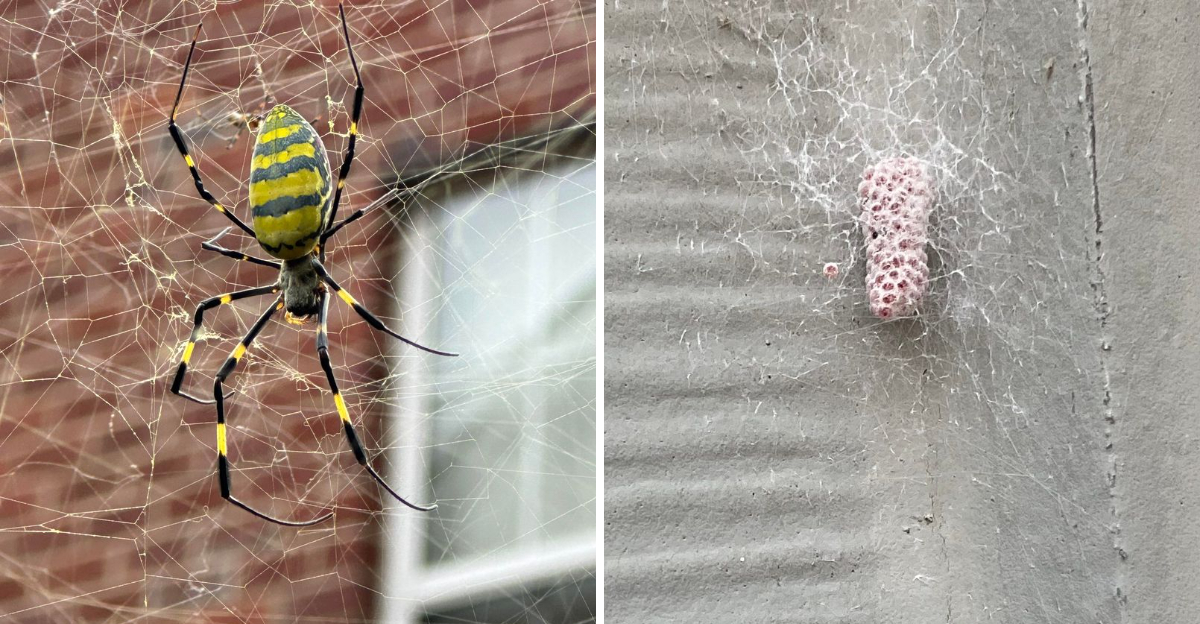
Spotting a large Joro spider can stop you in your tracks even if you’ve heard they’re becoming more common. That first reaction is understandable, but rushing to deal with it often creates more problems than the spider ever would.
Before you reach for anything, take a closer look. The biggest mistake is assuming every large web needs an immediate response.
In Georgia, Joro spiders are not considered dangerous to people, and their presence doesn’t automatically mean your yard has a serious problem.
Knowing what to do instead can save unnecessary stress and help you respond with more confidence. You’ll also avoid turning a harmless encounter into extra work that simply isn’t needed.
A few practical tips can help you decide when to leave the web alone and when action makes.
1. Removing The Spider Before Identifying It
Grabbing a spider before you know what it is might be the fastest way to make a bad situation worse. Joro spiders look intimidating, but they are not considered medically significant to humans in most documented cases.
Reacting out of fear before identifying the species can lead to unnecessary panic and poor decisions.
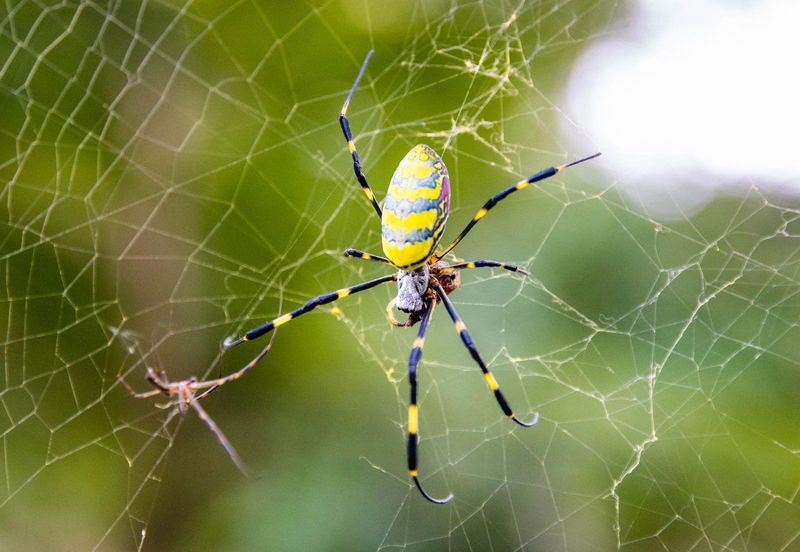
Joro spiders are large orb weavers with bold yellow, blue, and red markings on their bodies. Females can reach about three inches across including leg span.
That size alone makes people want to act fast, but slowing down and observing first is a smarter move.
Take a photo before doing anything. A quick image search or a free app like iNaturalist can confirm the species within seconds.
Misidentifying a Joro spider as something dangerous could lead to treatments or removal methods that are unnecessary and disruptive to your local ecosystem.
Joro spiders actually help reduce populations of nuisance insects like mosquitoes and stink bugs. Removing one without understanding what it is means losing that natural pest control.
Identification takes less than a minute and gives you much better information to work with before taking any action.
2. Recognize The Large Golden Orb Web
Not every big web in your yard belongs to a harmful spider. Joro spiders build some of the most striking webs you will see in a residential yard, and recognizing that web structure can help you stay calm and make smarter choices.
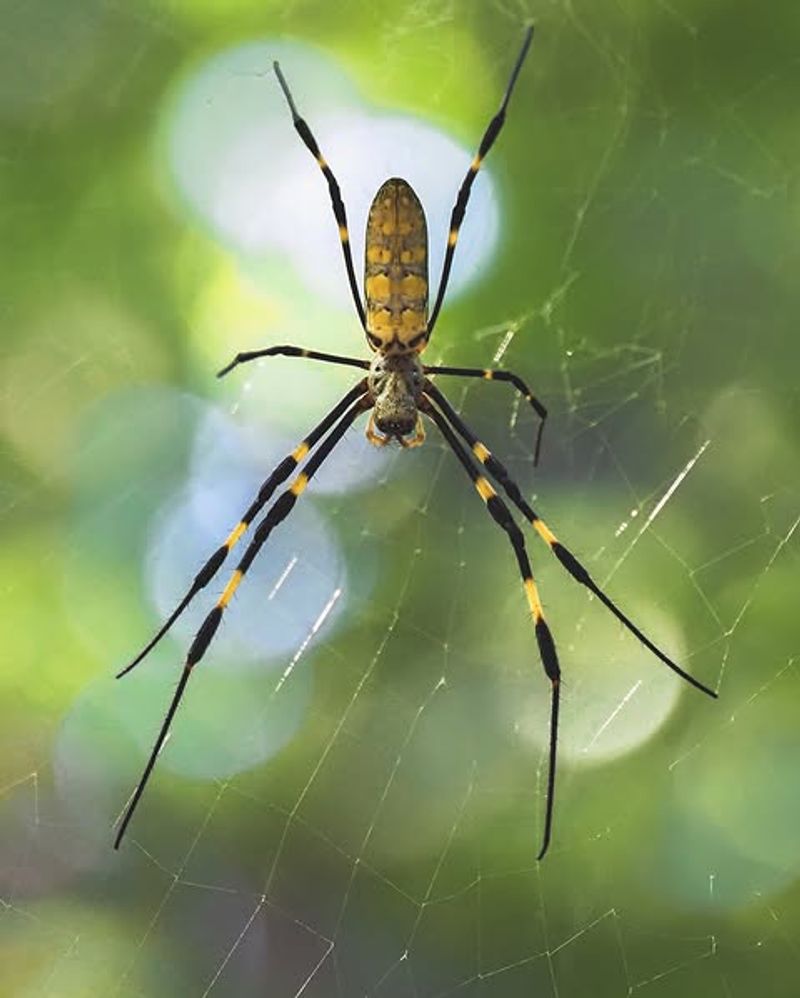
Joro webs are large, layered, and golden in color when sunlight hits them. They often span several feet between trees, fence posts, or porch railings.
Unlike flat webs, Joro webs have a three-dimensional barrier web surrounding the main spiral. That extra layer is a key detail that sets them apart from most other orb weavers in the region.
Spotting this web type early means you can plan ahead rather than react in the moment. If you see that golden, multi-layered structure appearing in late summer or early fall, a Joro spider is likely nearby.
Knowing this ahead of time removes the surprise factor entirely.
Web location matters too. Joro spiders tend to build high up, often between structures at least six feet off the ground.
Your Georgia Garden Changes Every Week. Your Plan Should Too.
Gardening in Georgia changes quickly throughout the season. Every Friday you’ll receive a simple weekly plan showing exactly what to plant, prune, fertilize, harvest, and protect so you never miss the right timing.
Webs at that height are less likely to interfere with daily foot traffic. Recognizing the web before you walk into it gives you time to step around it without disturbing the spider or its structure unnecessarily.
3. Wear Gloves While Working In Thick Shrubs
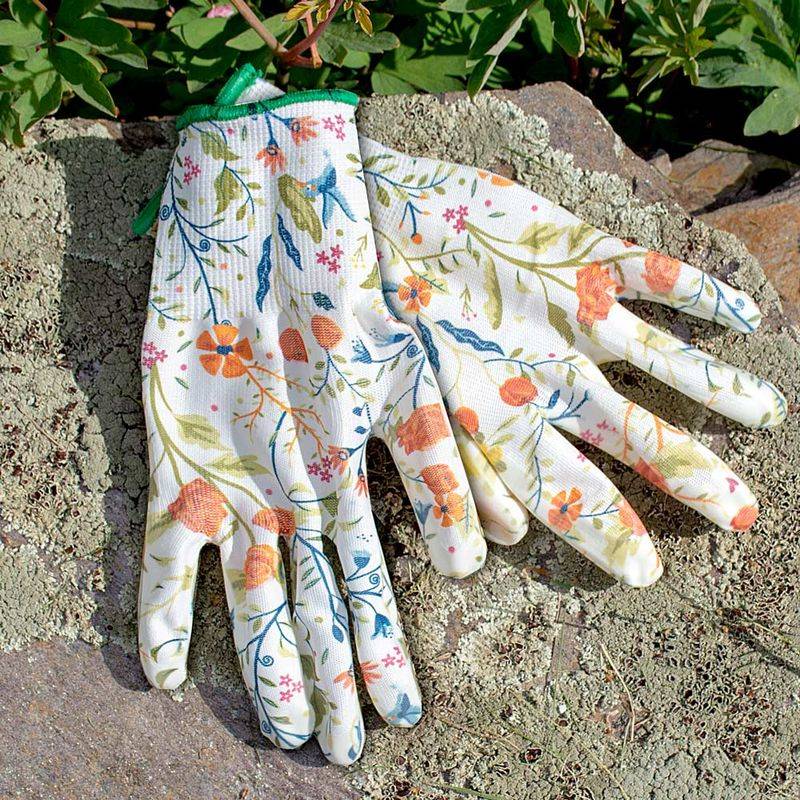
Working bare-handed in overgrown shrubs during Joro season is asking for an unpleasant surprise. These spiders tuck themselves into dense vegetation when they are not sitting at the center of their webs.
Reaching into thick growth without protection means you might brush against one unexpectedly.
Joro spiders are not aggressive biters. Most accounts suggest they prefer to retreat rather than engage.
But any spider, when pressed against skin with no escape route, may bite as a last resort. Wearing gloves eliminates most of that risk without requiring you to avoid yard work entirely.
Thick gardening gloves work well for this. Look for gloves that cover your wrist and lower forearm since webs and spiders can cling to exposed skin above the hand.
Long sleeves are also worth wearing when pruning areas where you have spotted webs recently.
Check gloves before putting them on if they have been stored in a shed or garage. Spiders sometimes take shelter inside stored gear during cooler months.
A quick shake and visual check takes only a few seconds. Simple protective habits like these make yard work much more comfortable during peak Joro season, which typically runs from late summer through early fall across much of the Southeast.
4. Prune Overgrown Plants After Webs Are Gone
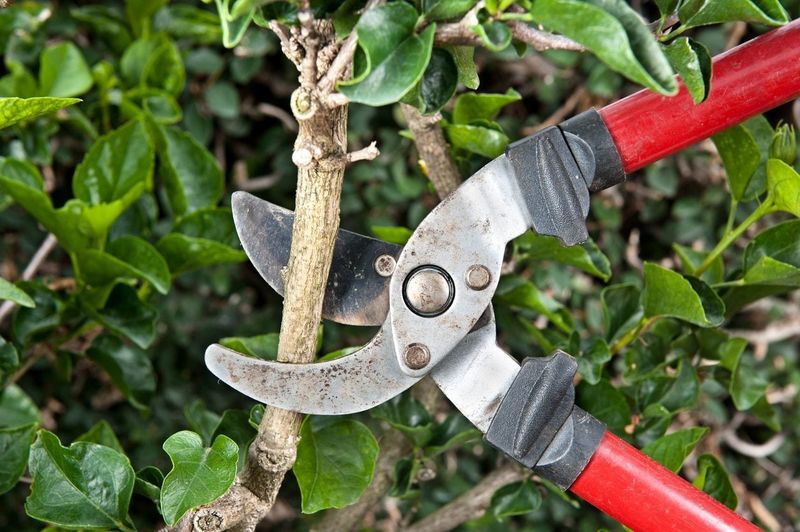
Timing your pruning sessions around Joro web activity is a small adjustment that saves a lot of frustration.
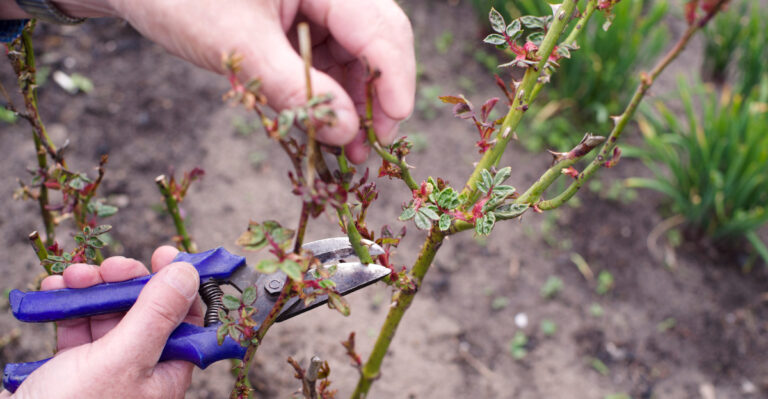
Cutting back shrubs while active webs are still present means you will likely disturb multiple spiders at once, scatter them into unpredictable locations, and end up with broken web material clinging to your tools and clothes.
Waiting until after the first frost makes the process much cleaner. Joro spiders do not survive hard freezes well, and their webs break down quickly once temperatures drop.
By late fall, most webs in your yard will have collapsed on their own, leaving clear access to the plants underneath.
Pruning after web season also gives you a clearer view of plant structure.
Thick webs in late summer can hide damaged branches, pest activity, and overgrowth that is easier to assess once the foliage and webs have both thinned out.
You get better results from the pruning session itself.
Keep an eye out for egg sacs while you work. Pruning season and egg sac removal can happen at the same time if you stay observant.
Wear gloves and check cut branches before tossing them in a pile. A few minutes of careful attention during fall cleanup can reduce the number of webs you encounter around your property the following summer.
5. Remove Egg Sacs Before They Hatch In Spring
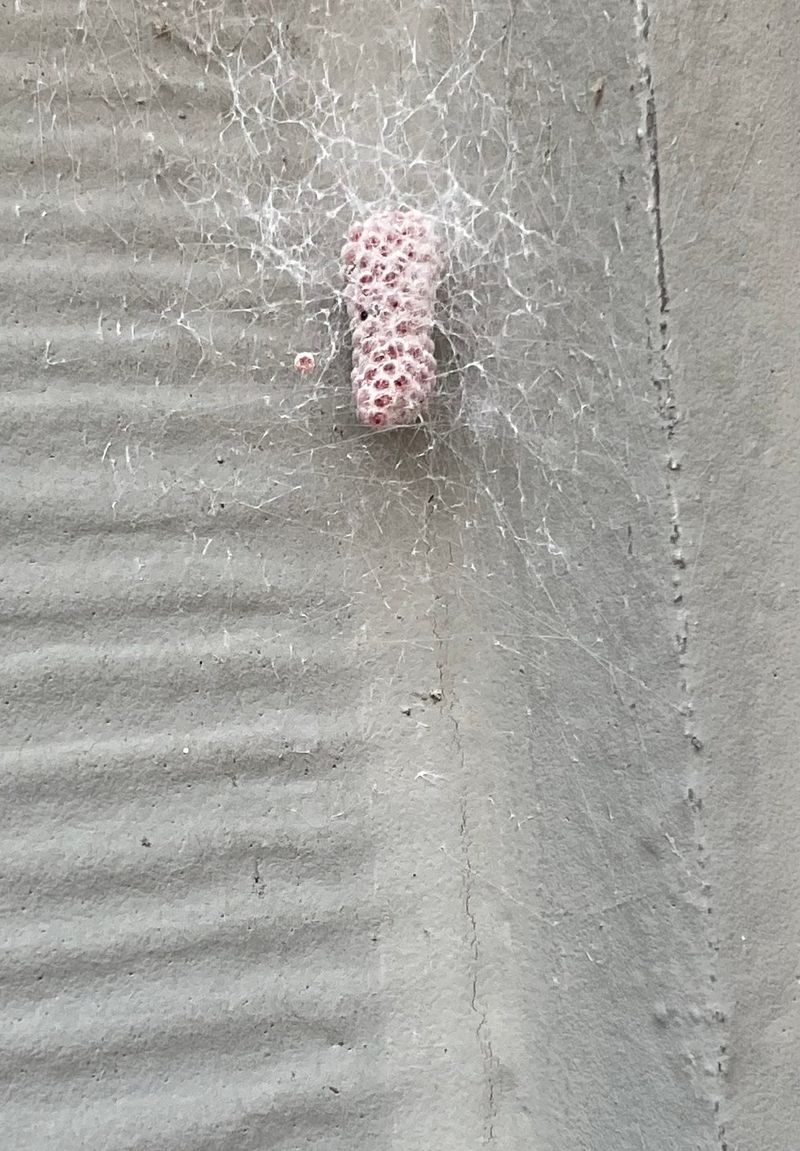
Egg sacs are easy to overlook, but missing them in fall or winter means hundreds of tiny spiders emerging right in your yard come spring.
Joro spider egg sacs are papery, off-white clusters usually found attached to fences, tree bark, or the undersides of eaves. Spotting them early gives you options.
Each egg sac can hold several hundred eggs. Spiderlings that hatch in spring often balloon, meaning they release silk threads and ride wind currents to new locations.
That is one reason Joro populations have spread so quickly across the Southeast over the past several years.
If you want to reduce the number of Joro spiders near your home next season, removing egg sacs in late fall or winter is one practical step. Use a stick or gloved hand to detach the sac and place it in a sealed bag.
Dispose of it in an outdoor bin away from structures.
Timing matters here. Egg sacs are most visible after leaves drop and webs have broken down from cooler weather.
A slow walk around your fence line, porch, and tree trunks in November or December can reveal several sacs that would otherwise go unnoticed until spring.
Consistent checks over a couple of seasons can make a noticeable difference in local web density around your home.
6. Leave Outdoor Joro Spiders Undisturbed
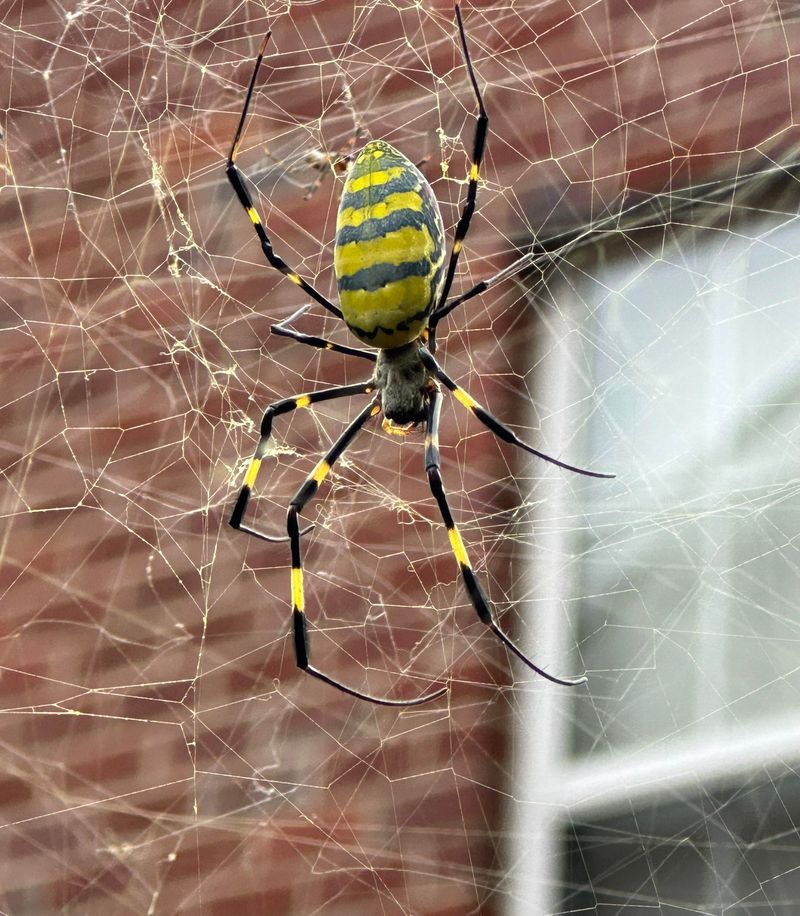
Disturbing a Joro spider that is minding its own business outside rarely ends well for anyone involved. When threatened, these spiders may drop from their web and scatter, which can cause more chaos than simply leaving them alone.
Letting outdoor Joro spiders stay where they are is usually the most practical choice.
Joro spiders are seasonal. They appear in late summer and are typically gone by the first hard frost.
That window is relatively short, and during that time they are actively reducing insect populations in your yard. Mosquitoes, flies, and stink bugs are among the insects commonly caught in their webs.
Outdoor spiders pose little direct threat to people going about normal activities. Webs built high between structures are easy to walk around.
Webs in low-traffic areas like garden corners or tree lines can be left completely alone without any impact on your routine.
Relocating a Joro spider is possible if one builds a web in a genuinely inconvenient spot, like directly across a walkway. Use a long stick to guide the spider to a nearby shrub or tree.
Avoid touching it directly. Relocation works best in the morning when the spider is less active.
Across Georgia and neighboring states, wildlife experts generally encourage a hands-off approach whenever possible.
7. Reduce Flying Insects Around Porches At Night
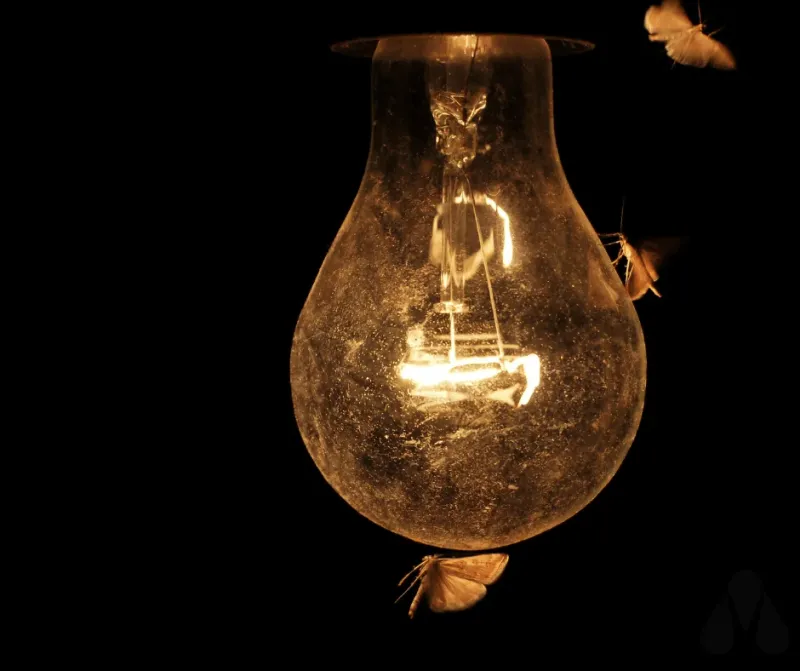
Bright porch lights are one of the main reasons Joro spiders set up webs near your home. Flying insects flock to outdoor lights at night, and spiders quickly learn that those spots offer a reliable food source.
Cutting down on that insect activity is one of the more effective ways to make your porch less attractive to web-building spiders.
Switching to warm amber LED bulbs or yellow bug lights can reduce the number of insects drawn to your porch each evening.
Standard white or blue-toned lights attract significantly more flying insects than warmer spectrum bulbs.
That single swap can make a noticeable difference in web activity near entryways over a few weeks.
Motion-activated lights are another option worth considering. Lights that only turn on when needed limit the total time insects are attracted to any one spot.
Less consistent light means fewer insects gathering, which means fewer reasons for a spider to anchor a web nearby.
Fixing torn window screens and sealing gaps around door frames also helps reduce the flying insect population immediately around your porch.
ewer insects at the source means less food available for spiders in that zone.
Across the Southeast, simple lighting changes combined with basic home maintenance have helped many homeowners reduce the number of webs appearing near their front and back doors each season.