Can Creeping Thyme Replace Arizona Lawn Grass? What Homeowners Should Know First
Replacing thirsty grass with something that needs less water sounds like a dream for any Arizona homeowner staring at a summer water bill. Creeping thyme keeps showing up in online searches and social posts as a low-water lawn alternative, and the idea is genuinely worth exploring.
But before you start pulling up Bermuda grass and ordering flats of thyme, there are real limits to what this plant can do in Arizona’s desert heat that most articles skip right over.
Arizona Turf Conversion Can Save Water, but Thyme Is Not the Savings Proof
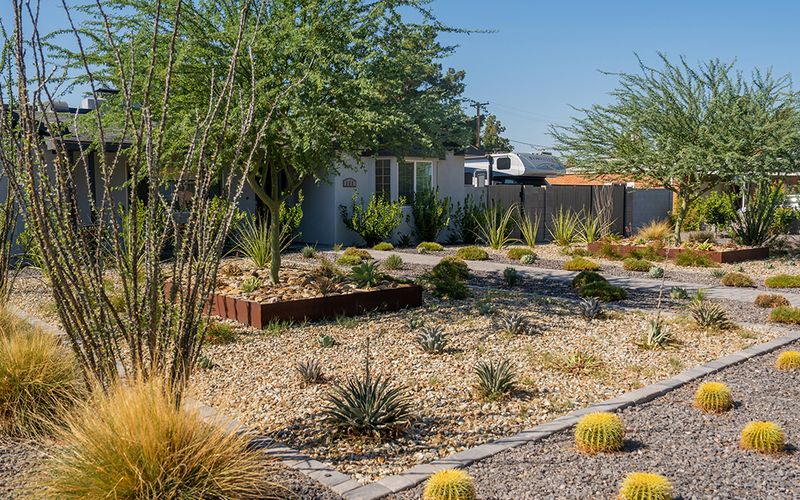
Plenty of Arizona homeowners are replacing ornamental grass with lower-water landscapes, and the water savings from doing so can be real and significant. University of Arizona estimates that Bermuda turf with winter overseeding in the low desert may require more than 55 inches of irrigation annually, while an average xeriscape requires less than 18 inches.
Those are landscape-level figures, not measurements tied to any one plant, and they reflect the full design of a water-wise yard rather than a single ground cover swap.
The amount of water saved in Arizona depends heavily on what replaces the grass. A dense, continuously irrigated living carpet, including one made of creeping thyme, can use considerably more water than a diverse xeriscape with spaced shrubs, mulch, and passive rainwater strategies.
How much a homeowner actually saves depends on the replacement design, plant density, irrigation system, soil, and management habits, not on the plant name alone.
What the evidence does support clearly is that converting ornamental turf in Arizona to a well-planned, water-wise landscape reduces irrigation and maintenance. Creeping thyme may have a place in that kind of landscape as one component, particularly in small or lightly used areas.
But no reliable Arizona source documents a broad homeowner trend of replacing grass specifically with creeping thyme, and the plant itself is not the reason turf conversion saves water. The savings come from the overall design, not from any single species.
Creeping Thyme Works Better as a Selective Ground Cover Than a Universal Lawn
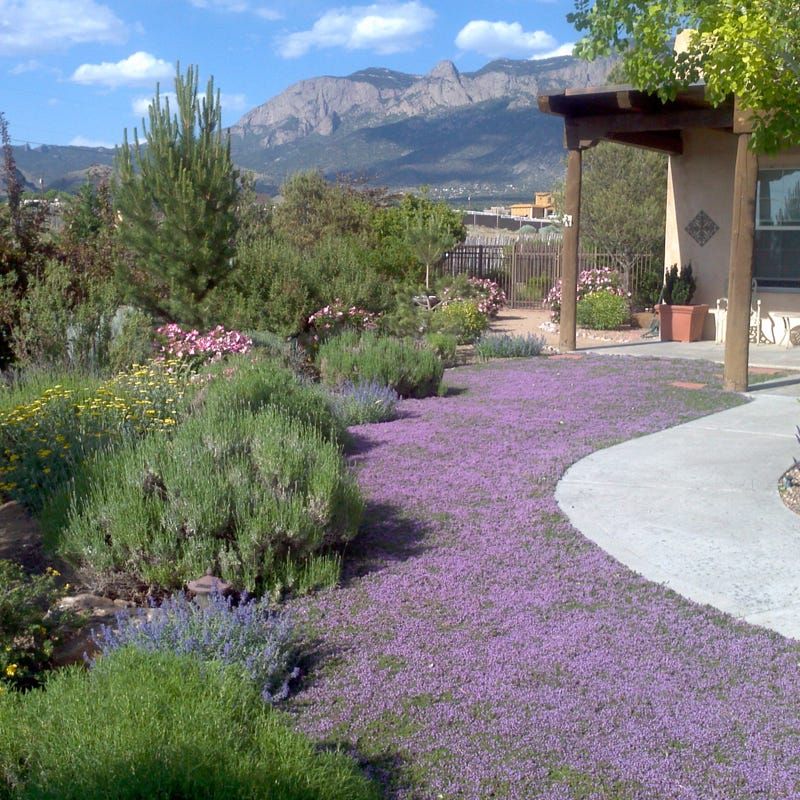
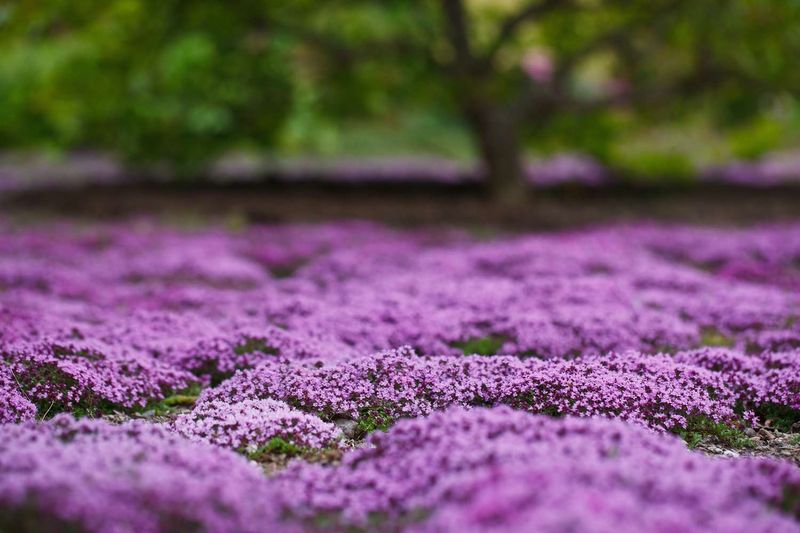
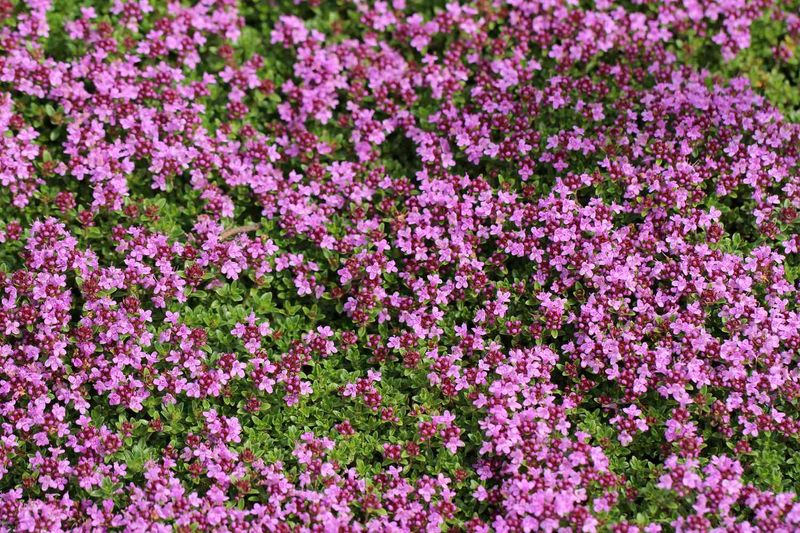
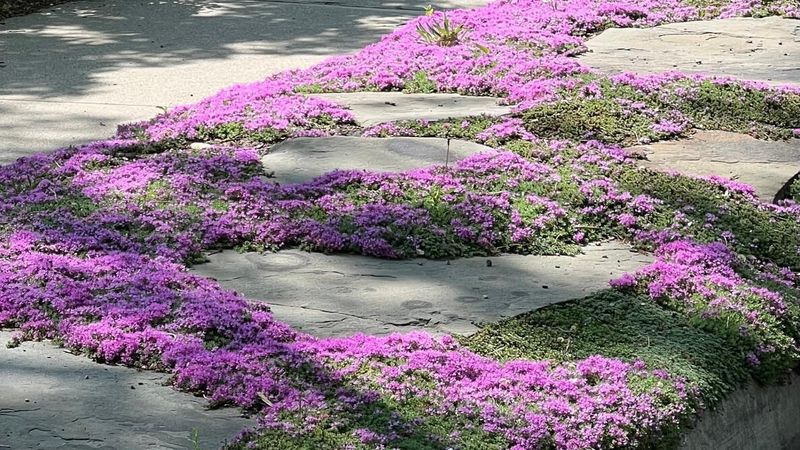
Creeping thyme is a low-growing plant, typically reaching just 1 to 3 inches tall, with white to rose-colored flowers and a spreading habit that makes it attractive for filling gaps between pavers or softening the edges of a pathway. University of Arizona materials describe it as having a low-water rating and tolerating full sun or partial shade, with some cultivars well suited to planting between flagstones or in other lightly used spaces in Arizona gardens.
The critical detail that often gets left out is where that low-water rating actually applies. Prescott, Flagstaff, and similar communities have cooler summers, colder winters, and very different conditions than Phoenix or Yuma.
Using that rating as proof that creeping thyme will reliably thrive in full-sun Phoenix heat is a stretch the evidence does not support.
Creeping thyme may still perform well in Phoenix in the right microclimate, cultivar, and setting, but treat it as a plant to trial in a small, manageable area rather than a guaranteed lawn replacement across your entire Arizona yard.
Your Arizona Garden Changes Every Week. Your Plan Should Too.
Gardening in Arizona changes quickly throughout the season. Every Friday you’ll receive a simple weekly plan showing exactly what to plant, prune, fertilize, harvest, and protect so you never miss the right timing.
Arizona Elevation, Heat, and Soil Set the Planting Limits
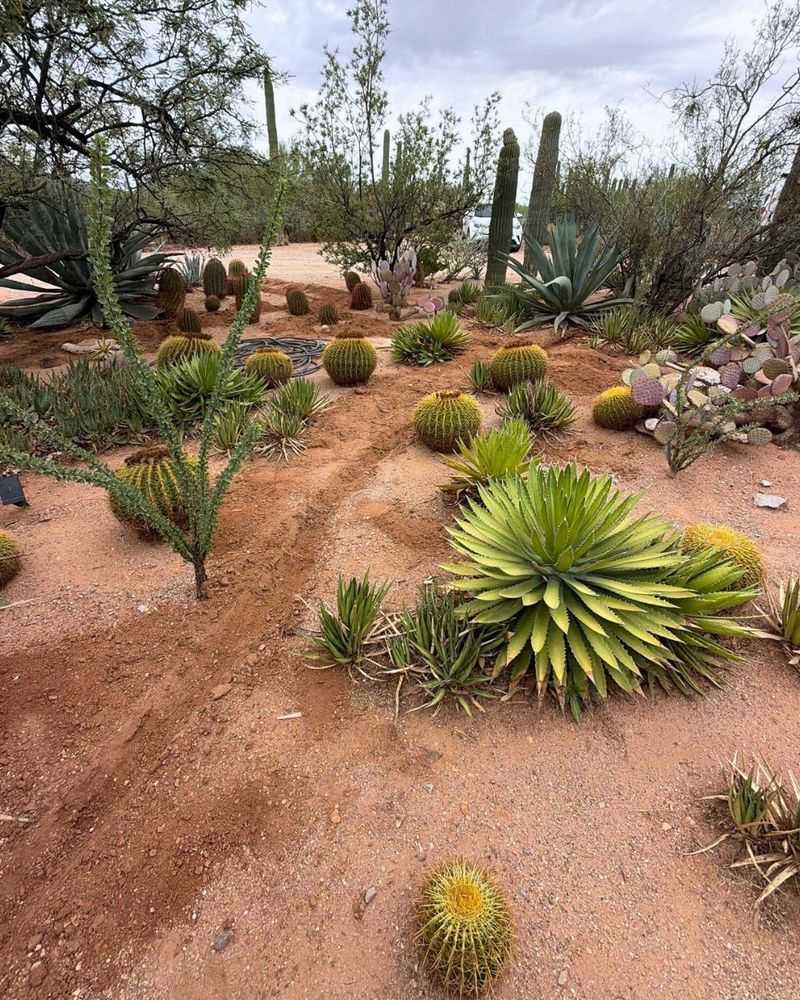
Arizona is not one climate, and that matters more than almost anything else when evaluating a plant like creeping thyme. University of Arizona climate zone guidance notes that average summer temperatures in the low or subtropical desert can reach around 107 degrees Fahrenheit, while higher-elevation communities still experience freezing nights and support a completely different plant palette.
A ground cover that performs well in Prescott or Flagstaff may struggle or fail entirely in Phoenix or Yuma under the same care.
Thyme’s preference for light, well-drained soil adds another layer of difficulty in Arizona. Arizona soils are frequently alkaline, compacted, rocky, or interrupted by caliche layers that block drainage and root penetration.
Poor drainage is one of the most common reasons thyme fails in home gardens here, and a drought-tolerant label does not mean the plant will survive in unmodified native Arizona soil.
Before purchasing plants, Arizona homeowners should run a simple drainage test by digging a hole about 12 inches deep, filling it with water, and checking whether it drains within an hour. Compacted areas benefit from amendment or raised planting beds.
In Arizona, that screening step can make the difference between a thriving ground cover and a failed planting that needs replacement by fall.
Low-Water Thyme Still Needs Irrigation During Establishment
One of the most persistent misconceptions about creeping thyme in Arizona is that its low-water reputation means you can plant it and mostly walk away. Young ground covers need regular irrigation to survive and fill in, and creeping thyme is no exception.
University of Arizona ground-cover guidance notes that newly planted ground covers may need watering every two to three days for the first two to four weeks, and that even drought-tolerant species require supplemental irrigation to form the solid foliage coverage most homeowners want.
That watering frequency guidance comes from a Northern Arizona publication and applies to conditions above 6,000 feet. In Arizona’s low desert, summer heat can dry soil far faster, and the irrigation demand during establishment may be higher.
Tucson herb guidance from the University of Arizona notes that thyme may need watering every day in midsummer, a schedule that applies to common thyme and herbs broadly in that region rather than to every creeping-thyme cultivar specifically. Neither schedule should be treated as a statewide Arizona prescription; adjust irrigation based on your site, soil, season, and the specific cultivar you are growing.
Planting time also shapes how much irrigation Arizona thyme will need early on. Tucson-based University of Arizona guidance identifies October through November and February through April as suitable windows for perennial thyme, when cooler temperatures reduce heat stress and give roots time to establish before summer arrives.
Summer planting in Arizona is possible but requires careful, consistent watering and some form of heat protection, such as temporary shade cloth, to keep new plants alive. Choosing the right planting window in Arizona is one of the most practical ways to reduce establishment irrigation and improve the odds of a healthy, dense ground cover.
A Thyme Carpet Cannot Do Everything a Turf Lawn Does
Ground covers and turf serve different functions, and creeping thyme sits firmly in the ground-cover category. Arizona plant-selection guidance distinguishes between floor-cover plants that tolerate some foot traffic and those suited only to light use or protected spaces between pavers.
Creeping thyme generally falls into the lighter-use group. If your Arizona yard sees children running, dogs playing, or regular foot traffic across a wide area, thyme is likely to thin out, develop bare patches, and require frequent repair rather than behaving like a resilient lawn surface.
The maintenance picture also shifts once you remove turf from an Arizona yard. Routine mowing goes away, which is a genuine benefit, but it does not mean the yard becomes hands-off.
In Arizona, perennial weeds are a leading cause of ground-cover failure, and bare gaps that appear before thyme fills in create open invitations for invasive species to move in.
Heat stress during Arizona summers can also cause thyme to die back in patches, particularly in spots with intense reflected heat from walls, pavement, or light-colored gravel. Northern Arizona ground-cover recommendations note that even low-growing covers need site conditions that match their tolerances.
For Arizona homeowners, the honest trade-off is that you swap one set of maintenance tasks for another, and in the low desert, the summer maintenance window for a thyme planting can be genuinely demanding. Thyme works best when it is placed where it fits rather than asked to perform like a full-use Arizona lawn.
Design the Replacement Landscape Before Removing Arizona Turf
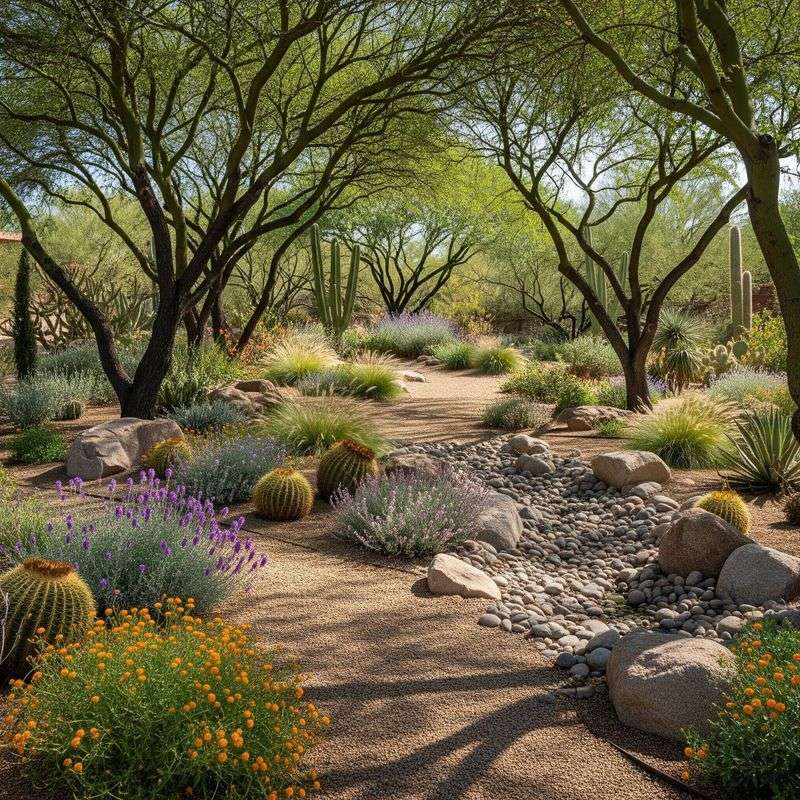
Removing grass from an Arizona yard without a replacement plan in place is one of the most common and costly mistakes homeowners make. University of Arizona turf-conversion guidance recommends designing the replacement landscape first, then removing the turf and obsolete irrigation, and finally installing an irrigation system matched to the plants that will actually go in the ground.
Skipping the design step in Arizona often means tearing out irrigation that the new plants still need, or leaving exposed soil that bakes into a hard crust before anything establishes.
Existing trees deserve particular attention during any Arizona turf removal project. Tree roots extend well beyond the drip line, and turf removal that disrupts the root zone or eliminates irrigation to established trees can cause serious long-term damage.
The replacement irrigation system should be designed to sustain any trees that remain before the old system is decommissioned.
Drip irrigation is generally the better fit for Arizona ground covers because it reduces runoff and evaporation compared to overhead spray. A diverse xeriscape that combines spaced shrubs, native trees, mulch, and passive rainwater harvesting strategies may use less water overall than a dense living carpet, but that outcome depends on design quality, plant density, soil conditions, and how well the system is managed.
Creeping Thyme Does Not Prove Pest Control or Guaranteed Pollinator Benefits
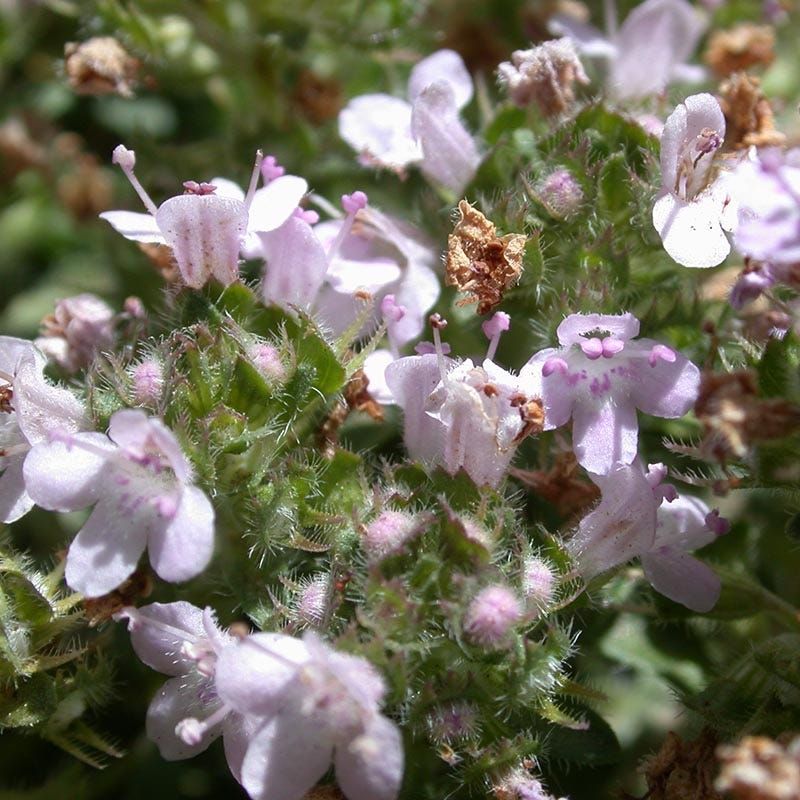
Fragrant plants have a way of collecting big promises online, and creeping thyme is no exception. The idea that thyme’s scent repels scorpions, mosquitoes, or ticks shows up regularly in gardening content, but the evidence behind those claims is thin.
The same logic applies to mosquitoes and ticks. Groundcover that retains moisture near the soil surface can provide the kind of humid microenvironment that insects and other arthropods seek in Arizona’s dry climate.
Fragrant foliage does not translate to landscape-scale pest control, and homeowners who plant thyme expecting a reduction in scorpion encounters or mosquito pressure are likely to be disappointed.
That is a genuine contribution to an Arizona garden’s ecological value, particularly as native habitat shrinks in developed areas. Thyme flowers do attract some pollinating insects, but calling it a guaranteed pollinator magnet or natural pest-control tool goes beyond what the evidence shows.
For Arizona homeowners who want wildlife-friendly yards, pairing thyme with native flowering plants and proven habitat elements will deliver more consistent results than relying on thyme alone.
Choose Creeping Thyme Selectively Instead of Expecting a One-Plant Lawn
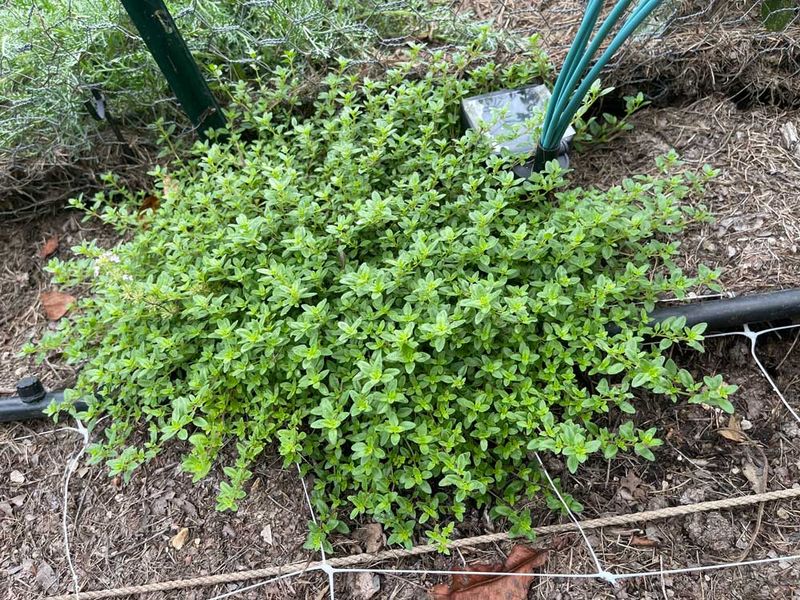
Creeping thyme earns a place in some Arizona yards, but that place is specific. It fits best where drainage is good, heat exposure is manageable for the cultivar and microclimate, foot traffic is light, and irrigation can support establishment and maintain dense coverage over time.
Gaps between flagstones, garden borders, small accent areas, and shaded or east-facing spots in the low desert are reasonable candidates. A sun-baked, high-traffic Phoenix front lawn is not.
Arizona homeowners in the low desert should not assume thyme will perform like turf or replicate the water savings of a broader xeriscape design on its own. A diverse, properly zoned landscape with native and desert-adapted plants, mulch, and passive water strategies generally delivers more reliable long-term results than any single-species ground cover.
For Phoenix-area residents who want a tested, low-growing alternative with documented performance in Arizona full sun, Kurapia is worth comparing directly before committing to thyme across a large area.
The strongest move for most Arizona homeowners is to treat thyme as one tool in a larger, site-appropriate landscape plan rather than the answer to every water and maintenance problem. Start with a small planting in a suitable Arizona spot, observe how it performs through at least one full summer, and expand only where the results justify it.
A yard that works well in Arizona is built on honest plant-to-site matching, and that discipline will serve you better than any single plant trend.