A Mysterious Green Visitor Is Dropping From Alabama Trees And Disappearing Underground Before Winter
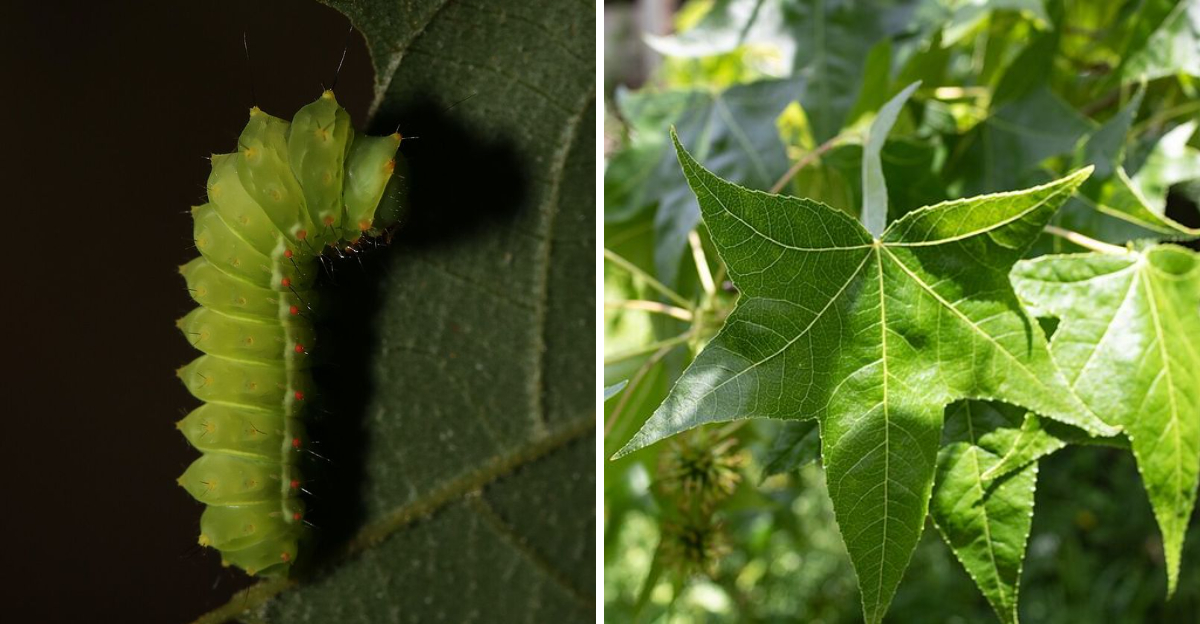
You notice sudden movement on the patio before you register what it is. It turns out to be a plump green caterpillar you almost stepped on. Alabama yards are filling with these fat little travelers you keep finding underfoot.
This isn’t some startled pest fleeing your trees. Instinct tells you to sweep it away fast, but resist that urge. Beneath the leaf litter, it settles right where you can’t quite see it.
Winter passes while you forget this creature even exists nearby. Spring arrives, and you hardly recognize this traveler now. Wings slowly unfold right where you previously watched only creeping legs move.
Few Alabama insects pull off a change you call striking. Homeowners rarely realize exactly what you are looking at underfoot.
Your yard could quietly be hosting the beginning of something truly spectacular. What happens next turns this backyard nuisance into a showstopper you won’t want to miss.
Meet The Chubby Green Wanderer In Your Yard
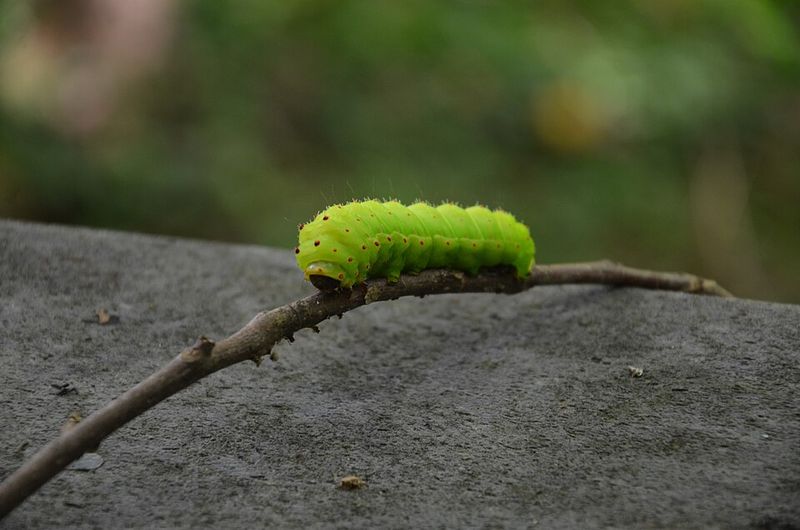
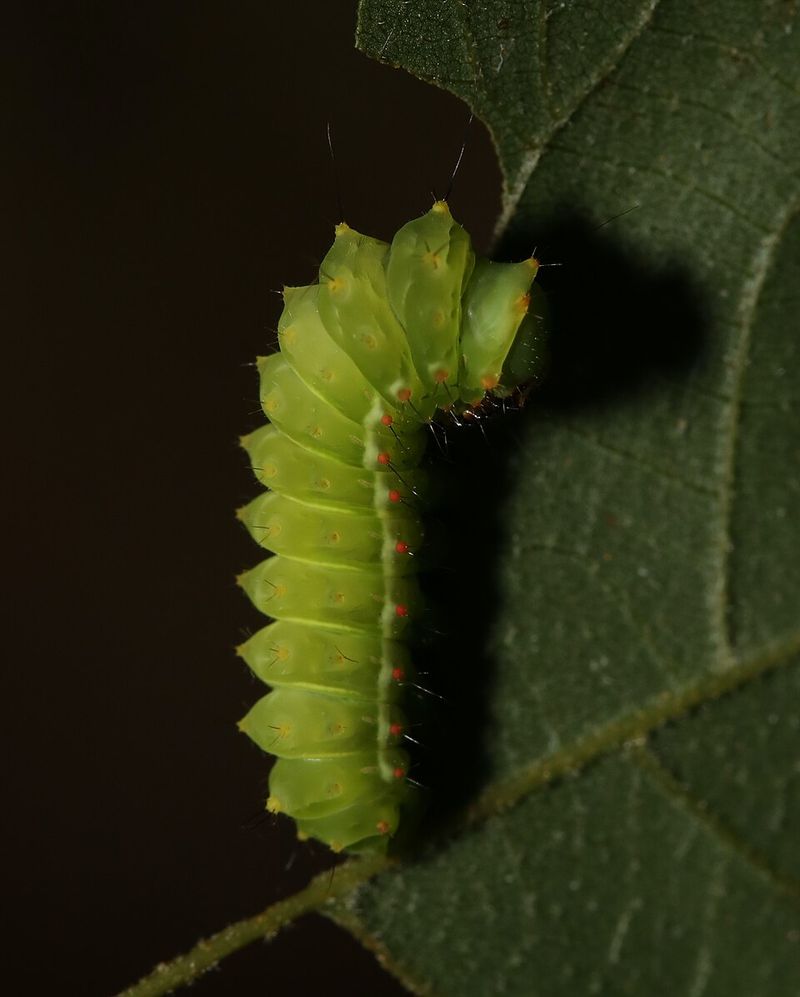
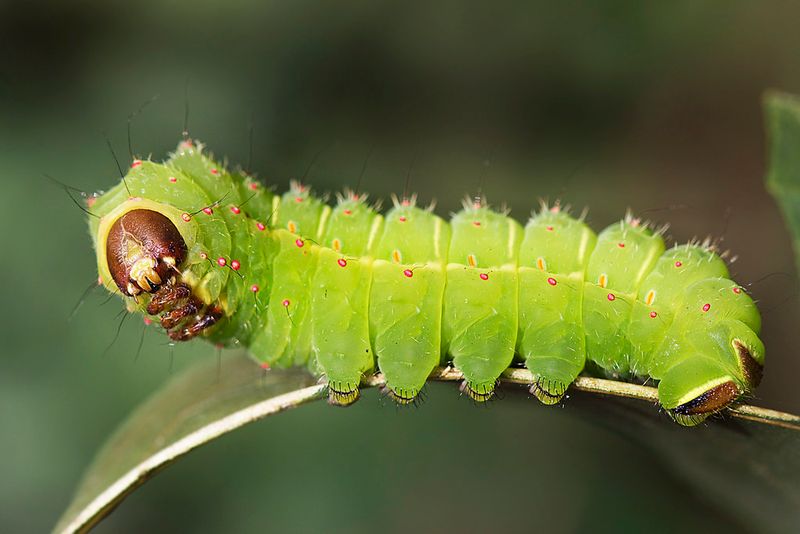
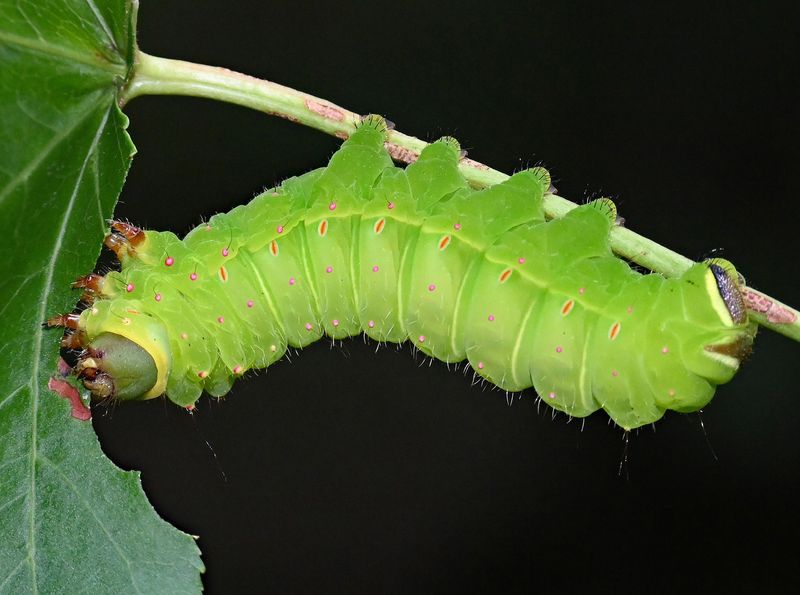
Picture a stubby green sausage with a serious appetite and you have a fair sketch of the luna moth caterpillar. Gardeners often mistake it for a tomato hornworm cousin, but the resemblance stops at the color.
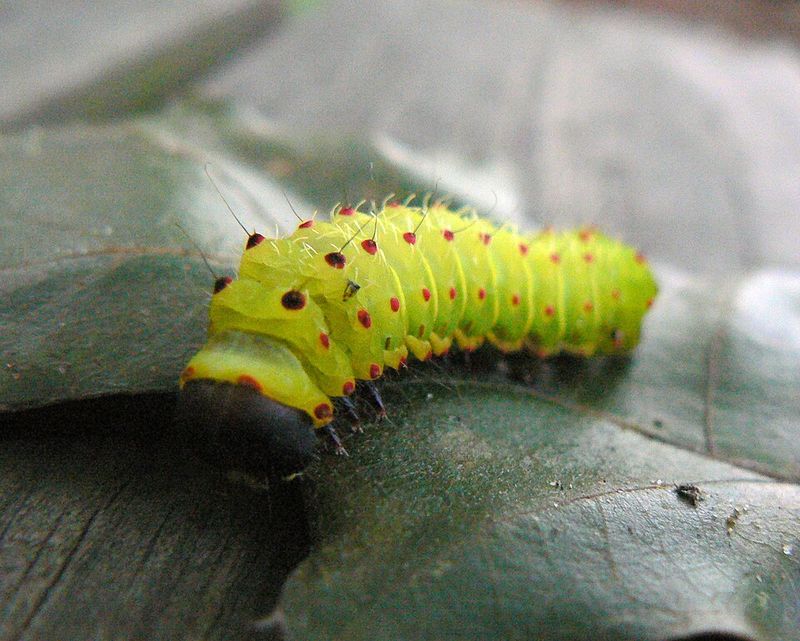
Look closer and the details show up. The body is a soft lime green, ringed with faint yellow lines and dotted with tiny reddish-orange bumps along each segment.
Those bumps carry short hairs, though they are harmless to touch. The head is a shiny brown, and the rear grips leaves with suction-cup style legs called prolegs.
A full-grown one stretches close to two and a half inches long and can be as thick as your pinky finger. Handling one usually gets you a surprised clicking sound, which is the caterpillar tapping its mandibles as a bluff.
Fun bit of trivia: the adult it turns into is the pale green giant with long swooping tails that people photograph on porch screens in May. Same creature, wildly different outfit.
In Alabama, these caterpillars go through two or three generations between spring and early fall. The last batch of the year is the one folks notice, because those individuals are the biggest and the ones taking the plunge toward the ground.
Knowing the ID matters. Once you can tell this gentle leaf-muncher from an actual garden troublemaker, you can relax and let it finish its journey in peace.
Why It Suddenly Lets Go Of The Branch
The drop looks abrupt, but it is a normal part of the caterpillar’s life cycle. After weeks of nonstop eating high in the canopy, a mature caterpillar reaches a point where food no longer interests it.
Hormones shift, the gut empties, and the body takes on a slightly reddish-brown tint. That color change is the signal that the wandering stage has begun.
Some individuals climb down the trunk. Plenty simply release their grip and free-fall, which sounds risky until you consider how light and cushioned they are.
Your Alabama Garden Changes Every Week. Your Plan Should Too.
Gardening in Alabama changes quickly throughout the season. Every Friday you’ll receive a simple weekly plan showing exactly what to plant, prune, fertilize, harvest, and protect so you never miss the right timing.
A soft body and a bed of leaf litter make the landing survivable. That is why you find them crossing sidewalks, patios, and driveways in September and October, moving with surprising determination.
Homeowners often assume the caterpillar fell by accident and try to return it to a tree. Kind gesture, but usually unnecessary at this stage.
Putting it back on a branch only forces it to make the trip again. If it is somewhere dangerous, like a hot slab of concrete or a busy walkway, scoop it up gently and set it in mulch or leaves beneath the nearest hardwood.
Watching one on the move is a small backyard event worth pausing for. There is something oddly touching about a creature that spends its whole leafy childhood in the treetops, then decides the ground holds its future.
Which Alabama Trees Serve As The Dinner Table
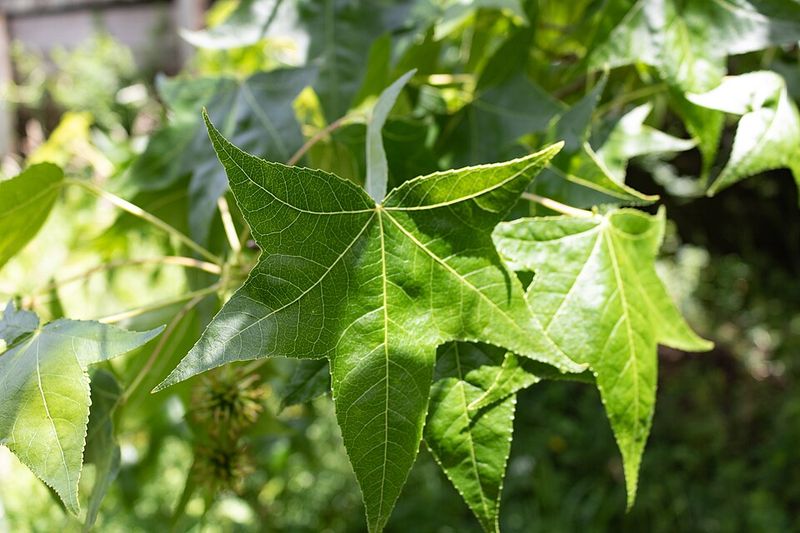
Ask a luna moth caterpillar for its favorite restaurant and it will point straight at a sweetgum. Across Alabama, sweetgum leaves are the number one menu item, and those star-shaped leaves show scalloped bite marks by late summer.
Hickory runs a close second. Pecan, walnut, persimmon, and sumac all get visits too, along with white birch and the occasional sourwood.
Because the state is loaded with these species, luna caterpillars turn up in suburban yards, along creek banks, and deep in pine-hardwood mixes. Neighborhoods with big old sweetgums tend to see the highest numbers.
Here is the reassuring part for tree lovers. A single caterpillar eats a modest amount of foliage, and populations stay low enough that healthy trees barely register the loss.
You are far more likely to notice a few ragged leaf edges than any real thinning of the canopy. Spraying is rarely warranted, and broad insecticides tend to remove the beneficial insects you actually want around.
If you want to encourage them, keep at least one host tree on your property and skip the chemical treatments in late summer. Sweetgums get a bad reputation for their spiky seed balls, but they quietly feed dozens of native insects.
Next time you rake up those prickly gumballs, remember what else that tree supports. A little tolerance for one messy species pays off with a spring visitor worth waiting for.
The Hidden Cocoon Tucked Into The Leaf Litter
Underground is not quite accurate, though it feels that way. What actually happens is that the caterpillar burrows into the loose layer of fallen leaves, pine straw, and mulch at the base of the tree.
There it spins silk, pulling a dry leaf around itself like a sleeping bag. The result is a thin, papery brown cocoon roughly the size of a large grape.
Inside that wrapper, the caterpillar transforms into a pupa and settles in for the long haul. The disguise is remarkably good, which is exactly the point.
A leaf-wrapped cocoon lying among a thousand identical leaves is nearly invisible to birds, mice, and curious humans. Only the very sharp-eyed spot one, and usually by accident while cleaning a flower bed.
Fall generations stay in that cocoon through the cold months and emerge as adults in spring. Earlier generations pupate for just two or three weeks before flying off.
Cold weather does not bother them much, but soggy compacted soil and constant disturbance do. A loose, dry, undisturbed layer of leaves is the ideal winter shelter.
If you have ever wondered where the big green moths of April come from, you now know the answer sits quietly under your shade tree. Their whole future is folded inside a leaf you might have bagged up without a second thought.
Yard Habits That Help Them Make It To Spring
Good news for anyone who dislikes yard work: the single best thing you can do is less of it. Cocoons rely on that fluffy blanket of fallen leaves, so aggressive raking under host trees removes the nursery.
Try leaving leaves in place beneath your sweetgum, hickory, or pecan through the winter. If the look bothers you, rake them into garden beds instead of hauling them to the curb.
Leaf blowers deserve a mention here. High-powered blasts scatter cocoons onto pavement where they lose their camouflage and their insulation.
Timing helps too. Hold off on heavy bed cleanup until temperatures are reliably warm in spring, which gives the pupae time to finish their change and fly out.
Skip fall applications of broad-spectrum insecticides on hardwoods, and be cautious with products used for other caterpillar issues. Those treatments do not distinguish between species you want and species you do not.
Outdoor lighting plays a role once the adults emerge. Bright porch lights pull them off course, so switching to warm-toned bulbs, motion sensors, or shielded fixtures gives them a better shot at finding mates.
None of this requires money or special equipment. A rake left in the shed, a lightbulb swapped out, and a little patience in March add up to a spring yard where pale green wings show up on their own.
What Emerges In April
Fast forward a few months and the adult moth appears on your porch screen. Out of that humble leaf bundle climbs a moth with a four to five inch wingspan, pale seafoam green, trailing long ribbon-like tails.
Four translucent eyespots decorate the wings, and the body is fuzzy white with feathery antennae. People who see their first one usually reach for a camera before they reach for words.
The adult stage carries a bittersweet detail. Luna moths emerge without working mouthparts, so they do not feed at all during their week or so of flight.
Everything they need was stored up during those hungry weeks in the treetops. Their entire adult job is finding a mate and placing eggs on the right host leaves.
Males use those elaborate antennae to detect a female’s scent from a considerable distance, with some research suggesting up to a mile. Those long tails are not just decoration either.
Researchers found that the spinning tails confuse the sonar bats use to hunt, giving the moth a real survival advantage.
Alabama typically sees the first flights in April, with additional broods appearing through summer. So when a green caterpillar crosses your driveway this fall, you are watching the opening act of a life cycle that ends with a moth in your yard.