The Ohio Plants Showing Powdery Mildew Warning Signs Right Now
Walk out to your Ohio garden tomorrow morning and get close to the leaves.
Not a glance from the deck. Close enough to touch one.
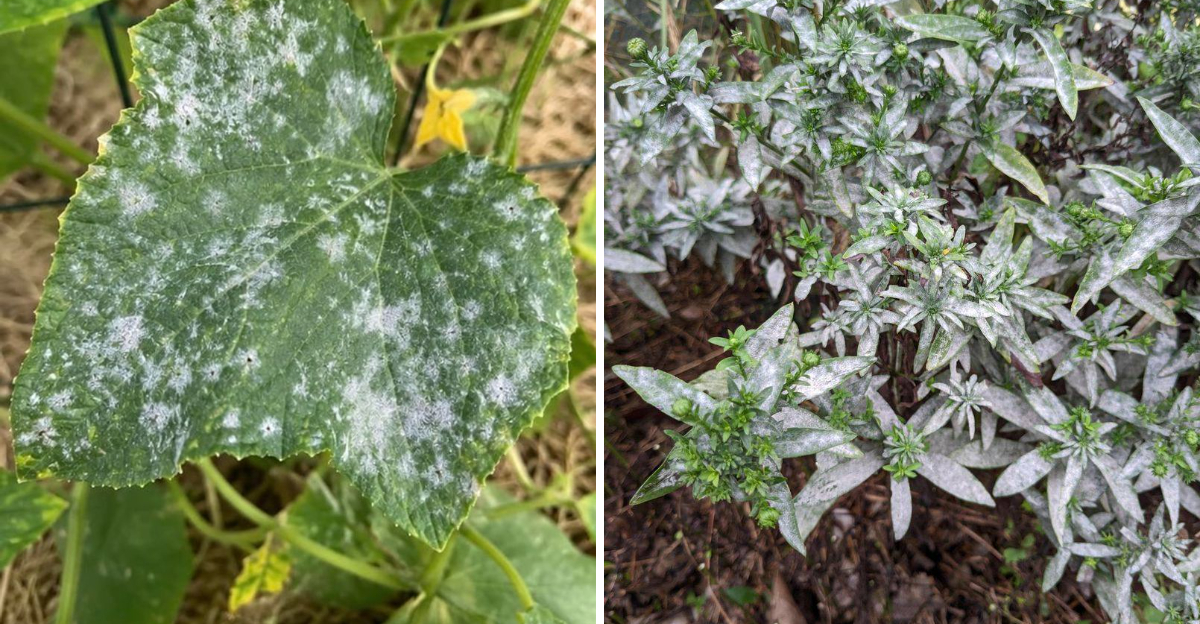
Something faint may be sitting on the surface. Pale, powdery, like someone tapped a flour sifter over the bed while you slept.
Rub it with a thumb and the film smears slightly.
That’s the whole warning. No wilting, no holes, no obvious damage yet.
What makes this particular visitor tricky is how comfortable it finds Ohio. Humid mornings, cool nights, crowded stems, and it moves faster than most gardeners expect.
By the time it looks alarming, the useful window has mostly passed.
Here’s the useful part though. It shows up on the same plants in the same places, year after year, and it announces itself on specific leaves before spreading anywhere else.
Learn where to look and you get a couple weeks of warning instead of none.
Eight Ohio garden regulars tend to raise the flag first.
1. Zucchini And Summer Squash
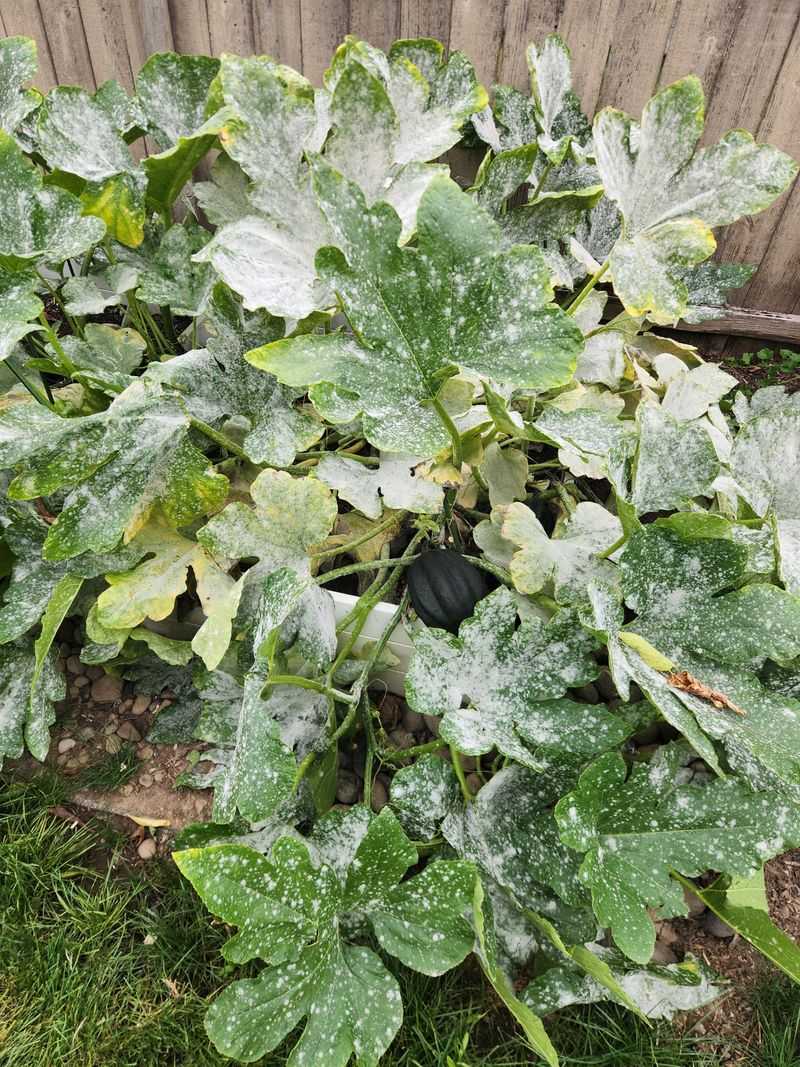
Squash growers in Ohio know the drill by late summer. The big, umbrella-like leaves are usually the first spot where that ghostly white coating appears.
You might notice it starting as small round patches on the older, lower leaves near the base.
Over a week or two, those patches join together until the whole leaf looks dusted with chalk. The plant keeps making zucchini, but the leaves lose their green power to feed the fruit.
Air flow is your best friend here. Squash plants sprawl and crowd each other, trapping damp air right where the trouble starts. Trimming a few inner leaves opens things up and lets sunshine reach the middle of the plant.
Watering matters too. Splashing the leaves in the evening leaves them wet overnight, which is exactly what the mildew wants. Pour water at the soil line early in the day instead.
Some gardeners spray a mix of one part milk to nine parts water on the leaves, which can slow the spread. Others reach for a baking soda solution. Both work best when you start at the very first sign.
Pick off the worst leaves and toss them in the trash, not the compost pile. Keeping your squash a little tidier now means more tender zucchini for your kitchen through September.
2. Garden Phlox
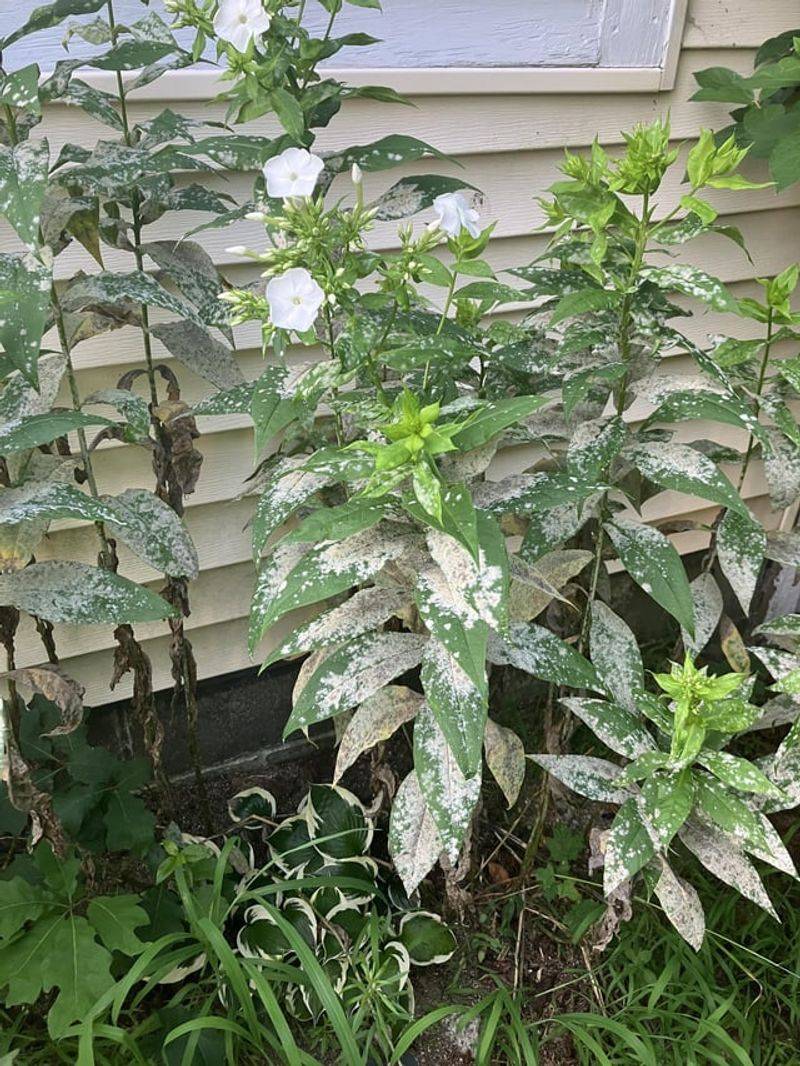
Ask any Ohio flower lover about their summer heartache, and garden phlox often tops the list. These tall pink and purple bloomers are famous for their perfume, and just as famous for catching that pale film.
The lower leaves usually show it first. A silvery haze creeps up the stems while the flowers keep putting on their show up top. By August, the bottom of the plant can look tired and dusty while the blooms still shine.
Crowding is the main culprit. Phlox planted shoulder to shoulder holds moisture between the stems, and that trapped dampness invites trouble. Thinning out about a third of the stems in spring gives each one breathing room.
Your Ohio Garden Changes Every Week. Your Plan Should Too.
Gardening in Ohio changes quickly throughout the season. Every Friday you’ll receive a simple weekly plan showing exactly what to plant, prune, fertilize, harvest, and protect so you never miss the right timing.
Good news for shoppers: newer phlox varieties are bred to shrug off mildew far better than the old-fashioned ones. Names like David and Jeana handle Ohio humidity with real grit.
If your patch already shows signs, snip off the worst stems near the ground. Clear away fallen leaves in fall so the spores cannot camp out over winter.
A morning drink at the roots keeps the foliage dry, which the mildew hates. Give phlox full sun and space, and it rewards you with sturdy stems and clouds of color that pollinators cannot resist all season long.
3. Lilac Shrubs
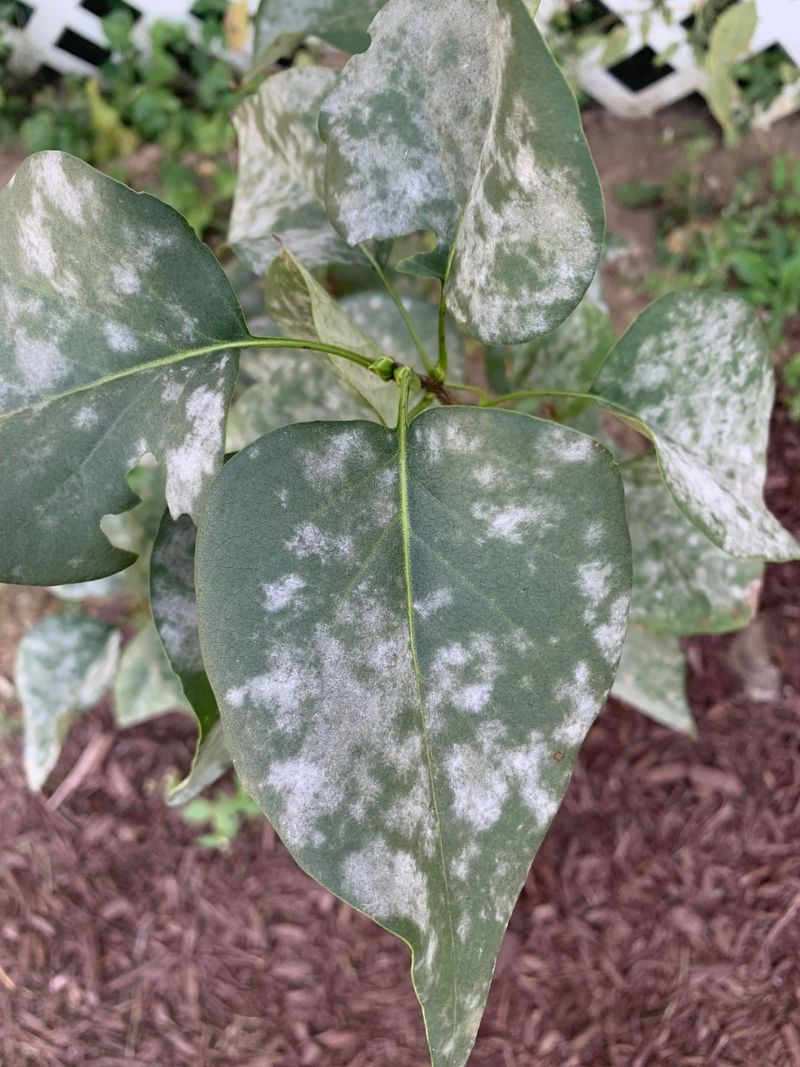
Lilacs give Ohio its most beloved spring scent, then spend the rest of summer collecting a dusty coat nobody asked for. By July or August, those heart-shaped leaves often turn a chalky grayish white.
Here is the comforting part. Powdery mildew on lilacs looks alarming, but it rarely harms the shrub in a serious way. The flowers already finished their show back in May, so the leaves are just riding out the rest of the season.
Still, a heavily coated lilac looks shabby against a tidy yard. The film blocks sunlight and can make leaves drop a bit early, which weakens next year’s bloom if it happens year after year.
Sunlight and space help a lot. Lilacs stuffed into shady corners or packed against a fence stay damp and stressed. Pruning out old, crowded canes lets air sweep through the center.
Rake up fallen leaves in autumn instead of letting them pile at the base. That simple cleanup removes a hiding spot for spores waiting to return.
If the sight really bothers you, an early-season sulfur or neem spray can keep leaves cleaner. Most Ohio gardeners simply live with a little dust and look forward to those fragrant purple clusters when spring rolls around again.
4. Cucumbers
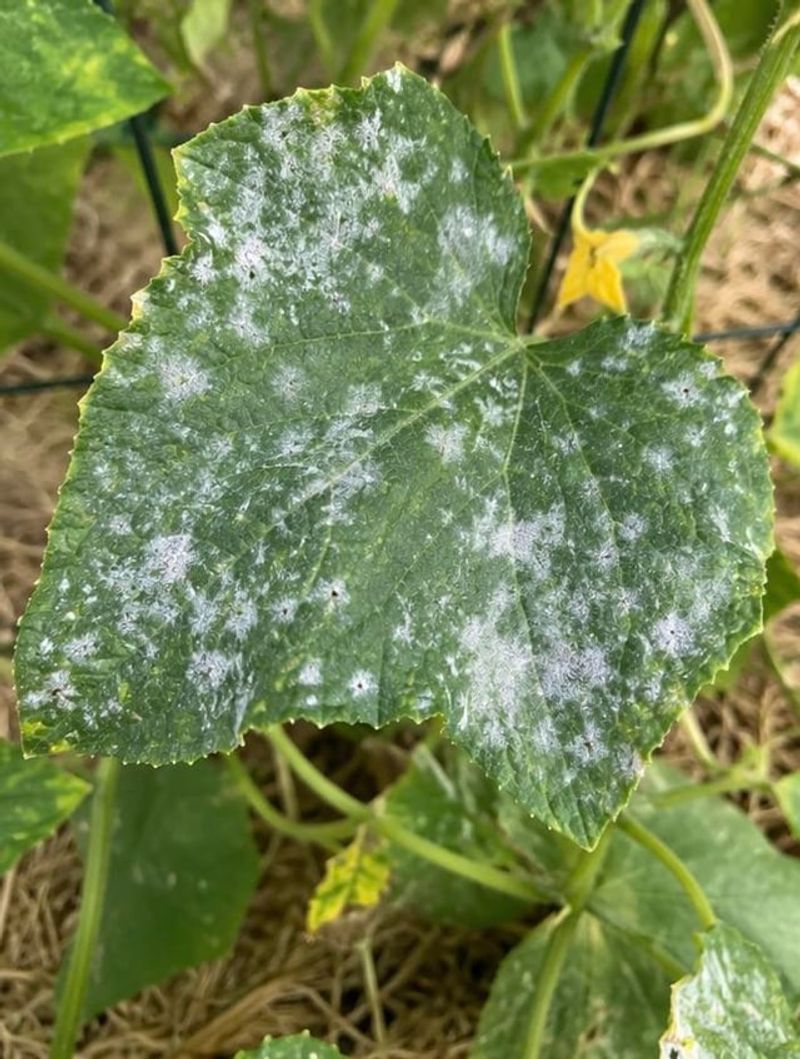
Cucumber vines climbing an Ohio trellis look lush right up until that first pale smudge appears. Then the race is on, because cucumbers can go downhill quickly once mildew grabs hold.
Watch the older leaves near the bottom of the vine. White spots pop up on both the top and underside, spreading into a felt-like layer within days if the weather stays warm and muggy.
Vertical growing is a smart move for cucumbers. Training them up a trellis lifts the leaves off the wet ground and lets breezes dry the foliage fast. Sprawling vines on bare soil stay damp far too long.
Spacing your seeds a bit farther apart pays off later. Crowded rows form a jungle where humid air lingers, and that is exactly the setting mildew loves.
When you spot early signs, snip the worst leaves and act fast with a homemade spray. A blend of baking soda, a drop of dish soap, and water coats the leaves and shifts conditions against the spores.
Look for resistant seed packets next spring, since many modern cucumber types fight this problem naturally. Keep picking your cucumbers often too, because a productive vine stays healthier and holds its ground better against the creeping dust.
5. Peonies
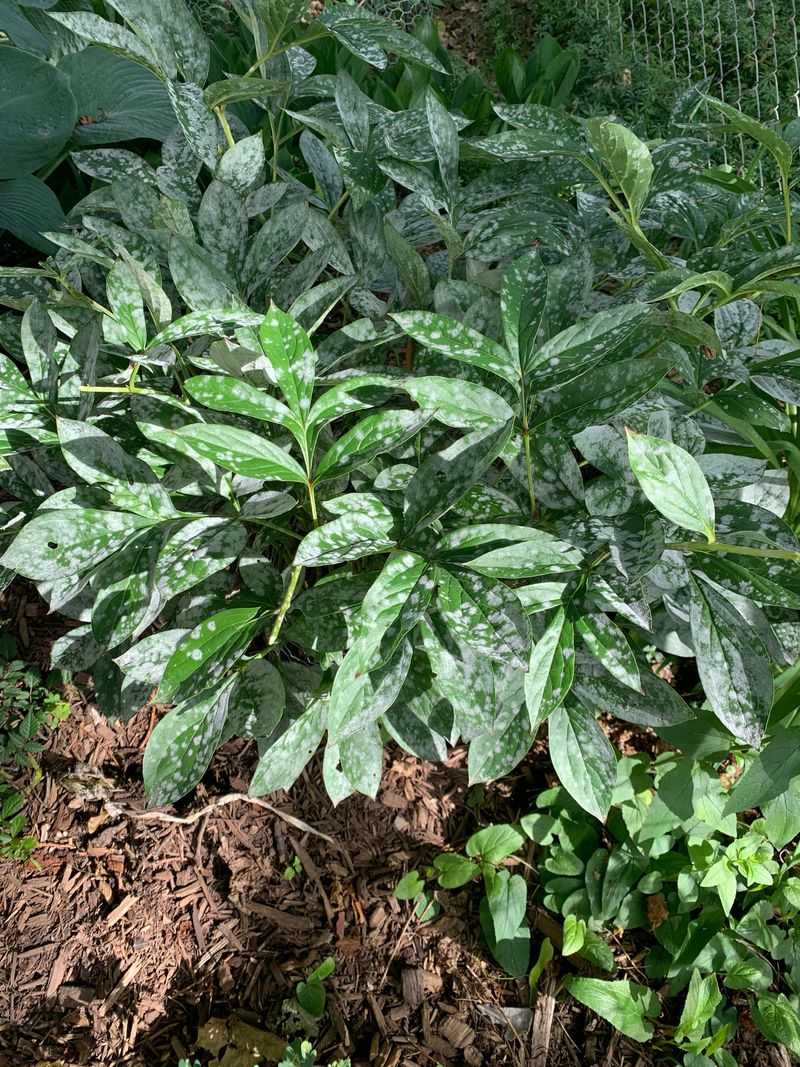
Peonies are the grand old queens of Ohio gardens, handed down through families like treasured recipes. Their late-spring blooms are jaw-dropping, but the foliage sometimes fades into a dusty mess by mid-summer.
The powdery film tends to arrive after the flowers finish. Leaves that were glossy and deep green turn hazy and pale, especially on plants tucked into partly shady beds.
Because the show-stopping blooms come and go early, mildew on peony leaves is mostly a looks problem. The plant stores energy in its thick roots and returns strong the following spring in most cases.
Air movement still helps keep things tidy. Peonies planted too close to walls, fences, or other bushy perennials sit in stale, moist air that encourages the coating.
Fall cleanup is the real secret with peonies. Cutting the stems down to the ground and hauling the old leaves away removes overwintering spores and gives you a fresh, clean start.
Skip overhead watering when you can, and let the morning sun dry any dew off the leaves. If a favorite heirloom peony struggles every single year, moving it to a sunnier, breezier spot often solves the whole thing. Treat these long-lived beauties well, and a single plant can keep blooming for decades in the same Ohio yard.
6. Bee Balm
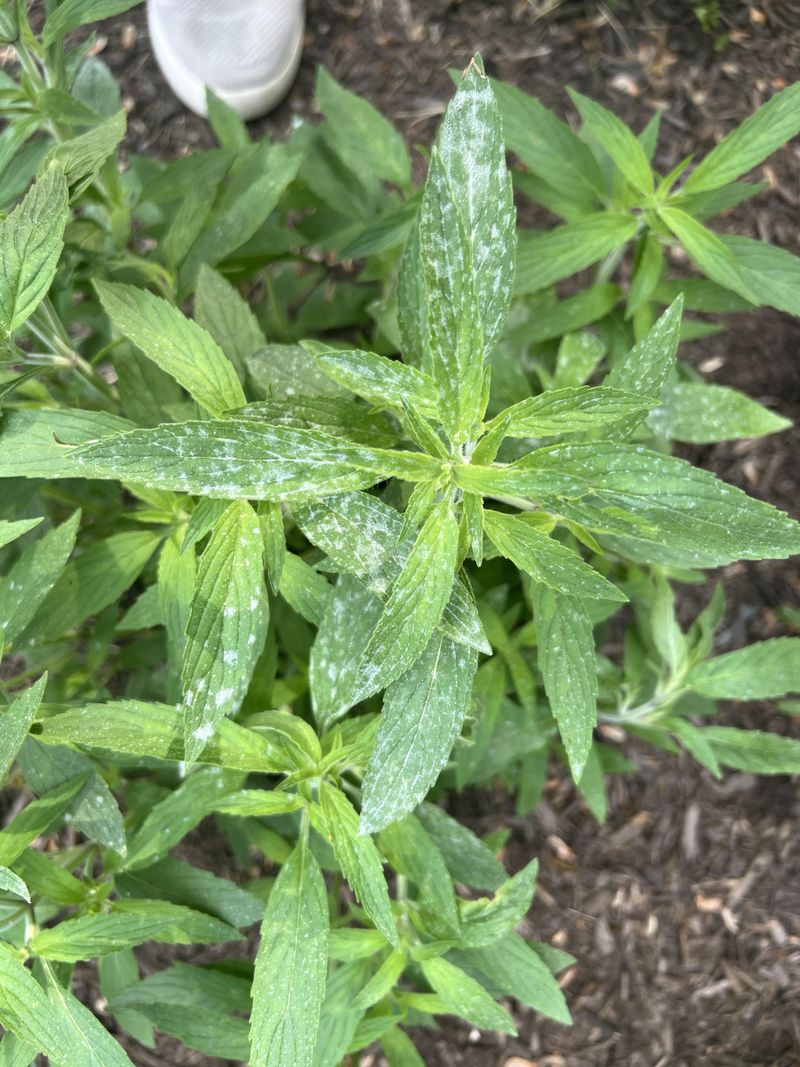
Bee balm buzzes with life all summer, drawing hummingbirds and butterflies to its wild, fringed blooms. Sadly, this native charmer is also a magnet for that telltale white dust.
Look for the film creeping up the lower and middle leaves right around bloom time. Bee balm often shows it faster than almost anything else in an Ohio flower bed.
The plant spreads by underground runners, so a single clump can turn into a thick, crowded thicket in a couple of seasons. All that density traps humidity and rolls out the welcome mat for mildew.
Dividing your bee balm every couple of years keeps it open and airy. Pull out some of the crowded center growth and share the extras with a gardening friend.
Choosing resistant varieties makes a big difference too. Types like Marshall’s Delight and Jacob Cline were bred to stay cleaner through humid Midwest summers.
If mildew already coats your patch, cut the stems back partway and clear the trimmings from the bed. Fresh growth often comes in looking healthier once air can move freely again.
Give bee balm full sun and room to breathe, and it keeps feeding pollinators without turning into a dusty eyesore. That steady parade of visiting hummingbirds is well worth a little extra fussing each summer.
7. Roses
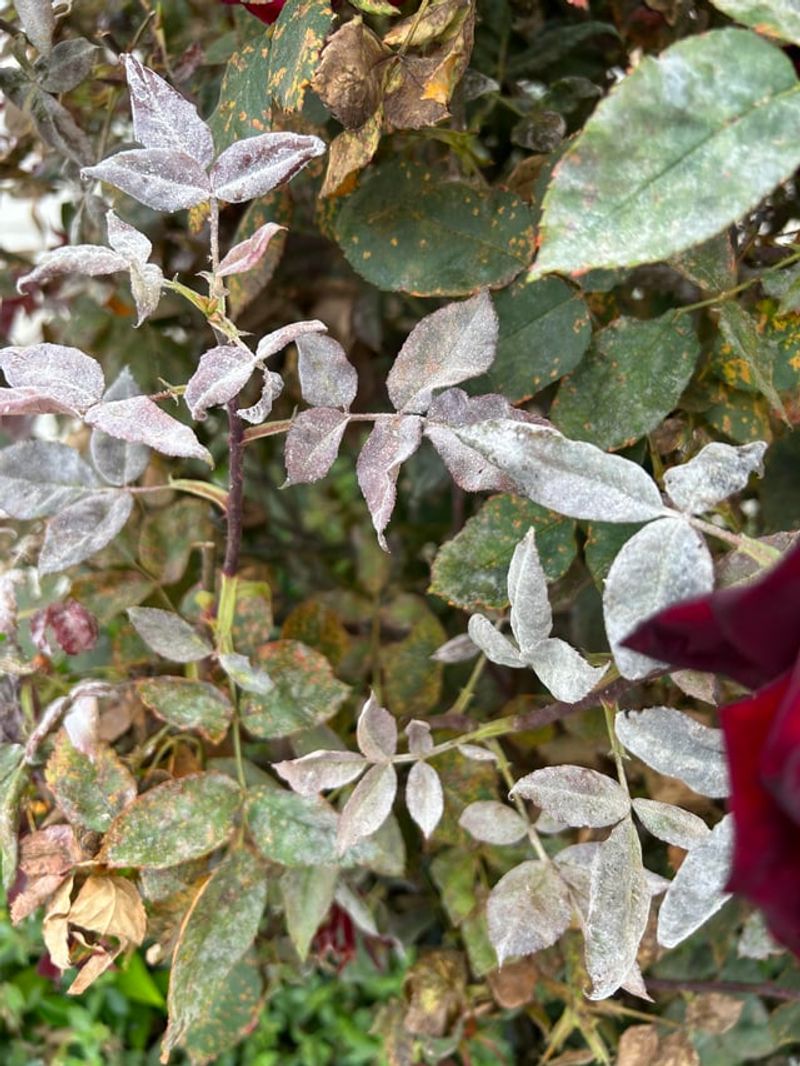
Few plants stir up as much pride, or as much worry, as a blooming rose. Ohio rose growers keep a sharp eye out for the pale coating that can twist and pucker fresh new growth.
Young leaves and buds usually show it first. Instead of small round spots, mildew on roses often makes tender leaves curl, crinkle, and take on a grayish sheen at the very tips.
Warm days and cool, damp nights create the perfect setup. That daily swing in Ohio weather during June and September gives the spores plenty of chances to settle in.
Good pruning goes a long way. Opening up the center of the bush lets sunlight and air reach every cane, and that dries the leaves before trouble takes hold.
Watering habits matter just as much. Aim the hose at the roots in the morning and keep the foliage as dry as you can through the night.
When you spot early signs, pinch off the affected buds and leaves. A weekly spray of neem oil or a baking soda mix can hold the line during muggy stretches.
Modern shrub roses like the Knock Out series shrug off mildew far better than fussy old varieties. Plant the tough ones, keep the air moving, and your roses will keep unfurling those gorgeous petals all season.
8. Pumpkins
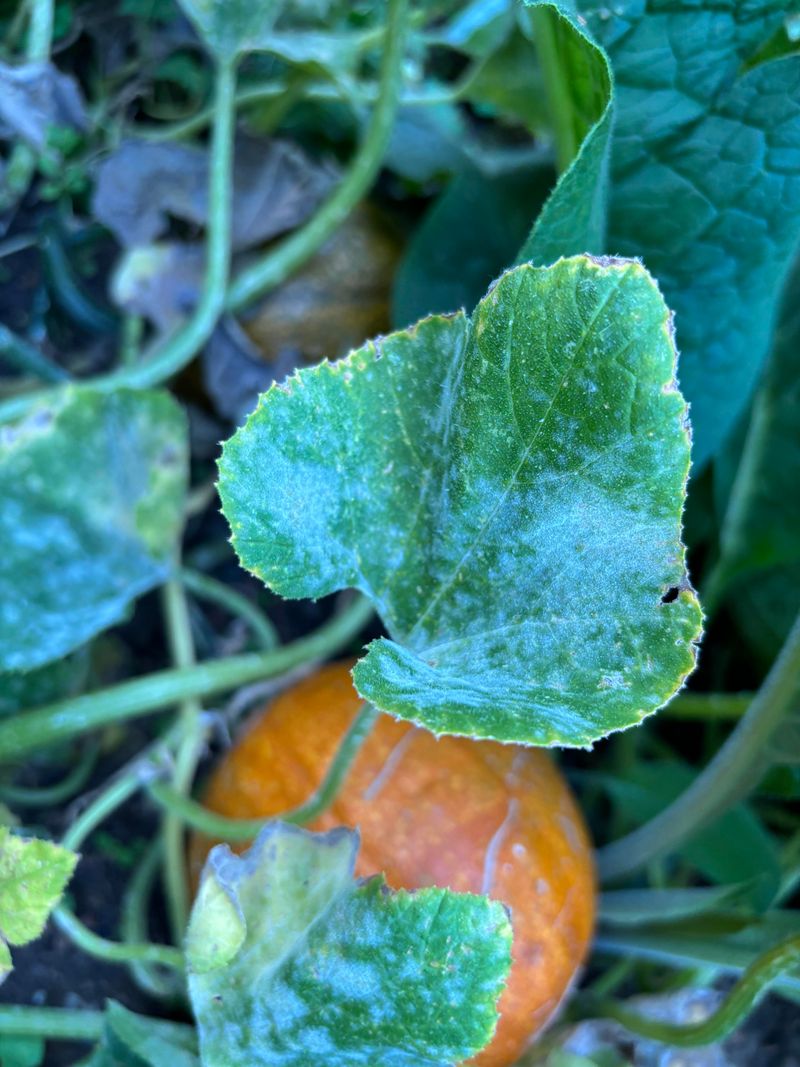
Nothing says Ohio autumn like a pumpkin patch, but those big orange globes come from vines that battle mildew all summer long. By late August, the huge leaves often carry a heavy dusting of white.
The sprawling foliage is ground zero. Older leaves in the shady middle of the patch turn pale first, and the film races outward across the sea of green in warm, sticky weather.
Since pumpkins need many weeks to ripen, keeping the leaves working matters a lot. Healthy foliage feeds the fruit and helps it develop that deep, even orange color you want for carving season.
Give the vines room when you plant. Cramming pumpkins into a tight corner traps humid air and speeds the spread from leaf to leaf.
Water low and early in the day so the sun can dry things out. Wet leaves lingering into the cool night are practically begging for trouble.
Preventive sprays help on a large patch. Rotating between a sulfur product and a baking soda solution keeps the spores guessing before they take over.
Clear out the vines completely at the end of the season instead of tilling them in. That habit removes lurking spores and gives next year’s crop a cleaner start. Do that, and your porch will glow with proud, sturdy pumpkins come October.
9. Aster
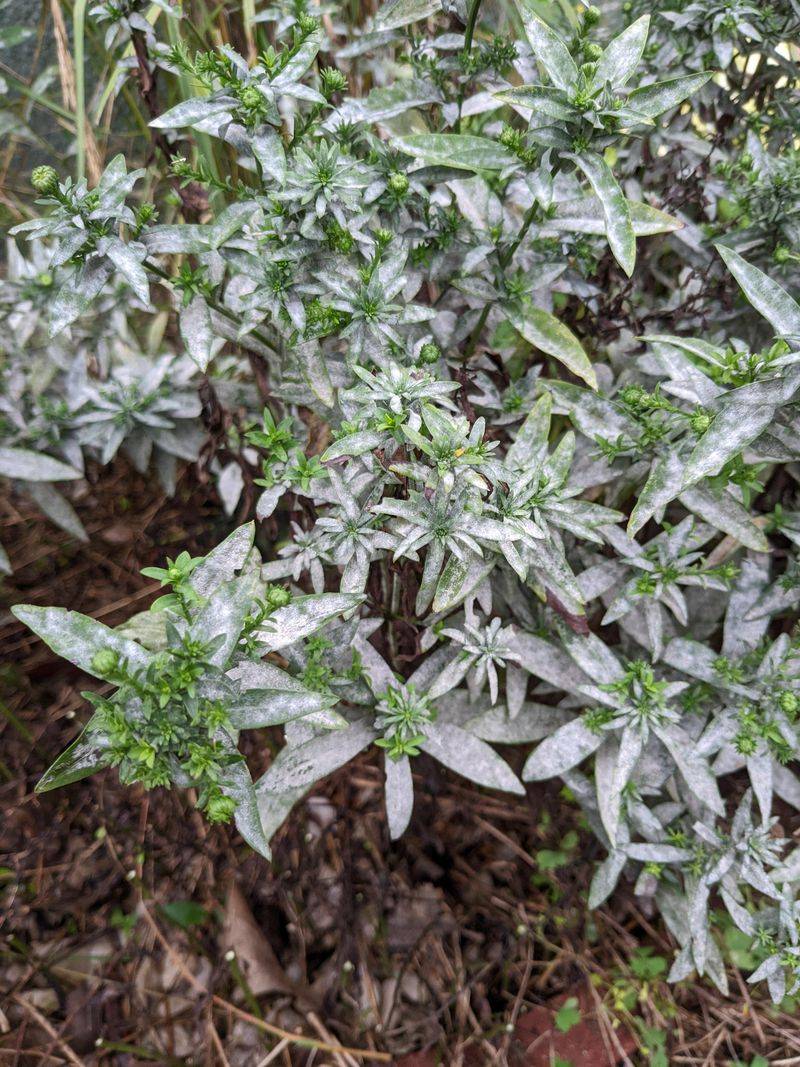
Asters carry Ohio gardens into October, blooming when almost everything else has finished.
They also pick up powdery mildew with real enthusiasm, usually well before the flowers open.
Lower leaves go first. A gray white film moves up the stems through August, so by bloom time the bottom third can look bare and dusty beneath a canopy of purple.
Height works against them. Tall asters flop, tangle, and create their own humid interior right where infection starts.
The Chelsea chop helps on both fronts. Cutting stems back by about a third in early summer produces shorter, sturdier plants with better air movement.
Division every couple of years keeps clumps from becoming dense thickets. Crowded centers stay damp long after the outer stems have dried.
Variety choice matters as much here as with phlox. Aromatic aster and smooth aster generally hold up better than New England aster, which is among the more susceptible natives.
Purple Dome and October Skies both have reasonable reputations for cleaner foliage.
Placement helps too. Full sun with open air on several sides beats a spot tucked against a fence.
Interplanting with something bushy in front hides the bare lower stems, which is honestly what many gardeners end up doing anyway.
Fall cleanup reduces overwintering material, though leaving some stems standing supports overwintering insects, so clearing the worst and keeping the rest works well.